Skip to content

Global Meet-Up #2 (New York City): The Eschatology of Capitalism

Analysis of the Iran war as an eschatological conflict within the unsustainable global economic system centered on US dollar dominance.

Ask about this video. Answers come from its transcript only — with the timestamp, so you can check them.

Generated from the transcript and can be wrong — check the timestamp.

Key Takeaways

  • The Iran war should be understood through an eschatological lens rather than traditional geopolitical frameworks.
  • The US dollar's role as a global reserve currency imposes significant economic and political costs on the United States.
  • Financialization and globalization have hollowed out US manufacturing, increasing inequality and corruption.
  • The US military budget is driven by the need to maintain global trade peace, not direct defense needs.
  • The current global economic system is breaking down, with the Iran war acting as a catalyst for systemic instability.

What the video covers

  • The Iran war is framed not as a traditional resource or power conflict but as an eschatological war with deeper ideological implications.
  • The global economy is structured around two main pillars: the Middle East GCC providing cheap energy and East Asia as the manufacturing hub, both linked by the US dollar as the global reserve currency.
  • The US dollar system creates significant challenges for the United States, including loss of financial independence due to the Eurodollar system.
  • Financialization has hollowed out US manufacturing, shifting the country towards speculation and increasing corruption and inequality domestically.
  • The US must maintain Pax Americana by guaranteeing free maritime navigation, resulting in a bloated military budget despite geographic advantages that make invasion unlikely.
  • The current system is unsustainable, with symptoms including corruption, inequality, and debt, exacerbated by the Iran war destabilizing global order.
  • The US dollar's global circulation is difficult to track due to digital money creation, bank-issued money, and counterfeit currency.
  • The US military is necessary not for defense against invasion but to maintain global trade routes and economic dominance.
  • Wall Street benefits from the current global financial system, which perpetuates the status quo despite its negative impacts on average Americans.
  • Audience engagement and questions clarify key points about the US system's benefits, geographic defense advantages, and signs of systemic breakdown.

Answers

Questions about this video

Why is the Iran war described as an eschatological war rather than a traditional war?

The speaker argues that the Iran war transcends traditional realist analyses focused on resources or power and is fundamentally about ideological and existential themes tied to eschatology.

What are the main problems the US faces due to the US dollar being the global reserve currency?

The US loses financial independence, must maintain a bloated military to protect global trade routes, and suffers from financialization that hollowed out manufacturing, leading to corruption and inequality.

Why does the speaker claim the US does not actually need a military to defend itself?

Because the US is geographically protected by two oceans and has widespread civilian gun ownership, making invasion impractical and unlikely, so the military's main role is to maintain global trade peace.

Full Transcript — Download SRT & Markdown

00:04
Speaker A
Thank you so much. Um, it's great to be back in New York City, and, uh, tonight there's a lot to discuss. Um, and what I want to focus on tonight is the Iran war, of course, why it's happening,
00:20
Speaker A
where it's going. Um, so the main argument I want to make, I want to make today is the war in Iran. It is not a traditional war that you can analyze from a realist perspective. It's not about resources. It's not about, uh,
00:40
Speaker A
power dynamics. It's fundamentally an eschatological war. And that's the argument I will make to you today. But it's a very complex argument, and I'll go step by step. Okay. So, um, I'm going to treat this as an ordinary day in the
00:55
Speaker A
school, and you guys will be my students. And so the general rule is feel free to interrupt. I am working not from rigorous scholarship. I'm working from game theory. So all the ideas that I'll explain to you tonight should be
01:11
Speaker A
intuitive. Okay? If at any point you're like, you know what, that doesn't make sense, please raise your hand. Please interrupt. Okay.
01:20
Speaker A
Um, we have a great crowd today. It's packed, and so, um, I, I'm really looking forward to participation, to debate, to dialogue. Okay. So that said, uh, let's begin. All right. So let me, um, first explain in very simplistic terms the
01:41
Speaker A
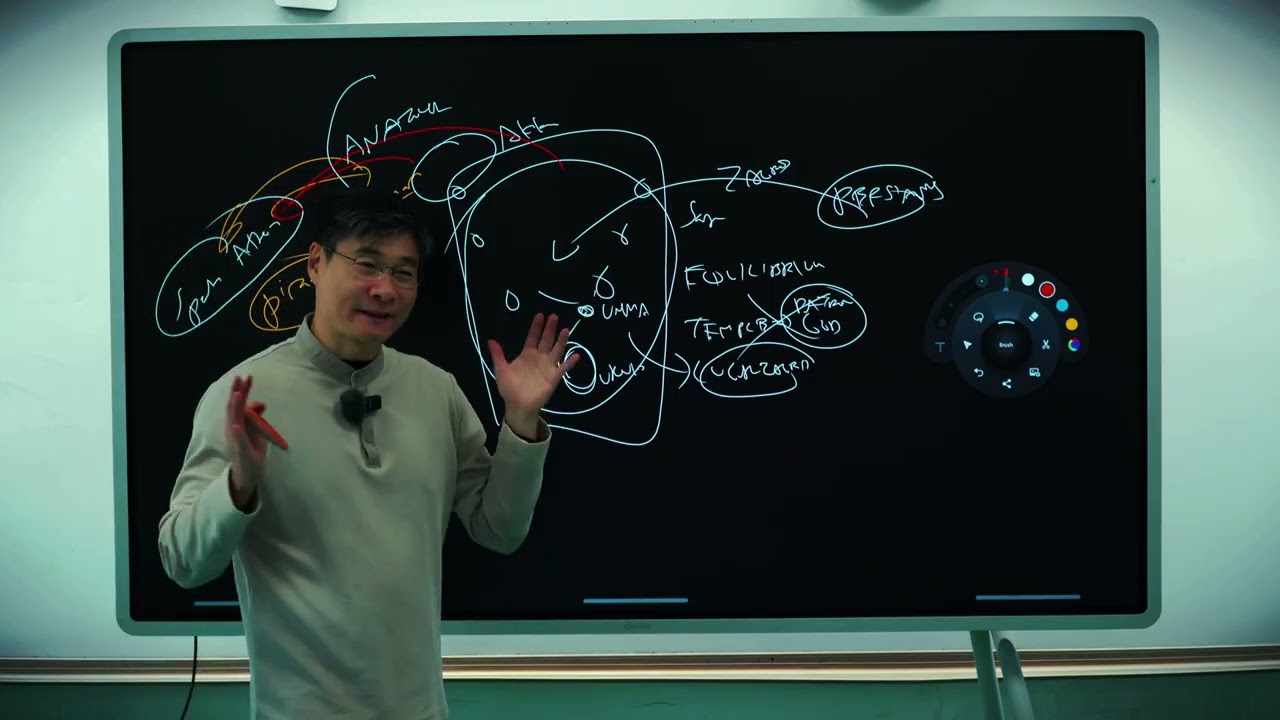
nature of the global economy that we have today. Okay. So there are two main pillars. There is the Middle East, the GCC, and then there is East Asia. And how the current economy works is the GCC provides the world with cheap energy.
01:58
Speaker A
Okay. So this energy is sold primarily to East Asia, and East Asia, of course, is the manufacturing hub of the world. So it takes the energy, turns it into manufactured goods, and then it moves over to the West,
02:16
Speaker A
uh, which consumes these manufactured goods. And this, in very simplistic terms, is how the global economy is structured.
02:23
Speaker A
Now, there is a particular quirk to this system, and it's all being, um, undergirded by the US dollar as a global reserve currency. So what happens is the GCC sells the, uh, energy in US dollars, and then US dollars are recycled back into
02:44
Speaker A
the US economy. Same thing with East Asia, where East Asia will sell its manufactured goods in US dollars, and it will manufacture the, uh, and then it will recycle the US dollars back into the US economy. Okay.
02:59
Speaker A
And the idea of the United States as a global reserve currency, it is unique in human history, and it has been a disaster for the United States as a nation state.
03:09
Speaker A
Okay. And there are three reasons why. Um, the first reason why is that the United States loses all financial independence.
03:20
Speaker A
Okay. So the United States must guarantee the free flow of US dollars, and the United States, um, has created a financial system in order to facilitate the free flow of capital around the world, and this is not good for the
03:39
Speaker A
United States because you lose financial, uh, independence. Um, the idea of this is the Eurodollar system. Now, now what the idea of the ER system is all the US dollars started outside the United States, and quite honestly, we have no
03:55
Speaker A
idea how much US dollars are outside the United States. Um, and so this dollar system, it actually makes no sense from a national perspective. You have no, you have absolutely no idea how much US dollars are in circulation. You have
04:10
Speaker A
actually no control over how it is circulated. Okay, so that's the first problem with this system. The second problem with the system is financialization, which basically means that in order for this system to work, this global economy to, to work, the United States
04:29
Speaker A
has to become the financial center of the world and shift resource extraction and manufacturing to the other parts of the world. So you hollow out your manufacturing sector. You no longer produce anything. You just speculate.
04:46
Speaker A
Okay. And we, we understand the problem with the system. It leads to corruption. Corruption, of course, just means Washington, D.C. Washington, D.C. is the most corrupt place on this planet. They, you get nothing done unless you're willing to bribe, uh, Congress people to do what
05:01
Speaker A
you want. Okay? So corruption is a huge issue. You have inequality, right? So think of, uh, New York City. I was in Santa Monica. Santa Monica, um, uh, last week. It was the most ridiculous place in the world. Okay, it was just so silly.
05:17
Speaker A
You have the Pacific Palisades, you have the $100 million mansions, you have Skid Row where they're all on drugs. It is, it's just ridiculous. Okay, inequality, and of course you have debt. Okay, so it, it's almost like Americans exist
05:31
Speaker A
in order to go into debt, in order to fuel the global economy. So again, this is terrible for American citizens. Okay, the third thing is just, uh, Pax Americana. And what I mean by that is this system is predicated on
05:50
Speaker A
peace in order for people to trade with each other, right? Um, so people need free access, free open maritime navigation for the system to work. And the United States must guarantee this free maritime navigation, which means a bloated military budget. Okay.
06:10
Speaker A
The United States must basically, uh, ensure the entire peace of the world, which causes tremendous military, um, pressure on the United States. If you think about it, this makes no sense because the United States doesn't actually need a military.
06:28
Speaker A
Okay, I, I know this is hard for Americans to understand, but the United States doesn't need a military because there's no nation in the world that would actually dare to invade the United States. Okay. So all that money that
06:39
Speaker A
goes to the military could, it could be instead spent on things like free college or free healthcare. All right.
06:47
Speaker A
But the United States, because it is forced to protect global trade and ensure free open maritime navigation, then it needs this $1.5 trillion, uh, Pentagon budget. Okay. All right. So this is the world as it is. And as you
07:04
Speaker A
can appreciate, this is not really sustainable. Okay. And so what we, we're seeing right now is the system breaking apart because of the Iran war. All right. So before I continue, any questions about this?
07:22
Speaker A
Is it all pretty clear? Um, yes. What are the benefits to the US system?
07:27
Speaker A
That's a great question. So the main benefit is Wall Street is very happy with the system. Okay. So, you got this financial hierarchy that benefits tremendously from the system. All right.
07:38
Speaker A
And, and that's why we still have the system. Uh, yes, I think you said like there's no way to figure out how many dollars are outside of the US or in the Eurodollar system.
07:48
Speaker A
Uh, why is there no way to calculate that? Okay. Um, so there's no way to calculate, um, because of a variety of factors. Okay.
07:57
Speaker A
The first is money is not printed. Money is just created off a computer screen.
08:04
Speaker A
Okay, that's number one, and banks actually have the capacity to create their own money. Okay, that's number one. Number two is there's a lot of counterfeit money in the system.
08:15
Speaker A
All right. Okay. Does that make sense? Yeah. Uh, yes. Um, you're saying that if the US did not have a military, then even then other nations would not have dared to invade the US. Are you saying that because the
08:31
Speaker A
US has a geographic advantage as a part of being in the Western Hemisphere? Yeah. So, um, United States, it's impossible to invade because it's protected by two oceans, the Pacific and the Atlantic. That's number one. Number two is there are a lot of guns in
08:45
Speaker A
America. Okay? All right. There's no military, but like you come and invade America, guess what? You'll be fighting for every street corner. Okay? It's just pain in the ass. Why would you do it?
08:56
Speaker A
Um, yes. Sorry. I was just going to ask, um, you say like there's a breakdown, but I just want to know like what the symptoms of the breakdown are, like what are we seeing right now that show that
09:07
Speaker A
there's a breakdown going? Well, well, I explain corruption, inequality, and debt. Okay, and that's what this, that's why the system is not sustainable. Okay, I just mean like how do we see that, like in our, in front of us, like what do we
09:20
Speaker A
see, what are the things that we see physically as those symptoms? Okay, so the clearest symptom of a breakdown is the 2008, uh, great financial crisis. Okay, that is when, uh, the United States government bailed
09:36
Speaker A
but not homeowners. That's and the idea behind this is the idea of regulatory capture where Wall Street the fin Wall Street financial elite are able to control the policy levers of Washington DC because from a um um just from a
09:51
Speaker A
economic policy perspective, you actually want to belt the homeowners and not Wall Street, right? because uh if you bought the homeowners that allows for a more efficient economy, but because you built the Wall Street and not the homeowners, you create a
10:07
Speaker A
K-shaped economy now. Okay. So the K-shaped economy is basically the best uh indicator that the system is about to break down. Uh yes. Uh uh so if you like we if we don't need this big of a military and we just um said that we're
10:20
Speaker A
going to be spending $1.5 trillion on our military um who's getting like like which it's clearly corruption. So who is benefiting the most from this corruption because it's not like yeah the military-industrial complex but like who's specific?
10:35
Speaker A
Okay. So so get on a train and go go to Washington DC and go to the suburbs.
10:41
Speaker A
Okay. in the suburbs, Fairfax County, Alexandria, they're all mansions. You go back 20 years, right, before the war on terror, uh you go to a place called So, so the wealthiest place in America is actually called Loen County, Virginia.
10:56
Speaker A
All right. 30 20 years ago, the per capita income of that place was 30,000.
11:03
Speaker A
Today, it's 90,000. It tripled in 20 years time. What happened? The war on terror. That's what happened. Okay. So, so it is the um military-industrial complex. Uh, yes.
11:15
Speaker A
Why has financialization led to inequality? Like I I get it, but I I'm unable to break down the because white collar jobs necessarily are a successor to financialization. You have people working in offices, doing IT jobs, tech jobs sort of abstracted away from
11:31
Speaker A
factory jobs and those were supposed to create. Okay, so that's a really good question.
11:36
Speaker A
So why would financialization lead necessarily to inequality? Um and the reason why is that if you read Thomas uh his book um called capital in the 21st century he explains this very clearly and the idea is that for capital
11:53
Speaker A
to be lucrative it consolidates. Okay. So what happens is that um once capital consolidates its returns are very very high much higher than if you actually uh engage in real work. Okay.
12:09
Speaker A
So for example if you were open a factory uh you might have a 2% return a year but with financialization the stock market uh if you invest in stock market you get 5% a year. So in this system the
12:22
Speaker A
riches get richer the poor get poorer. Okay. All right. Uh yes, in your model, the premise right now assumes that America was structured and designed to be an ethnostate. But in some of your previous lectures, you mentioned that the founding idea of
12:37
Speaker A
America was that if you give citizens or people the ability to buy private property and do whatever they want, that is the incentive that the government would want to create. And so by having open capital accounts, a strong banking
12:51
Speaker A
system, technically we could just say everything you're saying are manifestations that would happen in every civilization throughout time.
13:00
Speaker A
Inequality and all of these diseases, this warfare has been going on since before Homer. And so we just have a different paradigm of a different country that in this current world is not the ethnostate, but we have a
13:12
Speaker A
hallucination that it is. Okay. So, so I'll explain this later on. Okay. So, I apologize. I forgot I'm in New York City, not in China. Okay. So, we have to cut this out. Okay. But there's one last question. Yes.
13:26
Speaker A
Yeah. Um, I was wondering that if the case like pulls out the money from the the stock market, it's going to be economic or some issue. I don't know if that's what you said, but I looked it up and
13:41
Speaker A
the GCC only accounts for like one to like 2% of the US stock market. So, how would that have a profound effect?
13:50
Speaker A
Yeah. So, I mean, okay. So when we say like the GCC and East Asia are recycle the US dollars in the US economy that doesn't necessarily mean the US um stock market. It could also mean hedge funds.
14:04
Speaker A
It could also mean real estate, right? Because the stock market is only a very small portion of the US economy. Okay.
14:10
Speaker A
All right. But but but I'll explain more as we go on. Okay. All right. So So let's go let's go on. All right. So now I want to explain the war in Iran and how it is spinning out of control. Okay.
14:21
Speaker A
So originally the war was between u United States and Iran. Okay. So the Iran the United States strategy going into the war was very simple decapitation which means you knock out the leadership and then um everyone else because you're because they love
14:40
Speaker A
democracy, they love freedom, they love human rights, they love only fans, whatever. Okay, they rebel and then you have um a democracy. Okay, that's that was literally the plan going into the war. Didn't work out. The Iranians are
14:54
Speaker A
much much more resilient. The Iranians have counter measures against the strategy including closing off the certif primarily going to East Asia. So this creates a bottleneck in your entire global economy, right? This disrupts the model that that I previously presented.
15:17
Speaker A
But not only that, but as this war is progressing, the Houthies have been brought into the war. Okay, the Hoosies are a huge problem because they control another strait called the um the Bab L Mandabra. Okay. Um and it screws the
15:34
Speaker A
Saudi Arabia. All right. Um Hezbollah and uh Israel are at war. Then Iraq is also um at war right now.
15:47
Speaker A
As you know, recently there's been a Middle East military alliance signed by three countries. Saudi Arabia, Turkey, and Pakistan. Okay. Uh this is Turkey right here and this is Pakistan. All right. So what I think what's is going to happen
16:05
Speaker A
is Saudi Arabia sees the Houthis as an ex ext exentious threat and they will they will move against Houthies. They're probably backed by Israel. Israel has military bases over here. Okay, so they've surrounded the Houthies. Um the problem is with this system, the
16:22
Speaker A
Iranians have figured out that if you have four points of attack, okay, including um Hespala, which can attack the Shal, the Houthies, which can block the B and um that straight and then the Hummus. What you've done is you choked
16:38
Speaker A
off the entire Middle East. Okay? And also like you know the uh GC saying like we'll just build pipelines you know that's Okay because like if the drones can attack ships they can probably attack pipelines as well.
16:54
Speaker A
It's probably easier for them to attack pipelines cuz they're so huge right? So the GC is simply screwed. But it also shows you that um because they're proposing to build pipelines which cost billions of dollars and years to build
17:07
Speaker A
and they're not really a solution. It tells you that they don't really know what to do. they could really screwed in this. Okay. Um, now what's important to also remember is that Russia regardless of what happens can always supply uh e
17:22
Speaker A
Iran from the Caspian Sea and China for its bottom road initiative can supply using railways. And so what's going to happen is that this war has to expand globally. Okay. uh you have this uh problem in the Middle East and then it's
17:37
Speaker A
going to link up with the war in Ukraine and this will be a global um situation and this is going to destroy the global economy and the issue with this is remember these countries recycle US dollars back into
17:53
Speaker A
uh the US um economy especially Japan right remember Japan has $1.1 trillion of US treasuries Japan what Japan does for the glo global economy is provide liquidity. All right? And what what and so the idea is something called the
18:09
Speaker A
Japanese yen carry trade. You guys may know what this is, but the idea is it's really the dumbest thing in the world where the Japanese banks will lend money to Japanese corporations at 0% interest rate. And the idea is well when you do
18:24
Speaker A
that you are providing liquidity for the Japanese economy, right? Because deflation is a huge problem in Japan.
18:32
Speaker A
The Japanese corporations are like, well, we could do that, but there's a much simpler way to make money, which is we'll go buy US treasuries at 5%. Okay, we we're borrowing money at 0%. We are getting 5% by buying US treasuries. So,
18:44
Speaker A
we'll take that e we'll take that free 5%. Thank you very much. Okay, and so because Japan does this, what it's really doing is providing liquidity for the liquidity liquidity for the world.
18:53
Speaker A
Okay? And the liquidity by the way is about $4 trillion. The problem with this is like Japan uh gets most of it oil and energy from the Middle East. So the second thing is oil and energy investors are like uh maybe I
19:11
Speaker A
shouldn't put my money in Japanese yen, right? So now the Japanese yen is sinking. And so what the United States is doing is like okay we need to save the Japanese yen because if the Japanese yen sinks then the the the bank of Japan
19:24
Speaker A
is going to recall all this liquidity from the world to save the Japanese yen and this will cause economic collapse in the United States remember because United States the United States um 50% of US GDP growth is AI data data data
19:42
Speaker A
centers right so like it's a bubble so you need this liquidity from the GCC, from China, from Japan. This war means that these countries will have to um be much more nationalistic and so liquidity will dry up which will eventually cause
19:59
Speaker A
US collapse. There's just no way around this. Okay? So um given the situation, there is a solution to this. There's a way for the United States to win this war. Okay? And all United States has to do two simple
20:13
Speaker A
things. If it does these two simple things, this war in Iran will end right away and the US economy will be saved.
20:24
Speaker A
Okay? So the first thing United States can do is give Iran $2 trillion. Okay? And this would be disaster for Iran. So the example, the historical example is of course something called the Plaza Accord. The plastic cord happened because Japan at this point in
20:46
Speaker A
history but 1980s was the dominant manufacturing power in the world and the Japanese yen was very weak which meant that the Japanese were absorbing liquidity from the world. Okay. And this cause was causing huge problems for the US economy and for the global economy.
21:04
Speaker A
So the plaster cord was an agreement um between Japan and the G7 nations Europe and United States that Japan would uh would um increase the value of currency.
21:18
Speaker A
Okay. And this allowed Japan to buy property really cheaply overseas. Okay. And so now now you've reversed the situation. You before you absorbing liquidity and now you are um transferring liquidity to the world.
21:32
Speaker A
Okay. And so this was terrible for Japan because it led to 30 years of deflation, stackflation, economic um um silency, but it was great for the United States, right? So why not just do this for Iran as well? Give Iran $2 trillion. It's US
21:50
Speaker A
dollars. So they're eventually going to have to have the recycle back into the United States economy, right? They'll buy resources to rebuild. Uh a lot of this re US companies will be allowed to go United States. United States
22:02
Speaker A
companies will will will be allowed to go to Iran to rebuild infrastructure to um sell oil around the world. It's great for everyone, right? So that's number one. Okay, $2 trillion $2. But there's something else that that has to happen
22:15
Speaker A
which is contain Israel. Okay. Israel. Yes, I understand. Yes. Okay. But let me finish. Okay. Let's pretend that Okay. Okay. Israel is a hu is a huge problem in the Middle East because they're always going out starting wars,
22:33
Speaker A
right? So what you do is say to Israel, we're going to embar you no more weapons for you guys and like we're going to sanction you. If that would happen, peace would come to the Middle East, right? Just do these two simple things,
22:45
Speaker A
we would all live peacefully ever after and the global economy will be saved. Okay, we know for a fact none of these things are going to happen. Okay, so like this is really strange. How do we get in this in in a situation where 8
23:00
Speaker A
billion people, the fate of 8 billion people on this planet, it's all being determined by this one little country, okay, of like what 9 million people in the Middle East. The country is so small, it's you can't even find on a
23:15
Speaker A
map, okay, of the of the Middle East. So, this is the question we will examine tonight.
23:24
Speaker A
What is going on where the United States, the most powerful country in the world, it is not able to protect its own national interests and it's only advancing the interests of this again really small nation in a desert
23:39
Speaker A
somewhere, right? And we and what we've already discussed the consequences for this war are just tremendous. It's the end of civilization basically, but the United States is still allowing Israel to do whatever it whatever it wants.
23:54
Speaker A
Okay. All right. So, the main argument I want to make to you today is this war makes no sense unless you look at it from an esquetological perspective. This war is meant to usher in the end times.
24:08
Speaker A
This war is meant to bring in the Messiah if you're Jewish and to um have Jesus return if you're Christian. That's the only explanation for what's going on. If you look at it from any other lands, it makes absolutely no sense.
24:21
Speaker A
Okay, any quick questions? Uh yes, that model fails to acknowledge Islam. Iran is a big player. What? like you're saying the return of Jesus and and then you're saying the end of time for the Jews, but then you have the Shia,
24:38
Speaker A
Islamic, and you have the Sunnis. Why are they missing in the model? Um so um um you're right in that um there are religious fanatics in Iran. Okay. Shia martyrdom is a very powerful force, but it is only a minority within Iran,
24:59
Speaker A
right? So there are um if you go to Tran uh the capital most people are secular the intellectual class the the government uh bureaucrats a lot of them are secular. So um where and it's the same thing in Israel where you go to
25:13
Speaker A
Israel 40% of of Israelis are actually secular. So what's really strange about the world we're living in is history.
25:23
Speaker A
It's being determined by this very small minority in each of these different nations whether it be Iran, Israel or United States. Yes.
25:33
Speaker A
Uh just to respond to this uh there's like the 12 Shia um 12 Shia Islam, right? Like that's the esqueological belief within those groups. Um right.
25:42
Speaker A
Right. So like just watching your lectures um Iran's not the enemy in this war. It's the United States to remove the United States from the Middle East to create like to um establish you know Israel and the greater Israel project
25:56
Speaker A
and patch as the hegeimon in the Middle East. Yeah. Yeah. Yeah. So yeah. So for when I say the end times I mean they have to fulfill a certain prophecy and I'll explain what this prophecy is. Okay. All
26:09
Speaker A
right. Uh so guys guys guys I we'll be here all night if if we Okay. All right.
26:15
Speaker A
All right. So that's number two. Okay. So number one is we've um established how the global economy works. Number two is we've looked at how this war threatened to destroy the global economy and how this war is really being fought
26:30
Speaker A
for on the at the behalf of Israel. Okay. Now what what I'm what I'll try to do is explain how is it that we got to this unique moment in history. So I I'll explain to you the history and origin of
26:46
Speaker A
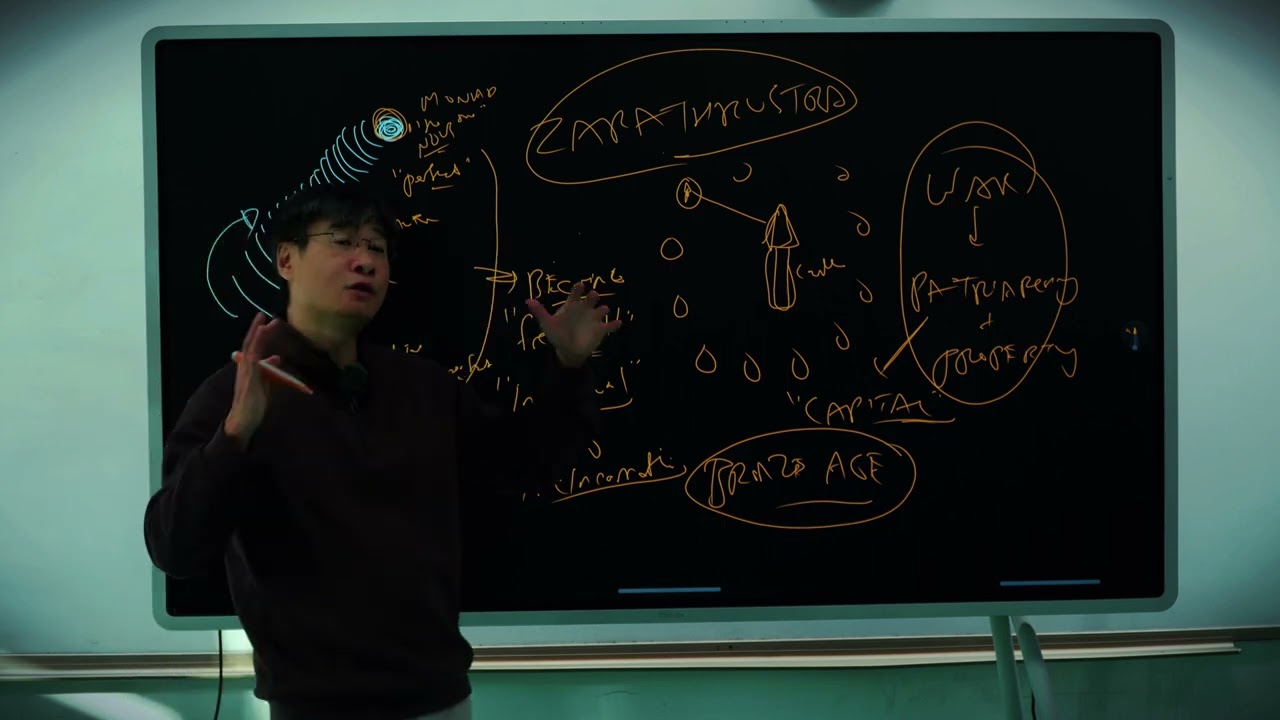
capitalism. All right. All right. So capitalism capitalism is a historical accident. Um I know that uh most of you believe that capitalism is just the best way to run the world. But what I want to show you um is that in fact it's a
27:08
Speaker A
convergence of several historical accents that has create the world that we live in today. Okay. So the first historical accent is Calvinism. And in Calvinism there's a very important idea called double predestination.
27:26
Speaker A
and double pre pred destination the idea is at the beginning of time when god created the universe he already decided the destiny of everyone he already decided who is going to go to heaven and who was go who will go to hell okay so
27:41
Speaker A
double meaning heaven and hell predestination means it's already been decided why we have double pre pred predestination was it was a rhetorical response to to the Catholic Church. The Catholic Church was able to control people because Catholic Church could determine whether
28:00
Speaker A
or not you went to heaven or hell. That was the source of the of the power. And Calvinism was tried to subvert the power by saying, "No, the church doesn't have this power. Only God has this power and
28:12
Speaker A
God has already decided." So no matter what you do, there's no matter what the church says, the fa your fate has already been been decided because at this point in history, indulgences were a huge problem. indulgence words is
28:23
Speaker A
bribes to the church so that if you're a bad rich person you could um basically get to heaven still. Okay. So Calvinism now Calvinism what's really interesting um is it creates a more dilemma that didn't exist before which is like how do
28:41
Speaker A
you know if God has chosen you or not? Right? Before like you would know because the church will tell you if you were selected or not. But now like you have to believe if you're chosen or not. And so the way
28:55
Speaker A
they remedied this is through the idea of wealth creation. Okay. Wealth basically if you're wealthy it means God favors you. That makes sense, right? Um, but the other thing that's interesting is communism demanded that you make wealth but at the same time also not spend your
29:19
Speaker A
wealth because you have to prove you are um you are a good person, right? So you make a lot of wealth but you can't even spend your wealth. And this goes against human intuition because historically when we make a lot of money, the first
29:36
Speaker A
thing we do is spend on our friends and family, right? Because we take this wealth and we transfer it into status for ourselves in a community. And that's what that's what intuitively we did in the past. And but now Calvinism breaks
29:50
Speaker A
this cycle and says, "No, no, no. If you make a lot of money, you also have to save it, which basically means you have to invest it." And this is weird, okay?
30:00
Speaker A
But this basically creates capitalism. You can't spend your money. You you can only save it. And because of this concept, you now have a new entity in the world called the Dutch Republic.
30:11
Speaker A
And what the Dutch Republic would do is take people's savings and then start these enterprises around the world that that led to a spice monopoly. And at this time in history, spices are the most valuable thing in the world. And
30:23
Speaker A
the Dutch Republic because of of of the of communism now becomes the wealthiest region in the world and they create really the world's first idea of a middle class. Okay, this is this this leads of course called the something
30:37
Speaker A
called the Dutch Renaissance. Um the problem with this is the Dutch Republic used to be part of the Habsburg Empire and now that they're so wealthy um they're constantly being invaded. So you have all this money. You have to
30:51
Speaker A
protect this money in order to get to heaven. That's this you're taking to heaven. But how do you prevent the Catholics from coming and stealing your money? Okay. This led to something called the glorious revolution. Okay.
31:01
Speaker A
1688 glorious revolution. This is the second historical accident. So the glorious revolution is really a marriage of the um dominant protestant powers in Europe at this time which which are England and the Dutch Republic right um so what with the glorious
31:22
Speaker A
revolution what happens is the Dutch Republic now transfers their gold their wealth to England why because England is an island protected by the Royal Navy the Royal Navy is invincible right so it's really it's really the best place to store your money.
31:39
Speaker A
The glory revolution then leads to something called leads to the chartering of the Bank of England. Okay, this is the third historical accident. The Bank of England 1694.
31:50
Speaker A
The Bank of England is unique in history because it's run by merchants, right? Historically, merchants would lend money to kings for their wars. The problem is the kings could die. They could lose the war or they could be like, "Screw you.
32:06
Speaker A
I'm the king. I don't have to pay you back." Right? So, this is this always a huge problem for these merchants. The Bank of England solved this problem because they're lending money not to the king but to Parliament.
32:19
Speaker A
Okay? So, basically the Bank of England and it's again it's so weird if you think about it. It is a private bank that is guaranteed by the people of England. Okay? Now you're lending money not to the king but to the English
32:37
Speaker A
nation which means that as long which basically means that as long as there's one Englishman alive uh that person has to pay you back. All right. So it's a really weird system but this creates our our modern financial
32:51
Speaker A
system. The bank England model of course will be copied with the Federal Reserve. Okay, so the Federal Reserve system that in the United States is model of the Bank of England system. Now this system is great because what it allows is
33:04
Speaker A
basically for infinite financing. So the example is the Napoleonic wars when England was trying to fight Napoleon for dominance in Europe and England lost six times. It only won once but England only need needed to win once because it has
33:21
Speaker A
infinite financing. No matter how badly Napoleon defeated them on the battlefield, England could just print money and says, "Okay, we'll bribe you Prussians or Russians to go fight another war." Okay? And and so um the Bank of England basically creates the um
33:38
Speaker A
the British Empire. Okay? So capitalism um then what happens of course is these ideas will then spread to the United States and create the American empire.
33:52
Speaker A
All right. So these are all historical accidents. Calvinism was was an accident. Glorious revolution bank of England United States. These are all historical accidents. Okay. But once you have these accident in place you now have to explain them. You have to create
34:07
Speaker A
a philosophy or religion, a bureaucratic system in order to manage these accidents. Okay. So now I'm going to explain to you um how they did so. But are we clear so far? Yes.
34:21
Speaker A
Uh one question. So a lot of this looks like the the act of money lending has been encouraged, eased up or you know just uh increased over time. Why is that? Many religions discourage that you know adise their followers not
34:37
Speaker A
engagement. Yeah, exactly. So, um most religions, I would say all religions banish usery. Okay. Um why? Because userie was the most um destructive element in society.
34:51
Speaker A
Um it basically caused all sides to to collapse sooner or later. So all all religions ban usery. Um, Judaism is unique in that it only bends you usually for the members of the religion. But so if you're Jewish, you can't lend money at interest
35:10
Speaker A
to other Jewish people, but you can lend money at interest to Gentiles. Okay. But all the religions ban uh usually because it was such a socially volatile force, right? Uh yes.
35:22
Speaker A
Not that I disagree, but what makes each event an actual accident? The Calvinism one I understand a bit more. Yeah, but the charter and such accident, right? Okay. So, when I mean accident, I mean they were not planned
35:35
Speaker A
strategically. They were all response to a specific problem that that arose at that particular time. Okay. Does that make sense?
35:43
Speaker A
Yes. Okay. Thank you. All right. All right. So now I'm going to explain to you the philosophies that develop because of these historical accidents. Okay. Now you have capitalism. Now you have to explain capitalism to the people. All
35:54
Speaker A
right. So um they had certain philosophers in place to develop a system in order to explain capitalism to the people and to justify it. Okay. So um one country c country that arose is democracy and private property.
36:15
Speaker A
If you think about it these two things are actually a a structural contradiction. We you guys live in the United States.
36:23
Speaker A
think this is the most normal thing in democracy. Of course, you have private property. But actually, if you think about it logically, it doesn't make any sense because private property basically means an oligarchy, right? Democracy means rule by the people. So, the people
36:36
Speaker A
choose if they vote to say, you know, like we want to redistribute wealth, they should be allowed to do so because it's a democracy, right? But private property idea of private property is it is an inherent and inalable right given to you by God.
36:51
Speaker A
Therefore, you are not allow allowed to touch each other's private property. Okay? So, we have this system as a response to the Bank of England because the Bank of England is private property, but it's guaranteed by the people. So,
37:04
Speaker A
how do you get how how do you how how do you elevate um elevate this contradiction? By saying to people, well, it we have a democracy. Okay? You choose to uh respect each other's private property. Does it make sense?
37:19
Speaker A
Okay. So this is a contradiction but this arose because of the of the inherent contrary nature of the bank of England. All right. Another contra contradiction that rose at this time is that reason and emotion were distinct. This you guys don't
37:38
Speaker A
appreciate this but this is actually a revolution in human thought because if you look at every other culture before this reason came from emotion right the idea that you could think independently of your emotion was ridiculous to everyone
37:57
Speaker A
like go read the Greeks go read the Chinese every ancient civilization is the heart and the mind are aligned in fact in China we say the the heart is the mind. Okay, you think of your emotions and look all the neuroscience
38:12
Speaker A
tells us that is that is true. Okay, our memories are essentially emotions and our memories become the the um units for our thinking. But so the question is why did they come up with this silly idea that again is counterintuitive? The
38:28
Speaker A
separation between reason and emotion and the answer is because of what reason means. Okay, reason in this formulation actually means capital and emotion means family tradition nation community.
38:49
Speaker A
Okay, does that make sense? So for in order for capital to win it it's transational capital there has to be a free movement of goods people and ideas and whatever obstructs the free movement of capital is inherently bad and we and
39:09
Speaker A
they're labeled as emotions. Okay does that make sense? All right. So again, we think these things are just intuitive.
39:15
Speaker A
But if you think about it logically, it makes no sense and they came up with these formulations as response to the distinct nature of capitalism at this time. Uh yeah.
39:27
Speaker A
Uh so you say that like in the French revolution they saw God as reason and in Greek literature they see the gods as like emotions.
39:37
Speaker A
Yes. Like they act in the world. So is that like why when they started to see God as reason and then they conflated reason with capital that's how we got to where we are.
39:50
Speaker A
Okay. All right. So uh that's a really good question. Okay. But but but let me explain the the history. Okay. All right. Let let me finish this section and then it'll become clear to you. All right. So you have these ideas um that
40:04
Speaker A
are contradictions um that that must that must be come in place in order to allow for transational capital to dominate the world. Okay. The first is like democracy and are not contradictions. They are they are intertwined together. They are the one
40:19
Speaker A
and the same. The second is that reason and emotion are separate. Whereas before in human history we saw them as one and the same. Okay. Um so in order to promote the system of trans capital you need both an public layer as well as a
40:36
Speaker A
secret layer. Okay the public layer is just what we call philosophy and uh the three main philosophies that develop in order in order to justify the system are empiricism skepticism and utilitarianism. Okay, David Hume, Jeremy Bentham, um John Lockach. Okay, I I
40:54
Speaker A
won't go too much into it, but there's a secret layer to all this. The secret layer is Freemasonry.
41:00
Speaker A
Okay. All right. Freemasonry is the religion of reason. If you read Freemasonian texts, whether it be Albert Pike, Morrison Dogma or Manley P. Hall, they use a phrase over and over again, it's like it's the idea of holy empire of
41:22
Speaker A
reason. What is this? It's a holy empire of capital. Okay. So again, this is really important for us to appreciate. Reason in their eyes is capital.
41:36
Speaker A
All right? So um and this created a revolution in human cognition because before if I met someone I might be like okay where you from right that's the first question I would ask you like what community are you part of right now I might be like
41:56
Speaker A
how much money do you have you understand okay I again this United States so you think this is the most intuitive thing to judge people by how much money they have but Historically we judge people by the comm community that
42:09
Speaker A
they come from. Okay. The god that they worship uh who their fathers are um who their parents are right. Okay. So this is the idea. Okay. Freemasonry was developed in order to better organize structure and manage capitalism secretly. Right?
42:28
Speaker A
Because remember the idea is democracy is just a facade created in order to fool people to agree to uh let bankers run the world. Okay. But you need a real management system and this real management system is called Freemasonry.
42:44
Speaker A
All right. Okay. Were religious organizations against it or were they part of it? Excuse me.
42:50
Speaker A
Were the religious organizations Catholic Church with this? I mean okay with this? within or within?
42:58
Speaker A
Yeah, that's a great question. Okay. All right. So, let's use game theory. Okay. So, the question is, okay, you have this secret organization called the Freemasons and they actually are transial capital and they want to conquer the world and spread capital
43:14
Speaker A
everywhere. Uh there must been organizations against this system. Well, there were. Okay. The problem is that um this system is set up so that capitalism will always win out. Okay? So if you go align yourself with capitalism then you
43:33
Speaker A
win out. If you go against capitalism you lose out. Right? So think of of history where things like monarchy uh organized religion the Catholic Church basically um community they're all being they're all being withered away right? Okay, so you see all this
43:50
Speaker A
massive migration to United States into Europe. You're like, well, who's doing this? And the answer is it's capitalism, guys. Okay, capitalism demands a free movement of people, goods, and ideas.
44:02
Speaker A
And so if you try to stop them, then they see you as an enemy. Okay, but but let me use game theory to explain what's going on. All right, so um transial capital is the most powerful force in
44:15
Speaker A
the world. Um and so if you go against transial capitalism, you will be destroyed. Okay. And if you look at the movement of human history for the past 200 years, it's been the triumph of trans capitalism. Okay. So the fir the
44:33
Speaker A
first example is the French revolution. The enlightenment is really the expression of capitalism. Uh the political expression of capitalism, right? is what does the enlightenment call for? The enlightenment calls for the free movement of ideas, people and goods, right? Okay. The enlightenment
44:54
Speaker A
leads to what? The French revolution. Then what happens? You have the rise of communism. Now, what's really interesting is if you talk to these Freemasons, they think communism is the best thing in the world. Why? Because communism is a triumph of human reason
45:09
Speaker A
above emotion. Right? Communism demands that you put the public good, the reason above family, community, emotion, love, nationalism. Okay, that's what communism is. So if I if if you look at the past 200 years, 300 years, it's been the
45:31
Speaker A
relentless march of human reason of capital but taking different guises, taking different forms, whether it be the French revolution or communism or capitalism. Okay. All right. Does that make sense? All right. So let me explain um how what's been happening. Okay. So I
45:51
Speaker A
say Freemasonry um is the organizing system behind capitalism. But but what what does that mean? Okay. So transnational capital means capital across different nation states. Okay. When you do that you have a problem. Um and so what they realize
46:14
Speaker A
is if you're able to solve three problems you will triumph. Okay. The first problem is uh information.
46:22
Speaker A
Second problem is infiltration. The third problem is coordination. Okay. So the classic example of the Rothschilds. the Rothschilds had um um their family was spread out in the different capitals of Europe including Frankfurt where where they're from but
46:42
Speaker A
also Paris, London um and one story that stood out is is the 1815 battle of Wateroo. So the British and the Persians fought Napoleon at the at the battle of Wateroo and of course Napoleon lost. Now the Rothschild had
46:59
Speaker A
agents to monitor the battle. When when the battle was declared, the agent got on a corvette, which is a fast ship, and sailed across the English Channel and told the information to Roth Charles 3 days before the public knew. Okay.
47:14
Speaker A
During these three days, there was a wild panic because for the reason, we don't know who did it, but there are rumors spec going around that the British had lost the battle. All right.
47:25
Speaker A
Okay. So this is the idea of information, infiltration and coordination. Information means how do you access information quicker than other people. Infiltration is how do you put agents into certain places that allow you to access sensitive information and coordination is how do
47:40
Speaker A
you work across different nation states in order to break the game in your favor. Okay? And the best way to do this is through secret societies.
47:50
Speaker A
Now at this time in history there are maybe three transnational forces in Europe. They are of course the Freemasons, they are the Jesuits and they are the Jewish diaspora. Okay. And eventually what they realize is well you guys we
48:08
Speaker A
could just work together right? When you combine the three Masons uh with the Jesuits and with the Jewish diaspora you get or organization called the Illuminati.
48:18
Speaker A
All right. The Illuminati. All right. So, the best way to understand this is, okay, I'm not saying that they're planning this out. Okay. Um, what they are doing is this. Okay. There are different organizations. There are different organizations and they all
48:38
Speaker A
have a range of certain behavior. Okay? There are people within within the Catholic Church who are protrans capital, people who are against transerial capital.
48:49
Speaker A
What I'm saying is that secret societies are convergence point a convergence point of these different organizations and because they allow because they have they're able to coordinate secretly together, they will always win out.
49:03
Speaker A
Okay? Doesn't make sense. All right? So I'm not saying that most people are part of secret society. I'm saying like if you choose to be part of secret society, you will have you will be at a greater advantage than if you are not. Okay? If
49:15
Speaker A
you're just a government bureaucrat, you'll just be government bureaucrat for the rest of your life. But if you're part of secret society and you're g bureaucrat, then your friends will help promote you in the bureaucracy. Then you'll be given investment
49:27
Speaker A
opportunities. Then your children will be allowed to go to the most elite universities. Okay? So it is your advantage to join the secret society. Um Okay. All right. Does that make sense, guys? Uh, yes.
49:40
Speaker A
So, you named three of them, but what are the organizations or you know, institutions that lost out like who can trace their history to see degraded as a result of this coordination?
49:51
Speaker A
Okay, that's a great question. Okay, so um, one thing I disagree with people about is how these studies are continuous, right? So what people say okay was well it start started out with the night templars which was the
50:04
Speaker A
original secret society and then it evolved to become the freemasons and then they become the roian the um and and I don't believe this is what happened I believe that secret societies are just a natural byproduct of transnational capitalism because the way
50:20
Speaker A
to win this game is by forming secret societies but secret societies usually revolve around a charismatic figure okay and So maybe the charis figure will go we'll start a new organization called skull and bones right and be and then
50:34
Speaker A
he'll uh because he's so successful very successful people people gravitate towards him but eventually what happens is these people become very arrogant their children become very arrogant and the secret society gives way to other secret societies but what I think is
50:49
Speaker A
true is the most powerful secret societies are esqueological Okay. So, what I mean by that is if you're so excited and you're like, you know, we're here to like, you know, make a lot of money and uh enjoy ourselves,
51:06
Speaker A
you won't do as well in the long term as we're here to serve God and we're here to bring God to our world. We're here to usher in the end times. Okay? Um, and there are certain reasons why. The first
51:20
Speaker A
reason why is if it's esquetological, it's a script that you can play out over centuries. If it's not if it's not esquetological then it usually revolves around a karatic leader who when he dies the organization devolves okay that's
51:36
Speaker A
the first thing okay it's it's it's it can span centuries because it's a script second thing is that uh you can have more people participate in the movement right you can scale it out if it's escological and the third thing is
51:51
Speaker A
people tend to be much more energetic when they think that oh I'm going to bring up the end times We are going to take the world to paradise, right? This is a jihad. Okay. So, um, societies that are esquetological
52:06
Speaker A
tend to do better than societies that secretes that are not esotical. Okay? And specifically, secret societies that practice called the cabala do the best.
52:16
Speaker A
All right? The cabala. So now what I'm going to do is I'm I'm explain to you the cabala. Okay? So if you know Freemasonry, if you read books like morals and dogma by Albert uh Pike, they're very open about the structure
52:29
Speaker A
and what what you'll recognize is Freemasonry tries to be the religion of reason. It tries to absorb all the best practices of every single religion out there and come up with like you know the empire of reason. Um and so maybe at the
52:43
Speaker A
bottom uh levels um you'll have like Pythagoras, the Egyptians. Um um but as you go up the highest level, it it's the Cabala. Yes.
52:55
Speaker A
Why did the Freemasons feel that reason was above emotion when they founded Freemasonry? What led them to the decision? Was it coordination? They felt they reason as opposed to Okay. All right. So um I'm not so they didn't plan this out. Okay, remember all
53:15
Speaker A
this all this is being a response to a certain problem, right? So you are trying to spread transial capital around the world. And so how do you convince yourself and others that capitalism is good? Well, what you do is you create a
53:33
Speaker A
distinction between reason and emotion where reason is capital, right? Let's make things for money and emotion is prejudice, right? No, I I can't make money because my religion doesn't allow for it. Okay. So, so that's what happened. It isn't like, you know, the
53:49
Speaker A
Freemasons had an epiphany which is like, oh my god, reason and emotion are se are separate. No, no, it was a response to a problem that they had.
53:58
Speaker A
Okay, does that make sense? Okay, so the cabala, what what was the cabala? Okay.
54:03
Speaker A
And again I want to be um concise. Okay. The cabala. The cabala it is an understanding of how the universe works. Okay. Why are we here? Where are we going? Where the universe come from. And what the cabala
54:20
Speaker A
says is that God is the will to bestow. Okay. He's God, right? He's all generous and he wants to share himself with others. Problem is there's no one to share it with. So uh to know to know itself to complete itself God creates um
54:40
Speaker A
Adam Kenmmont. Okay. The first man the cosmic man and Adam Kenmont becomes the will to uh receive. Okay. But if you're the will to receive, you see things purely from an egotistical perspective, which means you don't really appreciate why God
54:57
Speaker A
wants to give you anything. So you you reject God's gift. And when you reject God's gift, the universe breaks. Okay?
55:04
Speaker A
And so now you have the separation between us and God. So the purpose of the universe is to come to an enlightenment so that we're able to receive God's gift. Um this could mean spiritual alchemy. Okay. All right. And um that is the the Cabala at
55:27
Speaker A
a very general level. There are radical factions who um read the Cabala and they interpret it literally, okay, through the lens of the Bible.
55:40
Speaker A
And so they take this idea that the entire purpose of humanity is to uh seek reunion with God. And they use the Bible um as a script or as a plan. and they interpret it literally which means to
55:55
Speaker A
say they want they want to seek rene God by acting out God's divine plan as told in the Bible. Okay. And what this divine plan basically means is okay well the Jews must first res return to Israel in
56:14
Speaker A
order to fulfill the covenant between the Jews and God. Then the um uh Jews must build the third temple as a resting place for for God. And this will initiate the war of Gog and Magog. And when the Jews are most in need, then God
56:32
Speaker A
will come and save them and save the world. Okay? Because what um we of God means is opening your heart to God. And this means to repent. Okay? So this is how they interpret and again I'm talking very general terms but this is how they
56:47
Speaker A
interpret uh their role literally. Okay, this is why we're seeing what was happening in the Middle East. Why are the Israelis committing genocide in Gaza like that? That's like just insane. You don't have to do that guys. Okay, but
57:01
Speaker A
they're perfectly doing it and they're doing in 4K. Why? Because they want the whole world to see this. because they want to they want to initiate the war of gag and magog which will force the Israelis to come together.
57:13
Speaker A
Okay, that's why antism is growing in the world and this will force the world of Gog will force the Jews to repent and turn to God and then the world will end.
57:24
Speaker A
Okay. And then they can build the third temple. This is this is why it's happening. So um I want to really dis but I I want to explain why the cabala is so powerful and it's so powerful because there's a sexual
57:39
Speaker A
energy um and desire that the cabala unleashes right because it's sexual the idea of like re reun reunifying with God okay we were part of God we left God and now we will become with God again it's a sexual union and
57:57
Speaker A
that excit excites people. Okay, I hate to say this, but like have you guys seen Peter Hexf give press conferences? The guy's literally when he's talking about the war, it's almost like he's having an orgy. Okay, he's having an orgasm. Okay,
58:11
Speaker A
and like the tells you this guy's been reading the cabala a lot. Like I'm serious. Like these guys um who are committing genocide like Peter Peter HV, they literally see it in sexual terms like you know we're so close to
58:25
Speaker A
achieving the end times. We are so close to becoming one with God. Okay. They're excited about it. All right. Okay.
58:33
Speaker A
I don't get it. Excuse me. I like I I'm listening the whole time like I really don't get why people really believe that this is how you get close to God. Killing and killing and killing. That's so far from love.
58:44
Speaker A
Yeah. Okay. That's a great question. Okay. So from an intuitive perspective, it makes no sense because why can't you just open your heart and um welcome God?
58:56
Speaker A
And the answer is it's too goddamn slow, man. Okay, you could do it, but can your neighbor do it? Can your neighbor's neighbor do it? Probably not. Okay, but for the cabal to work out, everyone has to do it. So how do you create the
59:10
Speaker A
condition so that everyone is forced to do it? So my question is what I as a kid because I grew up in a very religious home when I was being conditioned I would always ask well why only one type
59:22
Speaker A
would God choose as the chosen that makes no sense to me it felt even as a kid and even now as an adult it feels like that's a false god that's a false belief because my intuition doesn't believe this the whole world
59:35
Speaker A
yeah okay that's a great point okay so you can argue there are a lot of logical fallacies within in Judaism uh especially uh messianic Jews. Okay, you you can say they're crazy. The problem is the world is not run by reason. The
59:51
Speaker A
world is not run by who's right or who's wrong. The world is run by those who willing to sacrifice themselves in order to achieve what they want. Okay, that's the issue. Okay, these people are crazy, but that's why they run the world
60:05
Speaker A
because they're willing to make sacrifices that no one else is willing to to do. So the example I have is you guys remember um of this um Muslim who killed these two Christians outside the um Israeli embassy in Washington DC.
60:24
Speaker A
Do you guys remember that incident? And and this was a married couple. They were Christians and they were I think volunteering at the Israeli embassy and uh they caught a Muslim and he was clearly drugged out. Um, and I don't speculate
60:40
Speaker A
too much, but there are people online who think that these two Christians purposely martyr themselves in order to advance the Zionist cause.
60:52
Speaker A
Okay. Does that make sense? Yeah. Like for them death means nothing. If if if I die in order to accelerate the coming of God, then it's worth it.
61:02
Speaker A
But it's not coming. That's the whole thing. again again like like like it's not about who's right and who's wrong. It's about who's willing to work the hardest to achieve his or her ends. Okay. And and these people are the are the
61:18
Speaker A
craziest. So so they usually get get what they want. Okay. Uh so think think of the Israel lobby which is basically like just just one issue, right? If you go into Israel, we'll come after you.
61:30
Speaker A
We'll spend like $30 million. And you like like Thomas Massie was this one lone voice in Congress. He was completely powerless. He was a pain in the ass. But like honestly, who cares?
61:41
Speaker A
They spent $30 million to get to to get rid of this guy. Then you have like, you know, Abdul Ali in Michigan, right? $30 million spent by Apac to uh against him and then $60 million total against him.
61:55
Speaker A
So they're fanatical, right? You're like, is it really worth it? like like you you might have like five people in Congress who are against Israel.
62:03
Speaker A
Everyone else is for Israel. Like you the map still is in your favor, right?
62:06
Speaker A
They don't care. Like no, if one person we don't care who it is, that one person is against us, we'll go after that person and make sure he or she can can never be in Washington. Okay. So So, so
62:19
Speaker A
it's fanatical. Uh yes. Did you have a question? Yes. 911 it was a sacrifice.
62:28
Speaker A
Um so um so so so let me continue. Okay. Then 911 will make sense. Okay. Okay. So so so you're like okay well okay you have these religious fanatics. Yes.
62:44
Speaker A
Before we continue on this on this topic. So how come China doesn't have corresponding organizations or societies like capitalists etc.
62:59
Speaker A
Right. Yeah. Because China has families. Okay. So families take the place of secret societies. Right. Because China it's not transnational. It it it it China works within its own borders. So you don't really need secret societies in order to
63:15
Speaker A
win out. Okay. So families in China went out over secret societies because families are much more close-knit than civil societies. But in in the in in the world in the western world where um the geography is much more spread out where
63:29
Speaker A
cultures are much more diverse the civil societies will win out over over families. Okay. Does that make sense?
63:35
Speaker A
All right. All right guys I we can be all that. Okay. But but let let me finish my point. Okay. So I'll do one more section which is like okay there we we we have a question which is okay
63:44
Speaker A
you've got these crazies in these in the secret societies that want to usher in the end times but this this is bad for transational capital right and the answer and and so what I want to show you now is actually if you're transial
63:59
Speaker A
capital you like these guys okay so we're seeing an alliance between trans capital and mezanic um secret societies And that this is why we live in the world that we live. All right. So let me explain to you why as capitalist I
64:15
Speaker A
actually like these guys. All right. So so one thing to keep in mind is capital has no value in itself. Capital is a tool for me to extract your energy, your attention, your consciousness.
64:34
Speaker A
Okay? Does that make sense? All right. So if I'm a traditional capitalist and like America is so wealthy rich, right?
64:42
Speaker A
So filthy rich, right? I'm in New York City. Um maybe the average family here I I'm saying hypothetically each family has a million dollars. That means the kids don't have to work, right? But if the kids aren't working, then the system
64:55
Speaker A
breaks down. So I need to create a condition um where people are forced to work. So if so capitalism um it creates wealth but it also must destroy wealth at the same time. It doesn't make sense right and there and
65:12
Speaker A
the best way to destroy wealth is through war and revolution. All right so this so this is how capitalism will work and again I'm not saying this is a plan but I'm saying this is the nature of capitalism to do this. All right. So I'm
65:24
Speaker A
the United So I'm I'm the United States and it's the wealthiest country in the world and all the capital is here. But this has led to moral, social and political decay, right? Too much debt, too much corruption, too much
65:37
Speaker A
inequality. And now I can't invest in United States because I can't get any returns, right? Like what do I invest in United States like AI AI data centers? There's no return in that. Okay? So this war in the Middle
65:53
Speaker A
East which will usher in Paka this is the best investment opportunity for me right now right because imagine okay like maybe 5 10 years down the road the Middle East is destroyed well it's good for me because if you're destroyed
66:10
Speaker A
I can now rebuild okay so uh coming here I I took the New York subway and I was like wow And you guys have to take this away every day, man. That's that's going to tell. And I'm like, okay, what do you
66:24
Speaker A
do with the New York subway? Because it's going to cost you a fortune to renovate it, right? And it'll take you forever to renovate it. So, your only solution if you're capitalist is okay, is to burn it down, right? Is that the
66:37
Speaker A
cheapest way, the most effective way to um renovate the New York subway? You just burn it down first, right?
66:46
Speaker A
Otherwise, it's it's it's taking like 50 years and billions of dollars, $200 in order to actually make it modern, right?
66:52
Speaker A
It's just cheaper and faster. Just burn it down. But if you want to burn down the New York subway, you probably have to burn out in New York City as well, right? But I'm telling you this, this is
66:59
Speaker A
how these guys think. Like, how do I get return the best return for my money? And the best return for my money is to invest in places after war, after destruction. Okay. So, so, so they moved their capital to Israel to Pax Judea
67:17
Speaker A
and a lot of this capital is also going to um Argentina, Australia Ukraine um the Mediterranean. Okay? So, basically places that are virgin territory, right? And it's all being anchored by Pax Judeica. Does that make sense? All right. So when the money
67:37
Speaker A
shifts away from the United States, you have economic collapse. Economic collapse leads to civil war. Now New York City is burned down. The New York subway is burned down. Which means what?
67:46
Speaker A
Which mean now I can invest in a new subway system. So now after like maybe 10 20 years, my capital can return to the United States. Okay. So another way of saying this is the only way for capitalism to
68:00
Speaker A
work is a constant cycle of destruction, revolution, and war. Without these things, capitalism cannot work. Okay, it doesn't make sense. So, you think, okay, well, these cabalists are crazy, but these capitalists are are kind of crazy, too.
68:16
Speaker A
So, okay. Uh, that is it. Uh, um, I look forward to your the questions. Okay. All right.
68:24
Speaker A
U, well, we we'll do a fireside chat first, right? Okay. Okay. Cool. So, uh, I took a lot of questions that you guys put in the questionnaire and compiled them and asked right now and afterwards we'll do a broader Q&A so anyone can ask any
68:40
Speaker A
other question. So we'll just start with the first question here. Does China have does China have similar secret societies?
68:47
Speaker A
What does it look like? I know we kind of talked about it but Yeah. Right. So um there are secret societies in China. There are secret societies everywhere. Um and they're basically family focused. Right. So it's usually one family and it's usually a
69:02
Speaker A
criminal organization triads and then they um obtain power and they become legitimate. Um so the Chinese system it uh the problem with the Chinese system is that it's it's not transnational.
69:17
Speaker A
It's only within a certain ethnic uh network. Um so it's much more limited in uh in in scope. The other issue with the Chinese secret societies is they're not esqueological. They're political, but they're not esqueological.
69:31
Speaker A
Okay. Can I ask a follow question? Yeah. Um I heard I may be wrong, but I heard that um the south they have infiltrated into the top um CPC officials like people and has been since they came to China in 194
69:50
Speaker A
188. So it never That's what I heard. But um whatever it is and they're now in kind of in China.
70:03
Speaker A
Do do you see that they are the the Freemason they are as determined as before in the 1950s to scramble strand of China just like people.
70:18
Speaker A
Yeah. Okay. So um China is in many ways have been colonized by secret societies by by these um um by transial capital. So the the goal of traditional capital is to go to a place and extract as much energy as possible
70:38
Speaker A
and trans and transfer it into uh capital and that's what's happened in China and you know I would make the argument that China has really hollowed out right so um in the 80s and 90s China transational capital went into China and
70:55
Speaker A
built factories in order to extract the energy of its uh demographic and then afterwards Um and and and and um I I don't think people appreciate this, but China could have only embarked on it infrastructure infrastructure spending with the aid of China capital, right?
71:12
Speaker A
Because you needed resources to build these highways and skyscrapers. So capital that allowed China to uh uh buy these resources from Australia, from South America. uh because at that time 2008 uh there's an agreement between the bank of international settlement and
71:28
Speaker A
China to increase the value of the UN of of the Chinese UN which allows China to buy up all these resources um and this infrastructure spending has really hollowed out the uh Chinese economy uh because uh this infrastructure spending has led
71:45
Speaker A
to corruption, inequality and debt as well. So, so China's basically done. Um, and there's really no real growth for potential for for China and and that's why trans capital is shifting from the United States and China to the Middle
72:01
Speaker A
East. Right? Again, if I'm a capitalist, I'm a trillionaire, I'm always looking for uh a place where which will grow.
72:10
Speaker A
And I think the United States and China are in the same boat. They're both empires in decline.
72:15
Speaker A
Okay. Do you see a kind of similar repeat of what happened in 1950s when they try to embargo China? China will just close up and then Yeah. So I I think what's going to happen is that China will be embargled
72:32
Speaker A
by it running uh neighbors and it will just remove itself from the global financial system, the global supply chain. It's going to turtle up. But when it does that, it's going to lead to structural contradictions. Why? because people in the in the urban areas are
72:47
Speaker A
used to a modern western lifestyle. And so, um, if there if there's not enough food, I I I know this sounds silly, but if there's if there's if there's if there's not enough food, the people in the urban
72:59
Speaker A
areas, Beijing and Shanghai, want to maintain their current lifestyle. And if there's not enough food, guess what's going to happen? There's going to be famine in the in the in the countryside.
73:10
Speaker A
This is what happened during the great fort as well. So I I I I'm not very optimistic about China. And so you're saying that there will be kind of things.
73:19
Speaker A
I I think so. Yes. Yeah. Okay. All right. Okay. Next question. What are the historical analogies of the current day techn technology transitions and consolidation of power?
73:31
Speaker A
Um so I see AI as a logical extension of this holy empire of reason, right?
73:42
Speaker A
Because what you're trying to do is you're trying to allow for the rapid almost seamless frictionless movement of people, people, goods and ideas. Okay.
73:58
Speaker A
And Freemasons appreciate that. The main constraint on this, okay, is are humans. Why? Because humans have emotions, right? And emotions are prejudices.
74:13
Speaker A
They're biases and they prevent the seamless movement of um goods, people and ideas. So you you have to break that. Okay? You have to transform people. They call it spiritual alchemy.
74:26
Speaker A
Um and to do that and so AI is considered a tool in order to achieve this.
74:36
Speaker A
Um so that's what AI is. A AI is not just a surve surveillance tool. What AI is, I mean AI will help us as humans achieve full enlightenment, right? So imagine a microchip implanted in your head, Neurolink, right? That's
74:55
Speaker A
always telling you the right thing to believe. And if we if we're able to synchron synchronize all of human consciousness, then that would lead to paradise, right? because all biases, all prejudices, all negative emotions will be wiped out from from the world. Okay.
75:13
Speaker A
So, so that's what's happening. Uh AI is not necessarily a revolution. AI is just the fulfillment of capital, right?
75:24
Speaker A
Okay. What is the future state of the Middle East in the short term following the conclusion of the Iran war? And is there any realistic chance that the existing global power structures will or even can be changed in meaningful ways?
75:38
Speaker A
Um, okay. First of all, this war in Iran will never end. It just can't end because the war in Iran, it's fundamentally a conflict between capital and religion. Okay? Um, and Israel represents capital and Iran represents um religion. So this this is
76:00
Speaker A
a contradiction and only one can can win out over the other but it's impossible for one to defeat the other. I mean the idea of the United States sending in ground troops against Iran, it's going to lead to a quagmire that that could go
76:13
Speaker A
on for for decades. Um but if you're a capitalist, you don't really care, right? Because all you're looking to do is extract as much energy from people as possible. And war does that. you know, war makes people anxious. It makes them uh work
76:31
Speaker A
work harder. So, the the the war in the Middle East, it's a perfect investment opportunity if if you're a capitalist.
76:37
Speaker A
And again, guys, like I'm not saying this if you're a millionaire, okay? You don't matter if you're millionaire. I'm saying this if you're a trillionaire, okay? Uh if you're trillionaire, then um the war in the Middle East is a perfect
76:49
Speaker A
investment opportunity. Um um and the question is, is there an alternative to this? And the alternative is um the return to religious nationalism.
77:04
Speaker A
Um so countries like Iran and Russia present a direct threat to capitalism. Um so uh they call this duganism actually dugan uh who proposes who who basically says capitalism is the antichrist system. All right. It's the beast and it negates all that is good in
77:26
Speaker A
humans and it includes family um community emotion emotions like like like like love. Okay. So this is really the great struggle that humanity will face over the next 50 years and and these this struggle is rep represented by the United States versus Russia.
77:43
Speaker A
Excuse me. Uh you just said likeism, right? the idea of like Russia operating at the catacon for preventing the antichrist from from occurring.
77:52
Speaker A
Yes. Um like like do they represent one of the two figures in Gog and Magog, right?
77:57
Speaker A
Like the idea of like operating a massive war against this. Okay. So there are different esquetological systems. Okay. In the Russian third Rome esquetology, Russia is a catacon. Okay. And it's meant to stop the antichrist from conquering the world. The antichrist of
78:15
Speaker A
course is capitalism, right? But then you have the um Christian Zionist esquetology which which perceives um Russia and Persia as Gog and Magog.
78:29
Speaker A
Okay. It doesn't make sense. Okay. But but these are different esquetologies. All right. Professor, can you speak a little bit more about the antichrist that Peter Theo is obsessed with and what his version of what is he trying to tell us? like what is he
78:44
Speaker A
implying with you know he goes and meets Javier and gives him a lecture about what is he trying to say I think Peter theo is carrying on the Freemason tradition and I I I don't know Peter the you you you should ask Kathy
78:58
Speaker A
but um but I think what Peter Theo is doing is carrying on the Freemason tradition and for the Freemasons the antichrist is whatever force that stops human reason from reaching its full potential. Okay, does that make sense? Okay, what what
79:17
Speaker A
the freebies believe is if human if everyone uh if human reason is allowed to dominate, okay, then human reason can achieve godhood. Okay, our collective reason becomes God itself as represented by AI. So whatever force that stops the
79:34
Speaker A
advent of reason, the advance of AI is fundamentally against God and therefore the antichrist. Okay. Does that make sense? That I think is a subtext of of what of what he's saying.
79:49
Speaker A
All right. All right. Um, will American universities in the GCC survive? Nope. Nope. Next question.
79:57
Speaker A
Yeah. How will how will the Iran how will the Iran and Ukraine wars converge? And how will there be both an AI and private bubble AI private bubble crash and hyperinflation at the same time? That's a little different.
80:12
Speaker A
Okay, so um these wars have to converge because Russia is supplying Iran through the Caspian Sea and um Ukraine sees sees as opportunity to combine both fronts.
80:29
Speaker A
Okay. So the Zilinski ordered a drone strike against an Iranian cargo ship uh transporting through the Caspian Sea.
80:37
Speaker A
And the idea is that um if you provoke the Iranians, the Iranians will begin to attack Europe and Ukraine because a lot of drone factories are based in in Europe. And so I think this is just this is this will just happen naturally
80:54
Speaker A
because um it's really hard to separate these fronts and more actors will be brought in over time because the stakes are so high. Um what what's the other section?
81:05
Speaker A
Uh how will there be both an AI private bubble crash and hyperinflation at the same time? Okay, you you have hyperinflation because fiat the fiat currency which is US dollar it's moving slowly towards zero. Okay, so that's a problem and the
81:24
Speaker A
AI credit private uh credit bubble will pop because liquidity has been removed from the US system. Right? So the GCC, Japan are no longer able to invest in United States because because of of of their own problems, right? Uh yes.
81:41
Speaker A
Uh so if the AI bubble crashes eventually, which is going to um could that be like wealth destruction? So like if the wealth is destroyed, the people have to work.
81:50
Speaker A
Yeah. Who's going to benefit and whose wealth will be? Look, all these bubbles are engineered.
81:56
Speaker A
All right. So the fact that the media is telling you the bubble is going to burst basically is is is is telling you like there are some vested interests that want this bubble to to burst. And who are these vested interest? Well, I would
82:07
Speaker A
assume the big AI companies, right? Because why would you as Omen want the bubble to burst? And the answer is the government has to come bail you out now, right? You're too big to fail. The bubble burst, open AI goes bankrupt.
82:22
Speaker A
This is a disaster for the American economy. Therefore, Trump has no choice but to nationalize data centers, right?
82:29
Speaker A
And and why why would you want that? Because now you socialize the losses and privatize the gains, right? The data centers cost you a lot of money and they're hard to implement because because of community um reaction, but if
82:42
Speaker A
but if Trump and the United States government comes in and nationalize these data centers, they there are now military installations. Now you have imminent domain. Now now the communities can't complain, right? And data centers are the main cause of AI companies. So
82:58
Speaker A
you want the bubble to burst so that the federal government can come in and save your ass and then um Yeah. Right. Does that make sense?
83:09
Speaker A
Yeah. Okay. Uh yeah. Yeah. So you mentioned this in one of your lectures as well like the engineering of bubbles bursting I think implies like a mechanism of control. So in this instance, what would you say is the like
83:26
Speaker A
lever? Is that a sample that can cause? That's a really good question because this AI bubble is distinct from other bubbles because going you go back to the 2008 uh subprime crisis there there was a trigger me mechanism which was the
83:42
Speaker A
home default, right? Um but with this AI bubble, it's a secular financing. So it's basically seven companies and it's a circle jerk.
83:51
Speaker A
They're all financing each other and as long as they agree to not burst a bubble, the bubble won't won't burst.
83:58
Speaker A
Um, so um what is the mechanism that will burst this bubble? And the answer is well those make something up. I mean um and and I mean there have all sorts of pretextes but these seven will agree at
84:15
Speaker A
some point to burst the bubble and it will be collusion and they are actually already if you just watch the news okay so many news articles about this bubble's going to burst this bubble's going to burst right they're already lay
84:30
Speaker A
laying the uh groundwork it's it's predictive programming that's what it is uh yes yeah uh my question is like what are they gaining by letting continue to go on. I don't get why they're not just bursting. You say that like they have to
84:45
Speaker A
time it right. Like what are they gaining by letting it continue on? Um so first of all, you just let it go on because it's a path of least resistance. Okay, that's number one.
84:56
Speaker A
Number two is um they can always control the time it collapses. And when when when they time to collapse, what what what they can do then is short the market to maximize their gain. So um people always pick the
85:16
Speaker A
path of least resistance. If you don't have to pop the bubble, you don't you don't you don't want to pop the bubble.
85:20
Speaker A
But if you're forced to pop the bubble, then then you want to pop it in a way that that maxim maximize your gain.
85:26
Speaker A
Okay. Uh yes. How can people in the west create an alternative to capitalism and modern modernity? And if wealth isn't capital, what is real wealth?
85:36
Speaker A
Um, well, first of all, real wealth is always your imagination, okay? Your attention. Uh, that's why these social media companies let you use your service for free. You think it's free, but it's not because you're paying attention to these things.
85:51
Speaker A
They're capturing your attention, and that's what they want, right? that's that's they're absorbing your your wealth and that's why these um these companies are so valuable uh because you're able to control your your your your attention. And so the alternative
86:08
Speaker A
is for you to reclaim your attention and this this can mean reading books but it really means to f you focus more on human relations. you focus on being kind, open, and generous with the people people around you on like, you know,
86:22
Speaker A
getting to know your uh neighbors. I was at the Pacific Palace in LA. It was the most ridiculous ridiculous cuz they live they live in like these $20 million to $200 million mansions and they don't even know their neighbors. I I was
86:35
Speaker A
talking to my friend. He's like, "Oh yeah, Stephen Spielberg lives down the street." Like, "Well, are you guys friends?" Like, "No, I never I never met the guy." Like, they live like three houses down. I never met the guy. Oh,
86:45
Speaker A
and um Adam Sandler. Yeah, he lives he's he's my next door neighbor. Never met the guy. Never seen the guy. It's so weird.
86:52
Speaker A
Yeah. Anyway. Yeah. Uh, next question. Yeah. US and China are declining empires. Who's rising?
87:07
Speaker A
Um, I think Israel is rising. I think Japan is rising. I think Poland could be rising. Um I think North Korea is rising, Iran could be rising.
87:20
Speaker A
Um but places that are outside the capital system will rise because they have they have um untapped potential.
87:30
Speaker A
Places that are over capitalistic are just exhausted. Okay. All right. So sorry, sorry guys. Uh we we'll continue the questions and we have lots of time for for questions. Okay.
87:41
Speaker A
Okay. What is your perspective on the apparent contradiction between JD Vans's isolationism and Trump's imperial ambitions? Do you see one faction of the Republican party winning in the end?
87:56
Speaker A
I actually um don't see it as a battle between JD Vance and Donald Trump. I see Donald Trump as trying to navigate opposing factions, right? That's why JD Vance is still around because JD Vance works for Donald Trump, right? It was
88:12
Speaker A
Donald Trump who picked VJ Vance and it's Donald Trump encouraging Donald J to write a book and go go on on his book tour, right? JD Vance has been on on a lot of um podcasts and honestly I think
88:25
Speaker A
how politics works is if JD Vance were really against Trump would have you know you know I mean like there are lots of things Trump Trump could could have done but I but I think you know Trump is a sort of person who tries to
88:40
Speaker A
maintain as many options as possible and JD Vance is maintaining an option for him.
88:45
Speaker A
Okay. guidance on where to build a family and home given the stage capitalism of western nations are at and the ongoing conflict in the Middle East.
88:56
Speaker A
I think that e if you have a family uh God will protect you anywhere. I I think you know rather than focus on like where should my family be focus first of all on having a family I mean you know but
89:11
Speaker A
also like you know just focus on loving your your your children and and then God will will take care of the rest.
89:20
Speaker A
Yeah. Okay. Where do you think the US China relationship is actually heading over the next 10 to 20 years? Is some form of long-term coexistence realistic?
89:30
Speaker A
I think um China and United States are not natural enemies. I think both United States and China are interested in maintaining the current global uh order uh especially China because China is very export uh orientated. So China would like as much as possible to come
89:51
Speaker A
to a dante with the United States. The problem is the United States internal politics makes US foreign policy very erratic. But I I think that um um President Cing's visit next month, he's coming here uh to United States on
90:09
Speaker A
September 24th. That will be a very good bell weather of of where things will will be headed. I think I think there'll be a compromise of some sorts. I think that things will turn around for um for US China relations. Okay. So, so we
90:24
Speaker A
we'll finish these questions and then we'll open up. Okay. Okay. As AI gets better, more of the things we consider human intellectual work, uh, how do you think it will change our sense of purpose and what we value as a society?
90:38
Speaker A
So, um, I think AI is a dead end. I I I think there's a limit to um, AI and the reason why is AI is completely dependent on the global supply chain, right? So, you'd be able to access rare earths, um, lithium,
90:58
Speaker A
um, silver really cheaply from around the globe. But if these supply chains are breaking down, then it's very hard to take AI to the next level. Um, and you ask yourself, in a time of um global disruption, is AI really the best place
91:17
Speaker A
to uh, invest your your money? Um, so I think that that we've basically reached the peak of of AI and I'm not very optimistic about where where AI will will take us.
91:32
Speaker A
Okay. If you could redesign high school education from scratch, what three changes would be best for preparing students for the next 20 years?
91:40
Speaker A
Um, so I would say the major problem with high school education is it's fundamental about indoctrination.
91:48
Speaker A
Um, and it it's trying to indoctrinate students in a very materialistic worldview. And I think that if you really want students to be engaged, if you really want students to ask good questions, to really want to learn, you need to teach
92:01
Speaker A
them the occult. You need to teach them like um things like the Cabala, you need to focus on the great books, Homer, Dante, and you need to make school relevant, right? So you need to have school needs to be a place where
92:16
Speaker A
students can learn about the world uh as opposed to be to be separate from the world.
92:22
Speaker A
You mentioned that we imagine reality. How can we determine that this imagination is sourced from God or Satan? In other words, how can we trust our imagination?
92:33
Speaker A
Um I mean I think that the imagination can only come from the monad. Okay. Uh I think it's impossible to um be imaginative in an evil way. And you know personally Shelley talks about this you know poetry if you're a poet
92:56
Speaker A
okay you're you're you're you're not being imaginative you're being divinely inspired. Right. So if it's a great piece of literature, if it's really beautiful, it comes from the monad. It's it's an act of of imagination. And you could also say s doesn't really exist.
93:14
Speaker A
Like what is Satan? I mean um um in my in my own conception of the universe, only the monad exist. And evil is something that we conceptualize to explain the world we we live in. But um you know Donna would say the
93:34
Speaker A
fundamental uh principle of the universe is free will and um if and we're imaginative real imagin imagination comes from a place of love. So it's almost impossible to be imaginative for like evil purposes.
93:54
Speaker A
Okay. Um, what do you think the role of an artist is during this time?
93:59
Speaker A
The role of an artist is to be a prophet, right? The role of an artist is to reveal the universe, reveal the truth, and to give hope to to people to um explain what's going on, but also to show new
94:16
Speaker A
possibilities um to to be a prophet. I I think I think historically all artists were considered profits uh of some sort.
94:25
Speaker A
Now they're just in uh Brooklyn and drinking like $10 matchas. Anyways, um okay. Yeah.
94:32
Speaker A
Uh what positive things can you say about this present time? That's the last question. I I think this is a very positive time because what's happening in the world is forcing us to think deeply about who we are and what
94:48
Speaker A
we want, right? That's why we're all here tonight. So, I think like 10 years ago, my lectures, people were like, "This guy's insane and like let's just ignore him because he's saying bad things and it's not comfortable like
95:02
Speaker A
listening to him, right?" But now um you're seeking answers. And by seeking answers, by seeking uh the truth, you're actually activating your the humanity in in you. Okay? Your soul, the soul in you, the spark in you that
95:20
Speaker A
was dormant for such a long time because things are so comfortable, it's now begging for answers. And so, so, so I think like this may lead to um a spiritual awakening.
95:33
Speaker A
um and an evolution of of of humanity. But this is something that is not obvious at some point because this is something that we have to seek together and together we will build the the solution.
95:47
Speaker A
Okay. Awesome. Thank you. Those are all the questions. So we'll open it up to Yeah. Maybe we can pass pass the mic mic around. So I I so so we we can hear hear the questions in in the video.
95:57
Speaker A
Somebody have a question. Okay. Just you want to choose or Yeah. Let's let's just pass it around. Okay. Yeah.
96:06
Speaker A
So um thank you so much for giving this lecture. So you constantly return to Dante um as kind of the paradmatic uh great books um author who kind of redefined human experience and provided a way to view reality in a positive way.
96:23
Speaker A
Are there any other great books um especially written among uh like following modernity? I'm thinking of like Ulyses or like In Search of Lost Time or books even written now that you see as providing kind of instruction manuals for our imagination to navigate
96:37
Speaker A
the complexities of modern life. Yeah, that's a great question. Um, so I really like the Russian novelist. So Dosyki and Toy Story and Karina I think is really the best novel ever written.
96:51
Speaker A
And then Karinina and then Dosyki is always wonderful. K punishment. Uh the brothers uh crash mazov. Um but really um uh modern writers um yeah so I I really like what what's his name?
97:17
Speaker A
Who who wrote um Cathedral? Cathedral. Raymond Carver. Is that his name? Yeah. Yeah. I like Raymond Carver a lot. Um, I think that his stories just force you to think very deeply and they um they're very emotional. So I I I would recommend
97:34
Speaker A
Raymond Raymond Carver Cathedral. Yeah. Okay. Hey, professor. Um, so your argument is that um Israel is the next um you know big world power, money's flowing to Israel etc. Um and you've you've already said that Israel has a high birth rate, you know,
97:54
Speaker A
three um children per woman. Um but the demographic of Israel going forward, most Brits are towards the Hazidic Jews or the Palestinian Israelis, the Arab Israelis right?
98:07
Speaker A
So that will lead to a very different Israel 50 years or 30 years from now.
98:12
Speaker A
Yeah. So, you know, does that not change your back Judeica argument essentially? Right. So, um, Israel, the the Israel, Israelis do not want Pax Judeica.
98:26
Speaker A
Okay. Israel, the Israelis are fairly happy with the way things are as they are. And unfortunately, there are some misanic Jews. Um, mainly Habalat Luvich.
98:39
Speaker A
I'm not sure if you guys know who what is it, but but but like they're trying to usher in the end times and um they're out of control. So what's been happening is there sort of internal contradiction.
98:53
Speaker A
It's being externalized, right? So you guys may know like a lot of Israelis are buying a property in the uh Mediterranean in Greece and Cyprus.
99:02
Speaker A
They're moving to Argentina. The reason why is they don't like the meic mess, right? Right? So rather than fight them, which would lead to civil war, there's like screw this, we'll we'll just move elsewhere, right? So they're moving to
99:14
Speaker A
Argentina, they're moving to the med the Mediterranean, uh they're moving to Australia, um these places. But what this means is that if these people are leaving, okay, people from Tel Aviv are leaving, that means that Israel becomes even more messianic,
99:30
Speaker A
right? The settlers become have have even more power. And so I see Israel trans transforming from a democracy to a theocracy in the next few years. I think this uh election October uh will be very telling you and it'll be very um uh
99:47
Speaker A
interesting to see what happens. But but but the idea of is as a democracy can't last. Okay. For p Judea to take shape, what has to happen is you have to have a priest class, the theocracy and you bring in like millions
100:03
Speaker A
of immigrants from India uh and they become basically your uh slave class and and and and that and that's what they want to and that's what they want to create.
100:14
Speaker A
Is that what um transnational capital wants as well? they want in Israel with like a police class and um and a peasant class, I guess.
100:22
Speaker A
Yeah. Because that's how how I make the most money, right? So I So like Libya is destroyed, Syria's destroyed, Iraq's destroyed, uh the GCC will be destroyed very very quickly, right? So now I repopulated with like Indians because
100:38
Speaker A
like India uh first of all they're they have a booming population of young people who are just going to revolt if you just let them stay in the country right so you need to remove them um and send them elsewhere also Hindua is is a
100:52
Speaker A
growing uh ideology in India which calls for Indian Zionism and so there's a lot of alignment between India and Israel in fact there's only four country four countries in the world where Israel has a net uh favor favorability rating.
101:09
Speaker A
Okay. And one of them actually is India. The I think the other are like Ghana and Nigeria. Okay. So yeah. Right.
101:18
Speaker A
Thank you for your lecture. I'm interested to learn more about how Kabala was co-opted by the West because from my understanding it was developed in Anduji Islamic Spain and then spread out into Christian Europe. Um, and now it's influencing the occult and secret
101:33
Speaker A
societies. So, how did kabala become part of Christian Zionism? And what other occult strains do you think should be studied to both understand the world and as an alternative to create something new?
101:48
Speaker A
Okay. So, Cabala is interesting because what what Cabala is doing really, if you think about it, it's taking like Egyptian hermeticism and Nazism and applying to the Bible. Okay. So um what makes a cabala distinct from say Nazism
102:05
Speaker A
and hermetism is um and neoplatanism is that um for them the mind of God is not really decipherable. You can't really understand the mind of God. But for Cabalis, they're like, well, the Bible is the word of God,
102:30
Speaker A
right? And the Bible is comprised of Hebrew alphabet. Then we can imagine that the Hebrew alphabet and numbers, numerology are the fundamental um tools that God uses to create the universe. So if we are able to interpret the Hebrew alphabet and then numer
102:53
Speaker A
numerology in a certain way then we're able to construct reconstruct the very fabric of the universe. Okay that's what what makes kabala distinct from from other things and you think about it that's a really powerful way of understanding the universe because if
103:08
Speaker A
you can actually figure out numerology and the Hebrew alphabet then you can actually predict the future. Um and that's why the cabala is so enticing for for people and there are practices of cabala who are able able to predict the
103:27
Speaker A
um the future um you look at habalich and habalich I'm not sure if you guys know about the history of habalich but it was founded in um modern day Russia and for most of its history was persecuted by uh the first the Russian SAR and then
103:47
Speaker A
the Soviets. Um and it was it it should have been extinct many many decades ago.
103:53
Speaker A
It's a very small movement and now it's everywhere. Okay, it's in Ukraine. It's very close to Putin. It's very close to Trump. Uh Jav Malay in Argentina. He he's actually a Habat Lubich member.
104:08
Speaker A
Okay. So from their perspective, it's a miracle. Okay. It's the vine how they were able to survive um such persecution and now grow and become so so powerful and they they believe they did so because of their understanding of the cabala and but
104:24
Speaker A
their understanding of the cabala is also me messianic and they call for uh the end times. Okay. And they're so energized. I mean um I mean the history of the Cabala sorry the history of Kabalich it is so
104:42
Speaker A
uh mesmerizing if you actually look deep go deep into it. Okay so but I I I'll tell you one story. Have you guys ever asked yourself how Mark Zuckerberg became a billionaire?
104:54
Speaker A
Um because Facebook it's not it's not a original idea. there are lots of like Facebook um um like concepts around that that at the time. What what did Facebook come to dominate dominate social media?
105:09
Speaker A
And the answer is um Mark Zuckerberg was able to take Harvard intellectual property because Facebook is Harvard intellectual property and he was able to ignore Harvard privacy rules, right?
105:28
Speaker A
Because like Facebook is like you shouldn't be able to access that person's face and like address and like personal details, but they were able to do so. So where did Mark Zuckerberg get this power? Okay. Well, when Mark
105:44
Speaker A
Zuckerberg was at Harvard, he was part of Harvard Habad, which is the campus offshoot of Habadich.
105:53
Speaker A
He was a freshman when he joined Harvard Habad. The two seniors who were part of Harvard Habad at the time were Natalie Portman and Jared Kushner.
106:04
Speaker A
Wow. The faculty advisor was Excuse me. You said Natalie Forman. Natalie Portman. Yeah. You didn't know that? Natalie Portman and Jush go way back. Anyway, um the faculty advisor was Alan Duritz.
106:22
Speaker A
The patron of Harvard Habad was Larry Summers. Okay. Um so you're like, "Wait a minute.
106:30
Speaker A
What's going on here?" Well, okay. Here's another really interesting story you can just Google. Okay. But uh Mark Zuckerberg said that his parents had three daughters before they had him.
106:43
Speaker A
They really really wanted wanted a son. So what what what do they do? They went for to ask for a blessing from Rebeersonen who was head of Havat Lubovich.
106:53
Speaker A
Okay. And um Rebeersonen says yes I will bless you. And then they had Marcus Zuckerberg. You think okay that's a nice story but like you you read the Bible it's not a nice story. is actually a very uh messianic story because who in
107:09
Speaker A
the Bible couldn't have children and then asked for God for a blessing and then had had a had a child? Well, it was Abraham and Sarah who had Isaac, right?
107:20
Speaker A
And then Abraham sacrificed Isaac to to God. But it was it was also um the prophet Samuel u Samuel's parents um who couldn't conceive. So they begged God and said look look if you give us a child we will
107:35
Speaker A
make this child your servant and then uh they conceived and had Samuel and then Samuel um became the prophet who anointed King David. Okay. So if you know the Bible you know like when Mark Zuckerberg tells his story it's coded
107:49
Speaker A
language. It means he's a servant of God. All right. If you look at what he's doing like creating the metaverse like why would you do that right? You're okay. So there are a lot of really strange things about Facebook and Mark
108:03
Speaker A
Zuckerberg and you can't explain it just using venture capital's sense. For example, why is Mark Zuckerberg the he has complete control over the company?
108:16
Speaker A
Why as a venture capitalist would you allow a 19-year-old 20-year-old to have complete control over Facebook? You guys know this, right? He he doesn't have majority equity, but he has majority control. He has he has he controls he
108:29
Speaker A
has certain shares that gives him total control of Facebook like why would you why would you allow that to happen right so there's a lot of strange things behind Facebook okay now why do I say this because in 2016 what happened the
108:43
Speaker A
Cambridge an analytical scandal happened right what's Cambridge analytical scandal basically this company was able to access 50 million Facebook users personal data and then create microargeting that allowed um the Trump team to sway the election in the favor, right? You you you guys know
109:07
Speaker A
this, right? Okay. Head of Facebook was Mark Zuckerberg. Who was head of the Trump social media team responsible for for this microargeting?
109:18
Speaker A
You guys know Kushner. Jared Kushner. Okay. Right. So, you're like, "Wait a minute here. what's going on, right? But but you just kind of connect the dots, you you get a really interesting story.
109:31
Speaker A
All right. Did you read the article yesterday about Amade's wife, CEO of Antropic? His wife tried to raise money from Jeffrey Epstein for a female site and she dated CEO. It's a Wall Street.
109:48
Speaker A
Yeah. It's a very small circle of people, right? It's a very small circle of people. you're always able to connect these people to together. Um Jeffrey Epstein is another um person who is probably also alive about Lubovich. All
110:03
Speaker A
right. I just have a really quick followup. You still recommend children and young people to study the occult and great books and you talk about the importance of artists as profits. So how do you think young people can use these ideas
110:17
Speaker A
that philosophers and intellectuals, entrepreneurs have used to spread ideas for good and to use the occult and philosophy to create new creative ideas.
110:26
Speaker A
Okay. So um I think people often look to me for ideas and and but that's not how these things work. Once you connect back to the monad, the monad will will show you the path forward because we're here for
110:46
Speaker A
our own individual experience, right? We all came here for a purpose and what's important is to know our purpose, discover our tilos and also to constantly connect to the monad to seek guidance. So um my advice is to open
111:03
Speaker A
yourself up to the monad to the universal consciousness and that will show you the path.
111:10
Speaker A
Looking to me uh won't solve anything. Okay. Yeah. All right. U keep on passing it. Yep.
111:19
Speaker A
I had a different question but I think I have a better one. Okay. When you connect to the monad, what is your path?
111:25
Speaker A
What is my path? Yeah. My path is to be a teacher, right? I mean like um from my life I asked myself what are things that I do that are smooth? What are things that I do which is uh not smooth? If it's smooth it
111:44
Speaker A
means I'm probably following the path the more wants for me. If it's if it's not going well then it's probably not the path I I I want. So um so what what what I've learned is to trust the
111:57
Speaker A
universe more. Right. Right? I'm in New York City because someone wants me here, right? Uh and there's actually a possibility I didn't get in New York City because I'm I'm talking with my son and I didn't know this, but United
112:09
Speaker A
States you need a travel letter to travel. um and I didn't have a travel letter but um and and there's a real fear that I missed my flight and but um and I think before maybe five five five
112:24
Speaker A
years ago I I would have like you know been really anxious but um but I told myself okay if I I get if I get in the United States it's because someone that wants me here if I don't get in it's
112:35
Speaker A
because the one that doesn't want me here so so so I'm trusting the universe more right um one more different question is I don't know if you've moved out of China yet, but you had mentioned that once you
112:46
Speaker A
do, you may be able to share more about like what you're seeing in there. Um I don't know if you're able to share, you know, what you're seeing on the ground in China.
112:55
Speaker A
Yeah. Um I just think that um the situation in China it's hopeless because you have this leadership in place that is very arrogant, very indifferent and just very stubborn. Uh and the people are so materialistic.
113:18
Speaker A
um you know if you know it's you can't connect back to the monad if you don't actually believe in the monad and and I I think that in the future uh because of all these cal calamities those who are
113:32
Speaker A
spiritual in nature will be most able to survive the coming crisis and the Chinese people are not at all spiritual uh the Japanese are uh but the Chinese are not can I ask question Um what first question can you give us a book list? Uh
113:52
Speaker A
not now but maybe later. I tried to resist question on substack but uh I haven't I know you have great books that you talked about but do you have a can you can you give us a more a bigger a
114:04
Speaker A
more comprehensive book list later? Yeah. Yeah. I mean like like like I've taught the great books before. Um but I would say the most important thing is just to start reading books you enjoy reading. Um, and that doesn't
114:19
Speaker A
necessarily mean you have to read the great books, but it just means like you you have to get in the process of like reading every day for an hour.
114:26
Speaker A
Yeah, I am doing that. But I still look forward to your book list. I started the the war on uh panoponia.
114:34
Speaker A
That is difficult word for me. I mean like like I I I highly recommend the Russian novelist.
114:39
Speaker A
So um Toy Stoy and Dosski. I have read uh read some. Okay. Can I ask you another question? Can I Okay.
114:47
Speaker A
Um said that China is going to close up um repeat the history. It's going to close its borders. Yeah.
114:54
Speaker A
Um uh but what will happen to China after she is he's 74 years old I believe. What will happen after him?
115:09
Speaker A
Cuz after Ma died, sorry after M died things changed. So, so one strange thing that I don't think like people appreciate is how long these guys can live for.
115:20
Speaker A
All right, like Trump is 80, right? And like I was talking to some friends um uh in Los Angeles and they're convinced like he can't he cannot finish his term, you know, he's going to die in office or
115:35
Speaker A
he was forced to resign. And like these guys, they're like they're there. They they're where they are because they have this steel determination to they love power. And so you put them put them in position of power, they can go they
115:51
Speaker A
can live for a long long time, right? So look at someone like Biden who was I mean like the guy was scenile. I mean like the guy brain did not function but he was able to like finish his term,
116:03
Speaker A
right? I mean like like like like like in the year 2020 um um and we we we we had a bet are you is Biden able to finish his term given his medical ailments? And and I think most people would be like no he won't be
116:17
Speaker A
able to finish his term and come out like Harris will will will be the first you know female president of the United States. I I think most people would would say that and people who know right people who knew his predicament would
116:30
Speaker A
say that. Um, but he finished his term. So, I think you I I think it's hard to appreciate how once you once you're in that position, whether you're be Putin or C or Trump, you never want to let go.
116:43
Speaker A
You don't you want to cling on until they snatch it from you. But but they will die eventually.
116:50
Speaker A
Says who? How do you know? How do you know that they'll die? Nobody has lived forever.
116:59
Speaker A
How do you know that? You mean the latest technology will make that live forever?
117:06
Speaker A
Um, I think modern technology will surprise you. I I I think I think nowadays with the idea of like blood transfusion and organ transplants and remember the they have they have like the access to the most advanced technology in the world.
117:26
Speaker A
Do you see any dies? I I I I didn't say they will never die, but I'm just saying like we don't know when they will die. And I think they will live a lot longer than you assume they will live. Okay. But but but
117:40
Speaker A
but we'll continue. Yes. Uh you use the word monad and god a lot. What makes you believe in do you believe in god a god some or do you use like god and monad interchangeably and and I guess what what makes you believe?
117:54
Speaker A
Yeah. I mean like so for me why I like the idea of the monad is it explains a lot of issues that I that I couldn't explain before. So for example human consciousness is something that I could never explain before. Right? And I I I I
118:09
Speaker A
did a lot of research in neuroscience. I know about how memory forms and how the brain works and the synats and all that but it was never really fulfilling. It didn't really explain to me what was going on. And now the monad idea like
118:21
Speaker A
our consciousness is um scattered across different dimensions and um our ideas our intuition comes to us from the monad that I think makes a lot more sense than uh the traditional neuroscience materialistic perspective. Okay. So, so, so, so for me, it's just satisfying to
118:42
Speaker A
think that there's a monad. Uh, and and so I I I just went through life not being able to answer a lot of questions and the monad helps me answer all the questions and emotionally in my heart, I
118:56
Speaker A
I believe it's right. Right. Because at the end of the day, you can only trust your your heart. You you you can only trust yourself. And anyone who tells you not to trust yourself, trust the science. Well, that that person is
119:08
Speaker A
probably Tony Fy, right? And like you shouldn't trust the guy. Yeah. Uh yeah. Yeah. Okay.
119:18
Speaker A
Lot lots of questions at the back. Okay. We we'll just pass it pass it around.
119:22
Speaker A
Okay. Uh thank you, professor, for the lecture. Um, so across multiple podcasts and in this lecture too, you kind of alluded to like a bronze age type collapse in the next 50 years.
119:39
Speaker A
Yeah. Um, and what really kind of like like especially if reality kind of plays according to the model that you built out. Um, you use the term bronze age collapse instead of something like when like there have been great dips in
119:56
Speaker A
history throughout history like the Great Depression or after World War II. But you kind of like comparing the next 50 years to the bronze age collapse that ushered like around half a millennia of like dark ages. Like first of all,
120:11
Speaker A
what's the probability in your honest opinion of that actually happening? And number two, like what will actually happen that you compare it to the Bronze Age collapse and not to something like the Great Depression or like after World
120:23
Speaker A
War II? Yeah. So I think like the um my logic is very simple. Right now there are 8 billion people in the world and these 8 billion people they all want to live right they all want to survive the
120:37
Speaker A
problem is like we are able to support 8 billion people because of access to cheap energy mainly from the the Middle East okay um if you remove the GCC from the equation like let let's pretend the GC GC doesn't
120:53
Speaker A
even exist well you would you would lose access to fertilizer uh not all fertilizer but a lot of fertilizer you lose access to cheap energy then there's a possibility um of famine in Africa uh of social uh revolution throughout Europe okay so
121:15
Speaker A
what people don't appreciate about the Bronze Age collapse is things were perfectly normal until they weren't okay um if you live during the Bronze Age you would think wow we live in a perfect world because everything is interconnected and you assume that this
121:30
Speaker A
interconnection leads to resilience. It leads to dexterity but it's the opposite. It leads actually leads to fragility. Um and so if there's one problem that arises somewhere, it cascades across the entire world. And look you look look again I hate to say this but like you've
121:49
Speaker A
got 8 billion people and their only resources enough to support two billion people and this includes water and food, right? So what are people going to do?
121:57
Speaker A
you have kids and you're in Africa and like there's not enough food and water.
122:01
Speaker A
What do you do? Well, you migrate, right? You migrate. Uh you join bands of pirates, bandits because that's the best way to survive. Then you become an army, right? Then you try to overwhelm the defense of Europe which leads to wars.
122:16
Speaker A
That's what hap this is what happened during the Bronze Age. The migration is going to be a huge problem in this world over the next 10 years because there's not enough food to feed people. Famine is going to be a huge issue and this
122:30
Speaker A
this will lead to war. This is not World War II. This is a breakdown of civilization.
122:36
Speaker A
Um and you know when this happens when people don't have enough to eat human decency goes out the window. Okay?
122:45
Speaker A
Like I don't care that you're a human being. You have food. You have water and I need it from you so I'm going to kill you. It's either it's either you it's a doggy dog, right?
122:56
Speaker A
Do you think that's engineered too? Excuse me. Do you think that's engineer? I think it's a path of least least resistance, right? It's like I don't want it to happen, but like if it happens, I have a bunker in New Zealand.
123:08
Speaker A
I have a helicopter that can transport transport me to somewhere else. I have this mansion in in the Pacific Palisides and and I can build a fortress. So, it's a path of least least resistance. I I I think these people in charge, the
123:22
Speaker A
problem is not that they're evil, the problem is like they're just Yeah. Yeah. Um do you have a vivid picture in your head like how this will look like?
123:33
Speaker A
Because I uh I remember you talking about it in a podcast where you believe that in the next 50 years like humanity there will be like two sects of humanity. One will believe in AI as a god and the other one will like not
123:46
Speaker A
reject AI as a god. like is that a part of your uh like model of like how this collapse will look like and like also how would you survive like in a in this like world that you like envision?
124:00
Speaker A
I I I think what's going to happen is just a process of constant change, constant revolution, the breakdown of um social order. And I think that those who will thrive or those who survive are those who are deep deeply spiritual.
124:16
Speaker A
Those who believe that they're connected to the monad and that they're here for a purpose and and their purpose is often to help others and these people will become leaders where um for and then people will will congregate towards
124:31
Speaker A
these people and then the monet will show them the path forward. So I can't visualize for you what it will be like because like every year will be different. I mean like imagine just imagine the amount of change we've had
124:43
Speaker A
these past six months. It's been crazy, right? Um and so the pace of change uh the acceleration is just off the charts. So I can't tell you what the what the world will be like over the next 50 years
124:55
Speaker A
because every year every year will be different. But I can tell you like to reclaim your spiritual heritage like like like to to remember like you do come from a monad uh that each of us come from a monad but we we but most of
125:10
Speaker A
us choose to forget that because it's just easier for us. Okay. Thank you so much.
125:16
Speaker A
Okay. Hi professor. I'm just here to wonder. I'm I'm asking if you've currently or previously the national draft. You've alluded to it many times. You talked about it a lot. I just don't see how it's feasible. I'm 22
125:32
Speaker A
years old. I was previously enlisted to go into the Marines before tearing my rotator cuff. I have a lot of friends that are actively in the mil military.
125:39
Speaker A
You know, there was recently a news story where people are throwing themselves off of ships currently. I mean, I just don't see how it's feasible how a draft could possibly happen.
125:48
Speaker A
everybody my age is prop is is currently being propagandized to hate Israel, to hate America. How are they going to use us as a tool to work for them?
125:55
Speaker A
Okay, so I think a national draft doesn't necessarily mean going in the army. Okay, but imagine a scenario where okay, you have economic collapse like the the AI bubble collapses, the private credit bubble collapses and a lot of
126:09
Speaker A
wealth, okay, is just evaporated, right? So young people nowadays think that they have a cushion which is their parents.
126:18
Speaker A
parent parents have a few million dollars in property and in the stock market and they think like okay well you know like worst case scenario my parents will bail me out and so but like let's imagine a scenario where the stock
126:31
Speaker A
market collapses the economy is in tatters now people are desperate now you have a great depression scenario right and what's the solution to the great depression basically a national draft right basically jobs for everyone and then and then sending everyone to world war war
126:46
Speaker A
II and And then World War II happened because of 10 years of like desperation, anxiety, people were happy to go to war, right? So yeah, you're like, right now I'm not I I I I there's no way I go to
126:58
Speaker A
war, but like five years from now things could be very different. On the same platforms that Zuckerberg owns, there's constantly being reels pushed. We're going to be used as drone bait. You know, I I just I don't see I I
127:09
Speaker A
feel like everybody would rather go to jail than even serve in a nonviolent part of the military. But you're just saying because of that, you know, we're going to be desperate. We'll work for them anyways.
127:18
Speaker A
I I think so. I I I think if if there's a situation where um you either work for the government um in infrastructure spending or what in infrastructure building or whatever, you know, or you know, be homeless while you would work
127:35
Speaker A
for the government. Um and and that that's that's that's what I think the national draft is. the N national could should be a national works program.
127:44
Speaker A
My last question, 22 years old, I would I I'm inspired by you. I would like to start a family. I see that it is, you know, the greatest means of purpose, but I'm I'm concerned, right, if I get
127:53
Speaker A
pulled away from, you know, the beginning of my family. How how, you know, so I don't have a question, but um you know what? That's a great question and I keep on saying this but like like if you just do your purpose the
128:09
Speaker A
universe will um will pave the way for you. So like when I was like 10 years ago I was unemployed um I have no real job prospects but I felt I fell in love with a woman and as
128:23
Speaker A
a manifestation expression of our love we had children and you know this was a time when there was no way I could support a child and after we had a a child I wrote a book and this book got
128:36
Speaker A
me a job and this job uh allowed me to put videos on YouTube and each time we we had a child it seemed like the universe um smile upon us even more. Okay. So, it's an it's it's a act of faith. Having
128:50
Speaker A
family is an act of faith. And so, like if you just say, well, I mean, like if I do a costbenefit analysis, I should have a family. Um you you get nowhere. But if you're like, you know what, if I have a
129:02
Speaker A
family, uh if you do that, if you do that, then what happens is like, oh my god, now I must do what is necessary in order to raise a family. Then then you will it then you manifest it and then
129:13
Speaker A
and then your life becomes different. Thank you. All right. So So what time is it?
129:19
Speaker A
Oh, it's 7:17. Okay. So maybe in another 10 minutes I I need you to ask me really quickly. Okay.
129:24
Speaker A
All right. Sorry. Let's continue. Yes. Hi, Professor Jung. Um I was just wondering because you had said that your view of these secret societies is a nonlinear evolution. It's it's a broken chain for secret societies. Yeah.
129:41
Speaker A
Do you seem to share so many common interests since the Elusinian mystery days up until now, do you think that it could be the collective unconscious kind of working through people and wearing the face of these organizations to
129:58
Speaker A
get to some kind of goal and and with that, how do you reconcile negative forces like this in the collective unconscious with your beliefs regarding the monad being all good and whatnot?
130:08
Speaker A
Yeah. Okay. So um there are different theories out there okay and one theory is there are certain individuals whose um whose spiritual practice is so great that they're able to transcend and they're able to embed themselves in the univers universal consciousness and
130:32
Speaker A
then these people are able to communicate with others and then they're able to incarnate um and influence worldly affairs. Okay.
130:44
Speaker A
And these people like in the past we've given names to like as like Satan or you know devils or Nephe or whatever. Okay.
130:52
Speaker A
So and I I think there's a lot of validity to this theory. And um the question then is okay then how how how can we reconcile this with the monad and what Donnie would say is the if the no if the monat truly loves
131:13
Speaker A
us the monad the monat's gift to us is free will so you can choose to do whatever you want you can choose to create this world that we live in um which is very which is very technologically advanced materialistic
131:28
Speaker A
but which has led to tremendous human suffering. Okay, we we choose to do this or we can choose to create another world. Okay, but for the imagination to truly be effective, there has to be complete freedom. Um so I think that to
131:47
Speaker A
say you know these people are evil and they are man manipulating human events for the um for the wrong things. That's how that's not what the monad would would say. The one I would say if these people can choose to do these things,
132:02
Speaker A
you can choose to do other things as as well. Um, and even though they seem to have all the power, your imagination is a true power.
132:14
Speaker A
So if you have faith in your imagination, then that will lead that that that will be your light. Okay.
132:23
Speaker A
And a follow-up question based on that imagination. Um what is your opinion on Platinus' processes and eventually like George Barklay's view of idealism as a metaphysical framework of the world and the projecting of the world rising from consciousness leading to matter rather
132:42
Speaker A
than matter leading to consciousness. I think that that makes a a lot more sense than matter leading to consciousness. Okay. I I I I think the universe is consciousness and this material world it's a simulation or it's a delusion that we've created for for
132:56
Speaker A
ourselves. Um that explains a lot more than the reverse where like so for example like I you how do you explain consciousness right if you just use the emergent materialistic framework you cannot explain consciousness and that's why they don't even bother trying to
133:12
Speaker A
answer the question of where a consciousness comes from. Okay. Okay. Thank you. Thank you. All right.
133:20
Speaker A
Hi, professor. Great to meet in person. Uh, two questions. Uh, number one, as a Could you ask just one, please?
133:26
Speaker A
Yeah. Sorry. Yeah, we're we're short on time. Yeah. Okay. Um, as a fellow teacher, what tips uh, and pedagogical practices would you recommend uh to somebody um, who works at the middle school level? Yeah. where uh uh they don't have as much of a
133:48
Speaker A
excessive vocabulary as high school and um where you use narration storytelling as uh methodologies um how what other techniques would you recommend where uh there may be language barriers? Okay.
134:07
Speaker A
So, I would say the most the three most powerful words you you can ever utter as a teacher is I am wrong.
134:15
Speaker A
Okay. If you do that every single day, I guarantee your students will be very different regardless of the age group or the the language barrier. Okay? If you just say every day, if if you just make a conscious effort to say, "I am wrong."
134:27
Speaker A
Okay? What that what that does is it models self-reflection and humility um and self forgiveness in the student you know because if the teacher can say I am wrong that gives permission to the student to say oh I can be wrong as well
134:44
Speaker A
and I should just accept I can be wrong and then learn from my mistakes and improve and that that's the greatest gift you you you can ever give uh to your students.
134:53
Speaker A
Okay. Great. Thank you. Okay. All right. Um yeah. Yeah. back back there and then over here you you you over here. Okay.
135:01
Speaker A
U professor, can I ask a question? Yeah, go ahead. Okay. Uh thank you so much for everything that you do. Um regarding dollar, what are the few key consequential events that you foresee happening and what does the replacement
135:15
Speaker A
look like? Uh the US dollar. Yeah. Um, so JD Vance has come out and said that he thinks the US dollar as the global reserve currency is a bad idea. Um, and a lot of people are saying, well, I
135:33
Speaker A
think they're trying to signal the US dollar is is is not going to be the global reserve currency anymore. And no one wants to be the global reserve currency because because as I pointed out before, it's a dumb thing to do.
135:47
Speaker A
Like why would you want to be the global reserve of currency? You have no control over your currency. It leads to financial speculation and then you have to like you know invest a lot in in in the military, right? So no one wants to
136:00
Speaker A
be the global reserve currency and so I think by default there'll be a basket in place. Um already you have these European banks saying you know we'll we'll start using the Chinese be more.
136:13
Speaker A
Um so I think the US dollar will still be around because it's a default option and there's no other there's no other alternative and um um so it's not that US dollar will be replaced it's more like you have total
136:34
Speaker A
global economic collapse right so the currency is no longer relevant because nations are no longer able trade with with each other.
136:45
Speaker A
Okay. So, the plumbing will break and there will be fireworks. I I think I I think we're heading towards a calamity beyond anyone's imagination.
136:57
Speaker A
Um I think if you just look at the progress of things these past uh 6 months, it's just astonishing. I mean like can you imagine six months before we we'd be in a room and saying how United States is is in a war against
137:12
Speaker A
Iran. We even today we don't know why this war started and the United States has absolutely no strategy to win this war but the United States refuses to withdraw from this war.
137:26
Speaker A
It's the most silly thing ever. So I think like the stupidity and the arrogance of the leaders today it it's it's just beyond anyone's imagination.
137:40
Speaker A
Okay. All right. Hi professor. Um so again right I just want to tie into this individual's uh question uh in front of me. Uh like like finding the source of wealth right there's like the bronze age collapse analogy. Um my thing is right like I'm
137:55
Speaker A
learning about these AI data centers and the amount of water that they consume right and so if we understand right like like you you place a lot of emphasis on uh our wealth being imagination uh and that's a that's a major part of it but I
138:06
Speaker A
think like uh in like you know the physical world I feel like a lot of our wealth and especially in a bronze age collapse scenario would come from the land and the amount of crops that we were able to grow from the land and
138:18
Speaker A
provide for those people around us right and so like the I mean that's just like my conspiracy theory is like they're consuming so much water to deny a a level of wealth that the average individual could get from being able to
138:29
Speaker A
produce the crops that they have um you know for themselves. So like how much importance would you place on um personal and familial gardening and like re and like like plant cultivation as a way to survive what is coming?
138:43
Speaker A
So I think most people will die not because they lack access to food and water. I think it's just because they cannot accept that the world is collapsing around them. Okay? They're so uh focused, they're so pigheaded about
139:02
Speaker A
the world, like you know, they're they're have they're so invested in the world that they refuse to accept change is possible. Uh and you know, like like listen, if if you just talk to ordinary middle class Americans, they're like,
139:15
Speaker A
"Oh, well, you know, when Trump leaves office, things will will go back to normal." They They literally believe this and like, well, how can you actually believe this? But they literally believe this and and and so they choose to put their heads in the
139:26
Speaker A
sand. So when that happens, it's they'll just break down mentally and then they'll just die.
139:33
Speaker A
Does that make sense? It's it's not a question of like, you know, like like can you access food and water? Cuz like if you want to, you can still access food and water. It's just like people would rather die than accept that
139:44
Speaker A
they're wrong. Okay. Yeah. And I and I I I that'll be a lot of people.
139:50
Speaker A
Yeah. This room is like this. We are we're like trying to This room is getting our head out of like the sand.
139:54
Speaker A
Exactly. Exactly. You know, you you're you've been awakened. You're you're out of the matrix now. Right.
140:01
Speaker A
Right. Okay. So, so, so sorry. Yeah. Up here. Yes. Okay. Uh Dante says free will is foundational. Um, how does that influence your understanding of these like personal tragedies you see in the news? Like for example, a mother with
140:18
Speaker A
postpartum depression killing her children or a kid that's been on SSRIs his whole life going crazy. Like how do we as a society come to like a shared understanding about those things? Like what do we take away from that?
140:36
Speaker A
Yeah, that's a really good question. So again um we all come here for our own individual experience and why we've come is something that that is unique to us and um so for example for most of my life I've
140:56
Speaker A
struggled with why I had the child childhood that I had because you know I grew up as a poor immigrant in Toronto where I suffered a lot of racism and bullying. Uh my family was very very poor. I mean like like they're still
141:10
Speaker A
very very poor and uh I grew up in a culture a Chinese culture that um I felt was very anti intellectual and for for the longest time for decades I I I suffered from depression. I felt traumatized because of my childhood in
141:28
Speaker A
Toronto and my uh education at Yale. I just was very angry and depressed at the world. I was like why am I here? like what purpose does it serve um anyone for me to suffer like this?
141:42
Speaker A
There can't be a god because no god would be this evil to make me suffer.
141:47
Speaker A
Like I I just felt like my life was just pointless and uh there was no god. There couldn't be a god because it was so um chaotic. But now looking back at my life, I felt like the only path to my
142:04
Speaker A
own personal enlightenment, my own personal salvation was through this path, you know, if if I really wanted to like open my eyes and see the truth, I needed an intense period of personal suffering and personal questioning. And there's really no other way, right? I
142:21
Speaker A
mean, like like like how how am I able to be so creative? And I think that my creativity comes from these decades of personal trauma. And I'm not saying personal trauma leads to creativity.
142:35
Speaker A
Okay? I'm not saying that. I'm saying like I'm not saying to traum your kids, man. Okay? I'm not saying that. Uh but I'm saying like we all came for a purpose and this purpose determines a lot of things that happen in our life.
142:47
Speaker A
And you know I think that I came with with a spec with a specific purpose of trying to enlighten others and that means first of all seeing self-enlightenment and that can be only done through personal tragedy and personal trauma. So I don't know why
143:01
Speaker A
these things happen to people but I would say I I would say um if they look deep within themselves they will find a deeper meaning behind all all these tragedies. I think a lot of people in this room and I know certainly for
143:17
Speaker A
myself have gone through something traumatic that made them ask more questions about the world and that's what opens them up to your ideas.
143:26
Speaker A
That's right. So I don't know how to get through to people who haven't had that.
143:32
Speaker A
Like it's like talking to a robot. They just they can't hear you out. Well, I mean, you know, I've I've been a teacher for my my entire adult life and for the longest time I was not reaching people.
143:47
Speaker A
Uh people thought I was crazy. I mean, imagine like, you know, 10 years ago, you watch my YouTube videos, you would think, you think I'm I'm insane, you know? Um and and but I I kept on doing what I'm doing because for me, it's not
144:03
Speaker A
about reaching others. It's about learning things for myself. Like I I have this like this passion for truth seeeking, for my own personal enlightenment. Um and what others do and think doesn't really matter to me. Uh but because I had this passion for truth
144:20
Speaker A
seeeking, uh that that that that's allowed me to reach many people when when the time is appropriate. So so I I would just say um do what is right in your heart. And what is right in your heart is to pursue the truth. Because I
144:36
Speaker A
could imagine myself working a job I didn't like uh saying things that I didn't believe even though that's what most people people uh do.
144:48
Speaker A
But that's that that's why I've been poor my life because I rather be poor than to live the lie. Um so a lot of things are just a personal choice and what others choose I think are not really relevant. Okay. Um, we we we uh
145:04
Speaker A
sorry so but but someone at the back. Yes. Hello, professor. Uh my name is Aldemar.
145:16
Speaker A
I'm coming I'm from Colombia. I live in a very poor neighborhood in Jackson Heights in Queens. And there is a lot of kids and youth. They they don't have uh religion studies in their schools. Uh fathers, moms, they work two jobs, seven
145:36
Speaker A
days a week. Um I'm dealing with something. I want to spread the word of faith and hope. But how do I overcome the fact that I feel judged by my religion when my religion tells me that if you don't behave well, then you go to
145:53
Speaker A
hell. If you have you have to behave good in order to go to heaven. So it's my question would be how do I overcome that that um bridge of me going to people and say hey there is hope there
146:07
Speaker A
is love to uh to share I don't know if I make myself yeah I understand so much so so I don't think it's important to convince others I I think it's just important to live the truth yourself and then and then
146:24
Speaker A
when you do that what happens s is others will naturally gravitate towards you, right? Um if that makes if that makes sense, right? So so rather than trying to convince others, you just live the truth yourself, then others will
146:38
Speaker A
come find you. Thank you. Okay. Thank you so much. All right. Uh over here.
146:50
Speaker A
Hi, professor. So we'll do three more questions, okay? Cuz like the food's ready and um Yeah.
146:57
Speaker A
Yeah. H knowing what you know about history and where the world seems to be heading, has that changed the way the way you are raising your own child, what are the things that you are most intentional about uh as a parent?
147:12
Speaker A
Yeah, that's a great question. So, um when when I first had my uh child, uh he's outside eating right now and he's just doesn't care. Um um I was I thought I knew how to raise a child perfectly because I I you know
147:30
Speaker A
I've been work working education for the past 20 years and I read a lot of books.
147:34
Speaker A
I knew all about neuroscience and then what I realized is the child is not yours. The child is uh from God and you're blessed to be with with a child but but the child has come with his or
147:50
Speaker A
her own purpose. uh his or own tilos and he or she is going to seek a path that is right for him or her and you can um provide some support but you cannot actually uh direct the child in the way
148:07
Speaker A
that that you want and if you try to control the child it's going to lead to a lot of unhappiness because because the child will be unhappy and and the child will make you unhappy. So, one thing that I I've learned to do is basically
148:25
Speaker A
um trust the child and let him or her uh seek the path that he or she uh wants.
148:34
Speaker A
Um and so my child who's eight um he doesn't speak any English because well I mean um he doesn't want to learn English, right? I speak English. If he wanted to learn English, he would ask me, "Can you
148:48
Speaker A
teach me English?" He's he he's never done that. Right. So, um, so I I've learned to let go and see each child as a child of God and not as my child.
149:00
Speaker A
Awesome. Thank you. Okay. Okay. Any more questions at the back? Thank Thank you. Hi. Thank you for doing this. Uh, I just wanted to know in your life when you said there was like 10 years ago or so
149:16
Speaker A
you had uh no job and whatnot. Was it did you did could you have a job that was comfortable and you decided to not take that route because it wasn't true to you? Basically, I'm trying to say like would you have settled for comfort
149:32
Speaker A
had it been possible back then or you kind of didn't want to in order to pursue your Yeah, that's a great question. So, um I'm very strange. All right. And I think that what makes me unique is all my
149:50
Speaker A
entire life I've I've absolutely refused to compromise because you know I went to Yale. I'm a very good writer. I'm a very good communicator and I could have easily set up for an a corporate job or done public relations. I mean, um, I
150:07
Speaker A
could have also in China, I could have also like helped students apply to Yale University, and that's very lucrative, but I just chose to live a life of poverty rather than compromise, rather than doing things I I I I don't like.
150:27
Speaker A
And a lot of the reason why is when I do things I don't like, I can't sleep. So the most miserable six months of my life was when I was working for the United Nations in Afghanistan. And if you ever
150:36
Speaker A
worked for the United Nations, okay, it is like the best job possible. It is the easiest job possible because like no no one actually does any work and you're there collecting a huge paycheck and it's very prestigious and you know they give you this blue
150:53
Speaker A
passport um and it's very you know it feels really good but I couldn't sleep because I knew that what I was doing um came at the cause of the local Afghan people because the local afan people were like
151:10
Speaker A
starving. And I was making like, you know, six figures a year and I was having like, you know, um lunch at a at a restaurant uh that was five stars and and so I couldn't live for myself. I
151:22
Speaker A
mean like I I literally could not sleep the entire time. I was grinding my teeth. I had anxiety. I I I So after that, I I I just learned like I rather suffer than betray myself. And I think
151:39
Speaker A
that's actually true for everyone. It's just like maybe um others have like higher tolerance than I do.
151:48
Speaker A
Could you sleep while suffering at that time? Excuse me. Could you sleep when you were suffering?
151:52
Speaker A
I could not sleep. I could not sleep. I literally could not sleep. I just wrote in bed all the time and I hated myself.
151:57
Speaker A
Like like like my entire body was shaking the entire time because I knew this was evil. Okay. the fact that you you're in Afghanistan and like people here were starving and like you were collecting you know this six figure
152:11
Speaker A
paycheck um and also you were part of this evil occupation force right because the Americans weren't there to help the Afghan people they were there to do drug smuggling drug smuggling like like when the Americans went in uh opium
152:27
Speaker A
production went like that okay during the during the pine you didn't have any opium production then the then the Americans came and like And they they basically facilitated opin production so that the secular family could produce their uh fentanyl drugs the opiates
152:43
Speaker A
which led to suicides a a suicide epidemic throughout the country. Okay. So and I I knew this because you because you could see it and so I I couldn't sleep at all and and I was so relieved after I I I quit.
152:58
Speaker A
Thank you. Yeah. Okay. One last question guys. Okay. Uh over here. Okay. and and and and that's it. But but it's been great.
153:05
Speaker A
Thank you so much for for coming. Um good evening. One last question. The last question.
153:12
Speaker A
Okay. Yes. Go ahead. Good evening, professor. Uh so I had a friend who showed me your YouTube channel a few months back. Um and when I came across the Plato's allegory of the cave, it was it was hell.
153:27
Speaker A
Um, what kind of advice would you have for somebody going through that kind of realization that none of it's real?
153:37
Speaker A
Um, I would say that's what waking up looks like. You know, you go through hell, right?
153:45
Speaker A
Because remember when Plato talks about the algo of the cave, he's not like, you know, the guy walks in a light and he's like happy happy. No, no, he's going through hell.
153:53
Speaker A
I wept a lot. You you wave. you um you know um what what's happening the occultist would say you're going through spiritual alchemy but the neuroscientist would would just say you're going through sematic reconnections and and it's a very it's a
154:09
Speaker A
it's a hellless process like it's it's it's like your brain is is just literally reconfiguring itself to reconceive the world in in a new way right I mean it it is hellish and it is painful but like once you go through it
154:23
Speaker A
you you can never go back Yeah. Right. And then you're happier for it. So, um, and I think that's why a lot of people don't go through this process because they know that to see things in this way, even though it's a truth, it
154:38
Speaker A
means basically abandoning everything that you've known and embracing the unknown. And they don't want to go through this. And that's why I think we should be sympathetic or tolerant or respectful, right? and just say like you know just because I went through it
154:54
Speaker A
doesn't mean you have to go through it. Um but once you go through it um then you can never go back and um you know how the world works. So you know this is just a phase a stage in our
155:08
Speaker A
lives and we are eternal. Our souls are eternal and when we come back at a later stage we will be we will be much more enlightened. we will be much more happier and we won't have to go through
155:20
Speaker A
the same process again. Okay. All right. Thank you. Okay. So, thanks so much guys. It's been wonderful. Thanks so much Kathy.
Topics:Iran wareschatologyglobal economyUS dollarEurodollar systemfinancializationPax AmericanaUS military budgetcorruptioninequality

Get More with the SozAI App

Transcribe recordings, audio files, and YouTube videos — with AI summaries, speaker detection, and unlimited transcriptions.

Or transcribe another YouTube video here →