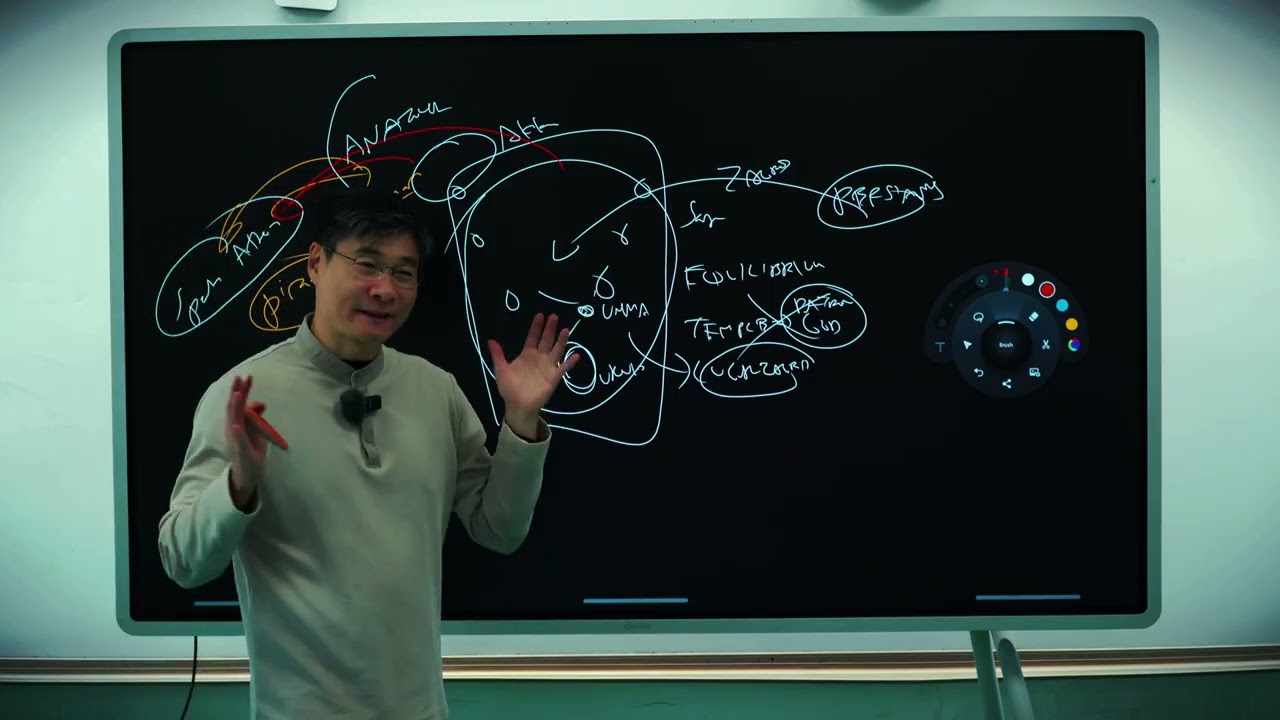
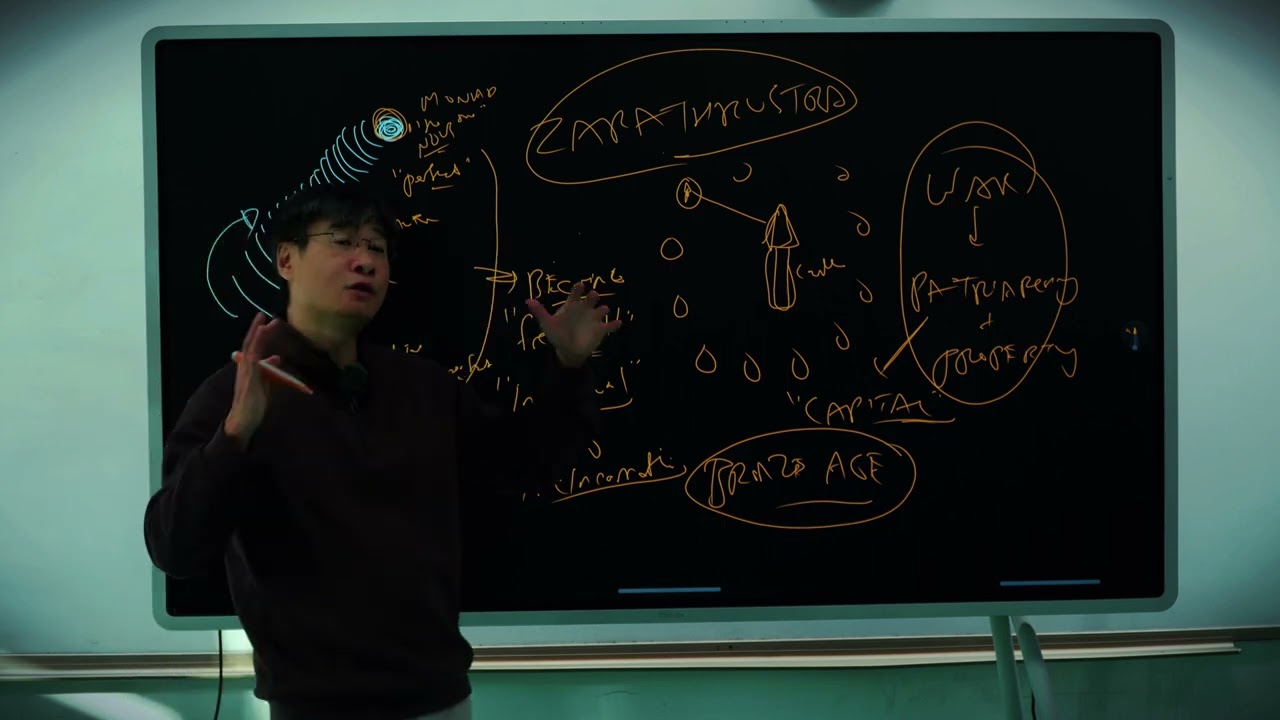
Discussion on Canada's future amid immigration, trade tensions, and political challenges at the Toronto Global Meet-Up #5.
Key Takeaways
- Canada is experiencing significant societal friction due to rapid immigration increases.
- US-Canada trade relations are strained, with potential tariffs threatening Canadian exports.
- Canadian political leadership, especially Mark Carney's role, is questioned and critiqued.
- Cultural changes in Canada reflect broader geopolitical and economic pressures.
- The future of Canada is uncertain and tied to both internal dynamics and external influences.
What the video covers
- The event is hosted by Kathy in Toronto, marking the first Canadian meetup in the series.
- Professor Jung delivers a lecture focusing on Canada's trajectory over the next 10-20 years.
- Key topics include mass immigration post-COVID and its societal impacts in Canada.
- The breakdown of US-Canada trade talks and potential tariffs by the Trump administration are discussed.
- The lecture explores paradoxes such as why Canada has many immigrants, why Canadians seem less 'nice,' and Mark Carney's political influence.
- Professor Jung critiques Canadian political leadership and cultural shifts, including the role of Mark Carney.
- The talk touches on economic challenges like housing affordability and wage pressures linked to immigration.
- There is commentary on Canada's national identity and its relationship with the US and global powers.
- The event includes shout-outs to organizers and contributors, highlighting community involvement.
- The lecture blends geopolitical analysis with social observations and controversial opinions.
Chapters
- 00:00Introduction and Event Hosting
- 07:52Immigration and Social Friction in Canada
- 16:57Political Critique and Mark Carney's Influence
- 26:04US-Canada Trade Relations and Tariff Threats
- 34:57Cultural Shifts and Canadian Identity
- 41:56Economic Challenges and Housing Issues
- 51:11Geopolitical Context and Future Outlook
- 61:00Closing Remarks and Audience Interaction
Full Transcript — Download SRT & Markdown
Speaker A
My name is Kathy. I am the host of this event. Thank you guys all so much for coming. This is, um, I think the first meetup in Canada, which is awesome because we're, you know, I'm from Toronto. Professor J's from Toronto.
Speaker A
It's really nice to be back. And also before we begin, I just want to give a shout out to some people who helped me with this event. This is Tim. Tim uh hosts a podcast which we were actually
Speaker A
It's really nice to be back. And also, before we begin, I just want to give a shout out to some people who helped me with this event. This is Tim. Tim, uh, hosts a podcast which we were actually
Speaker A
And then I also want to give a shout out to my brother who helped just set up the whole event as well. And my friends Gerard and his friends with setting up the whiteboard and uh some of the food
Speaker A
just on talking about biotechnology and, uh, and geopolitics. And Tim helped me find the venue and is recording this.
Speaker A
everyone. Um awesome. Um well without further ado um I'm going to give the stage to Professor Jung and we'll start with the lecture. Thank you so much.
Speaker A
And then I also want to give a shout out to my brother who helped just set up the whole event as well. And my friends Gerard and his friends with setting up the whiteboard and, uh, some of the food
Speaker A
tour. Um, so thanks so much to Kathy for organizing this. It's it's really a lot of work to put these meetups together and Kathy has done this twice already.
Speaker A
and snacks that you guys have had. And another really kind person who I met today, but I forgot his name. And he helped set up the sandwiches. If that's you, feel free to wave. And, um, that's him. Yes. Thank you. So thank you
Speaker A
from Peter Theel. I know he's a billionaire, but at least I'm not any Christ.
Speaker A
everyone. Um, awesome. Um, well, without further ado, um, I'm going to give the stage to Professor Jung and we'll start with the lecture. Thank you so much.
Speaker A
you know, um, the US Canada trade talks have broken down and they are now refusing to negot negotiate with each other. Um and Trump is threatening to impose a lot of tariffs on Canada.
Speaker A
Thank you. Thank you, Kathy. Okay. Good evening, everyone. Uh, it's really exciting to be with you, uh, this evening. As Kathy mentioned, this is my first Canada stop in my end of the world, uh, tour. Um, end of the world global
Speaker A
Um so that's the general uh theme of tonight's lecture. Uh where is Canada heading in the next 10 20 years? Okay.
Speaker A
tour. Um, so thanks so much to Kathy for organizing this. It's, it's really a lot of work to put these meetups together and Kathy has done this twice already.
Speaker A
I've been observing just because I have family back here. Okay. So I have three questions uh that maybe you guys can help me answer or answer together uh tonight. The first question is why are there so many immigrants?
Speaker A
Once in New York and this will be our second time in Toronto. The New York one was fantastic. I'm sure this, uh, Toronto one will be great as well. Um, I will eventually try to steal Kathy
Speaker A
you may know, I was also on a couple of comedy podcasts, Kurt Mezer and uh um Sam Hyde, and they're very offensive.
Speaker A
from Peter Thiel. I know he's a billionaire, but at least I'm not any Christ.
Speaker A
millions of immigrants coming into this country these past 5 to 10 years? It's all very sudden right after COVID and it's being um and it's really um causing a lot of friction within ch within Canadian society. for example, it's
Speaker A
I hope. Okay. All right. Um, so without further ado, we will do a lecture about an hour and I know we're in Canada, so we will talk about the US-Canada trade war and what will happen. Okay. So, as
Speaker A
moratorum on immigration. Instead, Mark Carney visits India. He visited India, I think last year, and he told the Indians, "Please send more. In fact, we'll give you scholarships to come here. So that's just weird. Okay.
Speaker A
you know, um, the US-Canada trade talks have broken down and they are now refusing to negotiate with each other. Um, and Trump is threatening to impose a lot of tariffs on Canada.
Speaker A
were known for their neness, being polite, being nice, being very friendly. Um, but I've been back in Toronto for about a day and a half and I take the subway and I walk around in order to get a sense of the maloo of this place. And
Speaker A
Basically, um, prohibit Canada from exporting alcohol, steel, uh, dairy products to the, to the United States.
Speaker A
70s. the young man gets very upset and violently pushes the young man, the old man down and against the wall. And um I think that in the 80s and 90s that would never happen because it takes a lot for
Speaker A
Um, so that's the general, uh, theme of tonight's lecture. Uh, where is Canada heading in the next 10, 20 years? Okay.
Speaker A
involved. I walked past him. But I'm pretty sure in the 80s and 90s there would have been people who went to help him get up or at least call the police.
Speaker A
So to establish, um, this talk, I'm going to ask three questions or three paradoxes that have been troubling me for the past five years because even though, um, I've not been in Canada, uh, for the past five years,
Speaker A
country that didn't really exist before. For example, um in the 80s and 90s people would make sure to give each other space, right? Uh to respect each other's space. Now it seems as though there are certain individuals that are
Speaker A
I've been observing just because I have family back here. Okay. So I have three questions, uh, that maybe you guys can help me answer or answer together, uh, tonight. The first question is why are there so many immigrants?
Speaker A
So that's the second paradox which is how do you get nice people to become mean? What happened? Okay. Um, and then the third paradox is why is Mark Carney prime minister?
Speaker A
Okay, so, um, just, just as a warning, I'm going to offend a lot of people tonight. Um, I was in the United States. They're very rude down there. So I was probably infected with their rudeness. As some of
Speaker A
about the general election between Mark Carney and Pierre Po pir which basically um confused me.
Speaker A
you may know, I was also on a couple of comedy podcasts, Kurt Mezer and, uh, um, Sam Hyde, and they're very offensive.
Speaker A
Um and it was probably not himself. It was probably Mark Carney, right? And and I think it's pretty obvious that Mark Carney was uh a shadow leader of the Liberal Party. So if you're upset with like Justin Trudeau for the for because
Speaker A
And so if, if I'm being offensive tonight, it's their fault. It's not my fault. Okay? Uh, maybe a couple more weeks and my Canadian niceness will return to me. Okay? But the first question we have is why do we have
Speaker A
lead and PV whatever for reason decides to just implode. Okay, he basically doesn't even try. There's one of attack.
Speaker A
millions of immigrants coming into this country these past five to 10 years? It's all very sudden right after COVID and it's being, um, and it's really, um, causing a lot of friction within, ch, within Canadian society. For example, it's
Speaker A
New York or London working for Goldman Sachs or the Bank of England. Most of your assets are foreign. Your family is overseas. You're a carpet bagger. you're not a true Canadian. A very simple, easy and effective attack. And we know this
Speaker A
almost impossible for a young person to afford a house. Um, at the same time, the, uh, wages have been, be are being driven down and you would think that because all the friction being caused by mass immigration, they would put a
Speaker A
Why? Because his opponent just said this guy's a carbon bagger. Yes, he's Canadian, but he spent his all adult life in the United States. He's come back in order to steal from us. Okay, so this attack is very effective. For every
Speaker A
moratorium on immigration. Instead, Mark Carney visits India. He visited India, I think last year, and he told the Indians, "Please send more. In fact, we'll give you scholarships to come here." So that's just weird. Okay.
Speaker A
Carney? Okay. Why not elect change? Right? Okay. So, um the answer to all three questions is and I know this is going to offend some of you, but Canada is not a real country. Canada is not a nation state.
Speaker A
Immigration is causing a lot of friction in Canadian society and you are encouraging more of it. So, a, so this is a paradox. Why? Why migration? Um, the second, um, thing is I remember growing up in Canada in the 80s and 90s. Canadians
Speaker A
point of my teaching is not to uh make judgments. The point of my teaching is to provide deep analysis so that you can come to your own conclusions. Right? So that's my argument to you today. The the solution uh to these three parts is the
Speaker A
were known for their niceness, being polite, being nice, being very friendly. Um, but I've been back in Toronto for about a day and a half and I take the subway and I walk around in order to get a sense of the maloo of this place. And
Speaker A
Well, historically, we've had three major examples of nation states. Okay? And they're all different examples. Uh the first is France, which basically gave us a concept of a nation state. Second is Germany. The third is United States.
Speaker A
I, and I've been startled by a couple of incidents. For example, I got off a subway with my son, um, and I saw a very angry young man get in an argument with an old man. The man was probably in his
Speaker A
contract, which is we're born free. Our freedom is is our most precious gift from God. We choose to surrender our freedom in order to work in society, in order to create a society. But in return for um our freedom, we must be given
Speaker A
70s. The young man gets very upset and violently pushes the old man down and against the wall. And, um, I think that in the 80s and 90s that would never happen because it takes a lot for
Speaker A
seriously. Okay? Okay. And it's created a lot of conflict in uh in France because uh there are many Muslims who want to wear the um uh hijab and the French is like no we are a secular nation state with a social contract. We
Speaker A
a young person to violently attack an old man who is basically defenseless. Um, the old man took some time to get up and people were just walking past him, including myself. I, I, I didn't know what had happened. Um, I didn't want to get
Speaker A
Specifically the French Revolution, right? And then and the Napoleonic Wars. That's what established France as a nation state, the sacrifice of the people in return for eternal and in inel rights guaranteed by the state. Okay, that's the French model, a social
Speaker A
involved. I walked past him. But I'm pretty sure in the 80s and 90s there would have been people who went to help him get up or at least call the police.
Speaker A
For Germany, it's iron and blood. It is the language. It is the uh heritage, the culture that makes you German. Okay. And this is this is interesting. And this idea proposed by Johan Ficte, who was considered the father of German nationalism. And um at
Speaker A
Okay, so that's one incident that I saw yesterday. Um, yesterday as well I was walking on Bloor and around Korea Town and I saw a huge argument between two people just walking around. Um, I feel a sense of aggressiveness in this
Speaker A
Okay. It was really the Prussians through their conquest that create the modern nation state of Germany and people like Hitler would will reinforce the German ethnic identity. Um and the idea of German nationalism is you are born into this culture, this land, this
Speaker A
country that didn't really exist before. For example, um, in the 80s and 90s people would make sure to give each other space, right? Uh, to respect each other's space. Now it seems as though there are certain individuals that are
Speaker A
Uh and it's Germany. The last example of the nation state is the United States of America. Okay. US and the US have something called the constitution.
Speaker A
trying to provoke others by infringing other people's, um, space. Okay. So there's a certain meanness to this country that didn't really exist before.
Speaker A
Okay, so um for the United States, what matters is ambition. We don't care who you are. We don't care what we come from, but if you come here, you work hard, you're talented, you're ambitious, you will succeed. Okay? And that's the
Speaker A
So that's the second paradox which is how do you get nice people to become mean? What happened? Okay. Um, and then the third paradox is why is Mark Carney prime minister?
Speaker A
example, the French had a revolution. Canada never had a revolution. And you guys may not know this, but Canada is not even owned by the government. It's owned by the crown.
Speaker A
And you're like, well, duh. Well, we voted for him. Okay, but my question is why did you vote for him? Because I, again, I mean, I'm the furthest from a conspiracy theorist, as you know. But I will say that there are certain things
Speaker A
Well, this is interesting. You you go online, you ask Chachi Beti, does the king of England own 89% of Canada? Because if he did, that would be a very strange thing. And Chachi says yes, he does. But it's all just a
Speaker A
about the general election between Mark Carney and Pierre Poilievre which basically, um, confused me.
Speaker A
historical and heritage reasons but in reality the people in Canada are in charge. So don't worry about this guys.
Speaker A
So I mean Justin Trudeau was not a smart guy. Okay. He probably never had an original thought in his, in his life. Someone was giving him these ideas.
Speaker A
uh Europe in a very embarrassing and humiliating defeat. Okay. Um and Winston Churchill gives a radio address before Parliament, before the English people, and he says, and it is the one most famous speeches in the world. I've actually taught this speech, but he
Speaker A
Um, and it was probably not himself. It was probably Mark Carney, right? And, and I think it's pretty obvious that Mark Carney was, uh, a shadow leader of the Liberal Party. So if you're upset with, like, Justin Trudeau for the, for because
Speaker A
remember the ending, but the ending goes like this. We will never surrender. And providence, God is on our side. But for if for whatever reason we lose Britain, it's okay. Why? Because we'll just go to Canada and we'll fight from there. And you guys
Speaker A
he was in power for 10 years, he screwed things up, why would you put his puppet master in charge? Okay. And then the general election between Pierre Poilievre and Mark Carney was kind of strange because the conservatives had a huge
Speaker A
Right? So, in the British imagination, Canada is just a resource colony of uh the British. And legally speaking, it is true. Okay. The democracy here, the separation of powers, the sort of rights and freedom, it's all just an illusion
Speaker A
lead and PV, whatever for reason, decides to just implode. Okay, he basically doesn't even try. There's one line of attack.
Speaker A
British who founded Canada through the Hudson Bay Company and they're still in charge. Okay. So, uh Canada um is not a real nation state. Okay. The Germans say um nationalism is iron and blood. Well, um first of all, Canada has two
Speaker A
There's one line of attack that he could have used which he did not use during the general election, which is, "Hey, Mark Carney, you're a carpetbagger." Okay. Yes, you're a Canadian, but you spent most of your adult life either in
Speaker A
the Bamic. Okay, um the Germans have um Bismar, France has Napoleon. Okay, so there's no mythology to unite the country. there's no um sense of destiny.
Speaker A
New York or London working for Goldman Sachs or the Bank of England. Most of your assets are foreign. Your family is overseas. You're a carpetbagger. You're not a true Canadian. A very simple, easy, and effective attack. And we know this
Speaker A
Okay. So you could also make the argument that not only is Canada not nationalistic.
Speaker A
because previously, uh, there was a man, um, Michael who was a Canadian but he was a Harvard professor. He came back, became leader of the Liberal Party, and he lost twice.
Speaker A
what does that mean? Well, for 50 years, oh, sorry, for 70 years after World War II, this was actually beneficial for Canada because it allowed Canada to navigate the relationship, the very complex relationship between Britain and the United States. Okay. So,
Speaker A
Why? Because his opponent just said this guy's a carpetbagger. Yes, he's Canadian, but he spent his whole adult life in the United States. He's come back in order to steal from us. Okay, so this attack is very effective. For every
Speaker A
Okay. The the nature of Canadian antinationalism allowed Canadians to basically live the easiest, happiest, best life of anyone in the world for the past 70 years. All right.
Speaker A
reason, the current service did not use it. All right, so we
Speaker A
Okay, what is an offshore financial center? It just means money laundering. Okay, that's all it means. Money laundering.
Speaker A
You think that the World Bank of uh Canada, Bank of Montreal, Bank of Bank of Nova Scotia, they make your money taking your deposits. No, they don't need they don't do that. Okay, they don't need your money. What they really
Speaker A
do is they do money laundering. Okay? They allow um um dirty money um that that was won for the drug trade and wars and arm smuggling and all that to be recycled back into Canada. Okay, that's that's a real function. So Britain allow
Speaker A
Canada to be an offshore um financial center as well as a land of immigration.
Speaker A
Okay. and immigrants bring energy, wealth and ideas to Canada. The relationship with the United States was also really good because the United States was a growing manufacturing power and so Canada provided resources to the United States. All right, resources.
Speaker A
So as you can see for the past 70 years, Canada did really well because it there were three main sources for Canadian wealth. They were selling resources to the United States and Canada has an infinite amount of resources
Speaker A
um becoming an offshore financial center for Britain for the state of London basically and allowing immigration into Canada. Okay. The nature of the Canadian economy basically then form the nature the structure of Canadian society. All right. Okay. So let me explain to you
Speaker A
what the Canadian society the structure looks like. Okay. So, as I said, Canada's owned by the crown, but we say crown, okay, we literally mean the king of England, but it's not really the king of England who's in
Speaker A
charge. It's a city of London that's in charge. Why? Because historically, it is the city of London which has led money to the crown and therefore the city of London can can dictate the policies of Britain. Okay? So, when we say the
Speaker A
crown, we actually mean the city of London. Now um the the city of London does not really care about everyday operations in Canada. So instead there are these um CEOs that are responsible for the everyday management of Canada and we
Speaker A
call them the Lorian elite. Okay, the Laurian elite. And they're basically um you know the prime ministers, the ministers. Okay.
Speaker A
And a lot of this is hereditary. Okay. Justin Trudeau is part of the luration elite. The people around him are part of the luration elite. And it is best to think of them as pseudo aristocrats. I would say pseudo aristocrats. Okay.
Speaker A
People who like to read Jane Austin basically man-in-lords. It's very easy to be part of the originally. You don't have to do anything because the economy just functions by itself. Okay? You're at the crossroads of the British um offshore
Speaker A
financial center as well as the US manufacturing power. And so the don't have to do anything. Okay? And so they just live a life of leisure and aristo aristocratic virtue very much like Jane Austin if you read her novels. Okay?
Speaker A
their their life is basically mirrored in the life in the novels of Jane Austin and they aspire to that sort of life a sort of pseudo British aristocracy.
Speaker A
Okay. Um so then around the origin elite are the bureaucracy. Okay. The federal the the the basically the government that actually runs Canada. All right. And then um um around the bureaucracy are basically white Canadians, okay? Canadians who
Speaker A
have been here for like more than two, three generations. And what keeps this system going, okay, because quite honestly, these guys don't really do any work is immigration, continuous immigration.
Speaker A
Okay? And this structure allows Canadian society to function. But once you have the structure that um determines the very composition or nature of the Canadian culture and I would say there are three aspects to Canadian culture.
Speaker A
Okay. Or the three most salient pillars of Canadian culture. Um the first I would say is uh following the rules.
Speaker A
Okay? Because remember, Canada is a corporation. It's a bureaucracy. So, what's really important is just follow the rules. When you go to school, what are you taught? Follow the damn rules.
Speaker A
Okay? All right? That's number one. Number two is be polite. Okay? So, you think that being polite is just means being nice. Actually, what being polite really, really means is um respecting the social hierarchy. Okay?
Speaker A
Okay, understanding your place in the social hierarchy and investing yourself in it. Which leads us to the third character characteristic of Cancer, which is mediocrity. Okay, mediocrity just means a lack of ambition. Again, uh in Canada, the worst insult you can
Speaker A
fraud someone is this guy's ambitious. Okay, that's like saying this guy's a pedophile or something, right? So, these are the three main characteristics of Canadian society. Everyone has to follow the rules. You have to be polite and you
Speaker A
have to uh be conventional. You have to be mediocre. Being ambitious is wrong. And that's and and if you are too ambitious, then you should do everyone a favor, move to United States, which is what I did and what what Kathy did,
Speaker A
right? Um so this is what this is what um has worked in Canada for the past seven years. And this is how this helps us explain why Canadians are so nice because the point in Canada is to maintain a status quo because the status
Speaker A
quo works for everyone. Okay. All right. So then the question then is right. So this is fine, right? So why would the system break down? Why are we seeing massive immigration? Why are Canadians being mean? Why is Mark Carney
Speaker A
being prime minister and starting a trade war with Trump? And the answer um is um and and you guys will know the answer if you've watched my lectures, but the answer is elite over overp production.
Speaker A
Okay, you've got um too um few pitches of power and you've got too many too much elite competing against each other. And to put this in very simple terms, what this means is right now, okay, is the city of London
Speaker A
is not doing well economically and so it needs to put more pressure on Canada in order to create more profit and more revenue. Okay, before the city of London was perfectly happy to get a certain return on investment. But as time
Speaker A
passes, as as the city of London faces pressure, financial pressure, it needs to exert more pressure on Canada to create more revenue. Okay. The problem with Canadians is they are too polite and they are too mediocre. So if you're
Speaker A
a company, okay, you're the investor and you look at a company, you're like, wait a minute here, the middle management, if they're not actually working that hard, what do you do? You replace them. Okay, we call this a corporate restructuring.
Speaker A
That is literally what is happening Canada today. Right before your eyes, there's a restructuring going on where the where the uh old Canadian Guard is being replaced by immigrants.
Speaker A
Okay, that's why they're doing this to generate better return on investment in Canada. Canadians like the environment.
Speaker A
Canadians like care about family. Canadians care about being polite. We don't want that crap, okay? We just want a higher return on investment. go and destroy the environment. Um, abandon your families. Okay? Stop being so nice.
Speaker A
Start making more money for us. Okay? This is why this is happening. Okay? And it's very clever what they're doing because um Canadians can't respond because of the antiationalism that has been um indoctrinated EU uh in the educ in in the educ system.
Speaker A
Okay. specifically this idea that's been very popular which is this land in Canada does not belong to anyone except the native people right on the plane from New York from Boston to Toronto I mean Air Canada and for whatever reason
Speaker A
it kind of puts on an ad saying uh thank you this land is the is the original people we are grateful why are they doing that it's to diminish or reduce resistance to this corporate restructuring. If this land does not belong to Canadians, then
Speaker A
it's probably fine to give it to the immigrants. Right? In fact, you have these court cases in BC where they're trying to uh take private property and return it to the indigenous people.
Speaker A
Okay? Right? All right. So there there's corporate restriction going on and there's really nothing the Canadians do can do about it because the antinationalism in this country. You can make the argument that antinationalism um was part of the of the ch of the
Speaker A
Canadian education system in order to make the restructuring fast and easy. Okay. But then you're like okay if there's restructuring going on who's coming in? Okay. And if you're the British people, if if you're the city of London, you're an investor.
Speaker A
Historically, you recognize that um there are two groups of people that offer you the best return on investment.
Speaker A
All right. Okay. So, what we're seeing in Canada is an invasion. you. It's not really an invasion, but it's a restructuring of an alliance between Zionist capital and Hindu labor.
Speaker A
Okay, this is why the vast majority of immigrants are Indians and that's what and and there are Zionist capital that's supporting this movement. Okay, this is what the corporate corporate restructuring looks like. All right. And then you ask yourself, wait, wait a
Speaker A
minute here. If it's clearly population replacement, why isn't the Lorian elite opposing this or why are they even supporting this? And the answer is because if you are the middle management, okay, you're just trying to keep your job for God's sake, okay? You
Speaker A
just want to keep your job. So if you're like, you know what, if I go with a stupid uh restructuring, then maybe I can continue being a man of lord and an aristocrat and like my children can continue to be so. But no,
Speaker A
no, no, that's not how restructuring works. Okay, the restructuring, you know, restructuring everyone goes, especially the old management. Okay. And eventually eventually maybe not now but eventually the loweration elite or certain factions elite will recognize this in which case
Speaker A
what is their play? What is their strategy? It's to join the United States. Right.
Speaker A
Okay. So this is over the next 10 years 10 20 years the conflict in Canada where it's been whereas the Russian elite become much more um clear about what's happening that there's a restriction going on and the city of London wants to
Speaker A
replace everyone in order to make Canada more profitable for the city of London there'll be certain factions of the Lion League elite who are like we're back we're actually better off being with the Americans. Okay.
Speaker A
So, you think that what's happening is a trade war between Canada and the United States, between Mark Carney and Donald Trump. No. Okay. Mark Carney, his boss is not the Canadian people or or he works for the Sea of London.
Speaker A
All right. And um if you don't believe me, consider what's happening in Argentina where Trump has come out and said that Argentina should reclaim the Faulland Islands. Why is he doing that?
Speaker A
Do you guys have you seen the map? Argentina is in the middle of nowhere, man. It's far away. Who cares about these stupid islands? Trump is doing this in order to enforce the mineral doctrine or the Trump corollary to the
Speaker A
mineral doctrine which is like the entire western hemisphere is United States guys of London get out of here.
Speaker A
All right. So the first major limit test is what happens with the Folkland Islands because Argentina wants to reclaim the Folkland Islands. Trump will help um will help Argentina do so and we will we will try to see Britain's
Speaker A
response. Okay. How will the city of London respond? The second big limits test is Alberta.
Speaker A
Okay. If um all my predictions, all my analysis is correct, what will happen is this. The people in Alberta will vote to succeed from the Confederation.
Speaker A
Okay? And then this will go to the Canadian Supreme Court. And the K Supreme Court will then tell the reality to everyone which is guys you think can is a democracy. You think the people are sovereign? No, that's not true. Okay,
Speaker A
actually everything belongs to the crown. Therefore, Alberta, you can't succeed. Okay, this is Why do you think you have sovereignty? No one like like the crown owns all the land.
Speaker A
You cannot succeed. Okay. And this is going to cause Trump to intervene and says maybe I'll send a peacekeeping force to Alberta in order to uh make sure there's freedom of democracy in Alberta. Okay. So, so um if my analysis
Speaker A
is correct, there will be next two years two major points of friction. The first is the Folkland Islands. The second will be Alberta. Okay. And Alberta will be the major test if my analysis is correct or not. I think I think what will happen
Speaker A
is that one the people of Alberta will uh choose uh to to become independent.
Speaker A
Okay, they won't join the United States because they cannot but they can choose to become independent.
Speaker A
This referendum will pass but then it will go to the Canadian Supreme Court who will rule for I don't know what reason they will say but they will rule this referendum is not constitutional.
Speaker A
It is unconstitutional. Alberta cannot succeed. This will draw Trump into the conflict. Okay. So that's what I think will happen longterm.
Speaker A
Um it is very hard for Canada to maintain its current way of life. Okay.
Speaker A
You either have this massive restructuring where Zionist capital and Hindu labor become the new uh elite.
Speaker A
Okay. where it's basically population replacement. Okay, like to put to put it in very simple stark terms, it is population replacement or you could have um Canada divide up into different provinces. If Alberta goes, the western provinces will go as
Speaker A
well, then Quebec will go, then the Maritimes will go and the only place the only uh place left will be Ontario.
Speaker A
Okay, Ontario will become Canada. So um but the question then is well Ontario by itself is it really a sustainable self-sufficient economy and the answer is no it's not okay so I would say um that is the stark choice Canada is
Speaker A
facing I will also say both will probably happen okay you will have population replacement and you will also have the provinces break up and some like Alberta will choose join United States some will become independent Um and maybe Ontario will be the last
Speaker A
province standing um in Canada. Okay. All right. So um I know this was a lot to take in and but um are there any questions uh about this? Okay. So so so so here here's what we'll do. Okay. Uh maybe Tim
Speaker A
can come and moderate but we'll first discuss this general thesis. Okay. and then after that we will open up to more general questions. Okay. But but first let's focus our discussion on this topic because we're in Canada and this is most
Speaker A
pertinent to your lives in your future. Okay. So uh Tim will moderate Tim Tim will pick the we'll pick the speaker and then we'll have a discussion. Okay.
Speaker A
So you just mentioned that uh there's a possibility of Canada splitting up at the end in the long term, but all the land belongs to the crown.
Speaker A
But then the Canadian people are not like, you know, they're going to they're not going to revolt against the the the crown. So there's no revolution.
Speaker A
How are they able to split up if everything belongs to the crown legally? Okay, so that's a really good question.
Speaker A
And so what we what we need to what we need what we need to appreciate is that Canada is a series of fictions. Okay.
Speaker A
And these fictions can be uh contradictory. Okay. So one fiction is the crown controls all Canada. But it's a fiction because unless you have the military to enforce uh your your claim, then it's just a fiction, right? And that's what Trump is
Speaker A
saying. Trump is saying, "Well, uh, well, technically, yes, the Quran controls 89% of, um, Canada, but we are the United States and the Western Hemisphere is ours because of the Monroe Doctrine. So, like what what's going to happen is if we roll our tanks into
Speaker A
Toronto, is Britain going to send their 5,000 troops over to protect Toronto?" Probably not. Okay. So, the idea that the crown controls 89% of Canada, it's just a fiction. All right. Um the idea that Canada is a democracy, that's also
Speaker A
a fiction. So there are different fictions in in place. And what Trump is doing, but not just Trump, but also Putin. What they're doing is just saying, well, let's test these fictions and and Okay. Does that make sense? All
Speaker A
right. Okay. Anybody have like a related question before we view topics? Yeah. Right here.
Speaker A
So again, guys, we're focusing on this topic right? Yes. Hello. Yes. Can you hear me?
Speaker A
Yes. Uh so what if neither the Laurentians nor the Canadian people prefer to be the underdog of the US or the crown? Uh if they play their cards right, will they be successful in setting up their own ruling, their own
Speaker A
uh system? Yeah. So that's a really good question because it is possible for Canada to triangulate because it's already at the nexus point between the city of London and United States. Okay. The problem in Canada and the reason why Canada is able
Speaker A
to maintain um the stat for so long is listen ignorance and self-denial. Okay. So maybe because you guys are used to me and um you're willing to put up with this. you're willing to hear this out, but I guarantee most Canadians do
Speaker A
not want to hear any of his crap. Okay? They actually they would come in racist.
Speaker A
They would say, "I'm stupid." But most of but most would just tune off. It'd be kind of dissonance. They they would just not do anything and they walk out and they would forget forget everything.
Speaker A
Okay. So, Canada is in a state of self-denial. And the problems in this country, no one talks about I mean, no one ever talks about COVID and what happened with CO. No one ever talks about the fact that Mark Carney was able
Speaker A
to be anointed as prime minister. It it was not a real leadership race from the liberals. No one talks about this stuff.
Speaker A
Okay. So, uh there's no strategy in this country. Okay. These people in charge the racial les. They're just basically like feudal manner lords who are interested in raising sheep. That's about it. Yes.
Speaker A
Um yeah. So, I'm curious uh if if your hypothesis is correct, right? and Alberta is kind of amalgamated into the United States and slowly kind of Canada fractures as a as a in the state that it's currently in. Um, what do you think
Speaker A
will happen to healthcare? Because I know healthcare is like a source of great pride in Canada. If Alberta becomes part of the states, they're all going to lose their healthcare and independent provinces aren't going to be able to kind of provide the resources
Speaker A
necessary. So, can you kind of address that? Yeah, that's a great question. Um so um if you're of a certain age uh don't expect to have a pension, don't expect to um have healthcare and uh just getting by will be enough. So one thing
Speaker A
that I don't think Canadians really appreciate is uh the idea of scarcity. Um, and there are a lot of immigrants coming into this country and they're tough people, meaning they have lived through the worst lives. They've lived through famine, they've lived uh they
Speaker A
live through violence, gang warfare, all that. So, Canadians don't really know what's um coming. But um the Canadian economy is in deep deep trouble because as I mentioned there's three pillars to the Canadian economy. There is um the
Speaker A
offshore financial center the moneyaundering immigration and the um uh resources. Well because of the trade can the economy is gonna be screwed. Okay. So Mark I I don't know why people think Mark is a genius. Look, United States is the buyer. Ken is a
Speaker A
seller. You don't piss off your customer. Okay? You don't do that. So Trump knows he has all the cards and uh you will have a massive recession in Canada very very soon. And uh there's no hope because this is not a trade war.
Speaker A
Okay? This is a this is a fundamental conflict between the United States and the city of London. The United States will win this war. Um and United States will win this war by inflicting as much pain as possible on the economy which
Speaker A
will then provoke people in Alberta to vote for independence and it will cause a lot of pain in Canada. So, so like a lot of people will want United States to invade. Look um um I was on court met
Speaker A
showing the boys. I was joking about this how you know like the United States should stop attacking Iran and start attacking Canada. Okay. And there were opinions in the comment section was like we welcome this. Thank you very much.
Speaker A
Okay. Because they understand that what's really going on is population replacement and maybe Trump can save them from what's going on. Okay. So, um I would say next 5 to 10 years will be pretty bad. All right. Let's go front
Speaker A
over here. Hi. Um so since Canada is as you're saying is a corporation of UK, UK tried this immigration model uh and probably is now trying again with Canada bringing in more immigrants. So if we have to predict future patterns that would
Speaker A
happen in Canada should we look at UK what happened what is hap what has happened in UK in past 10 20 years that might be that is what exactly going to happen in Canada. Secondly now as you said uh immigrants are being brought in
Speaker A
to raise ambition uh they bring in ambition and the three countries that you gave example like France, Germany and US ambition was connected to US. Now since ambition would raise here in Canada would rise here in Canada. Is
Speaker A
there a slightest possibility that Canada might actually be and become the next US and US is declining as per your other theories?
Speaker A
Yeah, thank you. So these are two great questions. Okay. So um let me summarize.
Speaker A
The first question is um will Canada uh the immigration here kind of be like Britain? Now we know the major problem in Britain is the Islamicification of Britain. There are a lot of uh Muslims in Britain that's causing a lot of
Speaker A
social conflict within the uh the country. Okay. Uh that's the first question. Second question is well in theory if you have all these ambitious immigrants come into this country that would kind of become like the United States and therefore maybe a dominant
Speaker A
power and they and so both both really interesting questions. Okay. Okay. So I spend some pawn be analysis. All right.
Speaker A
So Britain and Canada are not the same place. Britain is a nation state. People in Britain have a heritage. They have a language. They have a culture that they're very proud of. And um this is someification of Britain is causing a
Speaker A
lot of social profit because of that. you have lots of people who are setting up and quite honestly I think Britain is very very close to um civil war and in fact um I mean it's almost at the
Speaker A
tipping point what you need to appreciate is the city of London and Britain are not the same vein the city of London is the center of trans capital all city of London is interested in is trying to create as much s much return
Speaker A
on investment for the investors as possible okay Britain is actually a nation state so London is a for her sight on Britain. It's possible the for the civil lender to move anywhere around the world um if they need if they need
Speaker A
to. Okay. So um Canada and Britain are not the same thing. You have the resistance to immigration that you had in Britain. Okay. But now you ask ask the question, okay, but now you bring in Zionist capital and Hindu labor.
Speaker A
And so theoretically, wouldn't that make Canada in the future a superpower? Okay, there's something called a century project where by the end of the century, they're hoping 100 million Canadians and it's all part of like the idea that
Speaker A
Canada can can because of its resources, because of its uh size become a superpower as well. And the answer is no. Okay, so let me explain why. If you're the city of London, Canada for you is almost the ideal place to
Speaker A
corporate restructure because of the people. The people will not resist you. Therefore, you can find the ideal combination in order to restructure the society in order in order to generate the most return on investment for you.
Speaker A
Okay. So, um there is Zitus Capital and Higu Labor. All right. So first let me explain Hindu labor. Basically it's it's easy to understand where um India is one of the fastest growing populations in the world. That's a problem. You have too
Speaker A
many young people in India and you let them sit in the country eventually they will revolt. Okay. And this already happening in uh India. If you've been following the news there's something called a todd revolution in India.
Speaker A
Basically young people protesting against the corruption in the school system. Right. So your only solution long term is to export your people overseas and already seeing that to Canada but you need to export even more to Canada. Okay. Now Zionism
Speaker A
uh controls capital and what's really interesting between about Hindu labor and Zionist capital is it's actually a pretty good combination.
Speaker A
Okay? Because Zionism, look, to put it in very simple terms, Zionism is about racial supremacy. All right? They don't say this, but if you actually look at what they do and you look at their belief system, it's about
Speaker A
supremacy where where the Zionists, the Jews are at the very top, and everyone else is basically a servant. But you enjoy being a servant because they'll treat you well. Okay.
Speaker A
Hinduism, pacism. All right? So you can imagine a relationship where Zionism marries into a Brahman class and then they're able to control Hindu labor, right? Pretty simple pretty simple um relationship. In fact, what's really interesting is that um India is only was
Speaker A
one of only four countries in the world where Israel has a net favor rating. I was in Austin and an Indian American told me he went back to India and he was asking people where they were planning to immigrate and a lot of them say we
Speaker A
we're to immigrate to Israel. Okay. Okay. So this is a this is the combination that the civilian wants in not Canada but also Australia, Ukraine, Argentina, other places as well because for them it's the best return on investment. Okay. Because Indians and
Speaker A
Jews are pretty hardworking and they're really talented. So it makes a lot of sense but you're like okay what's the possibility of them uh making Canada supreme none. Okay why because uh the Hindus and the Zionists are also
Speaker A
practice their own racial supremacy. So Zionism is loyal to Israel and Hindu labor is loyal to India. Okay.
Speaker A
So rather become a resource colony for Britain, what will happen in the future is that Canada becomes a resource colony for India and Israel. But it's the same thing. Okay, Canada is our resources to be extracted.
Speaker A
Okay, but that this is only assuming United States goes along this clan and the United States will not go along this clan.
Speaker A
So uh the United States would rather Canada break up into different provinces and divide and rule Canada. All right.
Speaker A
Yeah. Snoop over here and popped up first just over here. I'll come back to here.
Speaker A
Yeah. Yeah. Professor Jen, I'm enjoy. I asked you a question yesterday on the Zoom.
Speaker A
Okay. Um, fundamentally I kind of see where you're going with the thesis, but I fit fit into your archetype. So, I'm Hindu Brahmin from India and I'll tell you why I think I can push back on this thesis.
Speaker A
Um so first of all I know you say Hindu labor but I think my friend can hear correct me as well. Most of the Indians that come here actually seek from Punjab and almost none of them a very minority
Speaker A
are Brahmans which are the uppercas that come to Canada. Um so I don't know if you're aware of the immigration application system to Canada but there's an application system where you have points. So I studied in the US. So I
Speaker A
went to CMU for my undergrad and I I was at Northeastern for my grad school and I was a senior AI engineer at Amazon. I applied to the immigration system of Canada for 8 years. I was on the wait
Speaker A
list and I had the minimal points because I was not married. Um so I didn't have kids. Um I didn't speak French. Um so I did the English language test and I got like a perfect school cuz I'm from the UK. I grew up there. So
Speaker A
those still didn't give me any points. But and I had a lot of friends from my sort of circles of the similar profile.
Speaker A
None of them got into the Canadian system. But the people that actually got into the system were a lot of people from India that are from the lower costs not Hindus didn't have an education and most of them when they come here they do
Speaker A
odd jobs. They do like they drive trucks they do like grocery stores and everything. So, and I wanted to come here as a senior AI engineer and I was like very ambitious. I ended up getting my green card in the US first. Um, so I
Speaker A
kind of pushed back on the ambition cuz I don't think Canada is looking to attract the the top tier talent which maybe Israel would like. So, I'm not sure what the overall thesis. I do fundamentally agree with the Indian
Speaker A
labor theory but and the the cockroach party and all of the stuff but I don't understand why I would not be allowed into the system whereas people much less qualified like get here with all the perks and also puts pressure on their
Speaker A
housing system and stuff cuz they bring families and the extended relatives and so on. So I don't know your thoughts on this.
Speaker A
Okay. Yeah. Okay. I I really appreciate the push back. Okay. So so so let let me explain what what what how I think right. I am not saying there are people in a boardroom discussing how to do this
Speaker A
nor am I saying that policies are developed in order to promote this I use aim theory okay which is say like given the structure of the world and given people's incentives how are they most likely to be aid in the future okay so
Speaker A
these are predictions I'm not saying that there are people in charge who want this to often I'm not saying uh that they are planning to replace the population I I don't think anyone is like that but I'm to say that given the
Speaker A
current state of the world given the particular structure of Canada what is most likely like likely to happen in the next 10 20 years okay so as you point out there are millions of Indian students in Canada right now that do not
Speaker A
have legal permanent resident status they have no path to citizenship okay and they're here just doing our jobs.
Speaker A
They're here as as students. Okay, but then you ask yourself, okay, how can Canada make them go home? And the answer is you cannot. Okay, if tomorrow Carney says we are going to make every Canadian go home, you can't prove it. That they will apply
Speaker A
for refugee status. They'll pull up the court system and they will continue just be here. All right. So um um um so I'm not saying this is what they want to happen. I'm saying this is what's going to happen over the next 10 20 years
Speaker A
because of of the particular pressure and friction within the Canadian economy. Okay. Does that make sense?
Speaker A
Okay. All right. Uh yeah. So I have a pretty pretty much a scientific mind. and I have done my PhD as a fullbray scholar. I went to Harvard to MIT to specialize in AI and uh I studied system dynamics coming out of
Speaker A
MIT trying to understand where the world is going and what I found out is that uh the Bible is very much informing us about what's coming in the book of revelation. Everything is aligning in that direction and we can read there
Speaker A
that it says nation will rise against nation. Those are the birth pains, the beginning of of the pain. So I I love that you talk about the different layers of the narrative, but I think if we can go a level deeper into the narrative and
Speaker A
what's coming. Um do would you agree that what we need to do is to build cells of resilience? Yes, all these noise things are happening, but shouldn't we put our focus and attention into building cells of resilience that
Speaker A
would have the resources and the support system and the community support to withstand what's coming.
Speaker A
Yeah. No, I can agree. So I think like one of one of the things that have made people weak um is a heavy focus on um individualism right and if we're to survive what's coming then there has to be um a
Speaker A
commitment to other people right so I think as human beings there are two things but we do two things that make us truly human and which has allow us to um live the best possible light. The first thing is to make promises. Making
Speaker A
promises means building community. Okay, I we promise to come together and work together. But the other thing is to uh is also forgiveness to forgive other people's mistakes. And so any community should be based on these two basic
Speaker A
principles and if they do these two two basic principles and the community really becomes resilient is able to survive heavy calamity that that goes off. Okay. All right. Thank you. All right. Okay guys, let's stick to Canada and then we'll roll it up later. Okay.
Speaker A
Okay. Um, professor, um, just a quick question because the analysis that you made seems like whatever the effects or consequences going to happen in Canada, it's all based on the friction between the United States and the Britain. Uh do you think
Speaker A
that it is all because we have Trump here in United States and if the Trump would not be there because I know one of the predictions yet you have that could come for the third term but the the the
Speaker A
the past trends that we saw that you know having Mandani in one of the area and in the Minnesota there is a Apac versus nonApac people are coming up and rising up. So do you still think that the Trump
Speaker A
would um come and go for the third term and if Trump would not be there will will that consequence of what you said about the Canada will remain the same or not?
Speaker A
Great question. Okay. All right. So um United States uh for the longest time was an empire that governed by consent. Okay. The United States was very popular around the world and um people believe the United States should be the hedgeim.
Speaker A
But over time because of severe mismanagement, you have a $40 trillion debt. You have these wars overseas. You have inequality corruption in Washington DC. Uh America's global setting has gone way down. Okay. But just because you're not popular anymore doesn't mean you
Speaker A
surround the empire. It just means you're now forced to have an empire by force. Okay. Now, before you empire um by consent, now you are an empire by force. Okay. The problem is a transition because most people don't want to be Okay?
Speaker A
Joe Biden, Cam Harris, yeah, they're politicians and they're very ambitious, but they don't be perceived as They care about the legacy. Okay?
Speaker A
There's only one person in the US political system that's a will be an and is proud to be an and that's Donald Trump. Okay, so this I think helps us understand why he's in power because remember in 2020 the
Speaker A
entire elite, the entire American elite coalesed against Trump. $6 billion was spent on defeating this guy in 2020 and bringing Joe Biden to power. What happens then? What happens afterwards?
Speaker A
Putin comes comes and invades Ukraine and embarrasses the American Empire and Biden was too weak to resist Putin.
Speaker A
Okay. So in 2024 the empire is basically we need somebody to be the scapegoat.
Speaker A
Okay. The scape just means like we know the empire is collapsing. So like let's get someone to be the scapegoat so everyone blames this guy. We also want to maintain our empire. That seems means being an to Canada, to Europe,
Speaker A
to Japan. And so we need someone who's willing to do all this. And that person is Donald Trump, right? And not only that, but this transition might kick some high. And so in campus in the second term, we can't trust Democrats
Speaker A
come in and follow through on a lot of his um uh policies. So we might have to take him a third term. Also, what's moving to us about Schwah is he's unique in American politics and but that is
Speaker A
able to capture the entire tension conscious consciousness of the global public. It's really strange. Go back to 2003.
Speaker A
Um, United States invades uh Iraq and there are huge protests around the world saying there's a war for oil. Okay. No one's like George W.
Speaker A
Bush is a They're all like no it's all for oil. Fast forward to to today Donald Trump invades Iran. No one's like this wars for oil. Everyone's like this guy's a That's really strange. Okay. But if you're part of the
Speaker A
elite empire, this is really useful. Okay. where who else can you get to uh do all this evil crap? And they get all the blame for it.
Speaker A
Okay. So, I think Donald Trump will get a third term because for the empire, he is indispensable.
Speaker A
Okay. All right. Somebody here. Um so while Downing Street is fighting the White House uh presumably with the awesome It's not Downing Street. It's the city of London.
Speaker A
The city of London. Yeah, it's not the same thing. Okay, my apologies. While um the Commonwealth like um the city of London is fighting the White House with their lessons in India and their cast system, what is France doing cuz they have
Speaker A
Quebec here and so they presumably have a bit of a say in the Northwest Passage.
Speaker A
Um is the Allesium coming to save us? Are we going to have a revolution here from the yellow jacket French?
Speaker A
Um, the French don't see Quebec as part of France. But could they once start going?
Speaker A
No. No. If you said a French person should go back, I'm pretty sure you'd be like, "We don't want this problem." Okay.
Speaker A
No. No. No. Quebec. No. No. France does not want anything of Quebec. Sorry. Uh, next. Sorry.
Speaker A
All right. Um, just in theory. um even if in practice it's futile which is the implication that I'm getting from you.
Speaker A
Um but just in theory how would Canada become more of a nation state? Oh um in theory how can be can become a nation state? Um well Canada needs to stand out and fight. Okay. So in theory, this trade war could be an opportunity
Speaker A
uh for Canada become a nation state where the Americans are putting a lot of pressure on Canada and Mark Coning rallies the people to say we will we will as a people fear this pain, fear the suffering and we will become
Speaker A
independent. Okay, if you were to do that then that would help Canada become more of an issue state. But Mark Cron does not care about Canada does not work for Tenny. He works for see London.
Speaker A
Okay. So for him as a banker, it's like how do I make the best deal for my investors?
Speaker A
Okay. So in other words, Mark Carney at a very critical point will eventually sell Canada.
Speaker A
Yeah. Professor Jang, thank you for what you do. Right. So just an observation now. Do you considering how you've set up the power structure in Canada, do you think that explains their reaction of the elite towards the trucker convoy
Speaker A
back in 2022? Uh yeah. No, that that's a really that's a really good point. Um the um yeah, so Justin Trudeau was his scapegoat, right? Uh it was Mark Carney that was actually running things and uh what Canada did to the Trumpers I think
Speaker A
was really unfair. Um not not only to the truckers but I think you you uh gave a dollar to the to the truckers you got debanked. Um so yeah so so I think you're right that the trucker uh the co
Speaker A
response it is uh you could in theory uh predict it from from a structure of main side.
Speaker A
Yeah I and yeah I think I think in the Glob and Mail or someone in the papers um Carney made a comment about why they should be debunked and I can't believe that people forgot that he actually expressed an opinion of why they should
Speaker A
be debunked. Yeah. So, it's really interesting how Canadians vote and how they think. Okay?
Speaker A
Because um most gay voters, and when when I mean most voters, I'm actually talking about the baby boomers and um the uh white um class of of of v voters, they understand the system subconsciously. And so their mentality, their gate their response is
Speaker A
if I play along with this system, then I can maintain my privileges, okay? Because they think that if they're white, they can have these these privileges and they don't appreciate that it's population replacement. Okay?
Speaker A
So, um the way that Canadians vote is not indicative of democracy. Okay? Right? If it's a true democracy, then the voters would not be afraid to overturn the government. And Can voters are very unique. I mean, I don't
Speaker A
understand why people voted for Mark Carney. And the idea that, oh, Mark Carney will set up against Trump, that's Okay. So, so, so I think that the voters are conscious of the system.
Speaker A
They play a law in order to maintain the privileges. Okay. All right. Uh, yeah.
Speaker A
Hello. Welcome, Professor Xiang. Thank you, Kathy, for putting all this together. Um, uh, I'm one of the Hindu laborers that's taking over this country. I'm sorry, guys. Okay. So um everything that you've described here um the kind of the
Speaker A
structure of how Canada um is controlled by the crown um just on a ground level as people um with all the natural resources that we have in this country, the fresh water, the um fertilizers, all that kind of stuff, isn't it an
Speaker A
advantage for us to be in Canada? And also um you've seen uh Trump what he's saying with Lake America. Maybe he's interested in in the freshwater of Canada. he's trying to kind of um set that all up. I'm just wondering uh could
Speaker A
you speak more about the fertilizer situation and um how that's going to play and also maybe if you can go into um Mark Carney how he kind of got uh conservatives to cross the line. Right.
Speaker A
So I I hope you can uh get into all that. Thank you again. Right. Okay. So that's a great point in that Canada is objectively speaking the richest country in the world. Okay. And Canada has like almost unlimited
Speaker A
freshwater resources, energy, land, and uh very low population. So in theory, Canada is the richest country in the world. And you would think that Canada has a very bright future. But uh historically, wealth and resources does not necessarily lead to the best
Speaker A
outcome for a nation. Okay? It is often referred to as a resource trap. Um in that you you have too much wealth. It leads to corruption. It leads to inequality. It leads to complacency in society. Okay. So uh we we see this all
Speaker A
the time in Africa place like Nigeria which is extremely wealthy with resources but it's always been corrupt.
Speaker A
Um Canada um is not as corrupt. Um Canada is one of the least corpor countries in the world but people here are complacent.
Speaker A
People here are not going to work uh very hard. Uh, one thing that we need to factor in is the mood and the energy of the people where um, in theory if Canadians got together, work really hard with its resources, Canada have a great
Speaker A
future, but often in times often decline, uh, you have exhaustion. You have people who are just lazy and want to do as little work as possible in order to get by. Okay? Okay. And that's why this population replacement is
Speaker A
happening, right? Because ifian people are like, you know what? Um, things are not as good as they used to be. So, let's work harder because we're the war in the world and if we send together, we'll, you know, be better off, right?
Speaker A
Instead, the attitude seems to be like, ah, whatever. Okay. Uh, in which case, this is forcing the restructuring of Canada. This is forcing uh the population replacement because again the city of London wants return on investment. Okay. All right.
Speaker A
Hi, thank you for sharing your ideas. Um what would you recommend for someone who's thinking about having a family here?
Speaker A
Um this is creepy. Okay. So, I have three young kids and um a couple years ago, I was thinking of actually returning to Canada and living here and um given what I've seen these past two years. I came uh to Canada with with my
Speaker A
two kids last summer and um I I will say that on the surface it looks Toronto looks like a great place to raise a family. It's quiet. Um, it's prosperous.
Speaker A
It's peaceful. It's saved. But I'm not I'm not optimistic about Toronto, Canada's long-term prospects. And I think that Canada is um on decline. So, one question that you need to ask yourself is um can I buy a house? And
Speaker A
the answer in Canada can is often no, I can't buy a house. uh or I or I will suffer if I buy a house. Um so my honest advice is to look for a place where you can afford a house because often a place
Speaker A
where where you can afford a house is often a place in which they're familyfriendly. They're growing. They welcome families because they want to grow the population and they want to grow the economy. A place like that is uh Austin, Texas. So, I'm not sure if
Speaker A
you ever been to Texas, Dallas, Houston, Austin, but uh you can still buy a very large house, a fourbedroom for maybe half a million uh at a 30-year fixed year fixed rate mortgage. That's really good. Okay. I I think like they have
Speaker A
that in order to entice young people to go. So, ask yourself, you know, not where you rather be, but ask yourself where I will be welcome.
Speaker A
And that's actually more important. Uh where they value my contribution um where I can be part of a growing community and and Toronto is definitely not welcoming.
Speaker A
I came 33 years ago to Canada and I can say that we as a Canadians because I consider myself Canadian basically lost the passion for Canada. On the other hand, Americans because I worked over there for many years have a passion for
Speaker A
United States. Now, United States divided as it is in my opinion can survive either to having the dictatorship that looks like EU4 or it will have a civil war. Can you comment a little bit uh about it because
Speaker A
that's the only way through the history that empire or better say remnants of empire will survive. Um yeah so it's interesting because United States it it is imperial decline and when empire decline it causes all sort of havoc to
Speaker A
itself as as well as to the world. So an empire decline tends to be overaggressive and it overextends itself and engages in wars or conquest throughout the world. Uh that's why he wants Canada. That's why they want Cuba.
Speaker A
That's that's why he invaded Venezuela. But also the empire decline tends to rupture eternal internally. That's why it's very likely in the next 10 years there will be a civil war of some sorts in uh in the United States. And uh the
Speaker A
civil war will be a long-term thing where the states are in defiance for the federal government. Okay? So maybe Trump has a third term. In response, New York, California, Massachusetts, these very liberal Democratic states, they are openly defying Trump. And what and and
Speaker A
this could lead to conflicts between federal law enforcement, ICE basically, and local law enforcement. uh and and I think this will be a very long-term thing. So it's a very strange thing where uh within the United States there's civil conflict and this the
Speaker A
civil conflict is externalized w by um going and conflicting other places. So the civil war in the United States um the Americans are much more likely to come in Canada okay in order to resolve their eternal disputes. Okay.
Speaker A
If that turmoil in Canada doesn't have a chance in your opinion, Canada doesn't have a military.
Speaker A
I mean, like, how do you resist the US military? Canada doesn't have a military, guys. I'm sorry. I mean, like, yeah. All right.
Speaker A
Uh, yeah. Uh, I wanted to understand more about the Zionist capital side. So I understand uh like the Hindu labor, but does the Zionist capital look like buying up of Tim Hortons and all of those corporations and what exactly
Speaker A
makes it Zionist? Is it because it's going back to funding like the war in Israel and the greater Israel project?
Speaker A
Yeah, I mean um Zionist um capital often just means Jewish capital. Okay. So there are Jewish diaspora around the world and um a lot of them have access to a lot of wealth and they were able to because of the
Speaker A
religion because of the community they're able to coordinate the application of this wealth they're able to uh invest together. All right. So, uh Jewish um uh there are Jewish bankers who have had access to gold for a long long time,
Speaker A
right? The Rothsch and over time um your investment just grow and grow and Zionism just means that you care about Israel and your investment, how you choose to apply your capital, um you are doing in a way that benefits Israel.
Speaker A
Okay. Does does that make sense? Okay. Thank you. Yeah. Professor Jang, you play a lot of poker as we know. So, uh, how would you approach Carney going to China? Um, we know that he's already, you know, had
Speaker A
this canola deal for electric vehicles. Uh, was that any kind of a red line maybe for our relationship with the US?
Speaker A
Um, given that we are this resource colony for a waning empire in the city of London, are there other, you know, larger, namely China, would they be interested in our resources? Thank you.
Speaker A
Yeah, that's a great question. Okay, so again, Mark Carney does not work against people. He works for the city of London and the city of London sees Canada as a resource colony. So what do you do if um
Speaker A
you're not doing well? Well, you strip your assets, right? You sell your assets off to the highest bidder. And that's why Carney visited China and wants to sign all these deals with Chinese.
Speaker A
That's why Mark Carney um um visited the Middle East as well. Okay. Qatar, Saudi Arabia. Okay. So, they're trying to sell their assets to the rest of the world, right? Because um because they're trying to generate as much return on investment as possible
Speaker A
for their investors. Um is that going to work? Because what people don't appreciate is that global trade, global finance, it's predicated on the United States being able to guaranteed world peace, right? And so you're you're China and you're like, you
Speaker A
know, like if I put in a trillion dollars in the Canian real estate, um how can I make sure this is safe for me?
Speaker A
Okay, because again, remember before it was United States which guaranteed that uh people could trade peacefully.
Speaker A
But now the United States is going into decline. The United States is very aggressive especially towards China. If the Chinese is certain that they put this investment into Canada, uh they will be able to maintain it. Okay. So
Speaker A
basically another saying this and it's hard for us to appreciate is all the traditional paradigms that we grew up with are collapsing right before us.
Speaker A
Okay? All these fictions that we we believed in are collapsing before us. You put five if you have $5 million in the bank. Okay. Uh you think that oh this money is mine and I can at any point take it out. Don't go try it. You
Speaker A
can't do it. Okay. You go to the bank you're like I want I want I $500 committed in my bank. I want to take it out. They're like sorry we can't do that. You're like how much can I take
Speaker A
out? Maybe$10,000. Try it. Okay. Try going to the bank and and try to get get all your money. It's a fiction. Okay, that money you think is yours. It's not yours. It's just a number they made up. Okay. So, all these
Speaker A
fictions that we believed in are collapsing uh right right before our eyes. Okay. Yes.
Speaker A
Hi. Uh just a quick question. Um can you just explain in simple terms how does the increase in productivity um generate an return an increase in return on investment for transnational capital and then the second question is um let's say
Speaker A
your population replacement theory is correct and let's say in a couple of generations Canada gets hauled out and middle management is replaced how does that change the status quo of the the picture that you laid out for us thank
Speaker A
you sorry sir can you repeat the same It's like um you're saying basically the problem is that Canadians are too complacent right?
Speaker A
If let's say you this population replacement theory happens and we get replaced with hardworking, productive, potentially ambitious people, how does it change the complacency of Canada within the whole like Israel kind of hierarchy?
Speaker A
Okay. All right. Okay. All right. Okay. So, so I want to answer your question like very simple trunks. Okay.
Speaker A
All right. So, imagine this. Say London is a landlord. Save London landlord. Okay, I have land.
Speaker A
So land what I want is people come and like grow crops on it, right? And then I take a share of the of these crops. It's only they use the land is my land valuable just sitting there. It's
Speaker A
worthless. Okay. So um the peasants come and they grow food on the land. Okay.
Speaker A
And the more food they grow, the greater cut I take, right? Because I get 10% of everything. So I want them to grow as much food as possible. Problem though is okay, over time, these peasants are really hardworking
Speaker A
and they set up a lot of grain. Okay, they have a grain a grainery.
Speaker A
Uh, and then the children are like, "Well, I could go work for the landlord and grow crops, but my parents have a greenery, so why don't I just like, you know, not work." Okay? And that's still Canada today. So, if you're a lander,
Speaker A
you're like, "Screw this man. This isn't sucks." So, what do I do? Well, what I do is I burn down the grainery, okay? and I bring in new peasants who have no grain and so they're forced to work really hard,
Speaker A
right? That's what's happening in Canada today, right? So, not only will you have population replacement, corporate structuring, but you should also you will also see the next about 10 years a financial collapse.
Speaker A
All right? Because you have to burn down the greenery in order to make the country much more productive.
Speaker A
Okay. So, um your parents uh these baby boomers who think they had like a million dollars in the stock market, $2 million in uh housing, and so they're good. No, no, no. Wait five years. Okay.
Speaker A
I guarantee you there's going to be a great financial collapse in order to reset the economy. Okay. The great reset. All right. Okay.
Speaker A
Yes. Uh hello, professor. um with uh sticking to Canada and all the new bills that are being introduced like Bill C8 2232 and all the freedoms that we're currently that we currently have to say what we want to say online and you know in
Speaker A
public discourse um and you're seeing the expansion of that Orton window um in the in the recent past. How is that going to change with these bills being introduced? what can we do about it and how can we safeguard ourselves? That's
Speaker A
Yeah. Okay. So, um that's a great question. Um as you probably understand or appreciate, a lot of these bills are being passed in order to disguise the transition, right? So, they are trying to restructure the economy, replace the population, and so they're
Speaker A
trying to step up critism in order to make this process as smooth as possible.
Speaker A
Okay? And that's why they are passing uh these laws. So what can you as a person do? You can't protest. They'll come and arrest you. Um and maybe you don't want to flee the country because you love this country. Um, and so my
Speaker A
best advice is to um, and I keep on saying this, but it's very important to start focusing on spirituality, on community, and on family. Okay? And so if you just shift your focus from one of material acquisition to one of
Speaker A
enjoying your time, the time of your family, then you'll be much more resilient. Okay. All right.
Speaker A
Okay. Oh. Uh, will AI and robotics have an impact of your idea with the draft?
Speaker A
Uh, sorry. AI and robotics, uh, will that will that have an impact on your idea like within with warfare? Will that have an impact with your idea of the draft or um, okay, so the draft? Yes. um to
Speaker A
facilitate this process. What what Carter is going to do is introduce a draft and force Canadians to go fight this stupid war in Ukraine. Um robotics and AI are overhyped. The reason why is both are very dependent on the global
Speaker A
supply chain network. Okay. So if you are uh if you work in AI, if you in work in robotics, you know that you are dependent on critical um minerals and elements that you import from all around the world. Okay? In a time of war, these
Speaker A
global supply chains break down and so you're not able to advance AI and robotics. Okay? And really, look, look, I I I know there's a lot of hype around AI and robotics, but um the people in charge don't think in
Speaker A
terms in those terms. They just think about how to control the population and how to better exploit the population.
Speaker A
Okay. All right. Uh who's next? Over here, stand up. All right. Well, please mention that you believe that Canadians who have their investments lying in Canada might not be too good uh in the near future. And I'm wondering if you think that people who
Speaker A
have uh land in Caner or people that are land owners with significant uh pieces of land here um should feel secure or if they should be looking at other options for places to be or if like their land
Speaker A
may not be so secure in the coming future with all the things you were discussing today about how Canada might turn out.
Speaker A
Yeah. Uh that's a really good question. So let's just imagine a scenario in which United States comes and invades and would they respect property rights and I I think they would respect property rights because if there if they
Speaker A
come and invade they would want um to basically get the population on their side. The best way to do that is by respecting property rights. Okay. Uh remember their enemy is not the people their enemy is to say lend it. Okay. Um
Speaker A
again 89% of Canada is crown land. So the other 11% do do the Americans really care? Not really. Okay. Right. Uh yep.
Speaker A
Hi Professor Jang. My question is um why does the US empire need uh why is it necessary for them to to take over uh the Canada which is uh owned by the city of London? Isn't the city of London and
Speaker A
American empire powered by the same transnational capital? Yeah. Okay. It's elite o over over production. Okay. Elite over production.
Speaker A
Meaning you have too many young ambitious people who want power. Okay. So like if you just let them in the country, they'll just cause revolution.
Speaker A
So the way you resolve this issue is like guys go to Alberta or go to go to like you know British Columbia and take take over that place. Go to Venezuela guys. Okay. So, so empire extension is about trying to um relieve the domestic
Speaker A
pressure. Okay. So, is is Trump in a different national capital? I mean um is a US empire um different from the city of London in because you know US is trying to take over Canada.
Speaker A
Yeah. Yeah. They're different groups. Okay. Let's say London right now controls Canada 89%. The United States is like, "Well, are we just steal it?
Speaker A
So, let's go steal it." Okay. So, I mean, they're all thieves, but they're different groups of thieves for carrying.
Speaker A
Uh yeah. Oh, yeah. Got it. Um, so just go a quick question on um the state or the future of Canada. You So, you basically said that essentially Canada will be sort of balkcanized, right? So Alberta, yeah, might be on its own. Ontario also and
Speaker A
maybe Quebec might be independent. But there's some other theories that are floating around there, which is one, I think Kevin Oly talked about the potential for Canada to join the United States, but under an economic union, very much like the European Union. Um,
Speaker A
there's also obviously the theory that Trump keeps talking about, which is becoming the 51st state. Um, but there was also a question that was posed to Carney about potentially joining the European Union.
Speaker A
um as a way of sort of combating what's going on with the United States. And then Carne obviously had that famous speech regarding middle powers which then also kind of leads the theory that there might be some sort of you know tie
Speaker A
up there in the future with the Europeans to combat what's happening with the United States. So just curious to see if you think those alternate realities are possible versus the vulcanization.
Speaker A
Yeah. Okay. So there are two possibilities, right? The first is that Canada becomes a 50 first 51 first day.
Speaker A
Second possibility is that Canada joins the EU basically in the lines of middle powers that Mark Cron talked about in his uh world economics form speech. Um okay so my question is why does United States want Canada? Right? Because you
Speaker A
take all Canada you're stuck with a health care system. You're stuck you're stuck with a pension. You're still stuck with a lot of government burdens. Okay.
Speaker A
So you start with the bureaucracy. Go the United States. I'm like, why do I want to absorb this crap? I I want Alberta because Alberta has the energy, right? It has the car sand. That makes sense. But why do I want Ontario? Why do
Speaker A
I want Saskatchewan? What good do these places do me, right? I'm better off just taking Alberta and then letting the rest of the country burn down because once you lose Alberta, you lose the main source of of revenue
Speaker A
for the country. You lose government subsidies. The healthare system goes bankrupt. The pension system goes bankrum. You have rise on the street and then the Canadian begging you to come and save them. But then I can choose where to go. Right? So that makes
Speaker A
absolutely no sense for me to take over all Canada. I'm better off just bugizing Canada and taking part I want. Right?
Speaker A
Now then you're like, "Okay, well then what if Canada joins the EU?" Do you know how incredibly incompetent the EU is? Like have you seen this war in Ukraine? It's a disaster. It's a trust guy. I mean like the European
Speaker A
leaders are even more idiotic than Mark Carney. Like uh like the British leaders mron, you have um Merel. They're just the most unprofit people that ever existed. What good would would it do Canada to join the EU? Also, like um you
Speaker A
know how far Europe is from Canada? Okay, we can drive the United States. Europe is at least 7 hours away by by by flight. Okay, the Atlantic Ocean is pretty big. Makes no sense for Canada to join the EU. And again, look, Canada's a
Speaker A
resource economy. It sells resources. The United States is a manufacturing power. It wants resources.
Speaker A
Europe is a dying museum. It doesn't need the resources. Okay. So, I mean, it's completely unrealistic. Um, yeah.
Speaker A
Go ahead. I just moved from Chicago to Toronto, so I experienced a bunch of privatization of military and the police, and Chicago was in conflict with ICE, so people were terrorized. I completely understand that. My question is the
Speaker A
military-industrial complex is trying to expand the empire and take make the technate and they're trying to drive out transnational capital. Their biggest agent is Donald Trump who is getting old has had assassination attempts and is losing you know confident people are
Speaker A
losing confidence in him but doesn't matter he'll take back power with force. What happens if the military-industrial complex loses this agent? What happens to their would someone else come and continue driving the defense strategy that they've outlined that they've
Speaker A
outlined to go all the way to the technate? Yeah. So, look, if you look at the swamp administration, they pretty much go align on the vision. Okay? You got people like Kitty Vance, Marco Rubio, Peter Hex, uh they're all aligned with this vision
Speaker A
of the greater North America. It it's a pretty broad consensus of people. So it doesn't matter if Trump is still in power. Next guy will follow through.
Speaker A
Okay? But it'll probably be a much slower process and it'll probably much more chaotic process, right? What's making this process so smooth is the fact that everyone's attention is focused on Trump. But if you remove Trump, then people will be much more able to analyze
Speaker A
the structural forces at work. Okay. Hi, Professor Jen. Um, I have you quoted saying two different things. I have you saying Canada is better off working with the US and then also that the US is a declining country. So how do we square
Speaker A
that? Thank you. Um yeah, that's a really good question. So when I say United States is declining, you have to appreciate that the decline just means that you go from a global hegeimon to a regional hedgeimon, right? it I mean like it's
Speaker A
pretty incredible United States was able to control the entire world for the past 30 40 years and now it needs to retreat from the world and focus on the western hemisphere but I mean like within the western hemisphere there's no power that
Speaker A
challenges the United States okay all right yeah um I wanted to ask uh when you said about capital uh bringing Hindu labor into Canada and the US not letting that happen. Uh I don't understand uh why they wouldn't
Speaker A
let that happen, especially when Trump has acted not in the interest of the US with Iran and other stuff and why breaking down Canada would conflict with bringing Hindu labor. I just don't see how those ideas conflict. I I don't I
Speaker A
said the United States was against the restructuring. The United States is not against restructuring. It's it's a question like who owns the land like who controls Hannah, right? So the restructure is happen regardless if the United States is in power or does
Speaker A
London in power. Okay? Because because they both are looking for the best return on investment. So I never really said the United States is against restructure.
Speaker A
Okay. They're for this. Okay. All right. Can you double down on the uh City of London bit? Like there's it's not an e is it an economic like where is the flow of funds or the economical tie that sits
Speaker A
there for like that return on investment because it's not like like it's not like we pay there's like a very nominal amount like yearly that's actually paid out to the UK or the Commonwealth so to speak. like where is that actual
Speaker A
economic bit that sits like how how does the city of London actually benefit year to year or decade to decade?
Speaker A
Okay. All right. So, um that's a really good question. Okay. And we need to appreciate the city of London. It's like Wall Street, right?
Speaker A
It's an umbrella term. Okay. Within the city of London, there are these corporations, these banks, companies.
Speaker A
Okay? They have assets in Canada. Okay? So, they control mines, they control forestry, they control water rights. Okay? And so, as a corporation, you make money when the nation is productive. When we mean productive, we just mean they're
Speaker A
energetic. They work really hard. Okay? And uh these companies are global. They're everywhere. Okay? They're in Australia. They're in some America, the United States. Uh companies like Rio Tinto, right? Rio Tinto, uh a major mining conglomerate.
Speaker A
What I'm saying is the entire Western world is declined. Okay? Why? because um the people are not as hardworking as they used to be. They're very complacent.
Speaker A
And so for you, if the company's not doing well, what do you do? Well, you restructure the management in order to make the workers work harder.
Speaker A
Okay. So, another way of saying this is, okay, in Canada, uh, the average Canadian is like, you know what, I'm good with making enough to get by. I'm more focused on my family. I want to enjoy my weekends and my cottage. I want
Speaker A
my two vacations a year. Okay, that's a Canadian attitude. Whereas maybe if you are Indian, okay, and you are poor, you come here and you're like, you know what, I need to bust my ass in order to stay in this country.
Speaker A
So, uh, the Canadian has more money, but the Indian will do more will be more energetic. He'll do more labor and as a capitalist, I extract value from the energy and not the capital. Okay. All right.
Speaker A
Yes. Hi, Professor Jang. Uh, two two questions, a macro and a micro. The macro one, if you're Laurentian elite, like you know, applying game theory, you see yourself being replaced, doesn't it make strategic sense that you cut yourself a deal with the US and sell
Speaker A
your country to the US? Like, I mean, I'm sure they know that the US can take over Canada and like, you know, you'll be out of a job anyway. So why don't you sell Canada to the US be be and manage
Speaker A
to like you know hold on to power still like you know agree to manage Canada.
Speaker A
Uh so um I I hate to emphasize this point, okay? But when I do my analysis, the people in charge think I'm a cleat war, okay? Because you're like, this is not re what we actually do, man. And so what
Speaker A
I'm going to say is these sort of structural forces are invisible to people. All right? And what one one reason why my predictions have been so accurate is I look at these social forces as the main determinant of
Speaker A
history. Okay. So the people in charge don't really think in in these terms. They don't really think that there's a population replacement going on. There's a restructuring going on. They're just trying to do the best job they can uh
Speaker A
and return uh in and have the biggest RAI return on investment where they can.
Speaker A
What I'm saying is that over time they will behave like this. Okay. So number one is a lot of these things are thisful to people. Number two is um it is easier to practice self-denial than just seeing things clearly. Okay?
Speaker A
Because obviously if you are in charge of the liberation elites, you see things so clearly that can only lead to dismay and these people don't want to feel bad about themselves. Okay? So these things happen and no one can stop them because
Speaker A
the people in charge practice self-denia. Okay? They are delusional. They live in their own bubble which reinforces their own prejudices. All right. Yes.
Speaker A
Oh. Uh so the top level question is what do you think are the odds that Carney will not kind of sell out to city of London or kind of people who are associated with him on that side but
Speaker A
more so he does perform more for the Canadian people in light of these upcoming economic challenges being potentially addressable in the similar way that in history in the 19 kind of 20s and 30s Um, we saw FDR do kind of like a new
Speaker A
deal with infrastructure programs similar to how we got what 10 billion into the railway system into Canada. Uh, another like 10 billion electrification program into the east. Um, another another like 10 billion for the icebreaker fleet. And of course, we've
Speaker A
heard about the submarine fleet. these domestic programs where billions are being poured in to those and their corresponding supply chains as an FDR like New Deal response that could help that that you know that this does seem to be kind of in lines with trying to
Speaker A
help stimulate and protect the economy from that and of course the the trade deals internationally as well.
Speaker A
Okay. Um, that's a really interesting question. And what you what you do recognize is that Mark Cardi is not FDR.
Speaker A
Um, FDR was an American aristocrat. Uh, very much like John Kennedy. They were both very strong willed, very independent. Um, Mark Carney is first and foremost a creature of finance. He first started his career at Goldman Sachs. Then he went to the bank of Bank
Speaker A
of um Canada and then he went to Bank of England and um um given his resume, there's no way he he he is independent. There's just no way. You do not climb into that position of power, the Bank of England, the Bank of
Speaker A
Canada, the governor, unless you're completely controlled and you're controllable. Okay? There's just actually no way someone with an independent streak would be allowed into that that position.
Speaker A
And um and you could argue, well, you know, maybe he'll he'll have a change of heart, right? And um the reality is um there's nothing about his character that suggests that he cares about anything except his own status, about
Speaker A
his own power. Look guys, look at the picture of Mark Carney. The guy's like a the guy's like a classic Hollywood villain. Okay, there's a cross between Emperor Palpatine and Voldemort. Okay, who face is not lie. He is pure evil. He
Speaker A
is pure opportunism if you have like just look at his face, man. Okay, I mean like Mark Cardi would have never ever got elected in the United States. Okay, wherever you have democracy, there's no way the people would would have put
Speaker A
together got in power. Okay. Oh, yeah. So, you're talking about these forces that a lot of people can't see and you're talking about the divisions and the west, but isn't there a deeper force that is actually driving unification? Do
Speaker A
you believe that we will get to the point of a one world order with digital technology that's actually controlling us more and trying to put even more um well controlling us in the end? If that's the case, if you believe that's
Speaker A
coming, isn't that where we should be putting our focus? What are the implications for all of us rather than us? because I think these are all it's very important analysis but I find it it's distracting us from the real threat.
Speaker A
Okay, that's a really interesting point. Okay, so it is true that there are a lot of people who suspect that the real purpose is going to want government a world government. Okay, that is true.
Speaker A
So um why is it that everyone believes that we're moving towards a one world government? Um and I think a lot of it is just intuition about how the elite operate and how the elite think. Okay, if you go to a world economic forum, you
Speaker A
hear our carative speeches, you if you see how these people talk, they are at the back of mind thinking of a one world government. Okay. But what's really important for us to understand is why would they think in those terms? Why why
Speaker A
do they want a one world government? And the and the answer is and this answer is going to surprise you guys. Okay. But what I believe is that as you climb in the power hierarchy, okay, as you become more and more powerful, as
Speaker A
you absorb more and more wealth, okay, you become a billionaire or trillionaire, the way that your mind operates changes.
Speaker A
Okay? So for example, using an average person, you see the world in terms of other human beings. Okay?
Speaker A
But at that level you are removed from humanity. We see humans as more thoughts on a screen or life on a blueprint. Okay? You stop seeing things from a human lens. You see start seeing things from a systems or
Speaker A
structural. You basically see the world as a blueprint. Okay? And so your mind what happens is your mind becomes focused on creating a one world government. Okay?
Speaker A
Because then it's easier for you to manage society and it's only a small group of people anyway. Okay. But there but there's a problem or weakness to this uh style of thinking which is as your power increases your imagination
Speaker A
decreases. Okay. So there's this inverse relationship between power and imagination. The more your power increases, the um more your imagin decreases, which means that you develop um hubris.
Speaker A
You are not capable of understanding your own limitations. You're not capable of appreciating you could fail.
Speaker A
Okay. In which case um you can't actually succeed. So it's a very strange dynamic where um never before in human history have so few pe so few people accumulate so much wealth and power for themselves. But because they've done so it creates
Speaker A
hubris and the hubris will ultimately lead to their downfall. Okay. So another way of thinking fig figuring of this is maybe think thinking of this as the uh power.
Speaker A
Okay. So the one world government is their version of the power of vapa and we know how this sort of how how double uh turned out. Okay. Yeah.
Speaker A
So, I'm just trying to have a little bit more clarity in my mind. Let's uh let's imagine what you say in terms of Canada happens. Uh the country breaks up and then I think you spoke to it when you
Speaker A
were in Austin that uh Trump would give it to his friends and powerful people and such. Uh you know, if the US were to absorb it. I'm just trying to understand because you tend to ground a lot of your
Speaker A
examples with historical president or at least stories and mythologies. That's the one that I haven't really been able to understand because for example this one my mind immediately went to Vietnam as far as the the hubris of the US. They
Speaker A
had all the power but they weren't able to defeat the Vietnamese and they were they were defeated themselves. What would it look like in your estimation if the US is able to absorb Canada and what does life look like on the ground in
Speaker A
that reality? That's my question. Okay. Let let me ask you now that if US tanks were roll into the streets of Toronto and declare Toronto to be angry kind of by the United States, how would you feel?
Speaker A
I mean, not great. Not great. Just like, oh, what's going on? Just shock kind of thing.
Speaker A
Shock. But but then eventually get used to it probably. Yeah, you get used to it.
Speaker A
Yeah. Right. To be honest, put the vast majority of response. Maybe in the beginning you're like the Americans are and then the next thing like oh whatever. Okay.
Speaker A
Like how do I get to work kind of thing. Yeah. Okay. So so so this is what what I've been saying. Um Canada has any nationalism.
Speaker A
Okay. So it's almost impossible for kids to to to resist because there's no mythology underpinning this resistance.
Speaker A
The Vietnamese were able to resist because they had like 2,000 years of resistance against imperialism. They resisted the Chinese. They resisted the Mongols. They resist the French. Okay, that Vietnamese are very proud and um very brave people. And people don't
Speaker A
appreciate that about the Vietnamese. But when you go and you kill one Vietnamese um their entire family will take up arms and fight you. The number of people that the Americans killed in Vietnam were just were just tremendous.
Speaker A
Okay. Okay. The Americans tried almost every except nuclear bombs against Vietnam and Vietnamese refused to surrender. The Canadian aren't like this. Okay. Okay. Uh next I have a question. Um it's not related to Canada, but one of the driving forces
Speaker A
that you've talked about which is the rise of Israel in India and the fact that the people that drive change the most are usually the most um extreme or the most esqueological.
Speaker A
So there's an esquetology in Hinduism which is we're in the kalyug and where this is the age of darkness where even though we don't see the physical manifestation of demons and angels every human is basically fighting this war within themselves. So it's it's the
Speaker A
demon demonic powers versus the the good the good the angels trying to fight over what we do and our actions. And so we truly don't define like Trump or like Carney like you said is the epidome of evil. Um if this fight and also I think
Speaker A
Jewish um esquetology is like there's a war of Gog and the Gog um eventually good will prevail. So is that what you see as well in this one world government like essentially the people in charge will have good forces or good thoughts
Speaker A
to change or lose their evil sort of plans. Okay. Um so the kayuga I think we're definitely in the kioa yuga because um and it like with a lot of other esquetologies um because I I I I look at this Lindsy
Speaker A
Krenzy case. Have you guys been following this Lindsay credit case? And I mean, it's shocking to me uh not only because she was able to do this, but also like there's so much division about what happened. Okay, there are literally
Speaker A
millions of women who believe that she is completely innocent and the husband Patrick was the one responsible for killing the three kids. And like what kind of society um what kind of age are we in when it's so obvious what happened
Speaker A
and then um um you know it's unbelievable that this was able to happen and then society is not able to come to a clear moral understanding or verdict. Um so I think we are definitely in the Kuga I'm not making a judgment
Speaker A
about what happened. Okay. And there was mistrial and there was a mistrial. Okay. But I'm I'm just saying like like the the that these actions and the fact that there's so much conflict uh in the vision society, it is definitely indicative of
Speaker A
like kali uh yuga. Um but I think that what these escalologists say is we will not enter a stage of a new world government or stability. It's just like complete another civilization collapse.
Speaker A
Okay, that's what we're really facing. So um the elites I mean if the elite were able to construct a new system then I think everyone would benefit. I think what's going to happen is just the gradual collapse of everything that we
Speaker A
we that we would call civilization. The breakdown of global trade the um uh um violence all around the place. Okay. It won't be very pretty. Okay. Yep.
Speaker A
Yep. Hi. Uh I have a spirituality related question uh similar to the last one. Um in a previous lecture you said um something like the future will be not a battle between organized religion and atheism or materialism but between
Speaker A
organized religion and free spirituality and with emerging ideas like u growing popularity of like hermeticism, narcissism neoplatanism uh and at the same time a potential theocratic state in the US. How how did how does that world develop if there's a
Speaker A
theocratic state that's more traditionally Christian that's being enforced? Yeah. Okay. So I I did mention this but this is a more long to prediction. Okay.
Speaker A
Like maybe the next 30 years. Um what I'm saying today is next 5 to 10 years.
Speaker A
But the idea like ultimately you have more theocracies around the world I think is a very long-term thing. And when these theocracies emerge, what we know is there will be a lot of resistance to organized religion because uh as human beings, we first and
Speaker A
foremost strive for connection to the monab. We we first want an ini god. Um but organized glazia doesn't want that because it is subverser. Okay. But but but that is something that to me in the long term. Yeah. Um yep. Uh my question
Speaker A
is uh more towards the First Nations in Canada. I know they're small and pretty unorganized, but back in 2016, they signed the China First Nations pact um with the Western provinces and territories for resources like mining, water, and forestry. If China, I know
Speaker A
you touched on China, if China doesn't have enough energy to go through with that pact, who would you see the First Nations kind of align with? I know they have only about 2 to 3% of Canadian land, but would they go with the United
Speaker A
States or would China try and re-energize to get those resources since they're going to be quite restricted over the next 10 years?
Speaker A
Yeah. Okay. So, um something to be clear about. Okay. When we say China in practice, it's not really China. It's companies that are Chinese. And why this is important is you you have to ask yourself why these Chinese companies are
Speaker A
coming to Canada. You think that it is about resource exportation but really a lot of these companies are coming in order to uh launder money into Canada and a lot of these trade agreements are way to launder that. remember because
Speaker A
Canada is first and foremost of offshore financial center and there's a lot of money that's trying to leave China and come into Canada. Okay, that's point one. Point two and this and this actually more important is um China is about to go to war with
Speaker A
Japan and this will change everything. Okay, because what Jamaican can do is build an alliance to embargo China which will force China to retreat to basically repatriate a lot of capital and a lot of resources from overseas. So on September
Speaker A
15th um you know 10 days from now what's going to happen is China will restrict or close its border basically. Okay. So China would basically turtle out. So a lot of actions you're seeing from China of of an outward expansion it will not
Speaker A
be sustainable. Uh Japan will put too much pressure on China. So yeah. Okay. Yeah.
Speaker A
Uh related point on the US and Canada trade war. Uh do you like basically what you talked about with China aligning with potentially Canada? Do you see Canada potentially like, you know, doing more trade with Canada or aligning
Speaker A
partnering more with uh China? Yeah, certainly Mark Carney wants to align more with China, right? So, uh again, Mark Carney represents the interest of the city of London and the city of London sees Trump as a threat.
Speaker A
So what Carney is trying to do is build an alliance to counter the United States. That that's why he's reaching out to the Middle East, to China, and to Europe. But if you're China, you're like, I'm better off actually working
Speaker A
than United States. Okay? Because the real power Americans. And quite honestly, if I'm China, I need to export my goods to the world and I need to do it in a very stable relationship. So I'm better off working with the United
Speaker A
States because they have real power whereas the Canadians, the Europeans, the Middle Easterns, like who cares?
Speaker A
Okay. So I know that McCary does want want to reach out to China, but China doesn't care. China wants to build a strong relationship with the United States. And at the end of this month, President C will visit um Trump in
Speaker A
Washington. It'll be a king thing, okay? It'll be a state visit, a state dinner.
Speaker A
There'll be a lot of pop and circumstance. But not only that, there are two more visits scheduled for the rest of this year. One in Apac, another in the D20. So all together this year, there are four uh bilateral meetings between Trump and
Speaker A
C. State leaders do not meet unless they are about to reach a major agreement.
Speaker A
Okay? They don't need to fight the need in order to sign documents. Yes. Hey, professor. Thank you so much for what you do. I have a question on looking at the geopolitics through the lens of what's happening with the oil
Speaker A
market. So for example, Canada exports a lot of oil to the United States, but recently because of the conflict, they're looking to diversify. So creating the western pipeline and potentially exporting to China. I was curious about your view of how this will
Speaker A
develop over time and also like if we look at it, China imports oil from Canada but also recently because of the Iran war they decreased their uh imports significantly probably because of the uh pressures from the US side. uh so this
Speaker A
complex way of how US, China uh and uh Iran are managing the oil market. I was curious about your thoughts. Um secondary question is kind of more tied to what China is doing specifically is he China has a relationship with Iran
Speaker A
and China doesn't want Iran to fall. So when China reduced the import, it actually reduced the oil price a lot which kind of counters what Iran is doing with the straight off Hormuz. So I was curious about your thoughts of how
Speaker A
they will navigate going forward. That's the second question um I have. Yeah. Thank you.
Speaker A
Okay. All right. So uh I hate to say this okay but one thing that you need we need to appreciate is local leaders their mentality has changed a lot. Okay.
Speaker A
So maybe before like 20 30 years ago, you had global leaders who fought long-term um nationally and strategically.
Speaker A
Okay, long-term is basically like, you know, I'm going to fake the next 10 to 20 year, 30-year time break. All right.
Speaker A
Uh nationally just means like I'm going to put my natural interests before my own personal interests. And then strategically just means I'm gonna consider uh the reactions of other parties. Okay.
Speaker A
And today none of these three things apply. So right now they think in terms of very shortterm results.
Speaker A
Okay. short term then it's partial and it's um uh like basically just pathically okay practically all right so basically it's always a question like how do I benefit as soon as possible from what I do okay so let
Speaker A
me give you an example um a Couple years ago, there's a really famous um case in China. And what happened was this business guy, this businessman has a falling out with his business partner.
Speaker A
So he he hires a hitman to go kill his partner. Okay, he gives a million dollars. I I I'm just making the summar up. Okay, he gives a million dollars to hit man. Says, "Go kill this guy." Before 20 years ago, the hitman would
Speaker A
just go and kill that guy. Okay? And then the business is done. Today, what that did was like, well, I could go and pull the trigger and kill a guy, but you know what? What's my best short-term personal tactical interest? Okay, I'm
Speaker A
going to go and give half million dollars to another guy to kill the to to kill the um business partner. All right.
Speaker A
Then the second man is like, "Well, I could go and kill the guy, but let me hire someone else to do it." So he subcontracts to the third guy who gets $250,000 now.
Speaker A
And then the guy's like, "Well, I'll subract again." And again, he gives the fourth guy $100,000, $20,000 US. And the fourth guy was like, "Well, I think they'll kill the business partner, but I can make more money by renting out
Speaker A
the the guy." Okay. So, he gets he goes to business partner and says, "Hey, um, I'll give you $100,000 to kill you. You give me $200,000. I I'll go and help you." The business partner like, "Sue you are. I'm going to report you to the
Speaker A
police." They were all arrested. Okay? This is how the world works today. The leaders in charge, Trump, Carney, they're all like this. Okay?
Speaker A
So, you think that Carney wants to create the Western Pipeline, a 20-year project? No, he doesn't. He doesn't care. He's using as negotiating tactic to get the most leverage against Trump. Okay? Whenever leaders say 20 years from now or you
Speaker A
know like let's do this big project, it's all an illusion. Okay? They none of them actually think in these terms.
Speaker A
All right? Uh yeah. So I'm I'm I'm curious. When you were uh talking in your lecture previously, uh you blamed the trade war on Carney. Um well, I definitely I want to say I by in no means support Carney,
Speaker A
but don't you think that Trump started it and he started it because of the the deficit? Uh but that deficit is driven by their imports of Canadian crude, which they then refine and sell at a much higher premium, you know, back to
Speaker A
Canada. Um, you know, as I said, I don't support Carney, but I got to give credit where credit is due. He is standing against against the the tariffs, right?
Speaker A
And related to that, uh, another question when you're talking about, you know, the reason Polyv lost is because he refused to to to blame Carney for being, you know, just in the in the pocket of of London, right? Uh don't you
Speaker A
think he didn't he didn't challenge Carney in that in that way because he himself is in the the pocket of you know transnational kind of Zionist capital right but Paulv is actually leans more on the side of Trump so he wasn't able
Speaker A
to challenge Trump in the way that Carney did which was obviously performative but nonetheless.
Speaker A
Okay. Yeah. Okay. So I don't I I understand that it's Carney's fault this trigger war started. Okay. I didn't say that. What I said was Carney's response is stupid or ineffectual, right? Because like United States is the biggest trade
Speaker A
partner of Canada, the biggest customer of Canadian resources. So I so um what I do believe is Trump did start this war and the point of starting this war is to force um circumstances in a way that allow that that would create the uh
Speaker A
partition of Canada. Okay. So 12 remember before this war started he said he said that he wants to make Canada into the 51st state right so this is part of the process of turning Canada into the 51st state but again he doesn't
Speaker A
want Canada as a 51 first state he wants Alberta all right okay uh okay so guys I'm pretty tired so we'll do final questions and and and then we'll call it okay all right yes so my question is on freedom of speech
Speaker A
and what the people can do. So if you look at our issues, right, the city of London is basically controlled by the elite. Even Trump is actually working with the Zionists. So at the end of the day, the world is controlled by the
Speaker A
elite. It's up to our people, we the people to to uh revolt against that. But then you know some of us are now we can't even share a news article on Facebook and we are restricted during co you know we our channel get shut down.
Speaker A
So how do you see what the people can do and how how are we going to be restricted to speak up and can you comment on that?
Speaker A
Yeah. Okay. So um I think it is incorrect to say the people versus the elite. Um I think like what drives the world is conflict amongst the elite.
Speaker A
Okay. So different factions of elite are fighting uh amongst each other and um it's our place to get involved because we don't have the power and we'll probably be used as pawns in the great game anyway. Uh but it is in our power
Speaker A
to focus on spirituality, to focus on our families, focus on communities. Okay. So um I do know uh that uh yes I yes it is true that I am very doom and gloom in my jupal analysis.
Speaker A
Okay but what I also do is um I also teach the beauty of the great books. I also teach the beauty of spirituality and I talk about the importance of having a family and focusing on children and um you know so a lot of what I do um
Speaker A
is for my kids. I I want my kids to learn about the world and have more control over their own destiny because eventually I will pass on the scene and my kids will inherit uh the future and that is what keeps me safe. So you know
Speaker A
when I went to United States I did a lot of podcast I met a lot of famous people but my focus was on taking my son around and showing him. Um, so I I think um if you just focus on what you can't
Speaker A
control, that will just make you insane. You have to focus on what things you can control and you know, learning by yourself, learning as much as you can, being nice to people around you, educating the people around you, that's
Speaker A
something that you can control. Okay. All right. Um, thank you for coming to Toronto and uh enlightening us. I'm Professor Jen.
Speaker A
Two quick question. number one um for many Canadians who grew up uh in Canada, we really embraced the u multiculturalism and respecting different cultures, learning from another. Um but for the recent years with like a influx of immigrants and
Speaker A
like they also brought us a lot of things, you know, like guess I don't want I don't want to use the word the bad side of cultures but like caused a lot of um I guess conflicts between like
Speaker A
Canadians and immigrants. How do we refine this compassion to accept like the immigrants that come to our country um and be able to you know embrace multiculturalism again? And um the second question is um if uh let's say uh
Speaker A
uh uh PP poly very won like do you think he would also be like a agent of um the uh uh England like the city of London or do you think he will act differently?
Speaker A
Thank you. Okay. Well, let me ask you a second question first. Okay. Sure. There's no way Pierre Holl wasn't going to win. Okay. He he's been set up to be the loser always. Okay. And and the one reason why we know is after he lost
Speaker A
against Barardi, he's he still stayed in power. That doesn't happen if politics. If you're the opposite leader and you lose election, then you're supposed to resign. He can never resign. In fact, he lost his seat.
Speaker A
And what he did was he took someone else's seat. Like what what what's going on? Right? So it tells us all this is being states managed and he's being set up as an opposition leader not the prime minister he's doing competent to be
Speaker A
prime minister and he makes a very good opposition leader okay he rallies the um anger of Kan people that that's his role okay and he's very happy being this actor first question about multiculturalism I mean look the population is being replaced people are
Speaker A
aimed there there's no there's No solution to this. Okay. People know them convenient place, right?
Speaker A
you know to be nice to our neighbor isn't there all canvas all cultures and so yeah so so I think a lot of his anger is being driven by such powerlessness okay meaning like Canadians are not even allowed to articulate this frustration.
Speaker A
They're just not you're not allowed to say you know like these immigrants are um don't don't know the rules and that you because you're racist. Okay. So there are lots of system built to ensure no prison could arise
Speaker A
and so this has led to a lot of anger. Okay. So I think that if u there are opportunities for constructive dialogue then I think things will be a lot better but as Canadians you're not allowed to discuss these things. There should be
Speaker A
town hall meetings where Canadians are permitted to discuss um their concerns. Okay. But the government doesn't care anymore. All right. Yes.
Speaker A
Are you aware of um any consistent um picture of the future that has been formulated and offered to the public after doom and gloom happens except basically what Schwab offered as a dystopian world that we supposed to live
Speaker A
in? That's number one. And number two, from your perspective, how many generations will be wasted in that gloom and doom uh picture that basically everybody is accepting will happen?
Speaker A
So what's the first question? Are you aware of any let's say picture of the world picture of the future that is offered to the public that majority of humanity can accept as a founding let's say point to go into
Speaker A
brighter future after the gloom and doom schwab offered what he offered basically which is dystopian picture that I think normal and will not agree with. Now, do we have anything else consistently opened and offered to all of us that we
Speaker A
can discuss and participate in contributing and so on and so forth because in my opinion that's the most important part. Now the whole world is in disarray and nobody offers the future that we can gather around Schwab offered
Speaker A
it but we know what is that. Okay. Um so there is a consensus amongst the elite. Okay. The consensus is this.
Speaker A
There are just way too many people on this planet. All right. If you if you really go to the least and you really uh are able to find private, everyone will agree there's way too many people on this planet. that's leading to a lot of
Speaker A
problems. So if we went from 8 billion people to 500 billion people, the world would be a better place. Okay, let's not discuss how we do this. All right, but if we were to do this, then we could create a utopia. There'll
Speaker A
be enough resources for everyone and people would get along a lot better, right? Imagine how much space there would be, how much resource there be if we only have 5 million people. Um, so um, how do we make how do we go from 8
Speaker A
million people to 500 million people? Well, I think God will take care of this. Okay. But what might be important is if we make this happen as fast as possible because if we were to accelerate the process, we would reduce
Speaker A
human suffering. Okay. So the options aren't, you know, like how do we maintain peace and prosperity because we can't do that. The options are do we want to accelerate the process and make it into a 20-year process or do we just
Speaker A
not do anything and have the process be 200 200 years because empires when they decline 10 to about 20 200 years? Okay.
Speaker A
Would it be better if we did it in 20 years or maybe in 10 years? Okay. That's how they're thinking.
Speaker A
Yeah. But we came to the schwah. Is there any alternative that you are fairly present to the to the world?
Speaker A
Well, I mean there are these technoutopians like Ellen Mus who tell us we'll go to Mars and everything will be solved. Okay? Or robots will take care of everything, but they're lying to everybody. Okay? That's not what they
Speaker A
really think. What they really think is we need to reduce the population 500 people as soon as possible. That's how they really think. All right, we have three more questions. Okay.
Speaker A
How how many generations I ask another question in your opinion? They want to do it as soon as possible because I would reduce you in software.
Speaker A
Okay. So, it could be 10 years. Um um I have a question. Um it doesn't have to do with Canada. So, if there's a better time to ask it, I'm happy to pass it on to the next person.
Speaker A
Okay. What? We're finished. Okay. So, so just ask. Okay. We got one more question. So, um, in Paradise Lost, um, Milton, he like interprets the story of Adam and Eve as the serpent being Lucifer. Um, and it's my understanding,
Speaker A
uh, let me know if I'm wrong, but before this interpretation, that was not like commonly understood, right? He kind of started that association. Oh, he didn't.
Speaker A
Yeah. I mean, this this was commonly understood. Oh, okay. Okay, then. No, that's good.
Speaker A
Yeah. Okay. Yeah. Uh, Professor Jang S. Professor Jang, thank you so much for sharing all the information with us and uh when reading your content or listening to the content your content uh you know you make my soul sober my heart pain it's really
Speaker A
hopeless it's it seems but you know my question for you today is do you have any comments on the Nepole uh Chinese border disaster any comment on that?
Speaker A
Um right so I've not been following the news about the China Nepole uh border thing but the reality is that over next few years these things will become much more common um just because of how nature works okay so I think that
Speaker A
natural disasters will be a very common thing and this is something something that we'll have to get used to all right um if you have not if you have not yet asked a question okay if you ask a
Speaker A
question please not raise your hand here I Just wanted to know big fan and when will be your series on the occult and cabala will be coming really looking forward to it.
Speaker A
Yeah. Okay. Um so right now I went on a tour of the United States and um what I what I want to do now is just focus on the reading and a study of the cult and the cabala. I have a general idea of
Speaker A
what what I want to talk about but um I I I I'll call you another month of preparation. Okay. All right. Right here. Yeah. Yes.
Speaker A
Hi, I'm a big fan. Um I just wanted to know this week President G um looks like he purged about 13 military and government officials. What does that mean for Taiwan, Japan, and specifically Canada? Because sometimes um I do feel that there is a lot of um
Speaker A
you know infiltration with the CCP and Canada as is there is the IRGC. So just wondering if you could I know it's a multiaceted question but yeah that's a great question um and reporting on what's happening in China
Speaker A
is completely wrong. Okay. So reporting is there this is one god in power. He's hol dictator going to purge everyone including his own friends. This is reporting. Okay.
Speaker A
So he's purged his enemies and now he's purging his friends because he's a paranoid dictator like Stalin. That's not what's happening. Okay. What's happening is this. Um, China is much too large a country for one person to be in
Speaker A
control of and there are maybe different factions that are competing against each other, fighting against each other and um, one major consequence of this uh, internal struggle is they're all trying to balance each other out. Okay. So maybe before presidency had too much
Speaker A
power. So the different factions aligned against him and and and so what you do is you don't attack the top guy. Okay?
Speaker A
Because that's too obvious and it would lead to disaster. What you do is you attack his lieutenants because once his lieutenants are removed from power, he himself has actually no power whatsoever. All right. So what's been happening these this past year in China
Speaker A
is there's constant global purge where different factions are removing each other's uh their their enemies from position of power and so they're basically neutering each other in in order to create u a b of power in China.
Speaker A
Does that make sense? In which case what I'm saying is no one now is in charge of China. President C could be seen as the leader, but all he's doing is implementing a consensus they agree on.
Speaker A
And one consensus consensus they agree on is we need international stability and we need to work states. Why? Because Japan is coming. Okay? So they agree on basic things but like right now there's really no want command and that's why
Speaker A
China has been so passive these past few years even though a lot of things are happening that go against Chinese national interests especially this war in Iran. Okay. So the reporting around China is completely wrong. No one's in charge right now. The guy is
Speaker A
just a figurehead. There are different political factions and they're all trying to balance each other out.
Speaker A
Okay. Uh yes. I just wanted to ask uh how can we prepare for what's coming essentially especially uh the younger generation like Gen Z uh beyond of what you've already mentioned like get together have a family love each other build a
Speaker A
community uh do you believe in God? I do but I I wanted to say on an individual level what can do what can one person do to prepare?
Speaker A
Um I would strengthen my relationship with God. So whatever you need to do in order to strengthen your relationship with God is important. So that could mean uh going to church. That could mean reading a Bible. That could that could
Speaker A
mean doing a lot of prayer. That could be that could mean engaging in your own spiritual practice where like forget meditation. Okay.
Speaker A
All right. You want to pick you want to pick the last one? Yeah. Okay. All right. So, so, so, so we'll we'll do some more, but only if you have not yet as a question. Okay.
Speaker A
All right. So, so we'll make sure everyone has a chance to ask something. Yes.
Speaker A
Go faster. So, game theory. So, uh, thank you. Um if Trump has been very open about a third term and potentially invade Canada, right, or at least take over one province, um for for the city of London from their perspective,
Speaker A
wouldn't it make sense for them to invest ahead of time, let's say, uh strong coalition against Trump with military support and they could potentially trigger uh American civil civil war in a vest so that you know their interest in Canada is protected.
Speaker A
Um okay so again the civil lend is an umbrella term for transnational capital interests. Okay and it's transational capital interests are divided among different groups. So I'm not saying it's 12 versus trans capital. It's one group of trans capitalist behind Trump versus
Speaker A
another group of transaist under Mark Colony. Okay. That's a real conflict. All right. Okay. Uh, next.
Speaker A
Hi. Uh, with regards to Alberta and the potential for a US uh, trying to take claim of it, uh, do you think it's more likely that they will send in their own military ground troops as a way to uh,
Speaker A
take claim of it or through the use of uh, funding separatist groups um, that align with US interests?
Speaker A
Yeah, that's a great question. Okay, so if you look at US military gawk trip, their main strategy is use special forces and embed them into local insurgents. Okay, that that's the way they do things. So there's no way
Speaker A
they're going to send in a ground invasion because it's too costly, been unpopular. Uh what what they'll most likely do is insert special forces, CIA agents, and uh organize local insurgents. Okay. To create go warfare.
Speaker A
Uh yeah, next. Uh hi, Professor Jang. Um, so I know you're doing the uh the next series on the occult and I know you're no longer at the high school that you were before.
Speaker A
So I was wondering uh what setting are you going to be doing this uh class in because you no longer have uh your students to interact with?
Speaker A
Yeah. Okay, that's a really good question. Okay, so right now um I am considering different possibilities. Um I am um um I'm considering a lot of possibilities right now. Okay. But like right now I'm just focus on the content
Speaker A
and then the location the students is something that I'll think about later on. Okay. All right. Yes.
Speaker A
Hello professor. You were saying that your advice to the younger generation Gen Z is to get closer to God. So I wanted to understand the relationship between God, the Bible, the nomad, basically death.
Speaker A
Okay. So when I say get close to God, I I mean you have to give up your materialistic understanding of the universe. Okay. So in a materialistic understanding when you die, you lose you you just die. Okay? You become nothing.
Speaker A
And that creates tremendous angst and dread in people. But if you believe the monol, you believe that there's a source, you believe that there's structure to the universe, then what you believe is that you're just here for a
Speaker A
purpose and that when you die, you'll come back eventually. Okay? So, um, death is only a new beginning. So, you have to believe this. Once you believe this, then everything else can fall into place. But once you accept that there is
Speaker A
a God and that God uh is the source from which you come you come here for a purpose then for you what's important is to first of all discover your purpose and then rebuild your connection with God um which will lead you to your purpose.
Speaker A
Okay. Yeah. Thank you John. Um, I watch many of your videos and I feel a lot when you mention you came from a poor family and trying to establish a life here in Canada. So you tried and went to Yale College and
Speaker A
you mentioned a lot of times you were a product of meritocracy and I feel that because I could say I'm an immigrant here in Canada and I worked really hard until I find you mentioned about trying to connect with nomad and the more we work
Speaker A
the more money that we earn. We're farther. We We go farther and distance from Nomad. But and then watching your other videos like immigration trap in a rat utopia. I tried to connect the dots.
Speaker A
And I've seen a transition when you mentioned you met your wife and you have your kids. That's when you felt comfortable with your life. But right now, I'm not married. I'm a single young working force male. And I believe a lot
Speaker A
of people are like me and before I get married or like a young man get married, what would be the right income number for us to be comfortable and then we stop continuing to earning more money because we also want to
Speaker A
connect with nomad, right? And money it's extract from our energy and time. Thank you so much. Um yeah, I think um that's a wrong way to perceive things like like how much money do I need to make? You have to ask yourself, you
Speaker A
know, like what makes me a happy person because once you become a happy person, you exude a positive energy and then that attracts people to you. You have more friends, you have more dating options. So for you, it's really a
Speaker A
question of like, you know, why can bring happiness to my life? And then once you have this happiness, then this will bring happiness to to others. And I think um one thing that I've learned that's really helpful is the ability to
Speaker A
to tell jokes. Um the the ability to make people laugh. What? Because like to tell jokes, you have to like be honest with who you are and you have to like go with your pride and you have to like put
Speaker A
the interest of others before before yourself. So um I think learning to tell jokes will be much more effective than like making a lot of money, right? Okay.
Speaker A
Yeah. So I've heard you mention uh the use of psychedelics uh to explore spiritual connections and this is something that I've been doing uh probably the for the past four years now and I'm curious what you think about how they could be used
Speaker A
uh to streng that to to strengthen that connection in ways that I may not have thought of.
Speaker A
Yeah, that's a good question. Okay. So, psychedelics does open new channels. Okay. It removes these material um constraints and allows you to see a deeper reality. But you're not here to do psychics. Okay? Psychis is a tool.
Speaker A
You're here to love. You're here to learn. We're here to create. Um so, uh your real purpose is to start a family. Your real purpose is to help others. Your real your real purpose is to suffer is to suffer tragedy and
Speaker A
trauma so that you can develop enlightenment. And psychedelics is a tool, but it's not the purpose. Okay.
Speaker A
Wait. All right. Last question here. Yeah. This is our last question of the guys. All right.
Speaker A
Uh, hi professor. I just I came from Kyrgyzstan where the recent SEO meeting was held. I just wanted to know your perspective on the Central Asia like region or like Kyrgyzstan in particular.
Speaker A
Yeah, couple question. Okay, so the SEO, Shanghai Cooperative Organization. Um, this is meant to be an alternative to the current financial system which is PAS Americana.
Speaker A
Um, and the idea behind the SEO is um the US empire is in decline and it is uh trying to coersse the world to follow its will. So let's come together and let's work together cooperatively to trade with
Speaker A
each other and bring peace to the world. Okay, that's a theory. Doesn't work in practice because there are lots of internal disagreements amongst the members. Okay. So, for example, um Putin was very angry because there were lots of people during the SEO
Speaker A
who were trying to get him to stop the war in Ukraine and he's like, "What? I just saw this war." Okay. So, um the SEO it's not feasible. Okay. You need a strong leader um to control this organization. It could be China if it s
Speaker A
want to do that because it would mean military commitments in places it doesn't want to be committed. It would also mean um the liberalization of its of its currency which would cause a lot of financial problems within China.
Topics:CanadaimmigrationUS-Canada tradeMark CarneyJustin TrudeautariffsToronto meetupgeopoliticsCanadian cultureeconomic challenges