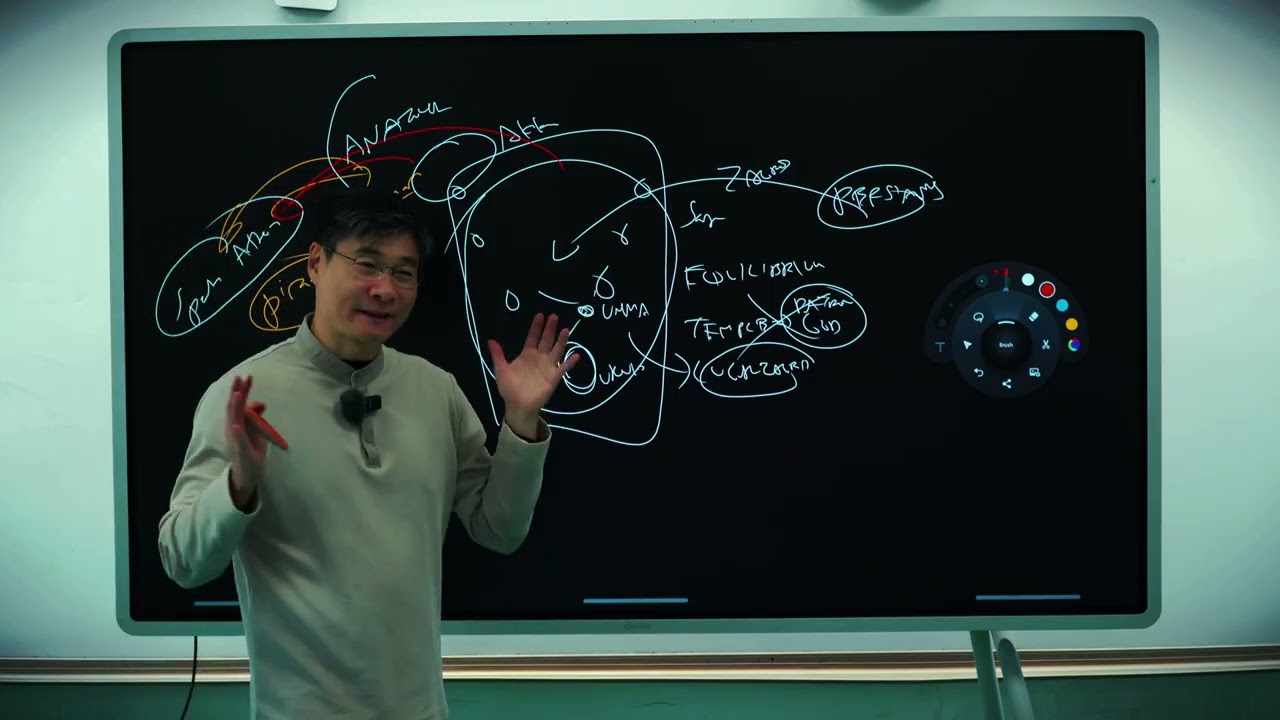
Secret History #18: Thus Spoke Zarathustra — Transcript

Explore Zoroaster's influence on Zoroastrianism, Persian empire, and concepts of consciousness, free will, and morality.

Key Takeaways

  • Zoroaster’s Zoroastrianism shaped Persian culture and introduced monotheistic wisdom-centered religion.
  • Free will and individual moral responsibility are central to spiritual development in this worldview.
  • The cosmic struggle between truth and falsehood is internal and impacts one’s spiritual fate after death.
  • War and social structures like patriarchy and property emerged as challenges to original spiritual understanding.
  • Zoroaster’s ethical system anticipates later philosophical ideas about universal moral imperatives.

Summary

  • Zoroaster founded Zoroastrianism, the first major world religion, influencing the Persian Achaemenid Empire.
  • The video explains a metaphysical system where the universe is conscious and humans are co-creators with God (the Monad).
  • Humans have free will and individuality, essential for creativity and spiritual growth toward perfection.
  • The concept of reincarnation reflects the soul's journey to higher or lower realms based on moral actions.
  • War, patriarchy, and property arose with population growth, leading to societal corruption and the need for prophetic reform.
  • Zoroaster introduced Ahura Mazda as the supreme god representing wisdom and fire, replacing polytheistic gods.
  • The internal battle between asha (truth/virtue) and dush (lie/evil) defines human moral struggle.
  • Persians were admired for truthfulness, horse riding, and archery, with truth linked to virtue rather than mere honesty.
  • The video connects Zoroastrian ethics to Kant’s categorical imperative, emphasizing universal moral laws.
  • Zoroaster’s teachings aimed to restore humanity’s connection to the Monad and promote creativity, love, and life celebration.

Full Transcript — Download SRT & Markdown

00:01
Speaker A
So, um, we've done the Greeks and we've done the Israelites, and today we discuss the Persians. Today, I introduce to you the most influential person who has ever lived, and his name is Zoroaster.
00:18
Speaker A
Okay. And Zoroaster will create the world's first great world religion called Zoroastrianism. This will lead to the rise of the world's first great empire called the Persian Achaemenid Empire. Okay. So, to understand Zoroaster, let's go back
00:40
Speaker A
and understand how we humans have traditionally understood the world. Okay. So, intuitively, we've understood that the world is one of consciousness.
00:50
Speaker A
Okay. The universe is conscious. It's constantly vibrating. Okay. These vibrations are infinite. And the lower that the vibrations go, the slower they are, and therefore they give rise to matter. Okay? And that gives rise to humans. So we both
01:10
Speaker A
inhabit the material universe, but our minds inhabit the spiritual universe. And, um, as a result, when we vibrate as well, our consciousness returns to the universe. Okay. So, we're in constant dialogue with the universe. Now, this is
01:31
Speaker A
hard to understand. So, we've used metaphors or stories to explain this system. All right. So, let's go over how we've explained the system using metaphors. So, this is God. Okay.
01:48
Speaker A
The God is called the Monad or the One or Nous. But there are different names for this God. And this God is perfect.
02:00
Speaker A
The problem with perfection is that you lack imagination. You lack creativity. And that's why when God emanates, he created us. Okay? Humans. Why? Because we are material. We have bodies, and therefore we are imperfect. What this means is that when we hit a wall, we
02:25
Speaker A
feel pain. We can fall down. We can die. Um, we can suffer. We can make mistakes.
02:31
Speaker A
At the same time, it is through constantly making mistakes, disobedience, fallibility that we are able to be creative. Okay?
02:44
Speaker A
And as a result, both God and we are in the process of becoming. Okay, we are becoming into perfection. We are becoming into eternity and infinity, and so we are co-creators with God. Now, there are certain characteristics about
03:06
Speaker A
the system that you have to remember. Okay, first of all, in the system, we need to have free will because only by having complete freedom can we be truly creative. If the monadic is controlling us, then
03:25
Speaker A
there can't be any creativity. It's all intentional. It's all planned. Okay. So, free will is very important. Another very, very important idea is the individual.
03:37
Speaker A
Okay. So, how the system works is what matters is what happens inside of us. Okay? Because only us individually can give rise to creativity.
03:50
Speaker A
And so it is our interactions with the Monad that's important. Okay. Another way of saying this is that, use a metaphor. Okay. The metaphor is a candle.
04:02
Speaker A
A candle. Sorry, this is a bad drawing. Okay. Candle. And we are all mirrors surrounding this candle, and the candle is reflected in us. Okay. So, the Monad is in us, and we are all part of
04:18
Speaker A
together. So, what happens is what happens to us individually. Okay. Another very important part of this is it's eternity. Okay. Reincarnation.
04:32
Speaker A
The idea here is that when you die, you just don't disappear. Your consciousness returns to the spirit world. Why?
04:41
Speaker A
Because maybe in this world, you made a lot of mistakes. And because you made a lot of mistakes, you can't really appreciate all the pain you've caused.
04:51
Speaker A
So, when you return to the spirit world, then it's a time for you to reflect and understand your significance on this world. Okay? And so, the idea is that if you done a lot of good in this world, if
05:04
Speaker A
you've been virtuous, you ascend to a higher plane. And if you did a lot of bad things, then you stay in the lower realm. Okay? And this idea of heaven and hell. Why? Because if you did a lot of
05:16
Speaker A
good, first of all, you can appreciate all that you've done. You can be closer to the Monad. Okay. If you've done a lot of bad, then you will see for yourself all that the hurt you've
05:27
Speaker A
caused in the world. Okay. And you will be further down from the Monad. So, this is how intuitively we've understood the universe to work. Okay. When we're born, we're born almost with an intuitive understanding of this. Okay.
05:45
Speaker A
The problem is that as our populations continue to grow and grow, eventually we have war. Okay. And war gives rise to patriarchy and property. Why? Because how do you incentivize people to go fight? Well, you promise them this wife will be
06:07
Speaker A
yours. Okay? You'll be the master of the household, and whatever you win, whether it's gold or whatever, it will be yours forever. Okay? And so these three things, war, patriarchy, and property are all interlinked together. Okay? And this, you can argue, gives rise to the
06:25
Speaker A
idea of capital. Remember when we last discussed the Bronze Age, the Bronze Age was the height of capital, and therefore it was the height of war, slavery, corruption, okay, violence, evil in this world. And in this time, there will emerge prophets,
06:48
Speaker A
the prophets who come and tell us that what we're doing is wrong. And we must remember who we came from originally. Okay? We must remember that we are part of the Monad and that we're here to celebrate life, not to destroy
07:02
Speaker A
life, to be creative, not to be destructive, to love, not to make war. Okay? And so, um, during the Bronze Age emerges a man named Zoroaster, and he is a prophet just like Homer and the Yahweh is, um, and he's dealing with a
07:26
Speaker A
situation. Okay, we've entered a system where war, patriarchy, and property are prevalent, and we can't imagine a world without these things. So now he has to create a new system. He has to present for his poetry new ideas that
07:43
Speaker A
help us return to the Monad. Okay. And so he creates the beginnings of a new world religion called Zoroastrianism.
07:53
Speaker A
Okay. So, let's go over the basic ideas. So, remember that this is a polytheistic world where you fight for your god. And the gods don't really care about what's good and what's evil. All they care about is themselves. So, you celebrate
08:06
Speaker A
them. You make sacrifices to them. If you give them enough money, if you bought them well enough, then you win wars. Okay? So, that's a system that is that we call polytheism.
08:16
Speaker A
So, what Azar Master does is that he reimagines the system and creates a new hierarchy where Ahura Mazda is the top god. Okay? And you can call him a Monad as well. And for Zoroaster, Ahura Mazda is the lord of
08:38
Speaker A
wisdom. Okay, it literally translates into lord of wisdom, and he's represented by the idea of fire. Okay. So, what is Zoroastrianism in Chinese? It's right.
08:52
Speaker A
Okay. The religion of white fire. It's a religion of wisdom. And what then he also says is that the war of heaven and hell is within us.
09:04
Speaker A
Okay. And there are two forces that tear at us, that divide us. Okay. The first is a force of asha.
09:12
Speaker A
The second is the force of... okay, these ideas are hard to translate, but asha just means truth, and dush means the lie.
09:24
Speaker A
Okay. So, the Greeks really admire the Persians. And what they said about the Persians is the Persians are good at three things. They're good at horse riding. They're good at archery.
09:39
Speaker A
They're good at telling the truth. The Persians find it abhorrent, hateful to lie. So, they're always telling the truth. Okay. But that's a very simplistic understanding of the system.
09:50
Speaker A
Telling the truth is not what asha is, right? What asha really is is a system of virtue.
09:59
Speaker A
By being virtuous, by doing good in the world, you become closer to Ahura Mazda.
10:05
Speaker A
You become his representative on earth. So, to better understand this idea, all right, I'm going to introduce to you another concept called the categorical imperative.
10:18
Speaker A
Okay. So, Immanuel Kant, so we don't know when Zoroaster lived, okay, but he lived about 3,000 years ago. Immanuel Kant is the 18th century. Okay, so he's closer to our time. And he introduces a concept called the
10:35
Speaker A
categorical imperative. For him, the categorical imperative is the highest moral law, the highest moral good, what we all should strive to. And what I will show...
10:53
Speaker A
So there are three um principles of the category imperative. The first the most important is the law of universality.
11:03
Speaker A
And what this idea states is that what is good? Well to know what is good imagine this. Imagine that whatever you do, whatever you say, everyone in the world will immediately do as well. Okay?
11:19
Speaker A
So if you get angry, everyone gets angry at the same time. If you are violent, everyone everyone's violent at the same time. Okay? If you curse God, everyone curses God. Do you want to live in a world like that? Obviously not. Okay? So
11:33
Speaker A
that is what the categorical imperative is. act and do and think as though everything you do will be reflected throughout the universe and you are the universe itself.
11:48
Speaker A
Okay. Now um this idea has been misunderstood as uh the golden law right or do onto others as others would do unto you. But actually no it's it's a much higher concept. The higher concept is that imagine that you are God
12:09
Speaker A
yourself. Okay? And you everything you do will be reflected throughout the universe. Then how would you behave?
12:15
Speaker A
Well, you would behave with the highest virtue. Okay? Because you want to make the world a better place because if you do bad things, people are going to do bad things to you. Okay? So that's the first idea. It's very important idea.
12:27
Speaker A
Second idea um is free will. So whatever you do cannot be coerced. Okay? Whatever you do must be out of your own desire, your own will, your own valition, your own choice. Otherwise, it's wrong. Okay? So I cannot make you
12:49
Speaker A
do good. You only want to do good by yourself. If you want to do evil, you should do evil because it's your choice.
12:56
Speaker A
Okay? Even though it leads to a worse world, it's important to maintain the principle of free will and free choice.
13:02
Speaker A
Okay. Now, last is the idea of humans as the end. Now, you have heard maybe heard the phrase the means to an end, right? So, um maybe I'm a king and I need to build a better world. So, I need to start
13:19
Speaker A
wars, conquer the world. So, I need to sacrifice a billion human beings in order to create a perfect world. Right?
13:25
Speaker A
That may sound good in theory, but what Kant and Zorustra would say is that's wrong because humans are the end onto themselves. Every life, every human life is as valuable as all human life together.
13:42
Speaker A
Okay? You cannot sacrifice one person for the sake of the others. That is fundamentally wrong. Do never do that.
13:49
Speaker A
That can only lead you into hell. Okay? So these three things together gives us a concept of Asha.
13:56
Speaker A
You can see or you can see immediately how complicated it is. But at the same time you can also understand how revolutionary it is. Okay. Because now Asha presents to us three new concepts that will revolutionize human history.
14:11
Speaker A
They are the individual. What matters is what matters inside of you. Okay? Everyone's doing bad. That's their problem. Don't worry about them.
14:22
Speaker A
Just do what is good to you. Okay? What is good for you. The second is free choice.
14:30
Speaker A
Don't ever feel as though you're being forced to do something. Do something because you will it. So, okay. And then last is truth. Why do you do this? Because the monad will know.
14:43
Speaker A
Okay? Because a horiz master will know. Because you will know. Okay? So what your family says, what your community says, what your nation says does not matter. Only what you feel in your heart matters. Okay? And let's introduce a new
15:00
Speaker A
concept in human history called montheism. And guess what guys? Zoroism will give birth to three new religions. Okay? Judaism, Christianity, and Islam.
15:18
Speaker A
Right? And this together is two to three point billion people on earth. And that's why I say Zorra Thusra is the most important individual who's ever lived because he will create the structure for montheism. Okay. These three concepts that will give rise to
15:31
Speaker A
three world religions. All right. Okay. So something else I want you to understand is that Zor thus had a major impact on the Greeks um especially Greek philosophy. In fact, the Greeks didn't consider him just a poet. They considered him the first
15:49
Speaker A
scientist, the first uh astronomer, the first um um philosopher, the first magician. Okay, the Greek is reverence for him. Um and Plato will take a lot of his ideas and create a very powerful metaphor that helps us understand Asher
16:08
Speaker A
better. Okay, it calls it the allegory of the cave. So imagine this. Imagine that we are in a cave. Okay? We're all prisoners inside a cave. We are chained to the ground.
16:25
Speaker A
Okay? So we can't ever get up. We can't even move our necks. We only stare at the wall in front of us. Now behind us is a fire. And this fire is projecting shadows onto the wall. Okay? And we give
16:39
Speaker A
names to these shadows. And this is what we call reality. Okay? But it's a shadow reality. It's all fake. It's all false. It's all what we imagine it to be. One day, for whatever reason, one of us, the chains
16:55
Speaker A
disappear. And so we stumble upwards out of the cave. Okay? And now we're suddenly in the light, right? We see the sun. The sun of course is Asha truth.
17:08
Speaker A
Okay? or a haram master and we're blinded because our eyes are used to seeing the dark, right? We can't see. We feel nothing but pain for a long long time. But over time, we start to see more clearly and we see the world is
17:25
Speaker A
beautiful. Okay? We see the birds flying in the sky. We see the trees around us.
17:31
Speaker A
We see the animals and we're like, "This is beautiful." Okay? I found heaven. I found the truth. I found Asha. I have found a haram master. This is what life is really about. Okay.
17:44
Speaker A
But over so but after some time you're like but this is not enough. Okay. I have found the truth but the truth is not complete because I know there are my friends my family that are stuck inside the cave. Therefore for me to fully
18:00
Speaker A
achieve Asha I must go down and tell them the truth. Tell them there is an asha and we can all break through our chains, escape into the light and see the truth for ourselves and then we will be truly happy and free and wise. Okay,
18:19
Speaker A
that's what ashra is. Asha is not just breaking through your chains and seeing the truth for yourself but it's a responsibility to go and spread this virtue to everyone around you. If you see injustice, speak out. M okay another way of saying this is let's
18:34
Speaker A
use a metaphor a choir okay singing choir how's a choir work well our master the monad he's singing a song we have to sing along with him okay if we do that the world is harmonized the world is perfect the world is per is
18:55
Speaker A
beautiful but if most of us are out of tune then we need to get into tune right okay So that's what Asha is. Asha is not just selfindalization, self-truth. It is helping others see the truth for themselves. Okay. So if you
19:10
Speaker A
yourself see the truth, you now have responsibility to teach this truth to others. But the problem is of course if you go down and tell everyone, hey man, this world we're living in is a shadow world.
19:25
Speaker A
It's a prison. We need to break our chains and escape into the real world.
19:32
Speaker A
Everyone's like, "You're crazy, man." Right? Get out of here, man. You're crazy. And they're like, "No, no, no, no. We have to go." And they're like, "Okay, well then describe this world to us." And you're like, "Um, it's hard. It's
19:44
Speaker A
kind of hard to describe." Well, you're crazy then. Okay. All right. So, that's Plato's allego the cave. All right. And this gives you a better understanding of um the idea of Asha. Okay. So if you move towards the truth, you're
19:59
Speaker A
moving towards Asha. But if you're moving away from Asha, you're moving towards the Drew. Okay.
20:08
Speaker A
All right. So that's a basic premise of um Zorashinism. This is the idea that uh Zorus brought to the world and will forever change the world. Okay, we'll go into the specific history next week, but first what I want to do this week is
20:26
Speaker A
just go into his ideas. Okay. All right. All right. So, Zorathusa, we don't know when he lived, okay? But we estimate anywhere between the year 2000 B.CE to about a th000 BC. That's a bronze age, right? I suspect he he lived towards the end of
20:51
Speaker A
the bronze age. Why? Because when the bronze age is coming into the form, people are in love with capitalism.
20:58
Speaker A
People want to get rich, right? But after the system matures, there's slavery, there's debt, there's corruption, there's misery, there's suffering and so people want to hear another voice. Zor Thusa himself was a priest and it was disgusted by the
21:14
Speaker A
corruption of priest because remember being a priest means being a teacher leading people into the light leading people into Asha. But once uh the branches becomes more mature then priests are corrupt. They uh want a lot of money for helping you achieve
21:34
Speaker A
immortality. Um they sort of spread false teachings. Okay. become very corrupt and so uh Zorusta becomes disgusted and he wanders around spreading his new message of Asha. Okay.
21:50
Speaker A
Now um what's important to understand is that we don't know where Zorusa worked specifically but we suspect northern Iran. Okay. Why is this important?
22:01
Speaker A
Because during the branch age um the main centers of wealth were Mesopotamia, Egypt, the Levant. So this is more like a colony where there's a lot of mining going on. Okay. So what's going on here is basically the most human suffering in
22:20
Speaker A
the world. Okay. So imagine maybe Congo where they're using they're using um child slaves to dig for rare earths.
22:29
Speaker A
Okay. It's it it's a margin empire where war is a very common thing. Violence is very common thing. People are being kidnapped and forced to work in the minds in order to get tin for the branch age economy. Okay.
22:46
Speaker A
All right. So as you can see um Zorusa is about here. Okay. Either northeast Iran or northwest uh Iran. Okay. And as and as I mentioned the global economy is around here. Okay. This is where most most of the wealth is. These people are
23:03
Speaker A
poor. They're enslaved and they're extremely violent. Okay. All right. So Zorusa comes and he's a poet prophet.
23:15
Speaker A
Okay. He's a priest and he's singing songs to help people better understand the world around them. He's trying to remind them of who they are really.
23:25
Speaker A
Okay, they really are parts of God. All right, so he says, "Listen with your own ears, with a bright mind. Choose truth from false creed. Each person for his own self before the final judgment comes." Okay. So the idea of in the
23:39
Speaker A
individual, what matters is yourself. What you do, what your family does, what your clan does, what your tribe does not matter. What you do because when you die, you will face a masta, the final judgment. Okay? Not your family but you
23:54
Speaker A
yourself. And so what you must do is choose asha the truth. Okay. What is the truth? Being virtuous because you yourself are virtue.
24:09
Speaker A
Okay. Um so um he wrote in a language called Avasten and it's a beautiful language and if you are a Zoroastrian priest you can memorize all this okay but I am not and I don't want to butcher the language
24:24
Speaker A
okay but it's poetry it's beautiful right so ash is the best of all that is good and ash is happiness happiness belongs to the one who follows the righteous path for the sake of the best righteousness so how do you know you're
24:36
Speaker A
doing asha because you are happy. Okay, do you understand? So the metaphor is imagine that you live in a world of like fat people who don't exercise and all they do is watch TV, right? And but you decide to go and work out and you become
24:52
Speaker A
more fit. How do you know you're on the right path? Because you feel happier about yourself. Okay, but the problem of course is that you lose all your friends. You lose all your family. Okay, that's why people don't do
25:04
Speaker A
this. Not because um they don't know the truth. is because they fear the truth.
25:13
Speaker A
All right. So, so this is some trusted poetry called agathas that we know that Jorah thus wrote. Okay. Or he didn't write it. They were all illiterate at this point, but he sang it. Okay. Now, the two primal spirits who reveal
25:26
Speaker A
themselves in vision as twins are the better and the bad in thought and word and action. And between these two, the wise ones choose all right. The foolish one not so. Okay. So we in our nature always um divide into into two halves.
25:40
Speaker A
Okay. The good and the bad. The asha and the douch. And to be truly virtuous, it has to be good thoughts, um good words and good actions. Okay?
25:51
Speaker A
You have to be unified as a person. You can't speak the truth but then do bad things. Okay? You have to think good thoughts, speak good thoughts, and do good works. And that's what um Zarashinism. Okay?
26:06
Speaker A
And when these twain spirits came together in the beginning, they created life and not life. And that at the last worst existence shall be the followers of the lie, but the best existence to him that follows right. Of these two
26:17
Speaker A
twin spirits, he that followed the life, the lie choose doing the worst things, the holiest spirit choose right. He that clothe him with a massy heavens as a garment. So likewise, they that are fain to please aaram master by beautiful
26:30
Speaker A
actions. Between these twin, the Davas, okay, those that lead you to the Drewge also chose not a right for infatuation came upon them as they took counsel together.
26:43
Speaker A
So that they chose the worst thought. Then they rushed together to violence that they might infeas by demons who choose violence to control us. Okay? And and what do you do? And to him came dominion and good mind and
27:01
Speaker A
right and piety gave continued life to their bodies and indestructibility so that by they retributions through metal he may gain the prize over the others.
27:12
Speaker A
Even in a world of evil you can choose and you must choose to be good. All right? If people are lying you tell the truth because what matters is your individual action not what others are doing.
27:28
Speaker A
So when there cometh their punishment for their sins, then oh master at thy command shall good thought establish the dominion in a consump consummation for those who deliver the lie or harara into the hands of right. Okay. So God will
27:41
Speaker A
know what what good you did, what evil you did. Okay. When you die, it'll be the final judgment. You will have to face God. So we may be those that make this world advance. Oh master Master and you order come hither thou shaving a
27:56
Speaker A
mission into your company and Asha in order that our thought may gather together while reason is still shaky.
28:03
Speaker A
Okay so even though the world has turned evil even though the people the elite are evil you can still do good and God will know you do good and God will reward you for doing good. Okay. So again, this is the beginning of
28:16
Speaker A
monotheism. And as you can see, this idea will echo in Christianity and Islam as well.
28:25
Speaker A
Then truly on the world of lie shall come the destruction of the light. But they who get themselves good name shall be partakers in the promised reward in the fair abol of good thought of master and of right. Oh, if, oh ye mortals, ye
28:40
Speaker A
mark those commandments which master have ordained of happiness and pain, the long punishment for the follower of the drew, and blessings for the followers of the right, then hereafter shall it be well. Okay? So you should do what is
28:54
Speaker A
virtuous, not only because God uh will reward you for doing so, but because you will feel eternal happiness in doing so.
29:04
Speaker A
When though amass in the beginning did create the individual and individuality through thy spirit and powers of understanding when though did make life clothed with a body when actions and teachings whereby one may exercise one's convictions at once free. Okay. So you
29:18
Speaker A
see individual free will these are the core concepts here. Okay. Never say you're being coerced. You always have the choice. You always have the choice to resist.
29:28
Speaker A
Then lifts up his voice the false speaker or the true speaker. He that knows or he that knows not each according to his own heart and mind passing from one to another. Ar matei confers with a spirit in whom there is
29:40
Speaker A
wavering. Okay. Clear it is to the man of understanding as one who has realized it with thought.
29:48
Speaker A
He upholds Asha together with good dominion by his word and deed. He will be oh master the most helpful helper to thee. Okay. So when we choose to follow Asha, we are doing God's work. When we in our hearts choose Asha, we at the at
30:05
Speaker A
that moment change the world for the better. Okay. All right. So this sounds a bit complicated, a bit abstract and honestly he was speaking to people at that time.
30:18
Speaker A
Okay. So what does he really really mean and how can we understand what he's really saying? Well, the argument I want I I I want to make you today is that all part prophets are the same. They're all
30:29
Speaker A
divinely inspired. They're all speaking a certain truth. So by understanding other part prophets of that region of that culture, we gain insight into the true thinking of Zoro. Okay. So this is Roomie who is considered the greatest Persian poet who has ever lived. He
30:48
Speaker A
lived in the 13th century which is about 2,000 years 3,000 years after Zorathustra. In many ways if you actually read his poetry he is the reincarnation of Zorathustra. Okay. So we're going to read a bit of his poetry and then once
31:03
Speaker A
you read his poetry they'll give you insight into the cosmology of Zorashinism. All right. I see so deeply with myself.
31:14
Speaker A
I so see deeply with myself not needing my eyes. I can see everything clearly.
31:19
Speaker A
Why would I want to bother my eyes again now that I see the world through his eyes? His eyes. Okay. Through the eyes of Asha, through the eyes of the Monad, through our master. Okay. That's what how you should be seeing. Okay? In other
31:31
Speaker A
words, you should be seeing the world through your imagination. You can imagine a better world. If you imagine a better world, you can create a better world. So don't be fooled by the material world around us. It's all fake.
31:44
Speaker A
It's all an illusion. Not Christian or Jew or Muslim. Not Hindu, Buddhist, Sufi or Zen. Not any religion or cultural system. I'm not from the east or the west. Not out of the ocean or up from the ground. Not
31:58
Speaker A
natural or ether. Not compulsive elements at all. I do not exist. I'm not an an entity in this world or in the next. Do not descend from Adam and Eve or any origin story. My place is placeless. A trace of the traceless.
32:09
Speaker A
Neither body or soul. I belong to the beloved. have seen the two worlds as one and that one called and no first last outer inner only that breath breathing human being. Okay, does that make sense to you? We're all part of God.
32:24
Speaker A
That's our true nature. There's a divine spark in us. Don't be fooled by the material world. Okay? And don't be fooled by labels.
32:35
Speaker A
Christians, Buddhists, Jews, there's no difference. We're all the God children of God, okay? We're all the same. So don't be fooled by labels.
32:47
Speaker A
Okay? So there's a joke. Okay? The joke is this. God and Satan are fighting over humanity. And God says to Satan, "Ha, humans have discovered religion.
32:56
Speaker A
Therefore, I have won." And then Satan says, "Yeah, but then I'll just organize it." Okay. So the idea is that religion is great. Okay? Okay, I'm a big supporter of religion, but organized religion is problematic because organized religion serves the interests
33:10
Speaker A
of the priests who control the religion. Okay? And that's why there are the differences in these religions in Buddhism, in Judaism, and Islam and Christianity because the people in charge need to differentiate the religion in order to um exploit you,
33:23
Speaker A
okay? In order to justify their existence. But at the end of the day, we're all connected to the vine and all that matters is our connection. Okay? So all these uh differences is something that is artificially created to fool us.
33:40
Speaker A
All right. All that I think about it then I say it where did I come from and what am I supposed to be doing? Okay. I have no idea. My soul is from elsewhere.
33:48
Speaker A
I'm sure of that and I intend to end up there. Okay. I don't remember where I came from but I know that I must have come from somewhere. Okay.
33:57
Speaker A
This began in some other realm, some other tavern. When I get back around to that place, I'll be completely sober.
34:03
Speaker A
Meanwhile, I'm like a bird from another continent, sitting in his Avery. The day is coming when I fly off. But who is it now in my ear who hears my voice? Who says word words within my mouth? Who
34:13
Speaker A
looks out with my eyes? What is a soul I cannot stop asking? If I could taste one of for an answer, I could break out of this prison for drunks. I didn't come here on my own accord. I can't leave
34:22
Speaker A
that way. Whoever brought me here will have to take me home. Okay, this is beautiful. And it's also a rewriting of the Plato of Plato's allegory of the cave. Right? This is a prison for drunks. Here we're all drunk. We're all
34:34
Speaker A
blind from our true reality. This is just a prison. When we return to the Monad to Master, then we'll see the truth for ourselves. Okay.
34:46
Speaker A
All right. So, here's another poor prophet, Federick Nichi. Okay. Fred Nichi is one of the three great German philosophers of the past um 500 years.
34:56
Speaker A
Um Emanuel Kant, Frederick Hegel and Ferdick Nishi and Ferdick Nichi wrote does spoke Zorah and he wrote in a very interesting way. He likes to take these long walks. He can walk walk for like hours and hours in the mountains and
35:10
Speaker A
then now and then he feels as though he's being seized. Okay, a force has seized him and compels him to speak and he believes this person is Zoro.
35:20
Speaker A
Okay. So he wrote a book and it just is a recollection of all the moments when he was seized by Zorusta and forced to speak his words. All right. And we actually read what Nichi writes, you will see that it's actually pretty
35:38
Speaker A
similar to what Zorusa himself um promoted during his time. Of course, Nichi is uh promoting it in a more modern contemporary lens. Okay. So, if Zoroa were to come back, uh he would be he'll basically be Nichi. Okay. So, in
35:56
Speaker A
many in many ways, Nichi and Roomi are reincarnations of Zorustra. They're all trying to speak a divine truth to humanity.
36:06
Speaker A
All right. So, this is the prologue, the first page of the spec zorra. Okay. And what you will notice, okay, look for this. What you will notice is that this exactly like the atta was 30 years old, he left his home in
36:24
Speaker A
the lake of his home and went into the mountains. There he enjoyed his spirit in a solitude and for 10 years did not wear of it. But at last his heart changed, and rising one morning of the rosy dawn, he went before the sun and
36:34
Speaker A
inspect thus onto it. Though great star, what would thy happiness if thou had not those for whom thou shineest? For 10 years hast thou climbed hither unto my cave, though would have weather of thy light and of the journey, had it not
36:50
Speaker A
been for me mine eagle and my serpent. But we awaited thee every morning, took from thee thine overflow, and bless thee for it. Lo, I'mware of my wisdom, like the bee that hath gathered too much honey. I need hands outstretched to take
37:02
Speaker A
it. I would fain bestow and distribute until the wise have once more become joyous in the folly and the poor happy in their riches. Therefore my I I descend into the deep as though does in the evening when though go behind the
37:14
Speaker A
sea and give light also to the neither world though exuberant star like thee must I go down as men say to whom I shall descend. Okay so Zorusta has hid himself in a cave and in inside the cave
37:26
Speaker A
in solitude he has discovered Asha. He has discovered the secrets of the universe. And he's discovered that this is not enough. I must now go shine the light on everyone. Otherwise, I can never achieve a fully. Okay? So, it's
37:42
Speaker A
exactly like the other girl in the cave where the prisoner, he escapes into the light and he's happy until he realizes that you can't be happy alone. You have to share this happiness with everyone else. Okay? So, it's exactly like the
37:54
Speaker A
algorith. All right, let's continue. Though in Plantus thy highest aim to the heart of those passions, then became thy virtues and joys. And though were of the race of the hot-tempered or the volutuous or the fanatical or the
38:10
Speaker A
vindictive, all thy passions in the end become virtues, and all thy devils angels. Once had those while dogs in thy cellar, but they change at last into birds and charming songstresses. Out of thy poisons breed though balsom for them
38:24
Speaker A
for thyself. Thy cow affliction milk so th though drinkkeeth though the sweet milk of her other. And nothing evil grow in thee any longer unless it be the evil that grow out of the conflict of thy virtues. My brother, if thou be
38:38
Speaker A
fortunate, then will thou have one virtue and no more. Thus goes no easier over the bridge. Illustrious is to have many virtues but a hard lodge. And many of one have gone into the wilderness and killed himself because he wasware of
38:50
Speaker A
being the battle and battlefield of virtues. Okay. Question then is if our master is wisdom why do we live in a world of hate of evil of sin and the answer is because virtue must come from vice good can only come from evil
39:10
Speaker A
okay to live in good forever is to live in ignorance okay we are born in the drew so that we we may discover Asha from our struggles we will discover what truly good is and that's a gift that God
39:27
Speaker A
has given us to grow to live in a time of evil so that we may ourselves may create good for humanity. Okay, that's the central message of of this without vice there can be no virtue and to have
39:43
Speaker A
one virtue itself is not enough. You must be constantly in a battle to create more and more virtue. Okay. So if you are a man of sin or a woman of evil, be thankful because now is your opportunity to be a star, a a son that
40:05
Speaker A
through transformation of oneself can can brighten the world. Okay? And when you do that, you transform the world.
40:12
Speaker A
And then when you after you do that, your next battle is to go and transform someone else or to look deeper and discover the evil in you. Okay? So don't worry about the world itself. Just worry about you yourself because within
40:23
Speaker A
yourself is a universe of evil that can be transformed into a universe of good.
40:30
Speaker A
So um one really important thing I I I have to say is that this is not Buddhism. Okay. The the structure and the framework are very similar. But what Zoro Zor ainism fundamentally says is that compassion is not enough. Okay. You have to act
40:49
Speaker A
because justice is about action. If you see injustice, you must speak out. You can't be like, "Oh, um inde I'm indifferent because I'm compassionate." Okay, that's not enough. You have to act out. And that's why uh people who
41:05
Speaker A
believed in this religion were so creative, okay? Because they believe in action. Being indifferent is simply being is basically being complicit in the system right?
41:18
Speaker A
All right. Ye tell me life is hard to bear, but for what purpose shall you have your pride in the morning and your resignation in the evening? Life is hard to bear, but not affect to be so delicate. We are all of us find some
41:30
Speaker A
asses and she assasses. Okay. What we have in common with a rose bud which trembleth because a drop of dew have formed upon it. It is true that we love life not because we are want to live but
41:40
Speaker A
because we are want to love. Love is Asha, right? Um we want always want to achieve asha. There's always some madness in love, but there's always also some method in madness. And to me also who appreciate life, the butterflies and
41:52
Speaker A
soap bubbles and whatever is like them amongst us seem most to enjoy happiness. To see those light, foolish, pretty, liely little sprites flit about that move Zasa through tears and songs. I should only believe in a god that would
42:05
Speaker A
know how to dance. And when I saw my devil, I found him serious, thorough, profound, and solemn. He was a spirit of gravity. Through him, all things fell.
42:14
Speaker A
Okay. So, what Nishi hates is organized religion because organized religion it is very serious, very somber. He basically wants to enslave us, right?
42:23
Speaker A
It's like don't do anything bad. Don't drink, don't smoke, don't have sex or you'll burn in hell. Okay, that's very serious. And what Zurusta and what Nisha is saying is that that's not what Asha is, man. Ashes recognized that the world
42:40
Speaker A
is beautiful, that our master is all merciful, all forgiving, all love, all compassion and you must delight in the world because that's why he created us.
42:51
Speaker A
Okay? So the only way to survive this world of evil is to recognize that beauty is everywhere around us and there's our responsibility to discover this beauty and celebrate this beauty.
43:01
Speaker A
Okay? Dance, sing, make love, laugh, smile. That's what life is about. Okay? If a priest is telling you, hey, uh, meditate for your life because only through that will you avoid sin. He's a devil, man. Okay? Because he's denying
43:21
Speaker A
you your free will. He's denying you your capacity to love, to seek action yourself.
43:29
Speaker A
Okay? But one day will the solitude worry thee. One day will thy pride yield and thy courage quail. Though one day cry, I'm alone. One day will thou see no longer thy loftiness and see too closely thy loneliness. Thus eliminate itself or
43:47
Speaker A
frighten thee as a phantom. Thou will one day cry all false. So life is a constant struggle, okay, between hope and tragedy. Um there are some days when you will be very hopeful, but there are some days when you'll be very depressed.
44:02
Speaker A
That's just the process of life and that's the process of wisdom. Okay? To seek wisdom, you always have to constantly destroy yourself. You have to destroy the world around you and and it's a never- ending process of pain and
44:15
Speaker A
suffering and tragedy. But it will gradually lead you to enlightenment. What's really important is to act okay to seek self-destruction. So another way of saying this is always assume that whatever you know no matter how truthful is probably wrong and to go and negate
44:36
Speaker A
yourself. Okay. It also means leaving your family leaving your comfort zone. All right. A heretic will thou be to thyself. Okay. A heretic is someone who doubts yourself. Right? Saying everything I've known is wrong. Okay.
44:53
Speaker A
So, another way of saying this and I I know it's hard to understand is you come to my class for a semester and everything I teach you, you're like, "Wow, this makes a lot of sense." Okay?
45:01
Speaker A
And every day you're excited. You learn a lot. But at the end of semester, what you want to say is everything I've learned this semester is wrong. So, I'm going to learn for myself. I'm going to get I'm I'm going to negate everything
45:15
Speaker A
I've learned and believe everything I've learned is deceitful so that I can rebuild my own knowledge. And through that process will you actually achieve enlightenment. Okay. The truth is it has to be to you. There can be no truth for
45:28
Speaker A
everyone. The truth has to be for you and you must fight for it every day.
45:32
Speaker A
Okay. Ready must thou be to burn thyself in thy own flame. Okay? You must destroy yourself. How could thou become new if thou have not first become ashes? Do you understand? To live is to die. If you really want to understand, you must
45:49
Speaker A
first destroy every everything that that you think you understand in order to build a new understanding. Though lonesome one, though go the way of the creating one. A god will thou create for thyself out of the seven de devils.
46:02
Speaker A
Though lonesome one, though goes the way of the loving one. Though loves thyself, and on account despise thyself as only the loving one despise. To create desire the loving one become because he despised. What know he of love who have
46:16
Speaker A
not been obliged to despise just what he loved. Okay, this is a really hard con to understand but like you know in the Buddhist tradition it's like avoid anger.
46:26
Speaker A
No, no, no. Embrace your anger. Embrace your hate because hate and love go together. Anger and calm go together.
46:36
Speaker A
Okay. So by going to one extreme, you can now embrace the other extreme and your life is a constant struggle between these two different extremes. When you negate yourself, when you move into nothingness, you can only move into
46:49
Speaker A
ignorance and slavery. Okay? Does that make sense? You are born of two natures. You must let these two natures fight. Okay?
47:01
Speaker A
All right. When Zorusa had spoken these words, he paused like one who had not said his last word, and long balance the staff undouily in his hand. At least he spoke thus, and his voice had changed. I now go alone, my my disciples. Ye also
47:17
Speaker A
now go away, and alone so will I have it. Verily, I advise you, depart from me, and guard yourselves against Zorustra, and better still be ashamed of him. Perhaps he have deceived you. The man of knowledge must be able not only
47:30
Speaker A
to love his enemies, but also hate his friends. Okay, you want true knowledge, you can learn from me, but at the end we must leave each other and you must say he's now my enemy. I must now destroy
47:43
Speaker A
him. If I really want to be myself, I need to destroy my teachers in order to discover my true self.
47:51
Speaker A
Okay? And as you can imagine, most people don't want to do this. Most people just want to cling to their mother, want to cling to the teacher. But you can never achieve true asha if you do this. Okay.
48:07
Speaker A
Ye love your virtue as a mother love her child. But when did one hear of a mother want to be paid for her love? It is your dearest self your virtue. The ring's thirst is in you to reach itself again.
48:19
Speaker A
Struggle every ring and turn itself. And like the star that go out, so is every work of your virtue. ever is is its light on its way and traveling? And when will it cease to be on its way? Thus is
48:31
Speaker A
the light of your virtue still on its way even when its work is done. Be forgotten and dead still its ray of light live and travel. Okay, so when we die, our bodies decompose. What's still left is our virtue. Okay, that's who we
48:45
Speaker A
are. Our virtue, all that good we've done in the world, all the knowledge, all the enlightenment, all the emotions that we've generated, okay, that will be eternal. And so we must embrace this nature and become virtue itself. Okay?
49:00
Speaker A
Being human is to be first and foremost virtuous to seek Asha. For this is the truth. I've departed from the house of the scholars and the door have I also slammed behind me. Too long did my soul sit hungry at their
49:16
Speaker A
table. Not like them have I got the knack of investigating as a knack of nutcracking. Freedom do I love in the air over fresh soil. Rather would I sleep on oxkins than on their honors indignities. I am too hot and scorched
49:29
Speaker A
with thine own thought. Often is it ready to take away my breath. Then have I go then I then I have I to go into the open air and away from all dusty rooms.
49:40
Speaker A
But they sit cool in the cool shade. They want everything to be merely spectators. And they avoid sitting where the sun burn on the steps. Like those who stand in the street and gape at the passers by. Thus do they also wait and
49:52
Speaker A
gape at the thoughts which others have thought. Okay. So this is a radical idea but it's very true. You go to university not to learn how to think but to fall into ignorance. Okay. Why? Because the professors there the priests there they have
50:12
Speaker A
departed from reality and they've chosen to live a life of comfort of ease of pleasure. And as a result they can't know anything. True knowledge is can only be found in the everyday in the mundane with ordinary people. That's
50:28
Speaker A
where God is. Okay. Universe are constructed to be away from God. They are temples for the comfort of priest. So if you want true knowledge, go out into the world and talk to another people.
50:42
Speaker A
Suffer. Okay. All right. So that's it. Okay. So now you you can understand the beauty and power of Zorusta and and I I really do believe this. I really believe that Nishi was channeling Zorusta, but he was channeling in a way
51:05
Speaker A
for the common mind. Okay? Because the thing about Asha is that it's always changing. All right? The Asha that was true 3,000 years ago is not the Asha that's true for us today. All right? And what's really important to understand is
51:19
Speaker A
that Asha is constantly coming. So you have to constantly work towards it. There's no there's no end point to Asha.
51:28
Speaker A
All right? And Asha is going to be different for everyone. But if everyone's moving towards Asha, then the world becomes a more virtuous, a better place, and a more just place. Okay? So um any questions guys?
51:44
Speaker A
All right. So um last class I gave a lecture on um the Bible and I made a mistake in my lecture. So um in my my discussion about the story of the patriarchs um between the love story of
52:02
Speaker A
Rachel and Jacob, I said that uh Jacob had had to work seven years for Rachel after his marriage to uh Leah. But as uh this substscriber um Cole tells me, actually that's not what the Bible says. The Bible says that
52:22
Speaker A
um Laban, the father, gave Rachel to Jacob right away, but then he had to work seven years to pay off that debt.
52:29
Speaker A
Okay. So, uh thank you to Cole for correcting the error. In fact, I probably made a lot of small errors um in my uh talk last class and and I obviously made make a lot of mistakes every class. Okay? So, I apologize for
52:44
Speaker A
that. But the thing about this class and it's really important for us to remember is that this is a class not about answers. It's about questions. Okay. So what makes this class interesting and special is that we're always asking the
52:57
Speaker A
hard questions. What does it mean to be human? Where do we come from? Why are we here? Where are we going? Okay. We're always asking these questions because these are questions that actually matter for us. Okay, that's the first thing.
53:08
Speaker A
Second thing is that I'm constantly in the process of becoming. I'm constantly um trying to discover the answers and so for for me this is a journey. So for example um Zorustra is a revelation to me before I didn't know about Zorusra
53:26
Speaker A
and I made a lot of mistakes. So for example I said that Christianity was the first monistic religion last um semester and now I recognize that's wrong. It's actually zorashinism. Okay. So I'm constantly in the process of discovery
53:39
Speaker A
of becoming um and what's really important is that we continue to speculate. We continue to explore together. All right? And if so if you don't like what I say this class or you don't like my opinion, just wait
53:54
Speaker A
a year or two and I'll probably change my opinion. Okay? Because that that's what true knowledge is about. If you really want to pursue knowledge, you must be willing to as Nichi as Zorusa says, you constantly need to destroy
54:06
Speaker A
yourself to burn yourself into ashes so that you may build yourself a new. Okay?
54:10
Speaker A
And that's what the process of um real education should be about. Okay? So in this class, I'm not here to give you a easy answers. I'm not I'm not here to give you facts that you must memorize.
54:21
Speaker A
I'm here to ask you questions that help you better understand yourself and better understand the world around you to help. This class is about conversation, dialogue, and debate.
54:32
Speaker A
Okay. All right. So, any questions, guys? Yeah. Sorry, give you the mic. Um, so as to say, uh, ash is different for for different individuals. Um, so I was thinking about an example is, um, so Hitler as a racist. Um he he he
54:56
Speaker A
not only himself but he also making uh um some like a lot a lot a lot of people to hate jewels and let's assume that he um think jewels are evil in his heart and trying to destroy them. So if he
55:16
Speaker A
think that this is uh real justice, does this still count for Ash? Okay, look um look, it's a very sensitive topic, you know, Hitler and the Holocaust. I don't want to spend too much time on, okay? But if you truly
55:33
Speaker A
understand Asha um if you truly understand Zoroa what it would say is that Ara Masta is complete forgiveness, compassion and love. Okay.
55:49
Speaker A
So whatever we do on this in this world will be forgiven in the end. I I I know I I I understand this is hard for a lot of people to accept. Um, I I know that we grew up knowing that there must be
56:01
Speaker A
evil in this world because of the Holocaust and there must be Satan and all that, but um, if you really want to discover Asha, you have to let go of these ideas and understand that in the end all will be forgiven. Okay,
56:21
Speaker A
I'm sure that there are people you hate in this world and you think that they're they must burn in hell because of all the evil they they've done they've done in this world. But if we want to appreciate Asha, if we
56:35
Speaker A
really want to discover the the truth, okay, we need to let go of this hatred.
56:40
Speaker A
We need to let go of um of of this judgment. Okay. Um I mean I mean the the very point of Asha is don't worry about other people. Just worry about yourself.
56:58
Speaker A
Don't compare yourself to other people. Compare yourself to yourself. Okay. And and so how do you know you're moving towards Asha because you can feel it.
57:05
Speaker A
All right. The problem is what keeps us from Asha are two things. Our ego and our fear. We want to be liked by everyone. Our ego. Okay. Our fear of rejection. people of saying something that offends other people being
57:19
Speaker A
politically correct. Okay? Like I know that in my class I offend a lot of people and I get shot at all the time on YouTube and I know that. Okay. But if I want to achieve asha I need to take this
57:33
Speaker A
risk. Okay? Because at the end of the day what matters is my own individual pursuit of the truth. What others think of me does not matter. Okay? So the problem our society is we're brainwashed into thinking that the opinions of others
57:49
Speaker A
matter. Okay? What what what your teacher says about you matters because the teachation will decide whether or not you get into good university. How much money you make matters because that will give you status in society. Okay?
58:01
Speaker A
And what Zoro thusta, what Nichi, what room, what Plato, they're all saying is this. It doesn't matter man. What matters if you want true happiness, if you want true enlightenment, if you want uh asha, you have to embark on a
58:16
Speaker A
personal journey that requires solitude that requires rejecting everything that you know in the past so that you can rebuild yourself. Once you make that once you make that that decision action will come to you naturally. Okay. But first and foremost, what you need to do
58:31
Speaker A
is let go of these prejudices. Let go of these ideas that have been put into you.
58:37
Speaker A
Okay, I know. Yes, I I know I will get shouted out. I I I I know get cursed online for saying, you know, Hitler will be forgiven, but Hitler will be forgiven because everyone will be forgiven. Okay.
58:50
Speaker A
Everyone will be forgiven. Okay. Okay. There is no there is no hell. I'm sorry. I'm sorry to say this. Okay. I'm sorry to say, but there is no hell. Hell is what we create in our hearts.
59:03
Speaker A
Okay. Everyone will be forgiven. All right. But but thank you for the question. Any any more questions?
59:14
Speaker A
Okay. Uh my question would be um I know that Asha for everyone will have different but like will it change in a different period like when I was being as a child or when I grow up would that change?
59:35
Speaker A
Um okay so like I I'm not a Zorashian priest and I I don't want to insult the religion okay because what they will tell you is that um at the end of the day Asher is virtue and God is virtue
59:47
Speaker A
okay so so when you do asha you're moving towards God which is perfection okay but um I think that what Nichi would say and maybe thus but I think Nichi would definitely say this is that God is creativity okay So God, so what
60:06
Speaker A
you really want to do is when you move towards Asha is to constantly reinvent yourself to discover new ideas about yourself. And this is a never- ending process.
60:17
Speaker A
Okay? There's no finale finale to it. If there's no there's no finale to it, that means that each of us uh will live our own individual lives that's different from from others. Okay? And and so what this means is that Asha will become
60:31
Speaker A
different for each of us. But what's important is and Roomie would say this, Evan would say this is follow your heart. Okay? Ignore what others think dissipate your fears. Okay? Kill your fears and just believe in yourself.
60:46
Speaker A
Follow your heart and action will come naturally to you. Okay? And when that happens also, God will come naturally to you and you'll discover new truths, uh new powers, new understandings that will bring you greater happiness in life.
61:01
Speaker A
Okay. Does that make sense? Yeah. Okay. Great. Any more questions, guys? All right. Mean that we'll never Yeah.
61:10
Speaker A
So, does that mean we'll never be like like uh not physically, but like with Asha, but like we're always trying to get closer with them.
61:23
Speaker A
Yeah. Okay. Yeah. So, again, there's no end point. Okay. There's no destination here. Okay.
61:30
Speaker A
It's becoming. Okay. It's a pos constant process of becoming. And it's not possible to seek Asha in one lifetime, right? That's why we are reincarnated because we come back and we do it over again and we move closer towards Asha
61:47
Speaker A
each time. But there can never be an end point. Okay? Because let's just say you reach that end point. Guess what?
61:53
Speaker A
Everyone else hasn't. So you have a duty now to help other people. Okay? Does that make sense? So if you move closer to Asha, you also want to move others closer to Asha. So it's a constant, it's a constant struggle, but
62:07
Speaker A
that's what gives meaning and purpose to the universe. The fact that we're all striving to be better. Okay? Virtue, truth, asha, these are all we strive for. Okay? There can be no perfection.
62:19
Speaker A
There can just be only a process of becoming. Right? Does that make sense? Yes.
62:24
Speaker A
Okay. So look, I mean, I know people want simple answers. I know that oh there'll be there'll be a final judgment we're going to go to heaven and we'll live every happy happ happy happ happy happy happ happy happ happy happ happy
62:35
Speaker A
happ happy happily ever after okay that's not what that's not what the truth is the truth is that the universe is a constant process of becoming of struggle of pain of tragedy but from that we can build hope and virtue and
62:51
Speaker A
good okay all right so thank you so I've done I've gone over into the three major civilizations Okay, the Greeks, uh, the Israelites and the Persians that that have come after the collapse of the Bronze Age. Okay, what what I'm going to
63:05
Speaker A
do next week is I'm going to put I'm going to show you how these three civilizations interact with each other.
63:11
Speaker A
Okay, we're going to go into the history of these civilizations. Okay. All right. So, I'll see you guys next [Music]
Topics:ZoroasterZoroastrianismPersian EmpireAhura MazdaMonadfree willashadushcategorical imperativespirituality

Frequently Asked Questions

Who was Zoroaster and why is he significant?

Zoroaster was an ancient prophet who founded Zoroastrianism, the first great world religion, influencing the Persian Achaemenid Empire and introducing ideas about wisdom, morality, and spiritual dualism.

What is the role of free will in Zoroastrianism according to the video?

Free will is essential because it allows humans to be truly creative and morally responsible, enabling spiritual growth and cooperation with the divine Monad.

How does the video describe the cosmic struggle in Zoroastrianism?

The struggle is internal between two forces: asha (truth and virtue) and dush (lie and evil), which determines one’s spiritual progress and relationship with Ahura Mazda.

Get More with the Söz AI App

Transcribe recordings, audio files, and YouTube videos — with AI summaries, speaker detection, and unlimited transcriptions.

Or transcribe another YouTube video here →