Secret History #14: Legacy of the Steppes — Transcript

Explores the misconceptions about civilization vs. steppes, highlighting innovation, hierarchy, and historical patterns of conquest.

Key Takeaways

  • Traditional views of civilization and barbarians are misleading and inverted.
  • Innovation thrives in open, competitive, and cooperative city-state systems, not in large bureaucratic empires.
  • Steppe peoples were often more innovative and open than the civilizations they conquered.
  • Empires tend to become corrupt and stagnant over time, leading to decline.
  • Historical exceptions like the Indus Valley show alternative societal models.

Summary

  • Common belief contrasts civilized societies as open, innovative, and prosperous versus steppes people as barbaric, static, and poor.
  • Historically, steppe peoples like Genghis Khan's Mongols conquered major civilizations, challenging traditional views.
  • The video argues the opposite: steppe societies were open, curious, and innovative, while civilizations became closed and static.
  • Civilizations start around rivers with city-states formed for religious and trade purposes, fostering innovation through open cooperative competition.
  • City-states compete and cooperate, driving innovation, exemplified by the Zhou period in China and other early civilizations.
  • Empires form when one city-state conquers others, often the most disadvantaged, leading to initial innovation due to scale, standardization, and centralization.
  • Over time, empires become bureaucratic, insular, secretive monopolies that stifle innovation and breed corruption.
  • Exceptions exist, such as the Indus Valley civilization, which was peaceful, egalitarian, and artistic without hierarchy or bureaucracy.
  • Empires eventually decline due to hierarchy, bureaucracy, war, and social issues like debt and peasant suffering.
  • The video challenges traditional narratives and encourages reconsidering the dynamics between civilization and steppe societies.

Full Transcript — Download SRT & Markdown

00:00
Speaker A
Okay. So today we are going to discuss civilization versus the steppes. Okay. Civilization versus the steppes.
00:17
Speaker A
The steppes are the grasslands, and you people often refer to them as barbarians. Okay. So in China, we refer to these people as barbarians.
00:27
Speaker A
And in school, you're taught that there are major differences between civilization and barbarians. Right? So, um, the first major difference is that in civilization you are allowed intellectual freedom because only by reading books, only by going to school, only by learning how to
00:57
Speaker A
think can you be free to think. Okay. Um, and in the steppes, we think of them as emotional slaves.
01:06
Speaker A
They are unpredictable. They are violent. Okay. Second thing is that we think of civilization as open and curious.
01:23
Speaker A
We love knowledge. We seek to gain more knowledge. Therefore, uh, we are innovative. Okay.
01:32
Speaker A
Whereas the steppes people, they are static. Okay. Because they are insular. They're close-minded. Okay. And the last thing is that we think civilization leads to wealth and prosperity.
02:03
Speaker A
Only if you are civilized can you truly be happy, okay, and wealthy.
02:14
Speaker A
And we think that the steppes people are poor and therefore unhappy. And that is the general understanding of the difference between civilization and the barbarians. Okay. The problem is that this creates a misunderstanding, and we can't really explain why it is
02:40
Speaker A
that throughout human history the steppes people have been the greatest conquerors. Okay. Okay. So the classic example is Genghis Khan. How is it that Genghis Khan was able to not only conquer China, okay, which is considered one of the greatest
02:58
Speaker A
civilizations in the world, but also, um, Baghdad, another great civilization. Okay. But what's interesting is that throughout human history, this has been a consistent pattern where the barbarians conquered the civilized people. Okay, so this is a problem. How
03:18
Speaker A
is it that, how is it that if in civilization they're so free, they're so smart, they're so open, they're so curious, innovative, and so prosperous, why is it that they keep on losing out to the steppes people?
03:32
Speaker A
And the answer is because your traditional understanding is completely wrong. Okay? And I will show you that it's the complete opposite. It is the steppes people who are open, curious, and innovative. And it is the civilized people who are
03:50
Speaker A
close-minded, who are static, and who are unhappy. Okay. So, that's my argument to you today. All right. So, let's go over, um, some of my, uh, points before I show you the PPT.
04:06
Speaker A
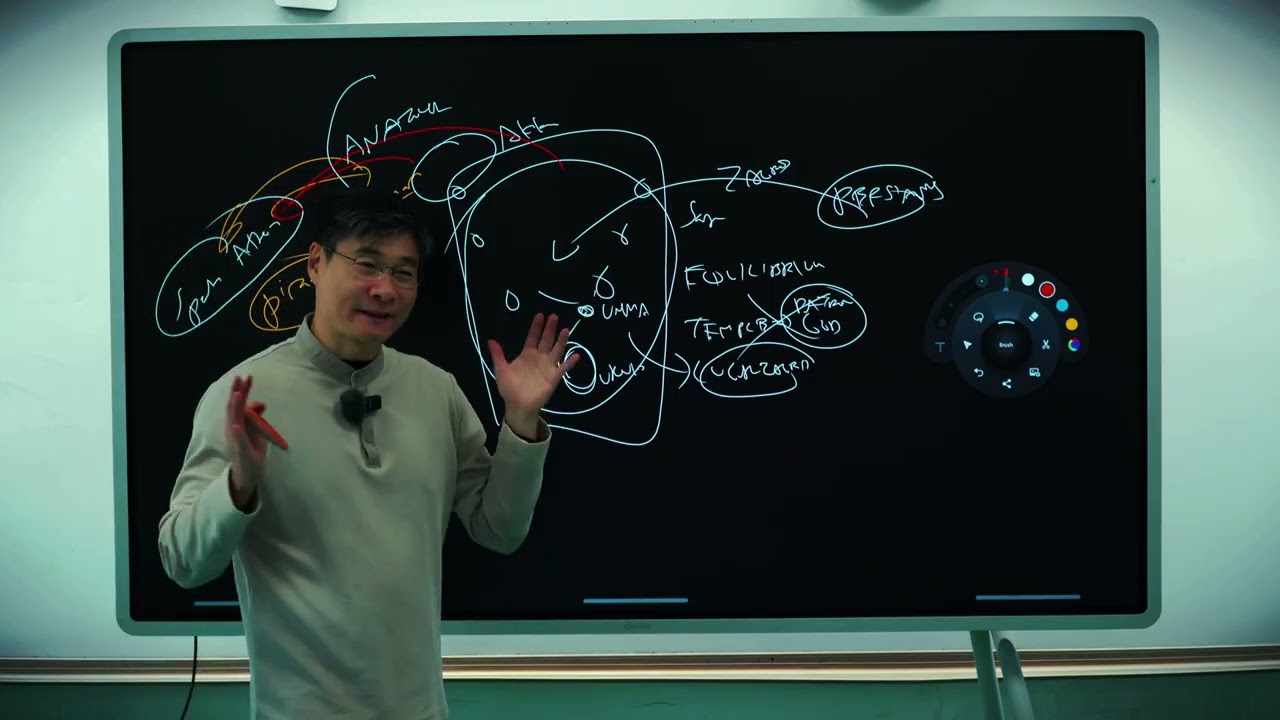
Okay. All right. So, let's discuss how civilization starts. So last class we understood that there's a major river, and on top of this major river you have a city develop. Okay, remember that we come together for religious purposes. We
04:21
Speaker A
have settlements in order to celebrate nature, celebrate God, um, celebrate our religion, our belief system.
04:29
Speaker A
And over time what happens is that, um, this system becomes unequal. It becomes hierarchical and therefore we leave. But there are some places that are strategic for trade purposes and therefore people don't want to leave because you can generate a lot
04:51
Speaker A
of wealth and prosperity in these places, and so they become, um, major cities. Okay. So the first city in world civilization is Uruk. Okay.
05:02
Speaker A
And over time they become more, more prosperous. They build canals. Uh, they learn farming. They develop their own mythology. Okay. And then what happens is that as the population grows and grows, they go off and colonize other places along the trade route. Okay.
05:20
Speaker A
Maybe upstream and then downstream as well. And then what happens is that these city-states are now in competition with each other.
05:33
Speaker A
And they have a system of competition called open cooperative competition. Okay, this is a very important concept because this concept is what gives us innovation. So if you have these three things in place, open, cooperation, competition, you'll be very innovative.
05:58
Speaker A
Open just means that you want to learn, you want to grow, you want to learn from others. Cooperation means that you are in contact with others so that you are learning the best practices from other people. Competition means that
06:10
Speaker A
you'll be better than they are. Okay? So in this system of city-states you have massive innovation, and we see this throughout human history. Okay. So think of China. When was China the most innovative? It was during the Zhou, right, the Spring Autumn
06:27
Speaker A
period. That's where we're getting Confucius from, Mencius. Okay. All the great ideas came from this period of the Zhou. Okay, this is also true for Mesopotamia. This is also true for Egypt as well. Okay, and eventually what happens is that these city-states, um, all
06:45
Speaker A
merge into an empire because during this process of innovation, one city will be more innovative than the others and therefore they will conquer the others. What's interesting often is that it is a city that is most disadvantaged that conquers the other cities because
07:06
Speaker A
you're forced to be more innovative. So in China, the classic example is the Qin, right? The Qin was in the mountains. They had lower population.
07:16
Speaker A
They were poorer. They were more isolated. And therefore they were more innovative than the Zhao, the Zhou, the Wei dynasties. Okay. Okay. And this is true also throughout human history. And so now you have an empire.
07:33
Speaker A
And at first this empire is extremely innovative. Why? For three reasons. Okay. The first thing is that it now has scale.
07:44
Speaker A
Okay. It has size. Therefore, it's able to draw in more resources. Second is the idea of standardization.
07:52
Speaker A
Standardization just means that now you're using the same monetary system, you're using the same laws, you're using the same, uh, communications network.
08:02
Speaker A
Okay, that allows for better use of resources. The last is the idea of centralization, meaning that you have one place controlling all activities elsewhere.
08:17
Speaker A
And that allows you to build canals, that allows you to build temples, that allows you to undertake massive public works projects. Okay. So in the beginning of the empire there's massive consolidation of innovation which leads to tremendous
08:31
Speaker A
innovation. Okay. But over time what happens is the empire becomes the opposite of an open cooperative competition system. Why? Well, first of all it becomes insular.
08:46
Speaker A
Okay. Then it becomes secretive and then it becomes a monopoly. That's what a bureaucracy is.
08:57
Speaker A
Hey, do you guys understand? Okay. Yeah. All right. So when an empire reaches a certain point of growth, it becomes a bureaucracy and therefore it kills all innovation. So this idea that civilization leads to innovation is wrong.
09:13
Speaker A
Okay. Civilization leads ultimately to corruption. All right. Now, um, what's interesting is that even though this is a general rule of human development, it's not always true. There are exceptions. Okay. So for example, one civilization that we know that did
09:38
Speaker A
not work out like this is something called the Indus Valley civilization, which is modern-day Pakistan.
09:44
Speaker A
And we'll discuss this later on, but they were actually, even though they had a city-state system, they were actually peaceful, egalitarian, and artistic.
09:54
Speaker A
Okay? They didn't go to war with each other. They didn't create a hierarchy. They didn't create a bureaucracy. And we'll discuss later on why this is the case. But this is something that you need to understand. Even though there
10:04
Speaker A
are patterns to human history, there are always exceptions to the rule. Okay? All right. So, um, over time the empire breaks down. Okay.
10:20
Speaker A
Why? Because you have a hierarchy in place. Okay? Hierarchy, a bureaucracy. The people are at the bottom.
10:31
Speaker A
And if you are a person in an empire, your life sucks. Okay? It really sucks because you're essentially a slave. Why?
10:39
Speaker A
Well, first of all, the empire goes to war a lot in order to protect its advantages.
10:45
Speaker A
Okay? So, they can at any time just take you to war and you get killed. Okay.
10:50
Speaker A
Second is the problem of debt. It's very easy if you, um, are a peasant to fall in debt. You owe rent to a landlord, then you have to sell your children. Okay, so debt really sucks.
11:09
Speaker A
immobility, which just means that you're just stuck where you are. Okay, so the people in the empire, their lives suck, but they're stuck where they are because of war, debt, and immobility. Okay. And as we discussed last class, uh the
11:27
Speaker A
bureaucracy will develop a methodology in order to just justify why they are like this. Okay. But at the very top, it's it's actually even more problematic because what happens is at the top you'll eventually have a problem of
11:42
Speaker A
elite over production. Okay, elite over production just means that there are only a few limited spots for the elite and the elite have too many children and therefore they fight.
11:58
Speaker A
Okay, they break up into different factions and each faction competes against each other for the right to be the elite.
12:10
Speaker A
And because of this conflict at the very top, you usually have three results. Okay, the first result is revolution where one elite tells the people to overthrow everyone else. Okay, so remember what's really important to understand is the people do not
12:28
Speaker A
um create the revolution. The people themselves do not rebel. It's always one faction of the elite help um working with the people to overall the other factions. Okay, that's what a revolution is. Second possibility is civil war. Okay, where the factions um
12:44
Speaker A
have different armies and they fight. And the third possibility is just they go to war with the empire. Okay, but uh this is a common pattern in history.
12:55
Speaker A
Now, what's really interesting is that as the empire falls, the pastoral people come and take over the empire. Okay, the step people or the pastoralists. Pashu just means that they don't farm for a living. They raise sheep, goats, and cows for a living.
13:14
Speaker A
Okay? They come and they take over the empire. Why is this the case? Because these people are the best fighters in the world. They have horses. They can they have they have they're archers.
13:27
Speaker A
Okay? So, they're the best fighters in the world. So what often happens is one faction invites them to be mercenaries in the struggle and eventually they re recognize you know what we don't have to fight for the prince we can take over
13:42
Speaker A
take over over ourselves. Another thing that happens is the faction that invites the mercenaries don't have enough money to pay them off. So the mercenaries are just like screw this we'll just take over the empire ourselves. Okay. Um and
13:55
Speaker A
what's important to understand is that throughout all this the pastoralists are always in contact of the empire through three things okay through trade through uh pillaging. So the pastors come and steal from the people and through being mercenaries okay so this is a pattern
14:12
Speaker A
throughout human history. So now the question we have to ask is why are the pastoralists so different from people of civilization and empire and the reason is geography.
14:28
Speaker A
What I will show you is that people who are passionless grow up in a different environment than the people of civilization empire and therefore they they de a different economy as well as mythology as well as culture. Okay. All right.
14:45
Speaker A
All right. Let's continue. But we're clear so far, right? Okay. So, um in the beginning, we had agriculture.
14:54
Speaker A
Why do we have agriculture? Because as we discussed before, uh people came together for religious purposes. They built temples and now you have to maintain the temples. Therefore, you build farms around the temple and develop agriculture. Okay. But because
15:08
Speaker A
of climate change and overpopulation, people always constantly forced to move to new places. So agriculture was first up in the Middle East and then it went over to Europe and it went over to um other places as well. Okay. So it spread around the
15:29
Speaker A
world. So when they went to Europe, they could actually maintain their agricultural practices because the climate and the geography and the terrain of Europe was conducive to agriculture. And as a result, Europe maintained the cultural practices of the
15:48
Speaker A
people of the Middle East. Okay? And so they had egalitarian, artistic and peaceful civilizations. Okay. So why they were peaceful is that first of all women were in control. Okay. Remember it's the most natural thing to have women be part of the political class.
16:10
Speaker A
Okay. So women were in charge. So if there's any conflict the women would just discuss it among amongst themselves and come to a harmonious conclusion.
16:17
Speaker A
Okay. they wouldn't have to fight. Second thing is there was no money because there was no property.
16:28
Speaker A
Okay, the agriculture is something that you work on together and you share. You don't there's no such concept as private property.
16:36
Speaker A
Okay, so in other words, no war, no conflict. So these are the three distinct characteristics of early human society. In an agricultural society, women are usually in command. There's no sense of private property. Everyone shares everything together and there's
16:52
Speaker A
no conflict in no war. People just discuss things and trade in order to reach a harmonious conclusion. Okay. So, um what this changes is that the city grows and grows and then you have a large city and so you need a
17:08
Speaker A
bureaucracy. Okay. But in Europe, what's really important to understand about Europe is that unlike China and Egypt and most of Britannia, it does not have a large river and therefore you cannot grow a big city in Europe. Okay?
17:23
Speaker A
So that allows them to maintain a pretty good life. Okay? So when they go to Europe, they're able to maintain the same cultural practices, but then they go to the steps. Okay?
17:37
Speaker A
And the problem with steps is you cannot grow food because it's all grass land. Okay?
17:46
Speaker A
You cannot farm. So now you have to change your cultural practice. So what was happening is that these people in the steps they started to trade with people of agriculture. Okay. Also you have people in in the agriculture who
18:01
Speaker A
moved to the steps and they brought with them cows and sheep and this changed everything because you as a person you can't eat grass but cows and sheep can. So now what you can do is you can base your entire economy
18:22
Speaker A
around animals as opposed to agriculture. Okay. Well, there's certain problems with cows and sheep. Okay. The first problem is that they're expensive. So, now you have a concept of private property money.
18:43
Speaker A
And this concept didn't really exist before. Okay? And so, if I see someone with a cow, I don't I don't have a cow. What do I do? I want to go steal it. Right? So this leads to conflict now war and
18:58
Speaker A
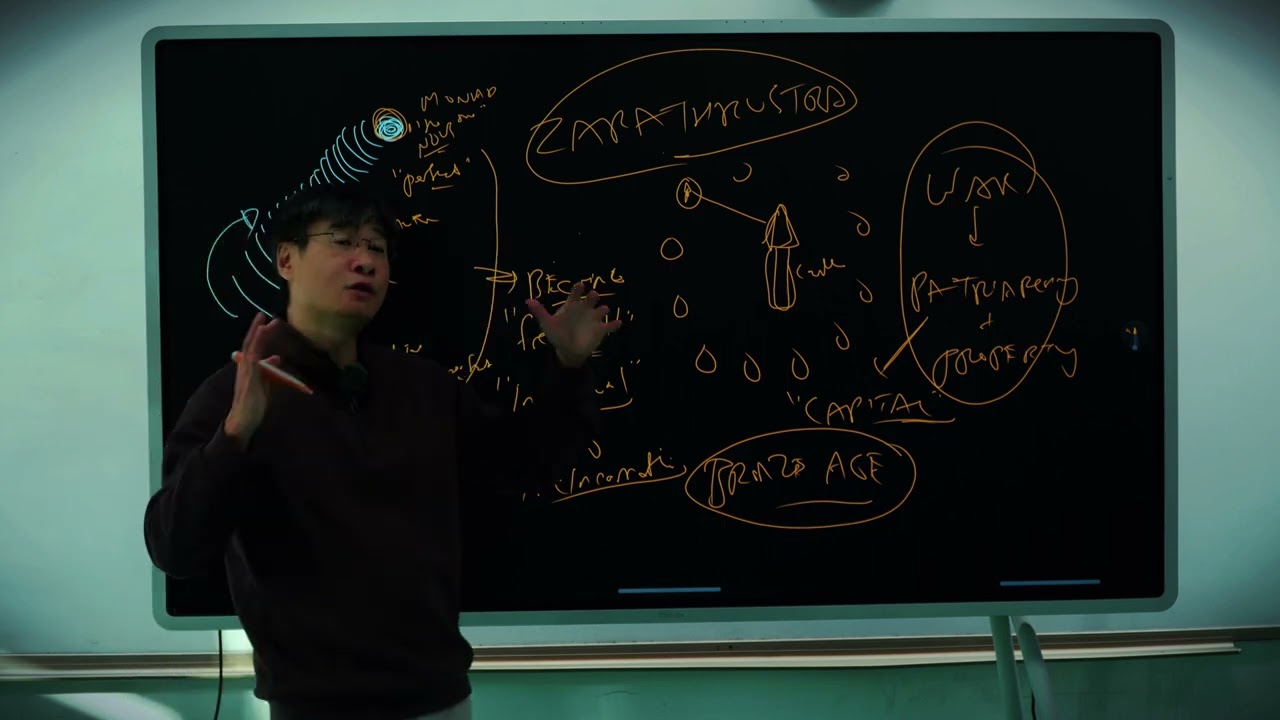
conflict. And because you have private property and war and conflict, you can't have a system run by woman. You need a system run by men. This creates a patriarchy.
19:13
Speaker A
Okay? So this is a very important principle in human history. These three things go together. Okay? Patriarchy, money and war. Okay, these three three things always go together. Patriarchy, money and war. Okay, so um this is changing the economy of
19:36
Speaker A
the steps and it's d in and it's and it's becoming different from agricultural societies. Okay. And now so now they need innovations in in order to deal with a new economy.
19:50
Speaker A
Okay. So let's go over some of their major innovations. The first major innovation that's very important is the idea of lactose tolerance.
20:01
Speaker A
You may not know this, but most humans cannot drink milk naturally. Okay? So you need to develop the enzymes to drink milk naturally. And so they were able to do that because they were forced to rely on cows and sheep for
20:14
Speaker A
their food. They had to learn how to drink milk. But when they learned how to drink milk, when they learned how to eat when when they started eating meat, guess what? They became stronger and taller. Okay? So for most of you in
20:26
Speaker A
history, the people of the steps were the tallest people in the world. They were the strongest in the world. Okay? That's the first major innovation that changed their history. The second major innovation is horse riding. Why? because the steps are
20:44
Speaker A
a huge area and it's flat so you can so you need to move around it a lot. Also remember cows and sheep eat grass. So when they eat this in this pasture and they finish all their grass they have to
20:57
Speaker A
move somewhere else. Okay. So the only way to protect your cows and sheep from other people is to be mobile. And so they learn how to domesticate horses.
21:09
Speaker A
Okay, which is a major invasion and it took a long time. And you can imagine how hard that is to do because if horses see you, what do they do? They run away.
21:18
Speaker A
So how do you train a horse to not run away and let the horse ride you? Well, it takes a lot and lot of effort. But because they had to do it, they managed to do it. Okay? And so with the horse
21:30
Speaker A
riding now, you can have another invention which is the wheel and the wagon. Wheel and wagon. Now you can put all your stuff in a wagon and move from camp to camp. Okay, you can cover the entirety of the steps.
21:49
Speaker A
Okay, does that make sense? Yes. Okay, and because of these three major innovations, you now have a different culture. Okay, so let's go over what makes their culture distinctive from other places.
22:06
Speaker A
Okay, the first is the idea of patriarchy. where um men are in control and the reason why they're control is because in the steps war is a constant thing. Okay.
22:21
Speaker A
So the culture becomes very masculine, very aggressive. It rewards aggression. It rewards courage. Okay. Um the other thing is that when you have a patriarchy in place, you can have more children.
22:35
Speaker A
Okay. When women are in charge, women tend to practice birth control because they want to make sure that every child is healthy and every every child lives to adulthood. Okay? They want to avoid the risk of dying in child birth. They
22:48
Speaker A
want they want to avoid the risk of their of their child dying young. Okay?
22:53
Speaker A
But with men are in charge, they basically get women to have as many kids as possible. Okay? Also remember in this world there's a lot of conflict. So you need as many uh boys to fight as possible. Okay? But then you have a
23:05
Speaker A
problem then if you have a lot of children what is what what you have a problem of inheritance like when you die your cows go to who right now let's assume you have 100 cows you have like 10 boys if you give if you
23:21
Speaker A
if you are fair and you give 10 cows to one boy well very quickly your family is going to be poor and because in the steps the weather is bad your cows are very likely to die Well then your entire
23:34
Speaker A
family could be extinct in two or three generations. So they invented a new concept called primogenature.
23:46
Speaker A
Primogenature. Primogenature just means that the eldest boy inherits everything that ensures that the family can stay can stay wealthy. Okay. All right. Now but now your problem is wait a minute.
24:01
Speaker A
If the eldest boy inherits everything, what do the other boys do? Well, they have to go and steal other cows. Okay?
24:09
Speaker A
And to do that, they form secret societies. Okay? Secret societies are just like basically just gangs. Okay? These gangs of young men who get together to do what? Well, they go steal cows and sheep. And what else do they do? They
24:25
Speaker A
steal woman. Right. Because Right. Right? I mean like what's the most most valuable commodity in the steps? Well, cows and woman. So that's what you steal. Okay. So this creates a culture of war and conflict constantly.
24:44
Speaker A
All right. And the third innovation is something called the patron client relationship. And this is actually how or patronage.
24:55
Speaker A
And this is what allows for the construction of society in the steps. So remember in a civilization you have bureaucracy. You have centralization. But in the steps you can't have that because you can't have that many people. So you have a
25:10
Speaker A
patron client relationship. And all that means is that uh it's like a mafia, right? I'm the big brother, you're the little brother. So maybe I have 100 cows and you need cows. So I lend you 10 cows. But now you're you are loyal to
25:26
Speaker A
me. Okay? I'm the big brother, you're the little brother. And this creates the idea of tribes.
25:33
Speaker A
Okay? Does that make sense? What's really important here is that in civilization, um, bureaucracy maintains control over people over debt. And so you become a slave, but in the steps there's no concept of slavery.
25:49
Speaker A
Okay? You're still a free and independent person, but you just pay, you're just loyal to your big brother.
25:58
Speaker A
So your big brother needs you to do something, you go do it for him. Okay?
26:01
Speaker A
So there's still a level of freedom in the steps that you don't have in civilization. And that's why they're such good fighters. Okay?
26:10
Speaker A
All right. So these three things are major um innovations. But now that you have these innovations, you need a new methodology to justify or explain these innovations.
26:27
Speaker A
Okay. And so what they had was a they went from the mother goddess. Okay. So mother goddess again is the religion of agriculture people to the sky god. And the mother goddess wants you to be harmonious. Okay. To be kind and
26:45
Speaker A
compassionate. What does the sky go want you to do? The sky god wants you to conquer and exploit. Okay? It wants you to destroy. It wants you to kill. It wants you to conquer, to steal.
27:00
Speaker A
Okay? And um also in this religion, horses and cows are very important. But as we discussed last class here, grain and nature are very important. Okay. So you see how this works, right?
27:19
Speaker A
Now what's important to understand is that because um this system does not allow for the creation of a bureaucracy, the steps always practice open cooperative competition.
27:40
Speaker A
And it's a system that forces you to be aggressive. It forces you to be independent. Okay? And it forces you to work hard.
27:52
Speaker A
And that's why people the steps are the greatest warriors in human history. And that's why when the steps people encounter the empire civilization, they usually are able to conquer the empire.
28:06
Speaker A
Okay? Does that make sense? Okay. So the steps are like a training ground for fighters and over time the fighters just become more and more fierce and what's ironic is those fighters who are the most fierce can stay in the steps. Those
28:23
Speaker A
fighters who are forced out the steps they go conquer the empire. Okay. All right. It's a constant pattern in human history. All right. Is that clear?
28:35
Speaker A
All right. Any questions, guys, before I do the PPT? Great. Okay guys. Yes. So, sorry. Can can you speak to the mic, please? So earlier you said that um uh these these people they inherit their uh to their oldest son right? So, so my
29:06
Speaker A
question is uh like is it like necessary for or um so they must inherit their inheritance to the oldest son or is it like they have some kind of a system to uh determine what which son can have the
29:24
Speaker A
best of their inheritance. Okay. Yeah. So their general principle is always the eldest son. Okay. That's to avoid conflict because if you open up to say okay well who's whoever is most brave whoever is most um noble whoever
29:38
Speaker A
who is most wise that means that they'll just fight each other okay and this is what happened after the death of Genghask Khan right so the general rule is you always give it to the eldest son but what if the eldest son has been
29:52
Speaker A
manipulated by his uh siblings it doesn't matter it does not matter okay all right so legacy of the steps all All right. So, as I discussed, what's happening is that Europe um at first was just hunter gatherer and
30:08
Speaker A
they were spread out. They did paintings in caves. They had a pretty easy life.
30:13
Speaker A
Okay? Not an easy life, but it was a free life. And over time, what would happen is that agriculture would develop in the Middle East and it would spread to Europe. Okay? Okay. And you can see the genetic change where the blue is
30:28
Speaker A
hunter gatherer and the orange is farmers. Okay. But then what happened um in about 2500 B.CE is the steps people who we call the Yamna actually. So there's different names. They're protoindo-uropeans.
30:41
Speaker A
The Yamnia you can refer to them as any. Okay. Steps, Yamnia, Portal Indo-Uropean, it doesn't really matter.
30:48
Speaker A
But they go to Europe as well and they start mixing with the um farmers. What's really important for our purpose purpose to understand is this. When the farmers went to Europe, they went as families, husband wife children.
31:06
Speaker A
And so they integrated into Europe pretty peacefully. Okay. But when the pastoralists, the Yamaya went to Europe, they went mostly as young men.
31:18
Speaker A
Therefore, that they kill the local men in order to marry their wives. Okay? And so basically um from DNA research, we know that it was a genocide. Okay. The uh European farming men were eliminated by the pastoralists.
31:40
Speaker A
Okay. And we have always remember that the pachlist, they were stronger. Okay. They were taller um and they're more aggressive. Okay.
31:54
Speaker A
All right. Yeah. So, this is another map that shows the same thing. What you need to understand is this. This movement is global. Okay. So, the farmers went to Europe, but they also went to India and Iran. Okay? They basically went wherever
32:09
Speaker A
they could go. Same thing with the Yamaya. Okay, so this this is the Yamaya people. They went to Europe, but they also, look at this, they also went to Iran and India. And we know because when we study the languages, uh, Persian,
32:26
Speaker A
okay, Hindi and European languages, they're basically the same languages. So, we know there had to be one common mother language to them.
32:38
Speaker A
Okay. So there's another map showing you the Yaya again. Um they went to Europe but they also went to in India. Okay. As well as Iran and by mixing with local uh customs and religion they created new religions that had tremendous impact on
32:57
Speaker A
world civilization. So in um Iran they will give birth to Zorashianism which we'll discuss later on. Okay. And the these are the Avestas which is the Bible of of Zarastrianism and uh India they uh of course gave birth to Hinduism
33:15
Speaker A
um and these are the vidas which is a bible of Hinduism we'll discuss this later on in the semester but I want you to be aware of this okay so again we know that this happened at first because
33:26
Speaker A
of linguistic studies when we looked at different languages we discovered there are common words to them so look let's look at father okay when Latin is patar Greek patus Persian Padar Hindi Pitha.
33:38
Speaker A
Pretty similar. Okay. Similar mother, mother, matar, mitra, madar, mad. So we, so from different lingu linguistic studies, we know they had to be a common language to all of them. And that's why we hypothesize about the protoindo-uropeans.
33:54
Speaker A
Um, this is even more stark example where the protoindo-uropean 2 is dual. Okay. And you can see how it spreads to other languages in the protoindo-uropean family. So that you go from uh dua to tua to two in English.
34:13
Speaker A
Okay? So all these languages are interrelated. That's why if you speak one like English, it's pretty easy for you to learn the other languages as well. Whereas if you speak Chinese, it doesn't really help you when you go
34:24
Speaker A
learn other languages. Okay. All right. Now linguist linguists have done studies of words that are distinct to protoindouropean and these are the words that they discovered. Okay. B cow, ox, ram eel dog grain cauldron wrestling wealth households families
34:45
Speaker A
clans. These words are unique to their culture. And therefore, we're able to group these words together and discover there are four characteristics. Okay, first of lots of words for wheel. They have words for uh dairy. They don't have
34:59
Speaker A
farming terms and they have words for horse. Okay? That's why we're able to figure out that these are nomadic pasturalists. Therefore, they must be from the steps. Okay? And then through archaeology and DNA DNA studies, we're able to have a better understanding of
35:15
Speaker A
who they are. Okay? And as I said, they have to be past. Okay? Because of the way they use words.
35:26
Speaker A
Um, so let's about old Europe before the Yami come and conquer them. Okay, so this is Maria Gmbhutas who is an American Lutheranian anthropologist and she's the first to hypothesize that old Europe must have been conquered by these people because she did a lot of
35:45
Speaker A
archa archaeology and discovered that their culture was primarily uh peaceful. It honored women and it exposed egotarinism. Okay, this is exactly what I said previously and the Yama people were completely different.
35:58
Speaker A
They were a patriarchy, quite a part of property and which was very aggressive. Okay.
36:05
Speaker A
Um she wrote many books um the language of the goddess and she like her work is amazing. Okay. So if you have a chance please do study her work and um so let's write let's read what she wrote. Okay.
36:19
Speaker A
So this is a mother god of civilization. Something that we we thought we've discussed a lot in this class. The goddess in our manifestations was a symbol of the unity of all life in nature. Her power was in water and stone
36:29
Speaker A
in tomb and cave in animals and birds, snakes and fish, hills, trees and flowers. Hence the holistic and mythopoic perception of all the sacredness and mystery of all there is on earth. Okay. So again this is a religion that practice balance and
36:44
Speaker A
harmony because everything is sacred. Therefore, you cannot destroy life without first getting permission from the mother goddess. Okay. This culture took deep delight in the natural wonders of this world. Its people did not produce lethal weapons or build forts in
37:00
Speaker A
inacceptable places as her successors did even when they were acquainted with metallurgy. Instead, they built magnificent tombs, shrines, and temples, comfortable house in moderatelysized villages, and created superb pottery and sculptures. This was a long-lasting period of remarkable creativity and
37:17
Speaker A
stability and age free of strife. Their culture was a culture of art. Okay, so this is a very nice place. They don't fight. They're egalitarian. They practice art. Okay. And what's really important for us to understand is they
37:32
Speaker A
had writing systems. They had m they had technology. They just chose not to use it for war because it was against their religion.
37:42
Speaker A
Um so they they also had writing systems and they had symbols. Okay. And this is something that u Mares has done a lot of research in. Okay. I won't go into their writing system. Um so when the came they
37:56
Speaker A
basically completely invert the culture. So for example the Europeans the old Europeans believed that the snake was symbol of life energy and regeneration.
38:06
Speaker A
A most benevolent non evil creature. It was a Y who introduced the idea that the snake is a devil. Okay. All right. And that's where we get the B and that's where we get the concept in the Bible
38:15
Speaker A
from. Um, black to them is a good color. White is a bad color. Why? Because black symblies life. White symbolizes death.
38:24
Speaker A
Right? Black did not mean death or the underworld. It was a color of fertility.
38:28
Speaker A
The color of damp caves and rich soil of the womb of the goddess where life begins. White on the other hand was the color of death of bones. Okay. And again when the come they will invert this. Um
38:39
Speaker A
what's really important to understand is in this society women are in control. They have power and agency. And why?
38:46
Speaker A
Well it turns out that um this book Sex and Dawn Sex at Dawn. Okay. It turns out that women are just um better at man managing social relationships than men are. Okay. So this is Sex at Dawn by Christopher Ryan.
39:02
Speaker A
And um he tries to show us that for most of human history, women had sexual agency. And one piece of evidence is the fact that human men have larger penises.
39:15
Speaker A
In fact, the largest penises of all primates. Okay? So gorillas are much bigger than we are. We have bigger penises. Why? Because um we have to compete in order to put our semen into women, right? Because women have multiple sexual partners. So
39:31
Speaker A
that's one major advantage of sexual freedom for women. Men have bigger penises. Okay. All right. Um even when women had long-term intimate partners, husbands, they had se sexual partners. Okay. So the idea is that for most of human history, love and sex were
39:47
Speaker A
not the same thing. Love is intimacy. Sex is just fun. Okay. Um in some societies, women would have many husbands, usually brothers. Okay? That's a way to maintain peace and harmony in your society. Okay. If a woman is
40:02
Speaker A
allowed to marry many brothers together. Okay. All right. So, um the book looks at the mill million people where they practice um sexual freedom for women and the explanation is that semen was essential to human growth and development. Okay.
40:24
Speaker A
So, so if a bride got married, then all the men would come and impregnate her because the idea is that semen is sacred and they want to give her as much life as possible. Okay.
40:36
Speaker A
All right. Now, you may be disgusted by this, okay? But I think there's a very good counter-argument. Okay. So, the argument is that I is that it's not honorable for a woman to love anyone except her husband. and that this evil
40:51
Speaker A
being among them, he himself was not sure that his son who was there present was his son. Okay, so the system sucks because if you're a guy, how do you know that that person is your son? And the
41:04
Speaker A
natives respond by saying you French people, okay, so he's talking about the French missionary, you French people love only your own children, but we all love all the children of our tribe. Okay. So that's what what humans can do. We can love each other. There's
41:22
Speaker A
no limit to our love. So in the system that we have today, a patriarchy, we only love our own children. But in their system, the agent system, everyone loved each other's children. Okay? Everyone loved all children. And quite honestly,
41:35
Speaker A
in this system, it's better to be a a child, right? And in this system, you would never ever develop depression.
41:43
Speaker A
Okay? All right. Again, women are just better politicians than men because women are more willing to cooperate. Women have more emotional intelligence and women can use sex and gossip as mechanism of control. Okay? So, this is all pretty
41:57
Speaker A
common sense, right? All right. But then question then is if this world is so wonderful, why did it collapse? Well, there are three major issues with agriculture societies. Okay.
42:09
Speaker A
The first major issue is that it's static. It does not innovate. Second major issue is climate change. If the weather changes on you, you're screwed.
42:17
Speaker A
The third problem is disease, right? Because you're living close to animals. You're living close together. So if a disease hits you, you're all screwed.
42:25
Speaker A
Okay? And that's very different from the p from the seps people who live far apart from each other. Okay? All right.
42:31
Speaker A
So we know that in Europe the farmer communities uh the population went collapsed. Okay. So so this is the level of carbon dioxide in the air. We can measure the level of carbon dioxide in the year. We know that in about the year
42:44
Speaker A
3000 BCE the population collapsed. Okay. All right. It collapsed everywhere in Europe. Why this happened? The plague guys. Okay. That's a problem with being a farmer. You are always susceptible to the plague. So we know that maybe you
43:00
Speaker A
know um 4,000 5,000 years ago a plague broke out. Okay. The black death basically by rats. Okay. And remember in this world we trade with each other. So the black death was able to go everywhere and wipe out farming
43:16
Speaker A
communities. Okay, even spread as far as China. Okay, but but the thing though is the the steps people are not as impacted because they live far apart from each other. So if one got the disease, you're not going to spread it to your entire
43:29
Speaker A
family or sorry your entire community whereas a farmer community they will. Okay, so there's this huge drop in the population because of black death in Europe. Okay, that's number one. Number two is climate change. So we know that
43:43
Speaker A
um now and then there's this huge climate change and that destroys our culture forcing people to migrate and this is what we suspect happened in old Europe as well. Okay. And so what's happening now is that because your
43:58
Speaker A
society is static because of disease because of climate change the population in Europe went all the way down leaving the MI opportunity to come invade. Okay.
44:07
Speaker A
And they did come invade. So as you can see uh when the agricultural people came they came as families okay so the so the blue is the man the red is the woman okay so uh one to one they go into
44:19
Speaker A
Europe but when the yama come they come as young men okay so it's mainly blue okay and of course what do young men do they come and they steal your woman okay that's what young men guy do do guys all right and over
44:35
Speaker A
time what they will do is slowly establish new cultures because what's happening is that their culture is blending with other cultures as well and why this is happening is the geography is different right so in the steps they
44:49
Speaker A
have a certain culture but when they move to our culture they now have to combine their culture with the local ones and this happens in um everywhere producing different cultures and producing different languages as well okay so all of Europe was radically
45:09
Speaker A
transformed be because of this migration and again this migration it was basically a genocide. So you look at Britain, okay, the people who built Stonehenge are gone. This is a farming agricultural community worship the monoliths, okay? And all this wonderful
45:24
Speaker A
scientific technology that's now lost to us because what would happen is the Mi would come and kill everyone. Okay? So this the blue is the farmer people, the red is Na total genocide. Okay guys, men and women were all killed. Why? Because
45:39
Speaker A
maybe they chose the men and women chose to fight together. Okay? Um in Spain it's a different story because um what happened is that all the men will be replaced. Okay. So the white chromosome is the male chromosome. So
45:56
Speaker A
before the year 2000 BCE uh you had a lot of blue, right? But as you can see if you move further it's all gone. They killed all the men in Spain. Okay. When they went to India it's a different
46:08
Speaker A
story because India Indians in that time were more peaceful. So they came to a settlement where the new conquerors would be at the top society and the people would be and the locals would be at the bottom. Okay. So there wasn't
46:22
Speaker A
that much of a genocide but we can we had a cast system created because of that. Okay. And we know because if you look at the upper cast they all spoke Indo-Uropean. If you look at the lower cast people they spoke the local
46:34
Speaker A
language Dravenian. Okay. Does that make sense? So depending on the circumstance uh the result is different. All right.
46:45
Speaker A
Okay. This is a wonderful book called The Horse, the Will and Language written by David Anthony who's a Harvard anthropologist and he explains to us the Naya culture and why they were so dominant. Okay. So, one thing um that is
47:01
Speaker A
unique to the Amnia is their mythology. It's a mythology of violence, of struggle, of dominance, of conquest.
47:10
Speaker A
Okay? And how the mythology works is in the beginning there were two brothers, twins, one named man and the other named twin. They go around by the world and they're accompanied by a great cow.
47:22
Speaker A
Eventually man and twin decided to create the world we now inhabit. Due to this man had to sacrifice twin. Okay, he had to kill his own brother, the person he loved in order to create the world.
47:32
Speaker A
And the gods thanked him for that. The gods blessed him for that. Okay, so this is a world that is pretty violent. Okay.
47:40
Speaker A
Um, after world was made, the sky gods gave cattle to third men. But the cattle were stolen by a three-headed six-eyed serpent. Okay. The snake. Third men entreat intreated the storm. Got to help get the cattle back together. They went
47:55
Speaker A
to the cattle um of the monsters killed it and freed the cattle. Okay. So, this is a mythology of struggle. Okay. And what's really interesting is that this mythology becomes the the mythology of all new uh protoindo European
48:12
Speaker A
civilizations including the Romans and the Mongolians. Okay. So this is Genghask Khan. His mythology is what he kills his best friend to become the leader of the Mongol people. And what's the Roman mythology? Ramlas kills his twin brother to found Rome. Okay.
48:31
Speaker A
All right. So that shows you that the Mongols and the Romans, they come from the same culture. Okay? A culture based on violence and exploitation.
48:42
Speaker A
All right. So now Anthony talks about the economy. Domesticated cattle and sheep started a revolutionary change in how humans exploited the pontiac caspian step environment. Because cattle and sheep were cultured like humans, they were part of everyday work and worry in
48:57
Speaker A
a way never approached by wild animals. Humans identify with their cattle and sheep, wrote poetry about them, and use them as currency in marriage gifts, debt payments, and the calculation of social status. Okay? Now, we have the beginning
49:08
Speaker A
of money and property, right? And they were grass processors. They converted plains of grass, useless, and even hostile to humans into wool, fed clothing tents milk yogurt cheese meat, marrow, and bone. The foundation of both life and wealth. Cattle and
49:25
Speaker A
sheep herds can grow rapidly with a little luck. Vulnerable to bad weather and theft. They can also decline rapidly. Hurting was a volatile boom bust economy and required a flexible opportunistic social organization. So they live in a world of tremendous
49:39
Speaker A
volatility because the entire world was a cattle. If the cattle died because of a bad storm or because of bad luck, they were completely screwed. Okay. Okay. So they they were very aggressive people and they um were opportunistic as well.
49:54
Speaker A
That's different from farmers who can just afford to sit back and relax because nature will grow the food for them. Okay.
50:05
Speaker A
The connection between animals, brothers and power was a foundation on which new forms of male-centered ritual and politics developed among Indo-Uropean speaking societies. This is why the cow and brothers occupied such a central place in Indo-Uropean myths relating to
50:18
Speaker A
how the world began. Okay. So this is a deeply patriarchal society. All right. All right.
50:28
Speaker A
Participation in long-d distanceance trade give exchange and a new set of cults requiring public sacrifices and feasting became the foundation for a new kind of social power. Stock breeding is by nature a volatile economy. Herders who lose animals always borrow from
50:40
Speaker A
those who still have them. The social obligations associated with these loans are institutionalized among the world's pastoralists as a basis for a fluid system of status distinctions. Those who loan animals acquired power over those who borrow them and those who sponsored
50:54
Speaker A
fees obligate their guests. Early protoindouropean include a vocabulary about verbal contracts bound by oath used in later religious rituals to speify the obligations between the weak and the strong. Okay. All right. So the idea here is there's no slavery in the
51:10
Speaker A
system. Okay. But there is obligation. There is loyalty. If I take you out for a meal, guess what? Now you owe me a meal. If I take you out for a meal, you now I'm now your big brother. Okay? And
51:21
Speaker A
that's what keeps the society cohesive. And this is important because if no one's a slave and everyone's free, then everyone is a great warrior because you're fighting for yourself. Okay?
51:33
Speaker A
You're not fighting because someone asked you to. That's why in wars between empires and these people, these people usually win. Okay? Because they're much more motivated.
51:46
Speaker A
All right? Wealth, military power, and a more productive hurting system probably brought prestige and power to the identities associated with protoindouropean dialects. After 33 BC, the gas host institution extended the protections of old bound obligations to new social groups. An Indo-Uropean
52:02
Speaker A
speaking patron could accept and integrate outsiders as clients without shaming them or assigning them permanently to submissive roles as long as they conducted the sacrifices properly. Praise posture of public feast encouraged patrons to be generous and validated the language of the songs as a
52:16
Speaker A
vehicle for communication with the gods who regulated everything. Okay. So another way of saying this is that even though there are wealthy people and poor people, they are still treated with respect. Okay. Okay, it's a very egalitarian society.
52:32
Speaker A
Okay, and what keeps the system in place is the belief in the gods. Okay, the belief that if I do you a favor, then you owe me the favor. We have a contract now. The gods oversee the contracts. And
52:46
Speaker A
what's really important is that this is an open-ended system. So, it's easy for me to bring in more people into this system.
52:53
Speaker A
Okay. Okay. Okay. And that's how and that's why again they were such an innovative, cohesive and open society.
53:02
Speaker A
Okay. The last thing we'll talk about are these um young men who enter secret societies. Okay. And enter secret societies and become um you know like this mafia gangs. Okay. The institution of the Morabon, the warrior brotherhood of young men bound by oath to one
53:19
Speaker A
another and to ancestors during a ritually mandated raid has been reconstructed as a central part of protoindouropean initiation rituals.
53:26
Speaker A
Okay. It's a very important part of society because these young men otherwise have no place to go. Okay. And if you if you want to know who they are, they're basically the Vikings. Okay. So the Vikings are the direct um
53:39
Speaker A
descendants of these people. Okay. All right. All right. So, let's talk about the the Mongols. The Mongols conquered the world, most of the world. And they and the question is how do they do it? Okay.
53:54
Speaker A
And I've already told the answer. Okay? Because the steps people have always been good at conquering empires. Um these are the Mongols. Uh the secret weapon of course is a horse archer. This is like the ultimate weapon for most of
54:08
Speaker A
human history. You could you could not defend against a horse archer. They were fast. they were strong um and these were the best warriors in the world. So um this has been considered a pattern in human history. First the Yamaya came and
54:23
Speaker A
conquered Europe, India and Iran. But then you have the cythians. Okay, same place, same people, same culture. Um guys, this is not a race of people. This is a culture of people. Okay, because remember at this time in human history,
54:39
Speaker A
genetic exchange is very common. Okay, the cyians were dominant. Then you have the medians who would later on give rise to the Persian Empire. Okay, sorry.
54:50
Speaker A
Oops. Okay. Sorry. Okay. Then you had So, can can you see this? Okay. So, now what's going to happen is is this. You're gonna have you're gonna so the steps people are all around the grassland. Now China emerges
55:13
Speaker A
as an empire and this is the Han Empire and this is really the last Chinese dynasty. Why? Because they are ethnically Chinese and they're proud of who they are. So what they're going to do is they're going to try to destroy
55:24
Speaker A
the Sepsible once and for all. Okay? So they move a huge army into the steps to try to limit the threat. And what what happens now is it forces a cascade effect where these people are now forced to go westwards which which forces them
55:38
Speaker A
with people over here. Okay. And so you have this huge migration all the way to the Roman Empire. Okay.
55:48
Speaker A
Okay. So this is what the map shows us. Okay. China forces the Huns the Shunu westwards which then forces these other groups to go elsewhere. Okay. So again the strongest people stay in the steps.
56:00
Speaker A
The weakest people go and conquer empires. Okay this is a process of constant innovation.
56:09
Speaker A
Um the the Han Empire. Okay Han. Then you have the Turks emerge. Um uh this is the Mongol Empire and as you can see they conquered basically most of the world. Okay.
56:27
Speaker A
Um and because they conquer most of the world and the world is is unified then you have the black death. Okay, which wipes out most of Europe as well. About a third of Europe is wiped out in the
56:37
Speaker A
black death. Okay. And the last great conqueror is Timberlane. Okay. Timber the lane. The great last great conqueror of the from the steps um and he conquers most of the world. Okay. So this is really important principle. Remember the
56:49
Speaker A
steps people are the most innovative, the most open, the most aggressive, the most courageous and that's why they're the greatest conquerors in history.
56:56
Speaker A
Okay. But eventually what happens is we develop gunpowder. Okay? And now the steps will be conquered by civilization.
57:06
Speaker A
But this was the turning point in history, the event of gunpowder. And so now what's going to happen is that civilization will now attack the steps people and reduce the step people culture. Okay. And that is it. Right.
57:22
Speaker A
Okay. Any questions guys? Um so so I was wondering like uh so the bombarians the steps are they're capable of developing uh re religions like because they are all conquering all around the world so it's difficult for them to like build up temples right
57:43
Speaker A
okay so religions don't require temples religion is just collective belief so as I say as I keep on saying in this class all humans have a religion Okay, a religion is just a worldview, understanding of how the world works.
57:59
Speaker A
That answers three questions. Where do we come from? Why are we here? Where are we going? Okay, even today, even though we're atheists, we're still religious.
58:08
Speaker A
Okay, but we worship money, materialism, science. So these people the steps they worship the horse, the sky god, the cow, they worship war, they worship um courage and bravery. Okay. So every culture, every person has a religion of some sorts
58:28
Speaker A
because because you because it's impossible for you to understand the world and operate in the world without a religion. Okay? Especially for groups.
58:35
Speaker A
Okay, any more questions? Okay, great guys. So we'll so we'll continue our discussion of human history next class. Okay.
Topics:civilizationsteppesGenghis Khaninnovationempirebureaucracycity-statesIndus Valleyhistoryconquest

Frequently Asked Questions

Why were steppe peoples able to conquer great civilizations despite being labeled as barbarians?

The video argues that steppe peoples were actually open, curious, and innovative, whereas civilizations became closed and bureaucratic, which led to their decline and vulnerability.

What is 'open cooperative competition' and why is it important?

'Open cooperative competition' is a system where city-states learn from each other, cooperate, and compete, fostering innovation and growth within civilizations.

How do empires contribute to the decline of innovation?

Empires grow large and centralized, becoming bureaucratic, secretive, and monopolistic, which stifles innovation and leads to corruption and eventual decline.

Get More with the Söz AI App

Transcribe recordings, audio files, and YouTube videos — with AI summaries, speaker detection, and unlimited transcriptions.

Or transcribe another YouTube video here →