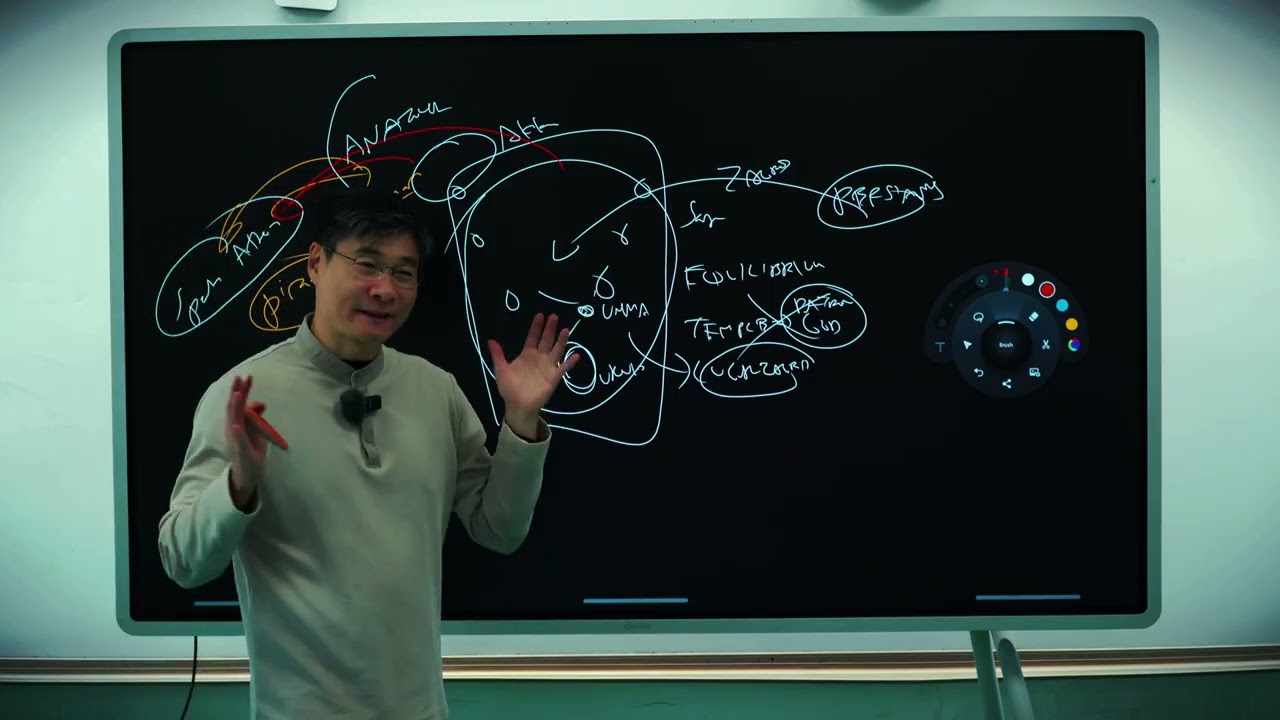
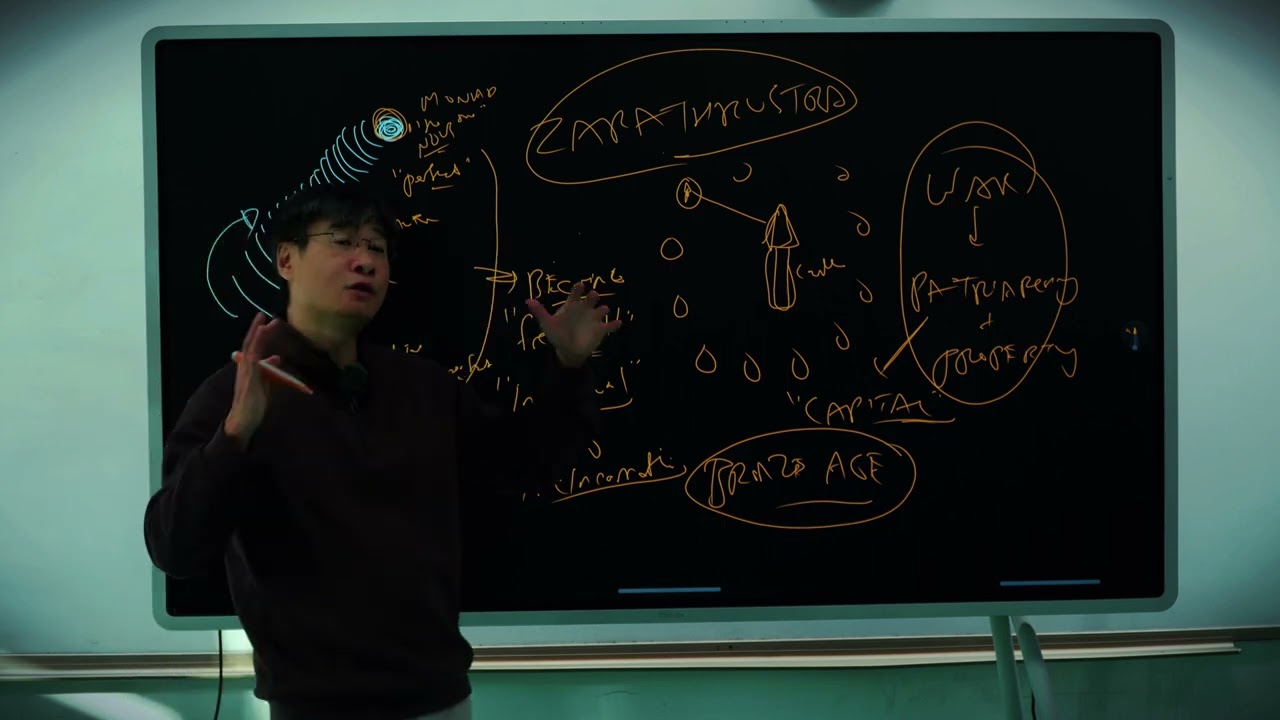
Explores traditional vs alternative views on civilization's origins, focusing on religion, trade, and hierarchy in early societies.
Key Takeaways
- Civilization did not create religion, arts, or science; humans possessed these inherently.
- Hierarchical structures in civilization are often justified through constructed mythology.
- Temple economies were early forms of taxation and resource redistribution.
- Geography and trade were crucial in the development and expansion of early civilizations.
- Mainstream historical narratives may underestimate the agency and creativity of early humans.
Summary
- Traditional Marxist view sees civilization arising from agriculture, surplus food, and a hereditary elite enabling arts, science, and religion.
- Alternative view argues humans were inherently religious, artistic, and scientific before civilization, which is a tool to justify hierarchy.
- Early temples served as religious centers and hubs for farming, trade, and redistribution of resources, forming a 'temple economy'.
- Writing and money developed to manage temple economies, record trade, and ration food.
- Civilization is framed as a device to legitimize hierarchical power structures through mythology and divine justification.
- Four earliest major civilizations—Egypt, Mesopotamia, Indus Valley, and China—share key traits: favorable latitude, proximity to major rivers, and access to seas for trade.
- Trade and geographic factors enabled the growth of large cities and colonies along rivers, expanding trade networks.
- These civilizations connected vast regions through trade, facilitating cultural and economic exchange.
- China's geography is unique due to the Himalayas, affecting its trade connections compared to other early civilizations.
- The video challenges mainstream academic narratives, emphasizing human creativity and social dynamics over imposed elite control.