Secret History #15: Capital and the Bronze Age Collapse — Transcript

Explores the Bronze Age Collapse, focusing on bronze as capital, global trade, warfare, and the sudden fall of ancient civilizations around 1200 BCE.

Key Takeaways

  • Bronze functioned as an early form of capital, essential for both warfare and social status.
  • Global trade networks were vital but vulnerable, especially due to the scattered nature of tin resources.
  • The Bronze Age Collapse was triggered by a combination of environmental, economic, and social factors.
  • Some civilizations like Mesopotamia showed resilience due to their adaptive warfare strategies.
  • Understanding the Bronze Age Collapse provides insights into the risks of interconnected global systems.

Summary

  • The Bronze Age Collapse involved the fall of major civilizations like the Shang dynasty, Mycenaean Greece, and the Hittite Empire around 1200 BCE.
  • Bronze, an alloy of tin and copper, was crucial for weaponry and became a form of capital due to its universality, storability, and mobility.
  • Four early major civilizations—Egypt, Mesopotamia, the Indus Valley, and China—developed along major rivers facilitating agriculture and trade.
  • Trade routes expanded to access scattered tin deposits, essential for bronze production, leading to increased warfare over control of these routes.
  • The Indus Valley civilization was unique in being peaceful and not engaged in warfare, despite being part of the globalized Bronze Age system.
  • Mesopotamia was the most resilient civilization due to its constant history of warfare and empire changes (Akkadian, Babylonian, Assyrian).
  • The Sea Peoples, possibly refugees from Europe, attacked Egypt and other civilizations, contributing to the collapse.
  • A 'perfect storm' of climate change, drought, famine, and migration crises destabilized the Bronze Age world.
  • Bronze transitioned from weaponry to status symbols and capital, influencing social and economic structures.
  • The collapse was sudden and devastating, reshaping the ancient world and offering lessons relevant to modern globalized societies.

Full Transcript — Download SRT & Markdown

00:02
Speaker A
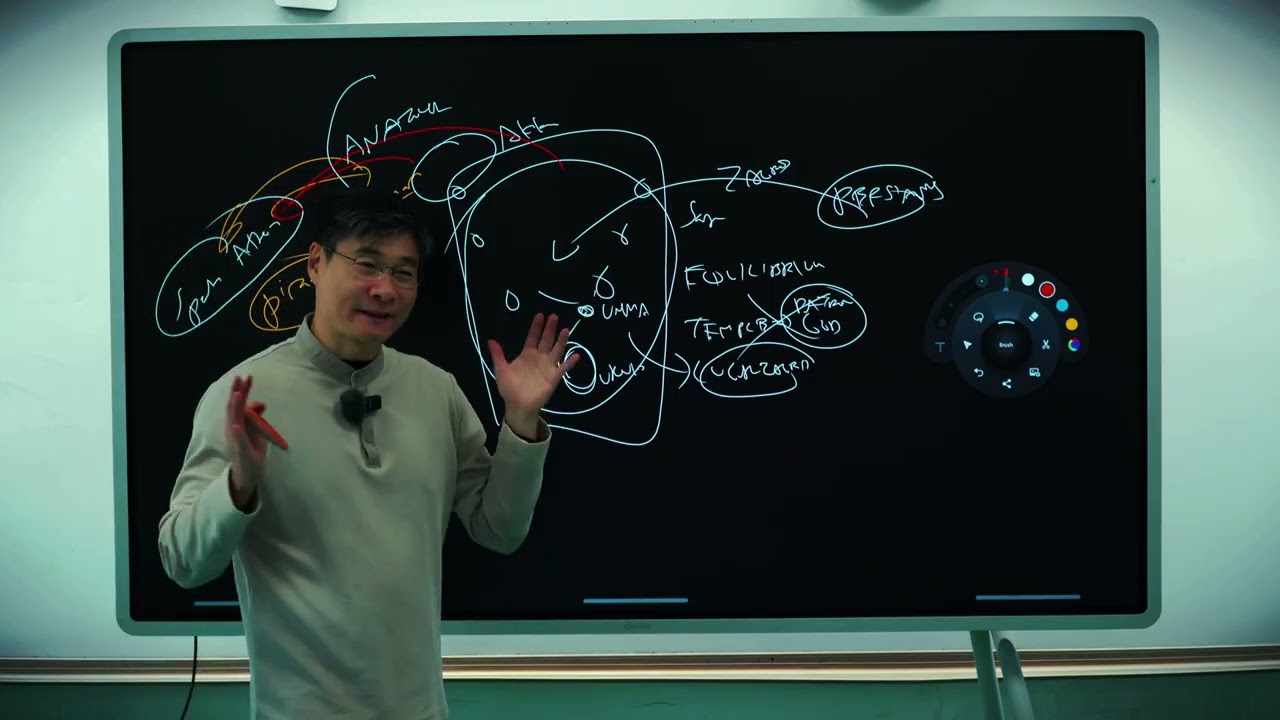
Okay, so let's start class. Today we are doing the Bronze Age collapse. So let's review where we are in history.
00:30
Speaker A
And as we discussed, the reason why the four they are the first four major civilizations is that they have major rivers that allow them to develop agriculture as well as trade overseas.
00:44
Speaker A
Okay, so remember the four earlier civilizations are Egypt, Mesopotamia, the Indus Valley, and of course China.
01:02
Speaker A
city is Eur China it's the yellow river right um so in this valley is in this valley uh is the Indis river and and now these different city states will go to war in order to control trade routes and this
01:20
Speaker A
And as we discussed, the reason why these four are the first four major civilizations is that they have major rivers that allow them to develop agriculture as well as trade overseas.
01:36
Speaker A
Okay bronze. Bronze, as you know, is an alloy of tin and copper. So, you need both in order to create bronze, which is the strongest metal. It's ideal for shields, for armor, and for swords. And whoever has more bronze weaponry will win any war.
01:58
Speaker A
And as we discussed, what will happen is that they will have a major city, and this major city will have colonies along the major river.
02:14
Speaker A
here, and over here, over here. Okay, they're everywhere basically, but it's not concentrated. Therefore, you must now build more trade routes in order to access tin. Okay? So, what's going to happen now is that more trade routes will develop in order
02:33
Speaker A
Okay? So in Egypt, it's the Nile. In Mesopotamia, it is the Euphrates and the Tigris, and the first city is Ur. China, it's the Yellow River, right?
02:44
Speaker A
All right. And now this world is globalized in order to facilitate warfare. Now what's interesting is the Indis Valley itself it's not like Egypt, Mesopotamia and China. It is not engaged in warfare. We've done archaeology in the Indis Valley in modern day Pakistan.
03:06
Speaker A
Um, so in this valley is the Indus River, and now these different city-states will go to war in order to control trade routes, and this
03:23
Speaker A
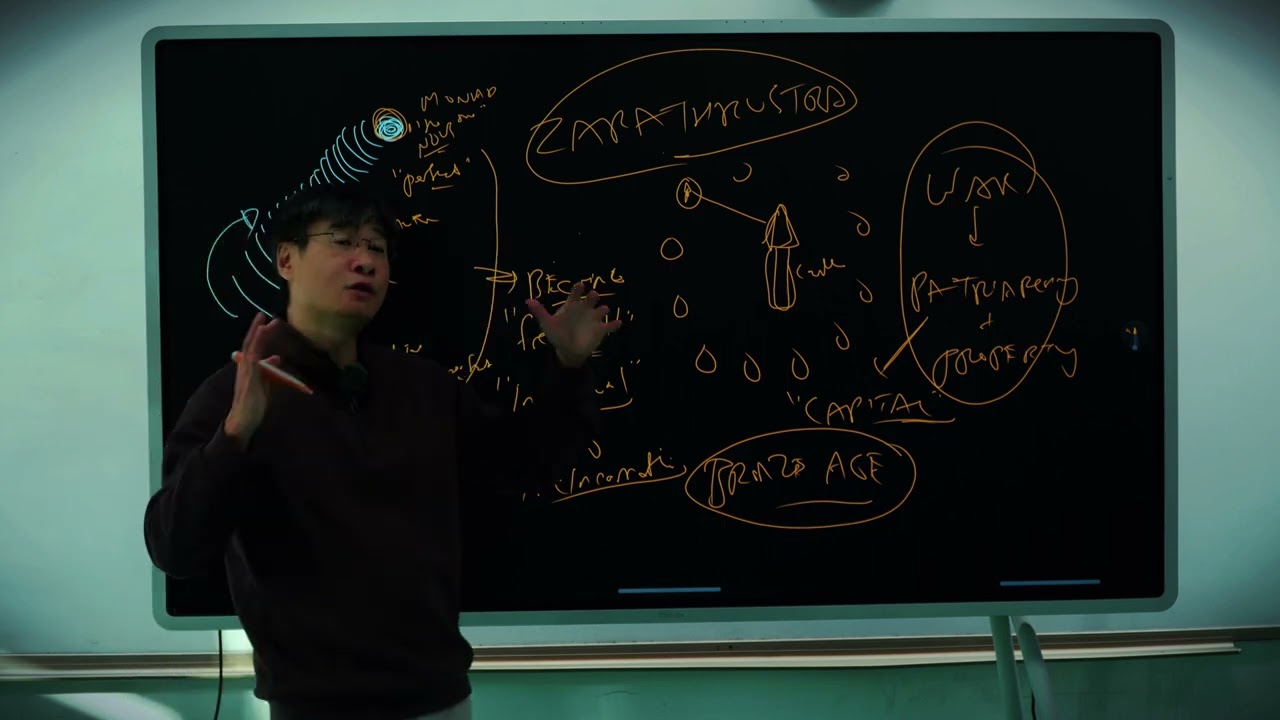
bronze changes from weaponry into status. Okay? Um meaning people use it for pottery, for jewelry. And then eventually what happens is that bronze itself becomes capital.
03:41
Speaker A
leads to a time of major innovation in human history. At the same time, because of these wars, they need better and better equipment, and so eventually they will develop bronze.
04:02
Speaker A
system collapses. In fact the collapse is sudden and devastating. So remember in if you know Chinese history you will know that this is the Shan dynasty right? Guess what guys about the year 1200 it collapses.
04:18
Speaker A
Okay, bronze. Bronze, as you know, is an alloy of tin and copper. So, you need both in order to create bronze, which is the strongest metal. It's ideal for shields, for armor, and for swords. And whoever has more bronze weaponry will win any war.
04:29
Speaker A
And what we believe is that the sea peoples are actually refugees who are fleeing the destruction of Europe. What we believe is that there's a perfect storm engulfing this world at this time.
04:46
Speaker A
The problem though is that tin is actually hard to mine, to discover, and to ask of it into manufacture. In fact, tin deposits are scattered all around the world.
05:03
Speaker A
and they are going to wipe out existing civilizations including Masonian Greece and the Hitite Empire. Okay, the Highite Empire which is in um Anatolia which is in modern day Turkey. Why Mason Greece and the high tide empire are important
05:21
Speaker A
Okay, so this is tin over here, over here, over here, and over here, over here. Okay, they're everywhere basically, but it's not concentrated. Therefore, you must now build more trade routes in order to access tin.
05:30
Speaker A
Okay, so Troy is in the center of global trade and that's why people fight over the location of the city. So the Messian Greece is being destroyed. The high tide empire is being destroyed and Egypt is being under attack. Egypt will survive
05:48
Speaker A
Okay? So, what's going to happen now is that more trade routes will develop in order to access tin, and the major points, the major trade routes will become cities themselves.
06:09
Speaker A
steps. Okay. Mesopotamia and it's very interesting about Mesopotamia but it's actually the most resilient of all the four major civilizations and the reason why is Mesopotamia throughout its history is constantly at war. Okay. So Egypt is protected by natural geography by the
06:29
Speaker A
Okay.
06:46
Speaker A
it's very easy for outsiders to come and build new empires. In fact, um, throughout Mesopotamian history, there have been three major empires. The Aadian Empire, the Babylonian Empire, and the Assyrian Empire, and it goes back and forth. And these empires are
07:00
Speaker A
All right. And now this world is globalized in order to facilitate warfare. Now, what's interesting is the Indus Valley itself, it's not like Egypt, Mesopotamia, and China. It is not engaged in warfare. We've done archaeology in the Indus Valley in modern-day Pakistan.
07:13
Speaker A
All right. So again, the big question for us is why would this world collapse like this all of a sudden? And it's really relevant for us to understand because many scholars have compared the bronze age world to our world because our world
07:37
Speaker A
We have not discovered weaponry. Okay, we've discovered bronze, but we have not discovered weaponry. In fact, we believe that in this valley, it is a peaceful, egalitarian, and artistic civilization. But it's still brought into this global system. Why? Because
07:53
Speaker A
And the argument I will make to you today is it has to do with the nature of capital.
08:02
Speaker A
bronze changes from weaponry into status.
08:09
Speaker A
And what we know about protocism is that it allows for rapid growth but then it also allows for rapid collapse.
08:22
Speaker A
Okay? Um, meaning people use it for pottery, for jewelry. And then eventually what happens is that bronze itself becomes capital.
08:36
Speaker A
The first is that it is universal. Universal just means that everyone wants it. Everyone in the world believes it has value. Okay, that's number one.
08:49
Speaker A
All right? Now, what we also know is that this world is heavily globalized. There's a lot of trading, and this world is complete, meaning it touches every corner of the world. But starting in about the year 1200, this
09:02
Speaker A
Okay. And the third thing about capital that's very important is it's mobility. Okay. Mobility meaning I can take this thing and then transport to somewhere else at little or no cost. If it has these three characteristics then it is capital. Okay. And throughout
09:20
Speaker A
system collapses. In fact, the collapse is sudden and devastating. So remember, if you know Chinese history, you will know that this is the Shang dynasty, right? Guess what, guys? About the year 1200, it collapses.
09:32
Speaker A
Um grain is sort of universal because everyone wants to eat but not everyone thinks it's valuable. Okay. Okay. And it's hard to store value in grain because it could uh decompose easily, right? And it's actually hard to transport grain because it's cheap, but
09:52
Speaker A
All right, and we know this because Egypt is under attack during this time by the Sea Peoples.
10:01
Speaker A
Cattle, like cows and sheep, um it's a better form of capital because you can store more value.
10:10
Speaker A
And what we believe is that the Sea Peoples are actually refugees who are fleeing the destruction of Europe. What we believe is that there's a perfect storm engulfing this world at this time.
10:18
Speaker A
Now if you keep on moving on you get into slaves right human beings and so you can have woman slaves, sex slaves, you can also have man labor. Okay. And this is a better form of capital because it's sort of universal. Okay. um you can
10:36
Speaker A
Okay. So this perfect storm includes climate change. Climate change leads to drought, which leads to famine, which leads to a migration crisis. What's going to happen is that the Sea Peoples are going to come in from the north,
10:52
Speaker A
Then you develop bronze. Okay. And bronze now is extremely valuable. Okay. Everyone wants it. So it's universal. you can store a lot of value in it because it's it's hard to make and now you can move it around.
11:08
Speaker A
and they are going to wipe out existing civilizations including Mycenaean Greece and the Hittite Empire.
11:26
Speaker A
dollar is universal. Everyone wants it. Um it's a store of value and it's mobile as well. And so it's a US dollar which allows for the rapid growth of capitalism around the world. Okay. Now let's discuss why how capital works.
11:46
Speaker A
Okay, the Hittite Empire, which is in Anatolia, which is in modern-day Turkey. Why Mycenaean Greece and the Hittite Empire are important
12:05
Speaker A
relationships. You want to be nice to people because you want to you want to be their friends. They're part of your family. Okay? Unitarian just means that you don't care about others. You just care about the goal, the profit, money,
12:20
Speaker A
is we believe they are the two major antagonists in the Trojan War. You may have heard of the Trojan War. Well, guess where? Guess what? Troy is here.
12:34
Speaker A
home to dinner and your mother is happy to see you, your mother cooks you a really nice meal and then you say thank you, right? You don't want to do the opposite, right? Where you go to a restaurant and you're like, "Thank you."
12:47
Speaker A
Okay, so Troy is in the center of global trade, and that's why people fight over the location of the city. So Mycenaean Greece is being destroyed. The Hittite Empire is being destroyed, and Egypt is being under attack. Egypt will survive
12:54
Speaker A
It would go up. Okay? We have two different natures and we keep them separate. What capital does that's very interesting is that it moves us from the altruistic state into the utitarian state. And at first that's good. Why?
13:12
Speaker A
the invasions of the Sea Peoples, but after the invasions, Egypt will be exhausted and will lose its global power status.
13:25
Speaker A
matters is not change. What matters is harmony. In this religious it kind of sucks to be an outsider. It kind of sucks to stand out. In fact, there are some traditions in which if you are outspoken, if you are thoughtful, if you
13:37
Speaker A
Okay. Um, the Indus Valley will be itself overwhelmed because of refugees fleeing in from the steppes.
13:53
Speaker A
anything to it, it just stays the way it is. So when you bring capital, people now are more motivated to work hard.
14:00
Speaker A
Okay. Mesopotamia, and it's very interesting about Mesopotamia, but it's actually the most resilient of all the four major civilizations, and the reason why is Mesopotamia throughout its history is constantly at war.
14:17
Speaker A
scale tips over. Okay. And people become too utarian. And when you become too utitarian, you cheat, you are um you don't care about others and this causes a lot of problems. Okay?
14:36
Speaker A
Okay. So Egypt is protected by natural geography by the desert, the Sahara Desert, and then by the Red Sea.
14:51
Speaker A
collapse. Okay. So let's use another example. Let's just say that you are a leader of a group of people and it could be a village. You could be anywhere.
15:00
Speaker A
Okay. So Egypt has natural boundaries. Uh, China also has natural boundaries, but Mesopotamia does not. It's a flat land. So, it's very easy for the mountain people to come invade.
15:08
Speaker A
You care about how other people see and perceive you, right? So you care about the feelings of others. Once capital enters the equation, then then the way that the leader sees you is different.
15:21
Speaker A
Um, and it's very easy for outsiders to come and build new empires. In fact, um, throughout Mesopotamian history, there have been three major empires: the Akkadian Empire, the Babylonian Empire, and the Assyrian Empire, and it goes back and forth.
15:42
Speaker A
align with other leaders and they will become a cartel, okay, or an elite and they will together exploit people, okay?
15:52
Speaker A
And these empires are not, um, they don't really last that long. Maybe a couple hundred years at most because this area is so competitive. But because it's so competitive, it's actually much more resilient than the other areas.
16:09
Speaker A
people have all the capital and the people down below they're enslaved they're exploited and they want to destroy the system they become indifferent. If you force them they will revolt against you. So the system must collapse. Okay. So the argument I'm
16:22
Speaker A
Okay.
16:28
Speaker A
Okay, that's why the bronze age grew, but that's also why the bronze age collapsed. And that's why our world grew, but this is also why our world will collapse as well. Okay, that's argument I'm making you to you today.
16:40
Speaker A
All right. So again, the big question for us is why would this world collapse like this all of a sudden? And it's really relevant for us to understand because many scholars have compared the Bronze Age world to our world because our world
16:49
Speaker A
All right, so um this is a map that shows you the world of the Bronze Age.
16:56
Speaker A
is also one that is heavily globalized, um, and it seems like it's on the verge of collapse. So why is it that this sort of globalized world in which many countries are getting very wealthy, why do they collapse all of a sudden?
17:16
Speaker A
located? Tin is located where the stars are. Okay. And you can see they're scattered over the place. So, what they're going to do now is they're going to build build trade routes into these tin places that that allow them to extract the tin
17:29
Speaker A
Okay.
17:42
Speaker A
Um, so this is this is China and as you can see, um, they're always at war and so they need weapons. Okay.
17:50
Speaker A
And the argument I will make to you today is it has to do with the nature of capital.
18:00
Speaker A
All right. So, how do we know that it's a completely globalized world? Because over the past 20 years, we've discovered shipwrecks. Okay? So, we've discovered ships that um were transporting goods during the Bronze Age. And so when you
18:16
Speaker A
Okay. So what I will show you is that this is a proto-capitalistic system.
18:23
Speaker A
And that's why we know about the bronze age. Okay? So what's going to happen is this. The green is the copper sources.
18:32
Speaker A
And what we know about proto-capitalism is that it allows for rapid growth but then it also allows for rapid collapse.
18:47
Speaker A
Okay? And as you can see, what's happening is that the expansion keeps on going until it encompass the entire world. So the dark brown is the earliest trade routes and then the pink um are the later trade routes. But as you can
19:02
Speaker A
Okay. So let's go over the idea of capital. What is capital?
19:14
Speaker A
Okay, this is important because if you study history um it's the the British Isles, Scandinavia are aren't often discussed during um in the Bronze Age, but recent research has has shown us that it's all interconnected. Okay.
19:30
Speaker A
Okay. So capital has three major characteristics.
19:52
Speaker A
gray are areas that are being created in order to bit better facilitate trade. Um, and eventually you reach a point when it's completely globalized, when every source of copper and tin has been discovered and there's a massive trade
20:09
Speaker A
Okay.
20:25
Speaker A
Okay. Right? And we know because of the Egyptian records, okay? The Egyptians write about the coming of the sea peoples. And so if you just watch the Eros, okay, this the movement of the sea peoples. These are refugees fleeing
20:39
Speaker A
The first is that it is universal. Universal just means that everyone wants it. Everyone in the world believes it has value.
20:54
Speaker A
they keep on attacking. Okay, even from the south, people are attacking the major cities. This is a this is a world in complete collapse.
21:06
Speaker A
Okay, that's number one.
21:17
Speaker A
similar to what's happening today where if you're following the news in Europe, you've got all these Middle Eastern uh refugees coming into Europe overwhelming their economic systems.
21:27
Speaker A
Number two is that it is a store of value. And what this means is that you're able to take wealth and store it inside this commodity.
21:43
Speaker A
the assumption is they come from everywhere and they are being led by pirates who are expert at raiding other nations. Okay. And this this is a painting from Egypt. And again we know because the Egyptians Egyptians left records of the invasions of sea people.
22:00
Speaker A
Okay. And the third thing about capital that's very important is its mobility.
22:16
Speaker A
Um this is Eric Klein. He's anthropologist at the University of Washington. He wrote a book called 17 1177. Okay. And he lists um the reasons why the Bronze Age collapse happened.
22:26
Speaker A
Okay. Mobility meaning I can take this thing and then transport it somewhere else at little or no cost. If it has these three characteristics, then it is capital.
22:32
Speaker A
There were also earthquakes. We're able to um do analysis and discover that there were major earthquakes during this time. uh um there were revolutions, there were civil wars, there was a migration crisis. Okay, so it's a perfect storm of crisis.
22:46
Speaker A
Okay. And throughout human history, there have been different types of capital.
22:55
Speaker A
All right. So my argument to you to today is yes, the branches collapsed because of a perfect storm of crisis.
23:02
Speaker A
Um, so let's look over at some examples. So one example is grain, right? Just food.
23:17
Speaker A
that's the argument I will make you to you today. All right. And we've seen this before. So this is the world right before World War I. As you can see, it was heavily heavily globalized. Okay?
23:29
Speaker A
Um, grain is sort of universal because everyone wants to eat, but not everyone thinks it's valuable.
23:45
Speaker A
people died for no reason. It was it was just a slaughter. And what I'm what I want to argue to you is that this is a very common thing. And if you look at the broad collapse in World War I, we
23:55
Speaker A
Okay.
24:07
Speaker A
And and people would argue that we're already reaching this point. Okay. So again um during the Bronze Age okay the the high bronze age the late bronze age 1400 to 1200 B.CE you can see this entire world is interconnected. And
24:27
Speaker A
Okay. And it's hard to store value in grain because it could decompose easily, right? And it's actually hard to transport grain because it's cheap, but it's expensive to transport.
24:34
Speaker A
And which city is the most important strategically in this world? It's called this city Troy, right? Troy, which is why we have the Trojan War. We will discuss actually the Trojan War um next class. Okay, but I I point this out to
24:51
Speaker A
Okay? And that's why grain never became capital. Now, let's look at cattle.
25:06
Speaker A
Guess what? It sucks because it's hard work and you don't make that much money out of it. Okay, it's just labor.
25:12
Speaker A
Cattle, like cows and sheep, um, it's a better form of capital because you can store more value.
25:25
Speaker A
Transporting, it's hard work, but you make more money. Okay, another way is just piracy. Just steal the stuff. But the best way you can make money actually is by controlling trade routes. Okay, that's what Troy is. Troy Troy is a
25:39
Speaker A
Um, and it could be universal, but it's actually hard to transport, and that's why cattle never became capital.
25:50
Speaker A
the Middle East controls global trade. Okay. So remember this idea we have empires because empires really are trade routes. Empires are just controlled of trade routes. Empires back then is very different from empires today. Empires today would be like nation states which
26:07
Speaker A
Okay.
26:14
Speaker A
Okay. That were aligned with each other. Um, and the children war was just a trade war. That's all it was. We we'll discuss this next class. Okay.
26:28
Speaker A
Now if you keep on moving on, you get into slaves, right? Human beings. And so you can have woman slaves, sex slaves, you can also have man labor.
26:36
Speaker A
It's good because you can mine for precious metals and it's easy to defend, but it's hard to access the sea. That's why Troy is so important. Okay.
26:49
Speaker A
Okay. And this is a better form of capital because it's sort of universal.
27:07
Speaker A
and we can actually date the location of where the pottery came from. Okay, so these are major sources of tin and what and what's really important this map tells you is that they're actually in mountains. Okay, so they're
27:26
Speaker A
Okay. Um, you can store value in it, but the value is uncertain or unstable, um, and it's mobile.
27:34
Speaker A
Okay, these are ingots. Okay, this is how you transport tin and copper. You you you transform it into ingots.
27:43
Speaker A
Okay. So slaves became an economy, but this is a very base, um, basic economy.
27:58
Speaker A
brought into this trading network. This is Scandinavia. And as you can see, there's a lot of trade focused on Scandinavia as well. Okay? Okay. And this is something that we've we've not known before. We just assume that Scand
28:14
Speaker A
Then you develop bronze.
28:25
Speaker A
Okay. So, let's talk about the Indis Valley civilization. Um the Indis Valley civilization for the longest time we know was peaceful, egotarian, and religious. And we know because we're able to dig up their cities. And what we discovered is that it's very much
28:40
Speaker A
Okay. And bronze now is extremely valuable.
28:58
Speaker A
compared to Egypt, Mesopotamia and China? I think it was because they were able to trade with Mesopotamia, China, and Egypt and discovered we don't want this system. We don't want a system where everyone's killing each other.
29:10
Speaker A
Okay. Everyone wants it. So it's...
29:25
Speaker A
similar to Katy Hoyek. Okay, a much bigger version of Kat Hoyek, which which we discussed previously. This is an artist re rendition of what Inis Valley City would look like during that time.
29:37
Speaker A
Okay. What's amazing is that it's very advanced. It's very hygienic. It's very peaceful. It's very egalitarian and religion was a major part of their lives during this time.
29:51
Speaker A
Okay. Um so the indic civilization will also give rise to something called the Bmac culture. Okay. And this is in actually North Afghanistan.
30:01
Speaker A
Um and uh how this developed was because of trade, right? Because as I discussed previously, tin is found in the mountains. And so you need you need to create a community around the the mountain. Um so it's a mining town, but
30:16
Speaker A
it's also for manufacturing. It's also for transportation. It's also for trade. So this is a pretty um sophisticated, pretty complex area.
30:25
Speaker A
But o but over time what will happen is that um the mima culture will bring people from the steps. Okay, these are the protoindouropeans we discussed previously and then because of climate change because of the collapse of branches they will come and they will
30:40
Speaker A
occupy both modern day Iran as well as India giving rise to two religions the zorastan religion as well as the Hindu religion we'll discuss this um at a later date okay this is pottery from that uh in this valley civilization
30:59
Speaker A
okay uh let's move on to the Mian civilization. Okay, the Mian civilization is really important because it gives us Greek civilization. Okay, which is considered the birthplace of all western civilization. We'll discuss the Greeks next class and specifically
31:16
Speaker A
but I will I will introduce the Manians now. Okay, Masonia is in the center. Um we believe that the Msian culture it is a warrior aristocracy. So the people in charge are warriors as opposed to a priest aristocracy. Okay. So remember in
31:31
Speaker A
Sumer it was the priests that were in control. Now it's a warriors who are in control. And we also know that the Msian people are descendants of the protoindo-uropeans. Okay. So the protoinduropeans indoor Europeans swept in into Europe. Uh and then they went
31:44
Speaker A
all the way down to Greece. Okay. Um, and as you can see, Masania is really important because it's a center of all trade. At this time in history, the easiest way to get around the Mediterranean is by sea. Okay. Land,
32:06
Speaker A
it's very costly. Um, it's very slow and there's lots of bandits. So, sea is the best way. So, in this system, um, the best way to make money is actually piracy. So, as you can see, there are lots of islands scattered
32:20
Speaker A
around Greece. And so the Greeks in the beginning were mainly pirates. Okay, so the people who invaded uh Troy during the during the Trojan war were pirates.
32:30
Speaker A
Okay, the Mians were being famous for being pirates. Okay, so as you can this this is a much um clearer map. Uh Masonian civilization, they had pottery, they had olive oil, they had certain grade goods for trade. uh but mainly it
32:47
Speaker A
was really about uh transportation, logistics, piracy and controlling trade routes. Okay, that's why Msania was so important at this time. Uh this is Troy by the way. Okay, as you can see uh during the Trojan War, what will happen
33:00
Speaker A
is you have different people of Mia go attack Troy because it's such a strategic location, right? They able to control Troy, they control the entire ANC.
33:10
Speaker A
Okay. Okay. So this is an artist tradition of what um the um Minian civilization looked like. It is what we call a palace economy meaning all the center of the economy was a palace. What would happen is that all the farmers had to give the
33:29
Speaker A
palace their food and the palace would then take this food and redistribute it to the um um artisans. Okay. people who made pottery, people who made um clothing for for and textiles for trade purposes. Okay, so it was a control and
33:45
Speaker A
control and command economy center of the palace. Okay, this is what the palace looks like. This is how what the economy looks like. Okay, so all the food would go to the palace and the palace would redistribute the food and the food
33:57
Speaker A
palace would then take the food to give to the artisans to make textiles for trade. Okay. And this is what the economy it was a very simple economy but was very effective. It was extremely wealthy place. This is a gold mass.
34:11
Speaker A
Okay. Gold is very rare as you know and they turn it into a king. Some have speculate this is the mass of Agamanon who is a major character in the Iliad.
34:20
Speaker A
We'll discuss Iliad next class. We actually don't know who this is. Okay. Um this is a sword with gold with a gold hilt. So it just shows you how extremely wealthy they are. Right. Even the warriors had gold.
34:36
Speaker A
Um, this is something called the lion's gate. So, the entrance into Masonia. This is a very rough time. Lots of wars, lots of piracy. So, there's lots of walls. Okay.
34:51
Speaker A
Um, the other thing about the Min civilization is their tombs are very, very elaborate. Okay. This is the entrance into one of their tombs. Over time, we see the tombs get become more and more elaborate. So, we know that
35:04
Speaker A
over time they they were became a much more wealthy civilization. Okay. This is what the tombs look like.
35:12
Speaker A
They're huge places. Okay. This is what what the outside looks like. Where where do the mian learn this? Well, they learn this from Egypt, right? So, at this time in history, the Minanians and the Egyptians were in close contact with each other.
35:26
Speaker A
The Egyptians have a habit of uh burying themselves with all their treasure. Okay, so this is their coffin.
35:35
Speaker A
This is a mustaba which is their tomb. Okay, as you can see it's huge. It's it's almost as big as a house. So the question is why would they do that?
35:46
Speaker A
Okay, we we've discussed it previously where throughout most of human history we've understood that this is material realm and then once we die we go off to spiritual realm. Guess what guys? You can't take your money with you. So why
35:57
Speaker A
are you burying your money with you? Right? Okay. This is a mustaba. Okay. As you can see, it's a very elaborate ornate place. And the Egyptians were known for this. But also China, right?
36:10
Speaker A
The first emperor of China, the terracotta warriors. Why is he buried with an army and such wealth? That makes no sense. If you die, you die. So why is this happening?
36:22
Speaker A
Um, so the argument I I want to make to you is that this is happening because money, capital, too much of it changes the fundamental chemistry of the brain.
36:33
Speaker A
It makes you crazy. Okay, so um let's let's let's do a thought experiment. Okay, the thought experiment is this.
36:41
Speaker A
Let's just say Satan were to come into this room and said, "Hey, I'll give you guys a billion dollars, but and you but you have to live forever and you have to be my slave forever." We' be like, "No,
36:52
Speaker A
why? Why would we want that?" You know, like to have a billion dollars, but then be a slave for all eternity to like say it. No, but okay, let's assume we are the richest people on earth. We all have a $10 billion right now. then
37:10
Speaker A
says to us, "You know what? $10 billion is a lot of money. I'm sure you enjoy your life, but you're going to die. And when you die, you can't take that money with you, but hey, I can make you live
37:20
Speaker A
forever. I will let you keep this money, but you have to be my slave for all eternity." Do you agree? We would agree.
37:27
Speaker A
That's the difference. You see what? You see what's happened, right? Money makes people crazy.
37:33
Speaker A
All right. So, bronze. Okay. So remember, brine started off as just a weapon in order to obtain power. But then over time, as powerful people became more stable in their lives, they use um bronze to make jewelry and and
37:50
Speaker A
pottery to show their status. Okay? And then over time, because rich people wanted it, everyone wanted it. And so bronze became a currency, wealth, and it was just easy to store, universally recognized, and mobile. And this happened over
38:06
Speaker A
centuries, over 100 years. Okay, that's a that's a pattern here. All right. So, um this is a map, a table that shows you how capital is formed.
38:19
Speaker A
Okay. So, capital needs to have universality. The more people want it, the more valuable it is. It's it has to be able to be it has to store value.
38:26
Speaker A
Okay? It has to be permanent. Okay? Does that make sense? Um it has to be mobile.
38:31
Speaker A
It has to be available. Okay? um it has to be rare enough. So once that it has these different elements then it becomes a currency. So if you just look at history um we've we've used different sources of currency. So we
38:46
Speaker A
have sea shells, cattle, grain, woman, slaves, drugs, oil, bronze, gold and US dollar. We've always had money as a concept. Okay. But um money for most of human history signified a debt that could not be paid off. Okay.
39:04
Speaker A
So David Grabber who's an anthropologist he wrote he wrote about this in his book debt. Why do we create money as a concept? Because there are certain transactions in which there was so much debt you couldn't pay it off. Okay. So
39:15
Speaker A
mo so like most of um human actions it's just reciprocal right. So you help me I help you. Okay. But there are three things in which the debt can't can't be really paid off. Okay? The first the first example is let's let's just say I
39:30
Speaker A
kill your brother. Well, now you come kill me, right? And you kill me then my family's going to go go kill you. Okay?
39:36
Speaker A
And it creates a vicious cycle of vengeance, right? So the way to get rid of this problem is if I kill your brother, I acknowledge that it's a debt I cannot be paid off. So I give you something valuable. It could be gold, it
39:48
Speaker A
could be um jewelry, it could be anything. Okay? All right. Right? So that's what money is. That that's the first example. Second example is if if a woman marries into your family, right? Then that's also a debt that that
40:02
Speaker A
can be paid off because you've just taken away my a daughter. So you give me a gift, maybe some gold, maybe a cow, a horse, it doesn't matter. Okay. The second example of a debt that can be paid off. The third example, and this
40:16
Speaker A
this is a really important example, is let's just say that you have a great person in community. he's a great leader or he's a great priest or he's just a great person in general and he's done a lot for you and but he dies. What do you
40:29
Speaker A
do then? What you do is you bury him with gifts, with gold, with money. Okay?
40:36
Speaker A
And so it's a monument to his legacy. You know that he can't take the stuff with him to the afterorld, but it doesn't matter. All you're doing is you're acknowledging his contribution to your community. And that's why when we
40:48
Speaker A
dig up graves in ancient times, you'll see people bearded with gold because the human is acknowledging this person was great. We will forever remember him. And so the money is a way to acknowledge this fact. Okay, does that make sense?
41:02
Speaker A
Right. So for most of human history, that's what we use money for as to symbolize money that can be not be that cannot be paid off. But then over time, as society became more sophisticated, u we use we use other forms of currency.
41:14
Speaker A
Okay? And as you can see, all these different forms of currency, okay? Whether it's seashells, cattle, grain, women's, drugs, oil, it doesn't really work in terms of universality, store value, immobility, but bronze does.
41:26
Speaker A
Okay? And after bronze, gold does. And then after gold, today we have the US dollar. Okay? Does that make sense?
41:34
Speaker A
Okay? So once you have an universally accepted currency, you can now have globalization, right? And so bronze was a major discovery which allowed for globalization. Um yeah go ahead.
41:48
Speaker A
Uh I think bronze and the gold is commodities and US dollar is like money stuff but why does browns because it is it because drugs and oil does not count as capital? So it is not.
42:04
Speaker A
Okay look let's you're right. Okay drugs can be a currency. The problem is that it's not universally accepted. Okay. And also the problem with drugs of course is it it causes a lot of problems your society. So think of opium in China and
42:19
Speaker A
it's it's hard um yeah it creates a lot of problems. So it can't be universally accepted. In fact most countries would ban drugs but at the same time you're right in that it is valuable. It's a store of value. So you guys don't know
42:31
Speaker A
this, but there are lot lots of governments that have secret supplies of drugs because if the world falls apart and you need to rebuild society, you need wealth, right? So gold, you need gold, but guess what? Drugs is also a
42:43
Speaker A
form of wealth because people want it. Okay? People crave it. All right? Um so so is this clear? Right? So once you have a universally accepted currency, you have the basis for globalization and global globalization happens naturally as a result.
43:01
Speaker A
All right. So, capital is just the monetization of power. That's all it is. And you can have any form of capital.
43:08
Speaker A
Okay. The problem with capital is that it exploits, it alienates, and it consolidates. Okay? So, go back go back example where I'm the leader of a village. If there's no money involved, all I care about is winning the respect of my people. Okay?
43:29
Speaker A
And so I work hard for them. But once capital is involved, I see each person as a commodity. Okay? And therefore I become alienated from my humanity and from others. And now I want to exploit people in order to generate more
43:45
Speaker A
capital. And over time what will happen is that um the strongest will have all the capital which leads to massive inequality. So the only result of capitalism is one massive inequality, corruption immorality okay, and alienation, anger, indifference. And this is the world we
44:07
Speaker A
live in today. Does that make sense? It's just the nature of capital. There's no way around it.
44:15
Speaker A
Okay. So, as we discussed previously, we have two different mindsets, okay? We're composed of two different individuals.
44:23
Speaker A
We have the altruistic nature. So we care about relationships. We care about empathy. We care about creativity. And there's our utitarian side which is all about material objectives, logic and hard work. Okay? So in school you have the utarian mindset. Okay? Like how do I
44:39
Speaker A
get good grades? That's all you care about. All right. At home you care about relationships. You care about maintaining good relationships with your mother and your father and your siblings and your relatives. What we also know, and this is really important, is that
44:55
Speaker A
people who are altruistic, people who work for others tend to be more creative than other people.
45:01
Speaker A
But people who are obsessed with money tend to work harder than other people. Okay? That's why polarization happens so fast because everyone's in a rush to make as much money as possible.
45:13
Speaker A
Okay? But eventually, you reach a point where a few people have all the money and so everyone's like, "Screw this. I give up because I'm I'm never going to be rich. You lie flat, right? Tping or quite quitting. You just give up. Okay?
45:27
Speaker A
And this is the world we live in today. Okay? Now, capitalism is a problem because it changes the fundamental nature of your brain. Okay. So, this is a article from the Atletic Monthly, which is a very popular magazine in the United States.
45:45
Speaker A
Um there are these neuroscientists who have done brain scandals, brain scans and they discovered that power causes brain damage. Okay. In fact, if you look at the brain of a psychopath and the brain of a wealthy person, it's pretty
46:02
Speaker A
similar. Okay. Yeah. They did brand brain scans and it looks as though people with who have too much money has brain damage. Why?
46:14
Speaker A
Because a normal person is able to have empathy, is able to understand the feelings of others. Guess what? If you're too powerful, if you're too wealthy, you don't have the capacity to have empathy. You don't you can't appreciate the feelings of others. So,
46:29
Speaker A
think of like Ellen Musk or Marcus Zuckerberg. They I don't care. They have actually no concept of empathy. Okay?
46:35
Speaker A
They are completely unable to relate to the feelings of other people. This is Brian Johnson. Okay. Um, Brian Johnson's a millionaire. He spends about $2 million a year on health. Okay. Um, he's done some crazy things. So, for
46:54
Speaker A
example, he has a father and he has a son and he believes in blood transfusion. So, you know, if you, you know, transfuse the blood, your blood, you become younger. So, he's trying to figure out how to live forever. Okay.
47:05
Speaker A
So, he'll do things like blood transfusion. But you know, he has he works so hard, man. Cuz he'll get up at like 5:00 in the morning, exercise. The food he eats is the most nutritious food in the world. And he'll regulate his
47:19
Speaker A
sleep. He's always monitoring his heartbeat. He's always exercising. Okay, his life sucks. And the question you have have to ask yourself is, if you have so much money, why don't you just enjoy it? You know, why not why not just enjoy your life?
47:37
Speaker A
Why are you focused on living forever? Okay. And that's a problem with wealthy people. They're kind of scooping their head. Okay. Um he looks like a vampire, guys. Okay. This is him when he first, you know, started this project. And you
47:51
Speaker A
can see he looks like a vampire now. All right. I'm not exaggerating here. Look, look at this guy.
47:58
Speaker A
The problem is that there are lots of wealthy people in the world and they happen to like this idea of living forever. Okay, so let's just say let's do a thought experiment. You're a billionaire. Okay, you have the you have
48:15
Speaker A
you have like $100 million, $10 million, sorry, like $10 billion in the bank, $100 billion in the bank, who knows? You have a problem which is how do I keep this, right? Because you're going to die.
48:28
Speaker A
Okay. And you have all that money so you can do whatever you want. So what you do is you invest in Brian Johnson. You invest in psychic research to live longer. But you also do what? You also build bunkers. Okay? Because you're
48:41
Speaker A
afraid that the world will end and you want to live forever. So you build bunkers.
48:45
Speaker A
This is Mark Zuckerberg's bunker in Hawaii. It's kind of stupid because if the world's if the world's going to end, is your bunker going to save you?
48:52
Speaker A
Probably not. Okay. But he spent like $26 million. No. or $260 million on this stupid thing hoping to live forever.
49:02
Speaker A
And this is what it looks like in on the on the inside. It's crazy to like go through life thinking about how to live forever and how to survive an apocalypse. Why not just enjoy your life? Okay.
49:15
Speaker A
They also join secret societies. Why? Because secret societies may have the secret to in reincarnation or the secret to immortality or the secret to longevity. They don't care. They have so much money that they're willing to invest in everything. Okay? So they're
49:30
Speaker A
willing to um try blood transfusion. They're willing to build bunkers. They're also willing to join secret societies. And that's why you see secret societies growing in power and popularity today. They also worship Satan. Okay? Because again, if you have
49:46
Speaker A
$10 billion, you're stuck, right? Because you don't want to die. Like you don't want like it's what we call sunk cost fallacy, right? You you you you you're like, I worked so hard for this and I have the best life, but
50:02
Speaker A
I'm going to die and when I die, all this is gone. I have to start all over again. I don't want to do that. Okay?
50:09
Speaker A
So, they're willing to do anything, including worship Satan. In fact, what we will learn is that the the religion of Satan became so popular in order to solve this problem where wealthy people, they want to live forever and they want the world to stay
50:28
Speaker A
the same as it is now. But as you learn in this class, it is impossible for the world to stay the way it is. Change is a constant. Things move in cycles.
50:38
Speaker A
Capitalism gives rise to wealth, but it also destroys wealth. That's just the nature of life. Okay. All right. So that's a branch age collapse. Any questions?
50:49
Speaker A
Sorry. Yeah. Go ahead, V. Go ahead. Why do they worship Satan? Because you said that those millionaires, they want to keep their money forever. And what does it do with Satan?
51:04
Speaker A
Okay, that's a really good question. Okay. So, um it's really desperation, right? Because what religion tell teaches teaches you is that wealth is bad. And when you go to heaven, you'll be judged by God. And God and God is
51:20
Speaker A
going to ask you, "Hey, why do you have so much money, man?" And you'll be like, "Well, I stole this money and I hurt a lot of people and I cheated. I lied. I stealed." Yeah. You know, and like, do
51:32
Speaker A
you really want to say that to God? Yeah. You're kind of stuck, right? Right. So, so first of all, you don't want to die. You don't want to give up all this money that you worked hard to get. But you also don't want to face God
51:45
Speaker A
and face his judgment. Okay. So, what's your alternative here? Your alternative is you believe in something more powerful than God or at least someone who you can find refuge in from God.
51:58
Speaker A
Okay? If it means going to hell, you you prefer going to hell than facing judgment from God. Okay? cuz you in your heart know exactly what you did to get that $10 billion. Okay? You know what you did. Maybe other people don't know,
52:10
Speaker A
but you know what you did and God knows what you did and you really really want to face judgment. All right.
52:16
Speaker A
Okay. So, yeah. Does that make sense? Okay. Any more questions, guys? All right. So, um that's it for the branches. So we will discuss the iliad next class. Okay. And so what I'm going to do is I'm going to
52:37
Speaker A
introduce the um Iliad today and then and then we'll continue the Iliad on Thursday. Okay.
52:48
Speaker A
All right. So the branches collapse is important because it will give rise to Greek civilization which we we which we believe to be the basis for western civilization. Okay. So the question then is how does this happen? Okay. So if you
53:07
Speaker A
look at mine in Greece and then we transition into um the dark ages. Okay. The dark ages does not all it means is that the Greeks lost the capacity to write. Okay. And so what will happen is M say in Greece will
53:28
Speaker A
transform from a past economy into something called the polus. Okay polis city state. Okay that this is where where we get the word politics from. Okay. So this is a major political transition where you went from a centralized economy to now city states
53:44
Speaker A
competing against each other. That's the first thing. Second thing that's important is the writing system changes.
53:49
Speaker A
It went from linear B. Linear B become now becomes do you guys know what what's a new writing system called? I'm sure you guys know the name alphabet.
54:03
Speaker A
Okay. All right. And the big the third big change is you go from censorship. Okay. Because remember in a palace economy, in a centralized system, bureaucrats are in control. And bureaucrats control what is talked about, okay, or what is expressed and
54:25
Speaker A
they censor and centralize content, okay? They they basically create propaganda. So now with censorship, you have a new person emerged named Homer.
54:36
Speaker A
Okay? And we will discuss Homer next class. And these things these three things together become the basis for Greek civilization.
54:44
Speaker A
And this is why the Greeks became the greatest civilization ever in human history. So the main lesson I want to leave you today is yes collapse is bad but collapse also gives opportunity for a new civilization to arise for a new
55:01
Speaker A
humanity to emerge. And we will discuss this next class. Okay. The birth of Greekization.
55:10
Speaker A
All right. Great. All right.
Topics:Bronze Age CollapseBronze as capitalAncient civilizationsMesopotamiaIndus ValleySea PeoplesTin tradeShang dynastyClimate change ancient historyGlobal trade ancient

Frequently Asked Questions

What caused the Bronze Age Collapse?

The collapse was caused by a combination of climate change, drought, famine, migration crises, warfare, and disruptions in trade routes, particularly for tin needed to make bronze.

Why was bronze important in ancient civilizations?

Bronze was crucial because it was the strongest metal available for weapons and armor, and it also became a form of capital and social status due to its universal value, storability, and mobility.

How did the Indus Valley civilization differ from others during the Bronze Age?

Unlike Egypt, Mesopotamia, and China, the Indus Valley civilization was peaceful, egalitarian, and not engaged in warfare, despite being part of the global trade system.

Get More with the Söz AI App

Transcribe recordings, audio files, and YouTube videos — with AI summaries, speaker detection, and unlimited transcriptions.

Or transcribe another YouTube video here →