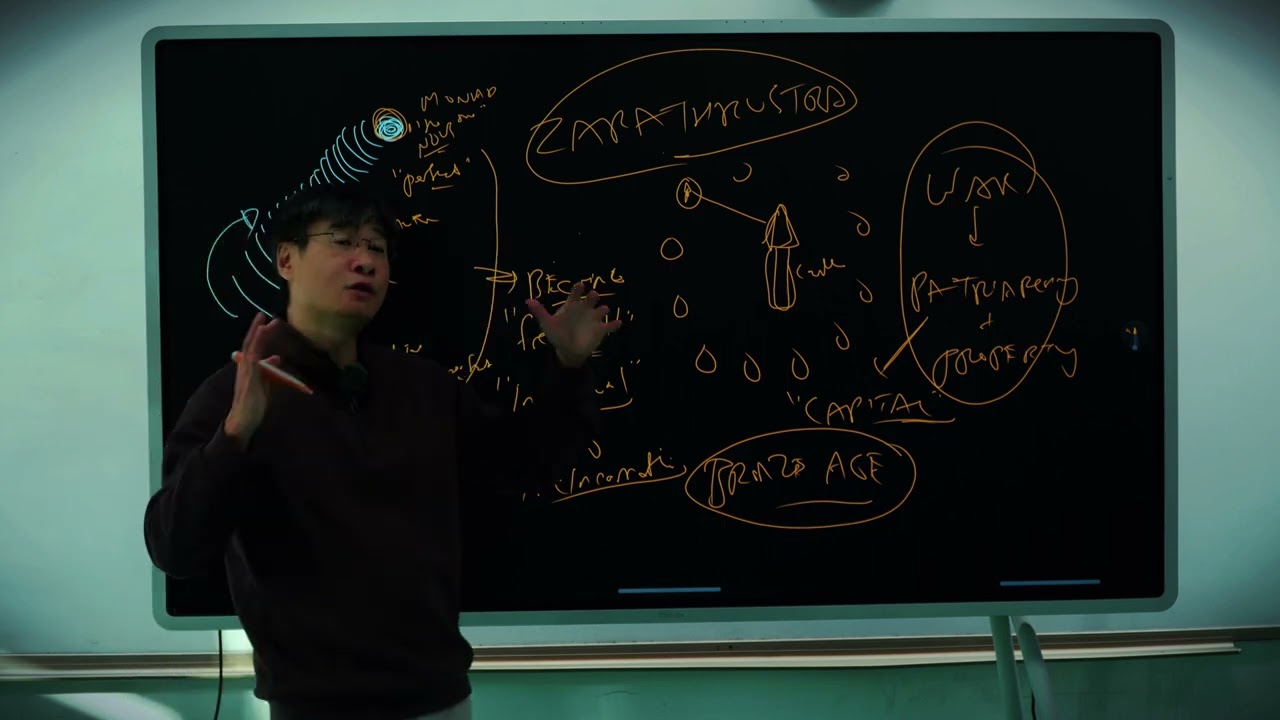
Explores three key principles of geopolitics through historical examples, focusing on elite overproduction, loyalty, and war as status quo maintenance.
Key Takeaways
- Elite overproduction is a primary driver of internal conflict within states.
- Elites prioritize personal power over loyalty to their nation or family.
- War functions to preserve existing power structures rather than to annihilate enemies.
- Stable political equilibria can become stagnant, creating conditions ripe for upheaval.
- Understanding these principles clarifies complex historical events and geopolitical strategies.
Summary
- The video explains three major principles of geopolitics essential for understanding historical and current conflicts.
- First principle: Conflict within states is driven by elite overproduction, where too many elites compete for limited power.
- Second principle: Elites lack loyalty to their people, state, or family and act solely to accumulate power.
- Third principle: War often serves to maintain the status quo or equilibrium rather than outright destruction.
- Historical examples include the fall of the Roman Republic, French Revolution, and Chinese Warring States period.
- The concept of 'Game of Thrones' is used to illustrate ruthless elite competition for power.
- The video discusses how poor and isolated groups like the Qing were able to conquer more advanced states due to innovation and talent influx.
- War is framed as a ritualized competition within stable but stagnant states to manage excess populations and prevent revolution.
- The video links these principles to understanding large-scale conflicts like World War I.
- Overall, the lecture aims to provide a clearer lens for interpreting historical power struggles and geopolitical dynamics.


![(MULTI SUB) [Journey With You] Wang Jing Han and Tang B… — Transcript](https://i.ytimg.com/vi/B70NGa_wU94/maxresdefault.jpg)