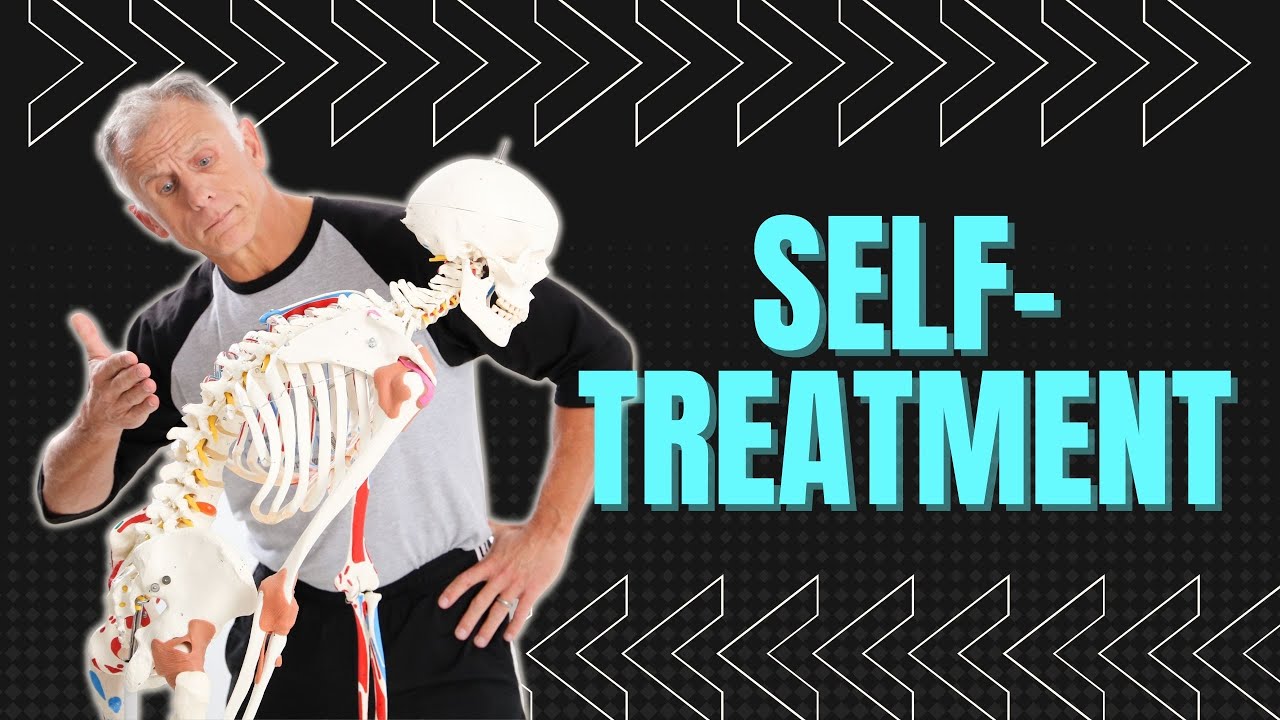
Top 5 highly rated neck stretches by Bob & Brad for fast relief from neck pain, headaches, and upper back discomfort.
Ask about this video. Answers come from its transcript only — with the timestamp, so you can check them.
Generated from the transcript and can be wrong — check the timestamp.
Key Takeaways
- Neck pain is often caused by poor posture related to modern device use.
- These five stretches provide effective, fast relief for neck pain and related headaches.
- Proper technique and gentle execution are essential to avoid aggravating pain.
- Using simple tools like a towel roll can enhance stretch effectiveness.
- Regular practice of these stretches can improve neck mobility and reduce discomfort.
What the video covers
- Bob and Brad discuss the common causes of neck pain, including head forward posture from computer and phone use.
- They present the top five stretches for neck pain relief, validated by their clinical experience and viewer feedback.
- The stretches also help relieve headaches, especially those at the back of the head, and upper back pain.
- Stretch 1 involves sitting with good posture and stretching the skin and fascia around the neck with fingertip pressure and cervical extension.
- Stretch 2 targets the levator scapulae muscle by tilting the head sideways and slightly forward, with optional gentle overpressure.
- Stretch 3 is a decompression technique using thumb pressure on the mastoid bones behind the ears to create cervical traction.
- Stretch 4 uses a towel roll placed low on the neck to support cervical extension and traction while leaning back in a chair.
- Stretch 5 focuses on neck rotation to stretch muscles not targeted by previous stretches, performed with good posture and optional fingertip overpressure.
- Each stretch should be done gently, avoiding pain, and stopped if discomfort occurs.
- The video emphasizes proper posture and gradual progression for effective neck pain relief.
Chapters
- 00:00Introduction to Neck Pain
- 00:57Overview of Top 5 Neck Stretches
- 01:54Stretch 1: Skin and Fascia Stretch with Cervical Extension
- 03:11Stretch 2: Levator Scapulae Muscle Stretch
- 04:36Stretch 3: Cervical Decompression Using Mastoid Pressure
- 05:50Stretch 4: Towel Roll Cervical Extension and Traction
- 07:39Stretch 5: Neck Rotation Stretch
- 07:52Conclusion and Final Tips
Full Transcript — Download SRT & Markdown
Speaker A
- Okay.
Speaker A
- Go, baby, go!
Speaker A
- We're talking about neck pain today. It's such a...
Speaker A
- Pain in the neck. Yeah, well, it's a pain in the neck. Everyone works on computers, cell phones, et cetera.
Speaker A
- Head forward posture. It's a very common irritant. Bob and I have, we've received thousands of comments on our neck pain, and between that and our actual patients that we've worked with—
Speaker A
- Right.
Speaker A
- We're gonna show you the top five stretches, and Bob, you concur on these five.
Speaker A
- I will concur.
Speaker A
- We concur, then you know we got gold here. (Bob laughs) ♪ Bob and Brad ♪ ♪ The two most famous ♪ ♪ Physical therapists ♪ ♪ On the internet. ♪
Speaker A
- All right, the first one, oh, before we go any farther,
Speaker A
- I do want to add, not only do these often help with neck pain, but they can also relieve headaches, particularly the ones in the back of the head that wrap forward, and upper back pain.
Speaker A
- So the first one, sitting in the firm chair, good posture, just like Bob is demonstrating, get your fingertips close to the center of your neck and push into the skin and stretch that skin. We're splaying, stretching the skin,
Speaker A
- the fascia underneath, and getting those muscles to relax that are tight. And now what you can do is work at different levels, lower and work up, whatever feels the best for you.
Speaker A
- And then a... Yeah, Bob was saying he doesn't have his mic on. Do circles and get into those muscles, that can really help out.
Speaker A
- And then add this little trick, it can make a big difference is to add neck or cervical extension while you're pulling here.
Speaker A
- Now if you do these, and you do that, and it does not feel good, you do not want to do it.
Speaker A
- But I think a lot of people will find that that extra little stretch going backwards is gonna really help relieve some more pain.
Speaker A
- How you feeling, Bob?
Speaker A
- He says excellent.
Speaker A
- Well, good, he said good, not excellent. Okay, we're gonna go to number two.
Speaker A
- (air whooshes)
Speaker A
- Okay, number two, this stretch is sideways stretching, or we're gonna actually modify it and get the levator scapulae, which is a small muscle, connects from the head to the shoulder blade, and that muscle can really knot up.
Speaker A
- So again, sit with good posture, right ear to the right shoulder, and then slightly forward.
Speaker A
- When you go slightly forward, you're gonna feel that levator muscle tighten up. Do not stretch this aggressively.
Speaker A
- Only about 15 seconds or so. You can add a little over pressure gently with your fingertips.
Speaker A
- Bob's doing a nice demonstration there and I always tell people, look down into your front pocket on one side, that'll give you the right angle.
Speaker A
- You do not have to give over pressure. Only do it if it feels good.
Speaker A
- This is one of those stretches that should just feel like, oh, that's clearly the spot.
Speaker A
- Do both sides. All right. Good.
Speaker A
- (air whooshes)
Speaker A
- All right, number three. This is a nice decompression stretch.
Speaker A
- And what we're gonna do, is, first I'm gonna show there's these bumps right here.
Speaker A
- Those are called mastoids. That's some little bone sticking out behind your ear. You're gonna take the pad of your thumb or the thenar eminence, and you're gonna hook those bones, and push straight up, and relax and breathe.
Speaker A
- So what Bob is doing, he's putting traction and pulling up, and Bob just mentioned last week he had some problems, and he's doing just his technique, took care of the problem.
Speaker A
- Life was good. Right, Bob?
Speaker A
- Yep, absolutely.
Speaker A
- He said absolutely. That's a nice, quick decompression technique you can do without anything but your body, your hands.
Speaker A
- Okay, Bob's saying he cups around the ear, and you'll feel that, I can't do it with my headphones on, 'cause it makes all the noise that irritates you guys.
Speaker A
- All right, we're going to number four.
Speaker A
- (air whooshes)
Speaker A
- Okay, the fourth stretch. Now with this stretch, you will need a towel roll.
Speaker A
- So you have to spin it up, and kind of get it into a nice roll like this.
Speaker A
- Put it around your neck. And, typically you're gonna start low on your neck, and it'll have a tendency to slide up, but you want it low on the neck for most people.
Speaker A
- And we're simply going to pull down so that it's against your body. Just start with a little chin tuck, and then roll your head back and you can see how it supports right here, and now, if Bob had his chair lined up,
Speaker A
- but we have it just for the video, you can lean back into the chair and look back, and then you're not gonna hold it there for a long time.
Speaker A
- Five to 10 seconds perhaps. It should be no pain. It should feel like, good stretch.
Speaker A
- Now if this is feeling okay, but it feels like it needs a little bit more, simply go back and go up, like Bob is pulling up, so we get a little traction or decompression with the cervical extension.
Speaker A
- I don't know, I've had so much success with this in the clinic with patients.
Speaker A
- I agree. They start out going like this, it's tight, little painful. With the towel and either straight down or up, they say, "Oh man, I can go back farther. It feels better." If that's how you respond to this,
Speaker A
- keep working it, and it's gonna show improvement very quickly. On the other hand, if it does create pain for whatever reason, stop and just stop.
Speaker A
- This is not one of the five for you. Okay, we're going on to our fifth and final one.
Speaker A
- (air whooshes)
Speaker A
- All right, the final stretch. Now this is different. It's actually, instead of working up and down with the head or pulling it, we're gonna do rotation, the last motion we have not stretched yet.
Speaker A
- So like Bob is showing there, over to the right, keep good posture, shoulders back and go over. If you wanna add a little over pressure, fingertips and go.
Speaker A
- And then check the other direction, to the left. Posture. Over. Now, oftentimes you'll find that one way it will feel good, the other way, there might be a little pain or maybe even some sharp pain.
Topics:neck painneck stretchesneck pain reliefphysical therapyBob and Bradlevator scapulae stretchcervical decompressionheadache reliefposture correctiontowel roll stretch