Skip to content
Get App

Is your tradition worth keeping? | Rin Sato | TEDxUWCRCN

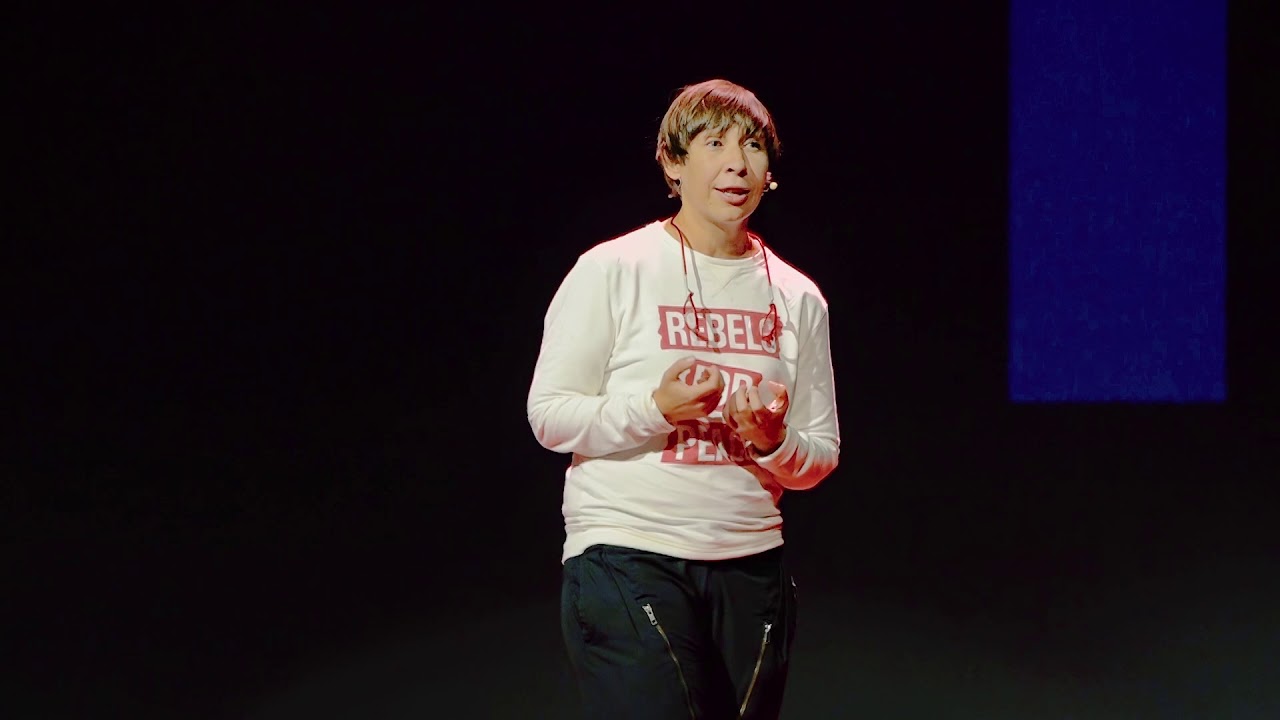
Rin Sato questions Japanese traditions, from school bags to family names, urging reflection on whether these customs are worth preserving.

Key Takeaways

  • Traditions should be critically examined for their relevance and fairness in modern society.
  • Inertia and comfort often prevent people from challenging outdated or harmful customs.
  • Small individual actions can contribute to addressing larger social and environmental issues.
  • Awareness and willingness to act are crucial to overcoming societal problems.
  • Privacy and equality concerns arise from some cultural practices, such as mandatory surname changes after marriage.

What the video covers

  • Rin Sato reflects on her life in Japan and questions societal norms and traditions she found unreasonable.
  • She critiques the mandatory use of traditional Japanese school bags, highlighting their impracticality and cost.
  • She challenges the enforced school uniform policies, especially the requirement for girls to wear short skirts regardless of weather.
  • Sato discusses the tradition in Japan where married couples must share a surname, usually the husband's, and its impact on women's professional and personal lives.
  • She emphasizes the privacy issues and social discomfort caused by surname changes after marriage or divorce.
  • Sato identifies inertia and comfort with the status quo as reasons why problematic traditions persist without challenge.
  • She shares a personal story about her friend’s misunderstanding of vegetarianism and LGBTQ+ topics, illustrating broader societal apathy.
  • Sato categorizes people’s responses to social issues into three types: apathetic, aware but inactive, and active changemakers.
  • She encourages small personal actions to address global issues, even if they seem insignificant.
  • The talk concludes with a call to critically evaluate traditions and to courageously advocate for change when necessary.

Answers

Questions about this video

Why does Rin Sato question the use of traditional school bags in Japan?

She finds the bags heavy, expensive, and impractical, questioning whether the intended purpose of identifying students could be achieved through less burdensome means.

What is Rin Sato's view on the requirement for girls to wear skirts in school uniforms?

She criticizes the tradition as outdated and uncomfortable, especially in cold weather, and questions the fairness of obliging girls to wear skirts based on gender stereotypes.

How does Rin Sato describe people's general attitude towards changing problematic traditions?

She explains that many people are either unaware, apathetic, or unwilling to act due to comfort and inertia, which prevents societal progress despite awareness of issues.

Full Transcript — Download SRT & Markdown

00:05
Speaker A
[Music] I have lived on this planet for six thousand eight hundred fifty-one days since I was born in Japan. Blessed with a really nice family, I could get pretty much everything I need unless it's super expensive stuff such as this Seeker or Space Shadow or something like that. Yes, I was very happy about myself and people around me, but not about the society around me. I felt there were way too many unreasonable things in the world. The first time I questioned something naturally accepted was when I was seven.
00:31
Speaker A
[Music] Why do I have to use this weird school bag in Japan? Almost all primary school students must use this personal bag to go to school. You are not allowed to use your regular backpacks or your favorite tote box.
00:52
Speaker A
It might sound rude for craftsmen who have been passionate about this bag for decades, but in my personal opinion, they are way more married to using this bag. For example, it is heavy and super expensive. It costs around five hundred dollars.
01:10
Speaker A
In addition, it's not very functional. It's too small for containing books and other school stuff, and when you get sweaty, it gets very stuffy. The only positive thing about this bag is its smooth body is perfect for sleeping on slopes.
01:30
Speaker A
I'm pretty sure most Japanese people experienced this when they were young. [Music] I've heard the purpose of this bag is to make it easier to recognize primary school students. [Music] But is this the only solution? I feel like the purpose would be
01:48
Speaker A
achieved by putting marks on students, for example. It doesn't have to be the traditional bag. [Music] I feel the same way when I entered junior high school or student. How to live wear school uniforms, which is unique to their school.
02:07
Speaker A
In high school, even training wear was designated. Does the school envelope need on the training wear? Is school really wanted sweaty students to be recognizable? Okay, let's say the training wear is acceptable. It's not a big deal because we only wear
02:26
Speaker A
it once or twice a week, but why do we have to wear school uniforms every day? In my school, all girls must wear short skirts every day, even in the middle of winter, where Japan is directly warm compared to
02:44
Speaker A
a temperature of -20 degrees in Norway, but still, skirts are not the best growth to wear in the winter. Moreover, I'm surprised and frustrated at the stereotype women wear skirts is still existing in the 21st century. I personally don't like wearing skirts,
03:01
Speaker A
especially the short ones, because it's cold and it's very easy to get turned by the wind and sometimes it distracts movement. Of course, if you like skirts as a fashion item, you can wear as much as you want. Of course,
03:21
Speaker A
but I wonder if it is fair to oblige students to wear skirts every day just because they are girls. Once I asked my teacher, why do you have to wear skirts school uniforms? [Music] He said people can recognize which school you're
03:36
Speaker A
in, so it's convenient, blah, blah, blah, blah, but I argued that's not the reason why women have to wear skirts. Is it? Then he said, but it's tradition. Tradition? Why is it so important to keep that tradition? It's such a weird tradition, actually
03:56
Speaker A
worth preserving. Oh, this reminded me one more Japanese tradition about family name. Now in Japan, when you are getting married, either one of the couple must change her name, and in reality, the overwhelming majority of couples choose the month
04:18
Speaker A
month surname. For some of you, her surname is not a very big deal that together much, but for some people, changing their surname has a big impact on their life. [Music] Take for instance my mother. She is currently working as a
04:37
Speaker A
photographer, and she uses her maiden name, which is her surname before she got married with my father, for her profession. She told me that the procedure for changing dreams such as insurance cards, driver's licenses, bank accounts, and passports was so troublesome and took
04:55
Speaker A
time, effort, and money. Also, it sometimes confused her and people around her to have two different names for work and her private life. Similarly, other professions have the same problem, especially for the researchers. They are not allowed to use their maiden names
05:14
Speaker A
for their treaties, so even if they publish a lot of priorities, it's when surnames change, it will be much more difficult to get people recognized that their researchers' works and achievements are theirs. Furthermore, if [Music] I'm sorry,
05:33
Speaker A
furthermore, you can know whether a person is married or not just by looking at your surname. It sometimes makes people painful and uncomfortable, especially when divorcing. [Music] And in your marriage status is protected as privacy information. Imagine people can get your private
05:56
Speaker A
information that you really, really, really want to hide super easily just by looking at your name. Isn't it uncomfortable? What I want to arrive here is that even if people are aware of the problem, they don't take action to solve
06:18
Speaker A
it. Also, there are numerous issues that people are not even aware of. It is because people are comfortable with their own and no one is bothering to change it. Lack of willingness to change, namely inertia, is the root of the whole
06:33
Speaker A
issue. There are numbers of global issues that have not been penetrated in some culture. However, people living in cohort with their role and satisfied with their life have no doubt about their current situation. Although some people disappeared, they
06:52
Speaker A
tried to disseminate knowledge about the issue. To give an illustration of what I mean, let's look at my experience. When I talk to my one, my best friend, after studying here at Argentina for five months, I was so excited to see her, and we met
07:09
Speaker A
up including our school. She ran to me exactly at the meeting time just right after we saw each other. She suddenly hugged me. What a dramatic union! But soon after, she took her body away from me and said,
07:28
Speaker A
"Oh wow, I'm behaving like a lesbian." I was shocked. I saw Sierra, the curious and caring person, checking current news regularly and having a critical viewpoint and thinking on everything she faces. I was frustrated that she used the word lesbian like a
07:45
Speaker A
joke and in a different meaning as it actually refers to the union. Story goes on. We went to a restaurant to have lunch. I ordered mushroom pasta and vegetable salad, and see other beef stroganoff. She seemed to be wondering at my order
08:04
Speaker A
because she knew I was a very, very big meat driver. She asked why. I told her that I was thinking about changing my diet to vegetarian to save the environment. Guess what she said? She said, "No, ring, come on, don't try to lose your
08:26
Speaker A
weight. You're already so slim. So if you try to lose your weight, you will die. Come on." I wanted to be a vegetarian not because I'm disappointed with my body. I just wanted to help improve the situation of environmental impacts
08:46
Speaker A
caused by our meat consumption. But what made me sad was not that she didn't know vegetarianism. What I hated the most was that even though I explained her my listening for wanting to be the salient, she assumed I
09:04
Speaker A
was the right to hide my motivation, my body and figure. She didn't even try to understand what I thought was a problem. I'm not trying to criticize or blame her in public. I just felt so sad that my one of my
09:18
Speaker A
best friends was so apathetic and didn't even try to what I was trying to say or how I felt. She didn't understand anything. Not only her, but there are more people who are ignorant and lack effort to know
09:32
Speaker A
or understand issues as well as people who are just ignoring the issues in the world. Let's assume there's one problem. I think there are three types of people who deal with it. One, a person who is completely apathetic and
09:46
Speaker A
doesn't know anything about the issue. Two, knowing what the problem is but not taking any action to overcome it. Three, understanding and taking the issue seriously and taking action against it. Of course, the ideal situation is that everyone knows every global issue and
10:02
Speaker A
fighting to change. Of course, but I know it's idealistic. We are humans. It's natural to not know everything. That's impossible unless you're a Spiderman, Batman, or God or something. It's totally okay for you not to agree with everything.
10:21
Speaker A
It's totally okay for you to not fight.
10:41
Speaker A
it's totally okay for you to not fight for things you don't agree with but you should fight for what you do believe in black people fighting in what they feel passionate about keep the nature and trend of traditions and other negative
10:58
Speaker A
things the way they are if no one fights back against momentable traditions the nation will never break i'm not saying all must be crazy about the issues you find again we are all humans we can't simply do whatever we want to do
11:19
Speaker A
but as you are aware of an issue you should be able to try something you can do even if it's a very very tiny thing for instance i haven't changed my diet yet even though i agree with the concept of
11:35
Speaker A
blizzardianism however if i become a vegetarian i won't be able to eat any of my favorite food sushi ramen steaks secret pasta and so forth these foods are my life and if i don't eat them i won't be able to survive this
11:51
Speaker A
hard drive i signed up for a vegetarian project and tried to be a vegetarian for a week the result okay let me be honest i couldn't make it on the day four the canteen had something like coat and serum with
12:09
Speaker A
flavored rice for meat eaters and some kind of flavored rice for the saiyans the vegetarian rice did it really but i mean i personally didn't like it very much so i took servant i couldn't control myself the salmon this is the best i've
12:26
Speaker A
ever had in my life [Music] let me get one contract i couldn't change my diet but i'm still trying to reduce the meat consumption by not eating meat during lunch time this is ver very very small step for
12:41
Speaker A
environmental issue but i believe it's still better than doing nothing i think the key to break the inertia is to go out from your comfort zone i know it is hard and uncomfortable to question speak up and take action for
12:57
Speaker A
existing standards because we are all told to go go with the flow and continue that momentum or tradition and stay at school our lives have been changing this time it means that tradition can also be out of date
13:14
Speaker A
so we have to choose what fits or not with our current lives sometimes we might even have to create something new i'm not saying tradition itself is bad nor we should ban all traditions there must be some traditions that each
13:29
Speaker A
culture wants to protect however it doesn't always do that possibly to just stick into sticking to tradition without thinking if it is something you really want to live with and even if you are happy with your life look around
13:45
Speaker A
there may be someone in trouble because of what you enjoy i hope someday we can create a society where every can spend their time comfortably and it starts from each one of us our courage to break the inertia
14:00
Speaker A
[Music] some of you might have anxiety that something may change if you start something new i'm also worried if i start something new something i've never experienced will happen but think we are making changes in everyday life [Music]
14:21
Speaker A
get up a little early to go to cantina for breakfast greet a person who you don't usually talk to change your hair style [Music] make makeups these are very very tiny things but the fact remains you're making changes every day there's nothing
14:40
Speaker A
to be afraid of so start looking around carefully them if you find something you want to change or something you are passionate about don't hesitate to fight for them as well as to share your thoughts with others the only way we can break this momentum
15:02
Speaker A
and to stop this inertia is to stand up and change the things that we clearly see are in desperate need of change thank you [Applause]
Topics:Japanese traditionsschool uniformssurname changegender rolessocial changecultural critiquetradition vs modernitypersonal identityenvironmental awarenessTEDx

Get More with the SozAI App

Transcribe recordings, audio files, and YouTube videos — with AI summaries and speaker detection. 30 minutes free.

Or transcribe another YouTube video here →