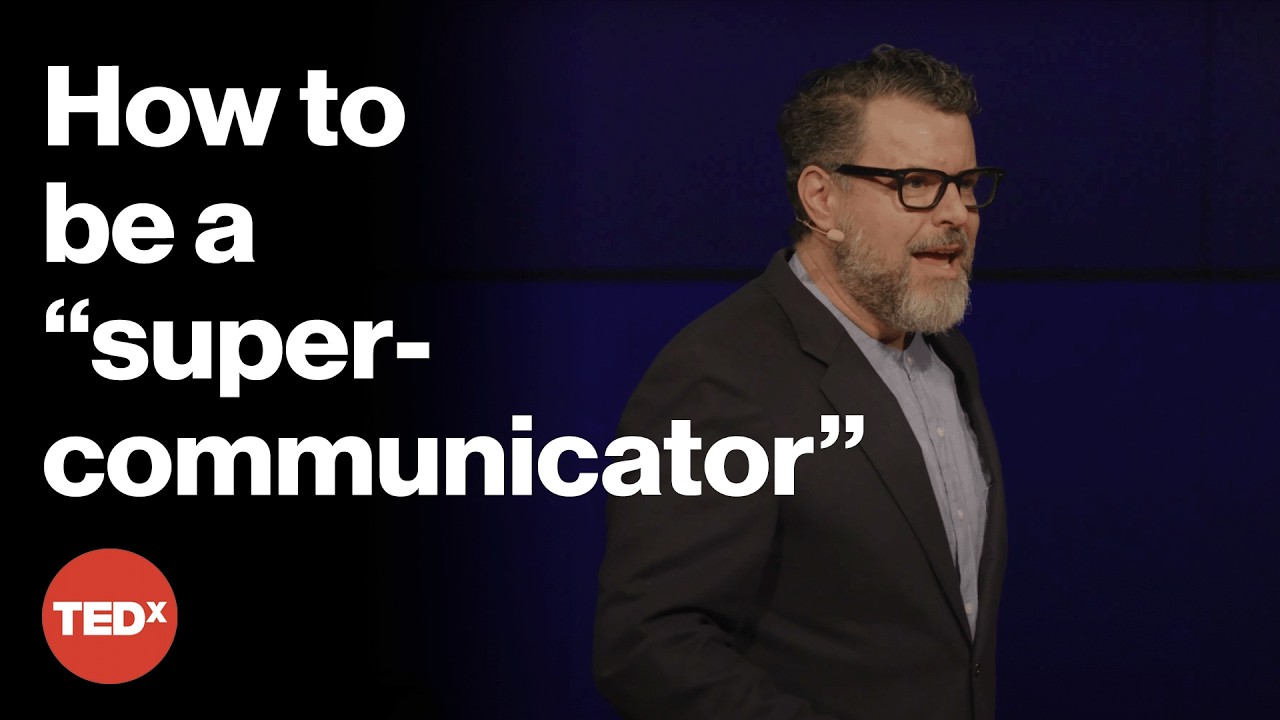
TEDxSalem talk by student Anna Nixon on how access to education drives change, the value of critical thinking and hands-on learning through programs like FIRST Robotics and STEM for Girls.
Key Takeaways
- Education access changes lives and communities, so it must be widely available and of the right kind.
- Teaching students how to learn and think critically matters more than memorizing facts in an unpredictable future.
- Applying classroom knowledge to real problems builds engagement and deeper understanding.
- Hands-on programs and volunteer mentoring can spark lasting interest, even from brief experiences.
What the video covers
- Anna Nixon opens with family history: her grandmother was pulled from school in fourth grade in rural India and married at 19, and made sure her daughter, Anna's mom, could complete her education.
- Anna's mother chose education over marriage at 19, earned a bachelor's in mathematics and a master's in computer science, and was hired after college and moved to America.
- Access to education changes lives, so education should be made as easily accessible as possible, with the right type of education for each child.
- Since many future jobs cannot be predicted, schooling should teach students how to learn and think critically rather than memorize facts.
- Students disengage when they are rarely given chances to apply what they learn; citing John Dewey, she argues people think most when confronted with a problem.
- Research suggests emotional connection drives attention and learning, so showing real-world applications deepens understanding.
- Schools often lack funding, time, or teachers for hands-on opportunities, so programs like FIRST Robotics fill that gap by having students build competition robots.
- Anna co-founded STEM for Girls, a nonprofit that runs workshops, funding, and mentoring to inspire girls in science, technology, engineering and math.
- Hands-on learning exists across fields, and volunteering as a mentor or presenter benefits both students and volunteers.
- Anna's mother first encountered computers in tenth grade through a one-month government subsidy program, and that brief exposure set her on her career path, showing how small sparks matter. She closes by asking the audience what they will do to give more kids access to inspiring education.
Chapters
- 00:00Opening: Family Photos and Grandmother's Story
- 00:57Mother's Path to Education and Career
- 01:48Why Access to Education Changes Lives
- 02:43Teaching Students How to Learn, Not Just What
- 03:31Applying Knowledge and John Dewey's Insight
- 04:20FIRST Robotics and Hands-On Learning
- 05:34Founding STEM for Girls
- 06:54Volunteering and Mentoring Opportunities
- 07:45Mother's Early Spark with Computers and Closing Call to Action
Full Transcript — Download SRT & Markdown
Speaker A
when we added MDMA oh you went up to six [Music] one of my favorite things to do over the holidays is sit down with my family drinking a cup of hot cocoa and flipping through old photo books together a while
Speaker A
ago as we were doing just that we came across this photo of my grandmother me and one of my younger sisters taken around 15 years ago now my grandmother grew up in a small village in India in a
Speaker A
time more access to education was extremely limited especially for young girls she was told to stop going to school in fourth grade and only after pleading and begging was she allowed to stay in school for just one more year at
Speaker A
the age of 19 my grandmother was married and at the age of 25 she was raising three kids because my grandmother never had the chance to complete her education she made sure that my mom did and so at
Speaker A
the age of 19 my mom had the choice between education and marriage she was able to choose to get a bachelor's degree in mathematics and then go on to get a masters degree in computer science after which she was hired straight out
Speaker A
of college and moved to America with my dad me and my two younger sisters to this day whenever I call my grandparents they never fail to remind me Anna remember to study hard the most valuable thing anyone can own
Speaker A
is knowledge to me personally there is no other more inspirational example of progress than the story of my parents and grandparents and hearing it has made me all the more aware of how influential education is to the process of change
Speaker A
access to education changes lives that's why in order to give everyone the best chance of success we need to make education as easily accessible as possible and we need to make sure that kids have access to the right type of
Speaker A
education there's no way to predict what the future will hold and so the value in schooling doesn't lie in the facts that we learn to memorize but rather the critical thinking skills that will allow us to solve a variety of problems for
Speaker A
example some of the jobs that exist today didn't exist 30 years ago and some of the jobs that will exist in 30 years may not even be imaginable right now so how do we prepare students to enter industries that don't even exist yet in
Speaker A
order to do that we need to teach kids how to learn and not just what to learn teaching kids how to ask questions and think critically is far more important than ever before that way they'll be prepared to face the constant changes
Speaker A
and challenges of the future in order to do that we need to show kids how the skills that they're learning in school can be applied to the things that happen around them in their day to day lives every subject is important whether it's
Speaker A
literature chemistry or calculus but the reason that students sometimes get frustrated or start to feel that these subjects are useless is because they're rarely given the chance to apply them John Dewey often regarded as the father of education once stated we only think
Speaker A
when confronted with a problem that's why students need to be given the chance to apply their skills before they can feel satisfied with their knowledge and studies have shown over and over again that students do better when they get
Speaker A
the chance to develop an emotional connection to the subject that they're learning emotion drives attention and attention drives learning by showing students the real-world applications of what they're learning in the classroom they're more likely to stay in gay
Speaker A
and develop a deeper long-term understanding but the problem is schools often lack the funding the time or the teachers to provide these opportunities for students that's why programs like first exist through FIRST Robotics students get the chance to apply the skills that they
Speaker A
learn in and out of the classroom by building robots to compete in fun and exciting challenges there's nothing more engaging than that moment where after hours and hours of hard work you finally get to see your robot come to life or
Speaker A
That moment when your whole team is jumping up and down cheering as your Alliance scores the winning points of the final match first is divided into multiple categories so that students of all ages can get hands-on experience with technology and each year a
Speaker A
different challenge is released keeping students engaged as they learn about everything from wiring and CAD to CNC milling and even computer vision but it's not just technical skills that you learn through this program you also get the chance to learn about skills like
Speaker A
business leadership and teamwork I've been involved in first for 10 years now and it has helped shaped me not only as an engineer but as a person getting the chance to apply my skills has given me confidence in my abilities and it's also
Speaker A
helped me find my passions and figure out what I want to do in the future I wanted to give other students access to these same opportunities that's why I co-founded a nonprofit organization dedicated to inspiring girls to pursue
Speaker A
opportunities in science technology engineering and math called stem for girls at stem for girls we work to present science and technology in fun and exciting ways by partnering with local organizations were able to host workshops for kids in the US as well as
Speaker A
provide funding and mentoring for a variety of stem programs that way more students can start learning about science and technology from a young age but this sort of hands-on learning opportunity doesn't have to be limb two technical fields there are hundreds
Speaker A
of programs out there that are working to give students a chance get hands-on learning in any field imaginable whether it's business medicine or fashion there is a nonprofit organization out there that's trying to give students a chance to apply their skills outside of the
Speaker A
classroom I'd highly encourage each and every one of you to reach out to volunteer mentor students are always in need of people with expertise to give them the best guidance they can get in any field by sharing your skill set and
Speaker A
your unique perspective you can open their minds to all the opportunities that are out there and change their lives and if there's one thing that I've learned from stem for girls it's that learning is a two-way street you often
Speaker A
gain just as much if not more when you're teaching others whether it's by volunteering and educational competitions presenting in schools or helping out at science fairs everyone can do their part in showing the next generation how to think critically and
Speaker A
open-mindedly even the smallest experience can be absolutely life-changing all it takes is a little spark to light a new path in someone's life for example my mom's decision to become a software engineer happened in tenth grade at that time the school that
Speaker A
she was attending was small and definitely not wealthy enough to afford its own computer especially when computers were relatively new however there was a government subsidy program that brought a computer to their classroom for just one month it wasn't
Speaker A
anything like the fancy Mac books or Dells that we have now just a large bulky UNIX server hooked up to a couple of monitors here and there for students to use during the one month that it was at her school the school offered an
Speaker A
introductory class and she rushed to sign up that's where she learned the basics as in the computer language basic beginners all-purpose symbolic instruction code she told me that they never learned anything more than simple addition and subtraction but that was enough to get
Speaker A
her hooked on computers for life is my mom han had that opportunity to work with computers in tenth grade she may have never become a software engineer that's why it's of utmost importance that we all work to give every child no
Speaker A
matter their race gender or wealth access hands-on learning opportunities in a variety of fields the more that they can experience the more that they can understand so what I want to ask you today is what will you do to give more
Speaker A
kids access to a challenging and inspiring education it's not about changing the whole world but by showing kids all opportunities that are out there and letting them learn by trying new things you can change their world thank you
Speaker A
you
Topics:educationSTEMFIRST RoboticsSTEM for Girlscritical thinkinghands-on learningwomen in STEMmentoringTEDxaccess to education