Skip to content
Get App

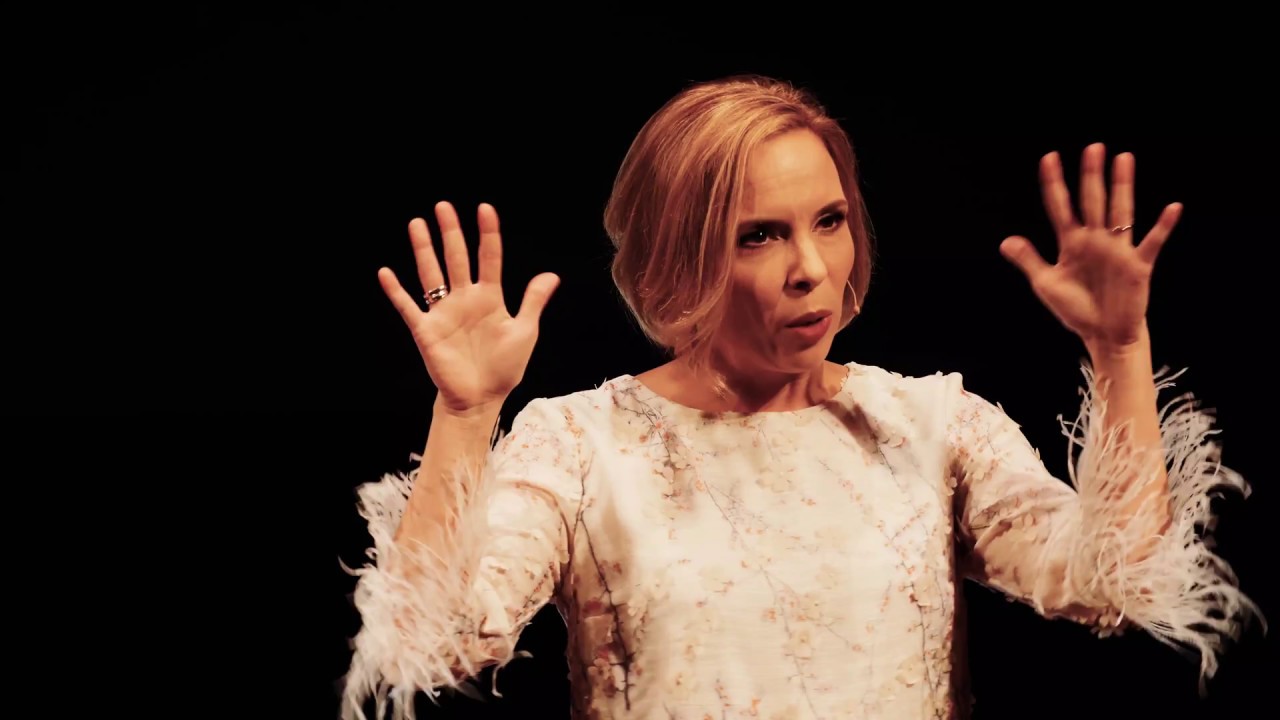
Emoji: The Language of the Future | Tracey Pickett | TEDxGreenville

TEDx talk arguing emojis are a vital advance in human communication, restoring the emotional cues (tone, body language) lost in text-based messaging.

Key Takeaways

  • Digital text strips out much of the emotional content of face-to-face communication.
  • Emojis act as surrogate nonverbal cues that help convey tone and feeling in text.
  • Text messaging has become the dominant everyday communication mode for many people.
  • Emoji design should reflect diverse social and cultural contexts to communicate effectively.

What the video covers

  • Speaker frames communication history as a sequence of revolutions: pictographs, the printing press and paper, and computer-mediated communication.
  • Computer-mediated communication replaced face-to-face contact, which is emotional, with text that lacks emotional cues.
  • Referencing Albert Mehrabian's widely cited (and often misapplied) claim, the speaker argues that verbal content carries only a small share of meaning versus tone and body language.
  • A 2014 Gallup poll is cited showing text messages exceed phone calls as the dominant communication form for Americans under 50.
  • Misunderstandings in text, such as an unwarranted email reply, illustrate the difficulty of conveying emotion digitally.
  • Emojis are presented as surrogate faces that add emotional and nonverbal context to text.
  • Research cited suggests emoji activate brain regions similar to viewing real faces and can trigger facial mimicry responses.
  • Japanese telecom cartoon icons from the 1990s are described as the origin of the emoji trend, later adopted by Apple.
  • The speaker argues emojis need greater diversity and inclusion so they carry the social and cultural references people need.
  • Other tools such as video calls, Apple Digital Touch, and iMessage effects are mentioned as ways to restore social intimacy.

Answers

Questions about this video

Why does the speaker argue that emojis are significant?

The speaker argues that emojis restore the emotional and nonverbal cues that text messages lack. Because text has replaced much face-to-face communication, emojis act as surrogate faces that help convey tone and feeling.

What statistic does the speaker cite about text messaging?

The speaker cites a 2014 Gallup poll finding that text messages exceed phone conversations as the dominant communication form for Americans under 50, reaching nearly 60% for some age groups.

What does the speaker say about diversity in emoji?

The speaker argues that emoji need diversity and inclusion so people can express emotions with the social and cultural references that matter to them, not just generic happy, sad, or angry faces.

Full Transcript — Download SRT & Markdown

00:04
Speaker A
you're about to discover a very important topic, a topic that could literally make or break your ability to communicate effectively in the 21st century.
00:35
Speaker A
that but this is a topic that I'm going to convince you emojis are perhaps the most significant advancement in human Communications as we know it but first let's take a look back at the evolution of human Communications of course there was
00:52
Speaker A
What is that emoji?
01:08
Speaker A
revolution the invention of the printing press and paper and this was great because we could now transport a message from one place to the next without actually being there but then came the third Revolution the invention of computer
01:23
Speaker A
Now, some of you might be feeling like this, or like that. But this is a topic that I'm going to convince you emojis are perhaps the most significant advancement in human communications as we know it.
01:41
Speaker A
mobile device however there was one problem with this latest Revolution it was the first one that was actually replacing face-to-face Communications and that would be okay except face to-face Communications has always been emotional and computer mediated Communications is
02:01
Speaker A
But first, let's take a look back at the evolution of human communications.
02:19
Speaker A
relationships there's a well-known and often cited psychologist by the name of Albert maravian who did a fabulous study huge study everyone loved it bigly and uh he discovered that only 7% of effective communication is verbal meaning the words that we're saying and
02:39
Speaker A
Of course, there was verbal language that developed long before we could document it. But then came the first revolution: the invention of the pictograph. Now, the pictograph marked the beginning of written language, but because these writings were in stone, they were immobile.
03:00
Speaker A
significant others out there are saying great let's just keep it this way but this is actually a big problem I'm going to take a quick poll how many of you would say that you send more text messages than you do making phone calls
03:13
Speaker A
So that led to the second revolution: the invention of the printing press and paper. This was great, because we could now transport a message from one place to the next without actually being there.
03:29
Speaker A
age of 50 reaching nearly 60% for some age groups of all the communicating that we're doing we're doing over some form of text now I'm sure we can all relate to the difficulty of communicating emotions over text messages or simply being misunderstood
03:51
Speaker A
But then came the third revolution: the invention of computer-mediated communications, or what some of you might call the assassination of American literacy as we know it. This was incredible, because for the first time we could communicate with anyone, virtually anywhere, just by accessing a computer, a phone, or a mobile device.
04:11
Speaker A
FaceTime and Google Hangouts right and Skype and this allows us to see each other when we're talking on the phone um but just like I said phone conversations are quickly going out of style so there's that uh then we've got Apple's
04:23
Speaker A
However, there was one problem with this latest revolution. It was the first one that was actually replacing face-to-face communications. That would be okay, except face-to-face communications have always been emotional, and computer-mediated communications are not.
04:36
Speaker A
have Apple's iMessage effects and these are super cool because you can send balloons and confetti and even slam down a text message on someone's iMessage interface that's my favorite um but if you haven't access these please do they're worth like 10 cool points every
04:51
Speaker A
Now, I'm sure you're saying, "Well, great, but we all know what effective communication is, right? It's not just what you say." Because it takes more than just words and information for us to develop and maintain relationships.
05:11
Speaker A
Japanese Telecom company back in the 1990s came up with a brilliant idea to add simplistic cartoon images to their paging interface and this was a way that they could compete in the market and attract more teenagers well this was so
05:25
Speaker A
There's a well-known and often-cited psychologist by the name of Albert Mehrabian who did a fabulous study. Huge study. Everyone loved it, bigly. And he discovered that only 7% of effective communication is verbal, meaning the words we're saying, and 38% is vocal, meaning our tone of voice and how we say what we say, and 55% is nonverbal, meaning just our body language.
05:42
Speaker A
having to download that Japanese language app right just to unlock your emoji keyboard anybody remember that well that's because Apple never really intended for us to find it but of course we did and Emoji was well on his way to
05:55
Speaker A
So that means when we're texting, literally 93% of our communicative skills are negated.
06:15
Speaker A
of emoji has been the subject of real scientific research because somebody has some time on their hands clearly uh just kidding I'm one of those people um and um and what is being found is that not only are emojis becoming a part of our
06:30
Speaker A
Now, I'm sure some of the significant others out there are saying, "Great, let's just keep it this way." But this is actually a big problem.
06:47
Speaker A
parts of our brain are activated as when we look at a real human face not only that humans are now having facial mimicry responses to Emoji like you see up here and lastly he found that our mood now
07:04
Speaker A
I'm going to take a quick poll. How many of you would say that you send more text messages than you do making phone calls if you need to communicate something? Because this is the world that we now live in. According to a 2014 Gallup poll, text messages now exceed phone conversations as the dominant form of communication for Americans under the age of 50, reaching nearly 60% for some age groups. Of all the communicating that we're doing, we're doing it over some form of text.
07:26
Speaker A
with digital communication skills right that that means that emoji is actually creating a new brain pattern within us and doing the same thing that tone of voice and gestures do in our face-to-face Communications uh anybody else feel like
07:46
Speaker A
Now, I'm sure we can all relate to the difficulty of communicating emotions over text messages, or simply being misunderstood, or getting that email reply that really wasn't warranted based on the intent of your original message.
08:00
Speaker A
emoji well diversity and inclusion of course because it's not enough that we can communicate emotions like happy and sad and mad right we need to be able to communicate those emotions with the same social and cultural references that we
08:14
Speaker A
So what has technology done to respond to this need to restore social intimacy and emotions back to our everyday communications?
08:35
Speaker A
but see I grew up in the church culture I'm a little animated so my response would be this and that's why my co-founders and I created iicons because we wanted to restore that social intimacy and that that fun
08:53
Speaker A
I'm sure we're all used to FaceTime and Google Hangouts, right, and Skype, and this allows us to see each other when we're talking. But just like I said, phone conversations are quickly going out of style, so there's that.
09:11
Speaker A
for others you might feel this way that might help uh but when I left my job back in October uh to go and pursue entrepreneurship full-time I got the nerve to send this okay and that's because I had one opportunity
09:31
Speaker A
Then we've got Apple's Digital Touch features, and this is cool, because we can send our heartbeat, or doodle a message, or even tap someone on the wrist when they have an Apple Watch. Now, that restores some social intimacy, right?
09:46
Speaker A
age and while emojis and text messaging will never replace the old way these little surrogate faces are going to help us to communicate more effectively so what is all of this about and and why am I even here talk about it like what's
10:00
Speaker A
But then we also have Apple's iMessage effects, and these are super cool, because you can send balloons and confetti, and even slam down a text message on someone's iMessage interface. That's my favorite. If you haven't accessed these, please do. They're worth like 10 cool points every time you send one.
10:17
Speaker A
through the Emoji because they really are the language of the future thank you what [Music]
Topics:emojidigital communicationnonverbal communicationtext messagingcomputer-mediated communicationTEDxsocial intimacydiversity and inclusionMehrabianiMessage

Get More with the SozAI App

Transcribe recordings, audio files, and YouTube videos — with AI summaries and speaker detection. 30 minutes free.

Or transcribe another YouTube video here →