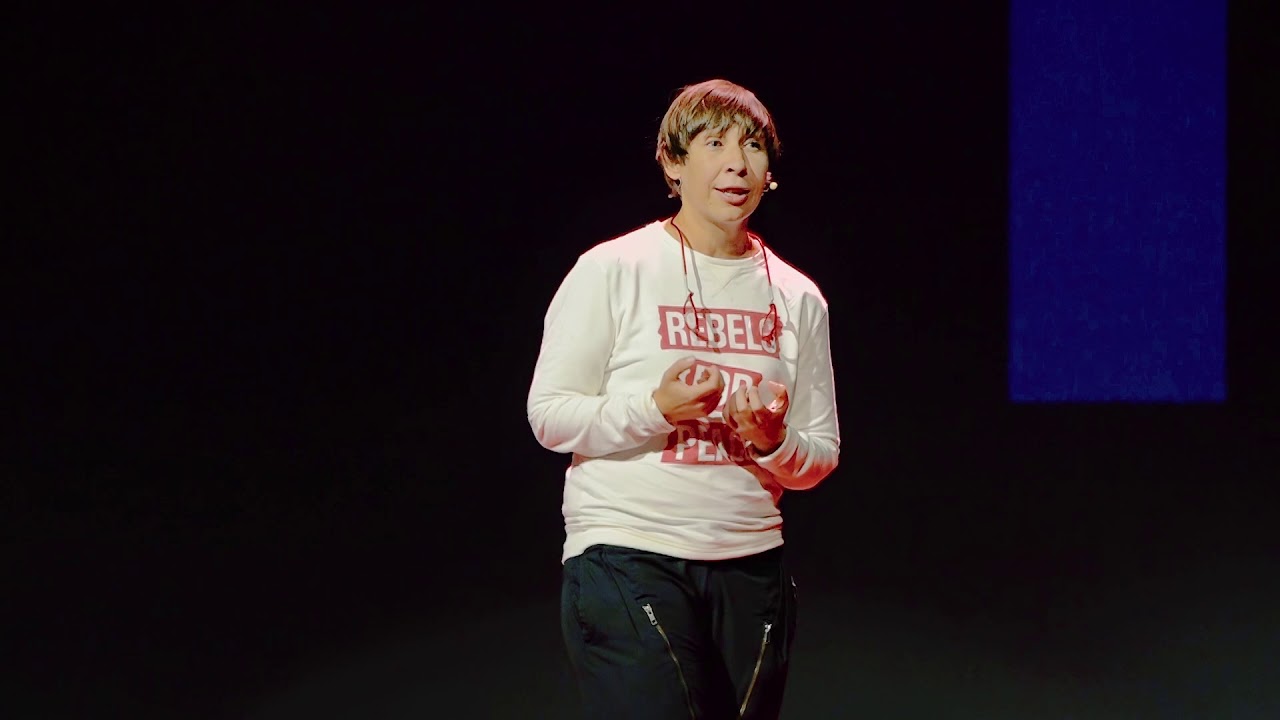
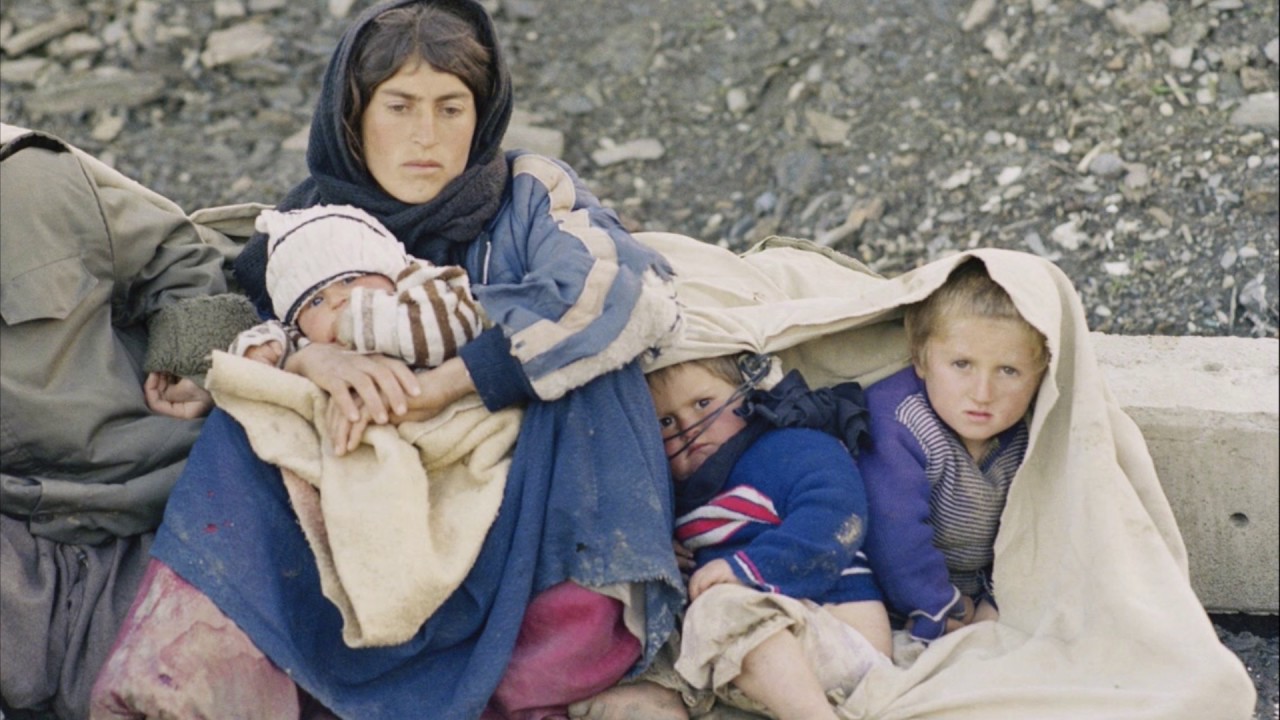
Steven Pinker explores the historical decline of violence, highlighting key processes from prehistoric times to the modern era.
Key Takeaways
- Violence has declined significantly over millennia due to social, political, and psychological developments.
- State formation and governance played a crucial role in reducing violence from prehistoric levels.
- Legal and humanitarian reforms greatly reduced physical punishments and capital offenses.
- The post-World War II era has seen an unprecedented reduction in interstate wars, especially among wealthy nations.
- Empathy, reason, and social norms are key psychological forces driving the decline of violence.
What the video covers
- Violence has been in decline over long stretches of human history, possibly making today the most peaceful era.
- The Pacification Process marks the first major decline, transitioning humans from anarchic societies to state governance around 5,000 years ago.
- The Civilizing Process shows a massive decline in homicide rates in Europe over the last 800 years.
- The Humanitarian Revolution ended judicial torture, drastically reduced capital offenses, abolished slavery, and curtailed the death penalty in many countries.
- The Long Peace refers to the unprecedented decline in interstate wars since 1945, especially among great powers and developed countries.
- The New Peace is the spreading decline of war and violence to other parts of the world, including colonial and civil wars.
- Psychological mechanisms both promote and inhibit violence, including empathy, reason, and social norms.
- Empathy tends to be limited to close circles, but historical changes have expanded the scope of our 'better angels.'
- The decline in violence is not guaranteed to continue but is a persistent historical trend influenced by multiple social and psychological factors.
- Modern societies show significant reductions in violence, including corporal punishment, racism, and capital punishment.
Chapters
- 00:00Introduction and Overview of Violence Decline
- 01:25The Pacification Process: From Anarchy to State
- 02:29Comparing Violence Rates: Prehistoric vs Modern
- 03:30The Civilizing Process: Decline in Homicide Rates
- 04:33The Humanitarian Revolution: Ending Torture and Slavery
- 05:40The Death Penalty and Its Decline
- 07:32The Long Peace: Decline in Interstate Wars
- 09:23The New Peace and Global Spread of Violence Decline
- 12:00Psychological Mechanisms Behind Violence and Peace
Full Transcript — Download SRT & Markdown
Speaker A
Translator: Raissa Mendes. Reviewer: Leonardo Silva. Believe it or not, and I know most people do not, violence has been in decline for long stretches of time, and today we may be living in the most peaceful era in our species' existence.
Speaker A
The decline of violence has not been steady, it has not brought rates of violence down to zero, and it is not guaranteed to continue.
Speaker A
But I hope to persuade you that it is a persistent historical development, visible on scales from millennia to years, from the waging of wars to the treatment of children and animals.
Speaker A
I'm going to walk you through six major historical declines of violence and try to offer explanations for the declines, in terms of the psychological mechanisms that impel us toward violence, the psychological mechanisms that inhibit us from violence, what Abraham Lincoln called "the better angels of our nature,"
Speaker A
and the historical changes that have favored our better angels. The first decline of violence I call the Pacification Process.
Speaker A
Until around 5,000 years ago, humans everywhere lived in anarchy, without central government. What was life like in this state of nature?
Speaker A
Well, one way of estimating rates of violence in non-state versus state societies comes from forensic archaeology.
Speaker A
You can think of this as "CSI Paleolithic," namely what proportion of prehistoric skeletons have signs of violent trauma, such as bashed-in skulls, decapitations, arrowheads embedded in bones, or mummies found with ropes around their necks?
Speaker A
(Laughter) Here I've assembled 21 estimates - as you can see they span quite a range, but they average out to 15%.
Speaker A
Fifteen percent of prehistoric remains show some signs of violent trauma. Let's compare that 15% figure to those of some modern state societies, such as the United States and Europe in the 20th century, with their two World Wars and many other wars,
Speaker A
that add up to a death rate of 0.6 of 1%. If we try to get the estimate as big as possible, by throwing in all the genocides, all the man-made famines across the entire globe, we can push the rate to, perhaps, as high as 3%.
Speaker A
And if we look at the world in the 21st century, you cannot see the bar because it is less than one pixel high, at 0.03 of 1%.
Speaker A
The second decline of violence can be appreciated by examining this woodcut showing a typical day in the life of the Middle Ages.
Speaker A
(Laughter) And the process that brought this level of mayhem down has been called the Civilizing Process.
Speaker A
In many parts of Europe, homicide statistics go back 800 years, and historical criminologists have plotted them over time, such as this graph, which shows homicides per 100,000 per year on a logarithmic scale from 1200 to 2000.
Speaker A
And, as you can see, there's been a massive decline, so that a contemporary Englishman has about one thirty-fifth the chance of being murdered as his medieval ancestor.
Speaker A
This is true not just in England, but in every country for which historical data exist - here you see Italy, the Netherlands, Germany, Switzerland, and Scandinavia.
Speaker A
The red line in this graph shows the average of those five regions. For the sake of comparison, I've also put the comparable rate from non-state societies in the dot on the upper left.
Speaker A
The gap between the dot and the beginning of the graph is what I call the Pacification Process, the further decline, the civilizing process.
Speaker A
The third historical decline of violence can be appreciated by recalling some of the ways that law and order was brought to European territories, namely sadistic public physical punishments, such as breaking on the wheel, burning at the stake, clawing with iron hooks,
Speaker A
sawing in half, and impalement. But in a development called the Humanitarian Revolution, major countries put an end to the use of torture as a form of criminal punishment.
Speaker A
This timeline shows from 1625 to 1850 the number of major countries that had judicial torture, and, as you can see, there was a wave of abolitions in the second half of the 18th century, including the prohibition of "cruel and unusual punishment"
Speaker A
in the Eighth Amendment to the American Constitution, which took place right in the middle of this wave.
Speaker A
Also abolished during the Humanitarian Revolution was the profligate use of the death penalty for nonlethal crimes.
Speaker A
In 18th-century England, there were 222 capital offenses on the books, including poaching, counterfeiting, robbing a rabbit warren, being in the company of Gypsies, and "strong evidence of malice in a child 7 to 14 years of age." By 1861, these had been reduced to four.
Speaker A
Now, the death penalty itself has been abolished in every Western democracy, except the United States.
Speaker A
The red line shows the number of European countries with capital punishment, from 1775 to the present.
Speaker A
Most of the abolitions took place in the 20th century, but the blue line shows the number of European countries that actually carry out executions, showing that before politicians got around to striking capital punishment from their countries' law books,
Speaker A
their fellow citizens had pretty much lost their taste for executing people. I mentioned the United States is an exception because 33 of the 50 states still practice capital punishment.
Speaker A
But even in the United States, capital punishment is a shadow of its former self, as you can see from this graph, which shows the per capita execution rate from colonial times to the present.
Speaker A
Nowadays about 40 people are executed every year in a country that has more than 16,000 homicides, and the rate has continued to go down over the last decade.
Speaker A
Finally, the Humanitarian Revolution saw the abolition of slavery. Now, slavery used to be legal all over the globe.
Speaker A
No one seemed to think there was anything wrong with it. The Bible had no problem with it, for example.
Speaker A
Democratic Athens was a slaveholding society ... But starting in the second half of the 18th century, there was a trickle of abolitions which grew into a wave that swept over the entire world.
Speaker A
As of 1980, when Mauritania abolished capital punishment, we're living through a unique era in human history, in which slavery is illegal everywhere on Earth.
Speaker A
The fourth decline of violence has been called the Long Peace. And I'm going to skip a number of graphs because the most relevant statistic for the Long Peace is zero.
Speaker A
It refers to the historically unprecedented decline in interstate war. So here are some examples of the statistic zero that symbolizes this era.
Speaker A
There were no wars between the United States and the Soviet Union, contrary to every expert prediction that World War III was just a matter of time.
Speaker A
No nuclear weapon has been exploded in war since Nagasaki; again, contrary to all the predictions from experts that nuclear war was inevitable.
Speaker A
There've been no wars between any two great powers since the end of the Korean War in 1953, following half a millennium in which the great powers were constantly at each other's throats.
Speaker A
There've been no wars between Western European countries since the end of World War II.
Speaker A
For the sake of comparison, prior to 1945, Western European countries alone started two new wars a year, for 600 years.
Speaker A
That number fell, as of 1946, to zero. And there've been no wars between developed countries.
Speaker A
The 44 countries with the highest GDP per capita have not fought each other since 1946.
Speaker A
And that might even seem banal and unexceptional that we think of wars as taking place in poor backward parts of the world, but for most of human history, it was the big rich developed countries that were constantly waging war,
Speaker A
and because they could afford big destructive armies, those wars did the most damage. Well, what about the rest of the world?
Speaker A
In a process that I call the New Peace, the long peace is starting to spread to the rest of the world.
Speaker A
And I'll illustrate it with one graph, a stacked layer graph, with the thickness of each layer corresponds to the rate of death of war in a particular category from 1946 to the present.
Speaker A
Here is the rate of death from colonial wars, which tapered off to zero as European empires ga...
Speaker A
Here we have the rate of death from interstate wars, wars with a country on each side, which shows a spiky but downward trend, with bumps corresponding to the Korean War, the Vietnam War, and the Iran-Iraq War.
Speaker A
Here we have the rate of death from civil wars and internationalized civil wars, where some country butts in on a civil war.
Speaker A
The height of the entire stack represents the worldwide rate of death from all wars combined.
Speaker A
And, as you can see, the graph shows a bumpy but unmistakable downward trend. In the first decade of the 21st century, you see a thin laminate of layers showing the unprecedentedly low rate in deaths of war from all categories.
Speaker A
Finally we have the Rights Revolutions, the targeting of violence on smaller scales directed against vulnerable sectors of the population, such as African Americans, women, children, and animals.
Speaker A
The Civil Rights Revolution first put an end to the practice of lynching. By the end of the 19th century, about 150 African Americans were lynched every year - that's three a week.
Speaker A
By the 1950s, that fell to zero. The kind of racist attitudes that licensed attacks on African Americans have been in steady decline.
Speaker A
This graph shows the percentage of white Americans that agree with the statement "black and white students should go to separate schools," and "if a black family moved in next door, I would move out." The percentages have fallen from a majority of white Americans
Speaker A
to the single digits, which is the range of crank opinion. The question is no longer even included in public opinion polls.
Speaker A
The Women's Rights Revolution has reduced the rate of rape by 80%, since its peak in the 1970s, and has brought about a similar decline in rates of domestic violence.
Speaker A
The Children's Rights Revolution has reduced the number of American states with corporal punishment, that is, strapping and paddling in schools.
Speaker A
Approval of spanking and other forms of corporal punishment of children by their parents has been in decline in polls in every Western country.
Speaker A
And rates of child abuse, both physical and sexual, have been in decline since they have been first measured.
Speaker A
The Animal Rights Revolution has seen a decline in hunting, a rise in vegetarianism, both in the UK and in the US, and a dramatic decline in the number of motion pictures in which animals were harmed.
Speaker A
Well, this brings up the question, "Why has violence declined on so many scales of time and magnitude?" I don't believe it's because human nature itself has changed and that our violent inclinations have literally been bred out of us,
Speaker A
but rather that human nature has always been extraordinarily complex and it has comprised both inclinations that tempt us toward violence and inhibitions that inhibit us.
Speaker A
What are the motives for violence? I don't believe there is any one part of the brain that contains an aggression instinct; rather, we have distinct motives such as simple exploitation, the harming of a person that happens to be an obstacle
Speaker A
on the path towards something that you want, resulting in forms of violence such as rape, plunder, conquest, and the elimination of rivals.
Speaker A
There's dominance, the drive among individuals to climb the pecking order and become alpha male, and a corresponding motive among groups for racial, national, or religious supremacy.
Speaker A
There's revenge or moralistic violence, in which you feel not only is violence permissible, but it is mandatory in order to punish those who have wronged you, resulting in vendettas, rough justice, and cruel punishments.
Speaker A
And perhaps, most destructive of all are utopian ideologies, belief systems from militant religions, nationalism Naziism communism that hold out the prospect of a world that will be infinitely good forever.
Speaker A
As captured in the saying, "You can't make an omelet without breaking eggs," namely if you have a belief system in which the world will be perfect, well, killing people who stand in the way is a price worth paying,
Speaker A
which is why, paradoxically, the worst atrocities in human history were committed in pursuit of a moralistic utopian goal.
Speaker A
Well, what do we have on the other side to counteract these violent inclinations? What are the better angels of our nature?
Speaker A
There's self-control, circuitry in the prefrontal cortex that can anticipate the consequences of behavior and inhibit our violent impulses.
Speaker A
There's empathy, the ability to feel others' pain. There's the moral sense, a system of norms and taboos that govern what we feel is appropriate behavior.
Speaker A
And finally, there's reason, cognitive processes that allow us to engage in objective, detached analysis.
Speaker A
Well, the final question is: How do we put the history back together with the psychology?
Speaker A
Which historical developments bring out of our better angels and stay our hands before they can commit acts of bloodshed?
Speaker A
The first possibility is that Thomas Hobbes got it right when he extolled "The Leviathan," a state and judicial system with a monopoly on the legitimate use of force.
Speaker A
A state with a monopoly on violence can neutralize your incentive to attack your neighbors by imposing penalties that cancel out your anticipated gain.
Speaker A
Just as important, it neutralizes your neighbors' incentive to attack you, and so you no longer have to maintain a belligerent macho stance to deter them, nor do you have to pursue vengeance after the fact.
Speaker A
And this can tamp down rates of violence by circumventing the self-serving biases that lead everyone in a dispute to think they're on side of the angels and that their enemy is perfidious and aggressive, and thereby reduce the cycles of vendetta,
Speaker A
in which both sides always think that there's still a score to settle. A second mechanism has been called Gentle Commerce, the idea that whereas plunder is a zero-sum game, the advantage to the aggressor is canceled out by the loss to the victim.
Speaker A
Trade is a positive-sum game, one in which everybody wins. And as improving technology allows the trade of goods and ideas over longer distances, among larger groups of people, and at lower cost, it becomes cheaper to buy stuff than to plunder it,
Speaker A
and other people become more valuable to you alive than dead. (Laughter) A third possibility has been called the Expanding Circle, and it builds on the biological fact that evolution has given us all a sense of empathy.
Speaker A
Unfortunately, by default, we apply our empathy only to a narrow circle of blood relatives, close allies, and cute little fuzzy animals.
Speaker A
But over the course of history, the expansion of literacy, travel, and cosmopolitanism has led us to enlarge our circle of empathy, from just the family to the village, the clan, the tribe, the nation, other races, both sexes, children,
Speaker A
and perhaps eventually to other species. Finally, there's the Escalator of Reason, the possibility that the growth of literacy, education and public discourse has encouraged people to think more abstractly and more universally.
Speaker A
People rise above their parochial vantage point. This makes it harder to privilege your own interests over someone else's just because I'm me and you're not.
Speaker A
It allows people to stand back and recognize the futility of cycles of violence and increasingly see violence as a problem to be solved rather than as a contest to be won.
Speaker A
Finally, what is the common denominator? Is it a massive coincidence that these four forces have all pushed in a "peaceward" direction?
Speaker A
Or is there some reason why they have all unfolded in this way? I think there is a reason, and that is that violence is what game theorists call a social dilemma.
Speaker A
It's always tempting to an aggressor to exploit a victim, but of course it is ruinous to a victim.
Speaker A
So, since aggressors and victims change places over the long run - anyone can be a [victim] or an aggressor - all parties would really be better off if everyone could agree to renounce violence.
Speaker A
The dilemma is, how do you get the other guy to renounce violence at the same time as you do?
Speaker A
Because if you beat your swords into plowshares, but the other guy keeps his as swords, you could find yourself at the wrong end of an invading army.
Speaker A
One can well imagine that over the course of history, human experience and human ingenuity have gradually chipped away at this problem just like we've dealt with other scourges of the human condition, like pestilence and hunger, and the common denominator among these four forces
Speaker A
is that all of them work to increase the material, emotional, and cognitive incentives of all parties to avoid violence simultaneously.
Speaker A
Thank you very much.
Topics:Steven Pinkerdecline of violencePacification ProcessCivilizing ProcessHumanitarian RevolutionLong PeaceNew Peacehistorical violenceTEDxpsychology of violence