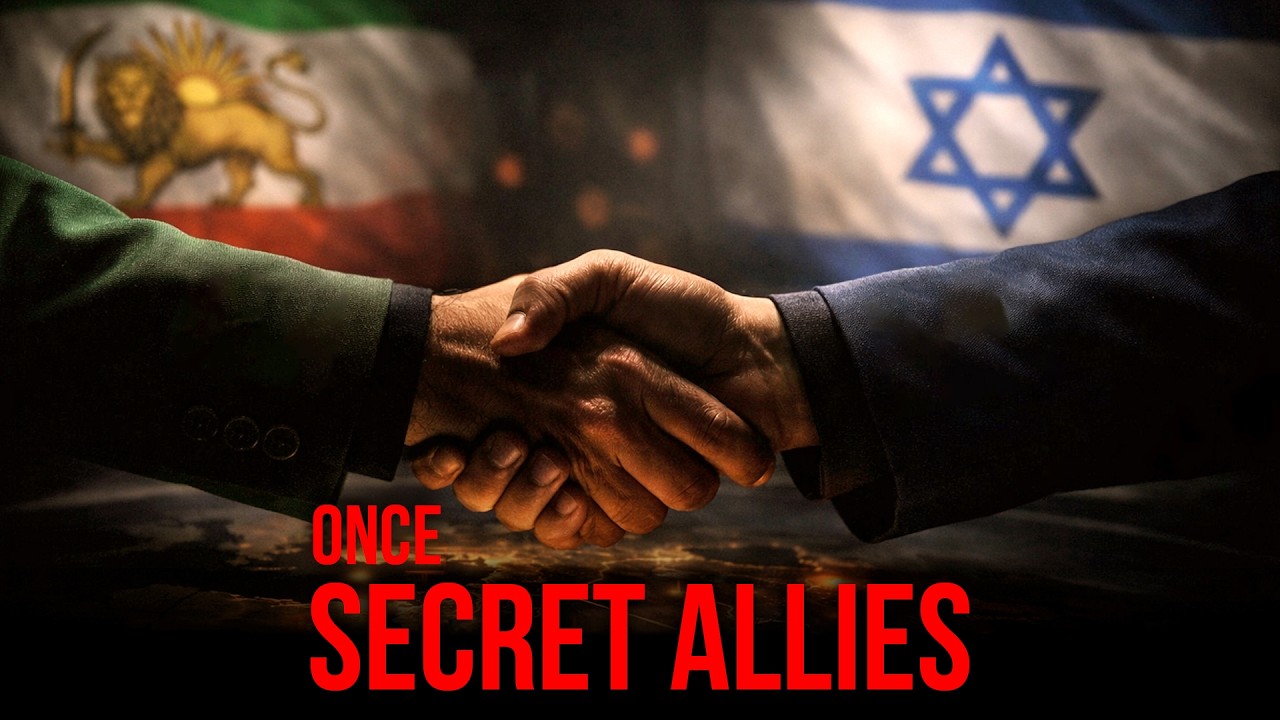
Explore the complex legacy of Sultan Abdul Hamid II, the last great Ottoman ruler, as hero or villain in a divided historical view.
Key Takeaways
- Abdul Hamid II faced enormous challenges including economic collapse, rebellions, and foreign threats.
- His foreign policy skillfully exploited rivalries among European powers to preserve the empire.
- He was a controversial figure, seen as both a defender of Islam and a repressive ruler.
- The internal repression under his rule contributed to revolutionary movements that eventually ended his reign.
- The legacy of Abdul Hamid II remains debated, reflecting the complexity of his impact on Ottoman and Islamic history.
What the video covers
- Sultan Abdul Hamid II ruled the Ottoman Empire for 33 years during a period of decline and internal strife.
- He inherited an empire facing economic ruin, internal rebellions, and political conspiracies.
- His early reign was marked by the humiliating Treaty of San Stefano after Russia’s war against the Ottoman Empire.
- Abdul Hamid adopted a realist foreign policy based on 'Divide and Survive' to manage competing European powers.
- He was both revered as the Caliph and protector of Muslims and criticized as the 'Red Sultan' or a ruthless dictator.
- The Sultan’s internal policies created suffocation that fueled revolutionary movements like the Young Turks.
- His reign saw the loss of key territories and the eventual weakening of Ottoman control.
- The Young Turks revolution restored the constitution and deposed Abdul Hamid in 1909.
- The video examines whether Abdul Hamid was a hero trying to save a sinking empire or a tyrant clinging to power.
- It invites viewers to judge his legacy based on historical evidence and the divided opinions that persist today.
Chapters
- 00:00Introduction: The Last Great Sultan of Islamic History
- 02:00Challenges at Ascension: Economic Ruin and Internal Rebellions
- 04:10Political Turmoil and the Hot Seat of the Ottoman Throne
- 06:10The Russo-Turkish War and the Treaty of San Stefano
- 08:10Abdul Hamid’s Realist Foreign Policy: Divide and Survive
- 10:10The Sultan as Caliph and Protector of Muslims
- 12:00Internal Repression and the Rise of the Young Turks
- 14:00Downfall and Legacy: Revolution, Deposition, and Historical Debate
Full Transcript — Download SRT & Markdown
Speaker A
Some stories are of the throne, and some are of the gallows! But this is the story of the last great Sultan of Islamic history.
Speaker A
And of the night his own army surrounded the royal palace! He who ruled the country for 33 years
Speaker A
Had taken charge of an empire that was on the brink of death! He whom the West called the 'Red Sultan'
Speaker A
A 'bloody dictator,' but for millions of Muslims,
Speaker A
He was the Commander of the Faithful,
Speaker A
The Caliph of the Muslims, their last protector! But on that night of April 27, 1909,
Speaker A
He was left alone. He lost his war! When the rebels ordered him to step down from the throne,
Speaker A
The Sultan looked them in the eye and said only this: I have served my nation and Islam for 33 years. History will be my judge!
Speaker A
Has history made its decision? Perhaps yes, perhaps no! Because more than a century has passed, but the world is still divided!
Speaker A
The Sultan on whom a magnificent drama like "Payitaht" was made, which caused a stir throughout the Muslim world,
Speaker A
Was he a great Islamic hero who made a last attempt to save a sinking ship?
Speaker A
Or was he really a ruthless dictator who destroyed everything to save his throne? Come today on 'Dareecha,' let's delve into the story of this Sultan, or rather, not a story, consider this a trial in which you are the judge!
Speaker A
Today, in the greatest court of history, let's look at the evidence of this case, one by one,
Speaker A
And decide who Sultan Abdulhamid II was: a hero or a villain? The day Abdulhamid became Sultan,
Speaker A
There was hardly anyone who congratulated him! Why? Because becoming king at that time was
Speaker A
Like someone laughingly placing a burning coal in their own hand, like joyfully wearing a crown of thorns!
Speaker A
This was the most difficult period of the Ottoman Empire, a time when its European enemies contemptuously called it "The Sick Man of Europe"!
Speaker A
And to be honest, this wasn't wrong. The empire had not one, but several diseases!
Speaker A
Disease #1: Economic Ruin! The treasury was completely empty, the empire was bankrupt. The situation was such that the entire economy of the empire, its taxes, its customs,
Speaker A
Everything was practically in the hands of a foreign commission called the 'Ottoman Public Debt Administration'!
Speaker A
Imagine, you were economically enslaved in your own country! Your treasury, its keys were all with the clerks of London and Paris!
Speaker A
Disease #2: Internal Rebellions! The country was breaking from within. In the Balkan regions like Greece, Serbia, Bulgaria, etc., rebellions were happening one after another!
Speaker A
The wave of Nationalism that arose after the French Revolution
Speaker A
Was now shaking the foundations of the Ottoman Empire,
Speaker A
And fanning this fire was Russia, which wanted to break the Ottoman Empire to reach the warm waters!
Speaker A
Understand that this was a very old desire of Russia, from the Ottoman era to the time of the Afghan Jihad!
Speaker A
Anyway, now let's talk about Disease #3, which was of the throne, a throne that had tasted blood!
Speaker A
Not far away, the capital Istanbul itself had become a hotbed of conspiracies! Just three months before Abdulhamid II,
Speaker A
Two sultans had been deposed! What happened was that Abdulhamid's father, Sultan Abdulmejid I, died in 1861.
Speaker A
According to the law, the throne went to his brother Abdulaziz, who ruled for 15 years,
Speaker A
But he became a puppet in the hands of powerful ministers, especially Midhat Pasha! Who was a liberal and very ambitious minister,
Speaker A
He wanted to turn the empire into a Western-style constitutional monarchy. When Abdulaziz refused to agree to this, in 1876, Midhat Pasha conspired and had him deposed!
Speaker A
Not only that, just four days later Sultan Abdulaziz was found dead in his room; his wrists were cut!
Speaker A
Officially, it was announced as a suicide, but it was probably a murder! Then Abdulhamid II's elder brother, Murad V, sat on the throne,
Speaker A
But the horrific end of his uncle had broken him from within, so much so that his mental balance was disturbed!
Speaker A
After only 93 days, he was declared insane and removed from the throne! This was not a throne; think of it as a Hot Seat.
Speaker A
Whoever sat on it was either killed or went mad! Now there was only one last hope.
Speaker A
The last man of the royal family was 34-year-old Prince Abdulhamid! People thought he would be killed too,
Speaker A
But the truth is that Abdulhamid had prepared for this day his whole life! He was not a pleasure-seeker like other princes,
Speaker A
He was intelligent, hardworking, and a deep thinker. He had a keen eye on world politics!
Speaker A
It was the conspiratorial ministers of the court who placed him on the throne on one condition,
Speaker A
That he would implement the constitution, meaning he would make the empire a Constitutional Monarchy!
Speaker A
They were looking for a puppet, but they had no idea that the man they were putting on the throne was far more clever than they thought!
Speaker A
But immediately, he faced another challenge: a ruined economy, a breaking country, and a bloody throne!
Speaker A
Now the question was, no matter how intelligent a person is, could he win this game?
Speaker A
Abdulhamid II had just worn the crown of thorns. It had only been a few months when the first and biggest challenge of this game appeared.
Speaker A
A storm was coming from the north. Russia had declared war on the Ottoman Empire!
Speaker A
Abdulhamid hoped that the Western powers, especially Britain, would help him stop Russia, as they had in the Crimean War!
Speaker A
They would never let Russia gain so much power that it would become a threat to important trade routes like the Mediterranean Sea and the Suez Canal!
Speaker A
But this proved to be his first major misunderstanding. The Sick Man of Europe was now completely alone!
Speaker A
And then it happened that the Russian armies reached the gates of Istanbul! The capital of the empire for four hundred years, the seat of the Caliphate,
Speaker A
Istanbul was now in danger! And in March 1878, Sultan Abdulhamid II had to sign a humiliating treaty with Russia!
Speaker A
The Treaty of San Stefano! The empire lost almost one-third of its territory in Europe.
Speaker A
Serbia, Romania, and Montenegro became independent. Bulgaria also became almost independent. Bosnia went to the Austro-Hungarian Empire,
Speaker A
And Britain also took control of Cyprus in the name of protection! It was a free-for-all,
Speaker A
Where everyone was tearing their share from the corpse of the Sick Man, and the Sultan was forced to watch all this helplessly!
Speaker A
This humiliating defeat taught the young Sultan a lot, two lessons that allowed him to rule for a long time afterward!
Speaker A
First lesson: Do not trust the West. They are not friends, only worshippers of their own interests!
Speaker A
Second and most important lesson: If the empire is to be saved, it must be strengthened not from the outside, but from the inside!
Speaker A
And then from the ashes of this defeat, a new Sultan was born. An idealist Abdulhamid died,
Speaker A
A realist king came to life, who would now not learn to fight the lions,
Speaker A
But to make the lions fight each other! For the next 30 years, Sultan Abdulhamid played his moves in international politics like a grandmaster,
Speaker A
In a way that left the whole world astonished! His foreign policy was based on a simple but very effective principle: Divide and Survive!
Speaker A
He knew that the European powers were seemingly very civilized, but inside, they were all greedy wolves and their interests clashed with each other!
Speaker A
Russia wanted to reach the warm waters, wanted to establish its control over the world's main shipping lines,
Speaker A
And Britain feared that if Russia succeeded, its important trade route to its colony, India, would be in danger!
Speaker A
Then there was France, which wanted to advance in Africa, while Germany was also an emerging power looking for new markets to sell its products!
Speaker A
And the Sultan used all these things. When Britain tried to occupy Egypt, he would remind France that it threatened their interests,
Speaker A
When Russia interfered in the Balkans, he would warn the Austro-Hungarian Empire and Britain of the danger!
Speaker A
And in this game, he also played his smartest move on Germany! He knew that B
Speaker A
German companies were given contracts for large projects... the most famous of which was the Berlin-Baghdad railway project!
Speaker A
A project that had worried Britain... because it was bringing Germany directly closer to the Persian Gulf and India!
Speaker A
Thus, the Sultan used Germany to balance himself between Britain and Russia! But, Abdulhamid's biggest, most revolutionary step was the one...
Speaker A
that proved to be the most dangerous weapon against the European powers... it was Pan-Islamism, the unity of the Islamic world!
Speaker A
Sultan Abdulhamid realized that the empire was trying to unite the country solely on the basis of Turkish nationality...
Speaker A
which was completely wrong because other nations also lived here... Arabs, Kurds, Albanians, and many more!...
Speaker A
And there was one thing that could unite them: Islam! And the Sultan held a title that no one else in the world had at that time: the Caliphate!
Speaker A
He was not just a Turkish king... he was the Caliph of millions of Muslims worldwide!
Speaker A
Just think: This was a time when millions of Muslims lived within the British Empire...
Speaker A
especially in India! The French Empire also had millions of Muslims, in North and West Africa!
Speaker A
And within Russia, the number of Muslims was in the millions, if not tens of millions...
Speaker A
in Central Asia, in the Caucasus! All of them were enslaved... and for all these enslaved Muslims, the Sultan's message was...
Speaker A
your real leader is not in London, Paris, or Moscow but here, in Istanbul! This was a nightmare for the European powers!
Speaker A
They were constantly afraid that if we put too much pressure on the Ottoman Empire...
Speaker A
the Caliph might issue a fatwa for jihad! And if that happened, the fire of rebellion would ignite in their established empires!
Speaker A
It was a spiritual atom bomb that Abdulhamid kept for his protection! You might be thinking that talk of Muslim unity is just that talk, no...
Speaker A
we saw a practical example of this during Sultan Abdulhamid's time! What happened was that the Sultan announced a project called the Hejaz Railway...
Speaker A
the purpose was to build a new railway line from Damascus to Medina... which would connect the capital Istanbul to Medina.
Speaker A
But where would the money for this mega-project come from? The empire had nothing! Then the Sultan appealed for donations from Muslims all over the world...
Speaker A
and this project was completed with donations from Muslims worldwide, from India to Indonesia! This was not just a railway line...
Speaker A
it was a living symbol of the unity of the Muslim Ummah! Now, for the outside world, the Sultan had become a brilliant diplomat...
Speaker A
but the situation at home was completely different! For any great ruler... there comes a moment in their life that defines the path of their rule, their style, their psychology, everything!
Speaker A
For Sultan Abdulhamid, that moment was the devastating defeat at the hands of Russia! That war taught Sultan Abdulhamid a lesson: he was surrounded by enemies on all sides...
Speaker A
and in this war, his own parliament was his biggest weakness! It had representatives from different nations...
Speaker A
who fought among themselves, and some even spied for the enemy! In the Sultan's view, "democracy" was a luxury that his empire could absolutely not afford...
Speaker A
an empire with one foot in the grave! So on February 14, 1878, right after the war...
Speaker A
he made a decision that is still considered very controversial today: he suspended the parliament set aside the constitution and took all powers into his own hands!
Speaker A
In the eyes of the West, this was the murder of democracy... and for this reason, he is called a dictator...
Speaker A
but Abdulhamid thought differently: in his view, this was necessary to save the empire!... A sinking ship cannot be saved by a committee...
Speaker A
but by a strong and powerful captain... This was a Dictator's Dilemma! Now everything was in the Sultan's Iron Grip...
Speaker A
and the most tragic consequence of this grip was seen in Armenia! What happened was that the Christian population of Armenia...
Speaker A
in the fervor of nationalism and instigated by Russia, rebelled against the Sultan! They went so far as to carry out an assassination attempt on the Sultan in 1905...
Speaker A
from which he narrowly escaped! Now all limits had been crossed... the Sultan decided to respond, and then...
Speaker A
this rebellion was crushed with great ruthlessness! This proves to what extent he could go to save his empire!
Speaker A
How many people were killed in the effort to crush this rebellion? No one knows!
Speaker A
But this is the incident after which the West started calling him the Red Sultan...
Speaker A
and tried to put such a stain on his legacy, which is still being attempted to be washed away today!
Speaker A
What do you think? Was this the Sultan's greatest test? Not at all! It was the offer from the founder of the Zionist movement...
Speaker A
an offer that no one could refuse! While Sultan Abdulhamid was fighting a war to save his empire from internal and external enemies...
Speaker A
a new, highly organized, and deep-pocketed movement was emerging in Europe... its name: Zionism! The founder of this movement was an Austrian journalist: Theodor Herzl!...
Speaker A
whose dream was: to gather the scattered Jews from all over the world... and bring them to their "ancestral land," Palestine...
Speaker A
where a Jewish state would be established! But there was a huge obstacle in the path of this dream...
Speaker A
a rock, whose name was: Sultan Abdulhamid II! This was a time when Palestine was part of the Ottoman Empire...
Speaker A
and Abdulhamid was not just a king... he was also the Caliph of the Muslims...
Speaker A
the Servant of the Two Holy Mosques... the protector of Jerusalem and the Al-Aqsa Mosque!
Speaker A
And Herzl knew what the Sultan's biggest weakness was: the bankruptcy of his empire and the incredible debt it carried!
Speaker A
He thought he would make the Sultan an offer he couldn't refuse! He started to think of himself as the Godfather...
Speaker A
that he could put anyone in his pocket! So to achieve his goal, he visited Istanbul five times between 1896 and 1902...
Speaker A
and tried to reach the Sultan each time... and finally, he got the opportunity to meet the Sultan!
Speaker A
He really made the Sultan an offer that no one could refuse which was: The Zionist movement would pay off the Ottoman Empire's debt...
Speaker A
and create a positive image of the Sultan throughout the world... where Abdulhamid had become known as the bloody sultan!
Speaker A
And what was needed in return? Only permission to settle Jews in Palestine and to make it their National Home!
Speaker A
This was a deal that any ruler would have certainly accepted, especially when the country was bankrupt!
Speaker A
But Sultan Abdulhamid was no ordinary ruler, he was a Caliph! He knew that Palestine was not just a piece of land...
Speaker A
it was a trust of the Muslims... it contains Jerusalem, the first Qibla, the Al-Aqsa Mosque, it is all in the land of the prophets!
Speaker A
If he accepted any deal history would never forgive him! Therefore, he gave the answer that no one expected, he said to Herzl: "I cannot sell even an inch of my empire, because this country does not belong to me, but to my nation...
Speaker A
My nation has acquired this empire with its blood and will water it with its blood...
Speaker A
You can keep your wealth! He once also said in his court: "As long as I am alive, it is easier to run a knife through my body than to see Palestine separated from the Caliphate...
Speaker A
I will never let this happen... To cut this land, to divide it, they will have to pass over our dead bodies!
Speaker A
This was not just a refusal, it was an ideological declaration! A declaration that the sacred land of the Ummah is not for sale!
Speaker A
It is Not for Sale! What happened to the Sultan after taking this step? You are absolutely right: the Sultan not only kept the Sick Man of Europe alive for 33 years...
Speaker A
but also tried his best to get him back on his feet and, most importantly...
Speaker A
took a step that was a demand of honor! But when he thought he had overcome every enemy, inside and out...
Speaker A
a new and unseen enemy struck! An enemy that, in a way, the Sultan himself had created!
Speaker A
The Young Turks! These were young army officers, students and intellectuals... many of whom were sent by Sultan Abdulhamid himself to Europe for better education...
Speaker A
to Paris, Berlin, Geneva, and who knows where else! The purpose was for the youth to study science and technology and return to modernize the empire...
Speaker A
but instead of science, they learned revolution: Liberty Equality Fraternity! In their eyes, the weakness of the empire and the biggest cause of every problem was just one: Sultan Abdulhamid!
Speaker A
They considered the Sultan's dictatorship the biggest obstacle to progress... They believed that the only way to save the empire was to create a modern, secular, and Turkish nationalist state!
Speaker A
They wanted to restore the 1876 constitution and parliament! Meaning, they were against the Sultan and were ready to remove him at any cost!
Speaker A
And they were not alone in this rebellion... the European powers, who were tired of the Sultan's Islamism...
Speaker A
were secretly encouraging these rebels! The enemy was no longer at the borders, it had come inside the house!
Speaker A
The fire that was smoldering in Europe finally erupted like a volcano in July 1908!
Speaker A
The empire's own army, the Third Army stationed in Macedonia, rebelled! These young officers had only one demand: restore the constitution and parliament!
Speaker A
They also threatened: if the constitution is not restored, we will march on Istanbul! Now Sultan Abdulhamid was at a crossroads!
Speaker A
He could have crushed this rebellion too but it would have started a civil war...
Speaker A
which even a king like him could not stop! So he made a decision that perhaps no king in the world would make...
Speaker A
he did not shed the blood of his nation to save his throne... he accepted the rebels' condition...
Speaker A
and after 30 years, the constitution was restored in the empire! The Young Turks' revolution succeeded...
Speaker A
celebrations were held on the streets of Istanbul... people felt that the sun of freedom had risen!
Speaker A
But it was all an illusion, a deception! In April 1909, conservative soldiers and students in Istanbul rebelled against the secular policies of the Young Turks!
Speaker A
Who was immediately blamed for this? Yes! Sultan Abdulhamid II! This was a golden chance for them to get rid of the Sultan completely!
Speaker A
And then they called their most loyal army from Macedonia, known as the "Action Army"...
Speaker A
and marched on Istanbul! After a few days of fighting, they gained complete control of the city and imposed martial law!
Speaker A
And then came that day! A delegation from the parliament entered the royal palace... and read out a fatwa from the Sheikh-ul-Islam to the Sultan...
Speaker A
according to which he was deposed from both the Caliphate and the Sultanate! How this fatwa was obtained from the Sheikh, you can well imagine!
Speaker A
So with this announcement, the man who had protected the empire for 33 years... today his own educated children were handing him over to the wolves!
Speaker A
The Sultan who could not be defeated by outsiders... who could not be defeated by the Zionists, lost to the enemies within!
Speaker A
But was that really the case? I don't think so! Sultan Abdulhamid was actually defeated by his own strategy!
Speaker A
This was his Grandmaster's Dilemma... when the Sultan's greatest strength became his greatest weakness! Sultan Abdulhamid's iron grip had saved the empire from breaking apart...
Speaker A
but by then, the diseases of the Sick Man had become incurable! The Sultan had not cured the diseases...
Speaker A
he had just suppressed them, which turned into cancer within! Meaning, the disease worsened as the medicine was administered!
Speaker A
The Sultan's iron grip created a suffocation... which gave birth to revolutionaries like the Young Turks!
Speaker A
The Sultan used the weapon of the Caliphate brilliantly against Europe... but it was this very ideology that turned the secular and nationalist Turks within the empire against him...
Speaker A
who considered Turkish identity, not Islam, to be everything! The Sultan did not realize that his own pieces on the chessboard had turned to rebellion...
Speaker A
and the fortress he had built to save the empire had become his prison! The Sultan was deposed, he was the last king of the Ottoman dynasty...
Speaker A
who had some authority, some powers... because whoever came after him was just a puppet!
Speaker A
The Sultan told the rebels: I have run the empire for 33 years, you won't be able to run it for 33 days!
Speaker A
And his words proved to be quite true... because what happened in the next 10 years, no one had even dreamed of!
Speaker A
In 1911, Libya slipped out of Ottoman hands! The Young Turks' government had not even properly settled...
Speaker A
in when Italy attacked the empire's last African province, Libya! The weak government in Istanbul could not send much help and Libya was lost!
Speaker A
In 1912, a rebellion broke out in the Balkans... Serbia, Bulgaria, Greece, Montenegro all attacked the empire together!
Speaker A
The result? Another devastating defeat! In just a few weeks, the Ottoman Empire lost almost all of its European territory!
Speaker A
As if this wasn't enough, in 1914, the same government plunged the empire into the First World War!
Speaker A
A gamble in which everything was at stake... and this gamble was lost badly! Then after four years of bloody war came 1918...
Speaker A
the result: complete devastation! The British army was sitting in Baghdad and Jerusalem... all Arab territories were lost...
Speaker A
even Anatolia itself was occupied by the Allied forces! The six-hundred-year-old great empire now became part of books...
Speaker A
lost in the pages of history! The Young Turks' dream of "freedom"... ended in the complete destruction of the empire!
Speaker A
Their inexperience, their nationalist fervor, and their lust for power... sank the country! Then it was the same year that the Sultan took his last breath during his house arrest...
Speaker A
he passed away on February 10, 1918, just a few months before the end of the First World War!
Speaker A
And when the last guardian was also gone... the vultures pounced on the corpse of the Sick Man!
Speaker A
Britain and France divided the entire Middle East among themselves... that Palestine, which the Sultan had not sold even for billions of dollars...
Speaker A
was now under British control... the deal that the Sultan did not make was now happening for free...
Speaker A
preparations for the creation of Israel had begun! But long before that, on March 3, 1924, the Caliphate was also abolished!
Speaker A
Turkey declared that it was not the spiritual center of the Ummah... not the leader of the Muslims!
Speaker A
So, what did history decide about Sultan Abdulhamid? Look, he was, after all, a Sultan, a human...
Speaker A
no human is free from mistakes, and a king certainly isn't! But he was the last captain of a sinking ship, he faced every storm head-on...
Speaker A
he made tough decisions not for himself, but to save his empire! And later, time proved it...
Speaker A
the people who deposed the Sultan calling him a traitor, sank the entire empire in ten years!
Speaker A
Yes! The story of Sultan Abdulhamid does teach us a bitter lesson... that the fire that starts from a lamp within the house is the most devastating!
Speaker A
And also that when a nation is deceived by beautiful slogans... and removes its strict but sincere rulers...
Speaker A
this is the fate of that nation! Now the case of Sultan Abdulhamid is before you...
Speaker A
the decision is yours: is the Sultan a hero or a villain?
Topics:Sultan Abdul Hamid IIOttoman EmpireRed SultanYoung TurksTreaty of San StefanoOttoman declineIslamic historyCaliphateOttoman politicsBerlin-Baghdad railway