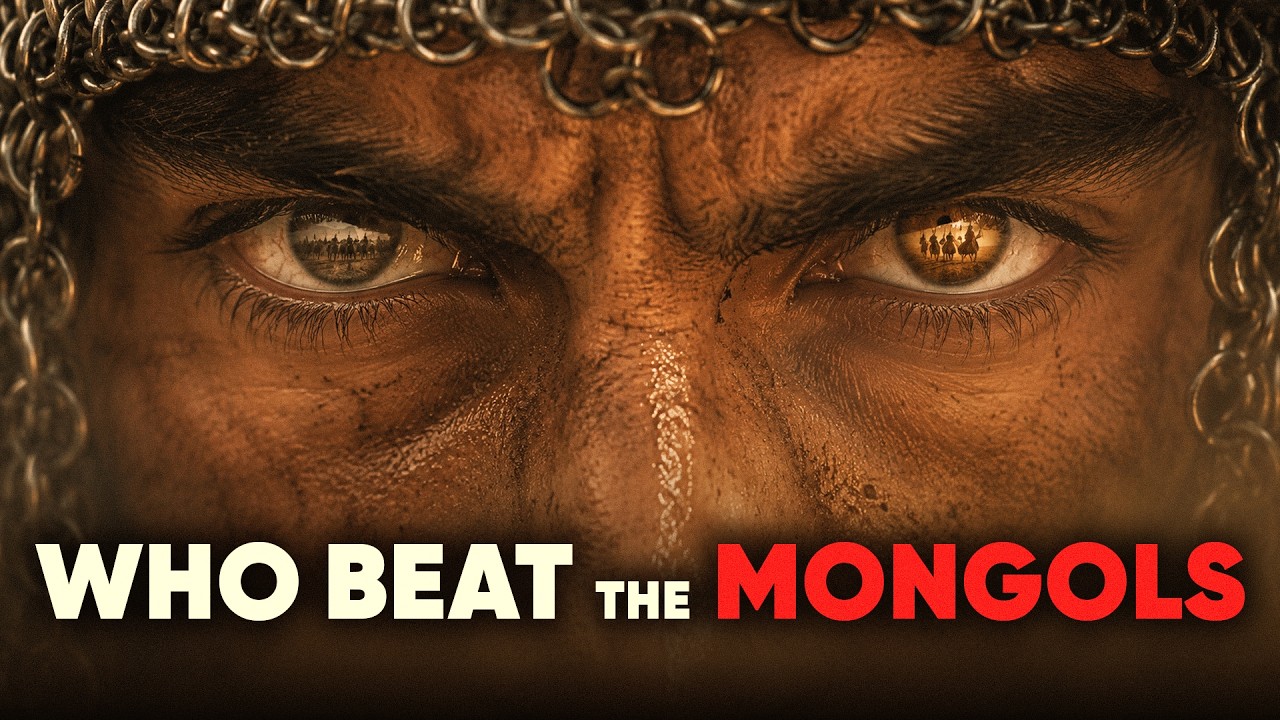
Explore the true story of Khayr ad-Din Barbarossa, the Ottoman admiral who ruled the Mediterranean and was misrepresented as a pirate in Hollywood.
Key Takeaways
- Barbarossa was a heroic figure who protected Muslims and challenged European dominance.
- His portrayal as a pirate in Hollywood is a deliberate distortion of history.
- The Barbarossa brothers played a crucial role in the Ottoman naval supremacy in the Mediterranean.
- Barbarossa's legacy is one of leadership, strategy, and resistance against oppression.
- Historical narratives can be manipulated by propaganda and media.
What the video covers
- Hollywood villain Captain Hector Barbossa is based on Khayr ad-Din Barbarossa, a respected Ottoman admiral.
- Barbarossa was a Grand Admiral of the Ottoman Empire who dominated the Mediterranean Sea for 30 years.
- The Barbarossa brothers, Oruç and Khizr, started as traders but became warriors against the Crusader Knights of St. John.
- They rescued thousands of Muslims fleeing Spanish persecution after the Fall of Granada.
- In 1516, they liberated Algiers and established their own government, challenging European powers.
- Oruç was killed defending Algiers, but Khizr continued the fight and allied with the Ottoman Empire.
- Khizr was appointed Grand Admiral and Governor of North Africa by Sultan Suleiman the Magnificent.
- Barbarossa defeated Europe's largest navy, turning the Mediterranean into an Ottoman-controlled sea.
- Despite his heroism, European propaganda portrayed him as a ruthless pirate to undermine his legacy.
- Modern Turkish media has revived Barbarossa's true image as a strategic leader and hero.
Chapters
- 00:00Introduction: Hollywood’s Villain vs The Real Barbarossa
- 00:53Who Was Khayr ad-Din Barbarossa?
- 01:46The Barbarossa Brothers’ Early Life
- 02:43Conflict with the Knights of St. John
- 04:08Rescue of Muslims from Spanish Tyranny
- 05:35Liberation and Rule of Algiers
- 06:27Death of Oruç and Rise of Khizr
- 08:06Alliance with the Ottoman Empire
- 08:55Barbarossa’s Naval Supremacy
- 10:48Legacy and Propaganda Against Barbarossa
Full Transcript — Download SRT & Markdown
Speaker A
You’ve all probably seen this character! Captain Hector Barbossa, a famous Hollywood villain! A dirty, greedy, and cruel pirate whose job was to loot, burn ships, and kill innocent people!
Speaker A
Hollywood told us that Barbossa is a demon, bloodthirsty, a ruthless pirate! But the truth is, Hollywood played a massive game with us.
Speaker A
By using this name, they carried out a vile character assassination of a truly great historical figure!
Speaker A
Because in reality, this name belongs to a man who once ruled the Mediterranean Sea!
Speaker A
A man whose name made the great powers of Europe tremble! He defeated the largest navy in Europe so badly that for 30 years, no one dared to challenge him at sea!
Speaker A
He was the Grand Admiral of the Ottoman Empire, the Amir-ul-Bahr, Khairuddin Pasha Barbarossa! The question is, why was such a great hero portrayed as a common bandit?
Speaker A
Why did they steal his name and stick it onto their movie villain? Why this hatred? What are they so afraid of?
Speaker A
Come today, let’s look behind this fear. Let’s explore the story of the Barbarossa brothers, the story of Oruç and Khizr, which will reveal who the real Barbarossa is.
Speaker A
A pirate, or the uncrowned King of the Seas? The story of the Barbarossa brothers begins on a small Greek island, Midilli, known today as Lesbos!
Speaker A
Here lived a retired Ottoman soldier, Yakup Ağa, who had four sons: Oruç, Ilyas, Ishak, and Khizr!
Speaker A
It was this Khizr who was later given the title "Khairuddin." The eldest son, Oruç, was a trader.
Speaker A
Ilyas was studying to become an Imam. Ishak was a carpenter, while the youngest, Khizr, helped his father in making pottery.
Speaker A
But Lesbos was an island. No one living there was disconnected from the sea. The sea was like a playground for these brothers. The sea was like a playground for these brothers. Initially, they traveled only for trade. But then, an incident occurred that turned them from traders into warriors.
Speaker A
It was the start of the 16th century, a time when a terrorist organization ruled the Mediterranean, much like the Somali pirates of today: The Knights of St. John!
Speaker A
These Christian warriors were remnants of the Crusades. When Muslims drove them out of Palestine and Syria, they took refuge on this island.
Speaker A
From here, they would loot Muslim merchant ships and capture the crews to sell them into slavery.
Speaker A
It was these Knights who once attacked Oruç Reis’s ship. In this attack, the younger brother Ilyas was martyred, while Oruç was taken prisoner.
Speaker A
How many years did Oruç remain in captivity? Neutral sources are silent, but Turkish history tells us that he spent three years in prison before being ransomed.
Speaker A
This imprisonment may or may not have done anything else, but it ensured that Oruç would no longer remain just a trader.
Speaker A
The fire of revenge now burned in his heart, and his targets were the Crusaders of the Mediterranean!
Speaker A
Oruç and his youngest brother, Khizr, decided that they would no longer allow Crusader rule on the sea!
Speaker A
They prepared their ship and the hunt began! Oruç Reis had a very imposing personality!
Speaker A
He used to dye his beard with henna, which made it look bright red! That is why the Europeans named him "Barbarossa." In Italian, it means "Red Beard." Some historians also say that people called him "Baba Oruç" out of love,
Speaker A
and "Baba Oruç" was corrupted into "Barbarossa" by Europeans. Whatever the case, this name became a symbol of terror for Europe!
Speaker A
But why? What did these brothers do that made Europeans fear them? Were they pirates? Did they engage in looting?
Speaker A
Not at all! In fact, this was the era when Muslim rule in Andalusia (Spain) was ending.
Speaker A
After the Fall of Granada, the Christian government gave Muslims two options: Either convert to Christianity or prepare to die!
Speaker A
Sacrifice your faith, or sacrifice your life. At that time, the Muslim world was fractured.
Speaker A
There was no unity. Who would listen to the cries of Spanish Muslims? There was no one in the entire Muslim world to hear them, except for the Barbarossa brothers!
Speaker A
It was Oruç and Khizr who first started working for these Muslims. They would take their ships to the coast of Spain, rescue thousands of trapped Muslims, and transport them safely to the shores of Africa!
Speaker A
Thousands rather, according to one estimate, 70,000 Muslims were saved by them from Spanish tyranny!
Speaker A
If Europe wants to consider these brothers "demons," let them. But the truth is, for the oppressed Muslims, Baba Oruç and Khizr were angels!
Speaker A
And most importantly, does a bandit or a pirate risk his life to save others?
Speaker A
That is the work of heroes, of superheroes! And that is why both brothers became incredibly popular in North Africa.
Speaker A
Now, the time had come for them to be more than just ship captains. It was time for them to become empire builders!
Speaker A
This was a time when Muslim governments on the North African coast, especially in Tunisia and Algeria, were very weak.
Speaker A
After the Fall of Granada, the Spanish Christians had become so powerful that their footsteps reached the African coast, and the Muslims could not resist them.
Speaker A
Then, in 1516, the Barbarossa brothers took a massive step. They liberated Algiers from Spanish occupation and established their own government there!
Speaker A
Yes! They were now the rulers of Algiers! This was a nightmare for Europe! An Islamic state right next to Europe’s strongholds on the Mediterranean coast was something they could not tolerate!
Speaker A
The King of Spain, Charles V, was driven mad with rage. He swore he would not rest until he finished these brothers!
Speaker A
A massive army was sent to reconquer Algiers and eliminate Barbarossa. In 1518, that moment arrived, which once again soaked the story of these brothers in blood.
Speaker A
The elder brother, Oruç Reis, had gone to defend the city of Tlemcen when the Spanish army surrounded him from all sides.
Speaker A
They were thousands, and Oruç had only a few hundred soldiers. There was no match between the two forces.
Speaker A
Oruç had a choice. He could have fled. But he refused to abandon his companions!
Speaker A
He fought until his last breath until he was martyred. The Spaniards cut off his head and took it with them. They displayed it on a spear across Europe!
Speaker A
There were celebrations that "Barbarossa is dead!" But they didn't realize only Oruç had died.
Speaker A
"Barbarossa" was about to be reborn! The younger brother, Khizr, picked up his brother’s blood-stained turban.
Speaker A
He took on the name "Barbarossa" and vowed that this war would continue! Compared to Oruç, Khizr was much more intelligent and far-sighted.
Speaker A
He knew he couldn't face the combined power of Europe alone. He needed a great power behind him, a power that could look Spain in the eye and pluck those eyes out if needed!
Speaker A
At that time, there was only one superpower: The Ottoman Empire! While the sun was setting on Muslims in Western Europe,
Speaker A
Granada, the last Muslim stronghold in Spain, had already slipped from their hands. But the Ottoman sun was rising in the East.
Speaker A
After conquering Constantinople, one European region after another was falling to them. So, Khizr played a masterstroke.
Speaker A
A decision that proved to be a game-changer! He took his independent state, his kingdom, and presented it on a platter to the Ottoman Sultan!
Speaker A
He said, "Algiers is not mine, it belongs to the Ottoman Caliphate!" "I will serve as your Governor; I only need your naval support." This decision changed the course of history.
Speaker A
Sultan Selim I was on the Ottoman throne at the time. He recognized the brothers' authority in Algiers and sent reinforcements.
Speaker A
But Khizr’s true rise came during the reign of Sultan Suleiman the Magnificent! The Sultan made Khizr the "Kaptan-i Derya," Grand Admiral of the Navy.
Speaker A
He also made him Chief Governor of North Africa and handed him control of several islands, including Rhodes.
Speaker A
And then, he gave him the title: "Khairuddin," meaning "The Goodness of the Faith." Sultan Suleiman was such a great ruler that even Western historians call him "The Magnificent." In 1533, he made a treaty with European powers, where one condition was that no European King would call himself "Emperor."
Speaker A
Because the
Speaker A
The lion was fully prepared for the hunt. The time had come to teach Europe a lesson.
Speaker A
A battle was coming that would decide who ruled the seas. Khairuddin Barbarossa was now more than a commander; he was a symbol!
Speaker A
As Admiral of the Ottoman Navy… he made life miserable for the Europeans in the Mediterranean.
Speaker A
Spain, Italy, Venice, no coast was safe from him. European kings soon realized that if Barbarossa wasn't stopped… he would set the entire Mediterranean ablaze!
Speaker A
This fear united all of Europe. The Pope declared a "Holy War" and formed the "Holy League." Spain, Venice, Genoa, Malta, and the Papal States, all pooled their naval powers together.
Speaker A
They created a navy that was the largest in history up to that point! And who was its commander?
Speaker A
The most famous and experienced European Admiral of the era: Andrea Doria! War was declared!
Speaker A
The Date: September 28, 1538. The Place: Preveza, off the coast of modern-day Greece. On paper, there was no contest.
Speaker A
Barbarossa had only 122 ships… while the Holy League had over 300! The enemy had three times the strength!
Speaker A
They had massive "Galleons" ships mounted with heavy cannons. Andrea Doria was certain he would crush Barbarossa!
Speaker A
It looked like the day Barbarossa would die. But Doria forgot one thing… In the sea, it's not the ship count or the number of soldiers that wins… It is the direction of the wind and the captain’s brain!
Speaker A
And Barbarossa was a son of the sea… And Barbarossa was a son of the sea… When the battle began, Doria’s large ships got stuck due to lack of wind.
Speaker A
Think of them as the 'elephants of Porus This was the moment Barbarossa was waiting for!
Speaker A
He attacked with his "Galleys" small, fast, and light ships. This wasn't a blind assault; it was a calculated move.
Speaker A
Barbarossa’s ships began circling Doria’s fleet! They would strike fast, fire their cannons, and disappear.
Speaker A
Doria’s massive cannons couldn't even aim at them! In just a few hours, the pride of Europe was turned to dust.
Speaker A
Or rather, it was drowned in the sea! Andrea Doria, Europe’s greatest Admiral was forced to flee for his life!
Speaker A
He extinguished his ship’s lights to escape in the darkness. It was a humiliating defeat.
Speaker A
In this battle, dozens of Holy League ships were either destroyed… or captured by the Ottomans.
Speaker A
And how many ships did Khairuddin lose? Historians record that Barbarossa did not lose a single ship!
Speaker A
Yes! This wasn't just a victory, it was a miracle! The success at Preveza changed the map of the world.
Speaker A
After this battle, the Mediterranean effectively became an "Ottoman Lake." Where only they ruled, that was it.
Speaker A
For the next 30 years… no European power dared to even look towards the Ottomans at sea!
Speaker A
This success allowed Suleiman the Magnificent to expand his empire on land. They had no more worries from the sea, so they started moving forward on land.
Speaker A
Soon, the Ottoman Empire stretched from the Danube to the Tigris and from Algeria to Persia!
Speaker A
Ottoman troops even reached the gates of Vienna! And this was possible because of Khairuddin Barbarossa.
Speaker A
He was not just a Grand Admiral, he was the uncrowned king of the seas!
Speaker A
Things went so far... that in 1540, Charles V of the Holy Roman Empire offered Barbarossa the rank of Admiral-in-Chief.
Speaker A
He promised him rule over all Spanish territories in North Africa. But Khairuddin rejected the offer.
Speaker A
Trust me, if he were a common pirate or bandit… he would have snatched that offer in a heartbeat!
Speaker A
Charles V was so enraged that he personally led a navy to attack Algiers. Despite having a much larger navy and army, he was brutally defeated.
Speaker A
After a life of undefeated glory, Barbarossa retired at age 67. He dictated his memoirs, titled "The Conquests of Khairuddin Pasha." He passed away the following year with full honor, glory, and status!
Speaker A
Perhaps it was this status and respect… that birthed a deep-seated hatred in the heart of the West.
Speaker A
They could never defeat him on the battlefield… so they decided to defeat him in the history books!
Speaker A
Just like Hollywood and Bollywood win lost wars on screen… The West attacked Barbarossa not with a sword, but with a pen and propaganda.
Speaker A
And so began, the greatest character assassination in history! Europe’s armies lost on every front but their ego never surrendered.
Speaker A
They knew they couldn't beat him at sea, so they opened a new front: The Front of Propaganda!
Speaker A
They decided they would distort the history of this great Admiral. Their first weapon was words.
Speaker A
They stopped calling him "Grand Admiral" and started calling him a "Pirate." Let me reveal the hypocrisy behind this word.
Speaker A
The West created a rule for its history: If someone loots a ship and he is a Muslim, he is a "Pirate." But if an Englishman does the same, he is a "Privateer!" Look at Britain’s national hero, Francis Drake.
Speaker A
He looted Spanish ships and attacked at sea… But Britain gave him the title of "Sir" and calls him a hero!
Speaker A
Why? Because he had a license from Queen Elizabeth! Then how did Khairuddin Barbarossa, who had a license from the world’s greatest empire, the Ottoman Empire… and was an official Governor and Grand Admiral become a "Pirate"?
Speaker A
This isn't just wordplay; it’s a Western double standard… which you will see everywhere in history!
Speaker A
Over time, this propaganda grew until it reached its peak today. Look at Hollywood’s Pirates of the Caribbean.
Speaker A
What is the villain’s name? Captain Hector Barbossa! Is this a coincidence? Just a random choice?
Speaker A
Absolutely not! This is a deliberate act. When millions of people, especially children, see repeatedly… that a man named "Barbossa" is dirty and greedy… an image of the real Barbarossa will be tainted in their minds.
Speaker A
They stole our hero's name and gave it to a demon. They essentially robbed history!
Speaker A
But there could be another reason for this propaganda: Fear. In the 16th century, the fear of Barbarossa haunted Europe so badly… that in Italy and Spain, they used to say: "Go to sleep, or Barbarossa will come!" He was their "Boogeyman." He was the 'Gabbar Singh' of his time
Speaker A
Europe began to hate what it feared. What it couldn't defeat, it began to defame.
Speaker A
For 500 years, the West did this… Using books, paintings, and now films to portray this great soldier as a looter.
Speaker A
They wanted us to forget our own heroes too! But where can truth be hidden? How can it be erased?
Speaker A
Today, in this age of technology and media… Turkey has brought the real Barbarossa back to the world in his original glory!
Speaker A
For five hundred years, Europe used its media to make him a villain. But in the 21st century, a change arrived.
Speaker A
The same media the West used to spread lies… Turkey began using to show the truth!
Speaker A
Turkey produced the TV series "Barbaroslar." Not just for entertainment but as a counter-attack! This series told the world that these brothers weren't looters… They were the Protectors of the Seas!
Speaker A
It showed how Oruç and Khizr rose from a small island to rule the Mediterranean.
Speaker A
This drama introduced our new generation to their real heroes! It showed that Barbarossa’s real strength wasn't just his sword or passion… It was his brain and his engineering!
Speaker A
Khairuddin Barbarossa wasn't just a warrior; he was a visionary. When he became the Grand Admiral… he completely redesigned the shipyards of Istanbul!
Speaker A
He built ships that were smaller than European ones but faster and more lethal! He changed the very rules of naval warfare.
Speaker A
He changed the very rules of naval warfare. He knew how to make the winds his slaves!
Speaker A
He won the Battle of Preveza not just with power, but with strategy. He had a sword in his hand but the mind of an engineer.
Speaker A
With this drama, something significant happened. Today, when someone Googles "Barbarossa"… they don't just find a Hollywood villain.
Speaker A
They see that "Red-Bearded Lion" who changed the course of history! No matter how long it takes truth eventually finds its way.
Speaker A
The truth is that Khairuddin Barbarossa was no pirate, hiding looted gold. He was a protector, who gave a new life to millions of oppressed people!
Speaker A
He was a commander who dedicated his life to a great cause! He was an engineer who changed the map of naval warfare!
Speaker A
No matter how many movies are made or how much propaganda is spread… They can steal the names of our heroes… but they cannot take away their character or their greatness!
Speaker A
History isn't written by Hollywood. If you want to see the verdict of history, look at the shores of Istanbul today.
Speaker A
Even now centuries later whenever a Turkish Navy warship passes by it slows down its speed.
Speaker A
And it fires a salute from its cannons! To whom? To the tomb of Khairuddin Barbarossa on the coast of Istanbul.
Speaker A
This is called: "The Barbarossa Salute!" King of the Seas yesterday, today, and forever!
Topics:Khayr ad-Din BarbarossaOttoman EmpireMediterranean historyBarbarossa brothersOttoman navyCrusadesAlgiersSultan Suleimanhistorical revisionismpirates vs heroes