Skip to content

Ertugrul: Hero or Myth? The Story You Never Heard

Explores the true history of Ertuğrul, separating myth from fact behind the Ottoman Empire's founder's father.

Key Takeaways

  • Ertuğrul was a real historical figure but surrounded by myth and legend.
  • Historical evidence about Ertuğrul is limited and mostly comes from later Ottoman chronicles.
  • The TV series dramatizes and fictionalizes many aspects for entertainment and narrative purposes.
  • Ertuğrul’s greatest achievement was uniting and leading a small tribe during a time of crisis, laying groundwork for the Ottoman Empire.
  • Understanding the real history requires separating fact from fiction and recognizing the context of 13th-century turmoil.

What the video covers

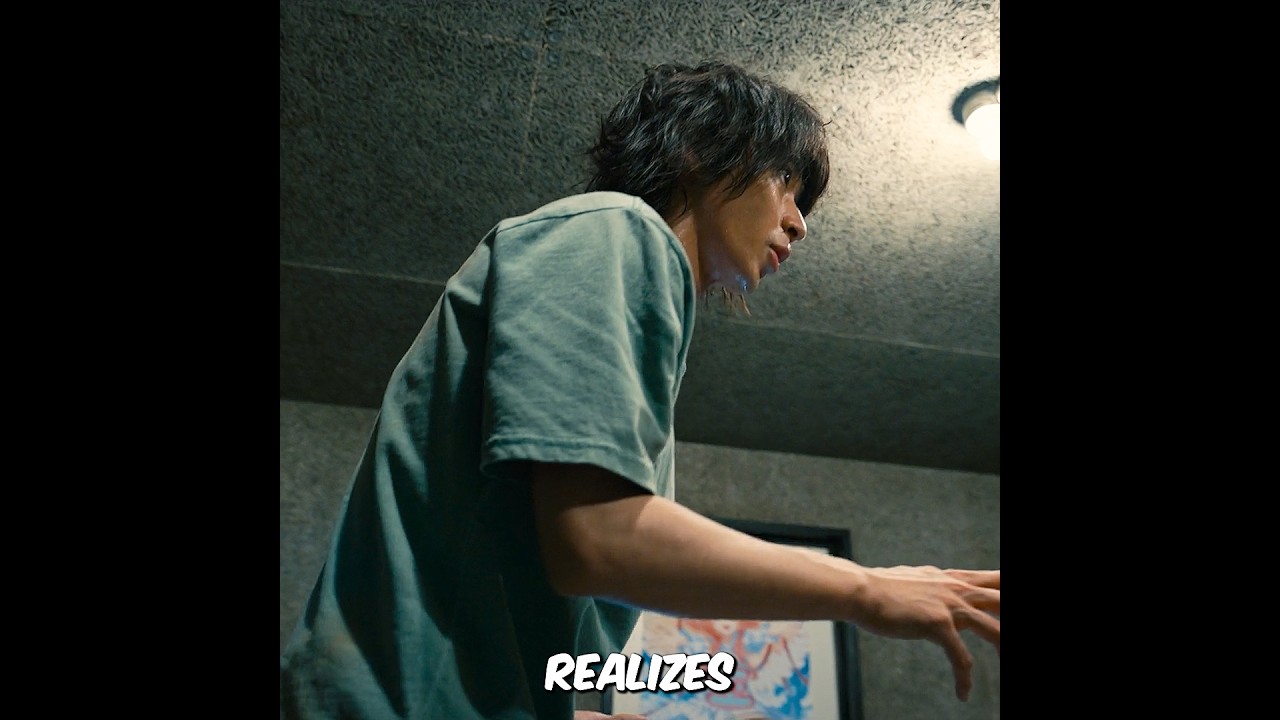
  • Ertuğrul is a beloved figure popularized by the TV series Diriliş: Ertuğrul, especially in Pakistan.
  • The historical record about Ertuğrul is sparse, with no contemporary written sources from the 13th century.
  • The show’s romantic and dramatic elements, including characters like Halime Sultan and Ibn Arabi, are mostly fictional.
  • Ertuğrul was the chief of a small Turkish tribe, the Kayı, fleeing Mongol invasions during a turbulent era.
  • The Mongol invasions devastated Central Asia and forced Turkish tribes westward into Anatolia, a region caught between declining Seljuk and Byzantine powers.
  • A key historical proof of Ertuğrul’s existence is a coin from his son Osman’s era, confirming Osman bin Ertuğrul.
  • The TV series writer Mehmet Bozdağ used creative liberty to fill gaps in history with suspense and drama.
  • Ertuğrul’s true legacy was strategic leadership and laying the foundation for the Ottoman Empire, not battlefield heroics.
  • The story highlights the harsh realities of the 13th century, contrasting with the show’s glamorous depiction.
  • The video discusses the political and cultural impact of the series and how it shaped modern perceptions.

Answers

Questions about this video

Was Ertuğrul a real historical figure or just a myth?

Ertuğrul was a real person, confirmed by a coin from his son Osman’s time, but many details of his life are unclear and surrounded by legend.

How accurate is the TV series Diriliş: Ertuğrul compared to history?

The series takes significant creative liberties, adding fictional characters and events for drama, as historical records about Ertuğrul are limited.

What was Ertuğrul’s main achievement according to history?

Ertuğrul’s main achievement was leading a small tribe through a dangerous era and laying the foundation for the Ottoman Empire, rather than commanding large armies or winning famous battles.

Full Transcript — Download SRT & Markdown

00:00
Speaker A
This face, this story, and this sword! It has ruled over the hearts of the whole world, especially Pakistan!
00:09
Speaker A
It was us who, for five seasons and 448 episodes, shed tears with Ertuğrul, celebrated his victories,
00:19
Speaker A
and took pride in the friendship of Bamsi and Turgut! This was not just a drama; it was an obsession, it was love!
00:26
Speaker A
But if I tell you that everything you saw, most of those things do not even exist in history!
00:34
Speaker A
So? Yes! It is true! The Ertuğrul we know is a hero of the screen,
00:40
Speaker A
but in the pages of history, he is just a shadow, a person whom no one truly knows!
00:47
Speaker A
The question is, why are history books so silent about Ertuğrul? Was he really that great?
00:56
Speaker A
Or was his character fabricated by someone later for their own interests? And if Ertuğrul was real, who was he?
01:06
Speaker A
Where did he come from? And what did he do that caused the creation of the world’s most powerful empire, the Ottoman Empire?
01:15
Speaker A
Come, today let’s go behind the glitz and glam of the television screen and see the real Ertuğrul.
01:20
Speaker A
Subscribe and join us for a story that is far more complex but much more compelling, because the truth is stranger than fiction!
01:32
Speaker A
Ertuğrul's world was nothing like the one we saw in the series: colorful tents, clean clothes, feasts all the time,
01:40
Speaker A
and in those feasts, everyone had their own spoons. Absolutely not! The era Ertuğrul was born and raised in was perhaps the most terrifying time in recorded human history.
01:52
Speaker A
Think of it as "The Age of Doom." Perhaps that's why the show was named "Diriliş," meaning "Resurrection." This was the 13th century,
02:00
Speaker A
and the entire Muslim world, especially the Turkish lands of Central Asia, was in the grip of a storm called the Mongols!
02:07
Speaker A
Genghis Khan and his descendants had descended upon the world like a curse. They were not men, but merchants of death.
02:15
Speaker A
Any city they passed through was reduced to rubble. Any river they crossed, its water ran red with blood!
02:23
Speaker A
Great cities, centers of knowledge and civilization—Bukhara, Samarkand, Khwarizm, Merv, even Baghdad—were destroyed by these very Mongols.
02:32
Speaker A
Millions of Muslims were slaughtered like vegetables! To escape this massacre, the people of Central Asia were fleeing west!
02:42
Speaker A
But what awaited them in the West? Was there a sanctuary, a strong Muslim government?
02:47
Speaker A
Not at all. The entire system there was also collapsing. In the Middle East, Crusaders from Europe had caused devastation,
02:54
Speaker A
and what is now Turkey, or Anatolia, was sandwiched between two weak states. On one side were the Seljuks of Rum, a Turkish tribe, but they had lost their old power and strength.
03:09
Speaker A
Facing them was the Byzantine Empire, that ancient Christian superpower, also breathing its last. The Crusades had exhausted both empires, and their decline was imminent.
03:23
Speaker A
Imagine on one side, the Mongol storm is coming, and on the other, these fragmented governments.
03:28
Speaker A
Where were the Central Asian Turks to go? For them, it was like facing a deep well ahead and a cliff behind.
03:34
Speaker A
But migration was necessary to save their lives. Among these migrant Turkish tribes was one called the Kayı.
03:42
Speaker A
They had no home, no land, no sanctuary! They had simply set out to save their women and children from the Mongol swords,
03:51
Speaker A
wandering in search of a safe haven. Their only goal was survival! The leader of this tribe was named Süleyman Shah.
04:01
Speaker A
This caravan consisted of only 400 families! Yes, just 400 families! On one side, the Mongol horde of millions,
04:10
Speaker A
on the other, the Crusaders and Byzantines; and in the middle, these 400 families! Reason suggested this small tribe would be crushed between the two.
04:19
Speaker A
But sometimes in history, reason is completely defied! In that age of despair, in that era of doom,
04:27
Speaker A
an unknown man sowed a seed that later made the impossible possible. His name was Ertuğrul, Süleyman Shah's son!
04:37
Speaker A
But which Ertuğrul? The one in the pages of history or the one we saw in the drama?
04:43
Speaker A
What is the truth? Now, brace yourselves, because what we are about to tell you might break your heart.
04:49
Speaker A
But remember, a broken heart is often necessary to know the truth! What did we see in the show?
04:59
Speaker A
The love story of Halime Sultan and Ertuğrul, the plots of the knights and villains like Grand Master Petrus in the Crusader castles,
05:06
Speaker A
then the wars with the terrifying Mongol commander Noyan, and yes, a mentor like Ibn Arabi, who was with Ertuğrul at every difficult turn!
05:15
Speaker A
It looked magnificent, didn't it? We also got emotional. But the reality is that the history books are silent on these matters. Completely silent!
05:24
Speaker A
The truth is that not a single written record exists from Ertuğrul's own time, the 13th century.
05:32
Speaker A
No book, no diary, no royal decree! Consider it history's "black hole." Historians even dispute the actual name of Ertuğrul’s wife or her background.
05:46
Speaker A
This means the main story of the drama, the love story, was also simply a creation of the writer’s mind.
05:51
Speaker A
That's all. And Ibn Arabi? He was a great Sufi saint. But was he truly Ertuğrul's mentor?
05:58
Speaker A
He passed away in 1240, while Ertuğrul's peak came much later. We have no proof that the two ever even met.
06:09
Speaker A
Even Noyan and the Templars, their characters were inspired by real people, but the details of their clashes with Ertuğrul, as seen in the show, are mostly fiction.
06:20
Speaker A
The question arises then, if there is no record, did Ertuğrul even exist? Or is he merely a legend, a myth, like King Arthur?
06:33
Speaker A
No. Ertuğrul is absolutely real, and there is proof: a small metal coin still kept in an Istanbul museum today.
06:42
Speaker A
This coin is from the time of Ertuğrul's son, Osman. And what does it say?
06:47
Speaker A
It is written that "Osman bin Ertuğrul"—Osman, son of Ertuğrul! This is the single, solid piece of evidence that proves a man named Ertuğrul existed,
06:57
Speaker A
a chief who was the father of Osman, the same Osman after whom an empire was founded,
07:03
Speaker A
which the world called the Ottoman Empire. This one coin outweighs all of history's silence!
07:10
Speaker A
But then where did all the details of Ertuğrul's story come from? Is the drama writer a liar?
07:17
Speaker A
No. Firstly, whenever a film or drama is made on history, the writer requires creative liberty.
07:25
Speaker A
Things are exaggerated for narrative effect. Look at Hollywood: in Braveheart, Mel Gibson completely distorted Scottish history,
07:34
Speaker A
and the film was still a massive hit. Filmmakers must create drama to make their show successful.
07:40
Speaker A
In the case of Ertuğrul's story, writer Mehmet Bozdağ had an advantage! Since there were few details about Ertuğrul in history, he had a blank canvas!
07:52
Speaker A
He knew the hero was Ertuğrul and the destination was the founding of an empire. But what was the story in between? No one knew.
08:00
Speaker A
He filled that empty space with suspense, conspiracies, and characters like Kurdoğlu, Petruccio, and Noyan.
08:08
Speaker A
He gave a voice to silent history, filled in a sketch with color, and made it compatible for today's audience.
08:16
Speaker A
However, many of these details are found in the history written 100-150 years after Ertuğrul.
08:22
Speaker A
This was when the Ottoman Empire had become a major power, and court historians like Aşıkpaşazade and Neşri began writing the history of the Ottoman forefathers.
08:32
Speaker A
The traditions that had been passed down orally, the folklores, finally made it onto paper.
08:39
Speaker A
Naturally, these stories included both reverence and exaggeration. But even if we remove all the exaggerations, much still remains.
08:48
Speaker A
Using that remainder and his creative freedom, Mehmet Bozdağ crafted a very entertaining story. But one thing is clear: Ertuğrul was not a sultan.
08:59
Speaker A
He was not the commander of a massive army. He was the chief of a very small tribe fighting for its survival.
09:07
Speaker A
This raises a question: If Ertuğrul had no large army or great treasuries, what did he do to be remembered in history?
09:18
Speaker A
What was his true mission? The reality is that his true mission was not to wield a sword,
09:23
Speaker A
but to lay the foundation for a dream! Ertuğrul's greatest achievement was not battle. His greatest achievement was decision-making.
09:38
Speaker A
A decision that seemed like sheer madness but was, in reality, a strategic masterpiece! The story is that Ertuğrul...
09:51
Speaker A
The tribe was hungry, exhausted, and haunted by the fear of the Mongols! Most Turkish tribes were heading south toward the safe regions of Syria.
10:02
Speaker A
But what did Ertuğrul do? He turned his small caravan northwest, towards the border of the Byzantine Empire!
10:10
Speaker A
Straight into the fire! But why? This was suicide! No. This was a vision that ordinary chiefs lacked!
10:18
Speaker A
Ertuğrul knew that if they stayed behind, the Mongols would consume them... or they would lose their identity by being swallowed up by other, larger tribes.
10:27
Speaker A
He needed a place that was dangerous, but also offered opportunity! Then occurred the incident mentioned in history: During this journey, Ertuğrul saw two armies fighting.
10:41
Speaker A
On one side were the Seljuk Muslims, and on the other, a Byzantine army! The Kayı tribe was already in trouble, facing one hardship after another for years.
10:50
Speaker A
Anyone else would have said, 'This is none of our business.' But Ertuğrul thought differently!
10:56
Speaker A
Even in these difficult circumstances... he decided to side with the oppressed and plunged into the battlefield with his companions...
11:03
Speaker A
purely to support the weaker side! And what happened? The Seljuks won! In return for this aid, the Seljuk Sultan, Alā ad-Dīn Kayqubād, gave Ertuğrul a gift!
11:14
Speaker A
Not gold coins, not jewels but a small piece of land! Essentially, a village named Söğüt!
11:23
Speaker A
This was no feudal estate; it was not a peaceful place where the Kayı could rest.
11:29
Speaker A
This area was in the 'Death Zone,' right between the Seljuks and the Byzantines, on the border of both!
11:36
Speaker A
The Seljuk Sultan gave this region to Ertuğrul so that he could serve as the empire's first line of defense.
11:43
Speaker A
The official title Ertuğrul was given was also exactly that: Uç Bey Guardian of the Frontier!
11:50
Speaker A
Means this was not a reward; it was a task, a hardship! And the people who succeed in history are those who turn their hardship into their strength.
12:03
Speaker A
Ertuğrul essentially did just that. Because they were right on the border, his tribe got the perfect chance to pounce, retreat, and strike back!
12:13
Speaker A
He raised the banner of fighting the Crusaders... anyone who wanted to fight for Islam and challenge the Crusaders began to gather under Ertuğrul's banner.
12:22
Speaker A
Turkish warriors from all over Anatolia started arriving. Söğüt, the place given to just 400 families, became the center for thousands of devoted fighters!
12:32
Speaker A
Ertuğrul did not just fight battles; he built a system. He administered justice to the local Christian population, expanded trade...
12:41
Speaker A
and, most importantly, convinced his people that this was not a temporary place... this was their home!
12:47
Speaker A
Perhaps for the first time in their lives, the tribe had a permanent place to settle.
12:52
Speaker A
And there could be no greater thing than this for them, which is why they settled firmly in that area.
12:58
Speaker A
But it is clear that Ertuğrul's mission was not to expand his fiefdom. He always remained in 'survival mode.' He spent the last 50 years of his life defending this area, strengthening it, and keeping his people united.
13:13
Speaker A
He maintained relations with the Seljuks while keeping the Byzantines in check... a balance of diplomacy and the sword that seemed impossible for that era.
13:24
Speaker A
Ertuğrul Ghazi lived a very long life, reportedly nearly 90 years. This gave him plenty of time to prepare, train, and test his successor.
13:35
Speaker A
When he grew old, when the sword began to slip from his hand... he entrusted his most valuable possession to his youngest, most intelligent son...
13:44
Speaker A
Not his fiefdom, but he gave his dream, to little Osman. Ertuğrul had three sons: Gündüz, Savcı, and Osman.
13:56
Speaker A
If you know anything about the tribal system, leadership usually goes to the eldest son!
14:02
Speaker A
It was usually the same with kings, and it still is: the eldest son is the heir. But Ertuğrul was no ordinary man!
14:10
Speaker A
He made a decision based on merit and chose his youngest son, Osman, as his successor!
14:15
Speaker A
The same Osman who is known in history as Osman Ghazi. He was not just a warrior, but a statesman.
14:22
Speaker A
He had not only learned to wield a sword... but also learned from his father how to unite friends and break enemies.
14:31
Speaker A
And it was this Osman who, as he grew older, the interpretation of which came out in the form of a great empire." We can call it the most famous dream in history: The Osman’s Dream!
14:43
Speaker A
The story is that Osman was a guest of the famous Sufi saint and religious leader, Sheikh Edebali!
14:49
Speaker A
He dreamt at night that a moon emerged from Sheikh Edebali’s chest and entered Osman's chest!
14:57
Speaker A
And then... a tree grew out of Osman’s chest, a magnificent tree whose branches touched the sky ...
15:05
Speaker A
and whose shade covered the entire world! Four great rivers flowed from the roots of this tree, and great cities flourished in its shade!
15:15
Speaker A
When Osman recounted this dream to the Sheikh in the morning... he interpreted it to mean that God would grant kingship to his descendants...
15:22
Speaker A
and an empire would emerge from his line that would dominate the world! Later, Sheikh Edebali's daughter, Bala Hatun, married Osman uniting the warriors and the Sufis...
15:35
Speaker A
the sword and the pen became one! Whether this dream is truly a fact or a story fabricated later...
15:42
Speaker A
it served to give the Ottoman Empire ideological legitimacy. This dream is what made Osman not just a tribal chief, but 'The Chosen One'...
15:51
Speaker A
the one selected for a great purpose! So, on the ground prepared by Ertuğrul, from the seed he sowed, a sapling emerged.
15:59
Speaker A
In 1299, Osman formally declared an independent state. Thus, the Ottoman Empire came into existence!
16:08
Speaker A
So, what is Ertuğrul's legacy? It’s not his victories. His true legacy was the training, the values, that he imparted to Osman!
16:16
Speaker A
He taught Osman how to deliver justice, how to care for the poor, and how to stay committed to his goal!
16:24
Speaker A
This is why, for the next 600 years, every Ottoman Sultan was given this prayer at his coronation: "May God make you as patient as Ertuğrul and as victorious as Osman!" So, Ertuğrul was not the founder of the Ottoman Empire.
16:38
Speaker A
He was the founder's father. He was the root hidden beneath the ground so that the tree could grow mighty and become visible to the world!
16:46
Speaker A
But the story did not end there! Not at all. Seven hundred years passed. Ertuğrul’s descendants created the empire...
16:53
Speaker A
saw it peak, and witnessed its end. A hundred years after the empire passed, the dust suddenly cleared from Ertuğrul’s grave...
17:00
Speaker A
and he came back to life! With a fame that no Ottoman Sultan ever achieved!
17:07
Speaker A
Yes! Ertuğrul stepped out of the pages of history and straight into our TV lounges...
17:12
Speaker A
appearing on our computer and mobile screens as a character who inspired us all! The character who had silently slept in his grave for centuries became a hero, a superhero, in the 21st century. But how?
17:30
Speaker A
The year is 2014. He came, he saw and he conquered! Every episode of Diriliş: Ertuğrul captivated the viewer and dominated the world!
17:40
Speaker A
The question is, why did Turkey make this series now? Was it just entertainment? Or was there another purpose behind it?
17:48
Speaker A
In reality, it was Turkey's greatest tool of Soft Power! Under President Recep Tayyip Erdoğan, Turkey was searching for its old identity!
17:57
Speaker A
It no longer wanted to be the 'Sick Man of Europe,' but the leader of the Muslim world!
18:02
Speaker A
And in the land of Atatürk, this required a major shift. And then, this series broke all records!
18:09
Speaker A
In Turkey, the Arab world, and even in Latin America! But the series’ most explosive entry was in Pakistan!
18:16
Speaker A
Here, it was not just a drama, it became a national obsession! Its popularity turned it into a 'political weapon'!
18:29
Speaker A
In Turkey, Erdoğan’s opponents alleged that he was using the show to present himself as the modern-day 'Ertuğrul'!
18:37
Speaker A
Ertuğrul's music became the anthem of his rallies! And in Pakistan? The same happened here!
18:43
Speaker A
When the then-Prime Minister Imran Khan ordered the broadcast of the series... many said that Khan was not just showing history to the youth...
18:52
Speaker A
he was shaping his own image to be like Ertuğrul! And then social media workers from different parties began to view politics through the lens of the show!
19:01
Speaker A
A leader's supporter is Turgut or Bamsi loyal and brave! And the opponent? The one who criticizes? He is Kurdoğlu, a traitor and a schemer!
19:10
Speaker A
'Certificates of treason' were already being handed out in Pakistani politics... but Ertuğrul gave them a new face and a new name!
19:17
Speaker A
Political workers began to see their opponents not as political rivals, but as the drama's 'villains'...
19:23
Speaker A
whose heads must be metaphorically cut off! This was the point where fiction overpowered reality to a very dangerous extent!
19:31
Speaker A
However, the series did do one great thing! Our children are growing up watching Hollywood's 'Spider-Man' and 'Batman'...
19:38
Speaker A
characters disconnected from our values! And suddenly, we found a hero who was 'ours'! One who raised his sword in the name of God!
19:47
Speaker A
One who prostrated in prayer! One who delivered justice! Ertuğrul filled that vacuum within us!
19:53
Speaker A
It gave us the self-esteem we craved! This was the drama that challenged the Western narrative that Muslims are only villains!
20:02
Speaker A
It showed that a Muslim can be a hero... a deliverer of justice and a conqueror!
20:08
Speaker A
This series was a 'cultural bomb' that convinced people across the Muslim world... from Indonesia to Morocco, that if the intention is pure, a small tribe can indeed overthrow empires!
20:21
Speaker A
But now that the Ertuğrul craze has subsided slightly... it is time to talk not emotionally, but with full awareness.
20:30
Speaker A
We must stand between the real Ertuğrul and the drama's Ertuğrul to understand what lesson his story holds for us.
20:39
Speaker A
So, who was the real Ertuğrul? Was he the superhero who cut off ten enemies' heads in every episode?
20:45
Speaker A
Absolutely not! He was a silent character of history, a patient, wise, and extremely far-sighted leader!
20:53
Speaker A
But we made a huge mistake: we took the passion from the drama, but forgot the wisdom!
20:59
Speaker A
We remembered Ertuğrul’s sword but forgot his true character! We fell into a psychological trap!
21:06
Speaker A
You might not like this, but let me say it because it is the truth!
21:11
Speaker A
Tell me, why did we watch Ertuğrul? Not to learn anything but simply to gain some catharsis!
21:18
Speaker A
In real life, Muslims are suffering everywhere from Palestine to Kashmir... from the economy to the field of science, everywhere is a decline!
21:26
Speaker A
And because we cannot do anything in real life... we watched Ertuğrul win on screen and decided 'we' had won!
21:34
Speaker A
Understand that this is a battle between love and intellect! The drama stirred our emotions, our love but put our intellect to sleep!
21:42
Speaker A
It taught us the false lesson that problems can be solved merely by raising a sword and shouting battle cries!
21:49
Speaker A
The reality is different. A nation is not built on emotions alone. It is built on justice...
21:55
Speaker A
on a strong economy and in this age, on science and technology! The true strength of the Ottomans was not their sword...
22:02
Speaker A
it was their scientific knowledge, their bureaucratic system, and their economy! We took the passion from the drama, but forgot the wisdom and hard work which are the true causes of success!
22:13
Speaker A
So, what does the real-life hero teach us compared to the drama? That no great empire is built in a day. It is not built on emotional slogans.
22:23
Speaker A
It is built on generations of silent effort, sacrifice, and relentless hard work! The real Ertuğrul spent fifty years yes! fifty years in the small settlement of Söğüt.
22:33
Speaker A
Instead of fighting major wars, he worked to strengthen his roots. Because he knew that if the root was strong, the tree would grow mighty...
22:41
Speaker A
a tree whose shade and fruit would be enjoyed by his son, his grandson, and their descendants!
22:46
Speaker A
Today, we all want to be Ertuğrul. We want to conquer the world, and for that, we seek a sword like his.
22:53
Speaker A
Instead, we need his patience, the patience to work silently for a single goal for 50 years!
23:01
Speaker A
The story of the real Ertuğrul is not as sensational as the drama... but it is a thousand times truer and more powerful.
23:08
Speaker A
Because a drama ends but character and ideology live forever. The choice is yours: do you want the hero of the screen...
23:16
Speaker A
or the lesson of history that can change the world?
Topics:ErtugrulOttoman EmpireDirilis ErtugrulTurkish historyMongol invasionsMehmet Bozdaghistorical mythKayı tribeOsman Ihistorical drama

Get More with the SozAI App

Transcribe recordings, audio files, and YouTube videos — with AI summaries, speaker detection, and unlimited transcriptions.

Or transcribe another YouTube video here →