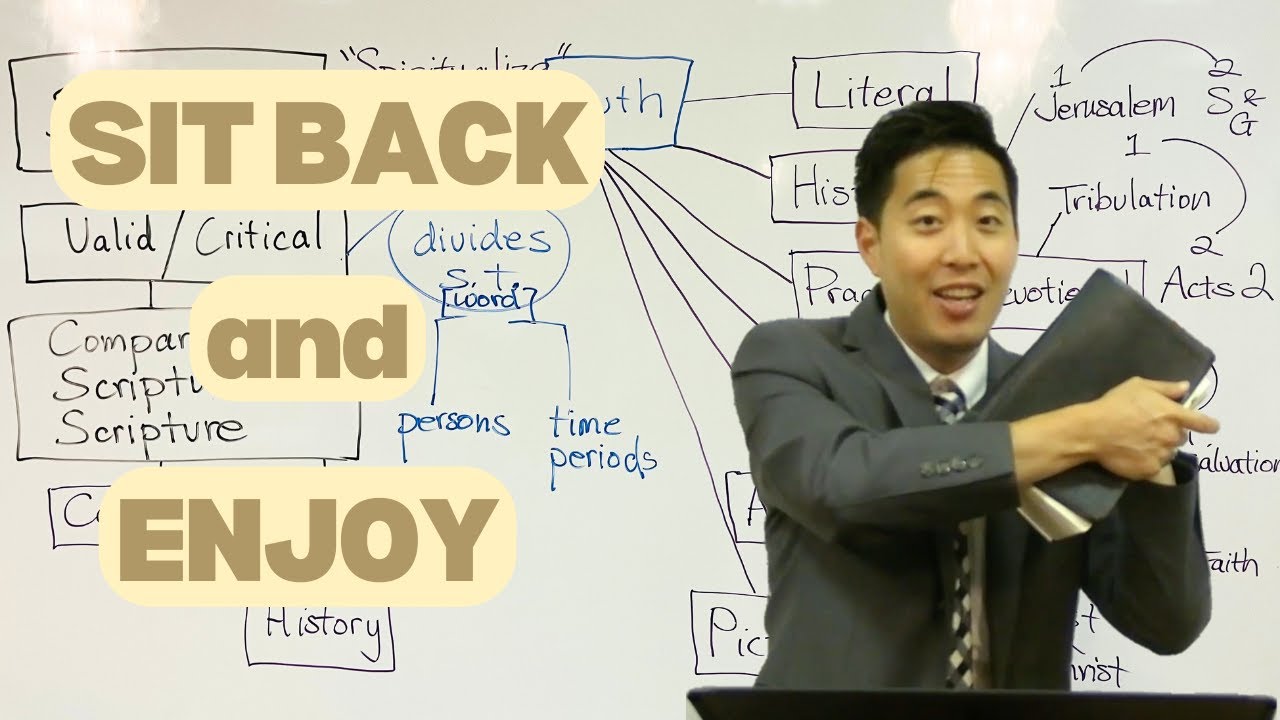
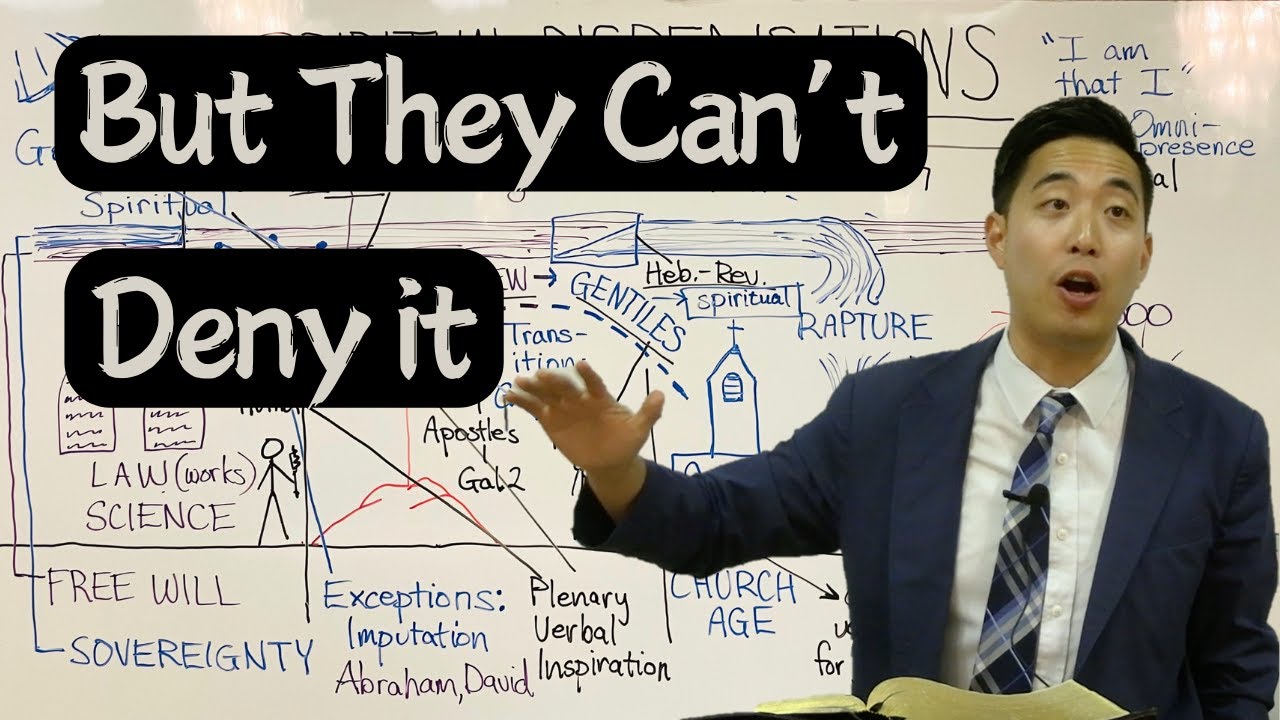
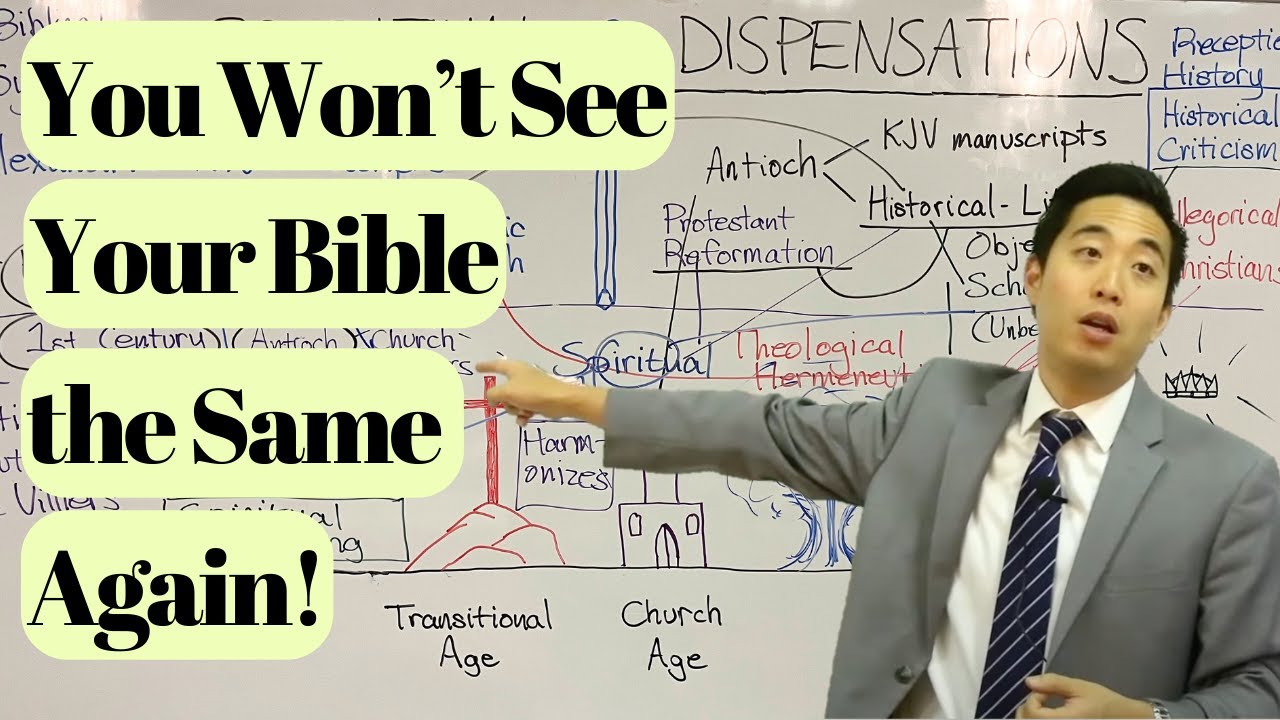
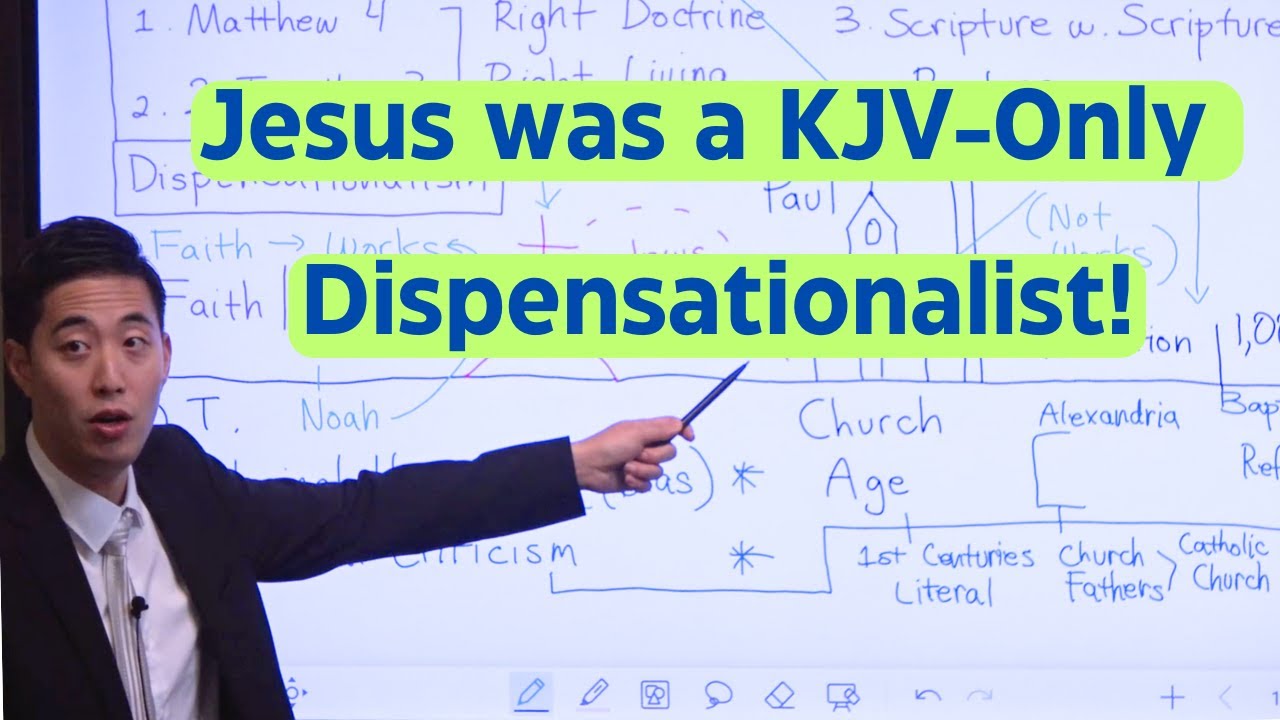
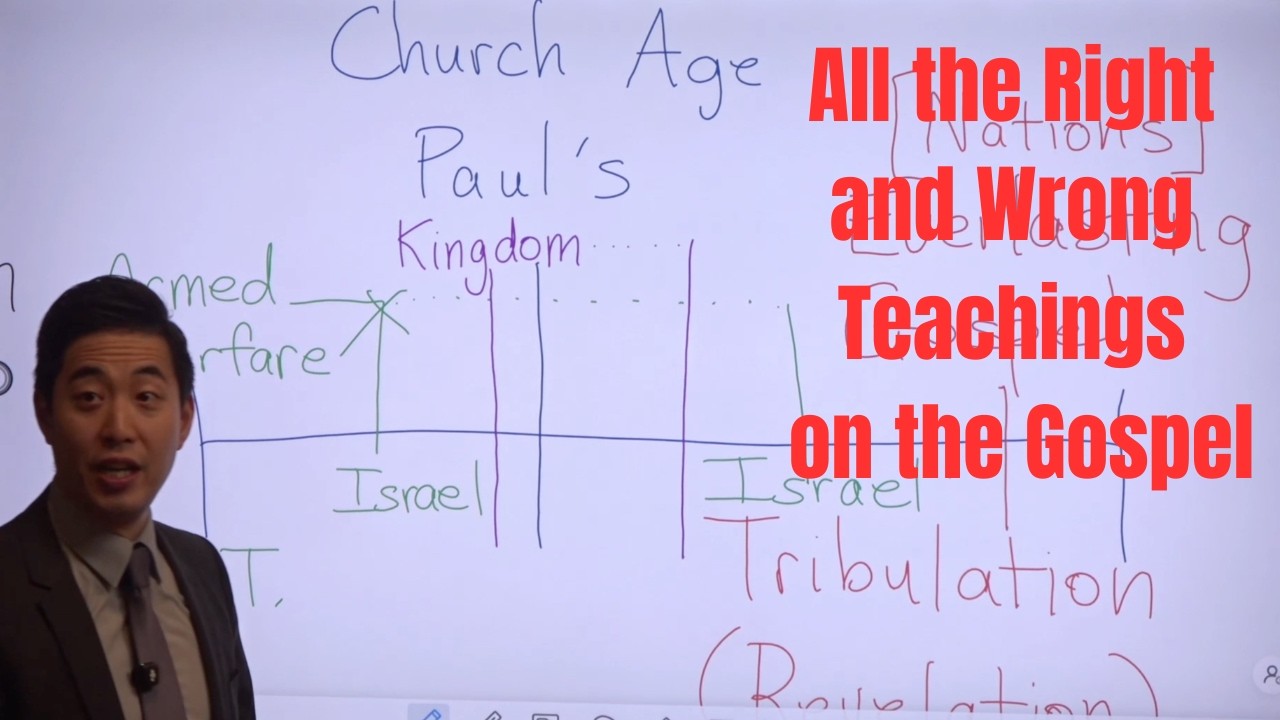
Dr. Gene Kim explores the roots of dispensationalism, emphasizing key doctrines like the Jew and the church distinction, tribulation, and rapture timing.
Key Takeaways
- Dispensationalism hinges on the clear distinction between the Jew (physical) and the church (spiritual).
- The rapture doctrine includes multiple views, but the pre-tribulation rapture is emphasized for Christians.
- The seven-year tribulation is a national judgment period for Israel, not for the church.
- Salvation by faith is spiritual and linked to the church, while physical acts like water baptism relate to Jewish salvation.
- Understanding the audience and time period of biblical passages is crucial for correct dispensational interpretation.
What the video covers
- The video covers foundational and advanced concepts of dispensationalism useful for all levels of learners.
- Emphasizes the importance of distinguishing between the Jew and the church, focusing on physical versus spiritual aspects.
- Explains how practical tools help filter and simplify complex dispensational doctrines for teaching and study.
- Discusses the significance of salvation by faith (spiritual, linked to the church) versus salvation by works or water baptism (physical, linked to Jews).
- Explores the doctrine of the rapture, including pre-tribulation, mid-tribulation, and post-tribulation views.
- Highlights the seven-year tribulation as a period reserved for national Israel’s judgment and forgiveness.
- Stresses the need to consider who is being addressed in scripture and the relevant time period for proper interpretation.
- Clarifies that tribulation applies to Jews, not Christians, based on national versus spiritual forgiveness.
- Encourages advanced students to use these teachings to deepen their understanding and simplify explanations for others.
- Addresses common misunderstandings and the importance of doctrinal clarity to avoid deception.
Chapters
- 00:00Introduction to Dispensationalism and Teaching Approach
- 04:11Understanding the Tribulation and Rapture Views
- 08:17The Nation of Israel’s Judgment and Tribulation Purpose
- 12:31Justification by Works vs. Faith and Scriptural Interpretation
- 16:08Different Time Periods and Audiences in Scripture
- 20:27Biblical Examples and Addressing Apparent Contradictions
- 25:04Applying Dispensational Concepts to Complex Situations
- 32:29God’s Omnipresence and Theological Implications
- 44:20Endurance in Salvation and Assurance
- 51:51Water Baptism, Salvation, and Final Thoughts on Dispensationalism
Full Transcript — Download SRT & Markdown
Speaker A
As you know, we're covering the roots of dispensationalism now. This will be beneficial for people who are new to dispensationalism as well as to those who are advanced. So this is beneficial even if these are things that advanced dispensationalists already know. These concepts will be very helpful when you try to teach others.
Speaker A
dispensationalists already know these Concepts will be very helpful when you try to teach others so the only way that you can teach other people or make them see this dispensational truth you need to know some practical or simple ways where it's going to filter
Speaker A
So the only way that you can teach other people or make them see this dispensational truth is you need to know some practical or simple ways where it's going to filter out all the difficult doctrines that you know in dispensationalism. So that's one.
Speaker A
from this lesson they're going to filter out and break down even more complex more difficult deep doctrines so that's the benefit for advanced dispensationalists for beginning dispensationalist for those of you who are new to this this will be very eye openening and you will
Speaker A
Number two, it's helpful for you. So when you do your own Bible study and you get deeper into dispensationalism, if you learn these basic tools and practical concepts from this lesson, they're going to filter out and break down even more complex, more difficult, deep doctrines.
Speaker A
hammer down dispensationalism very hard it is extremely crucial and important so that you don't get deceived by wrong Doctrine now I've taught you from the previous lesson the importance of the Jew and the church correct that is very
Speaker A
So that's the benefit for advanced dispensationalists. For beginning dispensationalists, for those of you who are new to this, this will be very eye-opening and you will not be the same when you study or read your Bible. Like I told you, this is the number one doctrine that will rescue you from the majority of wrong doctrine out there.
Speaker A
every verse and every Doctrine you read in the Bible when you try to find dispensational doctrines the key thing the key elements that you've heard about the Jew and the church is physical versus spiritual right that helped a lot to filter down
Speaker A
This is why we slam, we emphasize, hammer down dispensationalism very hard. It is extremely crucial and important so that you don't get deceived by wrong doctrine. Now, I've taught you from the previous lesson the importance of the Jew and the church, correct? That is very important.
Speaker A
salvation by faith that's not physical faith is spiritual so you will automatically connect that to the church and you're going to find verses that will connect to the church water baptism does the church practice it yes but it's for a spiritual
Speaker A
I broke it down to the most common sense that anybody would understand, and then you notice how I gradually broke it down more and it became more complex, right? The Jew and the church is crucially important. That filters down every verse and every doctrine you read in the Bible when you try to find dispensational doctrines.
Speaker A
water baptism which is something physical you can automatically connect that to a Jew and you're going to find out in the verses of the Bible that usually salvation by water baptism physical salvation is connected to a Jew you'll find it in those verses
Speaker A
The key thing, the key elements that you've heard about the Jew and the church is physical versus spiritual, right? That helped a lot to filter down right and wrong doctrines. So you hear about salvation by works, so that sounds physical, physical effort on your part, so you can attribute that to a Jew.
Speaker A
Tribulation so what makes us pre-trib Rapture and What Makes Us believe in also post-trip or mid-trip Rapture in other words what we believe in is a Rapture before the tribulation but we also believe a Rapture that's either at
Speaker A
And a lot of times you'll find out a Jew is connected in those verses. When you hear salvation by faith, that's not physical. Faith is spiritual, so you will automatically connect that to the church. And you're going to find verses that will connect to the church.
Speaker A
of sins see that so that forgiveness of sins is not for every individual spiritually where we get a spiritual trans trans action like that this is based on the nation's deed so that's why they have to undergo 7 years of tribulation so that their so
Speaker A
Water baptism, does the church practice it? Yes, but it's for a spiritual reason, conscience sake, right? So see, that's a moral principle, that's spiritual. That's not something physical. We're doing this for a spiritual basis. It has nothing to do with our salvation.
Speaker A
why is it a physical National forgiveness because that forgiveness is applied directed to a nation not to an individual see so it's something physical a physical Nation so hence that's why we believe the tribulation is for Jews not for Christians and when the
Speaker A
Well, what is salvation through water baptism? Well, if you're going to get saved by water baptism, which is something physical, you can automatically connect that to a Jew. And you're going to find out in the verses of the Bible that usually salvation by water baptism, physical salvation, is connected to a Jew.
Speaker A
for the church and it was speaking to the church why is that the reason why if you look at 1 Thessalonians chapter 4 those who get raptured are those who believe in Christ who are in Christ see that that's spiritual that has nothing
Speaker A
You'll find it in those verses. And when baptism is used for your spiritual walk with God, you're going to find out it is going to connect to the Christian or to the church. Now, this makes a lot of sense. The last thing that I'll say is the tribulation.
Speaker A
write those notes down and make sure you review back in your first notes and make sure you nail all that down because remember we went through all the doctrines nearly all the doctrines and dispensationalism through that filter which is why for beginners some of this
Speaker A
So what makes us pre-trib rapture and what makes us believe in also post-trib or mid-trib rapture? In other words, what we believe in is a rapture before the tribulation, but we also believe a rapture that's either at the middle or the end of the tribulation, basically a tribulation rapture. We call it.
Speaker A
them when they get home and then the advanced people they have to find something in this teaching that will be helpful for them to simplify the teaching to others or for their own Advanced Bible studies okay all right
Speaker A
Why do we believe in both? Because we saw in Daniel chapter 9 that the seven-year tribulation is reserved for the nation of Israel for them to receive forgiveness of sins. See that? So that forgiveness of sins is not for every individual spiritually where we get a spiritual transaction like that.
Speaker A
very helpful the second thing you want to keep in mind which is uh easier is differences differences that's easier than the last teaching however I had to do the last teaching because it introduced all those doctrines and I
Speaker A
This is based on the nation's deed. So that's why they have to undergo seven years of tribulation so that their judgment can be fulfilled. Because that's why Israel is under judgment right now. It's been under judgment for many years as a nation. They have to undergo through the tribulation because their physical national forgiveness is not complete.
Speaker A
who's speaking who to whom is the verse being addressed to you have to look at the person in that passage the second thing that you have to look at is which time period which time period these two will
Speaker A
Why is it a physical national forgiveness? Because that forgiveness is applied, directed to a nation, not to an individual. See? So it's something physical, a physical nation. So hence, that's why we believe the tribulation is for Jews, not for Christians. And when the Bible says there's a rapture in the tribulation, then we know who that applies to. That's for Jews in the tribulation.
Speaker A
to Hebrews chapter 1 Hebrews chapter 1 notice how the word of God reads here that when God gives things to people or is speaking to people he gives it to people differently and he gives it in different in time periods differently
Speaker A
But then we find a rapture that's before the tribulation. You see that in 1 Thessalonians chapter 4. We saw that a rapture directed for the church and it was speaking to the church. Why is that? The reason why, if you look at 1 Thessalonians chapter 4, those who get raptured are those who believe in Christ, who are in Christ. See that?
Speaker A
who at what sunry times so that means different times they're not the same and in what diverse manners everything that's different spake in time pass unto the fathers by the prophets hath in these last days spoken unto us by his
Speaker A
That's spiritual. That has nothing to do with a physical nation. That's completely spiritual. Christ being in you, that ain't physical. That's why we believe now in two different raptures. Okay, now that should be something you should already know. So if you still didn't know, then write those notes down and make sure you review back in your first notes and make sure you nail all that down.
Speaker A
right here that you have to pay attention to different people because they're receiving it in one manner one person does whereas the other person receives it at a different Manner and then God gives it out at different time
Speaker A
Because remember, we went through all the doctrines, nearly all the doctrines in dispensationalism through that filter, which is why for beginners some of this will be over your head, whereas advanced people, it's just so basic. But I'm trying to give a teaching that will meet both demographics. Okay?
Speaker A
to hear that catchy phrase that's pretty much a catchy phrase that people know from me as much as what men never learn from history is that men never learn from history but you'll hear me say this quite often as well why because that's
Speaker A
So that's why the beginners, they'll have to write down notes and review the notes and study them when they get home. And then the advanced people, they have to find something in this teaching that will be helpful for them to simplify the teaching to others or for their own advanced Bible studies. Okay, all right.
Speaker A
they're talking about the same thing but that's obviously not true so we're going to look at uh one example here the famous passage uh James 2 and Romans 4 Romans chapter 4 and James chapter 2 now when you look at these verses
Speaker A
Now that I say all that, let's go to the second process here. Okay, the second process is differences. The first process that we learned from last week is Jew versus church, a physical nation versus a spiritual individual. Okay, that's very, very helpful.
Speaker A
and verse 24 notice that the Bible says ye see then how that by works a man is Justified and not by faith only now do you see that there the verse is saying that when you get Justified it's not by
Speaker A
The second thing you want to keep in mind, which is easier, is differences. Differences, that's easier than the last teaching. However, I had to do the last teaching because it introduced all those doctrines and I cannot do that in this teaching. I'm just going to pull it through in this one. Okay?
Speaker A
before God for what saith the scripture Abraham believed God and it was counted unto him for righteousness look at verse 5 five but to him that worketh not but believeth on him that justifieth the ungodly his faith is counted for
Speaker A
So what you're going to hear quite often when people introduce dispensational teaching to you is who is the person in that verse? Okay, who's speaking? Who to whom is the verse being addressed to? You have to look at the person in that passage.
Speaker A
theologians theologians and Scholars always ruin everything they talk conundrum that's more confusing rather than it's being clarified when people get fooled by theolog iians and they say oh that makes sense I I question the common sense of those
Speaker A
The second thing that you have to look at is which time period. Which time period? These two will immensely save your life many times when you go through verses in the Bible that you're confused about. So you have to look at who is the person and which time period.
Speaker A
people are simple they just go by terminologies smooth and something that sounds like logic number one building up to logic number three that jumps down to logic number 10 and it equals to oh it makes a lot of sense no it doesn't they
Speaker A
Now this is biblical. When you look at Hebrews 1, go to Hebrews chapter 1. Hebrews chapter 1, notice how the word of God reads here that when God gives things to people or is speaking to people, he gives it to people differently and he gives it in different time periods differently.
Speaker A
sometimes people they can sound logical but it can be used as a trick tactic so you got to watch out for that what's the final Authority the Bible you have to go by the Bible what it says for the truth
Speaker A
What does that mean? When he's speaking or giving out verses from the Bible, he's speaking to you from the Bible. It's going to come out differently. You have to look at different people and different time periods. Okay? So Hebrews 1 verse 1: God, who at what sundry times. So that means different times, they're not the same.
Speaker A
there's no doubt that they contradict but theologians they're going to tell you that what this verse really means see that warning number one so they're telling you from their own logic okay they're not reading to you what the
Speaker A
And in what diverse manners? Everything that's different. Spake in time past unto the fathers by the prophets, hath in these last days spoken unto us by his Son, whom he hath appointed heir of all things, by whom also he made the world.
Speaker A
fool a bunch of Catholics Catholics when they debate Protestants about that they can see that as double Flim Flam and they're just being dishonest so that won't convince a Muslim apologist or a Catholic scholar I ain't going to jive
Speaker A
You'll notice right here that when God is speaking, he gives it out in different time periods, but he gives it out in different ways to people. So that proves right here that you have to pay attention to different people because they're receiving it in one manner one person does, whereas the other person receives it at a different.
Speaker A
if it's for different groups of people is that common sense sense yes what you're going to find out so let's practice this this will be our first one and uh I've done this in our last Bible study teaching but I think but you can
Speaker A
do it again Bears repeating James 1 one right who is he speaking to the 12 tribes of Israel Jews okay what time period James chapter 5:3 James 5:3 notice the verse says three the last days see that so that's
Speaker A
tribulation so this verse is for Jews undergoing the tribulation we saw the time period we saw the group of people in Romans chapter 4 which group of people what time period it's very simple we know who he's speaking to notice
Speaker A
right here when we go five verse five Romans chapter 1 verse 5 by whom we have received Grace and apostleship for obedience to the faith among all nations for his name among whom are ye also the called of Jesus Christ uh those Saints
Speaker A
see that so these are referring to those who believed in Jesus Christ for salvation so those are for Christians during that time so we do know this this is speaking to us today then this is for our group of people at our time period
Speaker A
you'll notice that it says faith to All Nations did you notice that see that's very different from one physical Nation Jews do you see that very very different this is referring to the Christian church this is referring to us today
Speaker A
this has nothing to do with Jews in the tribulation you'll notice Romans 1613 uh 23 Romans 1623 the verse says that it's directed to the church you will notice that it is directed to the church at verse 23 gaes
Speaker A
mine host and of the whole church notice that it's repeating chapter 1 in verse 26 look at Romans 16:26 notice it's repeating chapter one on who it's addressed to notice the uh Romans chap 1 uh 16 excuse me verse 26
Speaker A
like I said Obedience of Faith to All Nations see that again that matches with Romans 1 okay so we solve the problem here Romans salvation by faith not by works is for us Christians in the church age today faith and works for salvation
Speaker A
sometime in the future tribulation end times not today and it's for Jews notice this tactic is just very much common sense when we go to Matthew chapter uh 15 go to Matthew 15 now this is a very common sense
Speaker A
tactic and the Bible will even prove itself that this is just common sense you'll notice differences here but the Bible itself will tell you that it's apparently divided to different people to different time periods that they're all not the same go to Matthew chapter
Speaker A
15 and I also want you to turn to Matthew chapter 14 okay look at the distinctions here first of all go to Matthew 14 and verse 19 19 and he commanded the multitude to sit down on the grass and took the Five
Speaker A
Loaves and the two fishes now notice Five Loaves two fishes and he fed uh how many people at verse 21 5,000 men right all right now look at the contradiction go to Matthew 15 Matthew 15 and I want you to read
Speaker A
verse 36 verse 36 and he took the Five Loaves and two fishes did I read that correctly no and he took the seven loaves and the fishes look at verse 38 5,000 men no and they that did eat were 4,000 men oh then
Speaker A
there must be a contradiction right in this verse or maybe we can harmonize it maybe the author did a scribal error and he was repeating the story twice and was a couple numbers off no go to Matthew 16 Matthew chapter
Speaker A
16 look at verse n verse 9 Look what Jesus said do ye not yet understand neither remember the Five Loaves of the 5,000 verse 10 neither the seven loaves of the 4,000 what did Jesus do it's just common
Speaker A
sense if they're different it's talking about different groups of people 4,000 versus 5,000 it's talking about different time periods the first time I fed them Matthew chapter 14 the second time I fed them Matthew chapter 15 that's why when you read verses in
Speaker A
the Bible about the coming of Jesus Christ Jews only think one coming but every Christian and I dare say even Catholics they all know that when it talks about the coming of Christ it split into two two parts the first
Speaker A
coming of Christ where Jesus died on the cross but those are different than the second coming when he comes down and rules his suffering is different from his ruling so even though the Bible talks about the coming of Christ and never told you
Speaker A
there's a first coming or a second coming it's just common sense when things that are different they're not the same they must be split first coming Second Coming see that so that's common sense over there it's the same thing where uh you see in the
Speaker A
Bible about the 5,000 the 7,000 so you have to split them they're they're not talking about one event you have to do the same thing with James 2 salvation Romans 4 salvation they're not talking about the same event that's just common sense now let
Speaker A
me show you Proverbs this is way more apperent go to the Book of Proverbs and I want you to look at the Book of Proverbs chapter 31 go to the Book of Proverbs and then uh we will look at uh
Speaker A
chapter 31 actually uh that is the wrong verse I'm very sorry about that that's the wrong verse um I forgot to write that verse down uh let's see right here hopefully I can find the passage quickly it will be I know that it's in
Speaker A
Proverbs I just need to find that chapter uh 26 sorry chapter 26 and then we'll look at verse 4 Proverbs 26:4 now notice right here answer not a fool according to his folly lest thou also be like unto him but look at verse
Speaker A
five answer a fool according to his folly lest he be wise in his own conceit okay is the author being stupid here I don't think he's being stupid because he it's called Proverbs Proverbs means wise sayings all right so I don't think he's
Speaker A
that stupid back to back with the verse contradicting unless he has a purpose here right a different goal different purpose for each verse right now is I can't believe this but it's so amazing that there are some dumb atheists out there
Speaker A
including PhD guys this is their proof text to prove to you the Bible contradicts itself Oh Come seriously bro really really you seriously Proverbs 264 and5 is evidence that the Bible contradicts itself I don't know who's more stupid
Speaker A
the Bible or really you I don't think the author is that dumb Common Sense dictates in our minds the author had an intention here for these distinctions so why can't we think the same same thing with the Romans 4
Speaker A
salvation and the James 2 salvation why don't we think about that with the feeding of the 4,000 and 5,000 why don't we do that with all other doctrines in the Bible why do we have to as why do we have to make them all the
Speaker A
same thing no it's the common sense tactic is to divide you've got to divide if they're not the same if you make them the same you're going to you're going to have to reinsert your own interpretation and that's very dangerous you want to
Speaker A
leave the verse as it says okay now in Proverbs chapter 26 verse4 we can see a different person and a different time period right we don't answer the all the fools the same way every fool is different there is a fool in verse four that when
Speaker A
you argue with that fool you're going to look silly like him so with those particular fools you don't want to answer and that shows a different time period too it shows the circumstances are different you notice verse four
Speaker A
there is a time period or a circumstance where it makes you look silly when you argue with the fool but there are different time periods different circumstances in verse 5 where if you don't argue with the fool the fool will
Speaker A
look like that he's right and you're wrong now this is uh something basic that advanced Christians even mess up in if we know this basic dispensational tactic we should apply this in our everyday lives oh so you think you really know
Speaker A
dispensationalism I don't think you do you don't practice this in your everyday life a lot of people still would ask me questions how do I answer this guy this way how do I know when how do I know uh
Speaker A
you know to what level and it's so simple you got to look at the time period the circumstance when's the right time and you got to look at the person is that person ready for that yet or is
Speaker A
not every everything is different with people and time periods even the same person who undergo different time periods will have different levels that you have to deal with see that so you have to these two tactics are more
Speaker A
advanced than you think so don't think that you're Advanced and you got this down and you know this is uh this is okay I already know so I don't need to learn all this no you you really don't
Speaker A
apply the basic concept okay you have to in this teaching when I'm teaching to you apply it to complex situations that's the best way to say it so if you're advanced in this then what I want you to do is is
Speaker A
any basic thing that I taught you apply that to complex situations and see if that works all right then you'll learn a lot okay those of you who are new to this you're probably learning a lot and that's great okay now do we understand
Speaker A
that's just common sense now let me give you some common sense examples too things that are different are not the same okay we got to realize that the Bible is a book covering a expand of like nearly 10,000 years right 6,000 years uh or
Speaker A
more of human history right okay now if you were to record the 80 years of Jean Kim's life you're going to find contradictions in those statements for example you're going to find out that I'm going to you're going
Speaker A
to get a statement from me uh in this church if I pastor this church for even two years take take out the garbage and then another statement don't take out the garbage now think about it within 2 years of my life don't you think I'll
Speaker A
make statements like that well that's pretty common sense and obvious what are you going to say then oh contradiction no what if I'm saying take out the trash to a different person and don't take out the trash to another
Speaker A
person ever thought of that people don't think about that here's another doth statement what if I said those statements at different time periods take out the trash why because that day you need to take out the trash the statement don't take out the trash
Speaker A
why did I say that because that particular day we shouldn't maybe the trash is not full yet we need to put him more garbage in there now did that make any sense that's just common sense give a statement two years of my own statements
Speaker A
my own words you'll find contradictions if you don't apply it to different people or different time periods think about God's statements God's words for 6,000 years what you going to do you're going to find contradictions so it's just
Speaker A
common sense you got to apply it to the right time period the right group of people now that's just common sense okay but let me even break it down to more than Common Sense historical Common Sense historical Common Sense
Speaker A
okay uh for example you're going to get uh one particular country if you steal something then you're going to get your hand cut off okay but you're going to find out in that same country it gives a rule if you steal something you'll just
Speaker A
be in prison you won't get your hand cut off okay is there a contradiction then or maybe long time ago during the Medieval Era okay or the Dark Ages that particular country cut off people's hands for stealing but
Speaker A
then in the modern era because we became more Humane I guess that if you stole something no no no we're not going to cut off your hand we're going to just jail you for that see it's a time period
Speaker A
with the same country a lot of this just common sense okay that's historically historically proven so I can give a lot more historical examples too where there are contradictions but they're not actually contradictions they just did things differently because of the time period
Speaker A
they were in because of the people they were dealing with the context of that time all right now that we understand this things that are different are are not the same it's so common sense we saw that biblically we saw that historically and
Speaker A
we saw that just common sense okay I should filter out everything here's another one notice right here time is uh humans are bound by time correct everyone's trying to beat time but you're not going to beat time no
Speaker A
matter how much money you put into it you're not going to live forever time will catch up you you will die humans are bound by time so we have to arrange things divide things set things in order so that things can make
Speaker A
sense to us if we don't do that things are not going to make sense everything is bound by time when we do that but God is not bound by time okay so think about it God is I am
Speaker A
that I am past present future right when he speaks in the uh when he speaks about an avenge an event in the future he could speak in the past tense when he's speaking about things in the present he could be speaking it in the
Speaker A
future tense and vice versa so uh one great example which is very easy is if we go to Isaiah 53 Isaiah chapter 53 now this is talking about the death of Jesus Christ when we read about the death of Jesus Christ this is at the
Speaker A
time period of Isaiah Old Testament so if it's going to talk about Jesus dying on the cross it'll have to be future tense right one day sometime in the future Jesus will die on the cross that's what Isaiah is going to have to
Speaker A
write correct all right but he didn't write it that way look how he wrote it you will notice that what he did was in verse 5 Isaiah 53:5 but he was wounded for our transgressions he was bruised for our
Speaker A
iniquities the chastisement of our peace was upon him and with his stripes we are healed look at verse 7even he was was oppressed and he was afflicted yet he opened not his mouth wait a minute now notice right here that he's supposed to
Speaker A
be speaking in future tense Jesus will be wounded someday Jesus will be afflicted one day but he said he was past tense crucified he did die he was beaten that didn't make sense unless God is speaking and when God is speaking and
Speaker A
do you believe the Bible is the word of God so what's going to happen is this what's going to happen is when God is speaking here the reason why he speaks that way is he's not bound by time I mean uh even the stupid uh sci-fi
Speaker A
movie Interstellar and even scientists today who dabble with astrophysics or who get into theoretical stuff about physics they all even agree that beyond the third dimension or whatever dimensional plane there are beings or maybe substant substances or entities or
Speaker A
whatam call it whatever you want to call it out there that can play with that can go into past present future and it doesn't matter to them they can just land in whatever time period And it's like the present to them why if
Speaker A
scientists scientists teach you that stuff why is it so crazy for Christians to believe in some being out there who can do that for us it's just one being see who's Transcendent and intelligent that just makes more sense so we're more
Speaker A
logical than scientists who believe that it could be multiple beings good luck with that or a thing good luck with that that don't make sense it makes more sense someone that transcends third dimension and who has intellect intelligence there that just makes way
Speaker A
more sense see that so I just threw that in as a bonus there see you just learned something something against Advanced uh theoretical physicists now ain't that awesome all right dispensationalism does wonders now you'll notice right here that that's why God when he's speaking
Speaker A
in the Bible he can go in whatever time period and he could be speaking to whoever he wants to so you're going to notice this example at Ezekiel 28 Ezekiel chapter 28 why because God is not bound by time so
Speaker A
when he's speaking now look at this when he's speaking to this person all of a sudden he can switch to another person and then switch it to a different time period so check this out why because God is beyond Third Dimension Ezekiel
Speaker A
chapter 28 and then look at verse two Ezekiel 28 verse two son of man say unto The Who Prince of Tyrus thus sayith the Lord God because thine heart is lifted up and thou has said I am a God I am in the seed of God
Speaker A
in the midst of the Seas yet thou art a what okay now notice God is speaking literally to the prince of Tyrus here okay at the historical timeline of Ezekiel but now look at this this just gets weird when he's speaking to the
Speaker A
prince of Tyrus okay this is this just gets really weird okay look at verse 13 13 thou Hast been in Eden the Garden of God uh no no he was not he didn't jump timelines two to three 4,000 years
Speaker A
backwards and went to the Garden of Eden where Adam and Eve was verse 14 Thou Art the anointed cherub no you just said he was a man now some people might say well he's speaking to the king king of Tyrus
Speaker A
but that ain't going to even help okay it's king of Tyrus so it's not going to help out here so what's going on it's very simple we see right over here even though historically he's speaking to the prince or the king or to both or to
Speaker A
whoever the point is historically he's speaking to them these rulers of Tyrus at that time but then God he just switches the person to which is pretty obvious Satan we know that's Satan why can God do that because God
Speaker A
when he's speaking in the third dimension he can switch into the fourth or the fifth or the ninth or whatever Dimensions out there and can be speaking to the devil see that that's how God works when he speaks his word so this is even
Speaker A
theologically the case the the the theological doctrine of God with his omnipresence so he's not bound by time he is everywhere every time period and he could say whatever he wants to so that's why it's important to understand the
Speaker A
basic theological doctrine that theologians will tell you that God is omnipresent but humans are not omnipresent that's just basic theological Doctrine 101 we are not omnipresence we're not everywhere we're Bound by time so we have to divide it to
Speaker A
our right time period who the right person is he speaking to but with God he can say to whoever he wants what time period he wants to because time is does not bind Our God now did that make any
Speaker A
sense there okay so theologically we have seen that to be the case there is no doubt now you have to believe by now you've got to divide verses to the right people right time period do we understand so far that's
Speaker A
indisputable indisputable indisputable fact now notice how this works out when we look at all these verses okay now you'll see right here the beginning and I'll write down um the books of the Bible so it can be easier
Speaker A
for you but we know the beginning that's referring to the Book of Genesis let me erase that part and get a black ink so in the beginning we know Genesis 1 and then all the way down to 11 So
Speaker A
Adam and Eve all the way down to the Tower of Babel that time period then we see the time period of Abraham and that's Genesis 12 all the way to the rest of the Patriarchs to the 12 tribes
Speaker A
of Israel that's the end chapter 40 then we get to the law and the law we know is uh Exodus and then it gets all the way down to Malachi but we also know that the Jews they had a kingdom that time so in that
Speaker A
time period it goes from uh 1 Samuel with Saul and then continues but he was forsaken so it goes through David's Kingdom now and David's Kingdom all the way goes down to to Malachi then we come to the first coming
Speaker A
of Jesus Christ the time periods are pretty obvious it goes from Matthew through John Matthew through the Book of John obviously okay so now that you got the books of the Bible down and I introduced that now let's see some of the verses
Speaker A
here and then see how they work okay we're going to go in mixed up order and then you're going to see how effective this is there is no doubt you got to see time period and different groups of people
Speaker A
and that'll be immensely helpful so let's start off with Matthew chapter 24 Matthew chapter 24 and then we'll look at verse 13 Matthew chapter 24 and then we'll look at verse 13 all right here's a famous verse where
Speaker A
y'all should doubt your salvation or the churches will tell you this notice right here Matthew 24:13 but he that shall endure to the end the same shall be saved did you notice that so then churches are teaching you you got
Speaker A
to endure you got to endure all the way to the end otherwise uh you won't get saved so people doubt their salvation they don't confirm their salvation they doubt their salvation well uh look at the people look at the time period
Speaker A
correct okay let's look at verse three verse three and as he sat upon the Mount of Olives the disciples came unto him privately saying tell us when shall these things be and what shall be the sign of thy coming and of the what end
Speaker A
of the world tribulation uh look at verse 29 29 immediately after the what tribulation look at verse 21 21 for then shall be great what okay so we know the time period so look at that right there on
Speaker A
the board okay let me get over there that way you could see both together all right hopefully it'll get me and the Whiteboard together see that tribulation matching verses you see that matches up well now look at the group of
Speaker A
people the group of people look at verse 16 16 then let them which be in where Judea okay these are Jews there's no doubt about that look at the last part of verse 20 20 but pray ye that your
Speaker A
flight be not on the winter neither on the what Sabbath okay so we know Jews go to 1 Corinthians 1 1 Corinthians 1 verse 8 1 Corinthians 1 verse 8 so we're not confirmed unto the end we have to endure to the end no your
Speaker A
salvation is confirmed to the end look at 1 Corinthians 1 look at verse 8 who shall also confirm you unto the what and that ye may be blameless in the day of our Lord Jesus Christ ah we don't have
Speaker A
to endure to the end we're confirmed to the end very different why who is he speaking to verse two verse two unto the what Church of God see we know the time period it's right now the Christian Church age we're under the age of Grace
Speaker A
right here under the age of Grace the church age you'll look at verse four it's pretty apparent I thank my God always on your behalf for the grace of God so that's pretty obvious we call it Grace but let me title it Church age
Speaker A
that'll be simpler okay so notice which age it's at it's at the church age when Grace is explained and talked about quite often all right now notice how scripture with scripture shows a lot of distinctions with these practices so not all of them are the
Speaker A
same go to the Book of Exodus chapter 20 Exodus chapter 20 and then go to Romans 13 Romans chap 13 go to Exodus chapter 20 and go to Romans chapter 13 notice in uh Exodus chap 20 and verse
Speaker A
8 verse 8 remember the Sabbath day to keep it holy six days shalt thou labor and do all thy Work okay the Bible tells you to remember the Sabbath day s Day Adventists will use fancy schmancy logic that uh oh no Sabbath was not only for
Speaker A
Old Testament Jews if you keep insisting it was way back then and we can forget about it why would God tell you to remember then see that's their fancy schmancy logic fancy schmancy logic it don't matter it's easy it it can be
Speaker A
logical to say what if God was speaking to Old Testament Jews to remember because they kept forgetting see so it don't let their logic fool you okay it can work either way I I don't like it when they people talk like that when
Speaker A
people talk like that I like to make them look stupid after that why because I hate it when people use logical means to justify their argument no you got to check your heart and sincerely seek after the truth
Speaker A
not just make something so logical and then oh I I'm right I don't like that so I hope that this church understands that too okay I deliberately went to hire Ed and logic stuff just so that I can smash
Speaker A
it at the end and people ultimately Retreat to the heart of the matter the heart is what makes a difference okay but anyway uh who is he speaking to though all right it's pretty obvious in verse two okay verse two
Speaker A
I am the Lord thy God which have brought thee out of the land of Egypt out of the house of bondage did you come out of Egypt were you in slavery in Egypt no who was Jews notice the time period is
Speaker A
the time period of the Old Testament when Jews were being released from Egypt and God was giving them laws notice the group of people were for the Jews if you look at the book of not Romans 13 excuse
Speaker A
me but go to Colossians now go to the book of Colossians chapter 2 Colossians chapter 2 and verse 16 Colossians chapter 2 and verse 16 let no man therefore judge you in meat or in drink or in respect of an
Speaker A
holy day a holy day or of the new moon or of the what Sabbath days so you don't observe the sabbath day why who is he speaking to look at verse 17 17 which are a shadow of things to come but the
Speaker A
body is of what the body of Christ here see that's the church you know the church is the body of Christ right you know that so notice that he is speaking to the church the time period is for the
Speaker A
church look at the book of uh Acts chapter 2 Acts chapter 2 and then I want you to go to 1 Corinthians 1 1 Corinthians 1 Acts 2 and 1 Corinthians 1 now the Bible shows in verse 38 verse
Speaker A
38 then Peter said unto them acts 238 then Peter said unto them repent and be baptized every one of you in the name of Jesus Christ for the remission of sins and ye shall receive the gift of the
Speaker A
Holy Ghost so notice right here that Peter is telling them to get water baptized for the Forgiveness of their sins for their salvation but notice who is he speaking to verse 36 therefore let all the house of who Israel know see
Speaker A
that acts of who Apostles they were dealing with Jews that's why they had to do that the very first mention of water baptism for forgiveness of sins the very first mention was Matthew 3 John the Baptist and he was not baptizing Gentiles or the
Speaker A
church he was baptizing Jews for their salvation that's not for you well then what is US 1 Corinthians chap 1 verse 17 1 Corinthians chapter 1 verse 17 notice that the salvation gospel is not water baptism 1 Corinthians 1:17 for Christ
Speaker A
sent me not to baptize but to preach the gospel see that water baptism is not the Salvation gospel see that does that mean we don't practice water baptism no because if you look at verse uh uh 14 and 16 he he does water baptism
Speaker A
see that he does water baptism verse 14 and 16 but he doesn't do that for salvation acts 238 shows they do water baptism for salvation because that's for Jews all right who is he speaking to at verse 17 Again look at verse 2 1
Speaker A
Corinthians 1:2 the Church of God see the Church of God so it's the church age who don't practice water baptism but the Acts of the Apostles when the Jews were being dealt with they have to go by water baptism for
Speaker A
salvation now this is very important then if it's the Acts of the Apostles you got to watch out for the apostles writings then because they were dealing with Jews and then we've learned another thing every Church age Christian doctrine did
Speaker A
you notice right here that it's Paul's writings so there it comes to number three number three we have to go by Paul's writings here so we lock it down to this when we we every Christian verse you notied has
Speaker A
to do with Paul so we have to go by his writings Romans to phiman what about Hebrews didn't he write Hebrews well look at the title Hebrews right so that's a no-brainer that's for Jews then so then these books
Speaker A
you have to watch out because they're going to refer to what the apostles or addressing to Jews see the time period and the people is so important it's at the Acts of the Apostles it's uh speaking about the Jews
Speaker A
here now you look at Galatians Chapter 2 Galatians 2 Galatians Chapter 2 and then you're going to read uh verse n verse 9 now notice the ministries of the Apostles and Paul is different look at Galatians 2:9 and when
Speaker A
James sephus and John who seem to be pillars perceived the grace that was given unto me they gave to me in Barnabas the right hands of Fellowship that we should go unto the what so these who are the Heathen that's Gentiles
Speaker A
non-jews and they the apostles unto the who circumcision that's referring to the Jews see that so that makes sense now I want you to go to Romans 16 Romans 16 uh Ro not Romans 16 excuse me uh Romans chapter uh 15 15 and then I
Speaker A
want you to go to Second Peter 3 second Peter 3 this will be my last part and then I got to close it here okay 2 Peter 3 and Romans 15 now there is a heretical group I don't care what
Speaker A
they say it's a heretical group okay uh what they teach is heresy it's called midax hyper dispensationalism or midax you'll see that quite often a lot of them watch my stuff on dispensationalism and they'll always say oh it's so good
Speaker A
but until you called out midax I didn't like it well sorry I'm not a people pleaser I don't care if you like dispensationalism if I have to teach the truth and you don't like this part in dispensationalism I don't care what
Speaker A
matters to me is not dispensationalism what matters to me is the truth okay okay so then you got to watch out for a a dangerous group called midax they're going to use uh you're going to see that mid
Speaker A
ax they have the dispensational mindset like us so far all right Paul is key they're going to say but here's the problem notice that where we have a holistic perspective where it's divided what they do is that they only focus on
Speaker A
this and ignore all the other ones so in other words only these books of the Bible Christians should be reading Christians should be applying Christians should be learning any other book you should not apply that to yourself no you got to
Speaker A
watch out for that that is dangerous heresy now here's a question you might say why Pastor didn't you already divide it that these books are for this people time period and stuff like that yes but now you got to get another step this is
Speaker A
number three and we're going to close it here number three does it match with Paul's writings see what the high Mida will say only go by Paul's writings no what you want to go by is does it match with
Speaker A
Paul's writings why here's a no-brainer look at these books Revelation talks about the tribulation right the millennial Kingdom talks about uh Revelation talks about the millennial Kingdom right but they have matching verses why because other books of the
Speaker A
Bible will mention about these here and there if you think it can do it with these what about the other books in your Bible see that that's just common sense some even though these books mainly talk about these specific time
Speaker A
periods you're going to find out that sometimes those books they might talk about different time periods doctrines from different time periods why do they do that Pastor see that's a problem with mid acts mid acts only focuses here see that's their
Speaker A
problem we don't believe just this what do we believe we believe in this this whole plane here what do we do we got to realize for God's words he's not bound by time so he can jump time periods see that see we
Speaker A
cleanly divide the time period and we should because we're humans but God he can transcend them he can jump wherever he wants to that's very important important now the comment the evidence is Paul himself uh look at Romans 16 and
Speaker A
then Peter himself too second Peter okay so go to Romans chapter 15 and uh verse four verse four notice what Paul said for whatso verse four for whatsoever things were written a four time were written for our what learning that we
Speaker A
through patience and comfort of the scriptures might have hope notice what Paul did Paul believed in the other books of the Bible that Christians can learn from by the way this is common sense when Paul argued for his Christian
Speaker A
doctrines he had to pull up Bible verses for that why he's not going to only go by his own writings then he had to find Bible verses from other books of the Bible to prove Christian doctrine that's just common sense
Speaker A
everyone knows that Paul had to do that mid acts don't think about that they say there is no Old Testament verse that applies doctrinally to Christians then what's Paul lying see that now go to Second Peter 3 second Peter chapter
Speaker A
3 notice in verse 15 verse 15 notice what Peter said and account that the longsuffering of Our Lord is salvation even as our beloved brother Paul also according to the wisdom giveth unto him hath written unto who Peter is speaking to his own
Speaker A
audience he's writing to and he's saying Paul wrote to them but I thought Peter was only for Jews you thought wrong keep reading as also in all his Epistles speaking in them of these things in which some are in which are some things
Speaker A
hard to be understood why is it to be hard to be understood because Peter is used to a Jewish Doctrine Paul he is used to a church age Doctrine so think about this the apostles yes they were writing
Speaker A
to Jews they were writing to Jews their Ministry was for Jews but they recognized that Paul's writings that there was some doctrinal truth that they could apply so that's why it's important to understand that if you're in the Old
Speaker A
Testament get this now if you're in the Old Testament and if they had some New Testament books of the Bible if they were to have that there could be some verses they could apply for them all the way back then you'd be surprised they
Speaker A
could do that for example uh the Bible talks about o uh o obeying your parents in the New Testament couldn't Adam and Eve learn from that verse of course they can learn from that verse apply it doctrinally to themselves let's obey the
Speaker A
father here and not eat the forbidden fruit from the tree see that uh Christians can we learn a Doctrine can we learn Doctrine from the Old Testament absolutely there are verse uh Psalm 23 verse one the Lord is my
Speaker A
shepherd I shall not want can we claim that verse yes because the Bible says that Jesus Christ is our Shepherd of the flock okay so see that's why well then how do I know which verses for which time period it's just everywhere it's so
Speaker A
confusing no make this simple does it match with who Paul's writings so that's why we started out with one and two with one and two you get this see that you clean it off nicely humans got to divide things but then God
Speaker A
will sometime jump time periods right so then you have to go to number three number three does it match with Paul's writings and when you do that as you read Genesis 1 all the way to Revelation see if that verse can somehow apply to
Speaker A
you and then if it does go for it but if it contradicts then you know no that's no application to me all right did that make any sense so that's why uh be very careful uh you'll notice right here this
Speaker A
time period too it goes Jews to Gentiles you notice that that explains the mixture here so it can go back and forth with church age Doctrine and Jewish Doctrine so that's why you have to be careful of that look at the time period
Speaker A
mid acts are all about time periods but they don't pay attention to this time period this time period is not tribulation Jews it's Jews to Gentiles okay so they don't even know their time periods okay I hope that this was a
Speaker A
blessing to you and that uh you learned a lot father God dismiss us now with your blessing bless the fellowship and the remainder hours that we're going to have in Jesus name amen
Topics:dispensationalismJew and church distinctiontribulationrapturepre-tribulationmid-tribulationpost-tribulationsalvation by faithwater baptismBible study