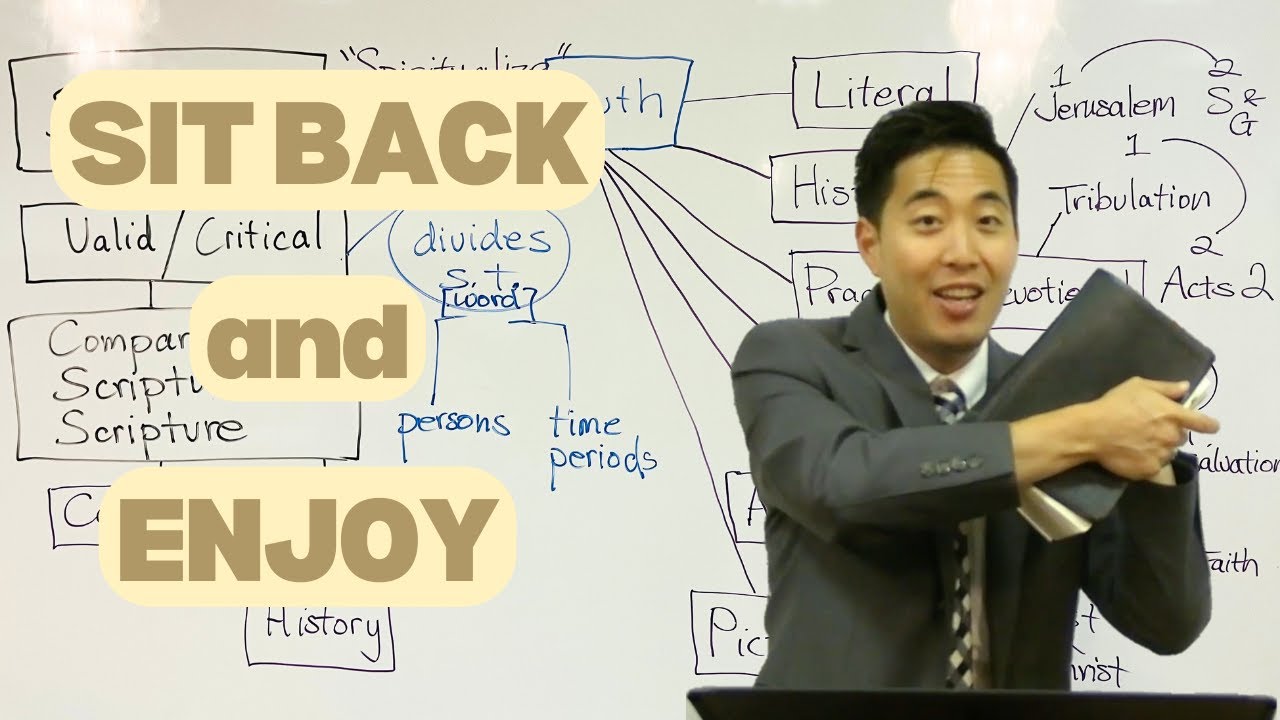
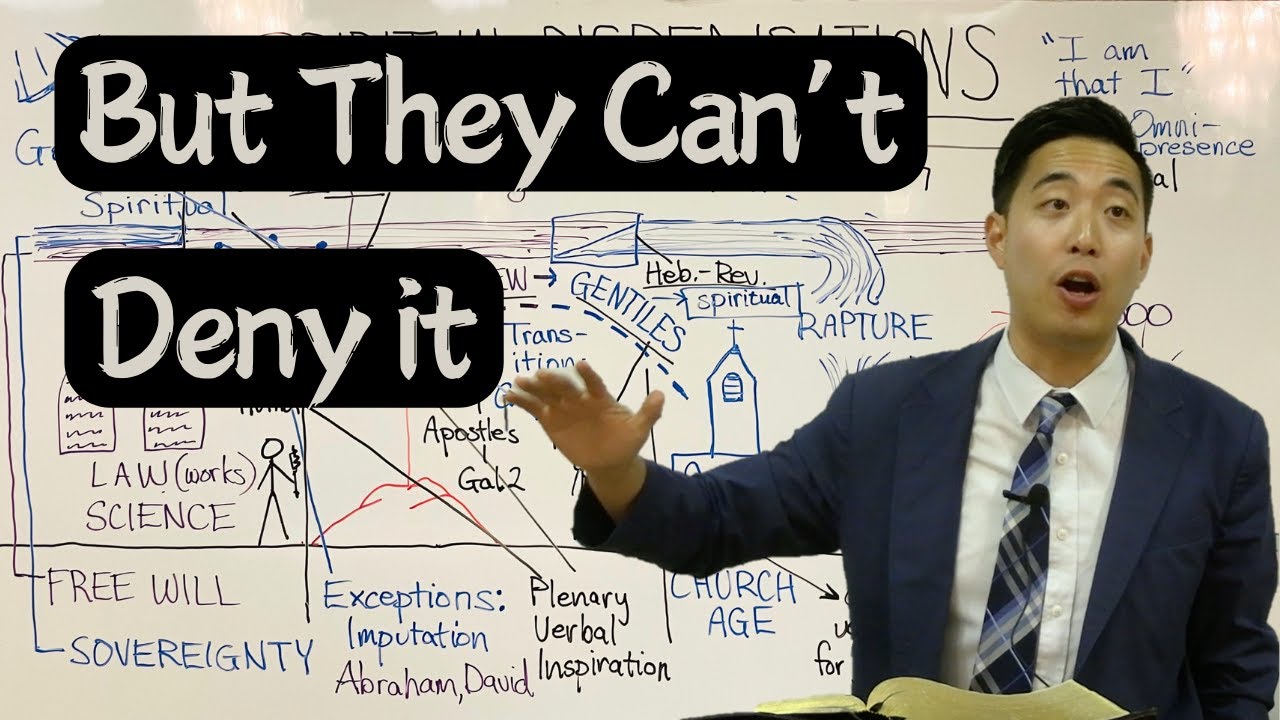
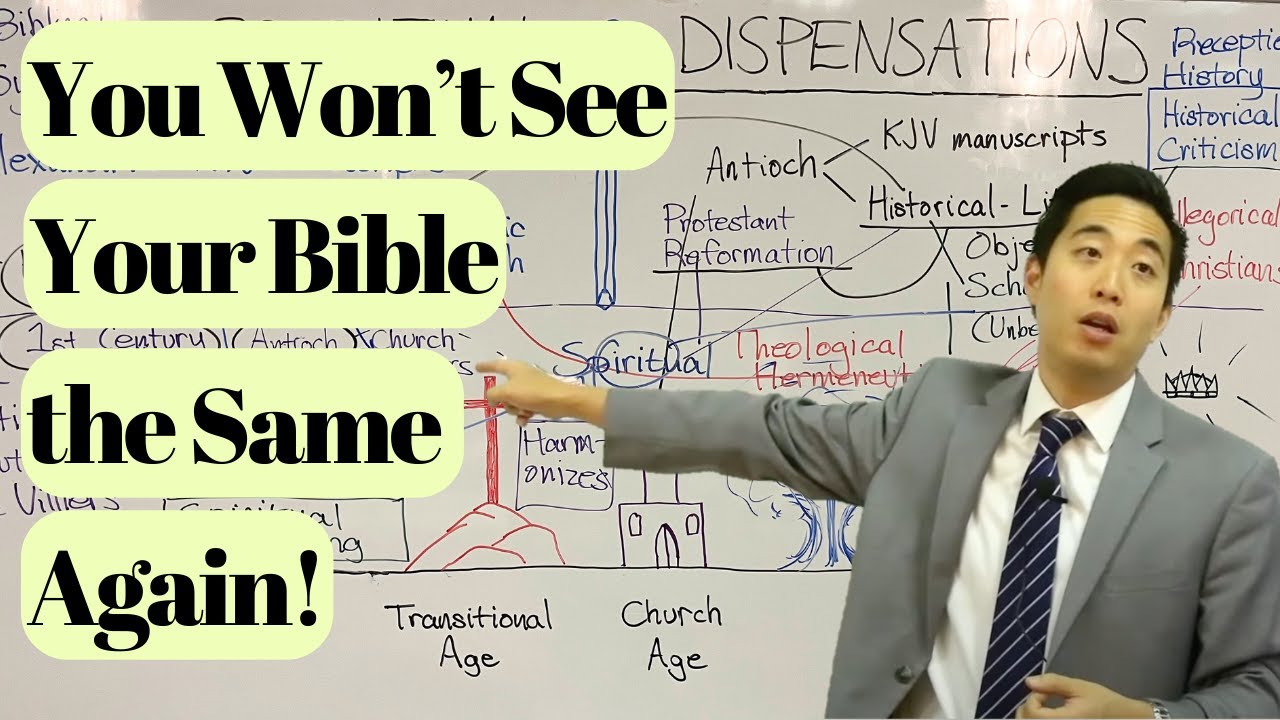
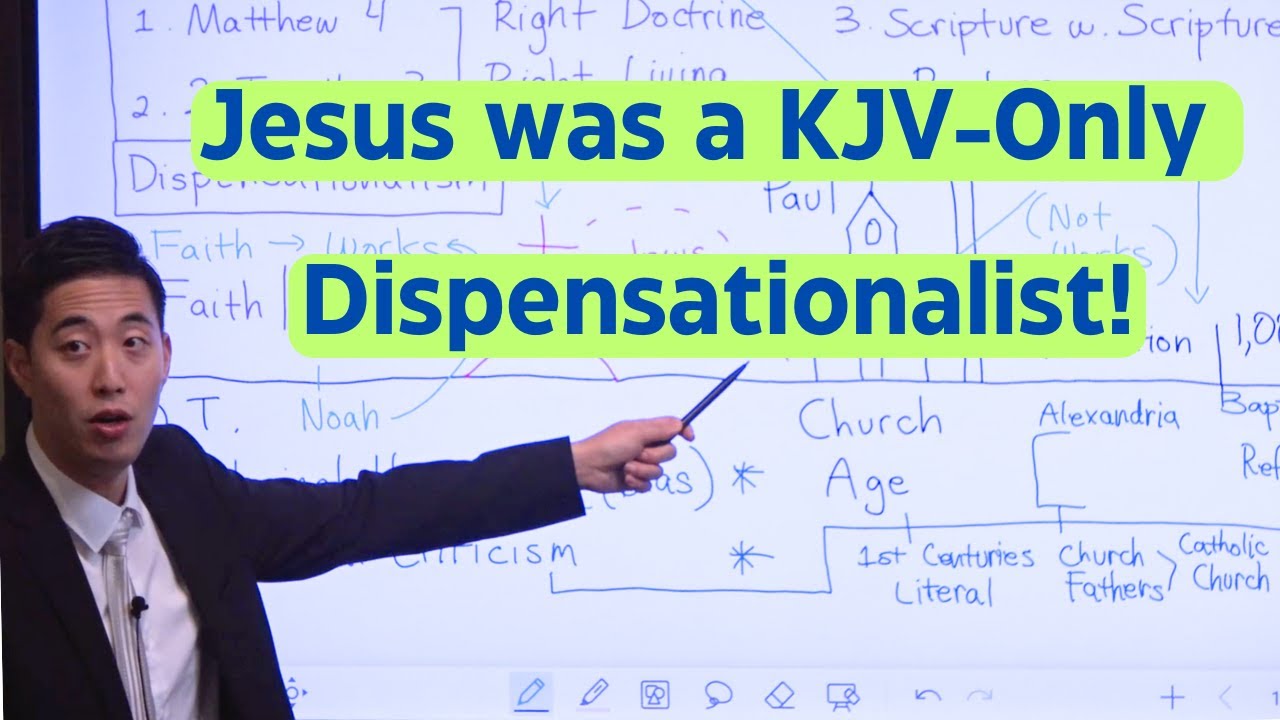
Dr. Gene Kim explains dispensationalism, its divisions, and how correct Christian doctrines are derived through proper biblical interpretation.
Key Takeaways
- Dispensationalism is essential for understanding correct Christian doctrine by dividing scripture appropriately.
- The Church Age is distinct from Old Testament and Tribulation periods, affecting how salvation and works are understood.
- Paul’s epistles are foundational but do not exclude meaningful application from other biblical books.
- Spiritual application of scripture is necessary for personal growth and devotional use.
- Hyper-dispensationalism is an extremist view that should be avoided.
What the video covers
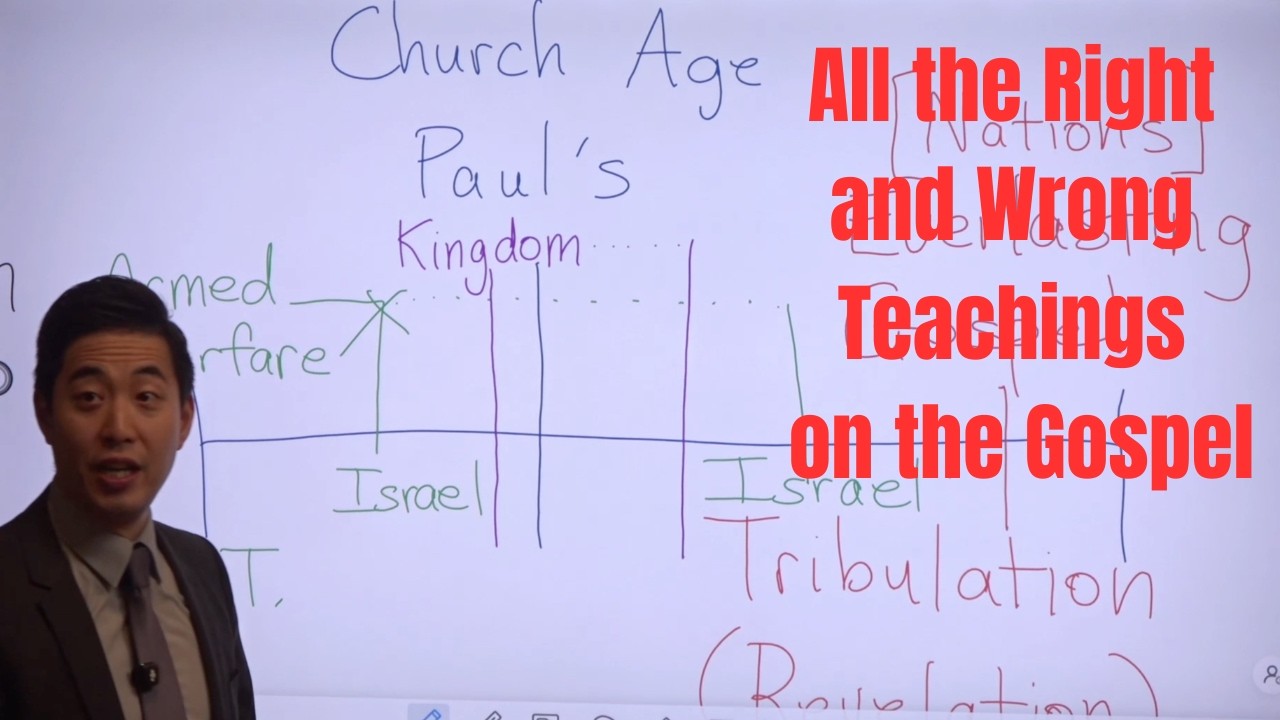
- Dispensationalism divides biblical verses by audience and time period, distinguishing Old Testament, Church Age, Tribulation, and Millennium.
- The transitional period between Old Testament and Church Age is the Book of Acts, focusing on the shift from Jews to Gentiles.
- Verses about salvation by works or losing salvation often apply to Jews, not New Testament Christians.
- Paul's epistles (Romans to Philemon) are the standard for Christian doctrine, but other Bible books still hold meaning and application.
- Hyper-dispensationalism or mid-acts teaching is rejected for limiting doctrine only to Paul's writings.
- Three key applications of scripture are historical, doctrinal, and spiritual, which help harmonize biblical interpretation.
- Dispensationalism aligns with scholarly hermeneutic methods like historical criticism and theological hermeneutics.
- Spiritual application allows believers to relate personally to verses even if doctrinally or historically they differ.
- Allegories and metaphors in the Bible have spiritual meanings that support doctrinal truths, such as Paul’s use of Moses striking the rock.
- Dispensationalism provides clarity and avoids confusion by properly dividing scripture according to context and audience.
Full Transcript — Download SRT & Markdown
Speaker A
We believe in a doctrine called dispensationalism. For some of you who don't know what dispensationalism is, we believe in rightly dividing verses to the right group of people and the right time period. So it's just a matter of fact, truth, and statement that the Old Testament is not the same as the New Testament. Right? So there's a division there. There are doctrines in the Old Testament that New Testament Christians do not apply to themselves. Now, mainly there are four time periods. Bullinger Lin, they put it up to seven, probably even ten, but to keep things simple, I divide things by four. One is Old Testament, the second is church age, which is our time period, the Christians, third is tribulation, and then the fourth is the millennium, which is a 1,000-year future kingdom that Jesus Christ will rule on the earth. Now, between the church age and Old Testament, this is very important for some of you who don't know, dispensationalism is a transitional period between the Old Testament and church age. It's a transitional period where it was going back and forth with Jews and Gentiles. We call that the transitional period. That's the book of Acts. You'll notice that they were switching from Jew to Gentile. A lot of verses that seem to show that you can lose your salvation or do works for your salvation, those actually apply to Jews. You're going to find out either in the Old Testament or in the tribulation or in the millennium, verses that talk about once saved always saved, faith alone, not by works, you're going to find out they apply to us in the church age. Now, if you do it that way, then you're not going to get confused. So when you see Acts 2:38, "Repent and be baptized for the remission of sins," you know that's not to you. That's for Jews. That verse occurred during the transitional era, and you'll notice they were first ministering to Jews at that time. So it was at a transitional era. They were dealing with Jews, and it was switching to Gentiles. You see the Book of James chapter 2, a very famous verse, "Faith without works is dead." You see that? How you are justified not by faith only but by works. Well, if you look at James 1:1, it's written to the twelve tribes of Israel. That's right. And then James 5:3 said it's for the last days, the tribulation. So you know that faith and works salvation is not for Christians; it's for Jews in the tribulation, which is why it makes sense that they cannot take the mark of the beast and they cannot deny Jesus. They have to resist persecution. They have to resist torture and death to maintain their salvation. See, that makes a lot of sense. Obviously, that's a lot of work. That's just not faith alone, right? This also makes sense why Christians are not going through the tribulation. See, we believe in a rapture, pre-tribulation rapture. We're out of the tribulation. If you're going to get saved in the tribulation, it's not going to be a Christian salvation, faith alone, not by works. No, salvation's different. You have to keep your faith. You have to do a lot of works. Okay, now that we understand that, we come across issues and it becomes more complicated when we come across dispensationalism. When we come across dispensationalism, it does not mean that we chop off, let's say, Paul's epistles. So Paul's epistles, remember, they're the standard for Christian doctrine. He's writing to Gentiles, so those are the books of Romans to Philemon. That doesn't mean that we take those books and then we chop off every other book from the Bible. Christians can still find meaning and application in Old Testament books, in the books of Matthew through John, in the book of Acts, and even Revelation, and the general epistles, Hebrews through Jude. There's an extremist group called hyper-dispensationalism. So I've explained to you what dispensationalism is. We divide verses to the right group of people, right time period, but that doesn't mean we're hyper-dispensational. So you can already tell hyper, right? They're also called mid-acts. So if you hear mid-acts, run away from them. Okay? They use the terms Berean a lot, and they use the term grace a lot, a grace church, Berean Society, but they'll identify themselves as mid-acts. So you want to run away from them. So these guys, they claim only Paul's writings you can find meaning and doctrinal application. That's not true because I've demonstrated to you before that Paul in his own writings used Old Testament verses to prove New Testament Christian doctrine. See, so there are verses in the Old Testament that can apply to you, but at the same time, let's be honest, that doesn't mean the whole Old Testament applies to you. All right? Otherwise, like one example, keep the Sabbath day, don't take God's name in vain, otherwise you are stoned to death. We don't practice that, obviously. Okay? That's an Old Testament Jewish thing. So then I've taught you there were three important applications: one is historical. Uh, let's do a different color. Oh my, this thing, uh, oh, this thing broke. We need to fix this. Something happened here. Okay, well, we'll fix that later. Okay. Uh, let me know if I'm out of bounds, please. Good. Historical, doctrinal, and spiritual. Now, I've explained to you that all theology schools and even the liberal divinity schools, the hermeneutic method schools, they've realized that this is a valid method. So they call it historical criticism, and then the other one is theological hermeneutics. Now, I'm not going to get into that. They do not, they may not divide it like we do. They may not use these terms historical, doctrinal, spiritual application. However, they cannot deny that they do practice or implement these methods because theological hermeneutics spiritualize verses, historical criticism. Famous Bart Ehrman and other liberals are atheists. They go by that approach to try to find contradictions in your Bible. Dispensationalism, why I argue, is a very crucial method is that it harmonizes all these three that all the scholars are trying to reach. When you believe the Bible is the perfect, pure word of God, then God's going to show you right doctrine. But if you're lost and unsaved or if you're apostate in your doctrine like most theologians, then you're going to go all over the place and you're not going to reach this. So remember, I talked about when you read verses in the Bible, you can look at it historically from their time period. You can see doctrinal truth, how it applies to you, a doctrine you can learn, spiritual. In other words, you can take the verse and devotionally apply it to you, practically apply it to you. So even though Psalm 23 is not doctrinally or historically to you, spiritually you can apply it: "The Lord is my shepherd; I shall not want." There's nothing wrong with that. We have God as our shepherd. So this spiritual application, remember, is what I'm arguing that answers everything of doctrinal, historical, as well as this doctrine dispensationalism. This is the key answer that I strongly believe many people have overlooked. So I've given you examples where literally any hermeneutic tool that you use, that spiritual application is a must, right? I mentioned, for example, allegories, metaphors in the Bible, figure, uh, figurative expression, that these actually have spiritual meaning behind them. Why? Because we've seen cases like that in 1 Corinthians 10 when Moses struck the rock. God saw that spiritually as Jesus Christ. The verse plainly said that, and then Paul used an allegory of Hagar and Sarah to picture what the law of Moses and Christian salvation. He made a doctrinal application, a truthful application from an allegory like that. Why was he able to do that? Because it was spiritual pictures, allegories. That spiritual meaning is the only validity to make that possible. Like Paul mentioned before when Moses hit the rock, that pictured Jesus Christ, but he called it spiritual meat, spiritual drink. That rock was Christ. See? So that's a spiritual application there. We saw an example with historical through Revelation 11. It mentioned about Jesus Christ. He was crucified at Jerusalem, but God spiritually saw it as what? Sodom and Egypt. That's what it said, spi—
Speaker A
fact truth and statement that Old Testament is not the same as New Testament right so there's a division there there are doctrines in the Old Testament that new testament Christians do not apply to themselves now mainly there are four time
Speaker A
periods Bullinger Lin they put it up to seven to probably even 10 but to keep things simple I divide things by four one is Old Testament the second is church age which is our time period the Christians third is
Speaker A
tribulation and then the fourth is the millennium which is a 10,000-year future Kingdom that Jesus Christ will rule on the earth now between the church age and Old Testament this is very important for some of you who don't know
Speaker A
dispensationalism it's a transitional period between the Old Testament Church age it's a transitional period where it was going back and forth with Jews and Gentiles uh we call that the transitional period That's the book of Acts you'll notice that they were
Speaker A
switching from Jew to Gentile a lot of verses that seem to show that you can lose your salvation or do works for your salvation those actually apply to Jews you're going to find out either in the Old Testament or in the tribulation or
Speaker A
in the Millennium verses that talk about once saved always saved faith alone not by works you're going to find out they apply to us in the church age now if you do it that way then you're not going to
Speaker A
get confused so when you see acts 2: 38 repent and be baptized for the remission of sins you know that's not to you that's for Jews that verse occurred during the transitional era and you'll notice they were first ministering to
Speaker A
Jews that time so it was at a transitional era they were dealing with Jews and it was switching to Gentiles you see the Book of James chapter 2 a very famous verse faith without works is dead ye see that how
Speaker A
you are Justified not by faith only but by works well if you look at James 1:1 it's written to the 12 tribes of Israel that's right and then James 5:3 said it's for the last days the tribulation so you know that faith and
Speaker A
works salvation is not for Christians it's for Jews in the tribulation which is why it makes sense that they cannot take the mark of the beast and they cannot deny Jesus they have to resist persecution they have to resist torture and death to
Speaker A
maintain their salvation see that makes a lot of sense obviously that's a lot of work that's just not faith alone right this also makes sense why Christians are not going through the tribulation see we believe in a Rapture pre-tribulation
Speaker A
Rapture we're out of the tribulation if you're going to get saved in the tribulation it's not going to be a Christian salvation faith alone not by works no salvation's different you have to keep your faith you have to do a lot
Speaker A
of works okay now that we understand that we come across uh issues and it becomes more complicated when we come across dispensationalism when we come across dispensationalism it does not mean that we chop off let's say Paul's Epistles so
Speaker A
Paul's Epistles remember they're the standard for Christan Doctrine CU he's writing to Gentiles so those are the books of Romans to phiman that doesn't mean that we take those books and then we chop off every other book from the
Speaker A
Bible Christians can still find meaning and application in Old Testament books in the books of Matthew through John in the book of Acts and even Revelation and the general Epistles Hebrews through Jude there's an extremist group called called hyper
Speaker A
dispensationalism so I've explained to you what dispensationalism is we divide versus to the right group of people right time period but that doesn't mean we're hyper dispensational so you can already tell hyper right they're also called midax so
Speaker A
if you hear midx run away from them okay they use the terms Berean a lot and they use uh the term Grace a lot a grace church Berean Society um but they'll ident ify themselves as mid acts so you
Speaker A
want to run away from them so these guys they claim only Paul's writings you can find meaning and doctrinal application that's not true because I've demonstrated to you before that Paul in his own writings used Old Testament verses to prove New Testament
Speaker A
Christian doctrine see so there are verses in the Old Testament that can apply to you but at the same time let's be honest that doesn't mean the whole Old Testament applies to you all right otherwise like one example keep the
Speaker A
Sabbath day don't take God's name in vain otherwise you are stoned to death we don't practice that obviously okay that's an Old Testament Jewish thing so then I've taught you there were three important applications one is historical uh let's
Speaker A
do a different color oh my this thing uh oh this thing broke we need to fix this something happened here okay well we'll fix that later okay uh let me know if I'm out of bounds please good historical
Speaker A
doctrinal and spiritual now I've explained to you that all theology schools and even the uh liberal Divinity schools the hermeneutic method schools they've realized that this is a valid method so they call it historical criticism and then the other one is
Speaker A
theological hermeneutics now I'm not going to get into that they do not they may not divide it like we do they may not use these terms historical doctrinal spiritual application however they cannot deny that they do practice or
Speaker A
Implement these methods because theological hermene they spiritualize versus historical criticism famous Bart Man and other Liberals are atheist they go by that approach to try to find contradictions in your Bible dispensationalism why I argue is a very crucial method is that it harmonizes all
Speaker A
these three that all the scholars are trying to reach when you believe the Bible is the perfect pure word of God then God's going to show you right Doctrine but if you're lost and unsaved or if you're apostate in your Doctrine
Speaker A
like most theologians then you're going to go all over the place and you're not going to reach this so remember I talked about when you read verses in the Bible you can look at it historically from their time
Speaker A
period you can see doctrinal truth how it applies to you a Doctrine you can learn spiritual in other words you can take the verse and devotionally apply to you practically apply to you so even though Psalm 23 is not doctrinally or historically to
Speaker A
you spiritually you can apply it the Lord is my shepherd I shall not want there's nothing wrong with that we have God as our Shepherd so this spiritual application remember is what I'm arguing that answers everything of doctrinal historical as well as this
Speaker A
Doctrine dispensationalism this is the key answer that I strongly believe many people have overlooked so I've given you examples where literally any hermeneutic tool that you use that spiritual application is a must right I mentioned for example allegories
Speaker A
metaphors in the Bible figure uh figurative expression that these actually have spiritual meaning behind them why because we've seen cases like that in 1 Corinthians 10 when Moses struck the Rock God saw that spiritually as Jesus Christ the verse
Speaker A
plainly said that and then Paul used an allegory of Hagar and Sarah to picture what the law of Moses and Christian salvation he made a do rinal application a truthful application from an allegory like that why was he able to do that
Speaker A
because he it was spiritual pictures allegories that spiritual meaning is the only validity to make that possible like Paul mentioned before when Moses hit the rock that picture Jesus Christ but he called it spiritual meat spiritual drink that rock was Christ see
Speaker A
so that's a spiritual application there we saw an example with historical through Revelation 11 it mentioned about Jesus Christ he was crucified at Jerusalem but God spiritually saw it as what Sodom and Egypt that's what it said spiritually
Speaker A
called Sodom and Egypt so notice right here even though there's an historical interpretation of that verse that Jesus was crucified in Jerusalem God in the spirit saw it as Sodom and Egypt so when we look at verses in our Bible
Speaker A
they might be a different historical time period they may have a different doctrinal application but a person can take a spiritual meaning out of that verse and still find truth in there so I mention that the greatest example is Paul when
Speaker A
he used an Old Testament verse to prove Christian salvation but remember when we looked at the verse that he used he's totally off Paul's like making it up it looks like because doctrinally the context and historically shows second
Speaker A
Advent a tribulation Doctrine for Jews has nothing to do with Christian salvation has to do with the nation of Israel being delivered restored from the Gentile Nations that are about to destroy him uh one verse example is for
Speaker A
whosoever shall call upon the name of the Lord shall be saved right so Paul used that verse to prove Christian doctrine but that verse is Joel to whosoever shall call upon the name of the Lord shall be delivered that's when
Speaker A
Israel is about to be conquered by Gentile Nations but God delivers them so see Paul made it up unless what's his only validity his only validity is that he's filled with the Holy Spirit when he's writing given by inspiration of God the
Speaker A
scripture he has the sign signs of the spirit he has the apostleship all the apostles recognize him the Holy Spirit selected him so what was that that was a spiritual application see only a spiritual operation like that would give
Speaker A
Paul validity where he can take a doctrine that is for tribulation Jews and make it a double doctrinal approach which is Christian New Testament salvation that's good brother now the if people have a hard time believing that the more easy evidence es which I've
Speaker A
demonstrated before are Messianic prophecies so remember Matthew he mentioned about Jesus Christ when he fled into Egypt as a baby and got away from Egypt he was quoting from the book of Hosea that it was a prophecy about
Speaker A
Jesus but Matthew is lying through his teeth if you're looking at a historical standpoint if you're looking like Bart ER and those guys Matthew he uh he's taking that verse from Hosea and Hosea plainly says out of Egypt have I called
Speaker A
my son Israel not Jesus so Matthew was lying unless what unless he's filled by the Holy Spirit and scripture is given by inspiration of God and Matthew has the signs of apostleship the holy spirit because of that he was able to
Speaker A
take a Doctrine for Jews and find double Doctrine Jesus the Messiah now Messianic prophecies are the easiest to prove double doctrinal application see it's not like when you look at one verse Oh this is what it means we're done that's
Speaker A
the doctrinal meaning no it can be a double Doctrine now why does God's word operate that way it's very easy because God is a spirit he's not bound by time so when he gives a statement he could see three groups of people that can fit
Speaker A
that statement he made he can see two time periods it's undergoing through that one statement he made why because God's not bound by time so when he speaks he is I am that I am so present tense so if the tribulation is
Speaker A
undergoing and the church age is undergoing God is still at those same time periods and has those two undergoing together does that make sense so a lot of theologians don't uh miss this out in their hermeneutics in their
Speaker A
interpretation of the Bible and spiritual dispensationalism is key now uh I've talked to uh Bible believing preachers as you might know some of you already know that so this is I've talked to those who are respected in our Bible
Speaker A
believing Community wrote books articles and stuff like that on dispensationalism and so far I talked to every one of them and they could not punch a hole I even asked them to punch holes and they tried and they could not
Speaker A
find any criticism with this or punch holes so this one I believe is very necessary tool it's a very foolproof necessary tool that we should all learn spiritual dispensationalism now that I say all this there's one other way
Speaker A
that I mentioned is the literal application right yeah so when we look at the verse we take it literally but actually you need the spiritual application you can't just take look at the verse and take it literally it also
Speaker A
is spiritually same time now some people find that contradictory because um as you might hear from theologians nowadays they'll try to say that the verses when you take them you can't take them literally all the time you got to take
Speaker A
them spiritually or metaphorically that's what they'll say now I've shown you that spiritually is metaphor IAL it can be historical it can be allegorical typology doctrinal I've given all these examples through spiritually theologians don't know what they're talking about
Speaker A
when they say spiritually see they just say that tongue and cheek then ask them what does that mean what do you mean by spiritually come on brother you use the word spirit for a reason that means it must be on a spiritual plane not just
Speaker A
yabba daa do I make something up metaphorically come on that's what they think so alexandrian Scholars theologians and the Catholic church has been very guilty of that so that's why they like the interpretation method of theological hermeneutics in other words
Speaker A
spiritual meaning whatever that means what that means is look at a verse make up whatever interpretation you want see Bart ir and atheist that's why they don't like that so they're more honest they go by a historical criticism
Speaker A
approach in other words you take the verse as it says but then what they've done is that because they're looking at a historical plane not a spiritual plane they found contradictions they found contradictions but for us when we're looking at a
Speaker A
spiritual plane the verses harmonize even more right amen so we' seen that uh when we continue on with this method what we hear from theologians is take the verses literally as you can but then the rest you'll have to make a spiritual
Speaker A
so it sounds like these two are contradictory right but actually they're more same than you think the first evidence is the theologians themselves so there are some theologians who actually wrote books and they mention about when you're giving the spiritual
Speaker A
application or a metaphorical interpretation allegorical interpretation they say usually the allegorical interpretation is to show how literally the author is feeling or the what the author is saying you ever heard people who get very mad at you for example and they said I'm
Speaker A
going to l literally kill you I'm going to literally pounce on you I'm going to literally eat you up man well obviously that don't mean like literally they're going to open their mouths and become a cannibal right but when they say that
Speaker A
it's to show literally how they feel even though literally that is not the case do we understand so notice right here already from that example and even from theologians themselves literal interpretation is not really contradictory to spiritual or
Speaker A
allegorical interpretation that's one but the second thing is it's more literal than you think so let me give you an example John chapter 6 John chapter 6 now notice what Jesus Christ he says right here at verse 51
Speaker A
verse 51 I am the living bread which came down from heaven If any man eat of this bread he shall live forever and the bread that I will give is my flesh which I will give for the life of the world now
Speaker A
notice right here that Jesus is saying that uh I am the bread from heaven and if you eat me then you'll live forever now Christians realize that that's not true this is a basically Jesus is saying that metaphorically
Speaker A
speaking he is demonstrating himself as an example that when you receive him for salvation it's like you're receiving sustenance that he is eternal life bread but actually it's more literal than you think and I'm not talking about from a
Speaker A
Catholic standpoint Catholic standpoint they're going to think that as soon as you take that wafer or that uh wine or juice or whatever they serve that it is literally the body and blood of Jesus Christ that's not what I'm saying what I
Speaker A
mean by literally is not from get this now from a physical plane see they make Jesus's blood and Body in a physical plane like it's physically his body physically is BL blood no it's spiritually but it is literal see
Speaker A
because when you look at right here when you look it right here verse 63 Jesus already answered them that it is literally of the spirit verse 63 it is the what spirit that quickeneth the flesh profiteth nothing oh he told you
Speaker A
physical is out of the window yeah the words that I speak unto you they are what spirit and they are life but he says it's literal because he mentions right here um let's see where is that verse Catholic apologists they love to use
Speaker A
this verse to show that it is more literal uh rather than metaphorical he points out in verse 55 look at this 55 for my flesh is what me indeed and my blood is what drink anded see that sounds very literal not
Speaker A
metaphorical so Catholic apologists and Protestant apologists go back and forth back and forth back and forth they can't come to a conclusion what's very easy all you have to do is this way let me draw it out people don't get it unless
Speaker A
it's drawn out right so let me draw it out Pretend This is the body of Jesus Christ okay now simple question what are we called what is the church called the body of Christ now is that metaphorical or he literally
Speaker A
meant that yes he literally meant that but it's a spiritual organization that's right it's in a spiritual plane it's on a spiritual Dimension we have Jesus Christ's body so it's not metaphorical it's not poetry you think this is just poetry no
Speaker A
he means it literally but it's in a spiritual plane not a physical plane and it's literal see that now you want a another example I'll give you another example plenty of examples angels are they poetic creatures are they
Speaker A
allegorical Jesus didn't really the Bible didn't really mean Angels or are they literally Angels yeah literally Angels right from heaven but they're not physical they're what spiritual they're spiritual creatures but they're literally real and actual but they're not physical
Speaker A
Flesh and Blood see that another example is devils are they real or are they just poetry are they you know devil means basically like metaphorically when you talk about the devil inside you you know you got something dark in no no no
Speaker A
they're real they're demonic satanic creatures evil spirits that are literal and real but they're not physical they're spiritual see so this spiritual application is more literal than you think so I've shown you now this is the last thing but spiritual application let
Speaker A
me repeat it again without spiritual interpretation you cannot have a doctrinal interpretation you cannot have a historical interpretation you cannot have a literal interpretation you cannot have any interpretation without spiritual interpretation all right that's how powerful this method is I think it's
Speaker A
really fullprof and the evidence is the scripture itself the Bible says all scripture all scripture is given by inspiration of God that's God's spirit God breathe all right in it you cannot separate Spirit from that I strongly believe in that you cannot do that
Speaker A
cannot do it spiritual is everywhere now that's why I'm vehemently uh urging Bible Believers or anyone out there who get into dispensationalism or double application right I've talked about double application remember that the Messianic prophecies are a great example
Speaker A
one application is the Messiah but the other application is it could be the nation of Israel the only way you have validity for double application approach is you need the spiritual method the spiritual application that is full proof I see it
Speaker A
there's no way that you can separate from that now I'm going to give you uh other examples about the spiritual application which is very eye openening let's go to 1 Corinthians chapter 10 1 Corinthians chapter 10 and then after I go through this I'm
Speaker A
going to give a a crazy Theory all right y'all like that right y'all like the crazy theory part so I'll give you a crazy Theory but actually believe it or not this has been uh this has been brought
Speaker A
up by uh intellectuals Theologian intellectuals it's just hasn't been taken advantage of and today's theologians lost track of it or forgot about it so I'll bring that up okay so a crazy theory of mine but first of all
Speaker A
let's go to First Corinthians chapter 10 the spiritual application is very necessary and you might say why it's because of you you might go whates what are you talking about you are very important it's called YouTube right now they're
Speaker A
making a u u version and all kinds of St every Everybody agrees okay you are the most important being in the world all right now obviously as Bible believing Christians we know that you is the greatest enemy right so we disdain that
Speaker A
the most but um here's the thing I'm just trying to point out right here that if you all are so selfish to think that you are very important then even selfish people people will have to agree with this teaching and I'll point out why the
Speaker A
reason why is when you read that book you are not thinking about dispensationalism when you're reading it like this verse applies to a Jew who has no application to me yeah come on what does everybody even everybody does this
Speaker A
as soon as you get saved even before you learn dispensationalism it's a common sense thing when we read our Bibles we're trying to apply it to us yes that's right all right so what we understand is that the
Speaker A
verses in the Bible have application to us but remember dispensationalism what it teaches is that not every in not every verse in the Bible applies to you but it has application for you right that's right has application for everybody
Speaker A
through all all time periods right what does that mean what that means is when we look at the verses we know for example if you take the lord's name in vain you get stoned to death that doesn't apply to me well well I
Speaker A
understand that doctrinally right but spiritually when I look at that verse what did I learn out of that God takes it very serious his name that's right so I better watch my mouth see that when we look at these verses we get
Speaker A
meaning even look think about this don't we argue and don't we preach about 1 Chronicles chap 1 genealogy that you can get something out of that let's be honest we're not going to get anything out of that if we're
Speaker A
looking at a historical application a doctrinal application the only way you can insist we're going to get meaning out of that is spiritual application now remember the hermeneutical Schools they're all about meaning remember that spiritual meaning even the hardcore
Speaker A
liberals there's this there's a school called uh literary it's literary approach you know you can already guess what that means literary criticism approach what is the literary approach it's whenever you read a text you know oh it means this to me right yeah I'm an
Speaker A
English major from Berkeley so you can guess right so I every when we read the text what does it mean to you what does it mean to you you know sometimes I like to raise my hand and give a crazy
Speaker A
meaning you know well it means this much to me and then give some crazy interpretation I did one time and the professor just eyes real big and she's okay does anybody else have a different I like to do that sometimes
Speaker A
but anyway uh that's the thing that a lot of Liberals are harping on theologians Pride spiritual meaning spiritualizing verses so and you by Common Sense do that as well when you read the verse what does it mean to you so whether you
Speaker A
believe it or not this is a valid or an unconscious approach everybody's doing just as unconscious as y's talking about the spiritual unconscious that's a joke but anyway uh the point is when we look at these verses the Lord think about it when God
Speaker A
wrote the verse When God spoke these words he wants you to read his words daily right why so you can hide the words in your heart that I might not sin against thee so that I can be doers of
Speaker A
the word and not hearers only how can he do that if he only insisted that only Romans toyan that's all doctrinally applied to you that's it see doesn't make sense he intended from Genesis to Revelation when you read that those
Speaker A
verses how you're going to live by it how are you going to live it out of your life and apply it to your heart so there is a spiritual filter here with these verses even though they don't doctrinally apply to you there's a
Speaker A
spiritual filter there that all of us have that we try to learn something out of it so 1 Corinthians chapter 10 1 Corinthians chapter 10 spiritual application is serious you might say why because the Bible says uh in verse 11 now all these things happen
Speaker A
unto them for in samples and they are written he's talking about the Old Testament Jews the Old Testament writings are written for our what admon admonition upon whom the ends of the world are calm it's our admonishment we
Speaker A
are to apply it see that's an application otherwise what does admonish mean if it has no application to you admonish means something's being apply to you obviously you're applying the verses to yourself how serious it's very serious because
Speaker A
look at this example look at verse six six now these things were our examples to the intent we should not lust after evil things as they also lusted neither be idolators as were some of them as it is written the people sat down to eat
Speaker A
and drink and Rose up to play neither let us commit fornication as some of them committed and fell in one day 3 and 20,000 now that's a lot of dead people from complaining right neither let us tempt Christ as
Speaker A
some of them also tempted and were destroyed of serpents neither murmur ye as some of them also murmured and were destroyed of the Destroyer now all these things happen unto them now get that now God had all these horrible tragedies
Speaker A
happened to those Jews from complaining why because God had it in mind when he wrote down the Old Testament these Jews were bitten by serpents that Jean Kim later on when you complain that's what I intended to write it for wow that's good
Speaker A
brother for Bible Baptist Church in California when you complain that oh you know we're the only Bible believing church and the Bay Area is so hard to serve God this is written for you that's what God had in mind it said
Speaker A
that now all these things happen why God intended that for in samples and they're written for our admonition midax hyper dispensationalist you got to avoid them at all costs they're very dangerous people they try to boast that they're
Speaker A
dispensational but what they've done and this is what you're going to notice what they've done is that they deemphasize other books in the Bible that you can apply to yourselves and God wants you to apply those verses to you you might say
Speaker A
I don't think so no that you're not reading verse 11 if mid acts beli Paul's the greatest Apostle they weren't reading their Apostle Paul what did he said that exactly happened in in the Old Testament and they were written
Speaker A
specifically for you Christians an admonition means something's being applied to you and not only that the seriousness is so great that he pointed out 23,000 dead that ain't serious that's more serious than any natural catastrophe you can think of
Speaker A
more than the hurricanes and the typhoons and earthquakes this is a lot of people dead and this is something you want to take seriously right so spiritual application is not important after that see this has a lot of bearing this
Speaker A
is very important if we see that this spiritual application is written like I mentioned to you for us here's another interesting thing as we all read the Bible let's say that brother Rob here he reads 1 Corinthians 10 and I read 1 Corinthians
Speaker A
10 we're not listen We're not gonna have the same spiritual meaning after our reading when we read he's going to get a different meaning like oh I got something out of 1 Corinthians 10 that I'm supposed to take I'm supposed to
Speaker A
watch out for complaining it's very serious but for me when I read 1 Corinthians chapter 10 I could be reading about oh wow this is good for my spiritual dispensationalism class tonight now you see that right there what's that
Speaker A
because the Holy Spirit guides every Christian differently as they read that book that's right so as Robert reads the verses in this book he's going to get different spiritual meaning from me when I read those verses and get a different spiritual meaning
Speaker A
what does that mean these verses can have multiple spiritual meanings double multiple triple now take this all right you can take a thousand Christians you could probably have a thousand different applications then from Reading 1 Corinthians 10 that's amazing isn't it
Speaker A
that's pretty serious too so go to 1 Corinthians 12 1 Corinthians 12 if you're midax hyper dispensational then you're very much an amateur in Bible interpretation brother 1 Corinthians 12 notice that the Holy Spirit he guides everybody differently there's a diversity yeah 1
Speaker A
Corinthians 12 verse4 now there are what diversities of gift but the Same Spirit verse 6 and there are diversities of operations but is the same God which worketh all in all but the manifestation of the spirit is given to every man to profit with all
Speaker A
look at verse 11 but all these worketh that one and the self-same spirit dividing to every man severally as he will that's how the Holy Spirit operates he doesn't operate everybody the same he operates everybody differently how many sermons have I
Speaker A
heard about the Prodigal Son 10 20 40 and they're not all the same that's right they're not all the same the Holy Spirit works on all of them differently do you see why this book is endless application can go on to God endlessly
Speaker A
amen now remember there's this caution about well what about you got to be careful about making up your own spiritual meaning right that's the extreme liberalism that you want to avoid you don't want to make up something that is totally out of whack
Speaker A
so remember what is the boundary line what is the filter what's the thing that keeps you in check what's your balance and checks remember 1 Corinthians 2 remember that comparing spiritual things with spiritual the only way you're going to
Speaker A
find the right interpretation from the word of God is scripture with scripture his spiritual words keeping his other spiritual words in check so when Jehovah's Witnesses say 100 I'm part of the 144,000 well he they're way off they
Speaker A
they made it up okay 144,000 in Revelation chter 7 that is referring to the 12 tribes of Israel well I'm the spiritual 12 tribe of Israel and you made that up give me a verse to prove it they can't pull up any verse to prove
Speaker A
that see when we say that Jesus Christ said that his body can be eaten and drink uh and drunk and that's a spiritual application we didn't make that up we had another verse to support it Jesus said it is the spirit
Speaker A
that quickeneth the flesh profiteth nothing when we take one verse and make it double application we didn't make it up Matthew points out that it's time about Jesus the Messiah and then when we look at Hosea it's talking about the
Speaker A
nation of Israel see scripture interprets scripture like Martin Luther said uh Solas scriptor that's an objective form of interpretation that historical criticism and Protestants know so it's called it's an objective interpretation a lot of theological hermeneutic Scholars they hate that they
Speaker A
don't think that you can have an objective interpretation that you have to have plural pluralist multiple interpretations you can spiritually interpret it however you want to they're only partially right you can pluralistically uh interpret the verse but it can only be done through an
Speaker A
objective approach they don't realize that the theological hermeneutics with the objective interpretation historical criticism they're one and the same thing only Bible Believers has have this interpretation right all other Scholars got it wrong see that they're all trying
Speaker A
to bring up their own models and methods to integrate the two and they're still having a hard time but this dispensationalism method with a spiritual application answers everything harmonizes everything it's something that hermeneutical schools and Scholars and theologians have been trying to
Speaker A
figure out for years they never got it now isn't this amazing this objective interpretation which is pluralistic at the same time only the word of God can do that now let me give you something interesting so let me give you the crazy
Speaker A
Theory okay the one you've all been waiting for the crazy Theory and then I'm going to give you uh a historical look from beginning to end which will be helpful here is you and you consist of three parts you
Speaker A
know what they are right so we consist of Body Soul and Spirit now origin Bible believers do not like that guy however a lot of theologians and Christian intellectuals they all of origin and this guy he actually majored in
Speaker A
hermeneutics interpreting the Bible That's why supposedly he created the Hippa all right but that or the point however is he majored in interpretations he believed that when you read the Bible there was a way that you can interpret it through Body Soul
Speaker A
and Spirit but there was not no one ever picked up on that no one ever really got into that now a lot of theologians and Scholars interpretive schools didn't really catch on this but they've already done two can you
Speaker A
guess they theological hermeneutics right remember they major in what spiritual interpretation right historical criticism remember is what because it's talking about physical time periods physical people humans history means history history of man so when we look at the verse we're
Speaker A
looking at a fleshly perspective physical perspective that's why you get Bart Erman and those guys who end up being liberals or finding contradictions in the Bible there's other group when they pick up the Bible they're looking at it spiritually so then they come up
Speaker A
with theological hermeneutics now we do know their spiritual interpretation is wacky right why because they're not saved they don't have the Holy Spirit and not letting the word of God speak for itself but for us on the other hand
Speaker A
you notice how handy this thing is right yeah when we spiritually interpret it now get this if there is any validity what about the soul shouldn't the word of God not just minister to get this the word of God
Speaker A
ministers to our spirit but it does does minister to our flesh in some sense think about a lot of lost people who find meaning from reading the Bible see it does minister to their flesh whether people believe it or
Speaker A
not if it can do body if it can do Spirit What About Soul think about bart IR The Atheist the historical critics they find Value because otherwise Bart ER wouldn't have a job then he would be the most unpopular atheist and no one
Speaker A
would recognize him he only becomes recognized because his bread and butter his major is what interpreting the Bible textual criticism from what from a fleshly perspective from a human perspective it's all humanist how he interprets and utilizes it see so the scriptures can be
Speaker A
interpreted notice right here it ministers to the humans uh flesh it ministers to the spirit but it makes you wonder about the soul how does that operate then okay so how do we interpret it through a fleshly perspective we already seen that
Speaker A
historically right that's why dispensationalism makes sense you need that spiritually we already know that right we get practical devotional applications out of it now what about the soul how how will that operate okay this is very interesting but I
Speaker A
think that the soul how it can minister is because I already wrote out the answer you might say why because who is the real you your soul if you die is the real you going to go to the grave no is the real
Speaker A
you going to be that spirit that goes back to the Breath of God no the real you is what the one who goes to heaven or hell for all eternity and what's that part you know what it is soul psychology
Speaker A
is the even lost people admitted whether they believe it or not easiest example is psychology study of the soul and when psychologists have lgbtq plus clients they don't care if in their body they're a male gender or a
Speaker A
female gender deep down inside the real them is what I don't know a unicorn or a fluffy green monster so even lost people see admit that you are different from your body see lost people even that whether they believe it or not they
Speaker A
believe in a soul if they're going to Proclaim lgbtq plus propaganda they're going to have to believe in a soul that's good brother use that on them okay that'll be pretty good anyway the point is we do know that the real you is your
Speaker A
soul there's your mind your Consciousness perhaps and the the real you so how am I going to take this verse when I read this verse I can see how physically historically it can apply right Old Testament is Old Testament New
Speaker A
Testament New Testament that's where we come up with dispensationalism rightly dividing things to the right time period mid acts whether they know it or not they're only they're only doing a body interpretation physical interpretation they're not spiritual people and you
Speaker A
wonder why mid acts they're not really spiritual people they're very dead they got dead churches they don't do water baptism they hardly do Soul winning I mean these guys are dead than a door nail because all they're thinking about
Speaker A
is refreshing their uh intelligence physically interpreting verses coming up with doctrines that's all head knowledge so what is that if Bible Believers aren't careful I question if they're doing this for fleshly Sensations all the doctrines they know this is powerful right here they're
Speaker A
not spiritual as you think I can tell you Bible Believers our crowd who can give you deep doctrines backwards and forwards people who watch Us online they know all the Deep doctrines but they're spiritually dead that's wow why because they only took the word of
Speaker A
God where it just refreshed their body their mental intellect head knowledge makes them feel good interesting interesting you know what that is fleshly that's good Nephilim is a very interesting Doctrine but let's be honest it's fleshly yeah it just makes you go
Speaker A
who why are those monsters and why are those giants what happened and see that's fleshly anyone under conviction now this is eye opening even though this is a crazy Theory I think there's validity here so mid acts and those who are
Speaker A
getting into deep Doctrine they're fleshly people if you're not careful Bible Believers what makes us unique even when we get into deep Doctrine is what because we're saying that Doctrine should be practical living as well yes right right so we make that spiritual
Speaker A
where we feed our spiritual nature we grow in the spirit we draw closer to the Holy Spirit not just all head knowledge it's a heart thing as well and that's all spiritual but what does this have to do with the soul because there's a
Speaker A
difference the spirit can be where let's say I take a passage and I preach this sermon to the people it is a spiritual message right and the Holy Spirit is ministering to people and then the Holy Spirit ministers to everybody differently they
Speaker A
get spiritual meanings out of it every in their own way that ministers to their Spirit but see you notice it's still different from the soul because this spiritual even though it's dividing everyone differently it still is operating to the whole body of Christ
Speaker A
everyone soul is more specific you you and you see that so when I preach get this a spiritual application from the sermon everybody's soul is taking it personally to themselves and then what what brother Daniel has in his soul that was personal
Speaker A
to him we will never know about it right in the altar no one will ever know same thing with me when I preach that sermon you'd be surprised something in there was personal to me so it is very similar Soul and Spirit
Speaker A
because spiritually it's meaningful to everybody it divides differently but you see the clear difference this is more narrow in scope this is more holistic even though the spiritual meaning is dividing to everyone differently it still doesn't change the
Speaker A
fact it's uh pouncing on everyone right it's still being applied to everyone and they're all applying it differently once people are applying this spiritual boom differently that's their soul operating on that see the soul is taking that spiritual meaning
Speaker A
and then trying to apply it personally to herself or him himself now did that make any sense or was that lost that's why Soul and Spirit see that they're so subtle in similarity but you can still see the distinction right
Speaker A
so Hebrews chapter 4 I believe so there's a application for this I really believe it what's your evidence for Body Soul Spirit to apply Hebrews 4 already look at this Hebrews 4 verse 12 I think I see Body Soul and Spirit
Speaker A
here Body Soul and Spirit Hebrews chapter 4:12 for the word of God is quick and powerful and sharper than any two-edged sword piercing even to the dividing a under of what Soul and Spirit and what and of the
Speaker A
joints and Marrow see that body yeah I mean come on let's be honest I know that the word of God spiritually ministers to you when you're going through suffering but your flesh does feel like it's being ministered it's feeling Comfort see the
Speaker A
word of God I really believe applies to Body Soul Spirit not only that um there are scientific studies that prayer and Bible reading really improves bodily Health believe it or not so it does something to your joints and Marrow and certain
Speaker A
things inside your body there are actual empirical studies on that and and is a discerner of the thoughts and intense of the heart so I think Body Soul and Spirit there's something going on here so that's my crazy Theory good so that is very eye
Speaker A
openening uh uh uh I guess I'll save that for another time then maybe no actually I can cram it all in I can do it so let me do five minutes here okay so I can do this five
Speaker A
minutes it's not going to really take long now here's a problem that a lot of Christians go through a lot of Christians struggle with a thought about when we look at our time period today so here you are today
Speaker A
day right Bible Believers now whether you believe it or not uh is this cut off or no all good still good all right so this here you are this is you our doctrines is not the same as those from the
Speaker A
beginning that's what you're going to find out the days of the early church study the early church during that time it was a mess of doctrines that's why there were Church fathers holding councils and then uh they were debating
Speaker A
on the Trinity when Trinity wasn't a big deal shouldn't be a big deal but it was a huge big deal that time and then when the Catholic Church came out so much wrong Doctrine so Protestants came to the scene and even those Protestants
Speaker A
have split denominations they all can't agree so what's the solution well the devil what he would like to say is why don't we all get a law well you can't get a law if somebody's Doctrine conflicts with another Doctrine if I say
Speaker A
salvation by faith not by works and another denam says salvation by faith and works then sorry there's no Harmony in that they conflict okay one of those doctrines is going to cost a person's soul in hell for all eternity and by the
Speaker A
way hell is a debatable Doctrine already there are people who don't believe in Hell other people do believe in hell so Doctrine is a big deal so no we can't hold hands and sing Kumbaya and pretend there are no differences when
Speaker A
differences do exist so what are we going to do then when there are these there is no doubt As Time passed by from the early church the Medieval Era and the Protestants they didn't have all the right doctrines like we did if
Speaker A
you look at the Great Awakening revivals there's no doubt the holy spirit of God was moving in there and there were so many people getting saved but guess what their sermons aren't all correct in Doctrine but here we are today we get
Speaker A
our doctrines right and then we're calling out other churches who aren't getting their doctrines right well doesn't that look hypocritical if we don't criticize these people as well well that doesn't make us look good then that we're proclaiming that we're
Speaker A
the only ones who have all the truth and in the past 2,000 years no one did right well the easy answer is this and this is a historical fact and even a scientific fact it's called progressive revelation that's what makes us very different from
Speaker A
Mida hyperd dispensationalist as well as covenant theology which does not believe in dispensationalism so what is progressive revelation it's something that any higher education system agrees in in any topic of study as you keep study studying you find new things you learn
Speaker A
more you even correct some previous errors now I don't see Scholars uh making a throwing a fit about Socrates he was stupid because he taught this and that and that no they still praise him as an intellectual but if you look at a lot of
Speaker A
his uh uh teachings or his studies it doesn't match with modern science today so what's that it's because what they believe is that Socrates was on to something he didn't get the luxury of knowledge like we had 2,000 years that's
Speaker A
been built up so they still respect Socrates because he was getting on to something and it kept progressing to where we now know better than Socrates right so if that's the case with Socrates if that's the thing with
Speaker A
Scientists from back then from Galileo to now and Etc why not today it's so obvious it's especially since 2,000 years ago they didn't have the complete Bible in their hands those manuscripts all scattered then as soon as KJV 1611 came
Speaker A
to the scene and everybody had the word of God in their hands and Great Awakening revivals were being preached they were able to read yes and when teachers started to give Doctrine other people who knew those Doctrine just
Speaker A
built upon those doctrines so that's just common sense all right now that we understand that the question is this I get progressive revelation but the question is there were people let's say during the Medieval Era and then they read the book of
Speaker A
Hebrews okay work out your salvation with fear and trembling why we know that that doesn't apply to us the book of Hebrews is tribulation Doctrine so we don't have to worry about trembling about our Salvation now you're going to hear a lot of Christians online
Speaker A
that are going to use the book of Hebrews uh work out your salvation with fear and trembling excuse me is Philippians the other one I want to talk about is Hebrews chapter 10 Hebrews chapter 10 talks about it is a fearful
Speaker A
thing to fall into the hands of a living God and it mentions about the just shall live by faith oh sounds Protestant but if his soul draw back uh but if he draw back my soul shall find no pleasure in
Speaker A
him see so it sounds like losing your salvation and fear so you hear a lot of Christians using those verses and then we point out no that's wrong Doctrine that's false Doctrine we believe that that's tribulation Doctrine we have the
Speaker A
assurance that once we're saved we're always saved okay so since we do that why can't we do that with these people there were people during the Medieval Era who read the book of Hebrews and they were scared scared about losing
Speaker A
their salvation so then why can't we call them out one is again progressive revelation that's why see it's because of progressive revelation think about it if scientists today had all the same beliefs like Socrates back then those modern
Speaker A
scientists would critique those scientists but they're not going to critique Socrates because of progressive revelation Progressive knowledge so that's why we have to call out wrong Doctrine because that's the that's what that's the Highly Educated thing to do believe
Speaker A
it or not they call us dividers but no all those guys are doing that in the professional Fields but anyway progressive revelation is one but number two go to Second Peter 1 who is the one that gives truth
Speaker A
remember it's not humans reading the verse and then you develop the truth no no no that's not how it works then it's absolutely useless without the Holy Spirit guiding you the ultimate the ultimate channel is the holy spirit right the ultimate source is
Speaker A
the Bible but you you're just a vessel without this ultimate Channel then you're not going to get it even if you have the ultimate source can I repeat that again even if you have the ultimate source of Truth the Bible
Speaker A
you're not going to get anything out of it without the ultimate channel the Holy Spirit the holy the Holy Ghost is the one who guides and leads into all truth not your intellect right that's the problem with mid acts and Bible
Speaker A
believers they have no spirit in them they're so spiritually Dead all they are is just you know mental mentally satisfying themselves mental satisfaction so the holy spirit is the one that guides and leads into all truth now look at this look what the Bible
Speaker A
says here were people progressive revelation trying to study the scriptures but it was not revealed to them as much as it was revealed to us second Peter chapter 1 uh excuse me I was wrong it should be 1 Peter 1 1 Peter 1 sorry 1 Peter
Speaker A
chapter 1 verse 10 verse 10 of which salvation the prophets have inquired and searched diligently who prophesied of the grace that should come unto you searching what or what manner of time the spirit of Christ which was in them
Speaker A
did signify when it testified beforehand the sufferings of Christ and the glory that should follow okay did you notice that right there the prophets are diligently searching yeah the truth through what notice right here testified beforehand that's the word that was
Speaker A
written the Bible notice right here the spirit of Christ the Holy Spirit but it was not revealed to them see verse 12 unto whom it was revealed that not unto themselves but unto us they did Minister the things which were
Speaker A
now reported unto you by them that have preached the gospel unto you with the Holy Ghost sent down from heaven so what did that mean the writers of the Bible also do not understand completely yeah that's what it points out amen they
Speaker A
think they knew and some of them are even searching more but they didn't understand completely why because the Holy Spirit was the one guiding them as they wrote the words so even though they were writing from their human standpoint
Speaker A
let's say Hebrews who knows maybe let's assume the writer Paul was writing to tribulation Jews when he's writing out the book of Hebrews and he intended it that way and that was his understanding but see God the Holy
Speaker A
Spirit was guiding him and those are his words not Paul's word so Paul from a human plane might see it that way but the Holy Spirit remember spiritual application you can go double the Holy Spirit can see that says well yeah that
Speaker A
can work for tribulation but that verse in Hebrews I can see that can work for a Christian over there and doctrinally speaking too and by the way here's an interesting one the Holy Spirit might say that verse will be good for that
Speaker A
martyr when he's told to deny Jesus Christ when he's being persecuted and tortured but if he remembers that verse in Hebrews about losing salvation that verse will be good spiritually good for him so he don't deny Jesus Christ see
Speaker A
what people don't understand is this the Holy Spirit his job is to profit give you as much that would profit you not satisfy your knowledge of Truth can I repeat that again it's not to mentally satisfy knowledge and all of
Speaker A
Truth No the holy spirit gives truth that profits he will give as much truth that can profit so that's the reason why God and show them everything because let's be honest if they knew that there would be so many people who' cave into
Speaker A
the Inquisition and deny Jesus Christ then but those verses were good for them well won't that be good for us today no that ain't good for us today people are taking psych you know psychedelics and all kinds of Med and being terrified of
Speaker A
their salvation and then calling you know calling hotlines of to receive comfort and all that we had some people like that in our church before too so you know what would be profit them yeah that don't apply to you that's
Speaker A
right see the Holy Spirit knows what he's doing when he's doing that so this is very eye openening if Jonathan Edwards you know he preached sinners in the hands of an Angry God he used verses that should be doctrinally wrong but no
Speaker A
the Holy Spirit saw that as something good because it got everybody to fear Hell Fire and that started the Great Awakening Revival so a lot of this stuff is actually good repentance has been preached very hard during the Great Awakening revivals
Speaker A
and some people are trying to get back to that but look if it's doctrinally wrong sorry it's doctrinally wrong well then why didn't God reveal that to them because they needed a Great Awakening that's what it's called so repentance
Speaker A
was very necessary where people cleaned up their lives and that was really good for them but today you see people doing that it ain't bearing fruit you see God bearing fruit out of that the Holy Spirit blessing it no you don't see that
Speaker A
you see a lot of pharc people coming out through that repentance Doctrine so see the Holy Spirit knows what he's doing the point is as much as the Holy Spirit shows you the truth in that book that's what you should abide by and he knows
Speaker A
what he's doing at that time period so don't question his method the spirit will lead and guide into all truth so that's very important that'll be very helpful to understand about our past history so no notice this can only be done because of what the
Speaker A
Holy Spirit spiritual operation think about it if we never had the Holy Spirit see it'd be quite a disaster so it makes a lot of sense that all this father God I pray tonight's teaching was a blessing to the hearers help us to all
Speaker A
go home safely in Jesus name we pray amen
Topics:dispensationalismChristian doctrineBible interpretationOld TestamentNew TestamentChurch AgeTribulationMillenniumPaul's epistleshermeneutics