Skip to content

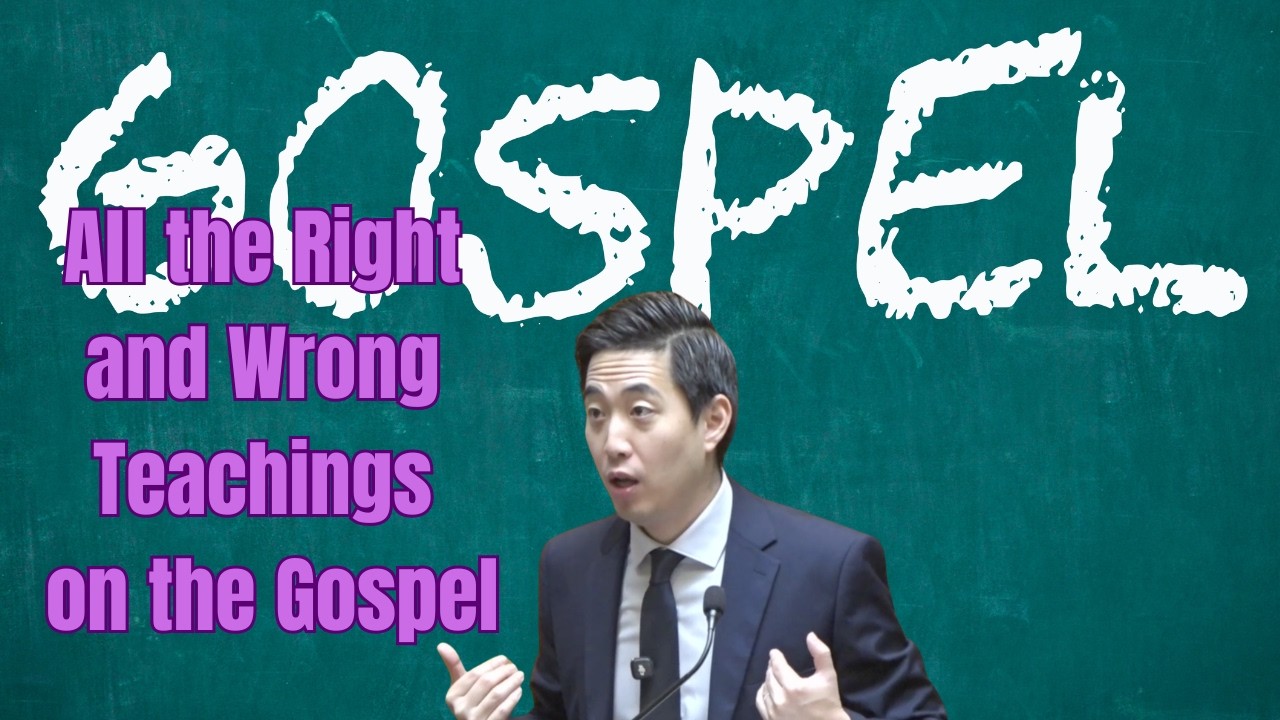
All the Right and Wrong Teachings on the Gospel (Part 3) | Dr. Gene Kim

Dr. Gene Kim explores right and wrong gospel teachings, emphasizing distinct gospels and biblical evidence against harmonizing contradictory verses.

Key Takeaways

  • There is more than one gospel in the Bible, each with distinct messages and audiences.
  • Salvation is by faith in Jesus Christ’s death and resurrection, not by endurance or baptism.
  • Beware of attempts to harmonize contradictory scriptures into one gospel message.
  • Paul’s gospel should be understood clearly to refute false gospel teachings.
  • Biblical evidence should be prioritized over scholarly opinions or interpretations.

What the video covers

  • The gospel means 'good news' and there are multiple distinct gospels in the Bible, not just one.
  • Misapplication of the gospel leads to wrong teachings, such as requiring endurance or baptism for salvation.
  • Scholars often try to harmonize contradictory verses, which can result in false gospel interpretations.
  • Paul’s gospel centers on the death, burial, and resurrection of Jesus Christ as the sole basis for salvation.
  • Endurance and baptism are not requirements for salvation according to Paul’s gospel.
  • Understanding the difference between belief and endurance is crucial to avoid false teachings.
  • The gospel of the kingdom and Paul’s gospel contradict each other and must be recognized as separate.
  • The speaker encourages listeners to rely on clear biblical evidence rather than scholarly interpretations.
  • There are different gospels for different groups, including the gospel of armed warfare related to Israel.
  • The video warns against mixing political or nationalistic ideas with gospel doctrine.

Answers

Questions about this video

What does Dr. Gene Kim say about the number of gospels in the Bible?

He explains that the Bible contains multiple distinct gospels, not just one, each conveying different 'good news' to different groups.

Why does the speaker warn against harmonizing contradictory Bible verses?

Because harmonizing contradictory verses often leads to false gospel teachings that mix incompatible doctrines, confusing the true message of salvation.

What is the core of Paul’s gospel according to this video?

Paul’s gospel centers on salvation through belief in the death, burial, and resurrection of Jesus Christ, excluding requirements like endurance or baptism.

Full Transcript — Download SRT & Markdown

00:01
Speaker A
Now, Father, fill within me the power of your Holy Spirit and the cleansing of your blood. How can I teach your word without you? Thank you so much for using me to teach your word to these precious people in this wicked area. Uh, Lord God,
00:14
Speaker A
where would we be today had it not been for the book? Had it not been for a Bible-believing church existing in this area? Had it not been for you? So, heavenly Father, we are grateful to be here today to feed on
00:28
Speaker A
your word. So, we're just going to enjoy ourselves a good time. Will you bless and honor it in Jesus' name? Amen.
00:36
Speaker A
Okay. I'm continuing on the series on all the right and wrong teachings on the gospel.
00:44
Speaker A
As you know, the gospel simply means good news. When you hear that phrase, good news, then that obviously means when you read your Bible, there's going to be tons of different good news. Not one.
01:01
Speaker A
There's going to be, again, tons of different good news. That's what gospel means. People, when they see gospel, they assume only one.
01:12
Speaker A
And when they make that mistake, then they apply a wrong gospel to a wrong group of people. They apply the gospel wrongly to Christians, teaching them that they'll have to, for example, endure to the end to get saved,
01:29
Speaker A
get water baptized for salvation. But, you're going as we've discovered from the Bible verses, that is not true. Our gospel is simply the death, burial, and resurrection of Jesus Christ.
01:45
Speaker A
Now, let's freshly review why we have to believe in different gospels. Let me review again.
01:54
Speaker A
And people should keep these in mind, that way they don't have problems with the scholars. The scholars are going to always try to harmonize. Remember, that's their tactic is to harmonize contradictory verses.
02:10
Speaker A
So, there's a verse that says the gospel is the death, burial, and resurrection of Jesus, and another verse that says endure to the end to be saved.
02:19
Speaker A
They're going to try to harmonize these two contradictory verses together and mesh it and tell you that's the gospel. So, remember I'm telling you, I'm hammering it over and over again, so easy.
02:33
Speaker A
So easy that you're going to assume that it's easy and I don't have to write it down. No, but then when you do that, you're going to lose the battle. If you debate against someone who's going to bring up different uh gospels to you and
02:47
Speaker A
try to harmonize them as one wrong gospel for salvation. So, you have to keep these easy points in your mind.
02:55
Speaker A
And if you keep that and drill that, have it stuck inside your brain, then when you hear Mr. Smarty Pants so-and-so saying blah blah blah blah blah, using terminologies you're not familiar with, using scholarly lingo, trying to harmonize complex verses into one
03:15
Speaker A
finalized interpretation that basically means a wrong gospel for salvation, if you keep these easy points stuck in your brain, it will filter out all that jargon and that lingo, and it will translate for you, well, what Mr. PhD Smarty Pants is basically
03:34
Speaker A
saying is what pastor told me a long time ago. He's harmonizing the verse. See, it's that simple. Okay? Now, I'm giving you fiery golden nuggets.
03:48
Speaker A
You might think it's too easy. You already know this. Please don't make that mistake, okay? You have to make it so easy that when you go through something complex, that easiness will stay stuck in you, and it'll help you go
04:03
Speaker A
through the complex thing, okay? So, please remember. I'm going to draw it in red because people tend to get more offended and pay attention when it's red, okay?
04:16
Speaker A
Easy, okay? And if you feel like a dummy after this, good, okay? That's how easy I want to make it that you should be ashamed of yourself if you don't make this that easy to you, all right? I'm
04:28
Speaker A
some teacher, all right? I know. I know. So, if you want to go to a feel-me-good church, then go over there, all right?
04:35
Speaker A
Now, number one, scholars harmonize verses, okay? Never forget that. So, when they try to interpret a verse and you have no idea what they're talking about, basically, if you keep this in your head, wait a minute, aren't they harmonizing here?
05:00
Speaker A
Aren't they harmonizing here? That sounds like they're trying to make it They're trying to combine contradictory verses together for one interpretation.
05:10
Speaker A
See that? So, just pay attention. So, basically, what they're doing is this. What they're doing is basically saying 1 + 2, and these are two contradictory numbers, right? And they're trying to say that 1 + 2 basically equals 1.
05:28
Speaker A
That's what they're doing, okay? So, make sure that you pay attention, envision that through their scholarly lingo. Then, it should be easy to demolish.
05:39
Speaker A
We've established and we've reviewed some of the verses covering just one gospel so far about the gospel of the kingdom versus Paul's gospel. You remember that?
05:54
Speaker A
So, we know Paul's gospel, you have the verses to support it, right? Clear verses what it is.
06:01
Speaker A
I've shown you how it plainly contradicts the verses about the gospel of the kingdom, correct? So, all you have to do is very simply know Paul's gospel.
06:21
Speaker A
If you know it real good, then find out how it contradicts the verses. That's it.
06:35
Speaker A
How it contradicts the verses that those scholars are using. So, then a scholar will try to point out to you that Matthew chapter 24, he that endureth to the end, the same shall be saved, right? When he's trying to do
06:55
Speaker A
that, then you have to point out how the verse and you don't have to answer his arguments. All you have to do is just say, but the data, the actual evidence, all right? So, his statements are not evidence. His statements are his made-up
07:14
Speaker A
ideas, his own interpretation. If you go to his own interpretation, you already lose. You want to tell him to focus on the evidence, the data, not his ideas, okay?
07:25
Speaker A
Not his made-up ideas. So, say, but look at the verse that you're using. You're using. It says endure to the end for salvation. And if you know Paul's gospel, point out the verse in Paul's gospel where it says that enduring to the end
07:45
Speaker A
is not part of your salvation. You don't endure. It is believing in Jesus Christ.
07:55
Speaker A
Well, if you endure, you would believe, they would say. All right, you you see what they did?
08:00
Speaker A
Then you automatically assume that's Oh, that's a true statement. I got to somehow argue against that. No, just look at a dictionary. Endure is very different from believe.
08:13
Speaker A
Now, you notice right here, if you keep insisting that, you're going to win. Now, I've shown you plain verses, plain verses that contradict.
08:25
Speaker A
I pointed out to you, Paul's gospel said, "I do not baptize, but I preach the gospel." The gospel of the kingdom is not just enduring to the end. You get baptized for salvation.
08:40
Speaker A
Insist the contradiction. That's what the data said. Well, no, if you really believe, you will get baptized.
08:49
Speaker A
Oh, then how do I argue No, you you fell for that again. Stop. Make it easy, all right? You want to point out to him, no, the verse is not get baptized. Here it says to get baptized.
09:01
Speaker A
Just keep pointing that out over and over and over again. Insist on what it said, what the verse said, did not match with what he said.
09:12
Speaker A
If you do that, you will always win. Now that we understand about [clears throat] these uh points that we tried to establish, let's keep going by this line of reasoning where we examine the different gospels. Now, why are there
09:32
Speaker A
different gospels? Were we able to prove that? Absolutely. Gospels have to be different. Now, we need to prove this statement.
09:45
Speaker A
They assume one, but they have no proof of that. We can prove they are different. Number one is it's by definition, okay?
09:57
Speaker A
It says good news. So, you think there's only one good news in the Bible?
10:03
Speaker A
Come on, man. But uh look up the word good tidings in the Bible. That's even better. You know what good tidings is? Same thing like gospel, good news.
10:15
Speaker A
I guarantee you this, you look up good tidings all over the Bible, there's tons of different good tidings, and they all don't mean the same thing.
10:27
Speaker A
Amen. Very simple. I don't understand why people have to conglomerate everything, mesh harmonize it, and make it a complicated mess, okay? So, definition.
10:37
Speaker A
I drilled that in you. Number two
10:49
Speaker A
It is totally new. Then what was Jesus preaching? A false gospel? Unless Paul's the false gospel.
11:00
Speaker A
Or they're two different gospels that are legit. So, I already established that with you.
11:07
Speaker A
Paul's gospel is unique. Now, let's uh keep looking through these verses where we can establish the contradictions.
11:17
Speaker A
So, why are they different gospel? Because they contradict each other. Contradiction is so powerful.
11:25
Speaker A
That's part of biblical hermeneutics is to compare and contrast, compare and contrast. There's a famous line that dispensationalist like to use.
11:36
Speaker A
Things that are different are not the same. Keep the contradiction in mind when you look at the data and that will be your strongest point to point out that they have to be different gospels, not the same gospel.
11:50
Speaker A
Okay, let's cover a different gospel number two. So, we covered gospel one, gospel of the kingdom. Now, gospel number two is the gospel of armed warfare. All right, gospel of armed warfare. Let's go to the book of Hebrews
12:05
Speaker A
chapter 3. Hebrews chapter 3. Hebrews 3 and Hebrews 4. Hebrews 3 and Hebrews 4.
12:30
Speaker A
Dispensationalism, remember what that means is that we believe in rightly dividing verses to the right group of people and the right time period. It's probably the most important doctrine or one of the most important doctrines in the Bible.
12:48
Speaker A
So dispensationalists teach that there are four gospels. And four gospels, they are as follows.
12:57
Speaker A
One is uh we already learned Paul's gospel. Well, that was easy. Number two, we talked about the gospel of the kingdom.
13:14
Speaker A
And then three, we're now covering the gospel of armed warfare. What that means is that the Jews have to arm themselves in battle, put their faith in Jehovah their God as they try to defend and build their promised land and establish the
13:40
Speaker A
Messianic kingdom. Now, if you read throughout the Old Testament, that's what they were doing.
13:46
Speaker A
They were kingdom builders. They were conquering pagan nations around them. They were defending their homeland.
13:54
Speaker A
You'll notice that the nation of Israel today, they're trying to do that. But, you can obviously see that the politics is just very corrupted in the Israeli government today. So, no, those who are accusing dispensationalists of kissing the Jews rear end. No, that's not true.
14:12
Speaker A
We know that Jews, just like any other nation, not just Jews, any other nation has corruption in their politics. But, the reason why we believe that the nation of Israel is God's people and God will restore it is because
14:30
Speaker A
we're going to look at the data, his verses say so. It's that simple. God's people have sinned. God's people have messed up. Sometimes they live more wickedly than other lost sinners, but that don't mean that God will not judge them. He will judge them
14:45
Speaker A
severely and that doesn't mean God is power powerless to not restore them. Uh he's going to restore them.
14:54
Speaker A
So, we're going to look at the biblical data that the nation of Israel, as they head toward more toward the end times, they're going to have to cast off their own sins. So, we're not condoning their sins when they build up their armed
15:07
Speaker A
warfare okay? They have to first cast away their sins so that when they build up their self-defense, the Lord's going to restore them and God's going to bless their armed warfare against the pagan nations.
15:24
Speaker A
So, this is sometime in the future. This is not now. We're not saying that it's occurring right now. This is sometime in the future that it will happen.
15:35
Speaker A
Because in the future, the Bible prophesies that all the nations around the world will unite together.
15:43
Speaker A
So, that sounds like United Nations, right? So, all the nations around the world will unite together and go against the nation of Israel because they will follow Satan's commander, the Antichrist. So, they're going to have a one-world government. When that happens,
15:59
Speaker A
God's going to judge the United Nations, crush them, and be on the side of the nation of Israel and defend his people.
16:07
Speaker A
This is the reason why Bible-believing Christians today do not go with the United Nations program. Do you understand? Sir. We're afraid to support their cause when it does something that weakens the Israeli government. Why?
16:22
Speaker A
Because we want to condone the sins of the Israeli government? No, because it's not just the Israeli government that has its problem, United Nations, too.
16:31
Speaker A
And if the Bible shows a future who's going to win, we don't want to side with United Nations on their endeavors.
16:40
Speaker A
See that? So, why would you lean more toward the side of the nation of Israel, pastor?
16:46
Speaker A
Because they're so wicked and corrupt. Well, the reason why is because in the future, they're going to be the winners in their military might and power, and God's going to side with them. And when God does so, he's going to make sure he
16:58
Speaker A
straightens them out at that time. Okay? So, that's the reason why. A lot of people don't know that, right?
17:07
Speaker A
So, that's why if people don't know this teaching, you notice right here I've already given you a chock-full of information.
17:15
Speaker A
This could have been known if they known this teaching about the different gospels. Whoever taught you that in church, you thought that the gospel is just simply Easter Bunny. Jesus got himself out of the grave. We're done.
17:29
Speaker A
That ain't the gospel, man. The gospel is a chock-full of information that could have helped you in this complex, confusing political decisions and policies that politicians are pushing.
17:42
Speaker A
And you don't know which side to vote for, which politician's word that you'll take forth to support. Our answer is very simple. We take none of them. We just take what the Bible says on what the right decision should be. Is
17:57
Speaker A
basically don't support decisions that will weaken or that will weaken or attack the nation that God set up, the nation of Israel. It's that simple.
18:08
Speaker A
Don't mess with that. Hands off on that one. Hands off on that one. Be careful when you support the policies of the United Nations, especially when it goes against the nation of Israel. Be careful of that. See, that would have been very
18:24
Speaker A
helpful for you. That would have been very helpful for you. Also, you don't have to worry about making a political decision or a vote that you have to. You know why? Cuz that gospel is not yours.
18:39
Speaker A
Your gospel is the death, burial, and resurrection of Jesus Christ. Not the Israeli government or United Nations policies.
18:48
Speaker A
That's a different gospel at a different time period. See, if you only knew this doctrine. All right. Now, let's give up supporting verses one by one to support this chock-full of information. You ready? Now, let's first go to Hebrews 4
19:06
Speaker A
verse two. Verse two. For unto us was the gospel preached as well as unto them, but the word preached did not profit them, not being mixed with them with faith in them that heard it.
19:20
Speaker A
For we which have believed do enter into rest, as he said, as I have sworn in my wrath, if they shall enter into my rest, although the works were finished from the foundation of the world. You will notice right here
19:35
Speaker A
uh that the Bible talks about his people entering into rest. And that you've got to believe in that one.
19:46
Speaker A
In verse two, it seems like people are going to assume that gospel was preached to us, and we've got to believe in it.
19:55
Speaker A
So, that's a false assumption, okay? When you read verses, you cannot let your bias blind you from the proper and the right exegesis.
20:08
Speaker A
Okay, what do I mean by that gibber jabber blabber? Okay? So, I'm just talking like this because that way the scholars can see that we know what we're talking about here.
20:19
Speaker A
Basically, you'll know the right meaning of the verse, what the verse is actually saying, the right interpretation, if you were to set aside your bias, okay? So, we got to withhold our bias here.
20:33
Speaker A
How do you know that this us at verse two is really us and not uh and not to somebody else? Well, you just have to think about the author is referring to himself as us, right?
20:47
Speaker A
Now, when he says us and he's writing about himself, and he's writing to this group of people, all you have to do is look at the title of the book.
20:56
Speaker A
It's the Hebrews. Then you know that the group of people the interpretation totally changes everything.
21:06
Speaker A
Thank you, Lord. Now I can teach. Okay. So, you you notice right here then when he's saying let us, I mean, look at the title of the book. Don't look at me like a tree full of owls, okay, and believe
21:17
Speaker A
what your pastor's saying. You got to look at yourself, okay? You have to take It is It is your job to take data and you inspect the data yourself and you critically examine, okay? You can't just believe what some
21:33
Speaker A
bozo says. If you're going to believe in some scientific hypothesis from a person, it's better if you do the testing yourself. If you do the examination yourself, all right? So, do us all a favor, all right? Use the
21:46
Speaker A
powers of observation, all right? That's part of a scientific approach. Look at the title of the book.
21:56
Speaker A
And you don't need a scientific microscope to see that. Hebrews And the author says, "Let us what?
22:07
Speaker A
Hebrews." The That gospel was preached unto us. Did you see that there? Did you see that there? It is something direct and specific. Unto us Hebrews was the gospel preached.
22:19
Speaker A
That don't sound like Paul's gospel, right? That don't sound like Paul's gospel where it was universal and that whosoever believeth on him should not perish, but have everlasting life.
22:33
Speaker A
See, this is something that sounds very exclusive. Unto us was the gospel preached where we have to believe. It says, "Unto us was the gospel preached as well as unto who?" Them. Well, then who is the them he's
22:46
Speaker A
referring to? You got to go by context. Let's rewind, okay? Verse 19 of chapter 3. Rewind.
22:56
Speaker A
So, we see that they could not enter in because of unbelief. So, this group of people had a problem with believing, and that's why they couldn't enter in.
23:06
Speaker A
Now, remember the author says, "Let's enter into God's rest, right?" That's the point here.
23:12
Speaker A
Well, what kind of rest are they entering in? Keep going backwards, 18. To whom swear he that they should not enter into his rest, but to them that believed not? Who are they?
23:25
Speaker A
Verse 17, backwards. But with whom was he grieved? Ah, now we know. 40 years. Was it not with them that had sinned, whose carcasses fell in the wilderness?
23:36
Speaker A
It's those Jews who wandered in the wilderness for 40 years. They were trying to enter into their promised land, their nation of Israel. They could not enter into that promised land because of their unbelief.
23:54
Speaker A
And Paul, the author, says, "That gospel that was preached to them is preached unto us." So, the author says that about the Jews.
24:05
Speaker A
So, they're thinking about entering into their promised land, their nation, the rights of their homeland.
24:13
Speaker A
That's why don't be I hate saying this, all right, but I'll just say it as it is.
24:19
Speaker A
Don't be stupid and follow Tucker Carlson, all right, and Candy Girl, okay? Just Just don't be stupid and follow them.
24:28
Speaker A
People who follow them really don't read their Bibles. You be scared by the words that they say.
24:36
Speaker A
Are their statements true about Israeli policies having problems, Jewish politicians sitting over here, and what they did to the poor Palestinians, and it was abusive stuff like that, or overboard and stuff like that?
24:48
Speaker A
Any nation you look up that is under sin yes. Duh, all right? Duh. So, we get scared, we panic, we go, "Oh, I can't I can't support the nation of Israel. You got to be careful, all right?" The verse says
25:03
Speaker A
right here that God's going to do this with his nation, the Jews, and they've got to do it for their gospel.
25:10
Speaker A
But it's not for this time period. The time period is future tribulation when you go to Hebrews chapter 1. Chapter 1. All right, now keep your hand here. We'll come back here. Go to chapter 1.
25:25
Speaker A
Verse 2, the author is saying this gospel is preached to us. So, he's talking about the audience themselves, what they're undergoing currently in the time period of verse 2, hath in these last days spoken unto us by a son. Who is the us
25:47
Speaker A
that is hearing these words? In what time period? He insists this audience is directed toward the last days. See that?
25:56
Speaker A
So, it's the future end times tribulation. So, as we get closer to the end times and future, keep your eyes peeled. The scriptures prophesied that the Jews have to defend their homeland, and all the nations will turn against them.
26:12
Speaker A
Keep your eyes peeled. That proves that book is true. How can you be an atheist after that?
26:18
Speaker A
Because there's no other group of people. Think about that. He didn't He didn't say Palestinians as the title over here. He didn't say the Chinese over here as the title.
26:30
Speaker A
He talked about the nation of Israel, the Jews. During that time period, nearly every tribe and culture kingdom went extinct.
26:39
Speaker A
What are the odds? All right. Now, let's keep going through chapter 3. Chapter 3. Keep going backwards. We know this is the Jews during the 40 years of wandering the wilderness because of verse 16, [applause] 16.
26:56
Speaker A
For some, when they had heard, did provoke, howbeit not all that came out of Egypt by Moses.
27:03
Speaker A
Let's keep going backwards. Let's go at verse nine, verse nine. When your fathers tempted me, proved me, and saw my works 40 years.
27:18
Speaker A
So, the the forefathers here, they tempted God. They had a hard time believing. They said, "What if They were trying to test out God, prove him." Now, what was it that those Jews did that tempted the Lord? That ticked them
27:34
Speaker A
off, that made them doubt him. They had unbelief issues. They did not believe. What was it?
27:42
Speaker A
What was it that God says, "Okay, I'm done with you. You're going to wander in the wilderness for 40 years." Can any of you guess?
27:49
Speaker A
Go to the biblical data. Scripture with scripture. Go to the book of Numbers, chapter 14. Numbers 14.
28:01
Speaker A
Okay, we've discovered now things about the gospel of armed warfare. The gospel of armed warfare is as follows.
28:17
Speaker A
So, let's put this in a separate box. So, we know where we're at. The gospel of armed warfare, we were able to establish right here, that has to do with unbelief, right? And then people automatically assume this unbelief is I did not trust in the
28:39
Speaker A
death, burial, resurrection of Jesus Christ. Didn't say that at all, man. This unbelief had to do with not entering the promised land, right?
28:56
Speaker A
And the promised land is what? The nation of Israel. Now, we didn't talk about armed warfare yet.
29:10
Speaker A
Why Why do you keep saying armed warfare, armed warfare, defending their homeland? We haven't established that yet, pastor. So, we have to go back to what was it they had a problem with believing?
29:21
Speaker A
What was it that caused them not to enter the promised land? So, those two parts are are pieces of the data that are absolutely essential and they're true, okay? And all scholars should be able to agree with that, okay?
29:36
Speaker A
But, we got to find out what they are now. So, go to Numbers 14.
29:41
Speaker A
Look at verse two, verse two. This is what the children of Israel did. And all the children of Israel murmured against Moses and against Aaron, and the whole congregation said unto them, "Would God that we had died in the land
29:55
Speaker A
of Egypt, or would God we had died in this wilderness? And wherefore hath the Lord brought us unto this land, this land, see that?
30:03
Speaker A
This land. They had a problem with entering the promised land here. To fall by the sword, that our wives and our children should be a prey.
30:13
Speaker A
Were it not better for us to return into Egypt? Now, notice right here they tempted God, right? They doubted his power.
30:22
Speaker A
And they were afraid that the enemies' warfare, their defense, would wipe them out. See that? They did not believe that their defense and their warfare was strong enough against them.
30:35
Speaker A
Right? So, this all relates to military might and warfare. Let's keep reading. Then we can find out that at verse uh nine, verse nine, this is what Moses and Joshua Caleb tried to beg the children of Israel at verse nine.
30:55
Speaker A
Only rebel not ye against the Lord, neither fear ye the people of the land, for they are bread for us. They're what?
31:04
Speaker A
Defense is departed from them, and the Lord is with us. Fear them not. This all has to do with defense. Defense, defense, self-defense, armed warfare.
31:15
Speaker A
But the children of Israel uh bait stoned them with stones. Verse 11, verse 11.
31:22
Speaker A
Now notice the wording here matches with Hebrews 3, what God said about the Jews.
31:28
Speaker A
Verse 11, and the Lord said unto Moses, "How long will this people provoke me?" Didn't that match with the book of Hebrews 3?
31:36
Speaker A
Where they provoked the Lord to anger, made him wrath. You remember that? Exact same thing.
31:44
Speaker A
And how long it be ere they what? Believe me. That's their unbelief. Didn't that match with Hebrews chapter 3?
31:54
Speaker A
So God got so upset with them, and that's the reason why he pointed out in verse 16, verse 16.
32:04
Speaker A
Uh no, let's skip that part. You'll notice right here that he made them wander in the wilderness, verse 22, 22.
32:12
Speaker A
Because all those men which have seen my glory and my miracles which I did in Egypt and the wilderness and have tempted me now these 10 times.
32:21
Speaker A
See that? They tempted God. That match with Hebrews 3 again, right? So there is absolutely no doubt we've established that Numbers 14 has to it has to be the companion passage. It has to interpret for us Hebrews 3.
32:40
Speaker A
Correct? Yes. Thank you. Someone's paying attention. Okay. It interprets Hebrews chapter 3 for us.
32:52
Speaker A
We've established that. We've proven that. We've looked at the data. It gave the exact words that match up. What else do you think the author was talking about? There's no other place that you can point out.
33:08
Speaker A
You will see that he keeps reading he keeps explaining here at verse uh Let's see, 29. Your carcasses shall fall in this wilderness. And all that were numbered of you according to your whole number from 20 years old and upward,
33:25
Speaker A
which have murmured against me. Uh verse 33. And your children shall wander in the wilderness 40 years and bear your whoredoms until your carcass be wasted in the wilderness.
33:41
Speaker A
So, you can see right here how the Lord was very upset with the Jews that they didn't believe in his word to conquer the promised land.
33:53
Speaker A
Uh if you read actually uh verse 40 through 44, it's very apparent what the Jews were doing. All right, we don't have time to read it. But, read verse 40 through 44. You know what those Jews were doing? They knew.
34:07
Speaker A
They knew they had a trouble believing that God would arm them arm them with warfare to conquer their nations. So, they tried to do that. They said, "God promised us, so we're going to go out and fight against the nations." They
34:22
Speaker A
knew what that gospel was if today's PhD theologians don't. These Jews knew exactly what that gospel was. So, they armed themselves to the teeth, but Moses told them it's too late. You sinned and you missed your chance believing.
34:39
Speaker A
All right? So, 40 through 44 shows the Hebrews response. They knew what the gospel was.
34:47
Speaker A
The Hebrews at the book of Hebrews, they would know. They would know what that gospel was, except today's PhD theologians.
34:57
Speaker A
Okay? So, 40 through 44 shows how the Hebrew audience knew exactly what that gospel was, okay?
35:06
Speaker A
So, we were able to also establish the Jews exactly knew. Hebrew knew what the gospel was.
35:21
Speaker A
Knew the gospel is armed warfare. So, even the Jewish audience knows. So, they ought to know better than us Gentile audience members. They ought to know better than messed up PhD theologians who are not Jews themselves during this timeline.
35:49
Speaker A
But during this exact timeline, those Jews exactly knew what it was. Now, let's go to the book of Zechariah 14.
35:58
Speaker A
Book of Zechariah. Notice that in the end times that the Jews have to arm themselves against the nations who attack them. So, this will happen in the future.
36:11
Speaker A
Let's look at the book of Zechariah. And we'll look at chapter 12, excuse me, chapter 12.
36:17
Speaker A
Notice that they are arming themselves to the teeth and they are fighting against the pagan nations.
36:25
Speaker A
Zechariah chapter 12 and verse two. Verse two. Behold, I will make Jerusalem a cup of trembling uh unto all the people round about when they shall be in the siege both against Judah and against Jerusalem. So, sometime in the future, there's going to
36:46
Speaker A
be people around the world who's going to lay siege against Israel. And in that day will I make Jerusalem a burdensome stone for all people. So, notice right here it says all, right? So, it is it insists that all people around the world
37:01
Speaker A
they're not going to like the nation of Israel. Already we're seeing that. Already we're seeing that.
37:08
Speaker A
Let's keep reading. All that burden themselves with it shall be cut in pieces, though all the people of the earth be gathered together against it.
37:14
Speaker A
Now, did you read that? Did you read that? Did you read that? All right.
37:21
Speaker A
Who wants to side with idiots then? Who wants to gather themselves together on a podcast or in some movement that will go against the nation of Israel?
37:34
Speaker A
Who wants to do that? Who'd be the fool to do that? I know that's really mean of me to say, but if you read that book like you're supposed to, you'd realize that you are a fool for doing so.
37:47
Speaker A
Let's read verse four. In that day, saith the Lord, I will smite every horse with astonishment and his rider with madness. Yeah, no kidding. That's why we live in a mad world because of that. And I will open mine eyes upon the house of
38:00
Speaker A
Judah and will smite every horse of the people with blindness. And the governors of Judah shall say in their heart, Now look at this. The inhabitants of Jerusalem shall be my strength in the Lord of hosts their God. Now, do you see
38:14
Speaker A
this nationalist mindset here? This nationalist mindset? So, Netanyahu may have his problems and all the Israeli politicians, but what they're but what's going on is is that the mindset that they have about their nationalism is going to pave the way in
38:33
Speaker A
the future where the Jews, because they're so used to doing that for many years, they're going to need that resilience when they fight against the United Nations.
38:43
Speaker A
You might say, "Well, I I can't condone that what they're doing with that mindset." Oh, don't worry. With their sin problem, the Lord's going to fix them on that one. Did you read your Bible?
38:52
Speaker A
Did you read history? Do you study history? You don't think God knows how to give his people a spanking?
39:00
Speaker A
Now, anyways, let's keep reading. Verse six, "In that day will I make the governors of Judah like a hearth of fire among the wood and like a torch of fire in a sheaf. And they shall devour all the people round
39:12
Speaker A
about on the right hand and on the left. And Jerusalem shall be inhabited again in her own place, even in Jerusalem." And the Lord also shall save the tents of Judah first. Now, did you see that there?
39:24
Speaker A
The Jews have to encourage themselves. And what does gospel mean? Good news. It's intended to encourage. They have to put good news in their minds. They have to encourage themselves. God is on our side and we're going to beat them. Now,
39:41
Speaker A
obviously right now is not the case with their corruption, right? But in the future, God will do that.
39:48
Speaker A
Look at verse eight. In that day shall the Lord what? Defend the inhabitants of Jerusalem. So, you notice right here that their defense defense defense self-defense national defense is very important to God as part of their salvation here. Their
40:08
Speaker A
salvation. I would be very careful to attack that when it has to do with their salvation.
40:14
Speaker A
Okay? You'll notice right here in verse nine, what does God what what do you think God thinks? You think he thinks like Tucker Carlson at verse 9? And it shall come to pass in that day that I will seek to
40:26
Speaker A
destroy all the nations that come against Jerusalem. Well, I don't agree. I don't agree. The Jews, you know, with their sin problem.
40:35
Speaker A
Did they read verse 10? Verse 10? And I will pour upon the house of David and upon the inhabitants of Jerusalem the spirit of grace and of supplications and they shall look upon me whom they have pierced. Oh,
40:48
Speaker A
yeah, God knows that the Jews that they're sinners, that they crucified the Messiah. That ain't an anti-Semitic remark. That is true, all right? God holds them to that.
40:59
Speaker A
But notice right here, and they shall mourn for him as one mourneth for his only son and shall be in bitterness for him as one that is in bitterness for his firstborn.
41:08
Speaker A
See that? Mourning. Either in repentance or in judgment. In that day shall there be a great mourning in Jerusalem as the mourning of Hadadrimmon in the valley of Megiddo, and the land shall mourn. Look at this, all the Jews. It's a national revival
41:26
Speaker A
right here. Every family apart, the family of the house of David apart and their wives apart, the family of the house of Nathan apart and their wives apart, the family of the house of He names to the tribe.
41:37
Speaker A
And then he says at verse 14, all the families that remain, every family apart and their wives apart.
41:44
Speaker A
Yeah, he meant every one of them. Well, isn't the Antichrist going to be a Jew? Aren't there Jewish elites? What about the Rothschilds and etc.? Verse 14 says all the families that remain.
41:57
Speaker A
See that? It's those that survive, that remain, that remain as the people of God. Why do you think Hebrews 3 says you got to remain as the people of God? But if you don't believe, then what? You're cast off into his wrath.
42:12
Speaker A
That's good. Okay, a lot of people just don't read the Bible nowadays. Now, go to chapter 14. Chapter 14. The gospel of armed warfare is a real genuine thing.
42:23
Speaker A
Now, look at chapter 14. Verse 1, "Behold the day of the Lord cometh." See that? It's a future time period. It's not now.
42:33
Speaker A
"And thy spoil shall be divided in the midst of thee. For I will gather all nations." See that? Did he say all nations?
42:40
Speaker A
All nations? So, when you hear United Nations, you know what you should do? Run.
42:46
Speaker A
Don't support them. Run, man. You saw what they did at 2020. They really helped all the world, didn't they? Just run, man. Even people with who don't know the Bible, that's just common sense what United Nations is capable of.
43:00
Speaker A
Verse 2, "For I will gather all nations against Jerusalem to battle." "And the city shall be taken, and the houses rifled, and the women ravished, and half of the city shall go forth into captivity." "And the residue of the
43:11
Speaker A
people shall not be cut off from the city." See that? What God's going to do?
43:18
Speaker A
He's going to make sure the Jews undergo the judgment even from the wrong nations. But, you know what God's going to do? He's going to revert it at verse 3.
43:25
Speaker A
"Then shall the Lord go forth, and fight against those nations, as when he fought in the day of battle." You see armed warfare, armed warfare, armed warfare.
43:39
Speaker A
Uh let's see right here. Look at verse 13, 13. "And it shall come to pass in that day." See, sometime in the future that a great tumult from the Lord shall be among them.
43:51
Speaker A
"And they shall lay hold every one on the hand of his neighbor, and his hand shall rise up against the hand of his neighbor. And Judah also shall fight at Jerusalem." "And the wealth of all the heathen round
44:03
Speaker A
about shall be gathered together, gold and silver and apparel in great abundance. You'll notice right here that the nation of Israel has to fight against the pagan nations.
44:15
Speaker A
And it says at verse 13, the Lord shall be among them, right? And he's going to get a hold of them to do that.
44:23
Speaker A
Well, I have a question for you. If that's good news for them, okay? If that's good tidings for them at a time period where all the nations are attacking them, uh what's the Lord going to say? From the Bible, from the Bible, what verse is
44:40
Speaker A
he going to use? What verse is he going to use? What gospel, what good news is he going to use?
44:49
Speaker A
Is it Paul's gospel? Or don't you think it's common sense? It's the gospel found at Hebrews chapter 2 through 3.
44:58
Speaker A
See that? So, notice right here that we're able to prove convincingly that there is a different gospel called gospel of armed warfare. This is way different from the Christian gospel. This ain't Christian gospel. You think this is Christian
45:11
Speaker A
gospel? Go to the book of Romans. Uh second uh excuse me, Timothy. Go to the book uh Second Timothy chapter 3, chapter 3.
45:25
Speaker A
Notice that for Christians, we don't have a nation that we fight for and die for.
45:32
Speaker A
Now look, don't get me wrong. Uh I salute all the people who died for our country, and we wouldn't enjoy the freedom had it not been for them. And interestingly, independent Baptist churches were responsible for all the things that went on in
45:48
Speaker A
America, all right? Despite of the corruptions, I'm familiar with the history of the Masons and all that kind of stuff, too, you know? But at the same time, uh you can't ignore that independent Baptist that they played a
45:59
Speaker A
part in fighting for our freedom. Whenever uh a lot of people don't understand this, whenever God's hand is on something, you'll see the devil's hand close to that as well. All right?
46:09
Speaker A
You can't attribute everything to the devil and everything as evil. But anyway, that's besides the point. So, this is all to say that I understand that. All right? So, when it comes to American patriotism and stuff like that,
46:22
Speaker A
I thank God for it, but that patriotism thing, you got to be careful is that you can't trust your country that much.
46:31
Speaker A
You might say, "Why can't I trust it that much?" Because there's sinners and the Bible never said the Bible never said that he establishes the gospel and the doctrine based on American nationalism.
46:44
Speaker A
There's only one nation he did that, that's the nation of Israel. Yeah, that's right. Today for Christians, it's the church. It's a church. It's a Christian church. And that's not a political secular nation. Second Timothy chapter 3 and then verse 12. Notice right here,
47:02
Speaker A
"Yea, and all that will live godly in Christ Jesus shall what?" "Suffer persecution." Now, in our end, we undergo through persecution.
47:14
Speaker A
We don't fight it out. We don't do national defense over here. We undergo persecution.
47:22
Speaker A
Here's another one. The The Bible never says about uh national armed warfare or defense for Christians. It's very different. Look at the book of uh 2 Corinthians chapter 10.
47:34
Speaker A
2 Corinthians chapter 10. This is very contradictory. Very contradictory. 2 Corinthians chapter 10. Verse 4.
47:47
Speaker A
God says that the Jews that their warfare has to be by sword and shield.
47:52
Speaker A
But in our case, we cannot live that way. 2 2 chapter 10 verse 3. verse 3.
47:59
Speaker A
For though we walk in the flesh, we what? Do not war do not war after the flesh.
48:06
Speaker A
No, we don't our warfare does not depend on military might national defense here. Verse 4, for the weapons of our warfare are not carnal, but mighty through God to the pulling down of strongholds, casting down imaginations every high
48:22
Speaker A
thing. You notice right here, it is spiritual warfare. It is not physical national warfare. So, this is very contradictory, very contradictory to the gospel of armed warfare that the Jews have to undergo. That's the reason why when you study church history,
48:42
Speaker A
Christian the Bible believers, their political decisions, get this now, their political decisions, the policies they endorsed, they're not in agreement.
48:54
Speaker A
They're all different. Some of them are Baptist forefathers, Anabaptist, they didn't believe in getting involved in anything that the government does or in armed warfare.
49:04
Speaker A
You know the guy who wrote Amazing Grace? He thought it was a sin to get involved in any political decision.
49:11
Speaker A
Then you get C.I. Scofield with his dispensationalism book, right? And that changed the political landscape where That's why the nation of Israel got That was hugely responsible perhaps for their re-gathering at the at the early or mid-1900s.
49:30
Speaker A
See, that's all what's going on here. The independent Baptist, they got involved in the American Revolutionary War cuz they wanted to fight for their freedom.
49:40
Speaker A
But then there were other Christians who didn't get involved in that. What What's the answer to this? The answer is very simple. There is no doctrinal point to this because our doctrine is based on Paul's gospel here. So, political decisions are
49:55
Speaker A
all going to be different. And you're going to see that in Bible-believing churches. Some of them will get into voting, and then other people will not so much into voting, etc.
50:04
Speaker A
Why? Because our gospel's not based on that. But a Jew at the end times, you better get involved in that because that's your salvation.
50:13
Speaker A
If you don't vote for your nation during the tribulation, where God plays a part on that one, you burn in hell for all eternity.
50:24
Speaker A
That's God's policy, all right? That don't sound Christian at all, so don't make it, okay?
50:32
Speaker A
So, people are going to use Hebrews chapter 3. I better close it right here, all right? Let's go to Hebrews 3 again, all right? Let me show you the verses in Hebrews that they're going to consistently jam into your head that you
50:44
Speaker A
have to do works for salvation, works for salvation. So, when we look at Hebrews 4, for example, Hebrews chapter 4, they're going to use this verses in verse 11, verse 11, "Let us labor therefore to enter into that rest, lest
51:04
Speaker A
any man fall after the same example of unbelief." See, this belief is combined with their works, their labor. You notice that?
51:13
Speaker A
So, that's why they'll teach that if you really have saving faith, then you should do works. No, it's to Hebrews.
51:20
Speaker A
They were not reading. This gospel that has to do with believing is there are works involved for salvation for their armed warfare.
51:29
Speaker A
This is all political endeavors here that has to do with the nation of Israel.
51:34
Speaker A
A lot of people, they just don't want to admit that, but let's look at verse 6, Hebrews 3:6. Isn't this interesting?
51:43
Speaker A
Remember that phrase, "Endure to to end for salvation"? Look at Hebrews 3:6. That's a Jewish thing.
51:50
Speaker A
Hebrews 3:6. But Christ as a son over his own house, whose house are we? If we hold fast the confidence and the rejoicing of the hope firm unto the what?
52:02
Speaker A
End. See that again? Endure to the end. Don't don't make that Christians. We've already established this is for Jews.
52:10
Speaker A
Because obviously in the tribulation, we've seen they have to endure to the end for their salvation.
52:16
Speaker A
How many of you heard of Hebrews 6? Here's their favorite one. Hebrews 6. Verse 4. Verse 4. For it is impossible for those who are once enlightened and have tasted of the heavenly gift and were made partakers of the Holy Ghost.
52:32
Speaker A
Verse 6, if they shall fall away, to renew them again unto repentance. Wouldn't that scare anybody?
52:40
Speaker A
Look at chapter 10. Chapter 10. Oh, here's one of their favorite verses. Hebrews 10. Verse 26. 26.
52:52
Speaker A
For if we sin willfully after that we have received the knowledge of the truth, there remaineth no more sacrifice for sins but a certain fearful looking for of judgment and fiery indignation which shall devour the adversaries.
53:07
Speaker A
That sound Christian to you? No wonder that they use these verses to jam on your Christian salvation. Has nothing to do with that. That has to do with armed warfare. That has to do with the nation of Israel when they undergo
53:20
Speaker A
the tribulation. So much work's involved for their salvation where they have to cling on to their faith. That has nothing to do with the Christian gospel.
53:28
Speaker A
You can see total contradictions all over. This is not our gospel. Heavenly Father, I pray I pray that today's teaching has been a blessing to the hearers, establish what the right and wrong areas of the gospel are. And I
53:41
Speaker A
pray that you'll bless the fellowship and the main service and everything we do. May it honor and glorify you in Jesus' name. Amen. Amen. Well, praise the Lord.
Topics:gospelPaul's gospelfalse teachingssalvationBible studygood newsendurancebaptismgospel of the kingdomarmed warfare gospel

Get More with the SozAI App

Transcribe recordings, audio files, and YouTube videos — with AI summaries, speaker detection, and unlimited transcriptions.

Or transcribe another YouTube video here →