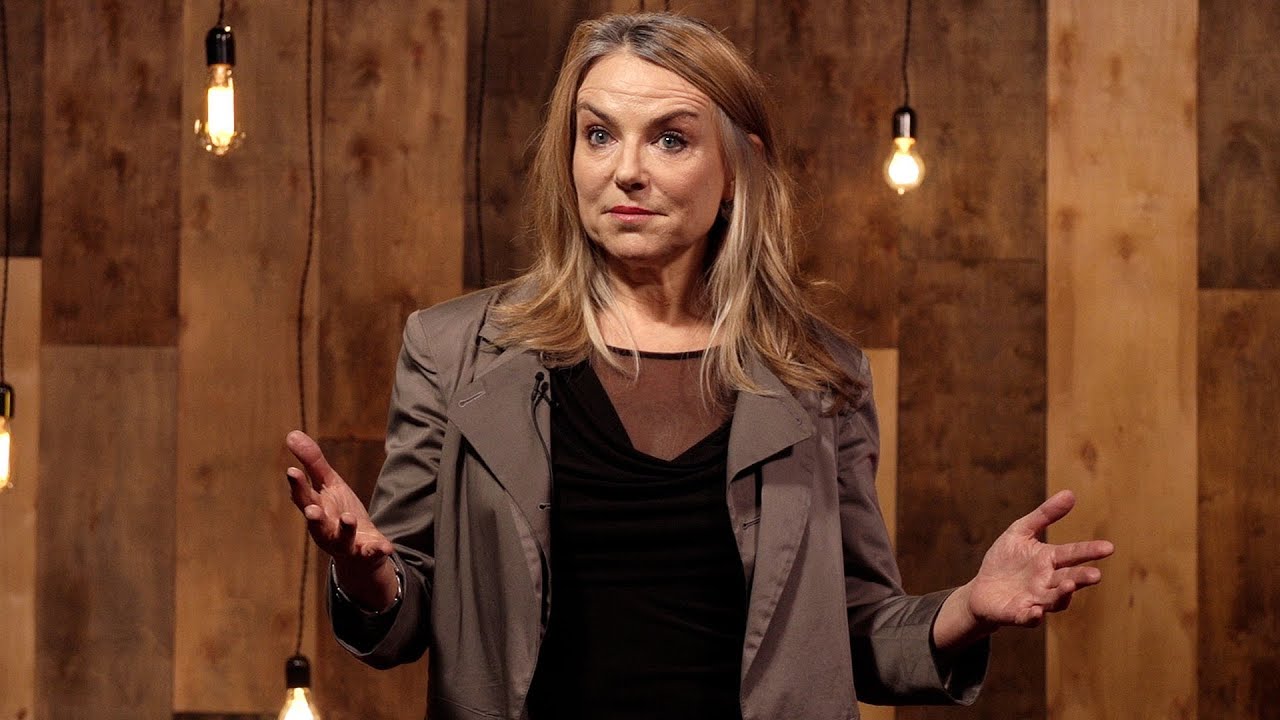
Julie and John Gottman explain that fighting isn't harmful to relationships; how couples fight predicts their future. Their 3,000-couple lab study identified fighting styles and the Four Horsemen.
Key Takeaways
- Fighting is normal and can be healthy; the manner of conflict matters more than its frequency.
- Maintain at least five positive interactions for every negative one during disagreements.
- Avoid the Four Horsemen: criticism, contempt, defensiveness, and stonewalling.
- When flooded, take a break, self-soothe, and return to the conversation at a set time.
What the video covers
- Most people assume fighting harms romantic relationships, but the Gottmans' research shows fighting can be healthy when handled well.
- Their Love Lab studied about 3,000 couples over decades, recording conversations alongside physiological data like heart rate and stress hormones.
- How a couple fights in the first three minutes predicts with about 96% accuracy how the conversation and the relationship will go years later.
- Some fighting actually increases connection and can even improve sex life; the key is how couples fight, not whether they do.
- Three fighting styles were identified: conflict avoiders, conflict validators (calm, then problem-solve), and conflict volatiles (intense and passionate).
- Successful couples, regardless of style, maintain a positive-to-negative ratio of at least five to one during conflict.
- The Four Horsemen of the Apocalypse are criticism, contempt, defensiveness, and stonewalling, which predict relationship breakdown.
- Flooding occurs when physiological arousal makes a person unable to think or listen; the remedy is to take a timed break and self-soothe without rehashing the fight.
- Harsh startup, usually involving criticism or contempt, signals distress, while softened startup helps couples discuss issues productively.
- The talk sets up the explanation of softened startup as the key to fighting well.
Full Transcript — Download SRT & Markdown
Speaker A
Julie Gottman: So most of us think that fighting is bad for romantic relationships, right?
Speaker A
How many people do you know who say, "Hey, I had a great fight the other day."
Speaker A
"Oh, yeah. My partner and I fight all the time and we're super happy."
Speaker A
John Gottman: Fifty-two years ago, we put love under the microscope.
Speaker A
Julie and I are the founders of the Gottman Institute and the Love Lab, and we've made the study of relationships our life's work.
Speaker A
And our research tells us that fighting is good for relationships, not bad.
Speaker A
Julie: In our lab, we saw that almost all couples fight.
Speaker A
In fact, how they fight in the first three minutes predicts with 96 percent accuracy not only how the rest of the conversation will go, but how the rest of the relationship will go six years down the road.
Speaker A
My God, I know, it's terrifying, isn't it?
Speaker A
So it's not if we fight that determines relationship success, it's how we fight.
Speaker A
John: In fact, our research has revealed that some fighting actually increases connection, and even improves our sex life.
Speaker A
So how do we fight right?
Speaker A
Julie: Early on, John and his colleague Robert Levenson in their lab simply watched couples interacting.
Speaker A
Sounds simple, but nobody had ever done that before.
Speaker A
John: Over time, 3,000 couples came to the lab.
Speaker A
As they were being videotaped, they wore monitors that measured such things as respiration, heart rate, and stress hormones.
Speaker A
And then they had a conflict discussion and they talked about the events of their day.
Speaker A
Julie: Afterwards, they rated how they felt during each conversation before returning home.
Speaker A
They would return to the lab every year or two and repeat the same procedure, and some were followed for as long as 20 years.
Speaker A
John: Videotapes were synchronized to the physiological data, and then in a split-screen video, second by second, we measured the couples' words, emotions, facial expressions, and physiology year after year.
Speaker A
Julie: Over time, we saw that some couples separated or divorced.
Speaker A
Some remained together unhappily, while others stayed together happily.
Speaker A
What made the difference between the couples who were successful and the couples who were unsuccessful, or as we call them, the masters and the disasters?
Speaker A
(Laughter) The couples in our studies were all ages, sexual orientations, and ethnically diverse.
Speaker A
After a while, just by watching a couple, we could predict what would happen with over 90 percent accuracy, what would happen in their relationship six years later.
Speaker A
Which meant we never got invited to dinner anymore.
Speaker A
(Laughter)
Speaker A
John: We found that there were three major styles of fighting.
Speaker A
Conflict avoiders who just agree to disagree and would rather wash the dishes than argue a point.
Speaker A
I'm a conflict avoider.
Speaker A
Julie: (Scoffs) He is. Believe me.
Speaker A
(Laughter)
Speaker A
Conflict validators would bring up an issue by expressing their feelings calmly and then jumping immediately into problem solving.
Speaker A
So think of your most patient kindergarten teacher.
Speaker A
Then there were the conflict volatiles.
Speaker A
They would express their feelings intensely and very passionately.
Speaker A
Notice I say, just fine, not bad.
Speaker A
And then they would leap into trying to prove that they were right, and their partners were wrong.
Speaker A
OK, so think of a very expressive basketball coach on the sidelines.
Speaker A
Or me. I'm a volatile.
Speaker A
John: And some partners had different styles of fighting from one another.
Speaker A
But the good news, we discovered that whether you have those three styles of fighting or you're mismatched, you can have a successful relationship as long as the ratio of positive to negative responses during the conflict discussion was at least five to one.
Speaker A
And examples of positive responses were head nods, affection, interest, shared humor, and words like "fair enough."
Speaker A
Julie: OK, so what about the negatives?
Speaker A
Were all the negatives equally negative?
Speaker A
No.
Speaker A
There were four big predictors of relationship demise that we called the Four Horsemen of the Apocalypse.
Speaker A
(Laughter)
Speaker A
Alright. The first one was criticism.
Speaker A
And criticism means blaming a problem on a personality flaw of your partner.
Speaker A
For example, if you walked into a messy kitchen and you wanted to be critical, you would say, "Oh my God, this place is such a mess. Why are you such a slob?"
Speaker A
How do you answer that?
Speaker A
John: The second horseman is contempt.
Speaker A
Contempt is like criticism, but it has a dash of superiority.
Speaker A
So with contempt, you include scorn, disgust, sarcasm, and nasty insults like, "You're such a loser. Why did I ever marry you?"
Speaker A
Julie: The third horseman is defensiveness.
Speaker A
That's the most common one.
Speaker A
And that's when we act like an innocent victim. "I did too pay the bills!"
Speaker A
Or we counterattack, "Oh, yeah? Well, you didn't pay the bills on time."
Speaker A
John: The fourth horseman is stonewalling.
Speaker A
When we shut down completely and we don't even give the speaker any signs that we're listening.
Speaker A
In stonewalling, we really wall ourselves off from our partner.
Speaker A
Hmm.
Speaker A
Julie: Hmm.
Speaker A
The fourth is a bad one, but here's another one that may be related to it.
Speaker A
It's called flooding, or fight, flight, or freeze.
Speaker A
So a partner in the middle of a conversation may be sitting there and looking totally calm on the outside, but inside, their heart rates are rocketing up above 100 beats a minute.
Speaker A
John: They feel like they're being attacked by a tiger.
Speaker A
Julie: (Growls)
Speaker A
John: But it's only our partner.
Speaker A
And when we're flooded, we can't think straight, we can't listen very well, and we certainly can't creatively problem-solve.
Speaker A
Julie: If you get flooded, here's what's crucial.
Speaker A
You stop immediately and call for a break, then say when you'll come back to continue the conversation.
Speaker A
That's really important.
Speaker A
And during the break, do not think about the fight.
Speaker A
Instead, simply self-soothe and then come back at the designated time.
Speaker A
When you're physiologically calm, you look like a totally different person, and it's much easier to be reasonable and to listen well.
Speaker A
Now, what do couples do who fight right versus fight wrong?
Speaker A
The couples who are really struggling and distressed may bring up an issue in that first three minutes of the conversation with something we call harsh startup, which almost always includes criticism or contempt.
Speaker A
The couples who fight right will bring up the issue with what we call softened startup.
Speaker A
John: So what's softened startup?
Topics:relationshipsconflict resolutionGottmanmarriageFour Horsemenfloodingcommunicationcouples therapyTED