Skip to content
Get App

How to Scalp with VWAP (DVA)

Learn how to use Developing Value Area (DVA) built on daily VWAP with standard deviation bands for intraday scalping, including TradingView setup and trading the value area.

Key Takeaways

  • Developing value area built from daily VWAP with 1 and 2 standard deviation bands mirrors volume profile value area concepts
  • Value area boundaries act as support or resistance depending on whether price is inside value, and their roles flip after a break
  • DVA is less reliable early in the session and should be combined with order flow and higher timeframe context
  • Standard deviation band multipliers (1 for value area, 2 for rotational extremes) are the key settings for implementation

What the video covers

  • Introduces Developing Value Area (DVA), using daily-anchored VWAP as the mean with standard deviation bands as value area high/low and rotational extremes
  • Explains that VWAP is the dynamic fair-price mean where buyers and sellers interact, while better execution is often found around the standard deviation bands
  • Walks through TradingView setup: anchor period set to daily, bands calculation set to standard deviation, band multiplier 1 for value area and 2 for rotational extremes
  • Covers styling preferences, such as filling only the first standard deviation band to highlight the value area
  • Notes DVA is less usable in the first 10-15 minutes of the session until the bracket expands and gives levels to work with
  • Explains trading principles: value area low acts as support and value area high as resistance when price is inside value, and these levels flip roles when broken
  • Demonstrates a session example showing opening, rotation to standard deviation two, acceptance into value, and retests where former support becomes resistance
  • Describes the continuous rotational cycle: move through value, acceptance back inside VWAP, retests, and targets at VWAP
  • Mentions the presenter's membership VWAP suite and Discord resources for order flow and deeper DVA coverage, as promotion

Answers

Questions about this video

What is the basis of the developing value area in this video?

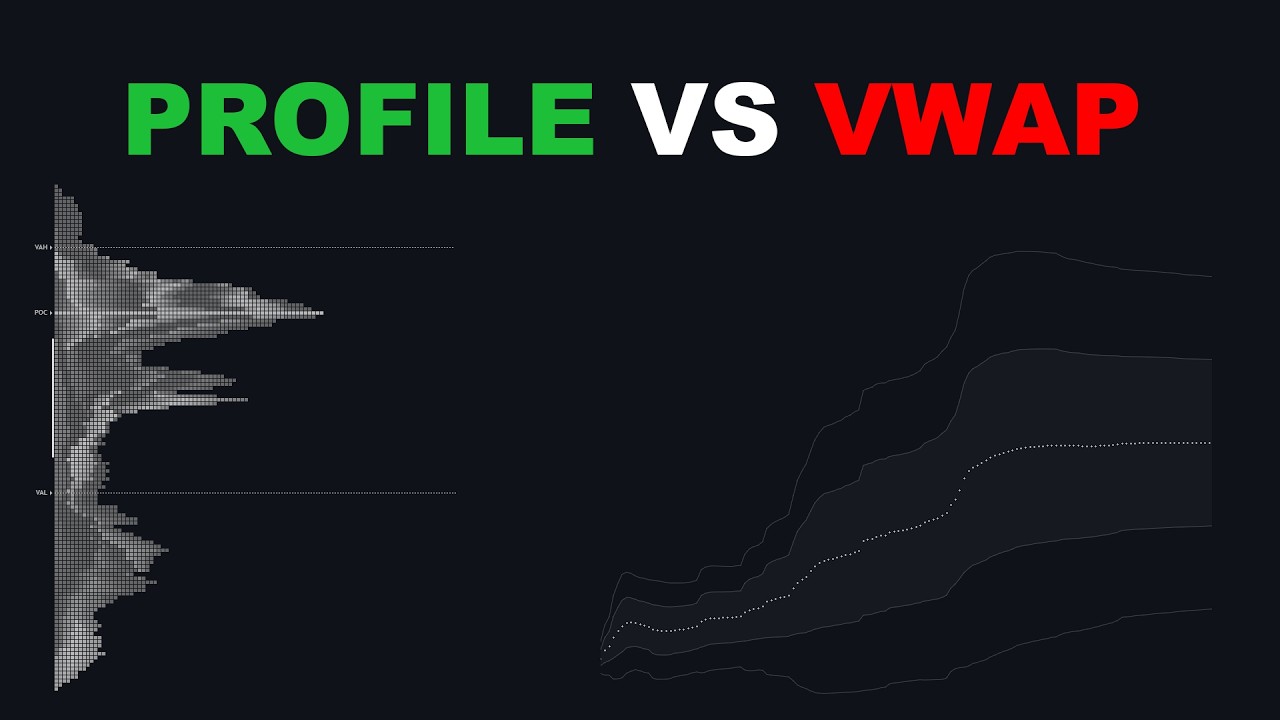
The presenter uses a daily-anchored VWAP as the mean, with the one standard deviation bands serving as value area high and low and the two standard deviation bands as rotational extremes. He compares this directly to volume profile, where the point of control is the mean.

How should traders treat value area high and low when price is inside value?

Value area low acts as support and value area high acts as resistance while price is inside value. Once broken, these levels can flip roles, so former support can become resistance on a retest.

When is the developing value area least useful during the session?

It is less usable in the first 10-15 minutes of the day because the bracket has not yet expanded to provide levels to work with. It becomes more useful once the range develops.

Full Transcript — Download SRT & Markdown

00:00
Speaker A
All right, what's up guys? Uh in this video I'm going to go over how to use kind of developing value, the basics of it. I'm going to go over some settings and show you kind of through the past
00:08
Speaker A
few days how you actually implement this in your trading. So, for starters, the actually the you know, the tool itself, we have our own VWAP suite, so um So, basically it's all VWAPs built into one tool, different standard deviations.
00:21
Speaker A
Uh it's got previous period levels, labels for all of the VWAPs, all rolling VWAPs built in. Lots of different styling and stuff like that, so uh that's available as well under our membership or as a standalone product if
00:33
Speaker A
you want to use that. Uh but ultimately to to get these levels you can use any VWAP you like, so ultimately if you go up to indicators here and search VWAP, uh TradingView has their own technical, I mean there's lots
00:43
Speaker A
of other indicators as well. Um so, once you have that loaded up, I'll kind of go over my settings here.
00:47
Speaker A
It's going to look a little bit different once you load it up being that this is something that I've had made, it it's different than the standard one, but ultimately the levels and uh everything is the same.
00:57
Speaker A
Uh so, in regards to developing value or DDA, or scalping VWAP, whatever you want to call it, um you're going to be using daily, right? Um weekly up to yearly, those are longer-term VWAPs, so that's a bit different. Um and then ultimately your
01:10
Speaker A
standard deviation bands are how you actually get these levels. So, VWAP itself is the mean. That's that's where, you know, throughout the session, um you know, that that that's where buyers and sellers are happy to interact, let's just say that. You know, it's kind of
01:24
Speaker A
it's fair price really, you know, so. Um VWAP itself isn't always a trade location, there's times when it is, but ultimately um better execution is found around the standard deviations of VWAP, so um [clears throat] essentially VWAP is a is a dynamic value
01:38
Speaker A
area. So, this is the mean, this is value area high, this is value area low.
01:43
Speaker A
This is standard deviation -2 and this is standard deviation +2. So, to actually get this set up for yourself, what you'd want to do is for me, I like I said, my settings are different, but ultimately you'll have uh if you're
01:55
Speaker A
using the standard VWAP, for example, uh you would have actually know what I'll just pull it up here. Let's do it this way.
02:03
Speaker A
Let's go like this and we'll set it up. Right, so ultimately it probably won't even look like this.
02:15
Speaker A
Oh, I guess it does. Okay, so ultimately this is the regular view up on TradingView. You can get started with this.
02:21
Speaker A
Anchor period, this is you know what it actually is. So if it's a weekly view up, daily so and so forth.
02:27
Speaker A
Session is daily in this case. That's just what TradingView calls it. So this is what you want in regards to DVA.
02:33
Speaker A
Right? And then styling is obviously whatever you want to put it as. So this is where you actually get your kind of dynamic developing value area to trade throughout the day.
02:44
Speaker A
[clears throat] So bands calculation you want standard deviation because like I said, this the idea of a value area whether profile or view up is one standard deviation either side of the mean. And the mean is the point of control in regards to a profile
02:59
Speaker A
or it's the it's it's the view up in regards or sorry, it's view up in regards to uh view up itself.
03:05
Speaker A
Right? So bands multiplier one. So this is one standard deviation from the mean. So if you made this 1.5, it'll be 1.5 standard deviations. Right?
03:15
Speaker A
So one is what you want to get your actual value area. Right? So that's what that is and if you want the standard deviation two, which is kind of your you know, you'd call it your rotational extreme, let's say. It's
03:27
Speaker A
standard deviation two. Right? When you get into coloring here, I personally this is all preference, but to me you can make it whatever you want.
03:36
Speaker A
So for example, I would make the view up let's say like light gray or white.
03:41
Speaker A
Upper band, you can make this whatever you want. I would probably keep it a similar color, make it gray.
03:47
Speaker A
Something like that. Upper band two, I would usually do about the same. And then my personal preference for the way I like to do this, I don't fill this one, but I do fill the first standard deviation being that
03:59
Speaker A
that is your you know your value area. So, I would uncheck that or sorry, unclick that.
04:03
Speaker A
Um and that's how I'd go about doing that. And you can make this whatever you want. If you want to make this a bit more gray, and then ultimately that's kind of what you have there.
04:11
Speaker A
Now, when it comes to actually trading it, um there there's a few different ways you can do it. So, in regards to kind of a scalping context, you can trade just off of this. I mean, you can get an idea uh of the kind of
04:23
Speaker A
moves you're going to be getting off of this ultimately, right? So, um if you're scalping intraday, this could certainly be one of your you know your main tools you're looking to trade, right? As well as order flow and things like that, uh
04:33
Speaker A
which we cover all of this extremely in-depth in our Discord, uh as well as as using DVA specifically in all VWAPs, but um anyway, I'll touch on the basics of how you can use this. So, uh it's going to be less usable at the
04:45
Speaker A
beginning of the day. So, for example, like I said, these are daily VWAPs. Um it's going to be less usable until you know the bracket actually starts to expand, right? And you get something to work with. So, I mean, throughout here
04:55
Speaker A
this this is pretty much useless for the the first 10 15 minutes. Conversely down here, right? This just goes um completely imbalanced up at this point.
05:04
Speaker A
So, um when it comes to actually trading it, you want kind of that period to actually start and you have a bracket to work with. Um but ultimately when you're scalping, like I said, this can form trades for
05:15
Speaker A
you. Uh if you're trading medium to higher time frame, this can kind of aid in your execution. It is one way you can look at it. Uh but ultimately kind of the uh the characteristics uh of of trading
05:28
Speaker A
this, right? So, um if you look at you know, a profile for example, right? If if you're familiar with with volume profile or TPO, I mean, like I said, it's exactly the same thing. So, I got actually we have another video on the
05:38
Speaker A
YouTube as well going over VWAP, but this is value area high, this is value area low, and this is your mean, which is VWAP, right? So, this is the same thing.
05:45
Speaker A
POC is the mean, so this is this. This is this and this is this. Right?
05:52
Speaker A
So, value area low is support when you're inside a value. Value area high is resistance when you're inside a value.
05:59
Speaker A
This is where you know, buyers and sellers are happy to interact being that you know, this is fair price.
06:04
Speaker A
Um and conversely you you know, you can flip that level. So, value area high when you're inside a value is is resistance like I said, it can become support.
06:12
Speaker A
And and same thing with VAL, right? So, that's the way you're going to trade VWAP. Of course, a lot a lot more goes into it, but ultimately if you go take a look here, right? Um even just here, right? You know, we we
06:24
Speaker A
open. Right? Here's your open ultimately we whoops. Let's go back to that. [sighs] Ultimately the day opens here, right?
06:38
Speaker A
And here's value area high, so like I said, you know, not much to look at here, but even again, if you wanted to go super granular here and zoom in on this, right? We open, we rotate down to
06:46
Speaker A
standard deviation two. We accept into value, we trade up to the other side, and then you can see value area high is support until proven otherwise right?
06:55
Speaker A
Uh once we get up here, we kind of start to range. You can see that you know, the trend is no longer as strong as it was before. Ultimately get one more kind of aggressive move up. We see a move back
07:04
Speaker A
into value, so at that point what was support is now resistance, and you know, we see the move through value. Of course, it didn't quite get there, but there was you know, there's still a trade there ultimately.
07:14
Speaker A
Right? And then from there, you know, VWAP is is really just kind of rotational, so at that point this is resistance, this is support, this more often than not if you're inside a value is not somewhere you want to be trading.
07:24
Speaker A
Um becomes, you know, bullish against VWAP again, so value area high is now support. You get a move into standard deviation two, and then ultimately price, you know, breaks down and finds support at VWAP.
07:36
Speaker A
And then at that point it hasn't really found acceptance above, right? It's really just again building out kind of a broader range, so no strength has really been established. So, if anything, you would have wanted to see this hold, and
07:46
Speaker A
then you'd probably see the trend establish again, and VWAP would would start to trend up with you with price.
07:51
Speaker A
But, ultimately, it rotated back to VWAP, which capped price again. Which is one of the things that can stop the move, you know, through value to the other side. It is is a you know, a VWAP rejection or POC rejection.
08:02
Speaker A
Um and then at that point, right, that stops the move. You get back into this kind of rhythm state, and ultimately, this isn't strength here. As much as this is now support, right, there there's been no initiative. So,
08:12
Speaker A
disregarding VWAP here, right, there there is no follow-through, right? There's no continuous higher highs being made.
08:18
Speaker A
At that point, it's it's really just finding weakness, right? A range isn't, you know, a range isn't strength at the end of the day, right? So, [snorts] as much as it found support here, ultimately, it failed.
08:28
Speaker A
You got a retest of value area high, so support flipped to resistance, and you see the move through value, which ultimately holds as support again.
08:36
Speaker A
And it actually pops back up to VWAP once more. So, so that would have been a potential as well, albeit, I would say lower lower risk or lower probability.
08:44
Speaker A
Um and then sweeps the low, and then ultimately, it rotates back up to previous day VWAP at that point.
08:48
Speaker A
And then you can, you know, this this cycle is really quite continuous. So, right? Rotational move through value, bullish against value, accepts back inside VWAP.
08:59
Speaker A
Right? Accepts back inside. Support's now resistance, move through value. Right? Move through value. Fails to go bullish.
09:08
Speaker A
Moves back into value, and then you can see that you know, value area high is now support. We're now bullish against VWAP.
09:14
Speaker A
You can see kind of this messy retest back inside. First target's VWAP, right? Ultimately, there there's a there's a bounce there, but then trades back down the other side of value.
09:22
Speaker A
And then, you know, at that point, we're just rotational on the lower half here.
09:26
Speaker A
So, VAL is support, but ultimately, price is capping at VWAP, so it's rotational on the lower half of value.
09:31
Speaker A
Right? So, this is support until proven otherwise. This is resistance until proven otherwise. Right? So, I mean, that's pretty much it. Pretty much covered the basics of how this works. Albeit if you want to learn all of this and and our entire
09:43
Speaker A
system and extreme kind of comprehensive course, that is available through our Discord. Should you have any questions, don't hesitate to reach out and yeah guys, good luck with your trading and have a good one. Cheers.
Topics:VWAPdeveloping value areaDVAscalpingstandard deviation bandsTradingViewvolume profilevalue area highvalue area lowday trading

Get More with the SozAI App

Transcribe recordings, audio files, and YouTube videos — with AI summaries and speaker detection. 30 minutes free.

Or transcribe another YouTube video here →