Skip to content

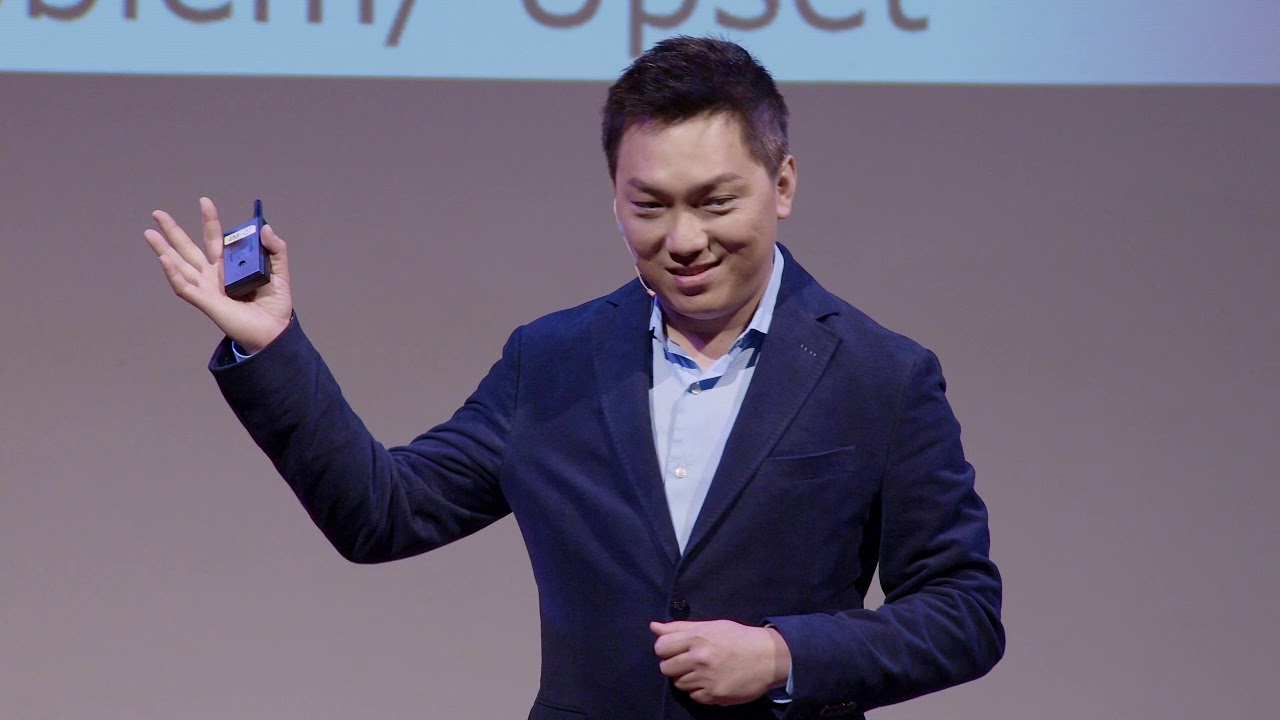
This is why we all should participate in our democracy | Caroline Hammoutene | TEDxTUWien

Caroline Hammoutene explains why active participation in democracy is essential to address crises and innovate political systems for a better future.

Ask about this video. Answers come from its transcript only — with the timestamp, so you can check them.

Generated from the transcript and can be wrong — check the timestamp.

Key Takeaways

  • Active citizen participation is crucial to revitalize democracy and address complex societal crises.
  • Hope can be relearned to overcome feelings of helplessness and empower societal change.
  • Innovative democratic processes like citizen assemblies foster inclusive decision-making and trust.
  • Systemic political and financial powers must act, but citizens have the power to drive change.
  • Democracy should be participatory, inclusive, and sustainable to ensure a better future for all.

What the video covers

  • The speaker shares a personal story highlighting the struggles of healthcare workers and uses it as a metaphor for broader societal crises.
  • Current democracies face crises with low public trust and ineffective governance.
  • Democracy needs innovation beyond voting, involving deeper citizen engagement and responsibility.
  • A three-step plan to innovate democracy includes relearning hope, learning from best practices, and active engagement.
  • Learned helplessness can be overcome by relearning hope, empowering people to believe their actions matter.
  • Citizen assemblies and participatory processes provide spaces for inclusive dialogue and political participation.
  • Despite challenges, these processes rebuild trust and offer hope for responsive governance.
  • Collective effort is required to innovate democracy, including finding or starting local groups for political participation.
  • System change is necessary, with political and financial powers playing key roles, but citizens must reclaim their power if progress is slow.
  • The ultimate goal is a democracy that works within planetary boundaries and includes marginalized voices for a life worth living.

Answers

Questions about this video

What is the main message of Caroline Hammoutene's TEDx talk?

The main message is that active citizen participation is essential to innovate democracy, rebuild trust, and address complex societal crises for a better future.

What does 'relearning hope' mean in the context of this talk?

'Relearning hope' refers to overcoming learned helplessness by realizing that individual and collective actions can influence society and create positive change.

How can citizens participate more effectively in democracy according to the speaker?

Citizens can participate by engaging in political decision-making processes such as citizen assemblies, town meetings, and participatory budgeting, and by joining or starting local groups focused on democratic innovation.

Full Transcript — Download SRT & Markdown

00:15
Speaker A
A few weeks ago, I was in Germany, and I had a really bad stomach ache.
00:21
Speaker A
So, I went to the hospital for a checkup, and everything was fine. But after the checkup, a nurse asked me what I was doing here, and I told her that I was studying in Germany.
00:32
Speaker A
When she asked me what I was studying, I said, "Economics, imagination, and designing the future." Normally, when I say this, people either just say, "Okay," or they ask a ton of questions.
00:47
Speaker A
But in this case, the nurse immediately said, "Great. So, please redesign our healthcare system so that we're not constantly overworked." I immediately had two thoughts.
01:00
Speaker A
My first thought was, "Well, it's not exactly what we're doing, but in a way, it is exactly what we're doing." We learn that our current economy is based, amongst other things, on complex imaginations about our future.
01:17
Speaker A
All of us constantly shape our future with our ideas and actions. And these ideas and actions strongly depend on the beliefs and information we have.
01:28
Speaker A
Therefore, we need to question our beliefs and be well informed in order to change broken systems.
01:37
Speaker A
The second thought I had was, "Wow. Healthcare workers are really not doing well." And the thing is, I felt it.
01:47
Speaker A
The whole hospital was just a dark, gray, depressing space filled with sick and overworked people.
01:55
Speaker A
This is not a great working environment, and it's definitely not a good environment to get better.
02:01
Speaker A
For me today, the healthcare crisis stands as an analogy for other crises as well. As you all know, we are deep within multiple, complex, and intertwining crises. Let's take climate change, poverty, or employment.
02:17
Speaker A
It so happens that designing the future and tackling crisis can be done with an over 2,000-year-old system that we like to call democracy.
02:27
Speaker A
But guess what? Our democracies are also deep within crisis. A recent study shows that only 34% of Austrians think that their government is working well enough.
02:42
Speaker A
Statistically, this means that more than half of you sitting in this room are not happy with the way our government works.
02:51
Speaker A
Looking to the UK, a similar study shows nearly the exact same numbers. And going further west to the US, even more alarming, only 20% trust their government. This means that four out of five people don't have trust in their
03:10
Speaker A
government. These are alarming facts. In a way, our democracies remind me of that hospital.
03:20
Speaker A
They are dark, gray, depressing systems with overworked and sick people. We urgently need to innovate our democracies.
03:30
Speaker A
When I talk about democracy, I mean a democracy where we, the people, are able to participate beyond simply the standards of voting and signing petitions.
03:42
Speaker A
I mean a democracy in which we can engage and can be responsible for the future of our society.
03:49
Speaker A
And I mean a democracy that works within our planetary boundaries. Okay, so how can we innovate democracy?
03:58
Speaker A
By initiating and taking part in political decision-making processes. And how can we get there? What do we need to do?
04:08
Speaker A
Well, that's a good question. Because I asked it. Um, and I brought a three-step plan.
04:16
Speaker A
We need to relearn hope and imagine a good future. We need to learn from best practices and get inspired.
04:27
Speaker A
And we need to engage and start innovating. So, let's start. What does relearning hope even mean?
04:38
Speaker A
Martin Seligman, an expert on positive psychology, coined the term called learned helplessness. It states that if people repeatedly experience a stressful situation, they tend to think that they have no control over it, when in fact, they do.
04:57
Speaker A
But he also found out that people can do something pretty amazing. We can relearn hope.
05:04
Speaker A
We can learn that what we do matters, and we can learn that the future can be better than the past.
05:10
Speaker A
I think that we've learned that we are not part of politics. I think that we as a society have learned that we cannot change anything big anyways.
05:23
Speaker A
But I also think that we—we've learned it all wrong. Because in fact, we do have control over how our society works.
05:33
Speaker A
We just need to relearn hope and take back the control we actually have. So, we can innovate our democracies and make the world a better place.
05:44
Speaker A
And for that, we need to get inspired and learn from best practices. We at the Future Council, or the Zukunft Rat as we say in Germany, create spaces where political participation can be trained.
06:00
Speaker A
We initiate bottom-up citizens' assemblies. Within a citizens' assembly, randomly selected people get together and discuss and solve political issues.
06:14
Speaker A
Issues such as unsustainable transportation. Equipped with scientific inputs, these people have a moderated dialogue, build bridges, and find solutions.
06:27
Speaker A
These solutions represent the needs and the values of people with different academic, economic, cultural, and political backgrounds.
06:37
Speaker A
Unfortunately, the results are not always taken up by politicians. And this is definitely still a problem that we need to work on.
06:45
Speaker A
Because in the end, taking the results of such processes into account makes the decisions of politicians more responsive to the needs and the wishes of our societies.
06:57
Speaker A
And this is what politics within a democracy should be doing anyways. But the processes alone give hope. It helps us to relearn hope.
07:07
Speaker A
And this also counts for other participatory processes, such as town meetings held in the US, where people of a town regularly get together to discuss local policies, or participatory budgeting, where citizens decide on how to allocate a public budget.
07:27
Speaker A
And this is, on a side note, a great way to avoid corruption. These processes also help us rebuild trust in the political system.
07:36
Speaker A
But we also need to innovate these processes. We need to reevaluate them, and we need to design new processes.
07:45
Speaker A
And this is something that we should all do together. So, if you want to engage, find a group in your area that is committed to innovating our democracies.
07:56
Speaker A
From my experience, they will welcome you with arms wide open and be helpful for any little help they get.
08:03
Speaker A
And if you can't find such a group, maybe you can start one. I'm sure that within no time, you'll find a handful of like-minded people that want to tackle the problems of our society with you.
08:16
Speaker A
And I wish I could tell you that it's easy. But unfortunately, it's not. It takes a lot of time, a lot of money, and a lot of energy to succeed.
08:27
Speaker A
And of course, a lot of hope. But if we all engage, maybe pretty soon, we are able to paint a colorful picture of our democracy.
08:40
Speaker A
Maybe our hospitals will be lovely places where healthcare professionals and patients feel welcome and appreciated.
08:50
Speaker A
Because after all, what we all have in common is that we want to live a good life.
08:57
Speaker A
We want to live a life worth living. But when I say all of us, I also mean those that are so easy to ignore.
09:07
Speaker A
I mean those that are far away, suffering from our consumer habits. And I also mean those that are sitting on our streets, having no homes.
09:16
Speaker A
We must pay all the more attention so that we don't forget to include those that are on the margins of our society.
09:24
Speaker A
And just so there is no misunderstanding, I pledge for system change. The main actors with the biggest levers are those with the political and financial powers.
09:36
Speaker A
But if their reactions are too slow, we are only left with taking back our power.
09:42
Speaker A
We are only left with living democracy the way it is meant in the truest sense of the word.
09:48
Speaker A
So, let's have hope. And let's work towards a better future. And let's demand what we need in order to participate. We need money.
09:58
Speaker A
We need time. We need infrastructure. We need to innovate our democracy now. Thank you.
Topics:democracycitizen participationpolitical engagementhopesystem changecitizen assembliestrust in governmentfuture designsocial innovationdemocratic crisis

Get More with the SozAI App

Transcribe recordings, audio files, and YouTube videos — with AI summaries, speaker detection, and unlimited transcriptions.

Or transcribe another YouTube video here →