Skip to content

How to actually grow a youtube channel in 2026

Learn a clear, practical roadmap to grow your YouTube channel in 2026 without wasting time on useless tips or expensive courses.

Key Takeaways

  • Focus on content that aligns with both your passion and audience interest.
  • Understanding why certain videos get views is more important than following generic tips.
  • Your USP and dream outcome messaging are critical to attracting and retaining viewers.
  • Outsource editing to save time and improve efficiency, especially when YouTube is a side project.
  • Consistency and patience are key; early low views do not mean failure.

What the video covers

  • Focus on the intersection of your interests and market demand to create videos that attract viewers.
  • Avoid watching too many tips videos or buying courses until you understand the fundamentals of what content gets views.
  • Define a unique selling point (USP) that differentiates your channel from competitors.
  • Create videos that showcase a dream outcome your audience desires rather than self-centered content initially.
  • Build content based on problems you have personally faced to establish credibility and trust.
  • Delegate time-consuming tasks like video editing by hiring beginner freelancers to save time and effort.
  • Use platforms like Osdire to find affordable freelance editors with transparent offers and pricing.
  • Analyze smaller channels in your niche to identify outlier video ideas that perform exceptionally well and replicate them.
  • Avoid copying content from million-subscriber channels as their success depends on their existing audience.
  • Keep publishing consistently even if early videos get low views; growth happens over time with persistence.

Answers

Questions about this video

Do I need to watch many YouTube tips videos to grow my channel?

No, watching too many tips videos can confuse you and waste time. Focus instead on understanding which videos get views and why.

How can I find topics that people want to watch?

Search your topic on YouTube and check the views of existing videos to gauge the total addressable market and audience interest.

Is it necessary to do all video editing myself?

No, especially if YouTube is a side project, you should consider hiring beginner freelance editors to save time and improve productivity.

Full Transcript — Download SRT & Markdown

00:00
Speaker A
If you’re a working professional and building your YouTube channel on the side, then in this video I’m going to share a clear roadmap with you so you can grow your channel a bit faster.
00:10
Speaker A
Because it took me 5 years on my first channel to reach 100 subscribers. But on this channel, I had uploaded only 20 videos and I hit 20,000 subscribers.
00:18
Speaker A
So whatever I learned in those 5 years, I’m going to share with you. I’m not saying this to flex, and I’m not trying to sell you a course.
00:26
Speaker A
I’m only saying it so you know the person talking has actually done it, not just given advice.
00:31
Speaker A
But let’s start with something very basic—please listen to this. To grow on YouTube, you absolutely do not need to watch tons of “tips” videos, and you don’t need to buy a bunch of courses either.
00:41
Speaker A
Because the more people you listen to, the more different advice you’ll hear—someone will say do this, someone will say do that—then you’ll get confused and you won’t take any action.
00:49
Speaker A
I’m telling you this because I wasted a lot of time on this in my initial journey, and I don’t want anyone else to waste the same time and then regret it later, thinking, “What useless stuff was I watching?” You don’t need all that—at
01:02
Speaker A
least not until your fundamentals are clear: which videos get views, which don’t, and if a video is getting more views, why it’s getting them. Once you understand that, repeating it becomes very easy. When you know, “Okay, views come like this,” then you just have to apply the same technique again and again.
01:17
Speaker A
And that’s what I’ll share with you in this video. So the basic point is: instead of focusing on a thousand YouTube tips videos, you only need to focus on two circles.
01:26
Speaker A
The first circle shows your interest. The second circle shows the market’s interest. You have to catch the intersection of these two circles—meaning, make videos on topics you’re interested in and that people also want to watch.
01:36
Speaker A
Now how do you find out whether people want to watch that topic or not?
01:40
Speaker A
It’s very simple: search that topic on YouTube, look at the results, and check their views.
01:45
Speaker A
Then you’ll get an idea of your total addressable market—how many people are interested in your topic.
01:49
Speaker A
If your topic is already decided, you’re already making videos on YouTube, and still you’re not growing—want to know the major problem?
01:55
Speaker A
Your USP isn’t defined. Your unique selling point isn’t defined. Like what’s my USP? I make very raw, informative videos that actually work.
02:02
Speaker A
Your USP could be storytelling. It could be humor. Or it could be the way you simplify and explain things.
02:07
Speaker A
Your USP is what makes you a bit different from your competitors—and better. But just defining a USP isn’t enough.
02:13
Speaker A
If in the beginning you only make self-related content—like “a day in my life”—that usually doesn’t work much, because in the beginning nobody knows you.
02:20
Speaker A
So why would anyone be interested in how your day is going? You’ll have to make videos that show a dream outcome.
02:26
Speaker A
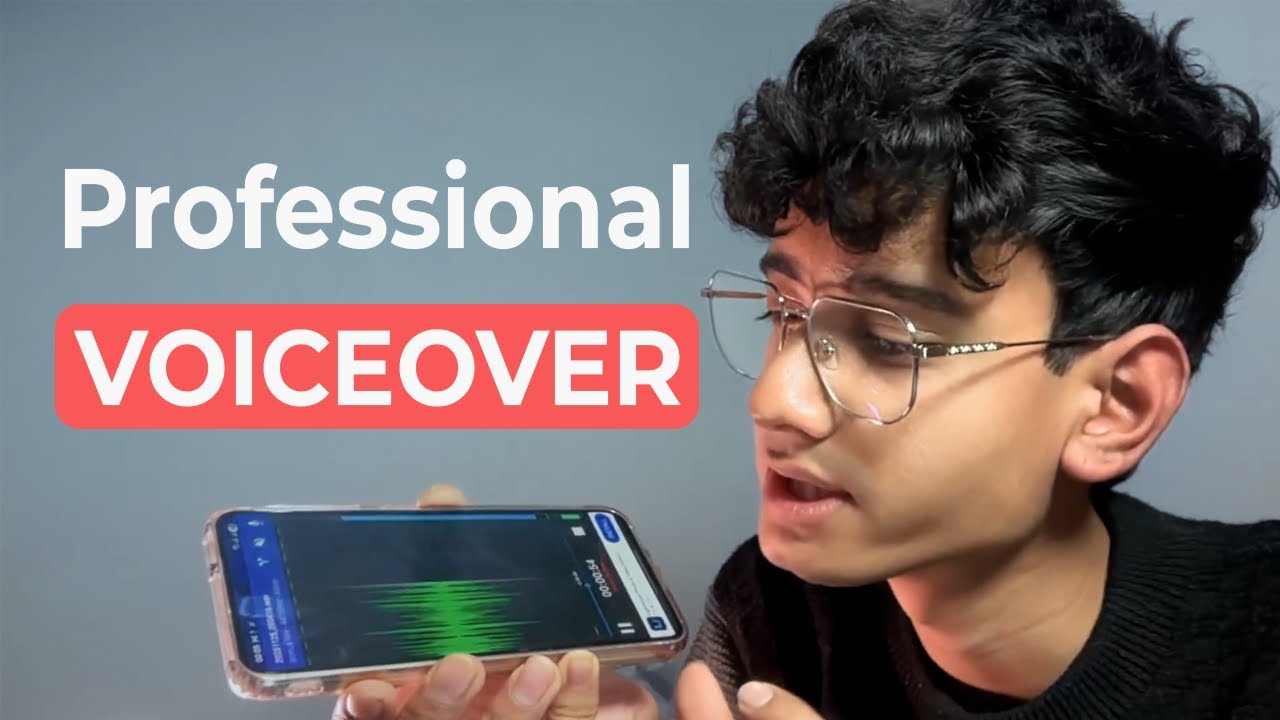
For example, in one video I showed the dream outcome that you’ll be able to create a professional voice-over.
02:31
Speaker A
In another video, I showed the dream outcome that your channel will get monetized in just 10 videos—or at least get monetized quickly.
02:38
Speaker A
So every video should have a dream outcome that the audience wants. You’ll need a bit of research for this—what do people actually want to watch?
02:45
Speaker A
You’ll have to figure that out first. But yes, there’s one more catch: people will watch your video and listen to you only when you’ve probably done that thing yourself.
02:53
Speaker A
Only then can they judge, “Is the person I’m listening to actually the right person, or is he just making videos?” And I learned this from the book *Rework*.
03:01
Speaker A
The author says: build solutions for problems you’ve faced yourself. So the YouTube guidance videos I make—I make them for my old self, my older version.
03:08
Speaker A
Because back then he didn’t get clear guidance. He kept watching useless YouTube tips like: which title should I use, which keyword should I use, which hashtag will get more views.
03:17
Speaker A
And after wasting time, he realized none of that helps. So instead of other beginners wasting that time—people like me—I try to tell them upfront that it won’t help.
03:25
Speaker A
Instead, focus on content—on the ideology of content—what content actually needs to be made. Second: when you’re making videos, there’s no benefit in doing everything yourself.
03:32
Speaker A
When I used to make videos in the beginning, it would take me two weeks to make just one video.
03:38
Speaker A
And because you’re a working professional—or you’re also doing something else alongside—YouTube is part-time for you, so you’ll have to delegate some work.
03:44
Speaker A
Like video editing takes a lot of time. So now I don’t edit myself—I prefer that someone else edits my videos.
03:50
Speaker A
In the same way, I’d suggest you also hire a beginner editor. I’m saying beginner because initially you’re not earning from YouTube, so there’s no point hiring a very experienced editor—he’ll charge a lot.
03:59
Speaker A
A beginner will at least do basic cuts and add text. You can tell them, “Do it like this, do it like that,” and they’ll do it.
04:07
Speaker A
Now if you’re thinking, “Where do I hire freelancers from, Saurabh?”—to hire freelancers, you can go to a freelancing platform like Osdire. On Osdire you’ll find really good freelancers.
04:15
Speaker A
Osdire is a freelancing platform where freelancers publish their offers, and buyers look at those offers and decide which freelancer they like, and based on that they give their work to a freelancer.
04:25
Speaker A
Then the freelancer does the work and submits it to the buyer. If the buyer likes it, they accept it, and then the payment goes to the freelancer.
04:33
Speaker A
So when you go to Osdire, you can scroll and see what kind of editor this is, check their work, see their pricing—what they’re offering and how much they’ll do it for.
04:42
Speaker A
Whatever suits you as per your budget, just hire a freelancer there. Hiring becomes very easy for you there.
04:47
Speaker A
Right now they have offers running for buyers, so on your first order you’ll get 10% off and you’ll also get 1% cashback.
04:53
Speaker A
Yes, this video is sponsored, but genuinely it’s a good platform—that’s why I’m sharing it.
04:57
Speaker A
I’ll put the platform link in the description; you can sign up from there. Then you won’t have to worry about editing.
05:04
Speaker A
If initially you’re doing it yourself, you can do it on CapCut, and side by side you can outsource some videos to an editor.
05:10
Speaker A
Let me tell you a shortcut for growth: whatever topic you’re making videos on, look at smaller channels in that topic.
05:16
Speaker A
See who else is making videos on that topic. Watch those small channels’ content. In their videos section, you’ll notice that some videos have performed insanely well compared to normal—meaning, that’s an outlier idea.
05:25
Speaker A
If you execute that in the same way it worked, the chances of it working will be higher than when you were randomly making videos on any topic.
05:33
Speaker A
You might be thinking, “Saurabh, why are you talking about copying?” I came here to do something original.
05:38
Speaker A
Let me explain. Even the really big channels do the exact same thing. Take Giggly as an example.
05:43
Speaker A
Giggly made a video on having multiple interests—on this channel, their usual numbers are lower, like their other videos get fewer views, but look at that one video: it has a ton of views.
05:52
Speaker A
So Giggly found an outlier idea and executed it. I’m just giving you one example.
05:56
Speaker A
Let me give you another from my niche: Ronit Batra made a video about a “lower middle-class setup,” and it got really good views.
06:02
Speaker A
I liked the video too—like, this is doing great. I watched it, I executed that idea in my own way, and my video also performed well.
06:09
Speaker A
Now it’s not 100% guaranteed that if you pick an outlier idea it’ll always work—but your chances go up, like I told you earlier.
06:15
Speaker A
But you can’t do this same thing with million-subscriber channels. If you say, “Saurabh, I’ll copy Ali Abdaal’s video”—bro, he’s at a million subscribers.
06:21
Speaker A
Whatever he makes will get views because he already has an audience. So you can’t look at a million-subscriber channel and conclude, “This is working great.” No—he has an audience. Don’t look at that.
06:30
Speaker A
Loo
06:34
Speaker A
I thought I’d share it—maybe it’ll help at least one person. And I’m saying “one person” because most people don’t do anything—they won’t even watch this video till the end.
06:42
Speaker A
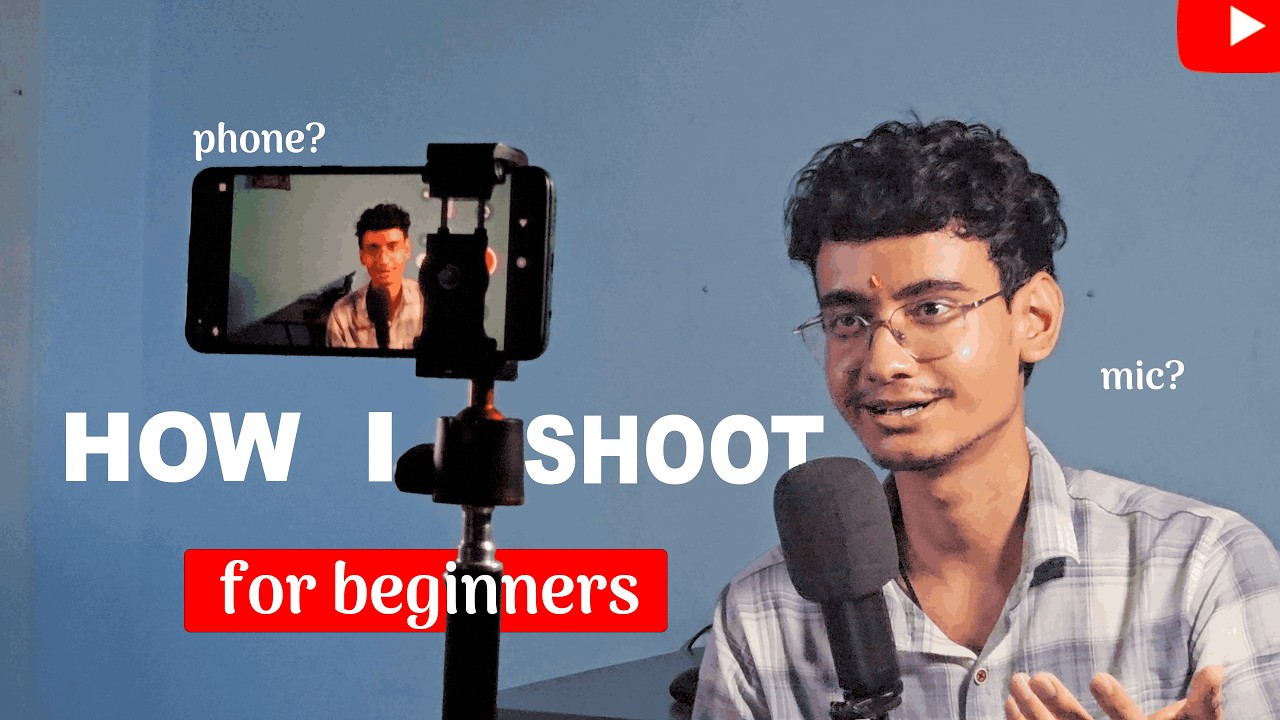
And even among the ones who do, very few will actually execute. But when you’re about to execute—when you’re about to make videos—don’t stop yourself thinking, “I don’t have a good setup, I don’t have a mic, I don’t have
06:52
Speaker A
lights, I don’t have a camera.” I’m also shooting on a phone. My lighting setup probably isn’t even worth 4–5k.
06:57
Speaker A
Yes—do invest in a mic. I recently bought this mic from Hollyland—let me show you.
07:01
Speaker A
It’s in this carrying pouch, and the rest of the stuff is here. This is the tiny mic—this small.
07:06
Speaker A
It clips on here, and the quality is really good. I’ve made a lot of shorts with it on my channel—go check them out.
07:12
Speaker A
This mic is around ₹4,000. It might feel a bit expensive, but I recommend investing in a mic because audio quality is important.
07:18
Speaker A
For video, if you add some light, your phone is enough. I’m recording on the selfie camera right now.
07:23
Speaker A
I don’t have an iPhone. And if you think this quality is good, then that’s all you need.
07:28
Speaker A
Beyond this, it becomes that perfection loop—“a little better, a little better.” I was stuck in that too when I was thinking of starting.
07:34
Speaker A
I was like, “Let’s gain some weight first, fix my face first, improve my voice first.” I was trapped in that loop: “Let’s improve the background, buy a better camera, make everything perfect, then I’ll start.” And what happens is—it just keeps going.
07:45
Speaker A
It’s a never-ending loop. Then I finally made videos. I said, no, I have to start now.
07:50
Speaker A
In the beginning I used to make videos where I’d be full-screen the whole time, and now when I watch those old videos, I cringe so hard—like, what was I making back then?
07:58
Speaker A
At that time it felt fine, but now I just laugh at what I made.
08:02
Speaker A
Everyone’s शुरुआती videos are a bit weird—yours will be too. No need to feel bad about it, because that’s how it starts.
08:08
Speaker A
When you keep doing it, you’ll make bad videos, bad videos… and then slowly, slowly, slowly you’ll improve.
08:13
Speaker A
And our focus should be on building a personal brand—making my personal brand really strong.
08:17
Speaker A
Even if your videos aren’t getting views, still keep publishing good content. If I show you a screenshot of my old videos—look, in the beginning I was getting very few views.
08:25
Speaker A
For about a year, I got around 1,000 views. I’m not saying you’ll also take a year to grow, but I am saying that good content eventually gets views.
08:32
Speaker A
Later, that same video got 1–1.5 million views. So yes, it took time, but it grew.
08:36
Speaker A
I didn’t think, “It’s been a year and this video only has 1,000 views,” and then stop. I just kept it there and kept making more content. I’d suggest the same to you: keep making valuable content, keep uploading it.
08:47
Speaker A
Eventually, at the right time, it’ll reach the right audience and it’ll get views. So don’t get disappointed in the beginning that views are low even though you made a really good video.
08:55
Speaker A
If it’s a good video, views will come—just might take a little time, like I showed you in my analytics.
09:00
Speaker A
If making long videos feels really tough—which it is: you shoot for 30 minutes to an hour, then edit it, it takes a lot of time, then you have to make a thumbnail too—make Shorts.
09:10
Speaker A
Shorts get good reach initially. And they’re comparatively much easier to make because it’s just a one-minute video.
09:14
Speaker A
No thumbnail tension—how to design it, what to do. Just make it, do a bit of editing (you can do it on your phone), and upload.
09:21
Speaker A
At least you’ll get into a flow—like, yes, I’ve started making videos. Then slowly, once you build the habit, move to long-form.
09:27
Speaker A
So please make content—because content creation changed a lot of things in my life, and I think you can do it too.
09:32
Speaker A
I was doing random stuff in the beginning, and then little by little I learned.
09:36
Speaker A
I hope this video gave you clarity on what to focus on and what not to focus on—so you don’t waste time like I did watching useless videos.
09:44
Speaker A
And if in the beginning you want to hire freelancers, scale your work, delegate your YouTube channel tasks, you can sign up on Osdire.
09:50
Speaker A
Your initial editing headache will be gone, and later when you want to scale, you’ll find more freelancers there too.
09:55
Speaker A
I hope you found this video helpful. If you did, like the video. I’ll see you in the next one.
10:01
Speaker A
Thanks for watching. Bye-bye.
Topics:YouTube growth 2026grow YouTube channelYouTube tipscontent strategyunique selling pointvideo editing outsourcingfreelance editorsYouTube monetizationYouTube content ideassmall channel growth

Get More with the SozAI App

Transcribe recordings, audio files, and YouTube videos — with AI summaries, speaker detection, and unlimited transcriptions.

Or transcribe another YouTube video here →