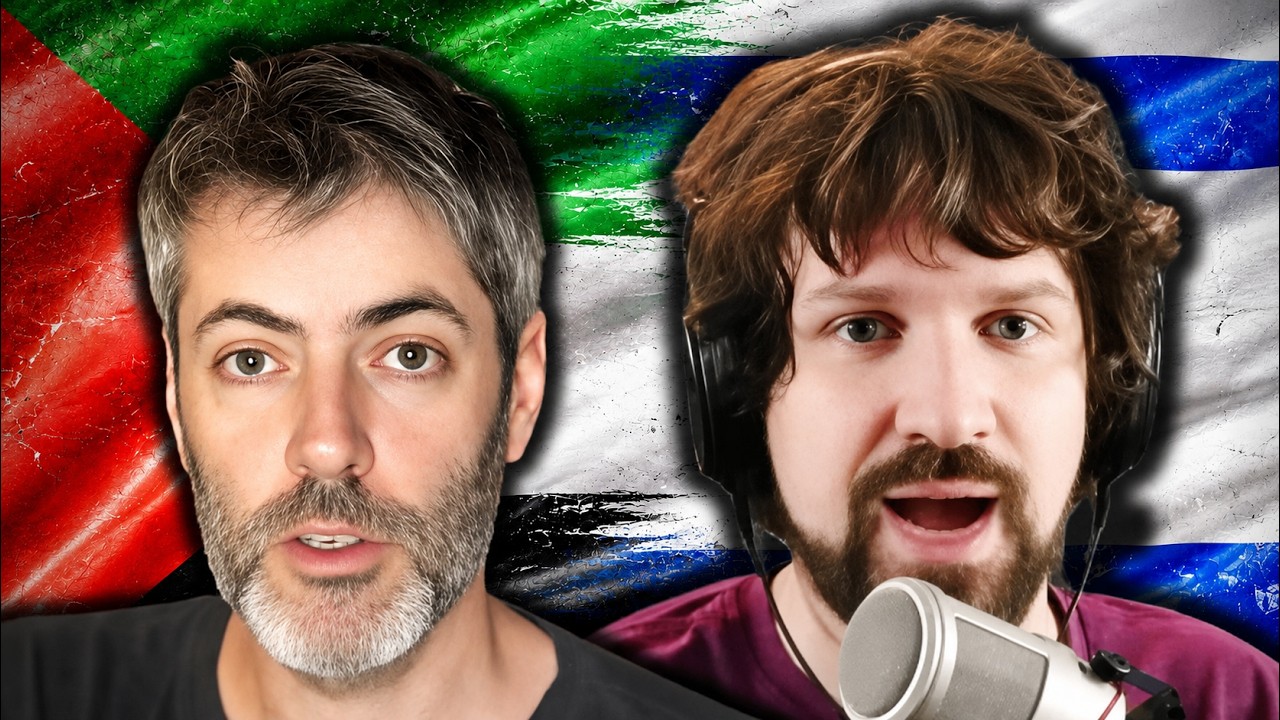
PF Jung debates Destiny on white identity politics, comparing white advocacy to men's rights activism and arguing for psychological self-respect over combative race politics.
Key Takeaways
- Whether racial pride is healthy or divisive depends heavily on whether it is framed as advocacy or as combative group identity.
- Jung sees a 'white guilt' culture as a driver of white identity politics and argues it should be pushed back on through self-respect.
- Destiny challenges the premise by questioning whether white people share a unique historical or cultural experience comparable to other ethnic groups.
What the video covers
- Jung argues that 'pro-white' sentiment is treated as automatically bad, while similar racial pride among other groups is accepted.
- He compares white identity politics to men's rights activism, which was once stigmatized but has gained some mainstream acceptance.
- Jung contends that racial advocacy groups should address specific group-related issues rather than adopt combative, 'us vs. them' framing.
- He suggests white identity emerges as a reaction to progressive race-first politics and perceived anti-white sentiment.
- Destiny questions what unique collective experiences white people share, distinguishing white identity from ethnogenesis seen in groups like Black Americans.
- The discussion touches on who counts as 'American' and whether ethnic heritage affects national belonging, referencing Ilhan Omar.
- Both speakers discuss the ambiguity of terms like 'populist' and 'white identity,' noting disagreement over their meanings.
- Jung proposes a psychological framing: letting people vent frustration about anti-white rhetoric to prevent it from building into resentment.
- The debate includes a hypothetical about choosing between Hasan Piker and Nick Fuentes as a dictator, with both expressing strong opposition to one or both.
- The conversation shifts toward emotivism and moral philosophy near the end, indicating a broader critique of how beliefs are justified.
Chapters
- 00:00Opening: Ilhan Omar and American identity
- 05:30Pro-white framing and advocacy vs. identity
- 16:00Comparing white advocacy to men's rights activism
- 28:30Race war concerns and combative group politics
- 45:40Ethnogenesis and whether white identity is shared
- 60:00Defining populism and political terms
- 80:00Hypothetical dictator choice and final positions
- 98:00Emotivism and closing philosophical discussion
Full Transcript — Download SRT & Markdown
Speaker A
Um like Ilhan Omar. Ilhan Omar gave part of her inauguration speech was in Somalia. She is not American the same way that the Americans who fought World War II are American.
Speaker A
The problem I think with your approach is I feel like what you're essentially setting up is like a race war.
Speaker A
If you had to pick tomorrow this person becomes dictator of the United States, Hassan [ __ ] or Nick Fuentes.
Speaker A
The point I was making was if we say if we say that white identity politics is white people having a healthy attitude towards their own race the same way that black people manage it and Hispanic people manage it and Asian
Speaker A
people manage it and all that then that's fine. And like any like yeah to be honest that just seems so uncontroversial. I I I I get why cuz again it's like most people grew up in a pretty like a super
Speaker A
liberal colorblind kind of world uh or like that was the education that was provided. That was certainly my education.
Speaker A
Um and so to you know we've been sort of conditioned for better or worse that when you hear someone who's like pro white you assume the worst.
Speaker A
But like Well cuz I think when we say pro white we're not really saying pro something or when we're talking about an identitarian movement we're not really talking about like just identifies as. I think we're generally talking about whether we
Speaker A
realize it or not. We're talking about some form of like advocacy. And so then the question is like why do we feel like this group of people need somebody to advocate for them?
Speaker A
I guess I see the whole white identitarian thing similar to like the men's rights activist stuff.
Speaker A
Like 10 years ago or even sooner the idea of like being like pro male or pro men or like men men's group men's issues was had the same kind of like oh this is like a weirdo and all that.
Speaker A
Um Casey Jay who I really liked did a documentary called The Red Pill which I thought was pro-social and empathetic and very drug-centered.
Speaker A
And I think my my read of the current collective vibe is that actually it's very it's not like it's not like the Red Pill has become the dominant ethos, but I think amongst the average person like to to casually [ __ ] on men kind of
Speaker A
does have the same stigma now to that like casually [ __ ] on women does.
Speaker A
And I think that's been a overall positive evolution. Sure, but if I were to say if you were to ask me based on what I just said about men's advocacy groups, what do you think my response would be
Speaker A
comparing them to like a white advocacy group? It's a good question. What do I think Destiny would say about comparing men's advocacy to white identity?
Speaker A
I feel like advocacy groups are advocating for people that need advocacy because there's probably some unique thing that that person experienced. And so I can't personally think of um like a thing that white people there are people who are white, but white people as a due
Speaker A
to them being white have experienced. Um whereas for men, I think men do have unique struggles and issues that like are maybe different than women that might be worth addressing, you know?
Speaker A
Yeah. I guess I white identity exists in so far as it is a political and social reality in the progressive kind of race politics world that we operate in today.
Speaker A
So for example, have you seen that clip of Jean Woo? He's the new um I think he's the House of Representatives leader in Texas.
Speaker A
And he's like the day that the Latino, the Asian, the Hispanic community wake up and realize we all share the same oppressor, that is a day when we will take power, basically.
Speaker A
And then you have people like I think it's what Wajahat Ali literally came out and is like to all the white people, you made a mistake by letting brown people in, because we breed. We breed, we breed, and then we
Speaker A
vote, and then we bring in our cousin and our whatever. And it's just like, I can understand that, especially if you're a young white guy, and you just constantly see the constant [ __ ] on white people all the time,
Speaker A
all the time. And it's so undeniable that when I talk to left-leaning people, it's like of course they don't deny this either. Yes, there's like a there's an anti-white sentiment.
Speaker A
It's not like Well, it is systemic. I mean, Lockheed Martin literally just had to settle like a $30 million lawsuit for discriminating against white employees because of their DEI policies, which is not unique to Lockheed.
Speaker A
Um, so there is You could say there is systemic discrimination. Then there is just a casual anti-white racism. So you say, well, what is white?
Speaker A
Well, white is whatever the the this whatever progressive society and whatever mainstream society is [ __ ] on when they say white people shouldn't get married the day that the Latinos all and the Hispanics and Asians unite and realize they they
Speaker A
share the same oppressor. So white identity becomes a reality in response to the kind of progressive race-first culture that emerged.
Speaker A
Sure. So I don't necessarily disagree with that, but what I would say is there's two approaches to that.
Speaker A
Um, on my end, I would say that racial advocacy groups should be trying to rectify or catch up or assist, you know, like their racial group for things that they can identify that might have been wrong or something unique to like like
Speaker A
particularly the the racial group that they belong to. Um, but it shouldn't be set up as like a combative group. It's like I don't think that like [ __ ] on white people or [ __ ] on men, I think
Speaker A
this is a mistake for a variety of reasons, but if for no other reason because strategically it just makes the other side want to hit back. Um, so my my what I my approach would be I would heavily critique that side. The problem
Speaker A
I think with your approach is I feel like what you're essentially setting up is like a race war where it's like, okay, well, hold on. The Hispanics and then we're going to advocate for their [ __ ] Well, [ __ ] that. We're going to
Speaker A
advocate now for our [ __ ] to fight back against you guy. And then you're like in like let's go, you know.
Speaker A
yeah. No, no, no. And this is what I said in that speech. I I'm not thinking about identity politics necessarily at like the advoca- like- like institutional and advocacy level.
Speaker A
Like, we need to form like a whites only, you know, a whites coalition to advocate on behalf of white people.
Speaker A
I don't I'm not That's not what I'm thinking about. It's more of a psychological thing where it's like Dude, I was I I was at the Austin Book Festival and this woman went up to ask a Q&A and and she goes up and she's like
Speaker A
and she's She's like a white woman and yes, it's a progressive leaning thing. But the first thing she says is so I want to acknowledge like, you know, I'm that white woman who plays bongo drums in the park or whatever and I'm
Speaker A
aware of my privilege. But And then she asked some I don't know. I forgot the question cuz I tuned out after she she said that.
Speaker A
That mentali- That's a That's not a like an institutional mentality. I'm saying there's there's like a white guilt.
Speaker A
There is no such thing as like the American white identity. Uh you know, to be pro-white is automatically bad.
Speaker A
That That needs to be pushed back upon not in a race war type thing. I mean the the I'm trying to avoid that. That's kind of the point. It's like Like, how do we get to a point where you don't repress
Speaker A
something so much that it comes back with a vengeance? You need to let the steam off slowly.
Speaker A
Meaning like yes, hey, if if you see all this anti-white [ __ ] going on, like you are right to say this is [ __ ] racist nonsense, go [ __ ] yourself.
Speaker A
That's actually fine because And And I do mean this it does have to do with I don't think other people can respect you unless you respect yourself.
Speaker A
This And this is the first example that comes to mind. Maybe this is a bad example and I'll regret using it, but like you know how This is I'm definitely going to regret it, but I'll say it anyway.
Speaker A
Uh you know how Islam will like kill anyone if you draw like a prophet of Muhammad or a picture of Muhammad?
Speaker A
Sure. People take Islam then more seriously because of that. Now, that's the extreme. I'm not saying it that, you know, to do anything like that. But, you know, if you think of a scale it's like Christianity, you know, no one
Speaker A
It's It's the norm to mock Christianity and all that. And I It's part of its strength. I think Islam ultimately ossifies, I think, because of what they're But just that as an extreme instance of like, or, you know, just bullying on the
Speaker A
playground, it's like bullies stop when the person has stands up for himself. And I just think if we replaced this the average sense of white guilt, which I think the average white American feels more leans more on the white guilt side of
Speaker A
the spectrum than white pride side of the spectrum. My point would be in order to diminish the white guilt, which I think needs to diminish, they have to move into a more healthy, you know, self-respecting attitude, which is not
Speaker A
like now pro white [ __ ] over the races, but just yeah, like white Americans, baby, like you know, join the exciting whites club, you know? I don't know what it manifests, but I'm I'm I think can't white why it feels like
Speaker A
there's so much work being done to build out, and I think why not just like self-hating on your race is [ __ ] cringe, and people should just stop doing it.
Speaker A
Like why can't that be the the thing? Well, that I would I mean that's that would be that's part of what I'm that's part of what I would advocate for. Be like guys, don't feel guilty because you're white, like
Speaker A
Yeah, that's it. But even that can be read as like, well I guess I I don't think so.
Speaker A
Like I say [ __ ] like that all the time. I don't think To say I'm not I don't feel guilty for being white at all. I'm I'm actually well, I suppose I don't feel guilty for white, and I'm
Speaker A
proud like I'm yeah, I'm proud to be white. Sure, why not? Like Well, it's also the the white identity is kind of weird, but like you have like like people can talk about their Italian heritage or their Irish heritage. It's
Speaker A
kind of weird when you say like white, cuz what does that even mean? It's kind of like the American default.
Speaker A
Yeah, I made this point in my video, but I know you were playing Minecraft, and I'm that's not No, I know you were. I know you I heard you say that exactly, but you also didn't address it. You didn't give a
Speaker A
counter argument to this. What did you say? Yeah, I made the point um the analogy to you know, you have like the black American identity, which was forged and or, you know, had ethnogenesis as a result of many different
Speaker A
um Africans from all over Africa being brought to one place and then then being cut off from Africa, they formed a new black identity over the course of you know, [snorts] a couple hundred years. That was ethnogenesis. A
Speaker A
similar process has happened with white Americans who don't have a single country of origin.
Speaker A
Obviously, it's been less suppressive, but the end result is the same where you have a bunch of white people who in America who have no real connection or loyalty to any European country.
Speaker A
Amer like they're America they're white American like me, you know, I'm 50% Polish allegedly.
Speaker A
Um but I don't like care I mean I wish the best for Poland, but it matters to me not at all compared to like American interests.
Speaker A
And so there's a huge number of white people where that's like the generic white American identity.
Speaker A
And I I just I just think like like you could you could teach white American identity the same way you teach black identity or Native American identity is like it's one subculture of the broader American identity.
Speaker A
Is it? And you can Yeah, I think so. Well, this is assuming do you I guess and maybe you have the the attitude that like black culture does not actually exist.
Speaker A
So we we got because of all the wokies we like changed a lot of our terms or whatever um which I think was cringe.
Speaker A
Listen, anytime that you want to blame the left for the excesses of the right, I'm I'm right there with you. Okay, that's my favorite hobby horse.
Speaker A
I I think that I think that there was a term that that became deprecated called African American and I think you can meaningfully talk about um like the like the genesis of and then the through line of African American culture in the
Speaker A
United States. And I think you can have a very coherent conversation about how that exists and it actually seems to persevere like even independent of like the city you're in and everything else where there there seems to be some kind
Speaker A
of like understanding of like African American culture that that you can meaningfully speak of.
Speaker A
Um now not necessarily every single definitely not every single black person and not every single African American person necessarily exhibits or is is much of like a member of this kind of like subculture or at least at all the
Speaker A
time or whatever. But um I think it's a little bit harder to meaningfully speak of like when I think of like a white if somebody says white culture to me, the thing that comes to mind most is probably going to
Speaker A
be like the like the sitcom middle upper middle class family white person. Like the I mean just like Leave It to Beaver, Boy Meets World kind of thing maybe. But like all white people definitely don't fit into that for a variety of reasons,
Speaker A
you know, class and geography aside. Or or class and geography being the two biggest ones I think. Um so that's why it's a little bit harder I think to just to speak of like a like a white culture
Speaker A
because there are so many different Yeah, I don't know. Yeah, I I think that's fair. And certainly there Yes, there And there's plenty of black people who are like black culture is not real and black and I and like I'm not part of black culture
Speaker A
so and I'm black so who are you to say it's black culture. I think it's it's you know, it's sort The terms black and white culture don't mean like every black person has black culture. Every It's just like It's just
Speaker A
It's almost arbitrary. You could have called it like a culture and b culture or blue culture and red culture, whatever.
Speaker A
We're just using labels because the majority of people that came from it Yeah, there is obviously connection.
Speaker A
It's not totally arbitrary. Yeah, I would say that's the important part is like the connection. Like African American culture definitely came from the conditions related to African Americans. I think that's a pretty important part of it, yeah.
Speaker A
Yeah, that's fair. But I think like my grand like my grandmother was born on Ellis Island so she was in the the 1900s wave of immigration. But like and then I have a friend who's can you know, trace his ancestry back to
Speaker A
colonial heritage Americans. We him and I like the the I He makes the joke like I'm more American than you.
Speaker A
And I'm like I He's serious when he says it. I I think it's a joke because it's like are you kidding? We both grew up in the suburbs of a major city.
Speaker A
Our You know, our both our both of our dads were not like didn't have you know, spoke just English, had no like accent, whatever. It's like um and I do think especially in the kind of monoculture age because of like
Speaker A
technology and the radio and then TV and then social media I feel like they're kind of there is more of a universal like white experience than there maybe was in the past.
Speaker A
And I think a big chunk of it again goes back to it it was sort of made a reality because it stands in contrast to the progressive intersectional framework where straight white male is at the center of this progressive ideology, which is
Speaker A
I think the average person is more affected by progressive ideology than like right-wing ideology, which is why corporations were very big on DEI and like your your your average podcaster and the average person you meet tends to be more
Speaker A
progressive at least at least publicly facing. So I think white I think white culture emerged yeah it was we were trying to think of like if we were trying to think of like what white culture is I guess how would we describe
Speaker A
it? Well yeah and look that's a fair objection but I the Well not an objection I'm just how would we describe it I guess?
Speaker A
it's it's I think it's um what's the phrase? Why can't I think of it?
Speaker A
You know it you can't you can't define it but you know it when you see it.
Speaker A
And I gave the example of like when people say acting white or acting but if I were to say like what is African American culture?
Speaker A
Exactly the same thing no I don't think so. you agree with that? You don't think you could There are there's a dialect right Ebonics African American Vernacular English they call it now. There's a set of cultural norms you've got like music
Speaker A
you've got um you've got like well-known like comedians that are big figureheads you've got like but like for music there's a whole lineage arguably America's biggest contribution to the world of music in terms of like jazz and then hip hop and rap like this is like
Speaker A
African American culture expanded you've got like fashion and style um you know you've got you can talk about negative aspects too you've got like honor culture and um you know different types of crime or drug selling that can be
Speaker A
associated with like there's got like there's a lot of different types of things that we can talk about um when we talk about African American culture that we can we can talk about we can speak about it um the good and the bad. And I
Speaker A
can't think of like for if I say like white culture like I feel like when people say that they're just kind of processing like what is like the upper middle class American experience basically you know?
Speaker A
Which there is something tangible there I like the the the the the white American middle class was a very significant cultural force in in so I don't think that's I don't think that's not consequential.
Speaker A
Um, but again, and I I do mean white American. So yeah, if you just say white, it's like well you're talking European people from whatever. It's like white American. It is this kind of unique thing where it's like
Speaker A
as a white American, you kind of can draw a like you know, when you talk about like Western civilization like Shakespeare and Plato and Beethoven and all that [ __ ] It all comes from Europe generally because because
Speaker A
that part of like is that really like white American culture? Well well that Like people like Beethoven and Shakespeare?
Speaker A
Well no, because because the culture is degenerate destiny. This is the problem. We need we need to reinstall the classics.
Speaker A
reality is culture evolves. No, I know I know. Culture has always been degenerate, but okay.
Speaker A
No, no no I know. I I don't listen to I mean I I I I don't listen to to Beethoven on on Spotify even though I could. Um, but I but I do think there was an ethnogenesis that occurred and it is the
Speaker A
mixing of many different cultures and it is somewhat unique and there is sort you know, there is a like the original colonial like people say Anglo.
Speaker A
And I hate the founding stocks sounds like referring to people like cattle, like stock.
Speaker A
But like American institutions obviously borrowed from like English common law and a lot of English um cultural norms. So there is that like core there and then it got you know and then got things got mixed in and all that and then there's
Speaker A
like the you know the the contributions of African Americans and all that. But but I do think you can do yeah when you talk about the average white American Again, everything you said about black culture, like you there
Speaker A
you will be able to find many many exceptions to that, many black people who are exceptions to that.
Speaker A
Yeah, but but so and so if you were to do the same exercise I I think the part that we're getting at that I'm getting at is when we say like um this is an this is X culture or this is
Speaker A
like X thing, we're looking for not like how many people belong to that group that are that thing or um or like you know how many people of that group does that thing apply to. We're just looking at where did that thing
Speaker A
come from? Like how is it influenced by that category? So when I think of like African American culture, and I think about like the way that black people speak, right? The the way that African American people speak. Like
Speaker A
we can draw a direct line from current modern like slang or whatever to the South because that's where slavery was, which is where people were brought from because they were enslaved, right?
Speaker A
genealogy. And he traces it back to like the Scottish Highlanders. Okay, sure. I don't know how far back it goes, but I know that that thing, that experience is is pretty unique to their existence in the United States, right?
Speaker A
If you want to talk about like like Asian or Chinese like tiger parents, tiger moms or whatever, like as a like as a like an Asian culture thing, you know, you've got a group of immigrants that come to the United States that are
Speaker A
very driven because they've immigrated, because they've spent so much money to put their kids in good schools and to excel like a lot. Like there that cultural experience is informed by that identity of being, you know, Chinese or
Speaker A
you know, of some Southeast Asian immigrant, right? Whereas if we just say like well white culture, not everybody belongs to it. Like what is the thing that I just think that the problem is that because white was the default
Speaker A
and because it's so broad, it ends up being like kind of the assimilated culture that just kind of like takes from a whole bunch of different things around it to build one like larger thing and that white people are too large a
Speaker A
group of people to speak to any kind of like unifying cultural experiences that that I can think of at least on the top of my head, I guess.
Speaker A
Yeah, fair. Again, if we if if we I think as we're talking about it, I think it would be an interesting sort of the same way that Thomas Sowell did sort of like the genealogy of like black culture.
Speaker A
If if someone were to do a genealogy of like white if there is such a thing as white American culture today in 2026, what it what it what is that genealogy?
Speaker A
Because [ __ ] I just forgot it. Like if I were to ask you this question, somebody says like oh, my parents uh, they are very Italian.
Speaker A
Do you Does that convey something more to you than if somebody says, oh, my parents, they're very white?
Speaker A
Kind of. If like generic white American, some like there something comes to mind. Like like me. Like I don't think I'm particularly I don't think I'm not like Italian or Polish or English or Irish really.
Speaker A
Uh-huh. I'm Midwestern. Although I don't know would people have guessed. People say I have a Chicago accent. I'm like I that doesn't make any sense. I don't even know what that means.
Speaker A
Um, but I feel like I'm the I feel like I'm part of generic white American culture.
Speaker A
And And because there's no such thing as a human being without a culture, then there must be something there even if I can't define it right now.
Speaker A
And maybe I you know I think there is I think there is Again, I think there is culture there, but when we call it white culture, is there something there that is a result of your of that classification of being white?
Speaker A
I think so because the the the the the like you said like what what what we just did for African Americans, there's like a dialectic, there's music, there's all these different things. I think the white American like white suburban
Speaker A
whatever, upper middle class, whatever you want to call it, that is a blending of there's like I there is German and English and Irish and if it is it is multiple European strains plus African American as well like jazz and bluegrass and all that. I
Speaker A
have a friend who's big on bluegrass as he he think he thinks is like a pretty core like American kind of cultural aspect. And you might point out well who listens to [ __ ] bluegrass that's not part of it.
Speaker A
And it's sort of like well in the same way that well music music less so, but like Christianity you don't have you don't ever have to have read the Bible to be influenced by Christian ethics. I mean this is Tom
Speaker A
Holland's whole argument in Dominion, which Sam Harris really likes. Of course when Jordan Peterson makes the argument, Sam Harris gets really pissed, but whatever.
Speaker A
Um, and I think that's true. I think just cuz you necessarily interact with the the artifacts of the culture that you inherited, doesn't mean that those aren't part of it. Like just because I don't listen to Beethoven now,
Speaker A
doesn't mean that the current art and music that I listen to was not influenced by that or or, you know, music like musical education in general.
Speaker A
You get what I'm saying? Yeah, I understand it. I'm just like I agree that they're going to be influenced and everything, but I'm what I'm just trying to think of that like right now like identities can change over time and I you know, they're
Speaker A
somewhat fluid. Um Yeah, totally. And and the you know to think of like when I just I'm just trying to think of like if I wanted to advocate for some identity, I think I would want to advocate for
Speaker A
like an identity that I could meaningfully describe. Yeah. I I'm not like here I would fight against like the wokies and I would say I really didn't like that we got rid of the term African American. Um and a lot of people that
Speaker A
are into like African uh American issues I know this because I got so many emails about it are getting really irritated that a lot of your um prominent uh black issues speakers are just African immigrants and they have a
Speaker A
completely different lived experience, completely different placement in society, completely different engagement with so many different things in the US that it's very weird that you know, a family that came from Uganda, Kenya, Somalia, whatever, generally they're very very very educated, they're very
Speaker A
wealthy, um and their engagement with the system is so much different than somebody who, you know, their family grew up in the South and they have a whole different set of cultural norms, experiences customs language and everything else. But because we kind of
Speaker A
collapsed it all into black because we thought African American was a slur or something, we lost that and now the black identity is is in my opinion that's a meaningless identity in the United States because there are totally
Speaker A
different customs and experiences between black and it's meaningless as like white identity almost. Yeah, that's fair. Like Afro Caribbean people have, you know, are very different from you know, American descendants of slaves in the South and all that. Yeah, I get
Speaker A
that. I get that. And And And And that's my point about like you know, we're calling it black, you know, like uh I can't think of an example, but like I'm sure there is some phenomenon that is named like
Speaker A
like German engineering. Like we we use German engineering to describe like good engineering. Like it doesn't necessarily mean it's German. We're just using even though German engineering was good and specific to Germany you know in for certain things we we've extrapolated out
Speaker A
to say German engineering as just good engineering. So even though there like there's white culture like white American identity or something like that that may have been there you know you have other people that get assimilated into it and all that stuff.
Speaker A
I guess the the yeah I guess the main point and I do think and I I have to think about it more but I I I think the the the the most tangible reality to white identity and what white as an identity is simply the
Speaker A
fact that it is the center of the intersectional framework and that and in we we live in a hyper racial milieu um at the educational level corporate level government like most institutions that are not outwardly conservative take take the progressive kind of
Speaker A
ideology and we assume that to be white is to be ignorant and oppressive and all that. And so I think white identity even if it's not a historical and cultural thing Mhm.
Speaker A
emerges out of reaction to this is the reality we live in which is why the that's the Anakin meme I think. Like I'm Sure but I really hate personally I just hate I hate identities that form as reactions
Speaker A
to other things. I think it's usually very very very well it it it it sets itself up for conflict basically.
Speaker A
Yeah I agree and I yeah and that's why yes and that's that why I'm not like the the phrase that I think is accurate even though it's kind of way too vague and generalized but like it's I think it's Pap You Canon he says
Speaker A
race is not everything but it's not nothing. And the and what I'm saying and what I'm saying is in this case because of the progressive attack on white identity Mhm.
Speaker A
race is not nothing. So for white people in America race cannot is not nothing because it's the center of the intersectional framework that people will attack you with. However because race is not everything to to then set up this is why I argue
Speaker A
with the the the far right white ethno nationalists who are like well we need a white ethno state.
Speaker A
I'm like no because that you're not you don't have any positive You just have a negative identity in response to like, yes, compared to a Somalian who's off the boat, yes, a white identity is obviously in stark contrast to that and whatever we
Speaker A
you know, that's that's fine. That's that's that's a simple enough immediate reaction that you can go forward with that. But you can't just say, well once once we have a society of all white people, we're going to be good. It's
Speaker A
like, no, you need virtue and morals and all that stuff and and and culture beyond that.
Speaker A
And but I do think the yeah, I think the big the reason the reason that I made did the speech and the reason I'm interested in this topic is is because it's divisive and I think you need to have I think I try to
Speaker A
provide the reasonable middle ground on divisive issues and I do think that the right wing, I know, I do think that the they have a point with the so much anti-white racism so the DEI [ __ ] that it that it that white identity
Speaker A
becomes a reality in response to that and that's the identity that I think is like yes, be have some self-respect and say you know, tell people who say that to [ __ ] off.
Speaker A
Um Yeah, I feel like that would be my I would just push back against like the the anti-white stuff because that is you are just going to end up creating a negative identity in response to whatever your particular progressive um
Speaker A
project is. But but I usually try to push back on like cringe like self-hating white people or whatever [ __ ] people are on for that.
Speaker A
But but the idea of like well, since these people are all going to make their racial groups problematic, now I'm going to identify my racial group and we're going to have our own problematic things like why why add to that if I
Speaker A
think it's a bad thing when the other people do it, you know? Like I I would hope to decrease the conflict there as opposed to adding my own.
Speaker A
Yeah, that's fair. That's fair. I mean yeah, so you yeah, you've given me something interesting to think about which is all right, let's if we were to do like a if we were to do a genealogy of white American identity, what would that
Speaker A
actually look like? Because you know, you have like landing on the moon in World War II and all that stuff and people are like, well, but other races were involved. It's like yes, but that the exception doesn't prove the rule.
Speaker A
Like by and large, it was a core kind of ethnic group. would you you bring up World War II though? What does that mean to you?
Speaker A
Well, America was what? 90 something percent white at the time. Sure. So it was like that struggle is part of American history that that is that is kind of a central aspect of the white American identity. Whereas if you're
Speaker A
like So you got it So I think you got it together. I'm an alien and I just came down and I said right now we're going to teleport into the brain of somebody that you think was on you know like your team
Speaker A
or whatever the right side for World War II. Quick, pick one identity. Who are you choosing?
Speaker A
America? Yeah, that would be an American thing, right? Cuz it'd be strange to say that was a white identity thing when I mean the Nazis and Mussolini and all like these people were white, right? Like it So it's kind of weird to
Speaker A
Well, but it was white American. So if like like like like England versus France is not white. Like white like the the the problem is this this is the problem. We don't have a You get what I'm saying? Like England
Speaker A
versus France Wait wait wait. Okay, the thing I understand everything you're saying, but here the thing that you're missing I think is like the reason why we choose the adjective.
Speaker A
If I were to tell you I'm working on a project, I need you to bring me a red wrench.
Speaker A
It seems to be the case that like for some reason red is probably operative there, right? I don't know what it is, but whatever it seems like a blue wrench probably won't Like the red part is operative there.
Speaker A
The important part of the World War II stuff was the it was probably the Western and then American identity, not like the fact that we were white. Like if we would have been 50% Hispanic, I don't know if we would have had a different
Speaker A
position in that war. Now if we were 50% or 80% German like if German descent of direct descent, maybe we would have had a different position on the war, which is also white. So I just don't know if
Speaker A
the white American part did actually at the time. Um did what? I believe there were a lot of German Americans who went and fought for the Nazis. Um Oh, sure, maybe. But I'm saying that the the white part I don't think is the
Speaker A
operative. Even though America is the majority white, I don't think the white part is operative there, you know?
Speaker A
Yeah, true and this was this was my point about a fish doesn't recognize it's in water until it's no longer in it.
Speaker A
True, but like you could play the you could do the reverse argument with like any culture. So like Japan or India.
Speaker A
Mhm. Like if you know what what is I mean I'm not maybe should pick a country that I'm more historically informed upon. But I don't know like if if you know when Japanese people think of their Japanese identity
Speaker A
Mhm. like something that they did as a country. Um maybe I should switch it cuz they were the bad guys in World War II. So if Chi as part of the Chinese identity is defeating Japan it's like well but if but if if if China
Speaker A
if it was 50% some other ethnicity it's not really the the the Han Chinese part of it. It's just the the country of China.
Speaker A
Sure. And I that's What do you think is it's [clears throat] annoying here. Well it's not annoying. Well we just have a different perspective because of where we're from in the world though. And I think the difference there is that when
Speaker A
you say Japan or Japanese or China or Chinese there's like an implied ethnic group there which makes it hard to separate out the two things, right? Like the it seems to be the case that the Chinese or China part is operative there
Speaker A
because it's part of that nation's history, but not necessarily just because of the ethnic group. Although the country might have been created for the ethnic group.
Speaker A
But it's hard to disentangle these two things because they're literally one and the same.
Speaker A
Whereas like if I were to speak to and create like an American ethnicity I would have to say like well yeah our ethnic group of being Americans that was the ethnicity at play because that was our country and our nation. But those
Speaker A
two things are we don't really have it as tightly wound as Americans because we have so many different people coming in because we're a New World country and everything.
Speaker A
Yeah, the New World country this is and what I think I get what you're saying. Part of the issue is we we over index on American exceptionalism where we think cuz even though cuz we are unique that we that somehow exempts us from human
Speaker A
nature. And and like again I'll I'll pick I'll pick I could pick either Jean Wu. Maybe maybe well um like Ilhan Ilhan Omar gave her or part of her inauguration speech was in Somalia.
Speaker A
Mhm. Um she she she is not American the same way that the Americans who fought World War II are American.
Speaker A
Right? I guess what do you mean by that? Well that that's I guess that's what I'm asking is it's sort of a vibe. It's like it's like cuz the the Chinese example um it's there's an implied similarity between when we say China and then the
Speaker A
the ethnicity of Han Chinese. So it's like and again if it Like I would agree that there's a lot of ways that she's different. There's a lot of ways that I'm different. And the question would be like what exactly
Speaker A
I specifically pick Ilhan Omar because she talks about how the idea that America's a white country is disgusting and all that and it's like well for no to say that America's only for white people is is disgusting if that involves like
Speaker A
what we're going to deport everyone that's not white. I actively I get called Yungstien by the uh the white nationalists who don't like me because I say I think you're demented if you think we need to if you think it's even
Speaker A
practical but more importantly moral to deport anyone who's not white from America. I think that's insane. That's disgusting. I would agree.
Speaker A
But when Ilhan Omar says it she being a progressive is saying it with from the same sentiment that Jean Woo is saying where once everyone realizes that straight white men are the problem we're going to take over and
Speaker A
unite or whatever. And it's like okay well then you're I you are not part of this culture the same way that I am if I'm viewed as the enemy.
Speaker A
Right whereas like whereas like you know because the the obvious counter example is like well what about white progressives who say the same thing?
Speaker A
And uh and yeah and I think that's fair. Um I mean I'm just trying to I mean I like interrogate that thought a little bit when we say that like Ilhan Omar is different than the people who fought
Speaker A
World War II. I think she Yeah, like I think that fought World War II are broadly um they I would just broadly describe them as Americans. My understanding is like the draft applied to everybody. I don't know if you could get out by being
Speaker A
a certain race or whatever. Um and I know they've made movies about famous different ethnic groups or whatever that also fought in World War II and had their own units and did their own things and um but but I'm but like
Speaker A
broadly speaking, like it was the country of the United States that fought Well, actually, I guess you could exempt you could exempt one group from that and that would be anybody that we threw in the um in the internment
Speaker A
camps. But I guess outside of um I guess Japanese people or Asian people that were put in internment camps, it would be broadly American, right?
Speaker A
Yeah, but again, it it it goes back to and I I do think this conversation wouldn't have be happening or wouldn't exist without the active anti-white contempt. That's that's kind of the issue. Ilhan Omar, I don't think views
Speaker A
herself as an inheritor of that culture in the same way that I would view myself as an inheritor of that inheritor sense.
Speaker A
Whatever. I'll use that term. Even though I'm [clears throat] generic upper-middle-class white guy culture, not an not an inheritor of anything other than my Civ 5 games.
Speaker A
Um but yeah, I think she has contempt for that culture. And so it's like that's kind of a that's kind of part of it too.
Speaker A
And then it comes down to and I Yeah, but then it's like progressive white people also have contempt for their own identity and it's like well, yeah.
Speaker A
perspective on this, but also like to some extent like it's just [clears throat] and I think the reason why you're running into so much trouble here is because I think you have um you've made this kind of like
Speaker A
pre-decision. You've decided that there is a cohesive white ethnic group that we can think of, but then it's very very very hard to define it and there's like so many huge exceptions that this is the reason why I don't think it's like a
Speaker A
meaningful group that you can speak of that has some coherent identity or coherent like goal or mission because so for instance, you talk about like she doesn't view herself as the inheritor of that culture. Like one of the very
Speaker A
common arguments made is that one of the most American things is kind of like this concept of cultural rejectionism.
Speaker A
Um that's I just that phrase. I don't know cultural rejectionism. [ __ ] I feel like a son. But, like the rejecting of like the [ __ ] culture, right? So, for instance, um, you know, you speak to
Speaker A
kind of like this waspy white Anglo-Saxon Christian idea of American culture. What was like Woodstock in the '60s was literally like we're going to [ __ ] do drugs. We [ __ ] hate the Vietnam War and our [ __ ] military.
Speaker A
We're going to [ __ ] listen to hippie crazy music and be, you know, not work and [ __ ] you guys or whatever was like a big rejection of that Christian culture.
Speaker A
But I don't think we would say that like the like the Woodstock and '60s peace and love thing was like anti-white or not white.
Speaker A
Like that was probably there was probably mostly white people there too. So, I I just I feel like it's harder to break down um I think it's just hard to make that a coherent cohesive group of people, I
Speaker A
would say. Yeah, it it it's I think it's it's a spectrum, I think, because again it's it's it's it's more real the more that progressives center white identity as the ultimate opponent.
Speaker A
That that I do agree with that, which is why I think it's really dumb to fight like huge groups of people like that.
Speaker A
Um, Dumb for who? The progressives? Or for the people responding to that? To the for for progressives, I would say. If there's a thing that you feel is being yeah, bad, I think it's you why the [ __ ] would you set this thing up?
Speaker A
cuz I think they genuinely don't like white people. Like I think it's like it would be This goes back to um the whole agree with you. I I agree with you. I would agree with everything you're about to say. The problem is I would fight
Speaker A
those people equally and I would say what what do you mean when you say white people, right? It's like white people voting for civil rights and women's suffrage and everything else, right? I would fight them on the same grounds,
Speaker A
yeah. Yeah, I guess Yeah, it just seems to me like the fact that white I mean Nick Fuentes his last name is Fuentes, right? And he's like the white, you know, leader of what the modern white white identity politics.
Speaker A
So, like yeah, there's there's always going to be ambiguity and in inconsistency and all that. But like if you just look at it pragmatically, white identity is real in so far it's politically you're able to rally people socially
Speaker A
politically around it, which I'd say is true for like black identity too. And I think like or Jewish identity or whatever.
Speaker A
Um So I think um okay, so I'm not going to ramble too much those are politically relevant identities just in terms of like voting patterns and like political action and all that stuff. But Maybe. So this is So this is why I would
Speaker A
fight on this is because I I actually think at the end of the day you should ask somebody to ground out their stuff pragmatically. Um the the the big issue with um uh I don't know how to say a fictitious
Speaker A
or uh a a non-contiguous identity that that I feel like people don't feel as much as sometimes people want them to feel it is if you try to assert that identity and you try to rally around that identity and it's just not as real
Speaker A
as you want it to be, it actually ends up becoming a very very very ineffective identity.
Speaker A
Yes, I would agree. Yeah, but I think that I think that test of whether the identity is real.
Speaker A
Yeah, so a thing that I you know, I'd like to talk about obviously because it's the only [ __ ] thing I've ever write about I guess is I think there's a very fictitious concept of a unified Arab or a unified Muslim identity. And I
Speaker A
think especially after World War II um and and and after World War I, but especially World War II, there was this huge idea that there was going to be like well Arabs are all kind of on the same side and especially Muslims we're
Speaker A
all kind of like you know in one of our sheiks you don't announce Jihad, we're all like on the same team for all of this [ __ ] And you know people in the West will kind of fear monger about it.
Speaker A
People in the Arab or Muslim world will definitely like be hyped up on it. But when you look historically about how all these people acted, there was no coherent Arab identity. That was a totally [ __ ] huge myth. It was held
Speaker A
together by like very powerful leadership at the time Turkish people at the top of the um especially the last caliphate the Ottoman Empire or whatever.
Speaker A
Muslims, Turkish people, yeah. Sure. The So the issue there is you had a lot of people that were hyping themselves up on we've got the unified Arab identity, let's [ __ ] go. But like from the Baghdad agreement to the
Speaker A
um Saddam making peace with Israel to the Saud family and everybody else being friends with America, well now all the Arabs are like well hold on, what the [ __ ] is going on here [ __ ] What where is our Arab identity? So it
Speaker A
wasn't until there's nowhere near that coherence even though they tried to Even the language of Arabic, speaking to somebody that speaks Arabic in um in like Iraq versus somebody who speaks Arabic in like Tunisia or Morocco is going to be sometimes like you can't
Speaker A
even understand each other is is what I've been told So yeah. Yeah, I think this is fair. And there is probably some sophisticated philosophical like uh I'm not going to I want to say like master-slave morality where the where the where the master
Speaker A
needs a slave in order to recognize his own identity as the master. Absent the slave, there is no master. You Like once You can only Identity can only exist in contrast to something else.
Speaker A
I think that's like a fundamental philosophical reality because what you just said about Well, but I think what you just said about the whole I agree. Yes, you can do that with Arab Muslim identity. I think you can do that
Speaker A
with literally any culture that's ever existed. Like Somali and culture does not exist. There's a nation of Somalia made up of all these subcultures.
Speaker A
And And but then you can do that You can do that exercise all the way down to like families. Like two families will literally have different like subcultures because you know, what what time they eat dinner at and the traditions they have around
Speaker A
these So like culture is an infinitely fractionable thing. But But like the Somali community to the degree that it's politically united um is able to be a more coherent identity identity because it's in opposition to not not like
Speaker A
it's in contrast to the mostly white or whatever identity um that surrounds. And And that's my I don't necessarily disagree, but then my then my question would be um is there a like coherent white identity that I could theoretically speak to? And then
Speaker A
the big issue is if we're looking to form an identity um due to the opposition or oppressive nature of another group, well, if I if I were to ask you to close your eyes and I were to imagine I were to ask you to imagine a a
Speaker A
group of people and all these people are saying like white people are oppressors, white people have done these horrible things historically, we need to do something about white people, what color are those people?
Speaker A
Not white. No, they're white. Right. In the United States, the super uber woke progressive party whites. Yeah, okay, I get what you're saying. I was think Yeah.
Speaker A
I think in the United States I think they're generally like if you go to these protests, you're not going to see like [ __ ] you know, Hispanic construction workers off shift that are at this. You're going to see mainly
Speaker A
young people and very white people. you will see yes, I think you will see self-hating whites.
Speaker A
Um genuinely. I think white I think I think white guilt generally speaking is a substitute for class guilt.
Speaker A
And because that is real. I think people who were born with a lot of wealth and money and then they see how especially in our hyper connected world, you see how poor people have it. You just feel a
Speaker A
sense of guilt like this is so unfair. And then a lot of white people have just assumed that it's their whiteness rather than their class because poor white people generally don't feel much white guilt.
Speaker A
Um so there's a lot of self-hating wealthy white people who are putting that in one direction. And then yeah, but then but then I think there are there's a lot of there's a lot of non-white people who just [ __ ] hate
Speaker A
white people. And that and they genuinely are like dude, my ancestors were [ __ ] enslaved.
Speaker A
really? Well, not not a not a majority, but it enough enough for it to be politically relevant, yes. The fact that Jean Woo can say this and all this stuff and what again how did I leave this like
Speaker A
I don't know. I feel like it's I feel like these are I think I would have different feelings a lot on this if it would that what Lee is [ __ ] crazy. I agree that dude isn't [ __ ] Mehdi Hassan now. It
Speaker A
definitely is well. But like when I think of like Yeah, okay, like Mehdi Hassan I think genuinely kind of like doesn't like white people.
Speaker A
Possibly. Well, well, I would disagree, but that's a different conversation. Um if you look at like I I think a really good example of this was, you know, if you go and you look at an audience of who's listening to these people, like
Speaker A
when Abdul said he had spoken in Detroit, that was the whitest audience the history has ever seen gather in that city in the history of all of audiences.
Speaker A
Um and so I think that when you have that type of thing going on, it becomes hard to like coherently speak in terms of like we need to form an a white identity against this like anti-whiteness when it
Speaker A
feels like a lot of the anti-whiteness is just kind of like powered by other, you know, obviously them white people.
Speaker A
Yeah, that's fair. And it really goes back to the the problem is we're using words. We're having a conversation and it's a practical kind of thing because again, race is not everything. It's not nothing. So where like where should we
Speaker A
be on that? Like well it's it's not everything obviously because you need a cohesive identity as you said and it has to do more with moral virtue and behavior and all that.
Speaker A
Sure. But it's not nothing. that comes from the from the word itself that that thing is like functional.
Speaker A
Like there's a part about it. Like when you said like who fought in World War II you know and it was like you said white Americans. Like if I were to ask for something to to turn a screw
Speaker A
I wouldn't ask for like a red screwdriver. Red's not operative. I don't care what kind of screwdriver you bring me. It just needs to be a screwdriver. The screwdriver part is like the the operative part there.
Speaker A
That's the important part. The yeah the the extended analogy would be like well there's something about the red screwdriver that in the current environment now actually is operative to it. Like it's got a different grip or something that wasn't relevant in the
Speaker A
past when all the screwdrivers were the same or it didn't matter if it had a grip but But that's the thing that I don't see.
Speaker A
And if there was if that thing did exist then I would probably say like okay yeah maybe something you know. Like if the if that if the progressive movement was like largely powered by like non-white people I would probably have a much
Speaker A
different feeling about those people and and maybe a different feeling about like I probably would be a little bit more protective about well hold on when we say we [ __ ] hate white people and you guys are a bunch of
Speaker A
[ __ ] you know [ __ ] jihadists or some [ __ ] I probably actually would. And I actually think one of the things I said in the video red pill you by sending you Gene Wu clips.
Speaker A
Sure I don't know I don't even know who the [ __ ] this person is but I'm sure they're a piece of [ __ ] But also this is why I think when you look at white identitarian movements
Speaker A
like the the bad ones or whatever you say this is why they usually try to set up some kind of like enemy or they like they talk a lot about like white genocide in South Africa is because they
Speaker A
need that and they understand humans intuitively need that contrasting struggle where they're being targeted because of their race by other people who who aren't their races because they know that that 's where the main alliances are going to form. That's how
Speaker A
you're going to form that like white identitarian identity movement. Yeah, that has to happen first, though.
Speaker A
Yeah, because human beings are social creatures. We have we have an innate sense of a collective identity. Candace Owens or I noticed this when Candace Owens did this. Like when the Russian Tsar was killed in the in the Russian Revolution by the
Speaker A
Bolsheviks. At no point in my life did I ever like I'm like yeah, that's just that's some historical event that happened in some country that's as relevant to me as some Lao you know uprising in Laos or something like that. Whatever.
Speaker A
But then Candace Owens was talking about it and it was like the Christian Tsar was killed by Jewish Bolsheviks. And I was like oh, this is how she's rallying people around the Christian Okay, now it's not just some historical event. This is now an
Speaker A
attack on that broader collective identity. Yeah, and I see and yeah, certainly the same thing happening with the with the South Africa stuff.
Speaker A
That's important there too because for her she's trying to connect it to like other identities, but it's it's just really really really hard. And I'm not trying to be This is kind of This would be like the woke argument. I'm not
Speaker A
trying to be super woke, but like it's just really hard to connect things and I'm not trying to be anti-white. It's just hard to connect it to like Yeah, it's it's hard to connect this like a white identity. Like white this is the
Speaker A
color obviously it's hard to speak coherently about a white identity. right. We'll have to come up with a new term. The Anakin identity.
Speaker A
Anakin Anakin is Anakinates refer to white upper middle class Americans who grew up whose ethnogenesis began the day that they Martin Luther King stopped being cool in schools. That's when the ethnogenesis began.
Speaker A
The the other part of it was that speech was moral intuitions. Like people having race preferences and all that.
Speaker A
Do you First off, I don't think you ever watched the Jonathan Haidt TED Talk, did you? Moral Foundations Theory?
Speaker A
I feel like I did, but it would have been a long time ago. did?
Speaker A
I I must have. I feel like Jonathan Haidt is a popular guy. He wrote his He's the Coddling of the American Mind, dude, right? Or am I mixing him up with Yeah, Coddling of the American Mind.
Speaker A
Although that the more important one is the Righteous Minds one where he talks about like there's conservative morality and progressive morality that are like wired into us and they're different and they need to be different and they're good that they're different.
Speaker A
Interesting. Okay. But uh Excuse me. The intuition that like okay, if someone's black and they want to have uh they want to marry a black person and have black kids, do you think it's equally moral or immoral?
Speaker A
I mean, I presume the answer is already yes. I think was your reaction was that if a white person says I want to get married, have white kids, and live around white people that there there's is is is that is that
Speaker A
different in any relevant way than a black person saying I'm black, I want to get married to a black person and have black kids and live around black people?
Speaker A
So I think we're going to go on a journey based on some of the things I just said. I think the reason [clears throat] why these things feel different my white brother.
Speaker A
The different why the reason why these things these things feel different is because I feel like um I feel like when we say white, intuitively, we don't have like a good idea of like what is a white identity?
Speaker A
What does that mean? I think that we don't really have a good intuitive strong sense of what that means. And then when somebody says um you know, I want to date a black person I think that we we proxy like the
Speaker A
concept of African American and I think we have a stronger sense of what that means. I think when somebody says I want to date a black person, I think what you're generally hearing and and hopefully what that person is saying is
Speaker A
I'm trying to use this as a proxy for somebody that has a similar set of life experiences to me that I that I can relate to that will relate to me. When somebody says I just want to date a white person
Speaker A
and you can't you don't have an intuitive sense of what those um common experiences would be, it feels like they're just kind of like um exuding some kind of exclusionary racial preference, I think.
Speaker A
Interesting. I would challenge the I agree we don't have a articulated understanding. I think we have a better articulated understanding of black identity versus white identity. That was what we just spent the last hour talking about.
Speaker A
Intuitively I do think there is something there. But but whatever. That that's actually not that's actually fine.
Speaker A
But um I don't think I don't think it's a a lot of say what it's like if somebody would say like just on this as an example somebody was like I only want to date um I only want to date black people because I you
Speaker A
know I grew up in whatever Baltimore and I feel like I want to you know have people that kind of understand where I come from. And then this person marries like a doctor that came over from Kenya.
Speaker A
I would look at that person a little weird and be like okay it seems like you're kind of just you said well I don't know if I would say racial preferences are bad. That's a little more complicated but like clearly
Speaker A
what you said before is not tracking. You have like some racial preference here that's not on an experience thing you know.
Speaker A
I I don't know I I would disagree that it's actually a proxy for experience.
Speaker A
Like it could just be like again I don't have this intuition. I would I'm far too listen I'm far too uh what would you say? I make far too many Look it's Saturday night and I'm talking to to Destiny all right. I can't I can't
Speaker A
be excluding my options of potential partners based on race. Okay I got to take whatever I can get. So I do not have this intuition. And I also don't have the intuition that like don't you want your kids and your
Speaker A
grandchildren to look like you and it's like I I I want my grandchildren and children to have my genes and my DNA. I want them to be my flesh and blood.
Speaker A
And I can't really I can't really justify that intellectually. It's just something I feel and I but I think it's a basic moral intuition and nobody challenges that anyway.
Speaker A
Can I push on that a little bit actually? Because I think that cuz I would argue this goes to my argument of you don't have a concept of what like a white identity is because you do you want your kids to be like you but in
Speaker A
your mind like the whiteness aspect of you is not like that central to your identity. Like imagine if your kid grew up to be like a rapist, a murderer, grew up to be like a religious fundamentalist who is doing you know religious
Speaker A
extremist attacks overseas. Yeah grew up to be like worse. Yeah, sure. Yeah, grew up to be a like an insane wokie or just like a sanctimonious piece of [ __ ] or whatever.
Speaker A
Like you wouldn't like any of these things. But the problem is that you don't proxy much on the um you don't proxy much of who you are unlike your whiteness. It just doesn't feel like that's a central part or or
Speaker A
even like a defining part of your identity. Much to the opposite of the accusations thrown against me. Well, it depends on what side they're being thrown from.
Speaker A
Um, but I do I guess I just I get like it's a cognitive empathy thing where it's like I can understand feeling like you know, I like if someone has, you know, beautiful blonde hair and light blue eyes and pale white skin and all
Speaker A
that they want to like marry someone who looks like that and have their family look like that.
Speaker A
I'm like that seem that's that seems fine to that seems fine. Or or or yeah, I mean but yeah, I guess that's I mean it just it it seems like it's a fundamental moral intuition thing. Even though I don't
Speaker A
have it, I'm not going to be able to defend it because I don't have it. But like if someone says I I just I want to marry white people and have white a white person and have white kids cuz cuz
Speaker A
they'll look like me. Like that's important to me and I can't really explain why.
Speaker A
I think that to pathologize that is a mistake the same way that if a black person said that or a Hispanic person said that.
Speaker A
Sure. And I guess what you're saying the proxy thing kind of, but I don't think that's the only thing.
Speaker A
Sure. I understand. I would say it, but but I guess the difference is is that most people that would say this wouldn't do what I would do, which is if a black person were to say I think I want my
Speaker A
kids to look like me what I would say is that I feel like or if they were to say that you know, I want to be with a partner that looks like me and then my kids to be like me
Speaker A
or whatever. I would say that you're proxying this for like cultural or social things. But if they were to say no, actually I don't care. My kid can grow up like completely different. I just want them to look like me, then I
Speaker A
would say okay, well it sounds like you just said some [ __ ] you know, racial Yeah, okay. That's fair.
Speaker A
Like you can't complain about it. Yeah. But but most people on the progressive side of it will never make that claim to say that like like a white person saying that they would only date white people just because of the way they feel they look
Speaker A
and act is that's pretty similar to a black person saying I would only date black people because of the way they look and act. Like if you're going to give reasons and those are the reasons I say okay well these are equally either
Speaker A
acceptable or equally problematic. It's hard to delineate between the two if you're not going to expand on it more.
Speaker A
But most people would attack the the minority for having the same feeling. That's fair. Okay I'm I'm just thinking of this in relationship to the you need you have your individual identity then you have your collective identity. In
Speaker A
order to have a functional collective identity it must be there must be something kind of cohesive and like there. It can't just be in response to something else.
Speaker A
Or I mean it can be in in response to something else. Like I would argue people don't like me for but I would argue like the Palestinian identity I would argue that formed that identity formed in response to
Speaker A
Sure okay fair. European Jewish immigration to the Levant yeah. fine all right. That that's the argument I'm making for upper class white immigrants. We're like the Palestinians of of America basically.
Speaker A
Sure. Um But I but then I would argue the the difference is that people that feel like they're attacking that group of white people the most are are just white people are white progressives. There are some people of color there too but it is
Speaker A
mainly white people. Yeah okay fair. But you know it's like um I don't even necessarily know I I think the identity might have to only actually exist in the abstract.
Speaker A
And as long as it's cohesive in the abstract that's fine. And because for example like the the most classic example of like basic human tribalism is like you take you you get a bunch of people you do like an experiment and you assign
Speaker A
people to team A team B or team blue and team red. Mhm. And and like you lie to them about what the experiment's really about.
Speaker A
And then you have and then you have them rate like their own team members or whatever. And these are people who just showed up randomly have no prior connection. They will naturally weight or rate people of of the randomly
Speaker A
assigned team higher than the other team. Yeah. Based which is like by definition that's not a functional identity because it was totally arbitrary and there's nothing binding it.
Speaker A
Well I would be really careful. I would I would actually challenge you hardcore because people just rely on your word choice there. It's not arbitrary. Um they gave you an identity and then they put you in opposition to another group
Speaker A
and that's the ground which the identity formed. That's the opposite of arbitrary. It seems like in the grand scheme of things arbitrary because like well who cares but it's definitely not arbitrary. It's a very deliberate institution yeah.
Speaker A
Well, and that Yeah, and that's my point, which I think reaffirms and that's what I I do I don't think I think the cohesiveness of any identity is directly dependent upon it being in contrast to another identity.
Speaker A
We're We're getting very meta philosophical. Um No, not meta at all. I think it's fair.
Speaker A
That's one of my biggest criticisms of like um of the hardcore like white identitarians is like, okay, well, you want to define yourself as white, like well, what kind of white people? In America, it's just like very broad. You
Speaker A
know, our Fuentes is our white, but you go to Europe and now they're very very precise about who they consider, you know, white enough to be part of a white identitarian movement. So I think it's worth exploring it.
Speaker A
That's fair. Well um yeah, I think that's fair. Can I ask you some other questions?
Speaker A
Yeah, no problem. Do you know who Casey Pool is? No. Casey Pool, he's one of your biggest fans.
Speaker A
Uh-oh. He also watches my channel. He's He's sort of like uh you know, if we if we were each to have our own feudal courts, like if you're the baron of DGG and I'm the, you know, the local duke of
Speaker A
Dark Centrist Land or whatever, Okay. Casey Pool is like the diplomat hanging out in my court representing DGG.
Speaker A
And uh I told him I was talking to you and he wanted me to ask these two questions of you.
Speaker A
Is that fair? Sure. Um there's this is directly politically related. There's been a rise of a certain Democrat archetype that takes the economic populism from the far left and the cultural pragmatism from the center left, people like Tulsi Rico,
Speaker A
El Sayed, John Ossoff. Is this the future of the Democratic Party? And if so, are you scared that those economic policies are going to be the new consensus in the Democratic Party?
Speaker A
I mean, I hope not. I I think all forms of populism are literal brain rot. I think it's tragic that somehow populist went from being like um an intellectual slur to like some kind of legitimate political position. I just think it's
Speaker A
[ __ ] [ __ ] but that's my feeling on it. you think that John Ossoff and Tulsi Rico and Abdul El-Sayed can be described as economic populists?
Speaker A
Um, I don't know. I don't know, to be honest. of them flirt with the flirt with populist messaging to a varying degree, which I also don't like.
Speaker A
Um, but to define something, especially a politician as a certain thing, the problem is everybody right now in America disagrees on what these things even mean. To populist can be all the way to the, you know, there's some
Speaker A
nebulous amorphous enemy that we all need to destroy to populist just want some form of government wealth redistribution. So it's like I don't know what Americans even say this sometimes but What do you think of taxing capital gains at a higher rate than
Speaker A
income and labor? I don't know about say that higher rate, but there definitely needs to be some kind of um No, I wouldn't say it's populist at all. There there needs to be a different treatment between capital income and and labor income because
Speaker A
right now capital income is confers way way way too much of an advantage, I think.
Speaker A
Okay, see that's funny because the well words just means I suppose however people use them, but I would consider like a central economic populist policy would be vastly increasing the Well vastly depends on what we mean, but increasing
Speaker A
the capital gains tax rate while reducing taxes on income and labor. You think that You You think that's sound economic policy generally speaking depending on the numbers?
Speaker A
I feel like most people that study economics, I'm sure if we look at like Chicago IGM polls or whatever, they probably agree that like we probably need to increase some kind of like taxing of of capital, yeah.
Speaker A
That's not like a fringe economic position at all good Yeah, just the fact that we don't The fact that we haven't done it already and the fact that we're in the most period of economic inequality and hasn't been done, I think speaks to the
Speaker A
Because I think a lot of our left-leaning economic Our left-leaning economic conversations get hijacked by retards that are too ideologically motivated and so they're not actually talking about that. They just want like the billionaires to fair. Oh, I agree Though Yeah, yeah, the
Speaker A
wealth tax is the most brain-dead policy that one could possibly imagine. Um, I think but raising capital gains over Okay, so good. I'm This is Destiny stamp of approval.
Speaker A
Do you ever bring in um, do you ever bring your chatters in to conversations? Or What do you mean?
Speaker A
guy in your chat, AssassinTQ4IF, who feels like I've hoodwinked you. I've got to pull the wool over your eyes and a lot of In my chat? Are you watching my chat?
Speaker A
I always watch every chat, yeah. Do you really? Oh, this is Oh, all right.
Speaker A
Who? real. He's been real mad. AssassinTQ4IF. Well, he's probably a uh one of one of the absolute further right people that watch my channel.
Speaker A
You know, I have a pretty I genuinely do have a pretty a reliable mix of right and left. Every time I do the poll, I do the same poll every time. I say compared to your perception of the
Speaker A
average American, Mhm. do you lean more to the left or more to the right when it comes to cultural issues?
Speaker A
And all and reliably, with like 3,000 votes at a time, it's like 50/50 right left.
Speaker A
So this is probably just, you know, one of those. What did he say? He Hood How did he Um, I think he feels like because you're not able to adequately push back on some of the things that I'm saying with
Speaker A
regards to race, I'm manipulating and hijacking the conversation in a way to undermine white people or something like that.
Speaker A
And me as PF Jungstien is happy to give you the platform to do so. That would make sense. We're working in tandem. No, I think the reason that I like talking to you is because you don't yell at me.
Speaker A
Um, and but you are smart enough to give me the points of opposition. And I think the my takeaways on this are again, going back to the cult the white identity.
Speaker A
Pointing out Yeah, I think what I was saying about white identity exists largely because it's the center of the intersectional framework.
Speaker A
If we agree that identity always is going to be a function of opposition to something else, then I think that is valid or at least practical enough where white identity politics, quote unquote, can make sense and can be done
Speaker A
in a in a prosocial way. But I have to think about and explore that more. And also the gene what you talked about what you just said with the genealogy of black people, I I have not done that
Speaker A
exercise with like Okay, if we are going to talk about like white American identity, can I can I come up with something that's fairly cohesive off the top of my head? You know? And so, you've you've helped, you've helped to direct
Speaker A
the Strengthening your your identity and racism. Exactly. Thank you. Thank you. Thank you for Thank you for platforming me, too, and helping me do this. Um so it Yeah, so don't Don't pay Don't be reading the chat. I I
Speaker A
don't We're supposed to be It's dialogue. We're just It's just you and I. Sorry. Do you think Jon Ossoff will be the 2028 nominee?
Speaker A
No, I It would be pretty crazy if he ran cuz I got to give a lot of statements on not running.
Speaker A
But people keep saying Obama said the same and didn't run, so or did run, so who knows?
Speaker A
Well, let's p- pretend for a moment that people wouldn't um penalize him for that. Do you think he's their strongest candidate?
Speaker A
Or I guess who do you think their strongest candidate is? I would think so. Or like Bashir or Shapiro or whatever, probably. Yeah.
Speaker A
It's going to be more moderately Josh Shapiro? Yeah, isn't people throw this out? Like he's got he's pretty high approval rating for governor now.
Speaker A
Um and I do believe governors tend to have a higher success rate for running for office for my limited knowledge.
Speaker A
Um Bashir Andy Bashir is it? Mhm. You don't think um Well, I guess Tyler Rico just got elected to Senate. It'd be It'd be too early for him. And I'll I'll do Ossoff probably wouldn't probably wouldn't be the nominee.
Speaker A
But you Who would you rather have, Jon Ossoff or Gavin What about What What do you think of Gavin Newsom as the nominee?
Speaker A
I mean, I don't know. I'm a very left-leaning person, so he might align with my politics more, but I um an Ossoff might be more effective at governance because I He's more moderate.
Speaker A
Wait, who's more moderate? Gavin's more moderate than Ossoff? No, Ossoff would be more moderate than Gavin Newsom.
Speaker A
So he probably My guess is he would prob- Yeah. I don't know. I don't know. I I I guess I just I don't have Yeah. Newsom is like the governor of California versus Ossoff has to be a democratically elected politician in
Speaker A
like a Southwest Southern state in Georgia. Yeah, all right. fair. Um, all right. This is the second question from Casey.
Speaker A
Destiny, recently you reacted to a debate between Hutch and the Sargon of Akkad. The Sargon of Akkad said in his ideal world, Republicans are just neoliberals and Democrats are progressives.
Speaker A
Casey assumes you disagree with that. What would your ideal version of the Republican Party be? Are you okay with some Nick Fuentes types, some Rubio but without the Trump MAGA stuff?
Speaker A
Or would you just prefer all of them to be Rubio, DeSantis, Nikki Haley types?
Speaker A
They want less taxes, less immigration without the extremism. These are I haven't actually thought much. I don't know how to answer these questions. These are really hard questions because like the way that politics works, like ideally, like when
Speaker A
I argue, I want everybody that listens to me to agree with me because I think I have the best ideas. Obviously, that's why I'm arguing them, right? But for some I don't think you can scale that up. Like if somebody were to say like,
Speaker A
oh, do you want to be to be persuasive to everybody that you talk to? I would say yeah. I was like, oh, okay. Do you want everybody in America to think the same thing as you?
Speaker A
Well, no. I don't think so actually. I think there probably needs to be a variety of um different viewpoints that come about through different reasons, lived experiences, different educational things or whatever. Like I'm sure you can make legitimate arguments for
Speaker A
everything. So I think the important argument um or not the important argument, I think the important question to ask a person is like how varied are the viewpoints that you would accept in your political system? And I think there has to be some
Speaker A
shared set of values that we can agree on, but those need to be very um basic and very expansive. So like broadly speaking, like the concept of freedom of speech, the concept of private property, the concept of um
Speaker A
being able to, you know, worship the freedom of religion. Uh now I think there needs to be a place in our society for people to debate whether or not, you know, something as hated as abortion is okay, right? Is a child is
Speaker A
that a human life or not? Like that's a I think that's an open debate that we can have.
Speaker A
Um somebody who's like pro like like actual like pro like authoritarian government, I would say I think this is outside of like like a liberal system. I I would appreciate any of these people to be involved in my
Speaker A
political discourse or, you know, when I think they'd be outside the window. So um I feel like the soy pills is very very very narrow, like bordering on authoritarianism. Like if your idea of the only acceptable conservative party
Speaker A
is like somebody that would be like um like a moderate Democrat, that feels very authoritarian-esque to me because that's a very very narrow window, but you know, I think it's a fair to ask people like what you know how broad of an opinion do
Speaker A
you think should have a representation in your system. And I don't mean just like fringe ideas, but yeah.
Speaker A
This is my question. If you had to pick, and you have to pick Mhm.
Speaker A
tomorrow this person becomes dictator of the United States, Hasan [ __ ] or Nick Fuentes?
Speaker A
Oh man, is this a Pisco question? Am I getting clip-farmed right now? Um the problem I have a lot of problems with Fuentes's ideology. I feel like there are probably parts of it. I haven't watched them recently that I
Speaker A
personally would consider to be kind of like incompatible with my view of America. Yeah.
Speaker A
But I feel like Hasan literally hates the United States. Um I think that if Hasan could push a button and essentially destroy the entire country, I think he would. Um I think if Fuentes could push a button and destroy parts of
Speaker A
this country that I think are essential to what I view the country to be, I think he would. But I mean I would probably opt for the Fuentes version than the Hasan version, which would be the the destruction the total and
Speaker A
complete destruction of my country. That's fair. For the record, I would also pick Nick Fuentes over Hasan [ __ ] It might even be a net positive. It might it might even be like not just like lesser of two evils, but one's good
Speaker A
and one's bad. I wouldn't Don't worry. that's fair. Yes, that's fair. Um what was I going to say? Uh yeah.
Speaker A
I don't know. I I I I do believe in um the ability for people to change and moderate. And to me, my top-line assessment of Nick Fuentes is all of the worst if you took if you made an hour compilation of all of like
Speaker A
of Nick Fuentes at his best by my estimation like prosocial, common sense, like strong kind of you know, intellectual, political, and you know, moral as well. If you took if you just had an hour of Nick Fuentes at
Speaker A
his best, it'd be like the best politician ever. But the problem is what if you took him an hour at his worst, it's just so degenerate that it's ridiculous. And my overall assessment is I think the worst the worst stuff he
Speaker A
says and has said is when he was younger. I think as he gets older, as he recognizes he has a real chance of affecting power, I think he will naturally realize, hey, I could actually gain a lot of power by
Speaker A
not being a saying such antisocial degenerate nonsense. And then actually changing his both rhetoric and real beliefs to become more moderate. And people say, oh, he's just masking for the sake of power. And it's like well, look, I think that's a
Speaker A
I I just you can you can I mean, yeah, that's a possibility, but you could just frame it easily and say one of one of the signs of maturation is realizing that genuinely antisocial degenerate nonsense is a is a sure way to undermine
Speaker A
yourself if you're trying to build a democratic coalition. And actually like, you know, being like saying, you know, being against interracial relationships or something like that is the most brain-dead possible thing.
Speaker A
And people say, oh, well, you know, he he said that thing about, you know, having sex with you know, people of interracial relationships are like I don't care. All of this [ __ ] is woke you [ __ ] I don't give a [ __ ] about any
Speaker A
of this. I don't care about the worst parts of this. I'm just evaluating evaluating the ideology, but I'm not saying that like the thing that I'm opposed to the most about Nick Fuentes is you see that really gross thing about
Speaker A
miscegenation is like bestiality. That's like a [ __ ] criticism. That's like a Hassan [ __ ] criticism of Nick Fuentes.
Speaker A
My criticism is I don't think that we have any form of like essential religion. I don't think that's essential at all to the American identity. I hate when Christians try to take credit for like Judeo-Christian values. Like the
Speaker A
entire planet didn't know that murder was wrong until the [ __ ] Ten Commandments showed up is [ __ ] [ __ ] You're giving way too much credit to Christianity there. And I don't like how much racial
Speaker A
essentializing goes on in those types of movements. I don't know how where Nick is at right now, but the idea that there are some cultural phenotype that necessarily emerges from some cultural genotype and we can very clearly delineate along these lines. I also
Speaker A
think it's really goofy. Um these are my big ideological problems. Like the crying about the dumb statements or the Jew jokes or oh and then the I don't like antisemitism because I view that as like the the dumbest form of
Speaker A
populism, this concept of like blaming global Jewry on all of our problems and that they wield so much more power than they actually do. I think it becomes a substitute for a real political critique and like difficult political problems to
Speaker A
solve because you just substitute it with like Jew bad and then you try to like put this into way too many areas that it actually exists in. Like these are my big problems. I I don't care about the
Speaker A
Yeah, that's fair. I I that's also another reason I am I'm I'm long Nick Fuentes because he like I am also feeling this. I I I am getting massive [ __ ] fatigue and [ __ ] are these are the people who literally blame
Speaker A
everything on the Jews all the [ __ ] time, left, right, and center. Everything is Jews, everything is Jews, everything is Jews.
Speaker A
I'm a Gentile. A Gentile calls out cultural pathologies in whatever religion or culture. Islam has its unique problems, Christianity has its unique problems, Hinduism has its unique problems, yes, Judaism has its unique problems.
Speaker A
Um that's Gentile behavior. [ __ ] is just everything is Jews all the time. And to be honest, Nick Fuentes is very I mean Ted Ted Cruz retweeted um Nick Fuentes saying and Ted Cruz says tragically every word of this is true.
Speaker A
And it's Nick Fuentes talking about how the whole like everything being of people being obsessed with Jews is just like is largely a Thought terminating and it prevents you from having like real ideological discourse or real policy positions.
Speaker A
That's true. He probably would say that, but he was specifically saying it's it's inorganic and it's largely from like third world countries on Twitter that are like just like from Muslim countries and stuff like that that are just like
Speaker A
like you know all the tweets and retweeting that stuff. And I don't know if it's just me. Maybe people watching in the chat can uh can say, but I've noticed on Twitter I feel like I'm getting more tweets that
Speaker A
are translated from different languages. That This is happened in the last like week or two, and I'm just curious if someone else has had a similar experience but that that seems like a bad idea. I feel like there should be an option to say I
Speaker A
only want tweets from people in my hemisphere or something, or like weight those heavier, because you don't want a bunch of you know, people who don't live in your country to be influencing your opinion on US politics or something like that.
Speaker A
Anyway um well this has been great. Any um anything else on your mind or uh anything that would be interesting to talk about?
Speaker A
no, not that I can think of. Other than that guy who was real mad in your chat, but That's fair. I mean that's the price of doing business.
Speaker A
Um Yeah. When I bring up the guy mad in your chat, I'm not [clears throat] it's not that the um that I think that it's bad the guy's mad in chat, it's that I'm he he thinks that there's some ground that we didn't cover
Speaker A
as part of our earlier conversation, and I imagine he would have wanted to see that ground covered is what he Yeah.
Speaker A
Well, that's awful kind of you to be considerate of his Hey, Paul, you've got a white nationalist in the chat and he feels like we didn't cover some content that we need to cover.
Speaker A
I don't know if he's a white nationalist or not. I'm just saying that if he feels like Well, the reason why is because I'm willing to cover it. Um and I know a lot of people shy away from those
Speaker A
conversations. I'm absolutely willing to cover anything. I'm not trying to hide cuz I don't like the accusation that I'm trying to guide you into some weirdo [ __ ] world where I'm trying to avoid having a tough difficult conversation
Speaker A
about things. I love talking about these types of things. Um yeah. yeah. I don't believe you are, but of course if we were both controlled opposition and it played into exactly. This is the issue. That's that's another thing too. I
Speaker A
thing to think about and you can you can have my lineage cuz my music background, but I'm sure there's a lot of culture.
Speaker A
Interesting thing to think about. Um and all these things undercut the white culture thing. I'm not trying to be super woke, but I mean when we think about things that are white culture, you brought up things like Beethoven and you
Speaker A
know what not. We think about these people, a lot of that was not actually culture. A lot of that was very inorganic. If you think about like the the great composers and the operas and everything else, These were just things
Speaker A
requested by royalty. These didn't actually play well with the common people. These were things that were literally cultivated, commissioned culture from like the kings and the queens that oftentimes the common culture didn't like. There was um there was a famous quote by or not famous, but
Speaker A
there was a complaint by Beethoven once that was funny that um contemporarily we like it, but even back then people really liked that um the first movement the of the Moonlight Sonata. They liked that piano piece even back then and
Speaker A
people requested it a lot. And he got incredibly [ __ ] tired of people requesting it all the time because what the common people like to hear, what their ear or whatever is attuned to, is not the same as what like the cultivated
Speaker A
art from the royalty was. Those operas weren't made for the average person. So when people call that white culture, it would be the equivalent of going to like the upper class elite, like what is Bill Gates listening to and that's and
Speaker A
calling that today white culture, which it really wouldn't be at all. We wouldn't say that at all. So it's a funny thing that people point out. Oh, well white my white culture is Wagner and all these other people. I was like,
Speaker A
oh, you mean the the the stuff that was specifically and explicitly only commissioned by royalty? That was your culture? It's a funny thing to think about but Yeah, the Medici family paid for all that art and all that [ __ ] Um
Speaker A
I also I'm not even joking. I I it's one of those I just noticed you have guns hanging in your background.
Speaker A
Oh yeah, that's to um ward off all the conservatives that want to call me too woke and like why I like guns. So now what?
Speaker A
Nice. I get called hair it was really good, you know. Yeah, I get I get called as you may have inferred from the guy that we were just talking about in my chat who thinks we're being subversive. I get I get accused of being
Speaker A
left and liberal far too much. That's why I have to constantly be I have to constantly be running interference for Nick Fuentes. I have to be going to make speeches about white identity politics because I can't maintain my dark centrist brand
Speaker A
if people think I'm liberal and leftist. Well Um What are you going to do?
Speaker A
All right, hold on. I'm thinking [sighs] the more pro-social thing to do would be to end the conversation.
Speaker A
Why? But the slightly the slightly more anti-social thing to do would would be to change the topic about some drama and and Okay. I stream for 8 hours a day, so whatever you want to chat about.
Speaker A
That's true. You're starved for content. Um because you because you asked you asked uh is this a is a um what did you say? Is this a Piesco clip or something like that? No, it is not for the record.
Speaker A
Um if I host a discussion between Piesco and someone else, am I blackballed from the Destiny community? Or excuse me, I don't give a [ __ ] about the community. Are are you ever are you going to not talk to me
Speaker A
anymore? No, I don't think. I don't think so. I like I don't think that would make me not talk to you anymore.
Speaker A
Okay. All right. I don't care about There's a lot of drama There's a lot of drama nowadays, Destiny.
Speaker A
there is. This is the frustrating um thing that I Reality TV I watch it on YouTube.
Speaker A
Sure. This is the frustrating thing that um that I try to push people towards recognizing that I'm trying to get rid of more is well, what would happen is is you get these people who are like um I I I I would call them I guess like you
Speaker A
could call them um tanky flashlights, okay? So they're not like the thing itself, but they're transferring the [ __ ] to you, okay? And what happens is is you get these people who are ostensibly like libs, but what they end up doing is they
Speaker A
end up running infinite defense for the far left, and they just seem to disproportionately attack people who are on the center left. And one of the ways that these guys do it is they'll always invent some reason why they can't talk
Speaker A
to me, okay? Cuz I'm either too racist or I'm too um bad faith or whatever.
Speaker A
There's always like some reason they can't talk to me. But any argument that I make if my uh if there are people who are around me that are also making those arguments, they're very very very eager to run and debate those people. And so I
Speaker A
just don't like the dynamic setup where you'll get these um these spineless [ __ ] like Piesco who would be like, oh, well, I don't debate Destiny's bad faith. But every time he makes a new argument on his stream, you better
Speaker A
believe I'm going to be clambering to debate every single person in his orbit so that I can defeat that argument without ever targeting Destiny. That's the [ __ ] that annoys me. Yeah.
Speaker A
Yeah, this is like the highwaymen who steal your trade caravans, but as soon as the the king's army shows up, they run and hide. Wait, hold on. This is actually cuz remember I I sent you you you quote tweeted Joshua Citarella
Speaker A
and I I messaged you and I said, you want to talk about this? This goes into because this is related to, I guess, debate broke quote-unquote culture.
Speaker A
Sure. Like what we just had, I would say, was not a was well obviously it was not debate bro.
Speaker A
Um Cinderella's point was that debate bro culture is sort of like church where it's just a reaffirmation of principles and doesn't really convince anyone.
Speaker A
And you were like no, that's not true. And I And you said, I think, like Charlie Kirk and them like made strides because they did debates and all that [ __ ] right? That was kind of your your
Speaker A
point. Um do you remember when you debated Andrew Wilson on uh January 6th? Yeah.
Speaker A
How On a scale of 1 to 10, how productive do you think was that conversation for changing people's minds?
Speaker A
Probably like a two. Okay. I guess the if Yeah, that 's fair. If if if I would agree.
Speaker A
But like hold on. Have you ever eaten [ __ ] before? Probably not. real life [clears throat] or But like So like no like yeah. But like if you were to eat something disgusting and bad, yeah, you wouldn't stop eating,
Speaker A
right? exactly exactly. I'm not Yeah, that's why Yes. Like for example, I I I cite this when I'm running interference for you You know, before I started Before I was running interference for Nick Fuentes and White Identitarians, I was running
Speaker A
interference for Destiny and I would I cuz people say oh you know, whatever, he's a bad person and all that.
Speaker A
And my point is Destiny is very useful because I know I can I know if he's going to spend 8 hours a day on Wikipedia looking up all the best arguments against right-wingers that I can just watch him for an hour
Speaker A
and get the distilled correct best arguments against right-wingers. And the debate I always cite is the um um Twitter Files one. You talked to like three journalists or whatever, I think it was.
Speaker A
Journalists in air quotes, but yeah. Yeah, and I cuz going into that, I was under the impression the Twitter Files basically revealed that the Democrats worked with Twitter to Mhm.
Speaker A
whatever, censor people and all that [ __ ] And by the end of it, it was like, oh, it's very clear by their own admission that Democrats and Republicans used Twitter equally to [ __ ] up, you know, censor people and all
Speaker A
that [ __ ] And so it's like, look, I'm not going to spend 8 hours researching this ahead of time, so I'll just go listen to Destiny talk about that. So I do think yeah, there's a balance between debate
Speaker A
bro culture is [ __ ] and useless. And I think like when it's autistic to the nth degree, which is what I would say you and Andrew Wilson, who just are absolute frame mongers. That's what that's all it is. It's just
Speaker A
hold the frame and just mong each other on that. That's useless. But when it's like what you had with the what I don't know, yeah, journalists in air quotes I guess.
Speaker A
That was very productive. Um Sure. I think also the big the big critique that I give when people always have like these I call these like the level one disagreements for a debate is people look at debate and they give it
Speaker A
like a very unrealistic like mark for success where they'll be like, okay, well, debate is only good if you're changing people's minds in the debate. And I guess like I view more debate as kind of like a competition or
Speaker A
maybe like a Super Bowl. So like do you think that like do you think that playing in the Super Bowl is what makes them good football players? Like no, it's all the training and everything like leading up to it. And then the fact
Speaker A
that they get that far and they get there demonstrate something about that preparation and then maybe once they compete ideally, you know, you get like an idea of well who the better team is.
Speaker A
And so when it comes to like debate, there's a couple things happening. One, it's the research that I do and I I mean I broadcast it so you can watch on my stream to see if you agree or disagree.
Speaker A
So there's that learning process. There's the research that I have to do on my opponents, so it means I have to understand what they think because when we go to have a debate and it's the research they do hopefully at least a
Speaker A
little bit on my positions, we have to make sure that we're somewhat commensurate with what the other person believes so that we can respond to them, right? If I have a debate on the Twitter files with somebody who believes that
Speaker A
Hillary Clinton is a reptile and he doesn't know any of my arguments, well we're not going to have much of a conversation. So I would argue that like when you do like debates, a lot of the good of a debate has happened before the
Speaker A
debate is ever happened just because people expect to have to do it. Much the same that like people who are in the Super Bowl are probably, well not probably, definitely exceptional football players, but not because when they're in the Super Bowl they learn so
Speaker A
much, but because in order to get that far they have to be good because that's there's going to be a competition and that's what's going to be expected of them. So as soon as you eliminate any expectation whatsoever of they're ever
Speaker A
being a debate or a conversation, well now I can have insane beliefs because I know they're never going to get tested.
Speaker A
I know I'm never going to have to defend them against anybody else. So I can be as wacky and ridiculous as I want to be.
Speaker A
I can start saying stupid [ __ ] like Hamas are freedom fighters and rape is the language of the unheard and start misquoting MLK over and over again to justify any [ __ ] social issue I want because who the [ __ ] is going to ever
Speaker A
call me out on it. And that's when things get super [ __ ] So it's not that like if I could have a debate with Hassan [ __ ] I would change everybody's mind in his audience and that's why we
Speaker A
need to have debate. It would be if people like Hassan [ __ ] were expected to debate, he would never hold the [ __ ] positions he has in the first place because he knows that they would fail at first contact. Does that make
Speaker A
sense? Yeah, and and yes, that makes sense. Wait, do you watch UFC or MMA?
Speaker A
I've seen UFC and MMA. I don't follow it. Okay. So like when people say things like one of the best martial arts of all time is like um Jitsu.
Speaker A
Well, no. Nobody talked about that before before UFC and MMA. They they would people mean this [ __ ] like Bruce Lee or like [ __ ] Aikido or like this artistic [ __ ] But like when you get
Speaker A
people in the ring who are actually fighting, okay, well now we can very quickly see, you know, what forms of martial arts are actually effective when it comes to fighting other people. But prior to that happening, I don't know, people will just make up
Speaker A
random [ __ ] and say wacky, crazy, random, wild [ __ ] and you'd have no idea right?
Speaker A
I I believe I could be wrong, but I believe I believe that Brazilian Jiu Jitsu emerged as the fighting style that beat all the other fighting styles. I think when I think the reason [clears throat] really well and everything is Yeah, it
Speaker A
was really effective and good, yeah. Um But it's not flying jump kicks, unless you're Conor McGregor I guess. It's not like flying jump kicks and crazy dragon claws and whatever we see in movies, which a number of people might actually
Speaker A
have thought were, you know, the best ways to fight. yeah, yeah. Yeah. But because we had the competition, well, now we know, right?
Speaker A
Yeah. Um Yes, that's true. And I do actually think there's some there's there is some value to like actually it is a kind of a point of like church P people do need to be reminded reminded and reaffirmed every now and then of
Speaker A
like hey, this is the new argument that's being presented. No, that's not right. Like I get that. I think Joshua Sorel's point that I do agree with, but I don't think he I don't think you don't necessarily do
Speaker A
this is that he he well, maybe actually maybe Mm I don't even know if I do this. He said uh he has more faith in the average person's rational faculties to kind of figure out their own position rather
Speaker A
than sort of just be like like like like if you if you if you say something or Nick Fuentes or Hassan [ __ ] and you assert this is the correct policy and you just say it, there will be a portion of your
Speaker A
of each of your audiences who will just accept it on the fact that they trust you to be they outsource political analysis to you and then they trust that.
Speaker A
Mhm. Um and I think the the critique would be you do that or debate bro culture does that too often.
Speaker A
Um without debate bro culture. a problem, but then what I would say is that like when that's happening in debate bro culture, it's better than what's happening now because those positions we don't really we're not going to perceive
Speaker A
it, but they will be more moderate because they know that they're going to have to stand up to some kind of scrutiny at some point.
Speaker A
So like if me and Hassan or me and some lefty were to have a big debate, like you know, we're not going to change each other's minds and I don't even know how much the audience's mind will change,
Speaker A
but even though and this is kind of intuitive not their audience, but the average person probably be.
Speaker A
Maybe, but and this might feel counterintuitive, but if we could perfectly analyze it and find out that absolutely nobody, zero people changed their mind as a result of a debate, that's still probably a better world because the fact that both those people
Speaker A
knew that they were going to have to defend their ideas at some point meant that their ideas were more moderated by that expectation than they would be otherwise.
Speaker A
And I would argue a really great example of this right now with the way that we've shied away from all forms of critical engagement is the entire Israel-Palestine issue. There is absolutely zero coherence and zero sanity in any of the positions related
Speaker A
to Israel-Palestine and it's because people know it's such a foregone cultural argument they will never have to defend the unbelievably wacky [ __ ] [ __ ] that they say about any of this.
Speaker A
Do you have you ever heard like this is an example, have you ever heard of the Western Wall?
Speaker A
Or maybe I have but I can't I don't know what that means. Have you seen the wall that people kiss in Israel?
Speaker A
wait, the one that they pray to? Yeah, I see the pictures all the time. Yeah, yeah.
Speaker A
Okay. Do you know why it's important? It has some theological significance, I would assume.
Speaker A
Okay. So Hasan didn't know anything about this a year ago, which if if you've studied Israel-Palestine this is what arguably the not arguably, it's the most important thing in um Judaism in the religion and it's one of the most
Speaker A
important people often say the third most important um monument in Islam. Um the idea it's connected it's the Western Wall of the Second Temple and it's where the Temple Mount is and the Al-Aqsa Mosque and whatever other [ __ ] But
Speaker A
the fact that Hasan could like not even know that that's it's that's unbelievable, that's unfathomable. It's like having an argument about fascism and then somebody brings up the Nazis and Hitler and you're like I I didn't go over them. I I like I only know like
Speaker A
I've never heard of like the Nazis before. That's like an it's that unfathomable that you couldn't know about that. And the only reason why he doesn't know about it is because he knows he's never going to be a part of
Speaker A
it. just I just didn't know about it. Wait a minute, I'm I'm [ __ ] Mhm.
Speaker A
No, I I I know no, I you studied the issue for decades and you have like all these huge [ __ ] positions right now.
Speaker A
Temple Mount and Al-Aqsa and all that and to be honest yeah, there's a variety of Yeah, but I'm saying that like that's like the only reason why people could get away with not knowing that is because there is um because of that
Speaker A
yeah. Or or like another like an easier example would be like if I have a policy on a website saying um you're banned if you, you know, like doxx or stalk or try to harass somebody or whatever else.
Speaker A
Even if nobody ever gets banned from that policy, it's probably good because people are probably trying not to do that rule violation, right?
Speaker A
True. Yes. Yeah. The threat of enforcement. Um, this this is this is also not a Piscopo question.
Speaker A
Sure. This is my question. Um, do do you ever foresee talking to Nick Fuentes publicly again?
Speaker A
Um, probably maybe at some point. I don't know. We'll see. Are you interested in that happening sooner rather than later?
Speaker A
Um, Would if I were to expend energy on perhaps setting that up? Well, hold on.
Speaker A
You guys have each other's Well, I know people who know people. Would it be worth would it be a waste of my time to try and facilitate that from your end? Meaning like The problem is that I don't generally
Speaker A
have like, um, I don't generally think in terms of like responsible platforming because I feel fine in terms of whatever. The issue I have right now is that the media environment is just so unbelievably corrupt not corrupt. That's
Speaker A
not a good word. Sorry. It's very just [ __ ] stupid in the way that it's set up and that people are very isolated and they won't have any kind of critical conversation with each other. So all the
Speaker A
MAGA people will never have a critical conversation. They'll never have a debate. All the lefty people will never have a debate. So they live in these like expanding MAGA is a huge echo chamber and then the lefty echo chamber
Speaker A
online is also quite large. Um, so like to have a conversation with Nick, like I consider Nick to be a trillion times more intelligent than all of the [ __ ] retards on the far left and probably a lot of MAGA. So I'd
Speaker A
basically be platforming him in a way that would make him look like an exceptional figure compared to all these other people. And I'd have to think about like how I would want to balance that, which is kind of annoying.
Speaker A
To be clear, I don't I've never I've never talked to him. I've alluded that I've I told I pretended that I have.
Speaker A
I've never talked to him. I know people that know him. Um, and Well, like if you listen to like a like a Hassan [ __ ] or some of these people talk, like these people have like no understanding of political ideology.
Speaker A
They Hassan whatever high school education and a lot of these things. But I just have it like on like the far left or any of these people. I listen to Emma Vigeland talk about how the Cleopatra documentary series was
Speaker A
fine because um they cast a Jada Pinkett Smith or whatever because you know Egyptians are from Africa so they should look like Africans. Like like just literally the most [ __ ] takes on anything I've ever heard in my entire
Speaker A
life that they'll unironically smugly say and laugh about. And it's like these people are [ __ ] [ __ ] so yeah I don't know. I just had to Yeah that's fair. Well look there's a lot of [ __ ] morons that hang around
Speaker A
Nick Svar but I I can tell you that. Um okay well I will take that into account. Um I think that's all I have.
Speaker A
Okay. All right. Is there anyone you would like to have a moderated conversation with that like I mean any MAGA or leftist type person I would love to.
Speaker A
Leftist? Like a socialist, communist, whatever, Marxist, DSA type person yeah. Okay. Um do you know who Tony One Dime is? Tony from One Dime Radio?
Speaker A
No. a reasonable leftist so he's not but I but I think he I know it's not as fun.
Speaker A
[laughter] Well because the problem is that like people who are reasonable or tempt to.
Speaker A
Yeah. Like if you've got huge problems with like wokies or whatever and you want to debate one of them and then you get me like it's going to be very unsatisfying conversation because I'm not like a super wokie person and you're
Speaker A
going to feel like you you know there's somebody you really wanted to beat up on and now you just get me and so fair. I mean like I moderated the Destiny the Destiny I'm talking to you.
Speaker A
The J. Shapiro and Destiny uh I did it again. It's it's getting late. The J. Shapiro conversation specifically because I figure whatever people can have their opinions on how that turned out but I I I don't want to do like I'm not going
Speaker A
to have you and Andrew Wilson I'm not going to sit there and moderate that.
Speaker A
That's there's no point in that. It just that goes least common denominator off the bat.
Speaker A
So I don't know how interested you are in you know more like not you know just straight up destroying the person whoever you're talking to or whatever. Like if up might be interesting.
Speaker A
It wouldn't be a debate, but but but I don't know. And I'll ask Tony, but Ooh. Do you know who Dave Green is?
Speaker A
Nope. I've asked you this before. [ __ ] Maybe. He might not be interested. I get again, I get why people would be not interested in getting going publicly to debate you. I don't like debating you. I do everything
Speaker A
in my power to not put you in debate mode. I do that consciously. I apologize if that's Wait, why is that?
Speaker A
Cuz it's just it's just it's I feel like we don't get to I feel like I don't learn out of it. Like the conversation we just had, I now know what to think about moving forward.
Speaker A
Whereas when it goes when it goes debate bro, it's just all right, Destiny just said something. Now I just got to come up with a response to that.
Speaker A
It's not exploratory. Sure. I think it's like a fundamentally different approach or goal of a conversation.
Speaker A
Right, which is why I'm trying to think of people who would be it'd be interesting to put you in dialogue where it's different enough but not devolve.
Speaker A
I think the reason why most people don't want to have I want to necessarily accuse you of this cuz I don't know if you cuz I don't think you parade yourself around like this. But a lot of people are very
Speaker A
confident. around? Well, cuz some people are very confident that their ideology is the best and that they have the correct answers for everything.
Speaker A
But then they won't have any critical conversations of it. Um people like me cuz they'll be shown up to be [ __ ] frauds. That's the reason why most people avoid it. If somebody's like, I don't want to debate you cuz it's just
Speaker A
like I don't think I would get much out of it. It's not enjoyable from a conversation to me. And you're a person, you know, who has beliefs or whatever, that's fine. But if you're running around saying [ __ ] like, you know,
Speaker A
people like Destiny are possessed by a [ __ ] [ __ ] ideology. This guy's clueless. He doesn't know what he's talking about. But also I never ever ever ever ever want to have a debate with him or anything like that. And it's
Speaker A
like, okay, well, [ __ ] you. You're a [ __ ] loser. You just you feel like you probably feel like you just can't defend any of your ideas and so you're petrified to having the conversation.
Speaker A
Those are the people that I don't like. Um, yeah. Well, yes, that makes sense.
Speaker A
Well, that's why I've got into the habit of I don't say anything about a uh I don't say anything about any public figure now that I wouldn't say to their face. I've already made that mistake.
Speaker A
Sure. Um, [snorts] I I said Fousey and the Fire was racist. Oh, you and Fousey and the Fire, it'd be perfect.
Speaker A
We could solve race relations would. I would talk to him. I don't think he would.
Speaker A
No, he won't talk to me. Um, But why? Why do you think that is?
Speaker A
Because his audience is full of dude. His because his audience is full of not full of a significant enough portion of his audience are people who genuinely [ __ ] hate white people.
Speaker A
And literally this one guy Oh my god. I don't even You know what? I'm not even going to I'm not even going to I'm not even going to give him attention. But But But But F D had to
Speaker A
had to like I He talked to me twice. And then he had to get like like put on trial by this one guy who as a policy does not have white people on his podcast. And I'm like, you know
Speaker A
what? Look, if I'm going to run interference for Destiny, if I'm going to run interference for Nick Fuentes, I'm happy to run interference from for Fousey and the Fire, okay?
Speaker A
Mhm. Um, Yeah, I I thought Look at this. I'm I'm I'm too sucked in now to the to the discussion. It's It's all emotivism. This is the problem.
Speaker A
You know you know um Have you seen Alex O'Connor talk about emotivism? Uh no, but I'm familiar with the concept of emotivism.
Speaker A
yeah, basically just boomer like there are no morals. It's not like it can't be resolved like mathematically.
Speaker A
Everything's just an expression Yeah, it's like a non-cognitivist of feeling about immoral [ __ ] Yeah, yeah, yeah. So the I think the like that's kind of that's how like I don't put you in debate bro mode because it because it's not because
Speaker A
because then it just becomes more like booing each other rather than like I think that's what debate When people talk about debate bro culture, I think what they're referring to is it's just frame asserting frame using the allure of logic on top.
Speaker A
I mean like when we're talking about like white identity like all right well what is white identity? Well let's think about it. Does it need to be in opposition to something? Well maybe but that's not enough but it's not
Speaker A
arbitrary. But so yeah like that's useful. I just think they have different purposes, right? Like I think you have ideas that you're exploring. I think you said some things that I Yeah I kind of sort of disagree with some of these and I want to get
Speaker A
like my perspective on it but like that's it. But like if you were somebody who is like um like if you were trying to campaign for somebody or you were pushing like some political figure heavily online and like
Speaker A
working volunteering time and energy or whatever, I probably I want to have a more aggressive conversation like well hold on. You're trying to exercise some form of political power and I think these ideas are like super harmful so we
Speaker A
move from exploratory mode to practicing politics mode and I'm going to be a lot more aggressive in that case because now we're exercising our ideas onto others in society and I think I would have a stronger position on that rather than
Speaker A
being in like exploratory mode you know. All right well James Fisback just announced his presidential run so um [snorts] Yeah.
Speaker A
Have you you haven't talked to him before have you? Him on Jubilee a few times. Um Oh really?
Speaker A
Yeah. He's a guy like I [ __ ] he asked me to debate it before and I SAID NO.
Speaker A
OH look who's running from who now. That's interesting. Yeah the the only kind of people I don't like to debate ever are like if I can't tell if they're genuine because then I just feel stupid. Um like I maybe I
Speaker A
would but like cuz he was he would like tweet out thing what did he say about the one thing like oh my problem with this guy is he's black hahaha and it's just like the most kind of I not a Fisback truther. I just saw he
Speaker A
he announced yesterday. To be for what it's worth Richard Richard Hanania had a conversation with him and I think Richard said it was pretty good. Um Sure.
Speaker A
So anyway. Yeah. I mean I probably would if it came up or whatever and somebody wanted to host it or whatever I mean I'm I wouldn't be like super poster and I just for people if I can if I can tell
Speaker A
somebody's not genuine then I'm like this is [ __ ] [ __ ] or whatever.
Speaker A
Yeah. All right. Well as my clout increases the opportunities will will will increase to put to put you in dialogue with people.
Speaker A
Wow. All right. Well, thank you very much. Yeah. I love you. Stay safe. Be careful.
Speaker A
Don't do that. Don't do that. We talked about this. Oh, [ __ ] Is that too parasocial?
Speaker A
It's It's a little You're the only person who says I love you at the end of the conversation.
Speaker A
Well, aren't Don't we talk about like toxic masculinity and men need to love each other more and all that? I'm trying to do that.
Speaker A
Yeah, but this is Kind of Trying to share love, you know? I don't want only women to be the ones that have those emotional those deep emotional bonds in life.
Speaker A
That's fair. You know, when you put it like that, that's fair. All right. Well, I'm just going to say I know like Han Solo. Um Jesus.
Speaker A
All right. [ __ ] Oh my god, frame mod. Holy [ __ ] I do appreciate though. All right. We'll talk again.
Speaker A
Have fun. See you later. Peace.
Topics:white identity politicsDestinyPF Jungrace politicsmen's rightsidentitarianismanti-white racismethnogenesisdebatepolitical philosophy