Discover X Nano's sustainable synthetic graphite production in Italy, crucial for EV batteries and energy transition.
Key Takeaways
- Sustainable synthetic graphite production is vital for Europe's energy transition and battery autonomy.
- X Nano’s innovative methane pyrolysis process significantly reduces pollution compared to traditional graphite production.
- Hydrogen generated as a byproduct enhances energy efficiency and can be reused or sold.
- The startup’s technology addresses both supply chain dependency and environmental challenges.
- Strong investor confidence and funding have accelerated the development of Italy’s first sustainable graphite plant.
What the video covers
- X Nano is an Italian startup founded in 2022 by Fabio Di Fonso and Paolo Mutti, originating from research at the Italian Institute of Technology.
- The company has patented an industrial process to produce sustainable synthetic graphite and hydrogen from methane.
- Graphite is a critical raw material essential for lithium-ion batteries, especially for electric vehicles.
- Currently, 90% of graphite production is concentrated in China, creating a supply chain dependency for Europe.
- X Nano’s process uses methane pyrolysis to split methane into high-purity graphite and hydrogen without burning, reducing pollution.
- The hydrogen byproduct is used to power the process or can be stored or sold for other uses.
- X Nano has secured over 7 million euros in funding, including a recent 3.7 million euro round led by the venture capital fund Mito.
- The company is building Italy’s first plant for sustainable graphite production to reduce reliance on foreign suppliers and environmental impact.
- Graphite’s role in lithium batteries is critical because it safely stores lithium ions, enabling efficient charging and discharging.
- X Nano aims to produce high-quality graphite close to customers, leveraging cheap gas sources and advanced technology.
Chapters
- 00:00Introduction to Success Stories and X Nano
- 02:47Founding of X Nano and Initial Funding
- 04:54Investment and Plant Construction Plans
- 07:04Importance of Graphite in Batteries
- 08:53Graphite Supply Chain and Challenges
- 10:31X Nano’s Sustainable Production Process
- 12:16Energy Efficiency and Hydrogen Utilization
- 18:26Investor Relations and Startup Challenges
- 24:20Future Plans and Market Positioning
Full Transcript — Download SRT & Markdown
Speaker A
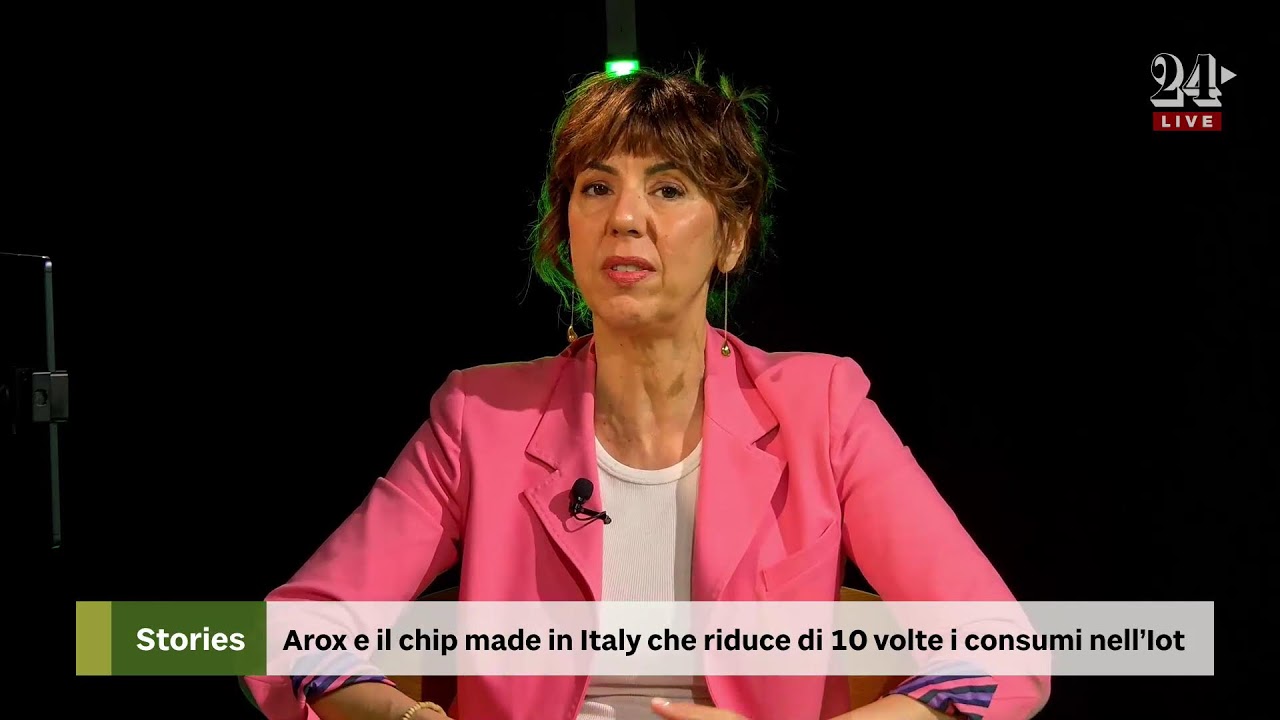
Good afternoon. Good afternoon to everyone. Welcome back to Success Stories by Il Sole 24 Ore. As every Tuesday, we are live on our website and social media to share a new story of an innovative company. As you may have
Speaker A
noticed since we returned from the holidays, we have changed our live broadcast time; we are now live at 3:00 PM and will be rebroadcast every Wednesday at 10:15 PM on Il Sole 24 Ore TV, channel 63 on digital terrestrial
Speaker A
television, so there are more ways to catch this episode. But today, I wanted to start by introducing the topic we are discussing. Today we are talking about graphite, sustainable, synthetic graphite, because as you know, graphite is a so-called critical raw material,
Speaker A
very important for the production of batteries for electric vehicles, above all, so it is a crucial element for accelerating the energy transition. The problem is that Italy still suffers a bit, or rather, suffers greatly from the lack of an Italian and European
Speaker A
supply chain. We are very dependent on China, especially for the supply of this material, but today there is an Italian startup called X Nano that has patented an industrial process to produce this graphite sustainably and to produce it in Italy as well. We will
Speaker A
see this, we will see it together with the founder, Fabio Di Fonso, founder and CEO of X Nano, who is here with us in the studio.
Speaker A
Good afternoon Alessia, thank you for the invitation. Hello Fabio, welcome. Welcome. So, I gave a brief introduction to highlight how important the implications of the technology you have developed are. But let's start from the beginning. What is X Nano? How was it born? What does it
Speaker A
do? Understood? Well, in 2022, first of all, I was a researcher at the Italian Institute of Technology at the Milan center.
Speaker A
Yes. And in 2022, I met Paolo Mutti, my co-founder, and we decided it was time —the decision at the time—to transfer all the research done up to that point into a company. So we started with X Nano, and by the way,
Speaker A
since I imagine you'll ask about the name, it's because we were involved in nanotechnologies and doing various things at the time, so we decided to call it X Nano precisely because of those various nanotech projects. Um, at the time, we found Pietro Fiorentini
Speaker A
and a series of private investors, as they say, family and friends, who believed in the project and even back then invested almost more than 4 million to get started. So it is also very important to emphasize that X Nano
Speaker A
was born from a research background. Absolutely, yes. From the Italian Institute of Technology. with great support also from the Italian Institute of Technology, which has allowed us—even today, we are partially, well, it’s not correct to say incubated, but in any case, we have
Speaker A
our offices and part of our labs at the Institute’s Milan headquarters. And this support, not only from the Institute of Technology but also from investors and partners, has allowed you to patent an industrial process for the sustainable production of synthetic
Speaker A
graphite and also hydrogen from methane. Hydrogen which, as you will explain to us now, and this is very fascinating, is a byproduct of the process, but then it also serves to power the process itself.
Speaker A
Exactly. To complete the story for a moment, this seed round helped us patent the process, and then this year we closed another 3.7 million round, led by the venture capital fund Mito.
Speaker A
Yes. They believed in the technology and were, let’s say, the first fund that believed in us because, from that point of view, it is not easy to attract attention, especially for technologies like this, which are very deep-tech. And we will delve into this
Speaker A
partnership and this support from Mito later, because this second round of investment allowed you to accelerate the construction of the first plant for the production of sustainable graphite in Italy, but we'll talk about that later. Meanwhile, I’m writing on
Speaker A
LinkedIn—excuse me for interrupting —I am writing and asking those following us to post their questions and comments so we can interact. So, a few words about our process.
Speaker A
Sure. Methane, the one we all have at home, is CH4, thanks to some lingering memories of high school chemistry. So, we have four hydrogen atoms and one carbon atom. Well, 75% of the mass is in the carbon, but 60% of the energy is in
Speaker A
the hydrogen. Normally, what we do is burn this methane to get the 60% of hydrogen, and by burning it—even with only 40% of the energy—we end up causing all the greenhouse effect problems and so on. In a way, nature tells us how to use this molecule,
Speaker A
which is, in any case, very abundant and very precious. We need to use the carbon for the mass and the hydrogen for the energy. We try to do exactly that. So we split it—pyrolysis, from Greek, meaning splitting with heat,
Speaker A
with fire, but we don’t use fire, just heat. We patented specific heating elements inside the reactor that allow this high-purity graphite to grow. This is fundamental, as we will discuss later, and the hydrogen is then recovered and, in our concept, converted into
Speaker A
electrical energy that provides the same energy to the system. Actually, nowadays, especially on a beautiful sunny day like today, the grid has an excess of electricity, so we can use that excess electricity from the grid to release hydrogen, store it for later
Speaker A
use, or for other companies, for example, that can use it. For example, uh before showing the product, I mentioned it at the beginning, but you explain it since you can explain it much better, why is graphite so important? Because, and here I'll take
Speaker A
this other bottle. Uh, every battery, the one we have in cars, in cell phones, for half, half of the active materials is graphite; in fact, the lithium battery became commercial when Sony figured it out, and a Nobel Prize
Speaker A
was even won on this topic, that uh with graphite it was possible to keep a battery charged safely.
Speaker A
Before, that had never been possible. Imagine a lithium battery. You have a material that contains lithium naturally, and when you charge it, you force the lithium out, as if you were winding a spring, and this process makes the electrons move. So you charge
Speaker A
it, the lithium goes into the graphite, and graphite is like a mille-feuille pastry, right? And so the lithium positions itself between the hexagons of the graphite, you disconnect the circuit, and the battery remains charged safely. When you close the
Speaker A
circuit again, the lithium returns to its position and the electrons pass through, giving you the electrical energy you need. Uh, every battery m m has various chemistries. We hear LFP, someone has heard of NMC and so on, but
Speaker A
all of today's have graphite, there are new technologies that are slowly arriving, but 99% of batteries are and will be graphite-based for a long time to come, precisely because it is the safest choice above all else.
Speaker A
Certainly. So, as we said, it's a critical material. If it's not there, if there's no graphite, it's difficult to produce batteries. And the problem, the big problem is that the 90% of the production is in China.
Speaker A
Exactly. Exactly. So we are not, we as Europe are not autonomous in the production of these batteries because we don't have this material, let's say, produced nearby.
Speaker A
The cathode, which is the "plus" of the battery. We are having a chemistry and physics lesson today. Wonderful. And it can be produced in the West and is also produced in the West.
Speaker A
Yes. Graphite, especially the synthetic kind, but also the natural kind, is produced only in China because the process is highly polluting, for that reason alone. As soon as they could, the Japanese moved the process to Korea, and as soon as they could, the
Speaker A
Koreans moved the process to China. This is the reason why the only graphite producers are Japanese, Korean, or Chinese.
Speaker A
Yes, essentially. And X Nano, instead, has solved two problems in one or is trying to solve two problems in one: pollution and supply.
Speaker A
Certainly. This is because the traditional process takes an oil byproduct, m
Speaker A
Yes. We convert it into this raw material and here we are showing a sample of the raw material. If the control room can help us, we can see it. It's raw, so I don't know if it can focus. Eh eh, good
Speaker A
, maybe we managed. Now we've managed. So, these are little pebbles, let's say, they are little pebbles, exactly, a few millimeters in size, as they are produced in our reactor. Then we process them and they become this silvery powder that is exactly what
Speaker A
ends up in batteries, which, as you told me, is very pure. It is extremely pure. Exactly, because unlike the traditional process or natural graphite taken, let's say, from underground, which must be purified using acids, polluting a lot of water
Speaker A
in the process, we use gas that is, let's say, pure at the source and can be purified in a very simple way; and so it is very pure, and we also expect to have a quality premium.
Speaker A
Not so much because—it's ugly to say —but from an environmental point of view, everyone says it's nice, a "nice to have" on top.
Speaker A
Yes, but from a business perspective, cost matters and performance matters. And from this point of view, with this process, we expect to be competitive with graphite produced in China, so not only from an environmental standpoint but also from the point of
Speaker A
view of production costs and therefore the final price. Absolutely. Absolutely, because obviously China's great advantage— which comes from a long way back, an industrial policy organized more than 20 or 30 years ago—is that by producing a fundamental material like
Speaker A
graphite, they started producing batteries. Certainly, by producing batteries they started, and today it is very difficult for a Western manufacturer to buy graphite, not only because it costs about twice as much in the West—so you already start with a
Speaker A
handicap—but the Chinese government can decide not to authorize the sale. But on top of that, what is happening now? What's happening is that once they've made the batteries, they start selling the cars. Certainly.
Speaker A
they are always trying to climb higher up the value chain. So this technology could be a, that is, it represents a significant push to also emancipate us from this monopoly of China, as you said, right? a quasi-monopoly of China, because since
Speaker A
... absolutely, since this is a clean process, we don't use water, we have no emissions, and as I was saying, inside we either generate hydrogen or we only generate water from the combustion of hydrogen, so we can imagine having this
Speaker A
factory anywhere. Sure. In fact, we imagine having it as close as possible to the customers, which will be the large G-factories, or in places where gas is cheap. And now let's talk about this plant as well. In the meantime, I wanted to ask the
Speaker A
control room to air the video we edited with the contributions X-Nano sent us, which show a bit of the production process. Here there are researchers who are studying, I imagine, the composition, and where is this process physically taking place right now? So,
Speaker A
we have our characterization and analysis labs, and where we manufacture the batteries and test them is at the IT labs on Via Rubattino, while the plant is in Casarile, near Pavia, where we have the first experimental plant and where, in a new
Speaker A
site we are setting up now, we will build the first pilot plant. Right, this pilot plant will be realized also thanks to this second round of funding of 3.7 million that we talked about earlier, and it is the first plant of its kind
Speaker A
in Italy, in the world. Ah, because this is a technology that actually exists in the United States, and since gas in the US costs— to say it's cheap is an understatement; it costs virtually nothing at times, and in some areas, it’s even a
Speaker A
negative price. There is a strong push from the American government for research, and there are various startups following different paths for pyrolysis; at first, it all started with hydrogen because, obviously, by splitting methane, as we said before, you generate hydrogen.
Speaker A
Then, it was realized that it is actually much more profitable than hydrogen. We focused directly on graphite because, as material scientists and engineers, our preference was immediately to try to solve the problem of graphite production, and so our process is
Speaker A
unique precisely because our graphite is born pure; it doesn't need any purification process. All other approaches are simpler, because we need to have a reactor that operates—if the footage is shown, you'll see—at 1200-1400 degrees. So we had to
Speaker A
engineer the entire system to make this possible, while maintaining high energy efficiency. Sure. Uh, other approaches are simpler, but they produce polluted graphite.
Speaker A
Sure. And so this would then require further processes and doesn't solve the problem . And as you were saying earlier, the fact that this production process doesn't pollute means the plant can even be built near suppliers or in
Speaker A
populated areas; in short, there are no location issues. Is that correct to say ? Absolutely, absolutely. This is fundamental because, as I said, and therefore also reducing, excuse me, transport times, making everything simpler regardless. Today, building a factory, a Gigafactory in the West: you
Speaker A
go "turnkey," you buy from an EPC contractor, they build the factory for you, it's hard to get it running and everything. But every day a Giga needs hundreds of tons of graphite that must arrive on time at 6:00 a.m., at the
Speaker A
same time at the factory. If, like now with Bab-el-Mandeb or the Strait of Hormuz or a typhoon, the supply chain breaks, you lose tens of millions a day .
Speaker A
Sure. It is crucial to be sure of supplies, perhaps more so than the cost, because this is fundamental. A factory of that kind must run 24/7 without ever stopping. Also because, in fact, the possibility of having a supply of graphite—and thus
Speaker A
the possibility of producing batteries —guarantees the acceleration of the energy transition. Now, let's say, there is also a debate about electric vehicles: they cost too much, who knows if we will really move forward with this technology. What do you think
Speaker A
about that, for example? I have no doubt that it is the future, for the simple reason that, even though I was born in a machine shop—I can say my family had, had a machine shop—so I am fond of the dear old piston engine
Speaker A
and all its elegance, the dance of the mechanics inside. But, from a performance and efficiency standpoint, there is no doubt, and as we see today, producing electricity is no longer a problem. Before, electricity was produced from fossil fuels, so electric
Speaker A
vehicles didn't make sense because it was better to burn the fossil fuel directly. Today, now that we have clean alternatives for electricity production , it doesn't make sense not to. Today China is investing heavily—it has always invested heavily—in renewables
Speaker A
, and I don't believe it's just for environmental reasons, but because it's a strategic issue. Sure, Oil can be blocked, the sun cannot, the wind cannot, and so China, which is rich in everything except oil, had to make itself independent from oil.
Speaker A
It is obviously an extremely broad, very complex topic, and as you say, as you explain, it involves not only chemistry and physics with the lessons we’ve done, but also geopolitics. So exactly. For example, in China, they have completely eliminated the problem
Speaker A
of pollution in cities thanks to electric vehicles. Completely. 10 years ago in Beijing, you couldn't breathe. Today, the sky is clear every day.
Speaker A
So, uh, as you say, we will hopefully also overcome the entire problem of the supply chain; in short, slowly, the obstacles will also be removed, and hopefully, electric vehicles will spread more and more, and you will be, as we hope, but as you already are, an
Speaker A
outpost of this new Italian and European supply chain for the production of this very important material.
Speaker A
Yes, yes. Our ambition is actually to sell to the Chinese too, because our process, for all intents and purposes, uh, with the right boundary conditions, can produce graphite more cheaply than traditional processes. I mean, as of today, not even the Chinese are
Speaker A
completely happy with the usual [ process], but ours is also cheaper. That is, in short, it's that is our goal.
Speaker A
Eh eh yes, I would say it's an excellence because usually, right? Eh eh you have to make a compromise, yes, it’s green, but it costs more and you make, let's say, a sacrifice for the environment. In this case, there isn't
Speaker A
even the sacrifice. That is our goal. We are working precisely for this. Well, obviously we wish you to reach this goal, but surely uh it will happen . Um, in the meantime, I would also like you to tell me a bit about your
Speaker A
entrepreneurial experience. So far we’ve talked about the industrial process, uh how you arrived at the industrial process, the fact that you come from research at the Italian Institute of Technology, and it all seems beautiful, it all seems like
Speaker A
sunshine and rainbows, but just from your face I can tell it must have been very strenuous. So, let's talk about the entrepreneurial experience, the most important challenges you’ve faced so far. For a researcher, the real moment, the turning point, is when
Speaker A
for the first time you are about to run out of cash, and there you already have perhaps 10-15 employees, you yourself have given up a let's say secure career for and you look at the account and the CFO
Speaker A
screams at you every day that we are running out of money, so then you start to break into a cold sweat and Every time, that's when you realize what execution means, and what dealing with investors means. What does it mean
Speaker A
to convince? When you're a researcher, sometimes you get told many things, like execution, the team, and you just don't realize it. Then, perhaps, when you start talking to investors, and you realize most investors are all financial, so they come with their checklists, and it
Speaker A
becomes very hard to talk to them, and sometimes it feels almost surreal because you have a beautiful technology that can produce a very important material at a lower cost, but then, I don't know, they don't like the cap
Speaker A
table or some other issue, and since you're a technical person, you ask yourself why they're saying no. Okay, we were lucky enough to have our original investors who continued to support us. They managed to, even though we were a bit hazy at the start,
Speaker A
a bit complicated—more than hazy, complicated—because they saw what was inside, and they are also helping us organize ourselves and make the company's value evident. This is very important.
Speaker A
Because skills...exactly, finding good partners, finding investors who are fellow travelers that believe in you, but also having not just technical skills, but also soft skills, entrepreneurial and managerial skills.
Speaker A
Those might come later, there are consultants, you get good advice, you have to make this leap, especially as a researcher, which means being careful with cash, execution, and meeting deadlines. These things aren't easy because technical elegance and the
Speaker A
solution sometimes tend to take over. I drive so many consultants crazy, but you have to remain disciplined to achieve the result.
Speaker A
And if you had to describe, define the biggest challenge you've faced so far, that you've faced with your team? Well, I must say not so much with the team, in the sense that we have a team— there are 20 of us today—
Speaker A
five are 50, or 45 and up, and all the others are under 30. It's a wonderful team. Some were my, let's say, PhD students or thesis students, some have been with me for several years already.
Speaker A
Many, in the hiring round we just did, we brought on six people, six brilliant young people, and so I must say, truly, the most difficult thing was communication with investors: being able to communicate the value as a technical person, the value of the
Speaker A
technology developed, and being able to organize a presentation well enough to secure an investment, because, from this point of view, an investment in digital is much simpler.
Speaker A
Certainly. We are a typical deeptech startup where if you invest today, you know you'll have to invest tomorrow, and maybe the day after you'll start to see returns —very significant returns—but you need an appetite for a big gamble.
Speaker A
That, in Italy and Europe, I have to say it's hard to find investors willing to take these kinds of bets, who have this foresight, right? Yeah.
Speaker A
Yes, because sometimes, it's really difficult because they say to you, " You're crazy, you want to go up against the Chinese giants?" I mean, you're a madman. And so that is perhaps the hardest thing, being able to organize
Speaker A
this narrative, especially at the beginning when you don't yet have the right partners along the way.
Speaker A
Sure. Right. And then I also find it very interesting that you have implemented what is called technology transfer, right? Because sometimes I think there is still a bit of a bias that research remains a bit confined to academic halls or research institute
Speaker A
classrooms. In this case, it is truly applied in the field. In my case, it was very easy because I had done the brevets myself, and let's say, in general, the IIT pushes, and has always pushed, its researchers, especially the more applied ones like
Speaker A
me, to launch into the startup world. There are very facilitated paths, which are very positive and advantageous, so from that point of view, it was quite easy. That was perhaps the simplest part of the whole operation. Well, I'm
Speaker A
pleased to hear that. So, in the meantime, I'm looking on LinkedIn, some questions are coming in; there's one, perhaps I'd ask the listener to elaborate, because Manuele Cardini asks simply "Germany, question mark?" Perhaps, Manuele, you want to ask if
Speaker A
such technology exists in Germany? I don't know, we invite you to elaborate further. So, regarding such technologies, as I was saying before, there are alternative approaches to pyrolysis, but none identical to ours. Yes. And they all started with the hydrogen
Speaker A
approach, so they are very efficient at making hydrogen, but very inefficient at making graphite.
Speaker A
So, indeed, we are talking about an original approach. Right. Exactly. So, let's see if Manuele or anyone else wants to ask any other questions. In the meantime, I'll continue with our chat. At a certain point, I always put
Speaker A
the social media issue on the table here, because social media can help a business, it can support it in various ways. Obviously, creators and entrepreneurs have passed through here who have worked specifically with social media; that's not your case, but
Speaker A
even in a startup, in a company like this, can social media play a role, and if so, what kind? And otherwise We, well I must say I'm quite antisocial at the moment, and always have been, but I must say that LinkedIn
Speaker A
in particular, for example, we use it a lot, it has been extremely helpful for us in finding new collaborators, getting in touch with consultants or partners, so from that point of view, absolutely yes.
Speaker A
For what we do, we are not yet a company that uses Instagram or TikTok or other social media of that type, no, let's say LinkedIn is our main tool at this moment. Even though I personally have a video of how intellectual
Speaker A
graphite is born. I must say that the reason we have used social media so little until now is a matter of confidentiality, because all the patents were filed recently, not yet public; and so I must say there was a
Speaker A
lot of focus on secrecy, also because, having to fundraise, it was essential not to burn through the innovation early. Now, and then anyway, we are all focused on achieving, because after the October plant we already have another one even bigger planned for June next
Speaker A
year; so we are all running around like crazy. And we don't have much time to do things or make a video.
Speaker A
Sure, sure, there's no time to make a video, I understand that. But surely, surely a little further down the line, when we can start to have a bit more discussion about the technology, it will certainly be a pleasure, also because
Speaker A
I have always had a bit of a passion for education, teaching young people, and so certainly attracting, yes. Sure, it can be a tool for outreach. Yes, from next year we will start opening the new round, so it will be important
Speaker A
to do some marketing. Good. Eh, you were talking about the new plants, do we also want to say where they will be built, if it's already known and can be said. The next one we will install at the Symbiosis center
Speaker A
which belongs to the Natta family in Pavia where we are now setting up the new laboratories and we will install it there and test it. As for the one in June, is it there in Natta or somewhere else? We haven't yet, we are still
Speaker A
defining the place, the site. Okay. But still in Italy. Absolutely yes. We shall see.
Speaker A
Precisely because it is a clean technology, it is easy. Exactly. As we were saying before, it is easy to position it, there are fewer implications from an environmental point of view and this already seems to me a, let's say, a very, very important
Speaker A
characteristic, right? For Yes. Obviously there is a fire department issue because by managing methane, natural gas, hydrogen, this is important, but that can be managed.
Speaker A
Sure, sure. Absolutely. So, one last question before we wrap up our chat. Actually, we’ve already given some advice by sharing your entrepreneurial experience, but I’d really like you to give one or two strategic tips for an aspiring digital entrepreneur
Speaker A
watching us, who might have a project in the drawer and doesn't know how to start. Ask, make calls, don't be ashamed, because to get funding, you have to ask hundreds of people. That is fundamental. Many get discouraged; even
Speaker A
though it's a cliché I've always heard , I say, "come on," but it’s actually exactly like that. And so this is fundamental. And the other thing is being prepared for the dark times, which will definitely happen, when the
Speaker A
account hits zero or nears zero and you struggle to even pay salaries, and then you have to restart after slowing down, and you have to jump back in at full speed. So these things, especially in the beginning, are absolutely normal;
Speaker A
you have to be prepared psychologically . This is, as Elon Musk once said, starting a startup is like staring into the abyss while eating glass. Exactly that.
Speaker A
It's a very effective image for the difficulty, but as you say, great motivation and also great flexibility, right? The ability to be on a rollercoaster, because sometimes it's Investors are very perceptive and have this animal instinct to understand if
Speaker A
the founder is willing to go all the way or not. After all, they are giving you their money. Typically, they don't understand anything about what you're doing, or they try to understand but can't, so they only invest if they know
Speaker A
you will be the last one to abandon the ship. If the founder isn't completely convinced, it’s difficult. Absolutely , and they are never wrong; they have a very strong instinct, infallible.
Speaker A
Exactly. I thank Fabio Di Fonso, founder and CEO of X Nano, for sharing this great story of innovative entrepreneurship with us.
Speaker A
I thank you all for following us. I remind you that you can rewatch this episode on the Sole 24 Ore website, or tomorrow, Wednesday at 10:15 PM, on the rerun on Sole 24 Ore TV, channel 63 on digital terrestrial. See you next
Speaker A
Tuesday. Thank you. Thanks, Alessio.
Topics:X Nanosynthetic graphitesustainable productionelectric vehicle batteriesmethane pyrolysishydrogen byproductenergy transitionItalian startupbattery materialscritical raw materials