Skip to content
Get App

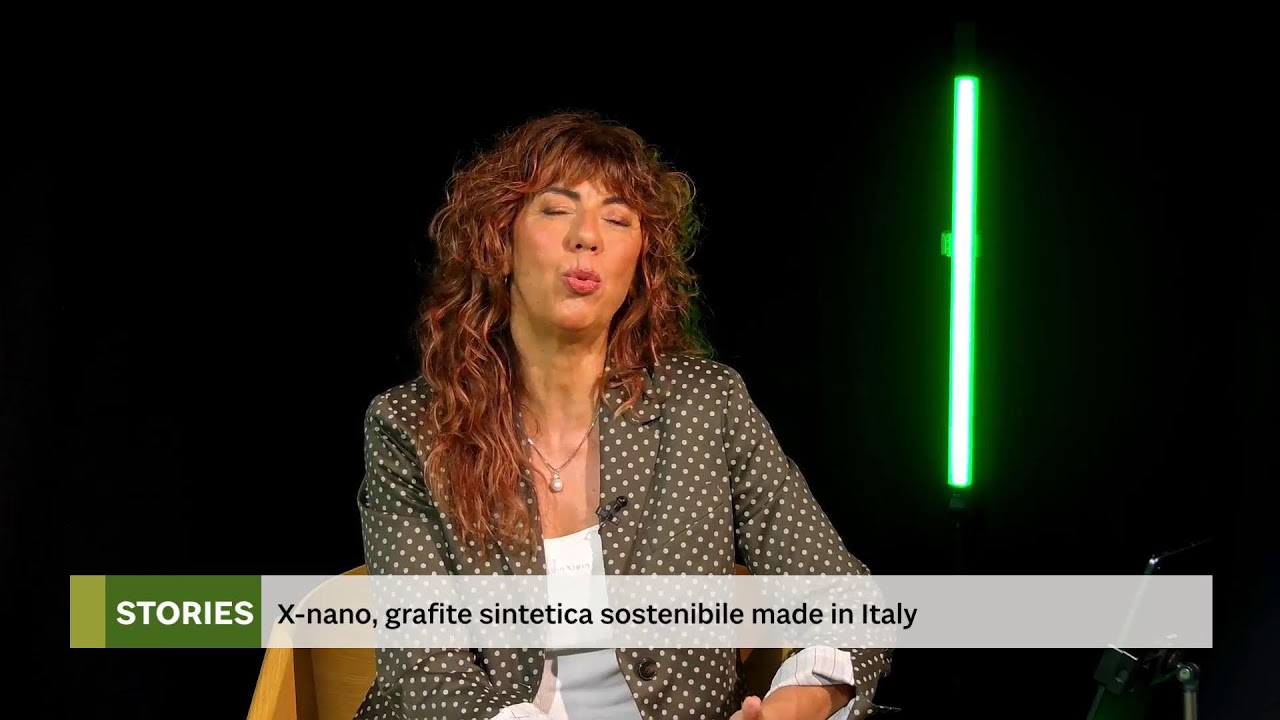
Arox e il chip made in Italy che riduce di 10 volte i consumi nell’Iot

Italian startup Arox develops a chip that reduces IoT power consumption by 10x, enhancing battery life and sustainability.

Key Takeaways

  • AX0 chip drastically reduces energy consumption in IoT devices, enabling longer battery life and less frequent charging.
  • Focusing on hardware innovation, especially microcontrollers, is crucial for overcoming energy efficiency limits in IoT.
  • Made in Italy design and testing paired with strategic outsourcing balances quality control and manufacturing efficiency.
  • Sustainability and environmental impact are important drivers behind Arox’s technology development.
  • Geopolitical factors can influence semiconductor supply chains, highlighting the importance of diversified production strategies.

What the video covers

  • Arox is an Italian startup founded in 2022 by engineer Davide Toschi, focused on creating energy-efficient microcontrollers for IoT devices.
  • The startup's chip, AX0, reduces power consumption by up to 10 times compared to industry standards, significantly extending battery life.
  • IoT refers to networks of smart devices that collect, process, and communicate data, often requiring low power consumption for practical use.
  • AX0 targets the microcontroller, the core control unit in IoT devices, optimizing hardware rather than just software to reduce energy use.
  • Applications include infrastructure monitoring, smart cities, fitness tracking devices, and any battery-powered sensor systems.
  • Arox designs and tests its chips entirely in Italy, but outsources manufacturing to Taiwan, a critical hub for semiconductor production.
  • The startup emerged from challenges faced in a previous venture related to indoor localization and battery limitations.
  • The geopolitical situation, especially in Taiwan, poses potential risks to the semiconductor supply chain.
  • Arox emphasizes innovation, sustainability, and maintaining control over design and testing phases to ensure product quality.
  • The company is actively engaging with the community through social media and encourages startup founders with strategic advice.

Answers

Questions about this video

What is the main innovation of Arox’s chip?

Arox’s chip, AX0, reduces power consumption in IoT devices by up to 10 times compared to current industry standards, significantly extending battery life.

How does Arox maintain its 'Made in Italy' identity while outsourcing manufacturing?

Arox designs and tests the chip entirely in Italy, controlling the first two phases of chip creation, while outsourcing only the physical manufacturing phase to Taiwan.

What are some practical applications of the AX0 microcontroller?

AX0 can be used in infrastructure monitoring, smart city services, fitness trackers, and any IoT system requiring efficient data processing with minimal energy consumption.

Full Transcript — Download SRT & Markdown

00:56
Speaker A
Good morning, and welcome back to Successful Stories from Il Sole 24 Ore. As every Tuesday, we are live on the website and social media channels of Il Sole to share a new story of digital enterprise and startups. Today, in
01:09
Speaker A
particular, we are talking about technology, about chips, conductors, micro and macroconductors. Our guest will explain in detail what we are talking about later. We are talking about an Italian startup that has created a chip capable of reducing power consumption by up to 10 times
01:27
Speaker A
compared to industry standards. This Italian startup was founded by a young engineer under 30 named Davide Toschi, who is here with me live as a guest.
01:39
Speaker A
Good morning, Davide. Thank you, Alessia, for inviting me. The startup is called Arox, and he is the founder of this company. As always, I remind you that you can participate in this episode by leaving your comments and questions in the comments
01:57
Speaker A
section under the live stream. I will put your questions to Davide, so you can join in this conversation with us.
02:08
Speaker A
So, let's start by talking about this highly innovative solution. This chip that you, that Arox has created, reduces power consumption in the so-called IoT, the Internet of Things.
02:22
Speaker A
First, if you agree, I would like to start by explaining what the Internet of Things is in detail, to help people understand the practical applications of this technology. Certainly. Well, the Internet of Things refers to that entire network of smart electronic
02:36
Speaker A
devices capable of collecting data from the surrounding environment, processing it, and possibly communicating with each other. Let's say that this term can therefore summarize all the devices that we currently call smart. Arox was born in 2022, by the way, precisely in
02:57
Speaker A
connection with this field of application. The idea behind Arox is to start by analyzing the IoT system as it currently exists. So, let's consider that at the core of an IoT system there is a control unit that processes the
03:13
Speaker A
data received from the sensors, which are always on the IoT device. Well, Arox focuses precisely on that control system, which is called a microcontroller.
03:23
Speaker A
Okay? We can imagine the microcontroller as a very small computer from which the screen, keyboard, and mouse have been removed, and which must compute what it receives as input from external sensors. The point is that microcontrollers were created precisely as integrated
03:44
Speaker A
solutions to be extremely efficient and thus ensure that an IoT system Certainly. can be highly optimized and consequently consume very little energy, because on average, in IoT systems, what we want is for them to be small, intelligent, and as a result, we almost
04:01
Speaker A
don't even want to worry about them needing to be charged; in fact, powering or charging them is basically an impediment to this. positive.
04:10
Speaker A
Eh, before we continue, shall we try to give an example to help our viewers visualize the practical application— that is, what are the sectors where this technology you have created is active or could be useful? Certainly.
04:26
Speaker A
Well, X0, being a microcontroller for the IoT market segment, can be useful, for example, within all monitoring systems. Whenever you want to monitor an infrastructure to see if it has unexpected thermal fluctuations or, for instance, uncontrolled vibrations, a
04:48
Speaker A
system like X0 uh-huh is absolutely ideal because it allows for the reprocessing of data from a temperature sensor or an accelerometer.
05:01
Speaker A
Everything that these sensors collect, it manages to process with very little energy, so if the system is battery-powered, it can last much, much longer compared to current solutions.
05:12
Speaker A
And could the application also be, for example, in the so-called Smart City field, meaning services that we use as citizens? Certainly, exactly.
05:21
Speaker A
Everything that basically collects data, even, for example, fitness monitoring. Yes, if I have a wristband that measures heart rate, respiratory rate, or other biometric data, today it’s done using straps we wear on our wrists; they have a battery and a control
05:40
Speaker A
system, which is the microcontroller. And just think how much of an impact using a solution like ours could have, as it reduces energy consumption by up to 10 times. This means that recharging these devices can happen much less
05:54
Speaker A
frequently than it does now. Um, you are an engineer, you studied at the Polytechnic, and how did you come up with the idea to, let's say, launch a business in this sector, to focus on chips and then, as we will see, on
06:11
Speaker A
artificial intelligence—where did this idea come from? Well, I have certainly always been very passionate about everything related to digital electronics. Let's say that electronics can be divided into two broad categories: analog and digital. I have always been very interested in the
06:30
Speaker A
digital side, particularly the part related to intelligent computing. Yes. AX0 was born from, let's say, previous experience with another company I founded in 2018 called Endcode, a company that promised an indoor localization system, essentially capable of overcoming the problems
06:52
Speaker A
encountered in enclosed spaces with GPS object tracking by using Bluetooth. Mm. Mm. Well, during our first deployment phases of this system, we realized that no matter how much we tried to optimize the software written on the devices transmitting the information, the
07:14
Speaker A
battery life was extremely limited in any case. Consequently, we were forcing those who wanted to use our technology to replace the batteries every 6–8 months, and this obviously wasn't sustainable for them.
07:28
Speaker A
It's a cost, but also, let's say, an environmental cost, I imagine, right? Certainly. Exactly, that too. And so from there, the idea for AX0 was born, saying, "If software isn't enough to significantly reduce energy consumption, the problem must necessarily lie in
07:42
Speaker A
the hardware, and therefore in the central control system, the microcontroller." And that's when we decided to say, "Okay, instead of focusing on the application side, let's work directly on the silicon." And that's how the development of AX0 began
07:57
Speaker A
, which, let's say, to reach what it is today, we had to—let's say—we looked for slightly different ways to design it, of course, otherwise we would have just fallen back into today's technology.
08:09
Speaker A
And so this is what ensured that today AX0 is available on the market and has the performance it can demonstrate.
08:18
Speaker A
Um, you mentioned silicon, so I imagine your sector, your startup, was also impacted once the conflict in Ukraine began, leading to the whole issue of, let's say, materials, the supply crisis, and the rising costs of raw materials
08:35
Speaker A
for production. I imagine you also felt the wave of this crisis a bit. Well, let's say yes. Are you still?
08:47
Speaker A
Well, let's say that certainly the procurement of raw materials is fundamental to our production chain, but it is also true that silicon is actually produced in a few very strategic places.
09:02
Speaker A
One of these, for example, is the very famous TSMC, which is the company that produces silicon and prints chips for big companies like Apple and others.
09:10
Speaker A
Mm-hmm. So, let's say that the direct conflict in Ukraine hasn't burdened our production chain, but a conflict over Taiwan could do so much more. Well yes, because Taiwan is precisely a strategic hub where the silicon manufacturing sector reigns supreme.
09:30
Speaker A
Because your chip is Made in Italy for all intents and purposes, but there is a part of production that is in Taiwan.
09:36
Speaker A
Exactly. Well, we pride ourselves on being Made in Italy, as the entire design and testing process is done completely in Italy. So let's say that in semiconductor companies there are basically three phases for creating a chip. A first phase where the circuit
09:55
Speaker A
is designed, a second phase where it is decided how the circuit is placed on the silicon, and then the third phase where the chip is literally produced.
10:05
Speaker A
Well, Arox has internalized the first two phases, therefore having complete control over the production of our chips.
10:14
Speaker A
While the actual manufacturing part is outsourced, basically you always try to —since there a
10:32
Speaker A
moment, represents a strength as they offer one of the best solutions in the world, so.
10:40
Speaker A
And so they also allow you to cut costs , I imagine, right? Yes, certainly yes, compared to those with less production availability, of course, absolutely.
10:51
Speaker A
But let's say that interfacing with Taiwan is something we try to push; they provide the opportunity to push technologically by using their solutions, so it is an advantage that mainly falls back on the technology.
11:05
Speaker A
And in the meantime, I am trying to retrieve some comments on LinkedIn that I am not connected to, so I ask the control room to send them to me if there are any. Thanks. Um, I wanted to know if your business also has, let's
11:20
Speaker A
say, ramifications abroad, so it is a Made in Italy product, but do you also supply the chip abroad? Who are your main clients? Who is this product aimed at?
11:36
Speaker A
Certainly. Well, absolutely, in the sense that production is all done— with the exception of the manufacturing part, as I was explaining before— everything is designed in Italy, so sales absolutely must be worldwide.
11:48
Speaker A
This is because the semiconductor market is basically very driven both in Europe and in other parts of the world.
11:56
Speaker A
So absolutely, our, let's say, our main clients are all those who need to build a system in the field of the IoT world that consumes very little, and therefore wants to try to overcome or mitigate the problem of recharging or
12:11
Speaker A
the battery directly. Shall we give some examples of clients? Clients in the healthcare field too, I think, right?
12:20
Speaker A
Yes. Well, we can say that today what we can comfortably talk about is that one of the cases, one of the application fields where it has been strongly requested, has been that of rail infrastructure, in the sense that predictive
12:37
Speaker A
maintenance of the tracks would certainly lead to a notable technological improvement compared to what is currently done. Certainly, the problem is that tracks have a life cycle that can be 5-6 years.
12:48
Speaker A
Consequently, a device that monitors a track that has a life of 5-6 years must last at least 5-6 years, otherwise it would be practically impractical to go and recharge all the devices on the infrastructure across a national network. So this, for example, is one
13:04
Speaker A
case. Eh, other clients are under NDA, so we cannot talk about them, but the world of applications is, let's say, varied. Also, let's remember that this is our first microcontroller of a large family that we are going to develop, in
13:20
Speaker A
the sense that this is for IoT applications. The reason for such low consumption. M m a second important point to emphasize is the fact that We applied a non-standard design methodology and this meant that the microcontroller was able to consume
13:35
Speaker A
very little, because for every operation performed by the microcontroller, only the portion of the circuit absolutely necessary to perform it is used. Consequently, energy consumption is reduced drastically; so it is not an algorithm found that we will then be forced to
13:50
Speaker A
invent another for the next chip, because it is already applied to this one. It is a methodology based on pure circuit design.
13:58
Speaker A
Ok. Ok. Which can therefore also be applied to subsequent products or Absolutely. In fact, that is exactly the point, in the sense that this is our first chip, as we said, for the IoT market. We want, we have, let's say, a
14:09
Speaker A
very dense product roadmap. The next ones will be focused on slightly higher computational tiers because, in any case, in the IoT, the IoT that we mean, where X and Z0 are applied, computation is limited to data collection and the
14:21
Speaker A
processing of this data. Certainly. And then it tends to stop there. Regarding higher computational ranges, for instance artificial intelligence brought on-chip, there are already plenty of manufacturers doing it, however adapted with our design style. In that case, we believe we will manage to see
14:40
Speaker A
not a 10x, but even more. So it is truly Well, this is very interesting. In fact , the next question I would have asked you...and you told me that you have these new artificial intelligence products in the production line, or at
14:54
Speaker A
least in the design phase, and there the issue of energy-intensive applications, if we can call them that, is an important topic, right? We even talk about how much, quite simply, ChatGPT consumes water too, right? Yes, certainly, absolutely. Ah, let's say
15:12
Speaker A
that there are different phases of artificial intelligence there too, so I gave the example of GPT, the one we consider most, and now what we are trying to do is say: "Alright, if ChatGPT is a very large model that
15:25
Speaker A
consumes a lot, let's try to bring to silicon"—others are doing it too— " some lighter artificial intelligence, while still making sure that what is called on-edge computation can be done.
15:36
Speaker A
" So I have chips that are microcontrollers connected to each other; they have limited resources because they are microcontrollers, but they can still manage to run even small artificial intelligence algorithms. The problem is that running them, beyond the fact that it consumes a lot of
15:54
Speaker A
energy even for such small devices, means that if they are battery-powered, as is the case most of the time, the battery gets drained very quickly. By applying our methodology, we believe, or rather, based on the data we have,
16:08
Speaker A
we have seen a net improvement in that as well, so our next chip will be for that market segment.
16:13
Speaker A
Are there any questions coming in from social media? Someone asks if it's true that it consumes less but costs more compared to other standard chips? Well, this is an interesting question, but certainly the fact of having, at equal
16:27
Speaker A
performance—because this is another point I emphasized—it means that to consume little, we didn't, quote-unquote, castrate our device and limit it computationally; on the contrary, we tried to maintain the same level with 10 times less consumption.
16:43
Speaker A
Consequently, any innovation, whatever it may be—whether in our market or any other—must certainly be paid more compared to something that has the same performance but consumes 10 times more.
16:53
Speaker A
True. So, in terms of cost for the end buyer, it will certainly be higher compared to existing solutions for the same level of performance, but as you say, there is a gain in the long run, right? You get what you pay
17:07
Speaker A
for, I’d say; but, well, it’s a proverb that, in a way, captures the essence of this technology. We have talked in detail about the chip technology so far, but I would also like to talk a bit about your
17:22
Speaker A
entrepreneurial experience and the funding that helped you launch the startup, whether there was external funding or a university accelerator.
17:31
Speaker A
Sure. Well, this is a long story because we have to start a bit further back, in the sense that, as I mentioned earlier, in 2018 I founded my first company with other guys, a software development company that was
17:47
Speaker A
already harboring the project I told you about earlier regarding indoor localization. From there, we decided, " Okay, let's start developing a low-power microcontroller." At that point, the company basically had two main branches: the consulting one and the R&D one, where we worked on the
18:04
Speaker A
chip, so still within our own company. The advantage of all this was that we were able, in the first instance, to essentially self-fund, because with software consulting we were able to pay salaries and the R&D development of the
18:18
Speaker A
chip we were working on. And so this meant we could have independence for, let's say, at least a couple of years.
18:27
Speaker A
Hmm. Then what happened after was that, yes, after an initial development period, we brought to light the heart of the microcontroller, where you could already glimpse extremely reduced energy consumption. Then what happened is a bit of what perhaps all startups
18:44
Speaker A
desire, which is that we received acquisition requests from big tech companies. Let's say that, perhaps, my idea was to continue working on this project and not give away what would later become the heart of what we see today. As a result, we turned down the
19:06
Speaker A
offer, and within just a few days, a proposal arrived from another 100% Italian investor who decided to co-invest to reach the end of AX0, so as not to cut the development short in a preliminary phase. We immediately embraced this this this investment and
19:26
Speaker A
to date, let's say, we have, yes, we have the backing of an Italian fund from an Italian family that invests in the company. I want to clarify that this is not a mere venture capitalist, so it is not simply a financial
19:40
Speaker A
investment, but the group that follows us and, well , yes, funds us, also has at its disposal, it makes available a sales network that ensures that the introduction of our solution to the market can be much, much more fluid
19:53
Speaker A
compared to everything else. And this is an important topic, not only that of acquisitions, but also that of an investor or a fund entering one's startup which, at times, can rightly shift the balances within the startup and perhaps even steer business goals
20:14
Speaker A
in a direction one does not want to go. Instead, in this case, you were lucky to find an investor, a fund that actually followed the same direction.
20:27
Speaker A
Absolutely, it's very important. In fact, this group has never destabilized the company's balance in any way; on the contrary, I must say it has only contributed in the right way and, above all, at the right times, which for a
20:40
Speaker A
startup is fundamental, because time to market is everything to us. Right. Um, so let's say we have been we have been lucky in this respect. I believe, however, that the technological impact we had at the time allowed them to notice us, and so the
20:58
Speaker A
value of the business and the innovation really played its part. Regarding your entrepreneurial experience so far, you have already touched a little bit on the journey, but I wanted to know what are the biggest or, let's say, toughest
21:15
Speaker A
obstacles you have encountered so far. Well, I must say that I am probably a voice a bit out of the chorus, in the sense that, from the beginning, so since 2018, I have always, let's say, created companies. My first company and
21:33
Speaker A
now this one with very capable people. So, fundamentally, we have always found a work harmony that I think few groups have.
21:42
Speaker A
The fact now of having then of having decided to have an investor. Again, I don't want to fall into the classic clichés of startups that have to sell no matter what. There wasn't the need, for us there was, because the
21:55
Speaker A
semiconductor market is also something that, beyond the trustworthiness you must have in the market, because an error inside a chip can cost a company that adopts that chip a great deal, because you have to think that an error
22:08
Speaker A
in physical hardware cannot be corrected. There is no software that updates it remotely and fixes it, especially on microcontrollers. So, if on one hand there was a need to enter the market with a strong group behind us, on the other hand, the
22:21
Speaker A
semiconductor market is certainly something that does not have common costs. Certainly. So, unlike mere software development, like for example we have in the other company, they truly have costs that are , let's say, not even comparable.
22:37
Speaker A
Creating chips, beyond just the design, therefore the programs that we use. If we consider the total calculation, we have the programs we develop with that have very high costs, extremely, extremely qualified personnel, because even there, I repeat, there is always
22:51
Speaker A
an issue of Certainly, not being able to make a mistake, meaning you cannot mess up a chip design because otherwise the damages are economic and, above all, to your reputation.
23:00
Speaker A
Absolutely. And then, after the design and engineering phase, there is the chip printing phase. And that is another extremely high cost, even though TSMC has, let's say, access to, let's say, has the volumes for production. In any case, it is a high cost. So, let's say
23:17
Speaker A
that perhaps my my entrepreneurial experience can be summed up in this: the fact of having worked with very capable people and having found a group that was able to embrace our cause and understand the technological value of what we have. So I would say you are
23:37
Speaker A
very lucky as well as very capable, but after all, luck never comes by chance, so it is clear that there is value in the business and in the innovation that you have presented. I wanted to ask the question I ask all our guests, the one
23:50
Speaker A
about the use, about the role of social media within the business, if it has had one, if it will have one, what are the platforms you use most and for what purpose.
24:01
Speaker A
Certainly. So, regarding this, we try to—as of today, we mainly use LinkedIn and the Instagram channel. Let's say that we have always worked with a company that follows us on a daily basis, you know, which is called Crain.
24:18
Speaker A
With them, we have decided to direct our social media in a way that is perhaps unusual compared to classic companies, in the sense that for us, LinkedIn represents a more professional side, and therefore where we want to highlight our technology. As for
24:31
Speaker A
Instagram, we are still working on it. The idea is to convey a different concept, in the sense that often chips, or microcontrollers, are produced as a series of blocks that fit together, m basically that’s what they are, if
24:47
Speaker A
you look inside them. It’s a very automated production method, I am simplifying it a lot, obviously.
24:52
Speaker A
Sure. What we do in our designs instead is something more artistic, almost artisanal, and so we like to tell the story of this marriage between art and engineering that I strongly believe in.
25:04
Speaker A
So, while on one hand LinkedIn shows the engineering side, on Instagram we want to highlight the artistic part of our work.
25:10
Speaker A
Sure. And this is very, very interesting, precisely the artisanal aspect of technology. It was a concept I had never considered, and actually I want to compliment you because because it is very interesting. Um, before asking the final question that I
25:26
Speaker A
ask all my guests, the strategic advice for those watching us, I wanted you to give us a hint about your plans for the future. We have already seen that there are many, that there is a lot on the
25:39
Speaker A
table, artificial intelligence, but maybe I don't know, there is also a greater expansion, I hope, of the team.
25:46
Speaker A
What are the paths for your future, for your future expansion? Ah, certainly the expansion has happened, it is currently underway and will continue, in the sense that you have to consider that we started with more or less five people mh
26:01
Speaker A
mh and today we are 15, and we expect to be at least thirty by the end of the year. And this is not just to make up numbers or tell a story of simply wanting to grow with no real end goal,
26:14
Speaker A
but because the design of what we do, let's say, it’s difficult to find figures versatile enough to cover all the phases of chip design. So it is useful to have compartments working and departments focused on a specific part,
26:30
Speaker A
so that there are no errors within them and they can be extremely vertical. Regarding this expansion phase, it is meant to support the dense roadmap we have, where currently this chip doesn't have, for example, a wireless communication interface like Bluetooth.
26:48
Speaker A
Yes, it will be next for us; we will release it shortly with integrated BLE, and then there will be the whole phase regarding artificial intelligence. It will be a microcontroller that, as we said before, will seek applications with, let's say, much higher
27:02
Speaker A
computational capabilities, while still enjoying our design style. Sure. So that artisanal aspect you were talking about earlier. Sure.
27:10
Speaker A
So, what is the strategic advice? One or two strategic tips you would give to an aspiring startup founder, an aspiring man or woman who is following us and has an idea for a business venture in their drawer.
27:23
Speaker A
Well, that's always a great question, in the sense that I also try to avoid the more obvious answers here, right?
27:30
Speaker A
So, saying believe in what you do or talk of passion, that's obvious; it must be the foundation that you believe in what you have, beyond just passion.
27:39
Speaker A
What I feel I can say from my experience is that I feel more inclined to address an audience of technicians, of engineers. I believe the technological aspect is absolutely fundamental. So, if there are guys from any university center who have studied
27:54
Speaker A
scientific subjects and want to approach an entrepreneurial career, I believe the first point is the technological realization of something that is well beyond the state of the art and then from there everything else follows. I tend to say this because
28:08
Speaker A
sometimes people try a bit too hard to end up in a more, let's say, business and market-oriented side, rather than actually focusing on what we technicians know how to do, which is the technological part. Certainly, I would say it is absolutely fundamental.
28:25
Speaker A
I thank Davide Toschi, co-founder of Arox, for telling us this beautiful story of innovation, innovation completely made in Italy. Obviously, I wish you the best of luck for all your future projects. I thank all those who followed us; I remind you that you can
28:40
Speaker A
rewatch this episode on the Sole 24 Ore website. I look forward to seeing you Tuesday with a new story. Thank you.
28:46
Speaker A
Thank you. Thank you very much. Thank you.
Topics:AroxIoTmicrocontrollerenergy efficiencychip designMade in Italysemiconductorsstartupbattery lifedigital electronics

Get More with the SozAI App

Transcribe recordings, audio files, and YouTube videos — with AI summaries and speaker detection. 30 minutes free.

Or transcribe another YouTube video here →