Skip to content

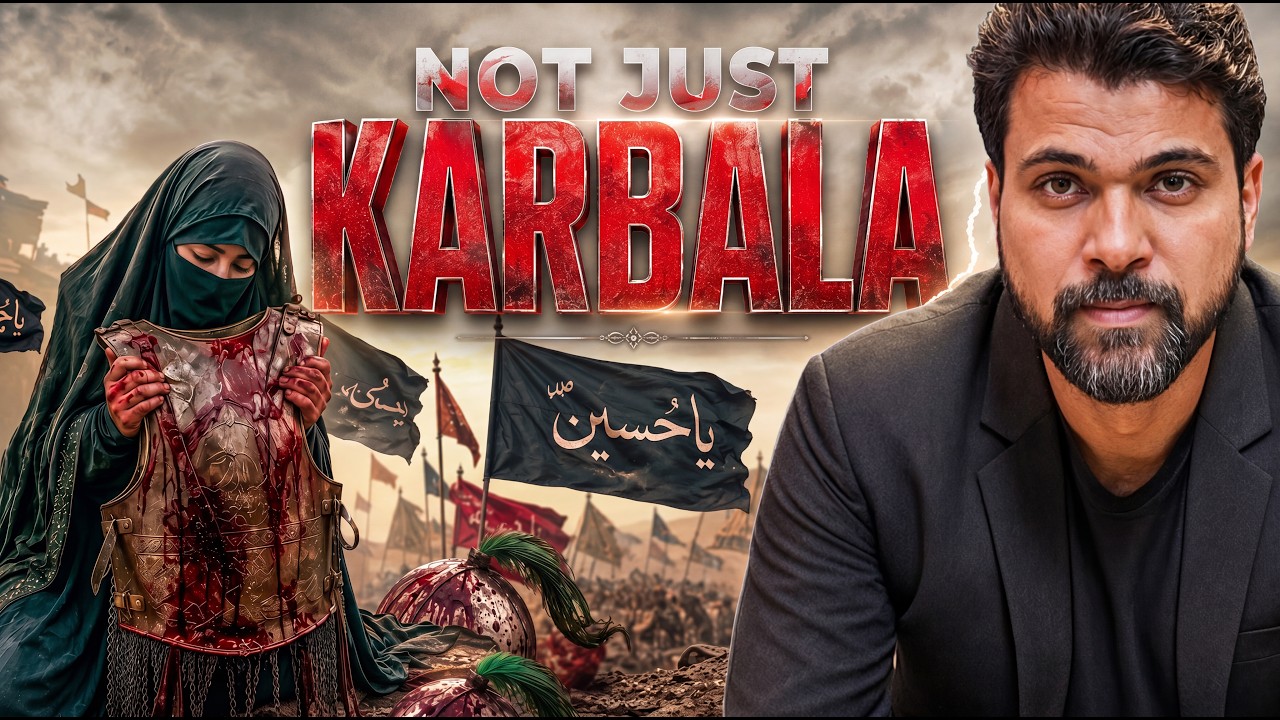
Women Are Like Dogs? — The Hadith They Never Let You Finish

Exploring a controversial hadith comparing women to dogs, this video clarifies context, historical background, and Islamic scholarly views.

Key Takeaways

  • The hadith comparing women to dogs and donkeys is often misunderstood and taken out of context.
  • The primary issue addressed by the hadith is distraction during prayer, not the inherent value of women.
  • Hazrat Ayesha (RA) provided authoritative corrections that influenced Islamic jurisprudence on this matter.
  • Using a sutrah during prayer is a practical solution to prevent distractions from passersby.
  • Women have historically played a vital and respected role in Islamic scholarship and religious education.

What the video covers

  • The video discusses a hadith from Sunan Ibn Majah that mentions women, dogs, and donkeys invalidating prayer if passing in front of a worshipper.
  • It highlights the narration by Hazrat Abu Huraira and initial shock at the comparison of women to dogs and donkeys.
  • The video introduces a dialogue between a Muslim and a priest to explore the hadith's meaning and context.
  • It explains the historical context of 1400 years ago when prayers were held in open fields without mosque walls.
  • Hazrat Ayesha (RA), a prominent female scholar and wife of the Prophet Muhammad, is cited as correcting misunderstandings about this hadith.
  • The video clarifies that the hadith is about distraction during prayer and the solution was to use a sutrah (barrier) to block the gaze and prevent disturbance.
  • It presents the consensus of major Islamic scholars that passing in front of a worshipper does not break the prayer, especially concerning women.
  • The video emphasizes the significant role of women in Islamic scholarship and their contributions to preserving and teaching hadith.
  • It also promotes an AI Masterclass related to video creation and freelancing as a side note.
  • The video encourages viewers to question misleading content and understand Islamic teachings in proper context.

Answers

Questions about this video

Does the hadith mean women are like dogs in Islam?

No, the hadith is often misunderstood. It addresses distraction during prayer caused by anyone passing in front, including women, dogs, or donkeys, not equating women to dogs.

Who corrected the misunderstanding about this hadith?

Hazrat Ayesha (RA), the wife of the Prophet Muhammad and a great scholar, corrected the misunderstanding and clarified that the prayer of the Prophet continued even with her presence.

What is the solution to avoid distraction during prayer mentioned in the video?

The Prophet Muhammad recommended using a sutrah, a physical barrier placed in front of the worshipper, to block the gaze and prevent distractions during prayer.

Full Transcript — Download SRT & Markdown

00:00
Speaker A
In Islam, women have been compared to dogs. Folks, I'm not saying this on my own.
00:07
Speaker A
This is in their own book. It is clearly mentioned in Sunan Ibn Majah, Hadith No. 950, that three things can invalidate a worshipper's prayer if they pass in front of them.
00:20
Speaker A
A woman, a dog, and a donkey. This is the limit. Hey, what is this? This is very strange.
00:27
Speaker A
That is, if a woman, a dog, or a donkey pass in front of a worshipper, then a Muslim's prayer is spoiled.
00:33
Speaker A
Are these people stupid? What does it mean? And who has narrated this tradition? One of the special companions of the Prophet Muhammad, 'Hazrat Abu Huraira'.
00:44
Speaker A
This is the reality of Islam, my friends. They compare a woman to a dog and a donkey.
00:50
Speaker A
Can we turn a blind eye to this truth? Absolutely not. I am surprised. This is the limit.
00:55
Speaker A
Are these people stupid? May God give these people some sense. Come, let's pray for all of them.
01:01
Speaker A
O Jesus Christ, shelter these people who are wandering in darkness. O Jesus Christ, take them out of the darkness.
01:09
Speaker A
Priest! Stand up and say what you want to say. Please stand up. We are not in the darkness.
01:23
Speaker A
In fact, those people wander in the darkness who have incomplete knowledge. Who is this?
01:31
Speaker A
And how is he talking to the priest? I am confused myself. Take him out of here.
01:38
Speaker A
You don't look like a Christian. Who are you? Praise be to God who created me.
01:43
Speaker A
I am a Muslim. Muhammad Maktoob Ahmed. Oh! My Muslim brother, so would you like to shed light on this hadith narrated by Hazrat Abu Huraira?
01:56
Speaker A
Absolutely, priest. But before that, one important thing. If you are surprised to see this church, this character, these voices, and you also want to make such real videos with the help of AI, or you want to start some side income freelancing from home,
02:14
Speaker A
then next month, 22nd August 2026, I am coming live with my AI Masterclass 2.0.
02:21
Speaker A
In this 3.5-hour class, using free and paid AI tools, we will learn creating VFX, how to make ads, and create Nasheed. Not only this, we will learn to use Claude, ChatGPT, and Gemini in this class.
02:37
Speaker A
Along with that, we will learn how to make presentations, how to write viral scripts using AI.
02:45
Speaker A
So if you are a student, a homemaker, or do any job or business, then this class is for you especially.
02:52
Speaker A
You can learn this class from your mobile at home, in a very easy language.
02:57
Speaker A
And today's biggest revolution, you can make your career by using AI. The feedback of our previous Masterclass 1.0 is 99.9% positive. And this 2.0 class is the advanced version of Masterclass 1.0. And yes, it's a promise that no more courses will be sold to you in this class.
03:17
Speaker A
No extra fees will be charged in the name of hidden charges. So go to www.reallymaktoob.com and register for the class. I have also made the link available in the description.
03:31
Speaker A
Mr. Maktoob, can we come to the topic please? Sorry, ma'am. Join the class. So, priest, to understand this Hadith, you will have to go to Madina 1400 years ago.
03:43
Speaker A
[Music] This is the time when the Prophet (PBUH) left the world. The era of the Caliphate had begun.
03:56
Speaker A
The Islamic Empire was rapidly growing under the supervision of the Caliphs. This was the era when only one thing was discussed in every home and gathering.
04:06
Speaker A
That how to spread Islam and keep it safe. And because of this, all male and female companions were busy serving Islam according to their strength and talent.
04:20
Speaker A
Strong companions from all over the world were spreading the message of Islam to different cities and countries.
04:25
Speaker A
On the other hand, Huffaz of the Quran, i.e., people who had memorized the Quran, were helping others to safeguard the Quran in their hearts. They were helping others to memorize the Quran.
04:37
Speaker A
So that every word of the Quran and Sunnah could be safe in the hearts of people.
04:42
Speaker A
And in this ancient mission, the women were not behind anyone. There were some women who were serving the Muslims.
04:50
Speaker A
Some were raising children, and many women were teaching the Hadiths of the Prophet (PBUH) and the religion of Allah to the men.
05:01
Speaker A
So as I told you, this Hadith is a Hadith-e-Qauli, not a Hadith-e-Qudsi. Okay? Hadith-e-Qauli, i.e., the direct statement of the Prophet (PBUH).
05:12
Speaker A
Very good. And the greatest muhaddith of this era, Hazrat Ayesha (RA), is not only the wife of the Prophet (PBUH) but she was also a great jurist.
05:23
Speaker A
Hazrat Ayesha (RA) has narrated more than 2200 Hadiths alone. Great companions used to come to her door to get knowledge.
05:31
Speaker A
O Ummul Momineen, what is the real peace of marriage? Our whole life has passed, but we still haven't understood the real peace of marriage.
05:41
Speaker A
Ayesha says that husband and wife are the clothes of each other. So the real peace is to cover up each other's weaknesses and shortcomings.
05:52
Speaker A
When a companion understands a Hadith incompletely or quotes it wrongly, then Hazrat Ayesha (RA) corrects him.
06:00
Speaker A
Sometimes gently, sometimes harshly. In the world of knowledge, when a companion corrects another companion, then it is called Istidrak.
06:10
Speaker A
And priest, this is no secret. It is so normal for an Islamic woman to correct a man that books have been written on it.
06:21
Speaker A
This religion is very liberal. Miss, please. The most famous book in which this is, is Al-Ijaba, which has been written by Imam Zarqashi.
06:31
Speaker A
This book contains all the Hadiths corrected by Hazrat Ayesha (RA). You can guess the wisdom of Hazrat Ayesha (RA) from the incident that one day someone informed Hazrat Ayesha (RA), "O Ummul Momineen!
06:46
Speaker A
Did you hear? Hazrat Abu Huraira says that if a woman, donkey, or a dog pass in front of a worshiper, his prayer gets spoiled."
07:00
Speaker A
Ayesha says that these people have made us equal to dogs and donkeys. Moreover, Ayesha herself gave the proof that when the Prophet used to pray, Ayesha used to lie down in front of him.
07:14
Speaker A
And when Ayesha had to get up, she would slowly slip. That is, during the prayer, Ayesha was between the Prophet and the Qibla.
07:24
Speaker A
Yes, Ayesha said exactly that. Praise be to Allah! So the debate is over? You are saying that this testimony of Hazrat Ayesha ended the whole debate?
07:35
Speaker A
Absolutely, priest! Because if the prayer is broken in front of a woman, then how did the prayer of the Prophet continue every night?
07:45
Speaker A
And the weight of this testimony was so heavy that three of the four famous Imams of Islam, Abu Hanifa, Imam Malik, and Imam Shafi, decided that it did not legally break the prayer if someone passes in front.
08:00
Speaker A
According to Imam Ahmed, if a black dog passes in front, then the prayer will be void.
08:08
Speaker A
But everyone has the same answer about the woman, that the prayer does not break.
08:13
Speaker A
But now the question arises, why did Abu Huraira say such a thing? Mr. Maktoob, I was also thinking exactly the same.
08:25
Speaker A
Please continue. Thank you, father. So, as I was saying, the question is why did Abu Huraira say such a thing?
08:35
Speaker A
Was he wrong? Absolutely not. Actually, the issue here is not of Hadith. Then what is the issue, Mr. Maktoob?
08:42
Speaker A
Absolutely. Why did he say that? I am a little confused. The issue is of context.
08:48
Speaker A
In what context did the Prophet say this? And to understand this, you have to see that era of Arabia, when people used to pray in open fields.
09:01
Speaker A
This was the time when there were no walls like today in the mosques. Rather, the worshipers used to stand in the open field and pray.
09:09
Speaker A
And their gaze used to go far into the open field. Now whoever passes in front of them, whether it is a man, a woman, a dog, a donkey, a camel, the person's mind gets distracted when anything comes in front.
09:22
Speaker A
And which creates disorder and disturbance in prayer. And to save this distracted gaze, the Prophet (PBUH) gave a practical solution.
09:34
Speaker A
Sutrah, i.e., put something a little ahead of your place of prostration. Something that locks your vision, which does not let your gaze go far.
09:46
Speaker A
Actually, the sutrah works like an anchor that locks the focus of the worshiper. And for the people passing by, the sutrah works like a warning that tells people that a private conversation is going on here.
10:00
Speaker A
This man is talking to his Lord. So let's go a little ahead. Even we get a hadith of the Prophet (PBUH) that if a person passing in front of the worshiper finds out how big a sin it is,
10:14
Speaker A
he will
10:25
Speaker A
Rather, the anyone passing in front has been stopped, whether it is a woman or a man.
10:31
Speaker A
And even today, in every mosque in the world, you will find the worshippers praying with sutrah in front of them.
10:38
Speaker A
This is a 1400-year-old tradition which still exists. Religion had told us to make things easier, But we have made our religion difficult.
10:48
Speaker A
You are absolutely right, lady. According to the evidence, the Prophet of Allah has called the one passing in front of worshiper as 'Sinner', whether it is a man or a woman.
10:58
Speaker A
But the blame is only on the woman. What kind of a misunderstanding is this?
11:04
Speaker A
This is not a misunderstanding, but a lack of knowledge. Until we delve deep into the knowledge, such issues will arise.
11:12
Speaker A
Priest! the subject of the hadith was never women. Rather, the context of the hadith talks about, how to maintain focus in prayer.
11:23
Speaker A
And the solution of this was given by the Prophet (pbuh) i.e. to use sutrah and keep the sutrah in front of you.
11:30
Speaker A
And when the hadith was misinterpret, when people began to understand this hadith in the wrong context there was no man to object on it first, Rathar, a lady- 'Ayesha (RA), and the amazing thing is that Ayesha (RA) has raised the most questions on the narrations of Abu Huraira (RA).
11:53
Speaker A
There was an open intellectual disagreement between them, which continued for years. But when Hazrat Ayesha (RA) passed away in 58 Hijri then Hazrat Abu Huraira (RA) came first to lead the funeral prayer.
12:17
Speaker A
So, in this hadith, a woman was not compared to a dog, but was commanded to use sutrah to maintain focus in prayer.
12:26
Speaker A
Absolutely Priest! Your argument has satisfied me to a great extent. But still, we don't see a female scholar in Islam.
12:35
Speaker A
All the narrations, all the scholars and most of the narrators are male. Don't you think that Islam is the religion of men?
12:43
Speaker A
And if this is not the case, then can you tell me the name of a female scholar?
12:48
Speaker A
The CM is trapped here. What? Nothing nothing. Not much. Just the name of a female scholar, Mr. Maktoub.
12:58
Speaker A
Not one, I can tell you 10,000 names, Priest! It's about Oxford in the 1990s.
13:05
Speaker A
[music] Dr. Mohammad Akram Nadvi started a project. He wanted to find out that how many women in Islamic history are scholors of hadith and islam?
13:16
Speaker A
Dr. Mohammad Akram Nadvi thought that maybe he will find 20-30 women and a small booklet will be made.
13:22
Speaker A
But when he started researching, He was surprised that 43 volumes were filled while writing books.
13:30
Speaker A
And in these 43 volumes, the lives of 10,000 female scholors were recorded. And the name of the first scholar in these books is Hazrat Ayesha R.A.
13:42
Speaker A
Her nephew Urwa bin Zubair says that I have not seen a greater scholar than Ayesha in fiqh, medicine and poetry.
13:50
Speaker A
Ayesha R.A. was not only an expert of hadith, but also knew thousands of Arabic poetry by heart.
13:58
Speaker A
Apart from this, she is also considered as a critic in Islam. When the great scholars get stuck on a hadith or Islamic law, people advise each other to go and ask Ayesha about it.
14:15
Speaker A
All the doors of knowledge are open at the door of Ayesha. Abdullah, the Prophet of Allah has given us the order of Zakat, but I did not understand it correctly.
14:25
Speaker A
Saad, you should consult Hazrat Ayesha for this. Hazrat Abu Moosa Ashaari says, whenever, we find it difficult to understand a hadith, we turn to Hazrat Ayesha.
14:35
Speaker A
Thank you very much, my brother. You have solved my problem. I will go to Hazrat Ayesha right now.
14:42
Speaker A
Priest! Although there are 10,000 names of scholars in these books, but I will tell you only a few, such as Umm-al-Darda, who used to teach hadith and fiqh in the mosques of Damascus.
14:55
Speaker A
Among your students, the fifth caliph of the Umayyad dynasty, Abdul Malik bin Marwan was also present.
15:02
Speaker A
i.e., a woman used to teach the most powerful ruler of his time. And when we turn the pages of this book, we also get the name of the 11th century scholar Karim-ul-Marwaziya.
15:14
Speaker A
She is a scholar who is considered an expert of the hadiths of Sahih Bukhari.
15:18
Speaker A
This was famous in her time. I am confused form where should I get the knowledge of Sahih Bukhari.
15:26
Speaker A
Dear son, if you want to study Bukhari, then go to Karima in Mecca No one else has the skill like her for Imam Bukhari's books.
15:36
Speaker A
Not only this, there are other names mentioned in the books of Dr. Nadri. Like Fatima al-Fihriya In the year 859, this lady spent all her father's inheritance and established an educational institute in Faiz.
15:51
Speaker A
Al-Qurawain. According to UNESCO and Guinness World Records, this is one of the oldest and continuously functioning universities in the world.
16:02
Speaker A
i.e. before Oxford and Cambridge, The one who has built the first university in the world is not a man, Rather, there is a woman.
16:10
Speaker A
This is the rank of a woman in Islam. I think you must have got the answer to your questions.
16:18
Speaker A
I have kept Dr. Nadri's books in your chamber. Read them, when you get time, to understand Islam better.
16:26
Speaker A
Allah Hafiz. Please everyone pay attention here. It's prayer time. We have answered the priest.
16:42
Speaker A
But next time someone puts a false accusation on you. Someone sends you a false hadith on WhatsApp.
16:49
Speaker A
Or you see a thumbnail on YouTube saying "Islam exposed". Then ask yourself three questions.
16:56
Speaker A
First question. How authentic is this hadith? Second question. Who has said this? And third question.
17:03
Speaker A
What is the context of this hadith? Through this video, I just want, people to wait, understand and feel what is the rank of a woman in Islam.
17:15
Speaker A
How much importance is given to education. My grandmother used to say that if a person only has the money to educate only 1 child, then he should educate a woman.
17:26
Speaker A
Because when a man studies, he studies alone. But when a woman studies, then the generations study.
17:36
Speaker A
So today, every brother, every father, every son should promise themselves that he will try to give the gift of education to women, for which Allah has commanded everyone.
17:52
Speaker A
Study in the name of your Lord. Study with the thought that you have to be someone's support.
17:58
Speaker A
You have to do something positive in your and others' life. A thousand years ago, Fatima al-Fihriya spend all her inheritance, to build a university by investing her entire inheritance.
18:08
Speaker A
I don't ask you for all your inheritance. I just ask for an afternoon and an investment of 600 rupees.
18:15
Speaker A
So that you can learn the biggest revolution of this era, AI. I will try my best to teach you from my heart so that you can also be someone's support.
18:26
Speaker A
You can stand on your feet. You can learn. Because when we learn, then we will earn.
18:33
Speaker A
I hope you liked the video. You must have understood the point. Jazakumullah Khair. Assalamualaikum.
Topics:IslamHadithHazrat Abu HurairaHazrat AyeshaPrayer in IslamSutrahIslamic scholarshipWomen in IslamIslamic jurisprudenceReally Maktoob

Get More with the SozAI App

Transcribe recordings, audio files, and YouTube videos — with AI summaries, speaker detection, and unlimited transcriptions.

Or transcribe another YouTube video here →