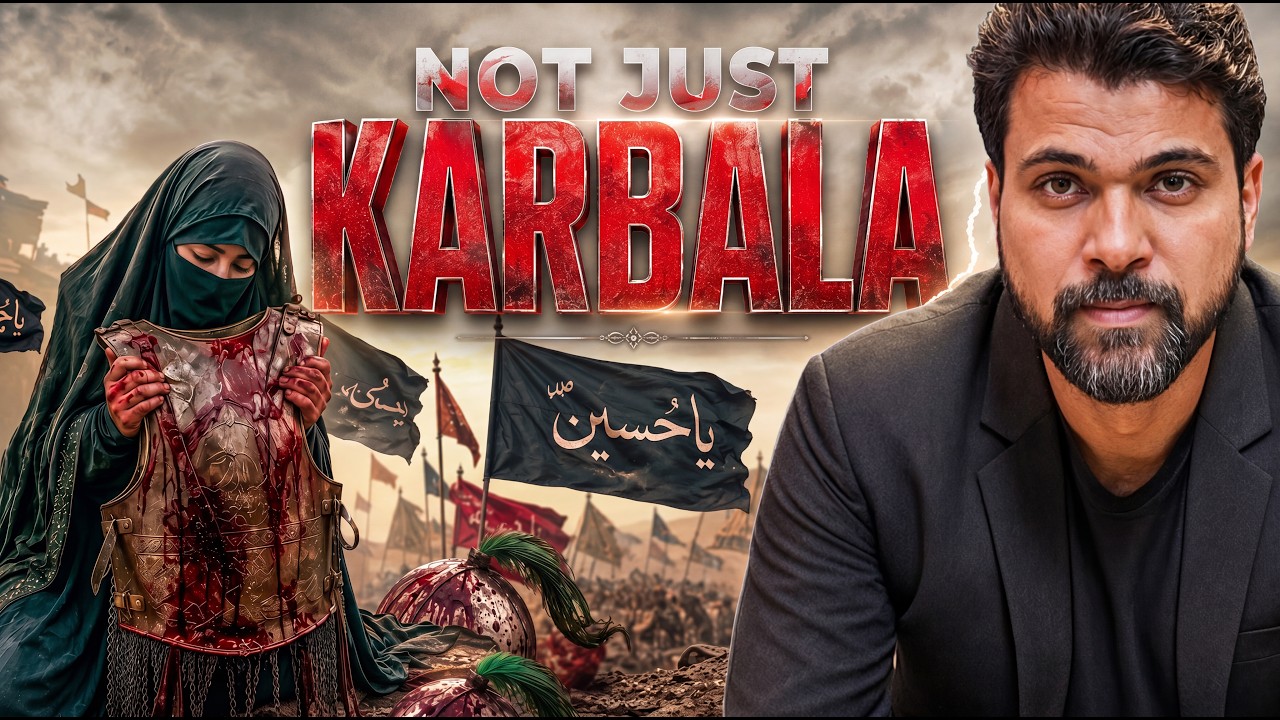
सूरह तकासुर की मनोवैज्ञानिक व्याख्या, अधिक की लालसा और उसकी हकीकत पर गहरा विश्लेषण।
Key Takeaways
- अधिक की लालसा मनुष्य को वास्तविकता से दूर कर देती है।
- तकासुर केवल धन नहीं, बल्कि प्रतिस्पर्धा और दिखावे की प्रवृत्ति भी है।
- सूरह तकासुर हर व्यक्ति को व्यक्तिगत चेतावनी देती है।
- दुनिया अस्थायी है, और असली मकसद आख़िरत की तैयारी है।
- जीवन में महत्वपूर्ण चीज़ों को प्राथमिकता देना आवश्यक है, न कि केवल भौतिक वस्तुओं को इकट्ठा करना।
What the video covers
- सूरह तकासुर में अधिक धन और वस्तुएं इकट्ठा करने की लालसा को बताया गया है।
- यह सूरह उस युग की सामाजिक स्थिति और दिखावे की प्रवृत्ति पर प्रकाश डालती है।
- मनुष्य की अंतहीन प्रतिस्पर्धा और दिखावे की प्रवृत्ति का उदाहरण एक आदमी की चाबियों की कहानी से समझाया गया।
- अधिक की लालसा मनुष्य को अल्लाह से दूर कर देती है और कब्र तक ले जाती है।
- तकासुर के तीन अर्थ हैं: अधिक इकट्ठा करना, प्रतिस्पर्धा करना और दिखावा करना।
- सूरह तकासुर हर व्यक्ति को व्यक्तिगत रूप से चेतावनी देती है।
- यह सूरह हमें याद दिलाती है कि दुनिया अस्थायी है और असली मकसद आख़िरत की तैयारी है।
- मनुष्य को अपनी ज़िंदगी में महत्वपूर्ण चीज़ों को प्राथमिकता देनी चाहिए न कि केवल दिखावे और धन संचय को।
- आयतों की व्याख्या में गहराई से बताया गया कि कैसे तकासुर मनुष्य को भटका देता है।
- प्रस्तुत वीडियो में कुरान की आयतों के साथ-साथ सामाजिक और मनोवैज्ञानिक पहलुओं को भी जोड़ा गया है।
Chapters
- 00:00सूरह तकासुर का परिचय और लालसा की व्याख्या
- 01:27अधिक पाने की मानव प्रवृत्ति और सामाजिक संदर्भ
- 02:42समाज में स्थिति और संपत्ति का महत्व
- 04:05लड़कियों के प्रति सामाजिक दृष्टिकोण
- 05:04चाबियों की कहानी: सफलता और लालसा का प्रतीक
- 05:56संपत्ति का बढ़ना और गर्व की भावना
- 06:55मृत्यु का सामना और जीवन के असली मूल्य
- 08:56तकासुर की गहराई और कुरान की आयतों का विश्लेषण
- 09:51तकासुर के तीन अर्थ और जीवन पर प्रभाव
- 12:33आख़िरत की तैयारी और जीवन के उद्देश्य की समझ
Full Transcript — Download SRT & Markdown
Speaker A
यह कुरान से एक संदेश है। अधिक से अधिक धन इकट्ठा करने की इच्छा ने तुम्हें बेखबर रखा है।
Speaker A
पिता, तकासुर क्या है? तकासुर क्या है? आओ, मैं तुम्हें बताता हूँ। वही तकासुर है। ओह! अब मैं समझ गया।
Speaker A
बहुत अधिक धन इकट्ठा करना ही तकासुर है। यह सूरह तकासुर की कहानी है। मैंने बचपन में टीवी पर एक विज्ञापन देखा था।
Speaker A
एक विज्ञापन जिसमें एक लेखक अपनी स्क्रिप्ट लिख रहा है और शाहरुख खान ट्रेन की ओर दौड़ता है और किसी के लिए कोल्ड ड्रिंक लाता है।
Speaker A
"दिल और मांगता है ज्यादा।" "आहा!" यह वास्तव में कोल्ड ड्रिंक का विज्ञापन नहीं है।
Speaker A
बल्कि, यह विज्ञापन मानव मनोविज्ञान की सच्चाई दिखाता है, कि एक व्यक्ति हमेशा अधिक चाहता है।
Speaker A
अधिक फॉलोअर्स, अधिक बैंक बैलेंस, अधिक व्यूज, अधिक जमीन, अधिक शक्ति, अधिक पदोन्नति। और आधे संसार को जीतने के बाद भी सिकंदर और अधिक पाने के लिए भूखा था।
Speaker A
अधिकार यूरोप जीतने के बाद भी नेपोलियन अकेले एक सुनसान द्वीप पर मर गया। और कई लोग अधिक से अधिक पाने के लिए दौड़ रहे हैं।
Speaker A
लेकिन सच्चाई यह है कि अधिक हमेशा कम होता है। अल्लाह तआला सूरह तकासुर में कहते हैं: "तुम अधिक की लालसा में पड़ गए हो।" "और एक दिन तुम अपने कब्रों तक पहुंचोगे अधिक और अधिक की लालसा में।" "और फिर तुम समझोगे कि वह भरमार
Speaker A
जिसकी तुम सारी जिंदगी तलाश में रहे," "वास्तव में आख़िरत में कोई मूल्य नहीं रखती।" "दुनिया तुम्हारे लिए बनाई गई थी; तुम आख़िरत के लिए बनाए गए हो।"
Speaker A
विद्वानों के अनुसार, सूरह तकासुर उस युग में उतरी थी, जब किसी व्यक्ति की स्थिति यह नहीं निर्धारित करती थी कि वह कितना अच्छा है और उसके नैतिक गुण कैसे हैं।
Speaker A
बल्कि, यह उसकी कुल संपत्ति से निर्धारित होती थी।
Speaker A
उसके कितने बेटे हैं? उसके पास कितना धन है? उसके पास कितने ऊंट हैं?
Speaker A
उस युग में स्थिति और दिखावे का जुनून इतना बढ़ गया था कि जब दो जनजातियों की स्थिति पर बहस होती थी, तो वे पहले अपने जीवित लोगों की संख्या का गर्व से बखान करते थे।
Speaker A
और जब जीवित लोग कम होते थे, तो वे अपनी स्थिति और प्रतिष्ठा दिखाने के लिए मृतकों को भी इस गिनती में शामिल कर लेते थे।
Speaker A
और कहते थे, "मेरी मौत के बाद भी मेरी गिनती तुम्हारी जनजाति से अधिक है।"
Speaker A
इस स्थिति को बढ़ाने के लिए ये लोग इतने अंधे हो गए थे कि जब बेटे पैदा होते थे, तो वे जश्न मनाते और निमंत्रण देते थे।
Speaker A
लेकिन बेटी के जन्म की खबर सुनकर ये लोग उदास हो जाते थे।
Speaker A
इतना कि ये लोग लड़कियों को नुकसान पहुंचाने का इरादा रखते थे। "आओ मेरी प्यारी जान, मेरी चमकती जान, यहाँ मेरे पास बैठो।" "धन्यवाद, पिता।" "तुम सब मेरे शेर हो; तुम मेरी जान हो।" "पिता, आप हमारी जान हो।"
Speaker A
"और हम आपके साथ हैं।" "हाँ बिल्कुल।" "हाँ, पापा, हम आपके साथ हैं।" "मेरे प्यारे बेटे," "बेटे ताकत देते हैं।" "मुझे लगता है अच्छी खबर आई है।" "सर।" "क्या खबर लाई हो, मारिया? जल्दी बताओ।" "तुम चुप क्यों खड़ी हो? जल्दी बताओ।"
Speaker A
"स-सिर!" "यह लड़की है।" "क्या? लड़की?" "अपनी शर्म को दफना दो।" "अपने देवताओं के क्रोध को छुपाओ।"
Speaker A
तो संक्षेप में, यह सूरह तकासुर की पृष्ठभूमि कहानी थी।
Speaker A
सूरह तकासुर को आसान तरीके से समझने के लिए, इस कहानी को सुनो। कि एक छोटे शहर का एक आदमी था जिसके पास एक चाबी थी।
Speaker A
वह चाबी उसके कमरे की थी। वह सुबह निकलता, काम करता, थका हुआ लौटता, दरवाजा खोलता और सो जाता।
Speaker A
जीवन आसान था। समय बीता और इस आदमी ने एक और दुकान ली। अब उसके पास दो चाबियाँ थीं।
Speaker A
आदमी बहुत खुश था, और उसने देखा कि जब वह ये चाबियाँ अपनी जेब में रखकर बाजार जाता है, तो लोग इन चाबियों की चमक से उसे देखते हैं।
Speaker A
चाबियों की यह चमक इस आदमी को गर्व महसूस कराती थी। अब उसके बाजार में कुछ स्थिति थी।
Speaker A
लोग उसे पहचानते, सलाम करते। और इस पहचान के साथ उसकी भूख बढ़ गई। उसने महसूस किया कि अगर उसके पास और चाबियाँ होंगी, तो शायद चमक और भी भारी होगी।
Speaker A
और लोग उसे और अधिक सम्मान देंगे। फिर उसने एक और दुकान ली। फिर एक बड़ा गोदाम।
Speaker A
फिर एक कार। और फिर दूसरी कार। उसके बाद उसने शहर के बाहर एक प्लॉट खरीदा।
Speaker A
फिर एक चार मंजिला इमारत। और हर नई चीज के साथ एक नई चाबी आती रही। और हर चाबी के साथ घंटी की आवाज़ भारी होती गई।
Speaker A
समय के साथ, चाबियों का गुच्छा इतना बड़ा हो गया कि वह उसकी जेब में फिट नहीं होता था।
Speaker A
अगर वह किसी पार्टी या दावत में जाता, तो पहले चाबियों का गुच्छा मेज पर रखता, फिर गर्व से बैठता।
Speaker A
ये चाबियाँ, बिना कुछ कहे, सबको बताती थीं कि वह कितना अमीर है। समय बीता। यह आदमी सफलता के रास्ते पर आगे बढ़ता रहा।
Speaker A
और एक दिन, अचानक दिल की बीमारी ने उसे घेर लिया। वह पूरी रात उस गुच्छे को घूरता रहा।
Speaker A
वह अपनी उंगलियों से हर चाबी को देखता रहा। डॉक्टर ने उसे बताया था कि उसका दिल कमजोर हो गया है।
Speaker A
उसके पास थोड़ा समय है। उसकी सारी जिंदगी की कमाई उसकी कांपती उंगलियों में थी। और फिर उसकी उंगलियाँ एक चाबी पर आईं और रुक गईं।
Speaker A
एक पुरानी, जंग लगी तांबे की चाबी। उसे याद आया कि पिछले कुछ वर्षों से उसने उस दरवाजे को नहीं खोला था।
Speaker A
उस चाबी का बोझ जिसे वह लंबे समय से उठा रहा था। उसे याद आया कि उसने इतना धन जमा कर लिया था कि उसे इसकी कोई जरूरत नहीं थी।
Speaker A
और इन चीजों को इकट्ठा करके उसने बहुत अधिक महत्वपूर्ण चीजों को नजरअंदाज किया था। ये चाबियाँ, यह प्लॉट, हमारी ज़िंदगी में कुछ भी हो सकता है।
Speaker A
शायद हमारे घर में कई किताबें रखी हैं जिन्हें हमने कभी नहीं खोला। या हमारे घर में अनगिनत जूते रखे हैं।
Speaker A
कपड़ों से भरा अलमारी। हमारी घड़ियाँ। हमारा घर। घर में रखी हर चीज जो आज दिखावे का सामान बन गई है।
Speaker A
इन्हें इकट्ठा करने के लिए, भगवान जाने हमने कितनी महत्वपूर्ण चीजों को नजरअंदाज किया है। भगवान जाने हमने जीवन में कितना कीमती समय बर्बाद किया है।
Speaker A
अल्लाह तआला इस लालसा को एक शब्द में समेटते हैं: तकासुर। और कहते हैं कि तुम इकट्ठा करते रहोगे, दिखावा करते रहोगे।
Speaker A
जब तक तुम अपनी कब्रों में न पहुँच जाओ। अब हम सूरह तकासुर को आसान और सिनेमाई तरीके से समझते हैं।
Speaker A
सूरह तकासुर को सूरह मकाबिर भी कहा जाता है, यानी कब्र की सूरह। इसके अलावा, यह सूरह मानव स्वभाव की अधिक की इच्छा को उजागर करती है।
Speaker A
और सबसे महत्वपूर्ण बात, सूरह तकासुर किसी विशेष समूह या समाज से नहीं बोलती।
Speaker A
बल्कि, यह हर व्यक्ति से एक-एक करके बात करती है। एक-एक करके उसे मार्गदर्शन देती है, चेतावनी देती है। सूरह तकासुर आयत 1: अधिक इकट्ठा करने की आपसी प्रतिस्पर्धा ने तुम्हें भटका दिया।
Speaker A
देखो, पूरे आयत में यहाँ धन के लिए कोई शब्द नहीं है। लेकिन क्योंकि यह एक सामान्य अनुवाद है, इसलिए यहाँ धन को जोड़ा गया है।
Speaker A
क्योंकि सामान्यतः, व्यक्ति की प्रकृति ऐसी होती है कि वह अधिक से अधिक धन इकट्ठा करना चाहता है।
Speaker A
लोगों, तुम्हारी अधिक इकट्ठा करने की इच्छा ने तुम्हें भटका दिया है। दूसरा अनुवाद गहरा अनुवाद है।
Speaker A
जब तुम इस आयत की गहराई में जाओगे, तो पाओगे कि आयत वास्तव में कह रही है: तुम्हारा दिल और तुम्हारा अस्तित्व इतनी चीजें इकट्ठा करने में उलझ गया।
Speaker A
तुम इस जुनून में इतने व्यस्त हो गए कि तुम उससे अधिक महत्वपूर्ण काम करना भूल गए।
Speaker A
यहाँ आश्चर्य की बात यह है कि यह नहीं कहा गया कि तुम बुरी चीजों से भटक गए।
Speaker A
तुम किसी भी चीज़ से भटक गए, तुम इतने भटक गए कि यह तुम्हें अल्लाह से दूर ले गया।
Speaker A
तो पहला शब्द है "अलहा"। यह शब्द कुरान में चार बार आया है।
Speaker A
और यह एक भूतकालीन क्रिया है। यानी यह अतीत के बारे में बात कर रहा है।
Speaker A
शब्द "अलहा" लाहु से आता है, जिसका अर्थ है मनोरंजन, लालसा या जुनून। अगला शब्द है "तकासुर"।
Speaker A
तकासुर के तीन अर्थ हैं। पहला है अधिक इकट्ठा करना और विविधता में इकट्ठा करना। यानी तुम्हारे पास एक कार है, अब तुम्हें दूसरी चाहिए।
Speaker A
तुम्हारे पास एक घर है, अब तुम्हें दूसरा चाहिए। इसका दूसरा अर्थ है बहस करना, एक-दूसरे से प्रतिस्पर्धा करना, एक-दूसरे से आगे निकलने की जल्दी में होना।
Speaker A
जैसे, अगर किसी ने कार खरीदी है, तो हम भी कार खरीदेंगे। और अगर उसने अपनी बेटी की शादी में इतना दहेज दिया है, तो हम भी अपनी बेटी की शादी में उतना ही दहेज देंगे।
Speaker A
ताकि हम उनसे पीछे न रहें। इसका तीसरा अर्थ है दिखावा करना।
Speaker A
तकासुर तब होता है जब कोई व्यक्ति दिन-रात अधिक इकट्ठा करने में लगा रहता है। और कभी यह सोचने की जहमत नहीं उठाता कि मैं इस दुनिया में आया हूँ और इस दुनिया में आने से पहले, अल्लाह ने मुझे कितनी आशीषें दी हैं।
Speaker A
और मैं यहाँ से कहाँ जाऊँगा? फिर क्या होगा? मैंने इस मुद्दे पर ध्यान नहीं दिया।
Speaker A
और मैं ऐसी चीज़ों में फंस गया। मैंने अपनी रुचि उनमें रखी। जब समय आया, तो उनमें से कोई भी मेरे साथ नहीं था।
Speaker A
अब यहाँ यह नहीं बताया गया कि आदमी किस चीज़ से भटका। अरबी भाषा में, जब विषय मौजूद होता है लेकिन कर्म गायब होता है,
Speaker A
"Hatta" means until. This word shows that the man will live in this competition his whole life.
Speaker A
Until "Zurtum", means "Ziyarat" Ziyarat is not done for a long time; it is done for a short time.
Speaker A
Meeting someone. And Maqabir, Maqabir means grave. This is the plural of grave. Now here Allah did not say that you will settle in the grave.
Speaker A
You will reside in the grave. Why? Because the grave is actually a waiting room where we will go and we will stay there until the Day of Judgment.
Speaker A
So what did he tell you in 2 verses? Takasur kept you diverted until you reached your graves.
Speaker A
Every person is going to taste the taste of death; then you will come back to us.
Speaker A
The third verse Let's understand the third and fourth verses together. What is being said?
Speaker A
Nay, you shall come to know soon, Nay, you will come to know very soon.
Speaker A
This is actually a scolding style, like Allah is scolding the person saying that you will know very soon.
Speaker A
"Kalla" means not at all, no way, for sure, 100%. In Arabic, Kalla is like a slap, like a rebuke.
Speaker A
Understand this as if a person is going to jump from a mountain peak and you hold him and shake him and say that have you lost your mind?
Speaker A
Where are you going? So in exactly the same way, Allah said, not at all, your illusion will break.
Speaker A
That is, Allah Almighty is telling the person to stop him from the race of this world by saying "Kalla Sawfa".
Speaker A
Sawfa is used for the future that you will know very soon, "Ta'lamoon", you will know and realize.
Speaker A
What will you know? You will know that you have put your time, your things in useless places, such places that now have no status in the grave, no benefit in the hereafter.
Speaker A
Then the next verse came. Summa means then. But in Arabic, there are many words for "and" and "then".
Speaker A
Like "Wa", it means and. It is used when there is another word with it, like "Wal-asr".
Speaker A
And I swear by the passing of time. The next word used for 'and' is "Fa".
Speaker A
It also means then. But it is used when the reaction happens as soon as the action is done.
Speaker A
The word Summa is used when there is a long pause between two incidents. According to the scholars, the first time a person is put in the grave, then he will have questions and answers and then he will keep waiting.
Speaker A
And the second time he will be picked up again and he will stand in front of Allah in the field of the hereafter.
Speaker A
And then Allah Almighty will have to account for each of his blessings. That is why Ayat no. 3 tells us that when you go to the grave, you will know that you were very distracted.
Speaker A
And Ayat no. 4 tells us that when you stand in front of Allah Almighty again then you will realize that you have spent your time in useless things.
Speaker A
It often happens that when you read the Qur'an, you feel that something is being repeated again and again.
Speaker A
It is being repeated again and again. Understand this in such a way that I scold someone and say, "Go away from here, I am telling you to go away." Now you are scolding and a person scolds twice, four times to emphasize his point.
Speaker A
But if you write this thing, what will happen? "Go away from here, I am telling you to go away." So it seems repetitive to read, but when you take it as a speech that it is the word of Allah, Allah is scolding, then he is saying:
Speaker A
No doubt you will know one day. That time is not far when the truth will be revealed to you.
Speaker A
You will know. You don't want to see the truth yet. but there will come a time when the truth itself will be revealed to you.
Speaker A
Your eyes will open. If only you knew with certainty. It seems a bit confusing.
Speaker A
Let's understand it word by word. Again the word came back, "Qalla" "law" means "If".
Speaker A
Ta'lamuna means to know In the Holy Quran, for the word "Ilm al-Yaqeen" i.e., certainty, only one word has been used for certainty, and that is death.
Speaker A
So what is being said, "If you had believed in that certainty that you know." Like you and I know that we have to die, but we don't believe.
Speaker A
If there was certainty, would a person steal from someone, harm someone, deceive someone? No.
Speaker A
In the Islamic tradition, there are three stages for certainty. The first is "Ilm al-Yaqeen", that is, to be sure of something by listening, reading, or logic.
Speaker A
For example, you are going to the jungle, and you see far away that smoke is coming out from behind the mountains.
Speaker A
Now because you have read in the books, you have knowledge, then you will immediately tell that there is a fire somewhere.
Speaker A
Then you went a little further, and now you saw the fire with your own eyes.
Speaker A
As soon as you saw the fire with your own eyes, you became "Ayn al-Yaqeen".
Speaker A
This is the certainty of the second level, that yes, I had seen smoke from a distance, I had guessed that there was a fire ahead.
Speaker A
Now I have seen it with my own eyes that yes, brother, there is a great fire.
Speaker A
But there is a third level, what is it? "Haq al-Yaqeen". That is, you have seen the fire, but you do not know whether the fire will burn or not.
Speaker A
Now you will feel that the fire burns, but when you see a small child, he does not realize.
Speaker A
He will put his finger in the socket, sometimes he will put his hand on the iron, sometimes he will hold the fire.
Speaker A
And the moment he puts his hand in the socket, he holds the fire, he experiences that fire, and he becomes "Haq al-Yaqeen".
Speaker A
In the Qur'an, only Surah Taqasur is a unique surah in which two "Yaqeen" have been mentioned.
Speaker A
"Ilm al-Yaqeen" and "Ayn al-Yaqeen". The mention of "Haqal-Yaqeen" has been mentioned in Surah Al-Baqiya and Surah Haqqa.
Speaker A
All the disbelievers, atheists, what do they say? We will bring faith, show us hell and heaven, show us God, show us this miracle.
Speaker A
So a person always wants "Ayn al-Yaqeen", he wants to see with his eyes. But in this world, Allah SWT said, if you want to believe, then do it, if you don't want to do it, then don't do it.
Speaker A
But death is certain, and when you reach there, you will know how much I was in negligence.
Speaker A
If you know the meaning of "Yaqeen", then the truth will be revealed to you.
Speaker A
Then you will come on the straight path, then you will be successful, then your end will be good.
Speaker A
This is like the answer to the condition that is neglected. The next verse is "La Tarawunna Al-Jaheem." That you will definitely see hell.
Speaker A
The word "laam" used here is used to emphasize the point. It means surely, 100%, without any doubt, you will definitely see.
Speaker A
"Tarawunna" means an inescapable sight, without any doubt, even if you don't want to see, you will have to see.
Speaker A
What will have to see? "Jaheem" will have to see. The word "Jaheem" has come from "Juhum".
Speaker A
Which means to see your prey before the attack. Just like a lion sees his prey.
Speaker A
In the same way, "Jaheem" is the fire of hell that is staring at a person and trying to cling to him.
Speaker A
"Summa La Tarawunna Ain Al-Yaqeen" And he will get "Ain Al-Yaqeen", i.e., he will get the visual confirmation of the eyes.
Speaker A
Then a person will say, "Now I am sure, now I have seen everything, Allah, now I am ready, send me back." And as I said, here it is already used, "Law", that is, now he has missed the opportunity, now nothing can happen.
Speaker A
Either he will die in the fire of hell or he will survive, it depends on his actions.
Speaker A
"Summa Latus Alunna Yawma Izin Anin Na'eem" Then surely, surely, surely, that day you will be asked about the blessings.
Speaker A
Here again, "Summa" was mentioned, i.e., after standing right in front of that raging fire, after that fear and fright, again "Latus Alunna" will be asked again, "Yawma Izin", that day, "An", "An" means about, about what?
Speaker A
About "Na'eem". What is "Na'eem"? "Na'eem" is derived from "Nehmat" (blessing), i.e., every blessing that Allah SWT has given will be asked from you.
Speaker A
Now there are two types of blessings, one is the blessing that man is getting continuously.
Speaker A
Like we are talking, we are seeing, we are listening, our hands are moving, we are eating, our kidneys, liver, everything is working properly.
Speaker A
And the second blessing is what we ask from Allah SWT, "Allah, make me pass, Allah, make me get married, Allah, give me children." Every blessing will be asked from you.
Speaker A
We get a hadith from the Prophet of Allah (S.A.W) that a man will not be able to take a step in front of his Lord, until he answers these questions.
Speaker A
Where did he spend his youth? What he earned, was it lawful or unlawful? Where did he spend it, and what knowledge he got, how did he use that knowledge?
Speaker A
Many scholars of the Qur'an mention that a man's "Na'eem", that is, his blessings become his "Takasur".
Speaker A
For example, Allah SWT has given you a great mind, you want to prepare for NEET, you want to pass a big exam.
Speaker A
So now what is happening, you have left your duty, your prayers, and you are riding on a drum, just somehow the exam gets cracked.
Speaker A
And that's it, after the exam, God willing, everything will come back to life. But the reality is, "Hatta zurtumul maqabir", that you do not know that you may be in the grave in the next second.
Speaker A
So our own blessings, our own skills become "Takasur" for us, which we do not even realize.
Speaker A
Judgement day is near. That is why it is said again and again, whatever you are doing, very soon you will know.
Speaker A
What was supposed to be done and what you did. You will realize at the time of death what your purpose was and what you have done.
Speaker A
In this whole surah, Allah SWT is warning in a scolding manner, that Allah knows that a man's nature is such that he wants to have more.
Speaker A
In fact, children also do the same, if there is one toy, they will want another, then they will take another; this is the nature of man.
Speaker A
Allah is not saying that you become perfect, no, no, just try not to come in the category of "Takasur", Do not be proud of your blessings, do not consider yourself a king, but remember that these blessings are a test for you.
Speaker A
This is not our house or destination. Our real house is Akhirah, as said by Prophet Muhammad SAW.
Speaker A
This world is created for you; you are created for the hereafter. Now let's understand what is the importance of "Surah Takasur" in our lives today, how does it help us.
Speaker A
But before that, a very important thing, the live AI Masterclass 2.0 on 22nd August, Thank you from the bottom of my heart for the love you all have given.
Speaker A
Thank you for teaching for 6 hours; learned, now I will earn too. The feedback you have given, the stories you have put up, and the amazing thing is that the assignment I gave you to do, you made it in just one day and tagged me.
Speaker A
My name is Razia Sultan and this is the story of my throne. Hello Maktub brother, I have finally learned to make a robot from your Robotics class 2.0, you also say thank you to the brother.
Speaker A
I have divided this class chapter-wise, which you can see in the course form at www.reallymaktoob.com.
Speaker A
Chapter-wise recording of this class, all notes, plus your certificate will be uploaded on it in 2-3 days.
Speaker A
So if you want to learn AI and want to use AI to move forward in your life, then join our Masterclass.
Speaker A
Secondly, we need your support; if you can afford and give your heart as a testimony, then by scanning this QR code, you can get a membership for only ₹ 119.
Speaker A
₹ 119 means less than ₹ 4 a day, less than a cup of tea.
Speaker A
Come on, now let's understand what is the relevance of Surya Takasur in our life.
Speaker A
Surah Takasur does not mention anywhere, that the success of the world is bad; this Surah only asks a question.
Speaker A
Could it be that the blessings and skills that I have given you, have become your identity today?
Speaker A
Now people do not say that the next person is religious, but they say that they are very rich.
Speaker A
Allah is only asking this question that it should not be that you get so entangled in the race of the world, that you get away from your duty, and command of Allah, and those things become your identity.
Speaker A
And when it seems in life that I am entering the category of Takasur, then just do a few small things.
Speaker A
First of all, stop leaving your duty. No matter what happens, remember that Salat cannot be left in any case, interest cannot be taken in any case, because you do not even know about the next second.
Speaker A
Secondly, ask yourself every night before going to bed that have I done something today that when I have a question in the grave, I can say that yes, Allah, I did a little preparation for it, not too much, but I did.
Speaker A
So do something every day that prepares you for the grave, whether it is reading a word of the Qur'an, understanding a word, reading a page, offering Salat, doing Zikr, helping someone, smiling at your mother, anything.
Speaker A
Just be humble and be kind and be prepared for the Akhira and the Qabr.
Speaker A
I hope you liked the video, understood the point. If there is anything missing in the video, then tell me, I have added all the references of the books for you.
Speaker A
Remember me and my team in your prayers and Allah Hafiz.
Topics:सूरह तकासुरकुरानमनोरोग विज्ञानधन की लालसामनोविज्ञानइस्लामिक शिक्षाअख़िरतधार्मिक व्याख्याहिंदी व्याख्यातकासुर का अर्थ