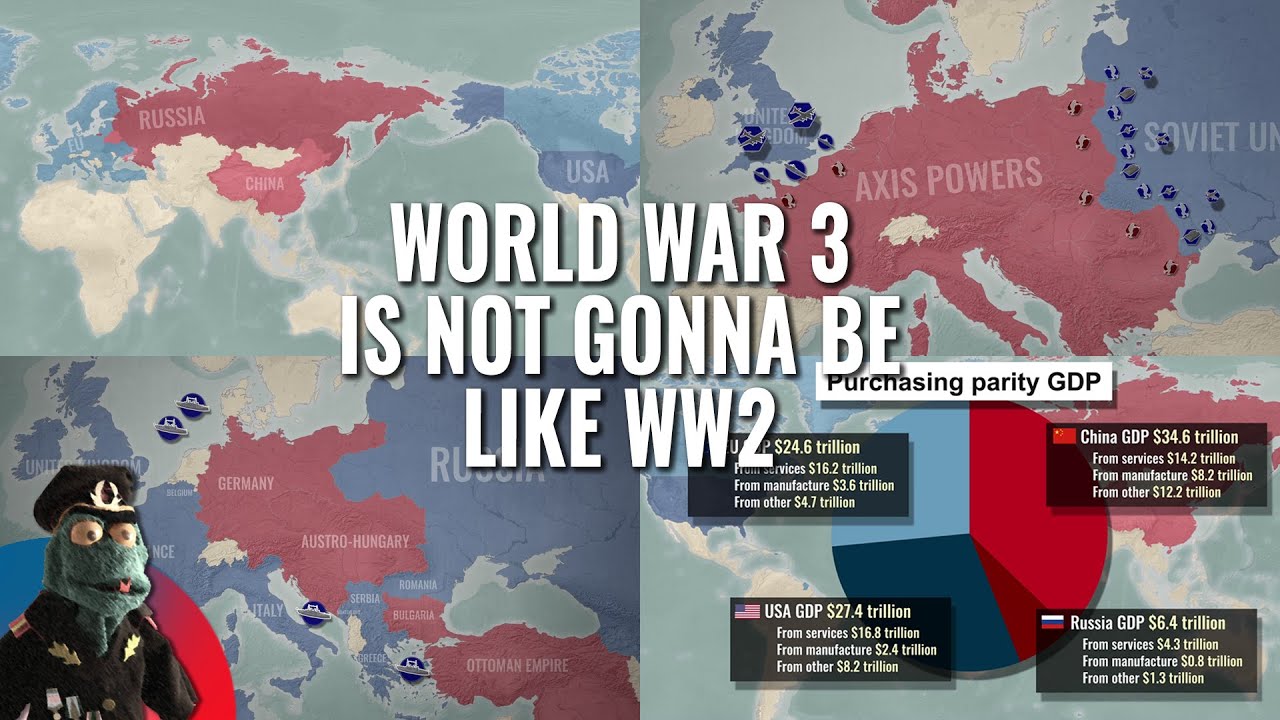
Analysis of a hypothetical Russia-Europe nuclear conflict, comparing arsenals, delivery readiness, US/China factors, and casualty estimates to show why it wouldn't be one-sided.
Key Takeaways
- Raw warhead counts are misleading; deployable and maintained forces determine real capability.
- European nuclear forces, though much smaller, are sized to impose unacceptable costs on Russia.
- US involvement and China's growth make the strategic picture far more complex than a bilateral Russia-Europe contest.
- Escalation dynamics and the timing of strikes against readiness-limited assets could decide the outcome.
What the video covers
- Russia holds over 5,000 nuclear warheads versus roughly 550 for France and the UK combined, but total warhead counts overstate what can realistically be used in a fight.
- Maintenance cycles, submarine refits, and bomber readiness mean only a fraction of each arsenal could launch on short notice.
- Russia's ICBM force (around 300 missiles, near 1,000 warheads) and submarine fleet (about 170 missiles) form the core of its strategic strike capability.
- Russian bombers could launch around 500 nuclear cruise missiles at best, and tactical nuclear artillery and Iskander missiles would likely be reserved for front-line use.
- The UK's arsenal is limited by submarine readiness: one boat on patrol, one ready within days, and one needing weeks, so a third of missiles may not launch.
- France's Triomphant-class submarines and warhead stockpile are estimated from missile production limits rather than published figures.
- The US faces competing demands from China and may prefer to stay out of an initial exchange, letting Europe and Russia fight while it assesses losses.
- Russia could pursue a divide-and-conquer approach against individual European countries, using nuclear threats to split alliances.
- Missile defenses such as Patriot batteries and Arrow-type systems would intercept some attacks, but coverage gaps remain, especially for ICBMs and Scandinavian routes.
- Casualty estimates depend on targeting large European cities with warheads averaging around 200 kilotons, with diminishing returns on smaller targets.
Chapters
- 00:00Introduction: Russia vs Europe Nuclear Arsenals
- 01:19Geopolitics, US and China Factors
- 02:19Methodology: Estimating Usable Arsenals
- 02:58Russian Strategic and Tactical Forces
- 04:19UK and French Nuclear Forces
- 06:40Missile Defenses and Interception
- 09:37Targets and Casualty Estimates
- 11:38Conclusions on Strategic Balance
Full Transcript — Download SRT & Markdown
Speaker A
On paper, Russia has over 5,000 nuclear warheads. France and the UK combined have 550.
Speaker A
So, would Europe even have a chance? Would 10 times as many nukes really be killing hundreds of millions? Of course, things are never that simple. So, this video will explain actual nuclear arsenals available, geopolitics, defensive systems, types and numbers of targets on both sides, and total casualty estimates. Ultimately explaining why the conflict wouldn't be so one-sided.
Speaker A
While a nuclear exchange limited to Russia and Europe might seem impossible, modern-day geopolitics showed us that nothing is really impossible.
Speaker A
The current US administration has shown itself to be inconsistent, threatening Greenland, Canada, and various NATO countries, acting alone against Iran or Venezuela, and negotiating with Russia while at times belittling Ukraine. Thus, US involvement isn't a sure thing. At the same time, Russian progress in Ukraine has slowed considerably. Russia might feel it needs a major shake-up to regain the upper hand. Or Ukraine might hit the Kremlin with ballistic missile strikes, deliberately or by accident. Or another Ukrainian Kursk-like offensive across the Russian border. Russia has warned of red lines in nuclear use many times, but as its conventional options diminish, nuclear use might eventually happen. And even after one tactical nuke, all bets would be off. The US might simply wait and see. No one knows if they would get involved. And Europe? Without its help, Ukraine would be cooked. But if Europe does decide to help, it would have to be much more actively involved. It would have to actually enter combat in Ukraine. And that would very soon spread to Europe striking Russia proper, and Russia striking Europe, conventionally. The US might say this is not our war as Europe attacked Russian forces. Europe would have to double down. United, it could field a stronger conventional force than Russia and, together with Ukraine, inflict major damage. That could lead to further Russian nuclear use, initially against European forces in Ukraine, but eventually perhaps against the Baltic or Polish border. From there, a full nuclear exchange between Europe and Russia could be only hours away.
Speaker A
Here's where it gets difficult for Russia, despite its much bigger nuclear arsenal. The possibility of US involvement would always loom, forcing Russia to preserve a large portion of its arsenal, perhaps over half, as a deterrent against the US. It would also need to retain hundreds of tactical nukes for the Ukraine war. China would further constrain the US. Its nuclear arsenal is growing rapidly enough that Washington might need to reserve half its arsenal for China, even assuming it is willing to deter China with two warheads for every Chinese one. The US therefore has a strong reason to stay out of the initial nuclear exchange. It could wait and assess Russia's losses, potentially freeing weapons previously needed to deter Russia. Since China is regarded as its main opponent, a nuclear-devastated Russia would pose little economic or industrial threat to the US.
Speaker A
Washington might prefer letting Europe fight Russia rather than risk Russian nuclear strikes against America. Russia could use a similar divide-and-conquer strategy against individual European countries, threatening them with nuclear weapons to create divisions. It would likely prefer fighting only one European power at a time, bringing France or the UK into the conflict only if necessary.
Speaker A
But waiting too long risks Europe destroying Russian nuclear assets before Russia can strike them. It is a difficult balance. For this video, we will assume France and the UK launching together, allowing us to analyze Europe's combined nuclear potential.
Speaker A
Now, nuclear arsenals are usually estimated. US and Russian figures were quite precise until a year ago because both inspected each other's forces under the New START treaty. Russia claims it still follows the treaty's limits.
Speaker A
Crucially, the total number of warheads is not the same as the number realistically used in a fight. Russia, the UK, and France all have nuclear-armed missile submarines, but part of the fleet is always in dry dock for refit, carrying no missiles. Missiles, too, need periodic maintenance checkups, though more rarely. Also, a missile able to carry 10 warheads doesn't mean it will. There may be not enough warheads, or some missiles may be under maintenance. Maximum loads reduce range and limit trajectory options. Decoys are almost always carried instead of some warheads. They force opponents to track them and waste interceptors.
Speaker A
Some interceptors can also hit missiles before they release their warheads, so it is useful not to put too many eggs in one basket. So, what does Russia actually have deployed? Kristensen and others made a 2026 report on the Russian arsenal. Bin Kamal allows for a few more warheads per RS-20, giving around 300 ground-launched ICBMs and close to 1,000 warheads.
Speaker A
Russia also has its submarine fleet with some 170 missiles and around 1,000 warheads. Borei-class submarines are so new that most are seven or fewer years old, so fewer than 15% of those may be offline. Only half of any subs might sail out, with others potentially being hit before launch. Russian bombers can launch nuclear-tipped cruise missiles.
Speaker A
So, some 600 cruise missile warheads are likely, plus a few hundred to a thousand freefall bombs. Though aircraft carrying those are unlikely to survive deep into Europe, they could still be used near borders or the front line.
Speaker A
As bombers too need maintenance, more than three dozen being used on the first day would be unrealistic if their bases aren't nuked first. At best, just under 500 cruise missiles could launch.
Speaker A
Russia also has ground-launch cruise missiles and Iskander ballistic missiles, likely reserved for near front-line use.
Speaker A
There's also the Rurik intermediate-range ballistic missile, essentially a strategic-level weapon against Europe when nuclear-armed.
Speaker A
Russia also likely has hundreds to over a thousand nuclear artillery rounds, a weapon class Europe lacks, plus a few hundred warheads for specialized weapons such as torpedoes and anti-aircraft and anti-missile interceptors.
Speaker A
The UK stopped publishing detailed arsenal figures in 2021. France has always used vague wording, but both arsenals can be estimated because they're limited by the number of produced missiles carrying warheads. The British arsenal is straightforward. Four submarines, one in refit and three carrying US-sourced Trident missiles. In theory, up to 48 missiles could be fired on short notice. Britain previously said it had 225 warheads, then raised its future limit to 260. The next-generation Astraea warhead is not yet ready, so 225 is the more likely number. Years ago, Britain stated that only 40 warheads were deployed on a submarine. That likely changed by today. We assume 14 missiles with five to eight warheads per submarine.
Speaker A
The bigger issue is readiness. British reports to Parliament indicate one submarine is on patrol, another can be ready within days, while the third may need weeks to assemble its crew and complete supplies, checks, and inspections. So, two submarines are likely to fire their missiles, while the third may remain in port. Technically, it could launch from port without submerging, but its location is known, and it would likely be an early target.
Speaker A
So, a third of the missile arsenal may not launch if Russia destroys the submarine in port first. One digression: even at the end of refit, British submarines cannot become operational soon. They must sail to the US, load missiles, then return to Britain to have warheads fitted. At 30 knots, that's a 10-day trip, excluding loading.
Speaker A
France has four Triomphant-class submarines.
Speaker A
Three would feature missiles. It has 160 older warheads, and an unknown number from an order for 80 newer ones, plus 80 old warheads awaiting dismantlement.
Speaker A
Some could potentially return to service given enough time. Around fiv
Speaker A
arsenal. Bin Kamal allows for a few more warheads per RS-20, giving around 300 ground-launched ICBMs and close to 1,000 warheads.
Speaker A
Russia also has its submarine fleet with some 170 missiles and around 1,000 warheads. Borei-class submarines are so new that most are seven or less years old, so fewer than 15% of those may be offline. Only half of any subs might
Speaker A
sail out, with others potentially being hit before launch. Russian bombers can launch nuclear-tipped cruise missiles.
Speaker A
So, some 600 cruise missile warheads are likely, plus a few hundred to thousand freefall bombs. Though aircraft carrying those are unlikely to survive deep into Europe, they could still be used near borders or the front line.
Speaker A
As bombers too need maintenance, more than three dozen being used on the first day would be unrealistic if their bases aren't nuked first. At best, just under 500 cruise missiles could launch.
Speaker A
Russia also has ground-launch cruise missiles and Iskander ballistic missiles like they're reserved for near front-line use.
Speaker A
There's also the Rurik intermediate-range ballistic missile, essentially a strategic-level weapon against Europe when nuclear armed.
Speaker A
Russia also likely has hundreds to over a thousand nuclear artillery rounds, a weapon class Europe lacks, plus a few hundred warheads for specialized weapons such as torpedoes and anti-aircraft and anti-missile interceptors.
Speaker A
The UK stopped publishing detailed arsenal figures in 2021. France has always used vague wording, but both arsenals can be estimated because they're limited by the number of produced missiles carrying warheads. The British arsenal is straightforward. Four submarines, one in refit and three
Speaker A
carrying US-sourced Trident missiles. In theory, up to 48 missiles could be fired on short notice. Britain previously said it had 225 warheads, then raised its future limit to 260. The next-generation Astraea warhead is not yet ready, so 225
Speaker A
is the more likely number. Years ago, Britain stated that only 40 warheads were deployed on a submarine. That likely changed by today. We does assume 14 missiles with five to eight warheads per submarine.
Speaker A
The bigger issue is readiness. British reports to Parliament indicate one submarine is on patrol, another can be ready within days, while the third may need weeks to assemble its crew and complete supplies, checks, and inspections. So, two submarines are
Speaker A
likely to fire their missiles, while the third may remain in port. Technically, it could launch from port without submerging, but its location is known, and it would likely be an early target.
Speaker A
So, a third of the missile arsenal may not launch if Russia destroys the submarine in port first. One digression, even at the end of refit, British submarines cannot become operational soon. They must sail to the US, load missiles, then return to Britain to have
Speaker A
warheads fitted. At 30 knots, that's a 10-day trip, excluding loading. France has four Triomphant-class submarines.
Speaker A
Three would feature missiles. It has 160 older warheads, and an unknown number from an order for 80 newer ones, plus 80 old warheads awaiting dismantlement.
Speaker A
Some could potentially return to service given enough time. Around five warheads per missile gives roughly 240 warheads ready to fire. France also has 50 air-launched ASMPA nuclear missiles.
Speaker A
They're supersonic, launched from Rafales with around 600 km range. Given Rafale's range, launches near Russia's border could reach much of western Russia, making the missile a strategic asset. About 50 Rafales are certified for it, but due to maintenance, only 40
Speaker A
would actually fly, assuming airbases survive. So, the combined UK and French total is about 520 warheads versus approximately 1,700 for Russia. Russia might retain around 1,300 ICBMs and SLBM warheads for the US, plus hundreds of older stored ICBM warheads, and another
Speaker A
thousand tactical warheads for Ukraine or frontline use. Of course, just because a missile is launched doesn't mean it will hit. A few percent might malfunction, while others could be intercepted, or their carrier aircraft shot down. Europe has little
Speaker A
defense against fast ICBMs. Against lower Iskanders, however, Patriot batteries in Germany, Sweden, Poland, and Romania could intercept quite a few.
Speaker A
Germany also has two Arrow 3 batteries, which might intercept something like Russian R-36M missiles. Crucially, there are also two Aegis Ashore sites in Poland and Romania using SM-3 ABM interceptors. Poland received a larger SM-3 variant in 2024, which has also
Speaker A
been tested against ICBMs. Note, Iskanders fly too low for Arrow 3 and SM-3 to intercept them. Although the Aegis Ashore sites were paid for by the US, their command is within NATO and allegedly designed to operate automatically without much deliberation.
Speaker A
This makes it fairly likely these defenses would be used against Russian missiles without directly involving the US in the war.
Speaker A
That said, only some Russian missiles could be intercepted. Multiple interceptors are often needed for one successful hit, and some missiles will leak through. Location is also crucial.
Speaker A
Patriot is a terminal defense system and could intercept Iskanders only within roughly 25 km of the launcher. Arrow 3 and SM-3 can attempt mid-course interceptions, but their coverage still extends only a few hundred kilometers off, of course. The Romanian site,
Speaker A
therefore, cannot protect Germany, while the Polish site cannot protect Southern Europe. Scandinavia would likely get no protection, which matters because many Russian submarine launches could use that route. Overall, probably no more than a few dozen ICBMs would be
Speaker A
intercepted out of hundreds. Many R-36Ms could be stopped, while Iskanders would suffer heavy losses unless deliberately aimed at targets outside Patriot coverage. That would not be optimal targeting, of course. Most cruise missiles would likely be shot down, as
Speaker A
in Ukraine, unless they take long northern routes or attack targets near the borders. The KH-102 is stealthier than most missiles used in Ukraine, but it's conventional counterpart KH-101 has also been intercepted frequently. In practice, well over 50% of Russian
Speaker A
nuclear cruise missiles might fail to reach their targets, forcing Russia to use more ICBMs against Europe. Aircraft delivering free-fall nuclear bombs would also be often intercepted. They would mainly survive by flying very low and conducting frontline tactical missions
Speaker A
rather than penetrating deep into Europe. Another digression, US maintains 80-plus tactical free-fall nuke bombs across Europe. Those are to be dropped by European air forces, but only if the US provides activation codes. Russian defenses against European nuclear weapons would fare worse, primarily
Speaker A
because Europe relies heavily on ICBMs. Russia has terminal interceptors around Moscow designed to hit individual warheads. Even a 50% interception rate would stop no more than a few dozen warheads, and that estimate is probably optimistic. Russia has no other
Speaker A
operational system capable of intercepting ICBMs or their warheads as S-550 is not yet operational. Russia could intercept some ASMP-A missiles as their lack of stealth and Mach 3 speed provide limited evasion. Most ASMP-As would likely target areas near the
Speaker A
border and frontline with St. Petersburg seeing several. With everything said so far, our video will model just under 400 European ICBM warheads going through versus under 700 Russian ICBM warheads. Submarines in port are given a 50% chance of firing
Speaker A
before being destroyed. The average Russian ICBM warhead also has 80% higher yield. Only a few dozen higher yield European cruise missile warheads would get through compared with around 100 smaller Russian ones due to their much larger initial numbers. Target selection
Speaker A
would be crucial. Both sides would face a double-edged choice. Attack enemy nuclear infrastructure and potentially reduce the number of enemy missiles, or waste missiles on locations that may be launched their weapons in the meantime.
Speaker A
The same applies to air bases housing nuclear bombers and submarine ports. Another question is how much to target conventional military forces and supporting industry. If largely left intact, Russia with 50 or Europe with 150 million dead could still remain
Speaker A
dangerous in the future, especially if your own conventional military was largely destroyed. Using a British Cold War era government study, we'll assume half the warheads target military assets and about a third target major cities, with the rest aimed at industry,
Speaker A
utilities, and fuel infrastructure. Applied to both sides, Russia would hit European large cities with over 300 warheads averaging 200 kiloton yields.
Speaker A
Europe would hit Russian cities with around 130 warheads averaging 110 kilotons. Russia has more medium-sized cities because its population is concentrated. The European population is more evenly distributed, requiring more warheads to cover its population. Most cities are sprawling targets, so
Speaker A
multiple warheads would be needed to destroy the enemy's human potential. London alone might be hit by around 10 warheads, while Moscow could receive over 20 since it is larger and European warheads are smaller. Both cities could see close to 5 million near immediate
Speaker A
deaths with a few million more dying within weeks from fires, untreated injuries, famine, and radiation poisoning.
Speaker A
If there wasn't prior warning helping people get inside buildings, casualties would be even higher. The cities of 500,000 to a million residents might receive several warheads. Manchester, for example, could lose most of its population. Cities below half a million
Speaker A
would likely receive one warhead, sometimes two against Russian cities due to weaker warheads. Europe would not have enough warheads to hit all Russian cities above 200,000 residents. Russia could hit all cities of that size and still have around 70
Speaker A
warheads left for smaller cities or additional industrial targets. However, nuclear strikes against smaller targets produce diminishing results.
Speaker A
Overall deaths from those major city strikes alone would likely reach over 60 million across Europe and close to 40 million across Russia after a month, with millions more dying near industrial infrastructure and military targets. At least as many people would suffer
Speaker A
injuries, leaving them unable to fight or participate meaningfully in whatever industry remains. Notice that while roughly a quarter of Europe's population would suffer greatly, around 60% of Russian population would, essentially incapacitating Russia.
Speaker A
Russia could have used more warheads to kill a similar percentage of Europe's population, but that would not reduce its own casualties. Russia's population would still be devastated, its industry largely destroyed, and much of its military hit. What would change is that
Speaker A
the US could then devote most of its nuclear arsenal to China, since Russia would no longer pose the same nuclear threat. With such casualties, Russia's conventional war effort in Europe and Ukraine would collapse. But so would Ukraine's and Europe's as hundreds more
Speaker A
Russian tactical nuclear weapons would be used, including across Ukraine. Nobody would emerge victorious. Europe could, however, retain enough human potential for long-term recovery once its economy and society begins rebuilding. That assumes Russia does not use its remaining nuclear weapons for
Speaker A
further destruction, losing its ability to deter the US. In theory, Russia could do much more damage, but world geopolitics doesn't allow that in real life. So, despite being many times smaller, Europe's nuclear arsenal is sized just right to
Speaker A
be highly destructive against Russia. It cannot directly prevent Europe itself from being devastated, but it could deter Russia from using nuclear weapons, or at least from using strategic weapons. Likewise, Russia's much larger arsenal cannot save Russia from catastrophic damage, but it is large
Speaker A
enough to deter both Europe and the US. Mutual assured destruction is therefore not just a buzzword. This scenario showed how it could work in practice.
Speaker A
And remember, Rybnikov may talk about war, but only real peace [music] can bring us all together.
Topics:nuclear warRussiaEuropenuclear arsenalNATOdeterrenceFranceUnited Kingdommissile defensegeopolitics