Taking resilience seriously: The impact on supply-chain… — Transcript

Suzanne De Treville explores supply chain resilience, local vs offshore production, and sustainability using decision tools and a serious game.

Key Takeaways

  • Postponing production decisions creates valuable options that improve supply chain resilience.
  • Local manufacturing supports sustainability by reducing waste and pollution.
  • Economic and environmental benefits of local production often outweigh the higher upfront costs.
  • Serious games can effectively demonstrate complex supply chain trade-offs to decision-makers.
  • Innovative decision tools help quantify and justify investments in local production capacity.

Summary

  • Local production allows postponing production decisions until demand is clearer, reducing overstock and stockouts.
  • Manufacturing close to customers fosters innovation and creates a positive economic cycle through job creation.
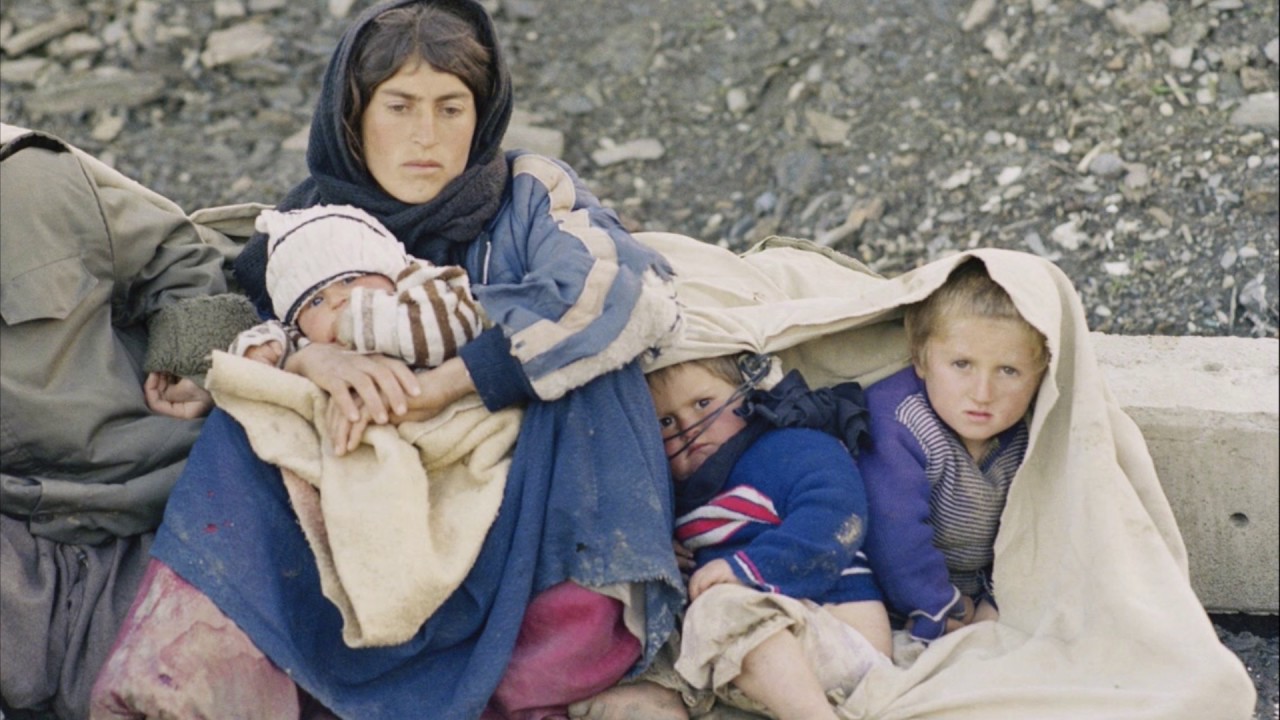
  • Apparel manufacturing is highly polluting, contributing significantly to greenhouse gases and microplastic pollution.
  • Despite sustainability benefits, offshore production is often chosen due to 20% lower costs.
  • Quantitative finance methods help quantify the value of options created by postponing production decisions.
  • Decision tools developed at the University of Lausanne are used by governments to evaluate local production benefits.
  • A serious game was developed to simulate production decisions between local and offshore manufacturing.
  • The game illustrates trade-offs in ordering quantities, capacity constraints, and demand uncertainty.
  • Local production capacity acts as an option to meet peak demand, reducing waste and increasing profits.
  • Local production leads to higher profits, lower carbon footprint, innovation, and better job creation.

Full Transcript — Download SRT & Markdown

00:09
Speaker A
So, I would like for you to imagine that you are a fashion designer, and you've just developed a ski jacket.
00:18
Speaker A
And now you need to get it manufactured. And the question is, where are you going to have it manufactured?
00:25
Speaker A
You can order it from a distant, relatively low-cost supplier. You can also produce it locally. So, you take a few minutes to think about what are the advantages of local production, because there are many. One thing is that when you produce locally, you can
00:44
Speaker A
postpone the decision about what exactly you're going to produce until you know what demand is.
00:51
Speaker A
That means that you don't order too much, and you don't stock out in a good season.
00:57
Speaker A
The second thing is that it's now pretty well established that innovation follows manufacturing, so that if you produce close to your customer, close to you, you're going to have both product and process innovation.
01:14
Speaker A
The other thing is, you produce locally, you create jobs, those jobs create jobs, those created jobs create more jobs.
01:22
Speaker A
It's a wonderful virtuous circle that is going to put more money in the pocket of the people who are going to buy your jacket.
01:31
Speaker A
And then the fourth thing is, when you don't produce stuff that you can't sell, and you don't fill a container, and transport it halfway around the world, this is good for sustainability. As a matter of fact, people go, "Oh yes, we
01:46
Speaker A
would like to be sustainable, have a nice world for our children and grandchildren." But let's take a moment to think about exactly what we're talking about here. Let's do a deep dive.
01:58
Speaker A
Uh, so it turns out that apparel manufacturing is the second dirtiest industry in the globe.
02:08
Speaker A
It's second to petroleum. It accounts for 8% of greenhouse gases. It pollutes a phenomenal amount of water. Uh, one-third of the microplastics in the ocean come from this industry. And by the way, 1% ends up being recycled. So when we're talking
02:28
Speaker A
about sustainability, if we can avoid making stuff that nobody's going to buy, that's going to go in the landfill, this is a good thing.
02:37
Speaker A
So with these arguments, who would ever consider placing the order with a distant supplier?
02:44
Speaker A
But here's the problem. The distant supplier is 20% cheaper. And for most decision-makers, even though they are completely convinced of the advantages of local production, they say, "It's 20% cheaper. We're placing the order over there." So my laboratory at the University of
03:04
Speaker A
Lausanne has taken on this challenge by turning to quantitative finance. Quantitative finance tells us that when we are able to postpone a decision until we have important information, that creates an option. And those options can be surprisingly valuable. So we have
03:23
Speaker A
been creating decision tools that let people quantify how much money is created when we can wait to decide how much to produce and what exactly to produce.
03:36
Speaker A
And it turns out to represent a quite surprising amount of money. These tools are being used by governments, the US government, uh some local Swiss governments.
03:47
Speaker A
And the good news is everybody agrees, "Oh wow, when we see how much money is represented by these options, local production is something that we should really consider." But the problem is that we as human beings don't want to
04:02
Speaker A
be the first one to make a decision that is counterintuitive. It's just scary.
04:10
Speaker A
So, what to do? So, what I decided to do was to bring a game developer into my lab. So, I'd like to introduce our game developer, Dr.
04:22
Speaker A
Jordi Weiss. Nice to virtually meet you. And Jordi has created a game. And this game we're going to play to see what it looks like to use a serious game to feel what these decisions look like. So, Jordi, shall we play?
04:39
Speaker A
Yeah. So, we are now going to be producing two types of jackets. We've got a fashion jacket and we've got a standard jacket. The fashion jacket we sell for 100, the standard jacket we sell for 35. The fashion jacket, if we buy one and we
05:01
Speaker A
don't sell it this season, it goes into landfill. And we think about the catastrophic slide that we showed you a couple of minutes ago.
05:11
Speaker A
With the standard jacket, if we buy it this year and we don't sell it, we pay a modest holding cost, we put it into storage, we sell it next year at full price, no problem.
05:22
Speaker A
And so, then let's think about what demand is. So, for the fashion jacket, the median demand is 100. That means 100, uh, half the time demand is going to be less than 100 and half the time demand is
05:39
Speaker A
going to be greater than 100. And then for the standard jacket, half the time it is less than 200, half the time it is greater than 200. So, we're going to make, um, three decisions before we observe demand. You see that we don't
05:54
Speaker A
yet know demand. For offshore, we need to place the order before we know what demand is.
06:02
Speaker A
Now, average decision makers tend to go for the middle. So, they say the median's 100, I'm going with 100. So, they order 100 fashion and they order 200 standard jackets. The next thing that we have to address before we
06:16
Speaker A
observe demand is what we're going to do with local capacity. Here an interesting thing shows up psychologically. Because most decision makers say, "You know what? I'm completely convinced that our future lies in local production. But the fact is, this is just too expensive because
06:35
Speaker A
look at this. The fashion jacket costs 50 to make locally and it costs 40 if we ordered offshore. So, it's 20% cheaper offshore.
06:47
Speaker A
We just can't afford local production. Somebody should study this and make local production cheaper." And then they notice that Jordi has insisted on putting 25 units of local production capacity. And they say, "You know, it's just so expensive and now I'm
07:05
Speaker A
competing and I want to win. So, can I get rid of this? Jordi, can they get rid of it?" You can, but it's not free because in Switzerland, if you want to get rid of the machines, if you want to fire the
07:18
Speaker A
workers, it's definitely not free. All right. So, Jordi has imposed this 25 units of capacity on you.
07:27
Speaker A
So, let's go ahead and observe demand. So, look at this and take a moment to think about it. Demand for the fashion jacket was 180.
07:40
Speaker A
It turns out that your customers love the jacket that you designed. Congratulations. It's too bad that you ordered 100. Of course, thank you, Jordi.
07:52
Speaker A
You've got 25 of local capacity, so you have 125 available. So, you're going to make money this year, but you're not going to make nearly as much money as if you would have been responsive.
08:06
Speaker A
Uh, standard jackets, you're pretty close, but you know what? You don't make money, and you don't compete based on standard jackets.
08:14
Speaker A
So, now what happens is because you have experienced stocking out in a really great year, you say, "Hmm. Would you please have your lab tell me what to do?" We would love to.
08:28
Speaker A
So, we do an analysis of your numbers, and we uncover the fact that it makes perfect sense for you to produce fashion jackets locally. And then, we do an analysis of how much capacity you should have to have the option of meeting
08:45
Speaker A
fashion demand even in a peak year. We make the assumption that if you have leftover capacity, you're going to use it for a standard jacket, because you're holding the capacity as an option cost, uh, to be able to produce in a good year,
09:02
Speaker A
because when you've got a good year, it pays for many years of profit. So, the incremental cost of filling it with a standard jacket is actually pretty modest. So, it makes perfect sense. We have just created a low-cost supplier inside our leftover
09:21
Speaker A
capacity. Keeping in mind the fact that we are going to be having leftover capacity, we're going to decide that you should have 200, I'm not kidding, 200 units of local capacity to have the option of producing to peak fashion demand. Um, and
09:45
Speaker A
then most of the time you're going to have some capacity left over. So we're going to reduce our offshore order for standard jackets from 200 down to 110.
09:55
Speaker A
So that means that for the next year we're ordering zero fashion jackets offshore. We're ordering 110 standard jackets offshore.
10:06
Speaker A
And then we have our 200 units of capacity. So we're ready to go. Let's observe demand.
10:13
Speaker A
Okay, int
10:21
Speaker A
This year it's only 80. Now, after having the really good year, it would be so tempting to top up our order and order maybe 120, 140.
10:36
Speaker A
But if we had done that, if we had ordered 110, 120 140 we would be putting all those jackets in the landfill. As it is, we say, "Hmm, they don't like our jacket quite as much this year as they
10:52
Speaker A
did last year, but they want 80, we make 80, and then the rest of the capacity we fill with standard jackets." All good.
11:03
Speaker A
So what this means is that we have put 40 standard jackets into stock. So we'll take that into consideration.
11:11
Speaker A
So next year when we place our order, fashion jackets it will be zero cuz they're local. The standard jacket, we're going to have leftover capacity, uh and then we've got 40 in stock. So Jordi, I suggest that we order 70.
11:27
Speaker A
We order 70. We observe demand. Jordi. Oh, look, there is an event. So, your offshore supplier was unable to deliver because of quality problem.
11:39
Speaker A
You mean suppliers have quality problems? Quality problems and sometimes other problems too. Like getting stuck in a container?
11:47
Speaker A
Can happen. Kind of. All right. So, what that means is that the 70 that we ordered are not going to come.
11:55
Speaker A
Uh and that's bad. But, the good thing is we don't have all of our fashion jackets that are stuck over there uh because this is a quite decent year, not as good as year one, but it's a quite decent year. So, we have demand
12:09
Speaker A
for 115 fashion jackets. We make them. We fill the rest of the capacity with standard jackets.
12:16
Speaker A
All good. Uh and we're going to stock out on standard jackets this year, but we don't really care cuz standard jackets are not how we compete.
12:25
Speaker A
So, we come into the next year. We've got nothing in stock. So, we're going to order zero fashion jackets, 110 standard jackets.
12:34
Speaker A
And now we're going to observe demand. Jordi, we have another event. Sometimes an event can be an opportunity and in this case, I think it's the the case.
12:45
Speaker A
All right. So, what happens is So, you remember I said a few minutes ago that when manufacturing is close to the market, close to the customer, close to you, it encourages innovation. And that's exactly what happened here. You see, when you started
13:01
Speaker A
producing locally, your customer thought, "Wow, we have this opportunity. I wonder if they're interested." So, they're asking the question, "We have demand, 60 units of demand for this jacket uh that is the people just really want.
13:18
Speaker A
So, if you can make these 60 units, we'll pay you 200 instead of 100. Are you interested?" And we say, "Oh, we're so used to saying we can't do that, but then we're like "Oh, we actually can do that because
13:33
Speaker A
we've got our local capacity." So, we say, "We'd love to do that." And it turns out to be the beginning of a whole new element of our relationship. And meanwhile, we've got demand for 120 fashion jackets. We can make that, too.
13:49
Speaker A
20 units of leftover capacity will make standard jackets. So, what happens is that we have a phenomenal year.
13:58
Speaker A
So, when we put all of this together, it turns out that we've made a ton of money.
14:05
Speaker A
Uh we've made over 30,000 uh euros, even though we had the first year where we didn't do as well as we could have done.
14:12
Speaker A
If we went back and we played the game optimizing uh an offshore set of orders, we would make a lot less.
14:23
Speaker A
So, how can it be that we made so much more money in addition to having a much lower carbon footprint, we weren't shipping all those jackets in containers, in addition to having innovation, and by the way, we've hired
14:39
Speaker A
those local workers, and they're happy. They're actually going out skiing, and they're going to be wearing our jackets.
14:45
Speaker A
So, how did all of this happen when we were paying such a substantial cost premium?
14:51
Speaker A
The answer is that the real money is usually in the mismatch cost. We are so used to thinking about the per-unit cost as being what counts, but the real money is in getting it right with respect to mismatch. So, when you bring mismatch
15:11
Speaker A
costs into your calculations, local production becomes a very reasonable option. You make more money, you treat the environment better, you create good jobs, you innovate.
15:28
Speaker A
So, I would like to encourage you to tap into these hidden options and start valuing them so that you, too, can take better care of the planet and your bottom line and your workers and us customers as you decide where to make your
15:49
Speaker A
your products. Thank you for your attention.
Topics:supply chain resiliencelocal productionoffshore manufacturingsustainabilityquantitative financedecision toolsserious gamesapparel industryinnovationjob creation

Frequently Asked Questions

Why is local production considered better for sustainability?

Local production reduces overproduction and transportation emissions, lowers waste going to landfills, and decreases water pollution and microplastic release associated with the apparel industry.

How do decision tools help in supply chain design?

They quantify the financial value of options created by postponing production decisions, helping decision-makers balance cost, capacity, and demand uncertainty to optimize supply chain resilience.

What role does the serious game play in this research?

The serious game simulates real-world production decisions, allowing players to experience trade-offs between local and offshore manufacturing, helping to visualize and understand complex supply chain dynamics.

Get More with the Söz AI App

Transcribe recordings, audio files, and YouTube videos — with AI summaries, speaker detection, and unlimited transcriptions.

Or transcribe another YouTube video here →