Skip to content

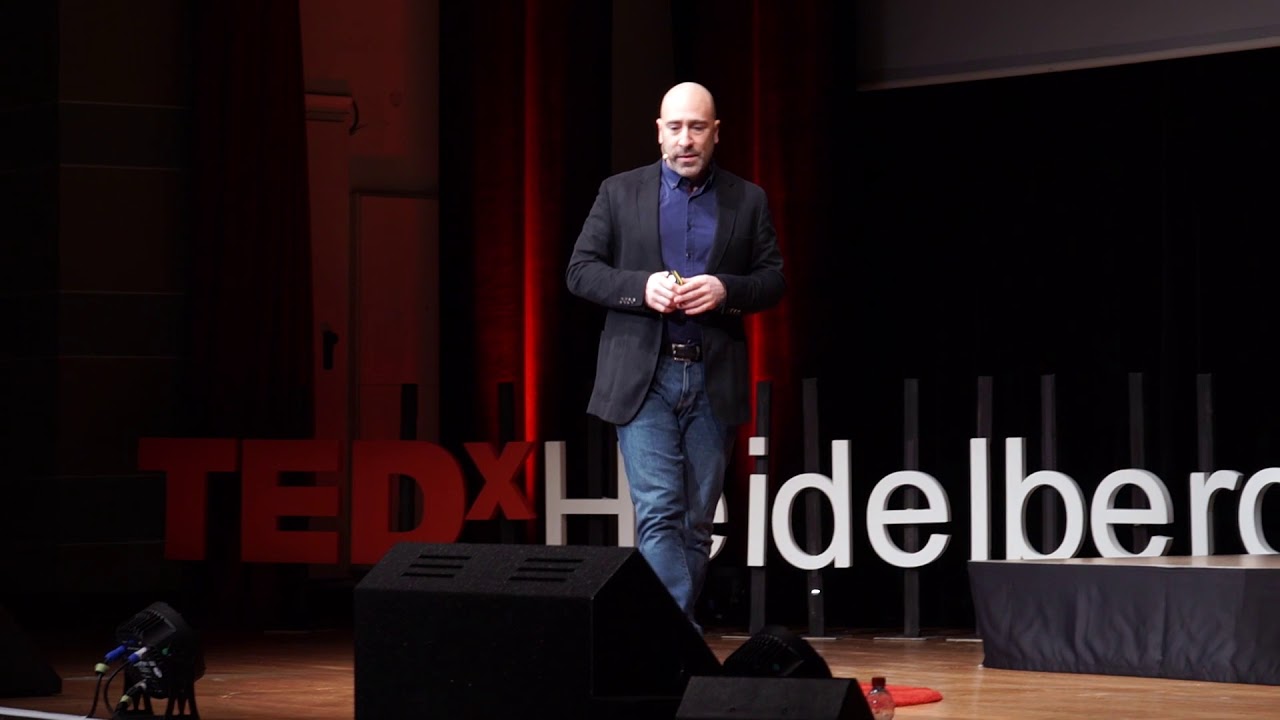
New Normal Mindset | Arunthep Sangvareethip | TEDxPunnawithi

Arunthep Sangvareethip explores mindset shifts for personal transformation and responsibility in this TEDx talk.

Ask about this video. Answers come from its transcript only — with the timestamp, so you can check them.

Generated from the transcript and can be wrong — check the timestamp.

Key Takeaways

  • Transformation is complex and often involves trial, error, and giving up.
  • People tend to avoid responsibility in some areas while taking it in others.
  • Blame and excuses are natural but hinder true accountability and change.
  • Mindset shifts from blame to ownership are crucial for personal growth.
  • Lasting change requires self-change before expecting others or conditions to change.

What the video covers

  • The speaker questions the label of 'transformation expert' and reframes himself as a 'transformation give-up expert' due to the complexity of change.
  • He observes that many hardworking professionals simultaneously take and avoid responsibilities in different life areas.
  • The talk is based on research by Dr. Christopher Avery on mindset changes over 29 years.
  • Change often requires others or external conditions to change, which complicates personal transformation.
  • Problems arise from the gap between what we want and what we currently have, triggering blame and excuses in our minds.
  • The speaker shares a personal story illustrating how blame and excuses are automatic responses to problems.
  • He highlights how society teaches us to find excuses to justify being right rather than owning mistakes.
  • The talk discusses the concept of 'above the line' and 'below the line' mindsets related to accountability and blame.
  • The core principle emphasized is that for change to happen, 'I must change' first.
  • The speaker encourages embracing responsibility and shifting mindset to overcome obstacles and achieve transformation.

Answers

Questions about this video

Why does the speaker call himself a 'transformation give-up expert'?

He believes transformation is complex with no clear answers, and over 80% of people give up trying to change, so he reframes his role to reflect this reality.

What is the main cause of problems according to the talk?

Problems arise from the gap between what you want and what you currently have, which triggers automatic blame and excuses in the brain.

What mindset shift does the speaker emphasize for effective change?

The speaker stresses that for things to change, you must first change yourself, moving from blame and excuses to ownership and accountability.

Full Transcript — Download SRT & Markdown

00:03
Speaker A
[Applause] I'm a bit ashamed to be called a transformation expert. Why? Because to me, an expert is a person who can answer most of the questions in that field. To me, if today you come to me, you definitely have a few choices but not a lot of answers. Like, it depends, it depends, followed by a bunch of questions and questions for you to go back and find out. Lots of people go back, find final answers, experiment on it. Some people succeed and forget about me, but most people, in fact over 80%, give up. So I like to reframe my job as a transformation give-up expert. I think that would be better.
00:37
Speaker A
definitely have a few choices but a lot of answers like it depends it depends followed by a bunch of questions and questions for you to go back and find out lots of people go back final answers experiment on it some people succeed and
01:07
Speaker A
For years, I have had the blessing and privilege to help a number of companies ranging from enterprises to startups. Everywhere I turn every day I go to work, I'm seeing small, hardworking, ambitious professionals taking responsibilities. The same people that are taking responsibilities are also avoiding responsibilities. This has been a burning desire for me for many years: why the same person is taking so much responsibility in one area in life but just tries to avoid it at all costs in a different area of life.
01:34
Speaker A
help our numbers of companies ranging from enterprises to startup everywhere I turn every day I go to work I'm seeing small hard working ambitious professionals taking responsibilities the same people that taking responsibilities also avoiding responsibilities this has been a burning
02:07
Speaker A
Today, I like to invite you to explore the mindset. In fact, it's my mindset. I'm not the one who invented it. It is small research at the University of Texas by Dr. Christopher Avery. It is a study that has been done for over twenty-nine years on how our minds work to change from a certain stage to a different stage.
02:28
Speaker A
the my set in fact it's my said I'm not the one who invented it it is small research in the University of Texas by dr. Christopher every it is study that has been done for over twenty nine years
02:43
Speaker A
Have you ever wanted to change something that you're so passionate about but find that somehow you realize that to change those things, you need somebody else to do it or somebody else needs to change or something must change, whether it's the government, its countries, it's education, or imminent price?
03:06
Speaker A
it or somebody else need to change or something must change whether it's the government its countries it's education or imminent price before I go into that things let's defy the context of problem because we wouldn't need to take
03:27
Speaker A
Before I go into those things, let's define the context of the problem because we wouldn't need to take responsibility if there is no problem. Okay, if there's no problem, why take action? So the problem in my context is the things that come between what you want and what you have. It's reciprocal. I'm sure you have your brain to read it. So what you want and what you have are two different things. In that instant, in that moment when you have problems, there is this microsecond in your brain that works itself like a human being.
03:50
Speaker A
what you want and what you have are two different things in that instance slides of moment when you have problems there is this microsecond in your brain that works itself like a human being so every one of us the same before I get bored before
04:14
Speaker A
So every one of us is the same. Before I get bored, before I bore you with theory, I want to walk through this research and study by telling a little story.
04:36
Speaker A
company I work for New York teams why I was staying in Bangkok I recall in November that year it was it's very late so I need to worry the shift where I need to support the time zone of New
04:53
Speaker A
A few years ago, before I actually left the enterprise, being a corporate warrior becoming an entrepreneur, I used to work for a global company. I worked for New York teams while I was staying in Bangkok. I recall in November that year, it was very late, so I needed to work the shift where I needed to support the time zone of New York City, which means that I probably finished work around midnight. It was very late. I was tired. I was in the software industry, so everybody knows the software industry has a special force where they don't have to sleep.
05:11
Speaker A
at midnight I drove home with my car's tired arrived home and I'm trying to get in the house through the front door I couldn't get in because too late I didn't tell my wife that would be late so she locked the door so what can I do
05:36
Speaker A
So I finished a job at midnight. I drove home with my car, tired, arrived home, and I was trying to get in the house through the front door. I couldn't get in because it was too late. I didn't tell my wife that I would be late, so she locked the door. So what can I do?
06:00
Speaker A
wake up and rush to the office you know to finish the job that I left last night and Irish everything and run to the front door and trying to get my keys guess did I find my key no guess what's
06:20
Speaker A
So I walked back to the back door of the house to find my way in. I'm not going to tell you how I got in. I got in, and I put my car key in the kitchen where the back door is. In the morning, I had to wake up and rush to the office, you know, to finish the job that I left last night and rush everything and run to the front door and try to get my keys. Guess, did I find my key? No.
06:44
Speaker A
things that happen in our blame is you know blame someone so fast who took my key and my wife who'd smart and beautiful shout back from the kitchen who's the last driver how smart she is actually she saw the
07:11
Speaker A
Guess what the first reaction or the first words that I said to my wife were. I shouted back to the kitchen, "Who took my keys?" I saw a lot of you answering those questions, "Are you at my home?" No, because that instant, the thing that happens in our brain is, you know, blame someone so fast. "Who took my key?"
07:33
Speaker A
fell excuses to get myself in the righteousness to be right I have to put the kahe here I have no choice it's a situations where I have no choice at all family it's the weather it's the economy it's the government it's the way it is
08:01
Speaker A
And my wife, who's smart and beautiful, shouted back from the kitchen, "Who's the last driver?" How smart she is. Actually, she saw the key in the kitchen. She was in the kitchen.
08:22
Speaker A
oh I am a dumber I'm so forgetful I will never be able to face my forgetfulness that is shame in fact if you look carefully those are the trees stay the blame in our brain and this is very
08:46
Speaker A
So I said, "Oh." So I walked back to the kitchen. I found my key. Guess what is the next episode of my sentence? I was tired, it was raining, the door was locked. I fell into excuses to get myself in the righteousness to be right. I have to put the key here. I have no choice. It's a situation where I have no choice at all. Family, it's the weather, it's the economy, it's the government, it's the way it is.
09:09
Speaker A
often that we see our kids doing something wrong and if he or she is like oh I know I'm wrong now and you say good boy good go that is how society is teaching us the story not in there
09:27
Speaker A
Trying to find excuses to get you into positions where you're being right so you're not wrong.
09:45
Speaker A
hopefully not this one yes that is the states that we've been taught about accountabilities you know I used to be a project manager shortly that I always say you know what I really don't want to do this that is my jobs I have to do I
10:10
Speaker A
So next, this is not the first time that I forgot my car key. So I graduated to the next stage when I drove the car back to the office that, "Oh, I am a dumber. I'm so forgetful. I will never be able to face my forgetfulness. That is shame."
10:30
Speaker A
of obligations and you feel like I just want to check that you know give up for example as I mentioned going to the talk that you don't want to go hopefully not this one if you don't like it what are
10:45
Speaker A
In fact, if you look carefully, those are the three states: the blame in our brain. And this is very natural. The first is blame other people. The second is blame the things, the way they are. And the blame that is very unlucky in our society is teaching us that is the right thing to do: feeling guilty by blaming yourself.
11:13
Speaker A
think the way that we should response all we can response in the stage where we call a true responsibilities what is this state this state is the state where you have true power freedom and choice the thing is these are just a tools and I
11:43
Speaker A
How often do we see our kids doing something wrong and if he or she is like, "Oh, I know I'm wrong now," and you say, "Good boy, good girl." That is how society is teaching us the story, not in there.
12:07
Speaker A
is a personal tools for yourself and it's nothing wrong to be in the state of blame justify shame applications its human being you know it's very human being but the thing is being a human being is aware of where the state you
12:30
Speaker A
Because in a lot of organizations, government, or education, we often get into obligations. So what are obligations? Have you ever won, have you ever gone to a talk that you really don't want to go to but you have to go?
12:53
Speaker A
sides going back to the last slide the thing which is below the line you see there the line between the blue and the red now here we call below the line up there we call above the line the things that I
13:14
Speaker A
Hopefully not this one. Yes, that is the state that we've been taught about accountabilities. You know, I used to be a project manager. Shortly, I always say, "You know what? I really don't want to do this. That is my job. I have to do it. I really don't want to do it."
13:37
Speaker A
in your minds and catch it now I can take responsibility I'm not in the patient's and move up to the responsibilities give yourself one MA on the ketchup which means catch it you have a chance to be responsibility
13:55
Speaker A
Have you ever fallen into that state? You know, those are states of obligations.
14:15
Speaker A
give the score because I want to give you an experience that being human is knowing that you are below the line and that's all it takes so that is idea worth spreading so take away for this model besides the State of Mind below the line
14:43
Speaker A
What about quit? Quitting is a very small stage where you have a lot of shame and a lot of obligations and you feel like, "I just want to check that, you know, give up." For example, as I mentioned, going to the talk that you don't want to go to, hopefully not this one.
15:09
Speaker A
not least go back to the first principle which I didn't say much about first principle is what there's a text in the middle the first principle is for things to change who must change I must change thank you
15:33
Speaker A
If you don't like it, what are you going to do? What are you going to do? Your cell phone is your friend, right? You're coming up, playing games. It's like being physically stay but mentally away. That is co-quitting.
Topics:transformationmindsetresponsibilityaccountabilitypersonal growthchangeself-improvementTEDxArunthep Sangvareethipmotivation

Get More with the SozAI App

Transcribe recordings, audio files, and YouTube videos — with AI summaries, speaker detection, and unlimited transcriptions.

Or transcribe another YouTube video here →