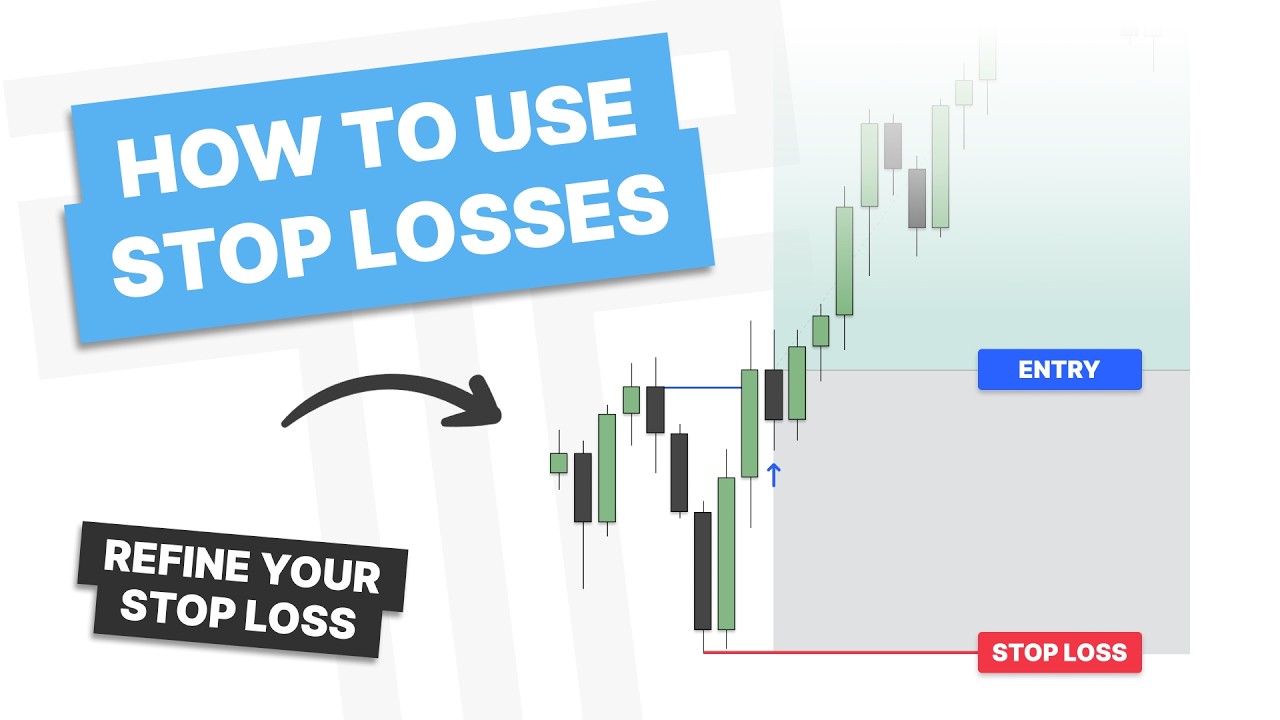
TTrades explains how to choose price targets in ICT-style trading using liquidity pools (lows, highs, equal lows) and imbalances like fair value gaps, plus counter-trend scalp targets.
Key Takeaways
- Liquidity (lows, highs, equal highs/lows) is the most obvious and commonly used target.
- Imbalances such as fair value gaps provide additional targets and can be used in sequence.
- Targeting imbalances may result in earlier exits but offers multiple scalping opportunities.
- Equal highs/lows should be treated as prime liquidity targets.
What the video covers
- Two main tools for selecting price targets: liquidity and imbalances (fair value gaps).
- After a short entry on a lower timeframe shift in structure, the first targets are the lows where liquidity rests.
- Fair value gaps on higher timeframes (e.g., 15-minute) can serve as targets that align with liquidity runs.
- Order blocks and lower-level fair value gaps are also identified as potential targets within a range.
- Equal lows are highlighted as strong liquidity targets that should be noted in a trader's mind.
- Taking out equal lows leads to the next liquidity pool as the subsequent target.
- Adding to a position while risking the highs allows targeting lows and small imbalances.
- Counter-trend scalps can target imbalances being filled, such as a higher-timeframe imbalance hit on a long entry.
- Multi-step targeting: hit one imbalance, then the next, with the final target being the highs.
- Using imbalances as targets may lead to earlier exits but provides more target opportunities.
Full Transcript — Download SRT & Markdown
Speaker A
This video we're going to go over how to choose targets. The two things I use to choose targets are liquidity and imbalances. So if we're looking at this five-minute chart here, let's say you got short after we ran these stops up here, shifted structure on a lower time frame. What are your targets? Well, you have this low right here, that is a target. Okay, low right here, and this low right here, that is where your liquidity will be resting.
Speaker A
shifted structure on a lower time frame what are your targets well you have this low right here that is a target okay slow right here and this low right here that is where your liquidity will be resting now you
Speaker A
Now, you can also use imbalances as a target. For example, on this five-minute chart here, this fair value gap, or you could also use this would be your 15-minute fair value gap right here, which also corresponds with that liquidity run.
Speaker A
let's go find some more examples real quick so right here all right let's say we ran this high here right shifted structure right in here and you got along somewhere there we're not going to go over the plays but just
Speaker A
Let's go find some more examples real quick. So right here, all right, let's say we ran this high here, right, shifted structure right in here, and you got along somewhere there. We're not going to go over the plays, but just searching for targets, so where could you target in this range? Well, you have this little order block right here, right, target that as well, as well as this lower-level fair value gap here, and then liquidity down here, as well as these equal lows. Whenever you see equal lows, that should be a target in your mind.
Speaker A
whenever you see equal lows that should be a target in your mind another example right here we shift structure here if you get short in this fair value gap here or this fair value gap here your obvious target
Speaker A
Another example right here. We shift structure here. If you get short in this fair value gap here, or this fair value gap here, your obvious target is these equal lows here, which you take out, and then where's your next target? Liquidity down here, liquidity down here. So you hit these, let's say you add to your position here, liquidity, let's say you add in here, right, risking the highs. You can use this low here, this low here. You also have a little imbalance in here that you expect to fill. This is also a way you can play counter-trend scalps.
Speaker A
risking the highs you can use this low here this low here you also have a little imbalance in here that you expect to fill this is also a way you can play counter trend scalps so for example you expect price to return to this fair
Speaker A
So for example, you expect price to return to this fair value gap in here, right? Higher time frames, you have an imbalance right here that gets hit, so you could long in here, target that imbalance. Once you get to that imbalance, target this imbalance, and then overall your final target would obviously be these highs up here. But that's just a way you can scalp around, right? So if you get short in this order block up here, which I probably wouldn't, I would have wanted to see a move up into this fair value gap, but let's say you did that, target imbalance to imbalance to imbalance.
Speaker A
obviously be these highs up here but that's just a way you can scalp around right so if you get short in this order block up here which i probably wouldn't i would have wanted to see a move up into this fair value
Speaker A
So that's just a quick video I wanted to show you, because I know a lot of people target the liquidity. It's pretty obvious, right? If you are used to the strat or any other strategies, you're going to target, you know, the obvious highs. But if you look for imbalances as targets as well, you might exit a little bit more early, but it also will give you a few more targets. So I hope you found this video helpful, and if you enjoyed it, please consider liking and subscribing. Thank you so much.
Speaker A
any other strategies you're going to target you know the obvious highs but if you look for imbalances as targets as well you might exit a little bit more early but it also will give you a few more targets so
Speaker A
i hope you found this video helpful and if you enjoyed it please consider liking and subscribing thank you so much
Topics:ICTprice targetsliquidityfair value gapimbalanceorder blockequal lowsscalpingsmart money conceptsTTrades