Skip to content
Get App

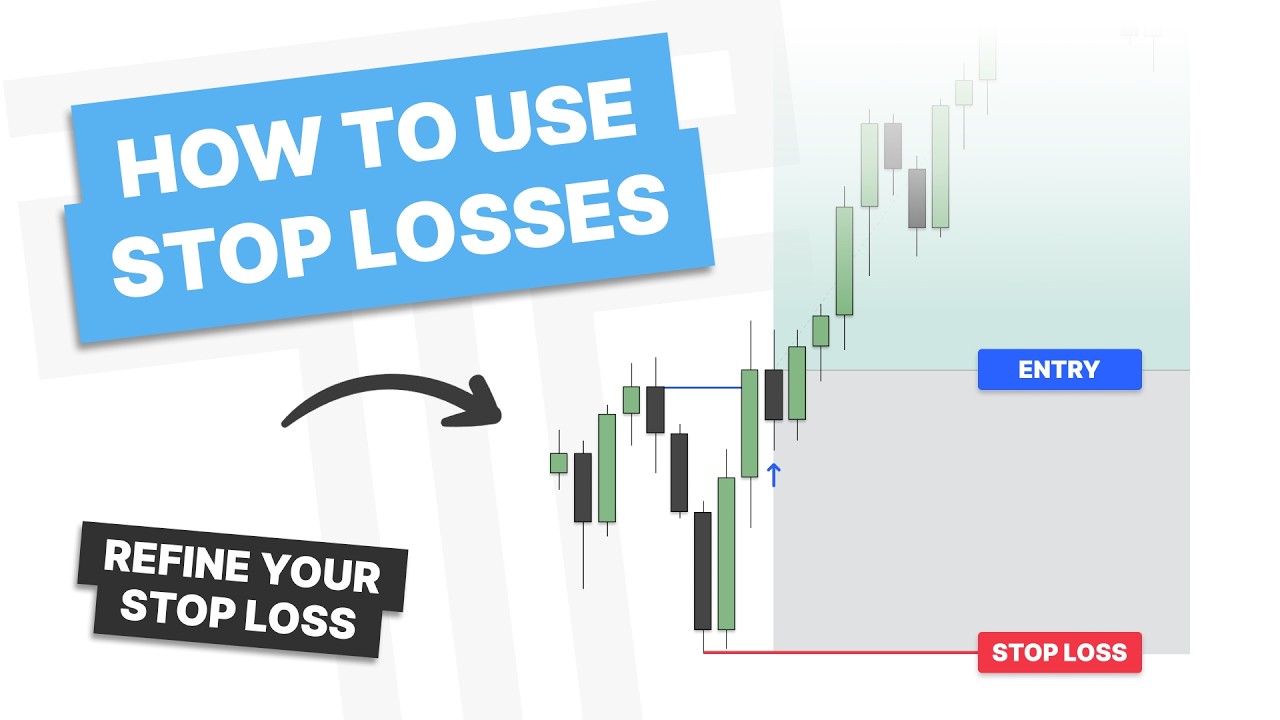
Position Sizing For Trading - Futures & Forex

Explains why win rate and risk-to-reward only work with consistent position sizing, comparing fixed contract size vs fixed dollar risk, with a futures position size calculator.

Key Takeaways

  • Consistent dollar risk per trade is required for win rate and risk-to-reward math to work.
  • Fixed contract size leads to inconsistent risk and can turn a profitable system into a losing one.
  • Position size = (defined risk) / (value per point x stop size in points), rounded down to whole contracts or micros.

What the video covers

  • Win rate and risk-to-reward relationships only hold if risk per trade is consistent; otherwise profitability calculations break down.
  • Example: with a 1:2 R system and 50% win rate, equal $1,000 risk per trade yields a profit of 1R, but inconsistent sizing can result in breakeven or losses.
  • Three position sizing methods are discussed: fixed contract size, fixed dollar risk, and fixed percentage risk.
  • Fixed contract size (e.g., two NQ contracts every trade) produces varying dollar risk because stop distances differ, distorting results.
  • The presenter prefers fixed dollar or fixed percentage risk, adjusting contract size per trade to keep risk constant at $1,000 (1R).
  • Position size formula: defined risk divided by value per point divided by stop size in points, giving number of contracts.
  • Futures contracts cannot be fractional, so micro contracts (10x smaller) offer finer position sizing; the presenter rounds down.
  • CFDs allow decimal position sizes, making exact risk targeting easier.
  • Two spreadsheet calculators (futures and forex/CFD) are provided in the video description, with a futures calculator showing contract counts by stop size for ES and NQ.
  • Overall message: consistent risk per trade is essential for a win rate and risk-to-reward strategy to be profitable.

Answers

Questions about this video

Why does win rate and risk-to-reward only work with consistent position sizing?

Profitability depends on each loss and win being the same dollar amount in R terms. If position sizes vary, a loss may be larger than the following win, changing the outcome even when win rate and risk-to-reward are unchanged.

What is the difference between fixed contract size and fixed dollar risk?

Fixed contract size uses the same number of contracts each trade, so dollar risk varies with stop distance. Fixed dollar risk adjusts contract count per trade so the dollar amount at risk stays constant, such as $1,000 per trade.

How do you calculate the number of contracts to trade?

Divide the defined dollar risk by the instrument's value per point, then divide by the stop size in points. For NQ with $1,000 risk, $20 per point, and a 20-point stop, the result is 2.5 contracts, which can be expressed as 25 micros.

Full Transcript — Download SRT & Markdown

00:04
Speaker A
Hey everyone, this video is going to be about position sizing. A lot of people talk about the correlation between win rate and risk-to-reward. However, what they don't talk about is proper position sizing. Without proper position sizing, the correlation between win rate and risk-to-reward does not work out, so let's hop into a PDF and go over this.
00:22
Speaker A
position sizing the correlation between win rate and risk to reward does not work out so let's hop into a PDF and go over this now here we are with a win rate and risk to reward table so what
00:33
Speaker A
Here we are with a win rate and risk-to-reward table. What this shows is what win rate paired with what fixed risk-to-reward equals profitability. For example, if you have a 20% win rate in a 1:1 risk-reward, it's not profitable. However, if you have a 1:2 risk-reward with a 40% win rate, then you are profitable.
00:48
Speaker A
then you are profitable now this table only works out if you have the same risk per trade now why is that well let's take for example I'm using a fixed 1 to2 R system and have an expected win rate
00:59
Speaker A
Now, this table only works out if you have the same risk per trade. Why is that? Well, let's take, for example, that I'm using a fixed 1:2 R system and have an expected win rate of 50%. Assuming a risk of $1,000 per trade, if I take my first trade and it is a loser, I'm down 1R, or $1,000. Now, if I take my next trade and it is a winner, keeping the same position size and risking $1,000, I'm up 2R, or $2,000. Adding those together, I'm up 1R, or $1,000. So you can see that with a fixed 1:2 R system at a 50% win rate, it is profitable.
01:12
Speaker A
$1,000 I'm up 2 r or $2,000 adding those together I'm up 1 r or $11,000 so you can see with a fixed 1 to2 R system at a 50% win rate it is profitable now let's say I was using the same fixed 1 to2 R
01:27
Speaker A
Now, let's say I was using the same fixed 1:2 R system with a 50% win rate, but I was not keeping consistent position sizing. For example, on the first trade, instead of risking $1,000, I risk $2,000. After taking that loss, I am now down 2R, or $2,000. But then, on the next trade, when I'm risking $1,000 and hit a 2R trade, instead of being up 1R, I'm at break even. So you can see how this table only works out with consistent position sizing.
01:41
Speaker A
I'm risking 1,000 and hit a 2R trade instead of being up 1 R I'm at break even so you can see how this table only works out with consistent position sizing now there are a few ways I can
01:53
Speaker A
There are a few ways I can position size. I can keep my contract size the exact same, for example, risking two NQ contracts per trade, or I can do a fixed dollar or fixed percentage, where I risk the same dollar value or same percentage value per trade. Let's look at our first slide, where we go over what it looks like to keep the contract size the same and why I prefer the other two methods.
02:07
Speaker A
value per trade let's hop into our first slide where we go over what it looks like to keep the contract size the same and why I prefer the other two methods let's take a look at using fixed contract size so in this case I'm going
02:18
Speaker A
Let's take a look at using a fixed contract size. In this case, I'm going to use two NQ contracts for every trade. In this first example, risking 20 points with two NQ contracts gives me a risk of $800. Here, risking 40 points with two NQ contracts gives me a risk of $1,600. Then here, risking 10 points with two NQ contracts gives me a risk of $400. You can see that this risk size is all over the place and not consistent, so why is this a problem? Let's say we were to take a loss on these first two trades. On this first trade, that's -1R, or -$800. Here, -1R, or -$800 again, and then we win this last trade, which is a 4R trade. However, we are only risking $400, so we only make $1,600 due to the inconsistent sizing. Although we should be up 2R, we're actually down $800.
02:33
Speaker A
$1,600 then here I'm risking 10 points with two NQ contracts which gives me a risk of $400 so you can see that this risk size is all over the place and not consistent so why is this a problem well
02:45
Speaker A
Let's go to the next slide and see why I prefer fixed dollar risk over fixed contract sizes. When using fixed dollar risk or fixed percentage risk, I adjust the contract size per trade to maintain a fixed risk of $1,000, so you can see throughout each of these trades I have a risk of $1,000, or 1R. Now let's use the previous example, where we lost the first two trades and then won the last one, and see how this works out with consistent position sizing. Losing the first two trades, you can see I'm down 1R, or $1,000. Now I'm down another R, or another $1,000. But on this last trade, because I'm position sizing correctly, this 4R is actually 4R, and so I end up being up 2R, or $2,000. Compared to the last slide, where we were down $800, that's a major difference.
02:58
Speaker A
only risking $400 so we only make $1,600 due to the inconsistent sizing although we should be up to R we're down $800 let's go to the next slide and see why I prefer fixed dollar risk over having fixed contract sizes Now when using
03:13
Speaker A
How do I determine how many contracts I take? Well, it's really easy with CFDs because I can just use decimals. However, with futures contracts you can't have half a contract, and this is why I like to use micros, because they allow more flexibility in my position size. I want to get as close to that $1,000 of risk as possible.
03:28
Speaker A
example where we lost the first two trades and then one the last one and see how this works out with consistent position sizing and then we'll discuss how to determine our position size so using that example losing the first two
03:40
Speaker A
So how do I determine how many contracts or micros I need? I use my defined risk, in this case $1,000, divided by the value per point for the instrument, which on NQ is $20 per point, and then divided by my stop size. In this first example, risking $1,000 with a 20-point stop, I have $1,000 divided by $20, which is NQ's value per point, and then divided by my 20-point stop, which gives me 2.5 contracts. If I want to convert from contracts to micros, I just move the decimal over one place, or multiply by 10. In this next example, with 40 points of risk, I would take $1,000 divided by $20, which is NQ's value per point, and then divided by my 40-point stop, which gives me 1.25 contracts, or 12.5 micros if I multiply by 10. Since I can't take half a micro, I would personally round down. In this last example, risking $1,000 with an NQ value of $20 per point and a 10-point stop, I get 5 NQ contracts, or 50 micros.
03:53
Speaker A
up 2 r or $2,000 when in compared to the last slide we were down $800 so how do I determine how many contracts I take well it's really easy with cfds because I can just use decimals however with Futures
04:07
Speaker A
Although I know how to calculate my position size manually, it does take time, and there are easier ways to do it. There are a lot of calculators and tools out there. I've created two spreadsheets, which I will link in the description below, that are very simple calculators for position size. I'll do a brief overview of both here.
04:19
Speaker A
do I determine how many contracts or micros I need to take well I use my defined risk in this case $1,000 my value per point for the instrument so on NQ that's $20 per point and then my stop
04:32
Speaker A
Taking a look at the futures calculator, the first thing I want to do is fill out which contracts I generally trade and the value per point for each. NQ is $20 per point, ES is $50 per point. Next, I fill out the account size I am trading and my desired risk per trade. It will then calculate my risk per trade in dollar value. Looking at the table below, I can see, for a given stop size, how many contracts I should be taking. For example, on ES, if I have a five-point stop, I'm going to be taking 10 contracts; if I have a six-point stop, I'll take eight contracts. On NQ, if I have a 15-point stop, I'll have eight contracts; a 20-point stop, six contracts. If this doesn't go out far enough, I can just drag it down and determine the stop size I need.
04:45
Speaker A
get from contracts to micros I just move the decimal over one or multiply by 10 so in this next example with 40 points of risk I would take 1,000 ID 20 which is nq's value per point and then my stop
04:59
Speaker A
Taking a look at the Forex calculator, the first thing I want to do is figure out with my broker what the price per pip or per point is for each instrument I'm trading, and fill them out in this table. From here, I choose my account size or type it in. If I have a 100K account, I'll adjust that here, along with my desired risk per trade, and it will spit out a fixed dollar risk. Then, selecting which instrument I'm looking to trade and my stop size in pips or points, it will give me a lot size for that trade. With both of these sheets, make sure you make a copy, or else you won't be able to adjust any of this info. And please do not request access, as it just sends me a bunch of emails.
05:15
Speaker A
10o stop which gives me 5 NQ contracts or 50 micros now although I know how to calculate my position size manually it does take time and there are easier ways to do it now there are a lot of
05:27
Speaker A
The next thing I want to discuss is using TradingView's risk-reward tool to determine position size. Here I have an entry and a stop, so I want to double-click in and make sure this information is all correct. Let's say I have a 100K account risking 1%. Because I'm in Forex with EUR, I want to make this lot size 1,000. From here, you can see it spits out a quantity of 14.92 EUR on a 100K account. I can load this template in and it will be correct.
05:39
Speaker A
taking a look at the Futures calculator here the first thing I want to do is fill out which contracts I generally trade and the value per point for them so you can see NQ has $20 per Point es
05:51
Speaker A
If I were to do a similar thing in futures, in this case the NASDAQ, I'd have to adjust the settings in the risk-reward tool. With our current Forex settings, it's giving a quantity of 0.3, so I need to adjust that. For futures, I use a 1 in the lot size, and then it gives me the correct quantity. To risk $1,000 with this stop size, I need 2.817 contracts, or 28 micros if I'm using micros. Before I do anything, I'll want to save this as a template for a 100K account on index futures. For this trade, I would have to take 2.18 contracts, but you cannot do that with minis, so we will
06:03
Speaker A
at the table below here I can see that with what stop size how many contracts I should be taking so for example here on Mees if I have a fivepoint stop I'm going to be taking 10 contracts if I
06:15
Speaker A
have a Sixpoint stop I'll be taking eight contracts I go over to M andq you can see if I have a 15-point stop I'll have eight contracts 20 point stop six contracts and if this doesn't go out far
06:28
Speaker A
enough I can just go in and adjust it such as so drag it down and determine my stop size I need now taking a look at the Forex calculator the first thing I want to do is figure out with my broker
06:40
Speaker A
what is the price per pip or per point for each instrument that I am trading and fill them out in this table here from here I then go choose my account size or type it in so if I have a 100K
06:53
Speaker A
account I'll just adjust that here my desired risk per trade and then it will spit out a fixed dollar risk then selecting which instrument I am looking to trade my stop size in pip or points and then it will give me a lot size for
07:07
Speaker A
that trade now with both of these sheets make sure you file make a copy or else you won't be able to adjust any of this info and please do not request access as it just sends me a bunch of emails now
07:18
Speaker A
the next thing I want to discuss is using trading views risk reward tool to determine position size so you can see here I have an entry a stop so I want to double click in here and make sure this
07:27
Speaker A
information's all correct let's say I have a 100K account risking 1% now because I'm in Forex with EU I want to make this lot size 1,000 so from here you can see it spits out a quantity of 14.92% EU on 100K account I can load
08:02
Speaker A
this template in and it will be correct now if I was going to do a similar thing on Futures and in this case the NASDAQ I'm going to have to adjust the settings in the risk to reward tool so you can
08:13
Speaker A
see with our current settings on the Forex it's giving a quantity of 03 so I need to adjust that and for futures I use a one in the lot size and then this is giving me the correct quantity so to risk $1,000 with this
08:30
Speaker A
stop size I need 2.81 7 contracts or if I'm going to be using micros 28 micros now before I do anything I will want to save this as a template for a 100K account on index Futures and for this
08:44
Speaker A
trade I would have to take 2.18 contracts however you cannot do that with minis so we will drop down to the micros to take 28 and I'll show you some stuff there so looking at the same trade on the micros here you can see our
08:59
Speaker A
quantity is now 28 and that's because micros are on10th of a mini now the cool thing you can do in trading view with the risk to reward tool is when you hit create a limit order on this already
09:10
Speaker A
created risk to reward tool you can see how much you're going to risk with your stop and take profit you can see I'm risking $994,000 with position sizing than using minis last thing I'm going to quickly discuss is position sizing with Futures
09:35
Speaker A
prop firm accounts let's say I get a 25k account do I have access to $25,000 no I really have a $1,500 account because that is the drawdown size so if I was going to risk 1% of this account size how much am I actually
09:51
Speaker A
risking I'm risking 177% of the draw down size if I was to lose six or seven trades in a row then that account is blown so generally on Futures prop firms I'm not looking to risk 1% of the
10:03
Speaker A
overall account size instead I am focused on the draw down amount so for a 25k account I have $1,500 in draw down I put that over here and then from here I can see risking what percent of the draw
10:15
Speaker A
down gives me how many trades until I lose the account so I want to look between 10 and 7% generally on these accounts CU that gives me 10 to 15 trades that I can lose in a row before
10:26
Speaker A
losing the account then going back to sheet one I will adjust this from the account size to the draw down size and then I will adjust the risk per trade from 7 to 10% and that is how I
10:38
Speaker A
personally do it now what I talked about there is for evaluations generally once funded I lower my risk which gives me the ability to lose more trades and have a larger cushion and with Forex prop firms the concept is exactly the same it
10:53
Speaker A
just is different numbers I hope you found this video helpful and insightful if you did please consider like and subscribing and I'll see you guys next week
Topics:position sizingrisk managementwin raterisk to rewardfutures tradingNQESmicro contractsfixed dollar risktrading calculator

Get More with the SozAI App

Transcribe recordings, audio files, and YouTube videos — with AI summaries and speaker detection. 30 minutes free.

Or transcribe another YouTube video here →