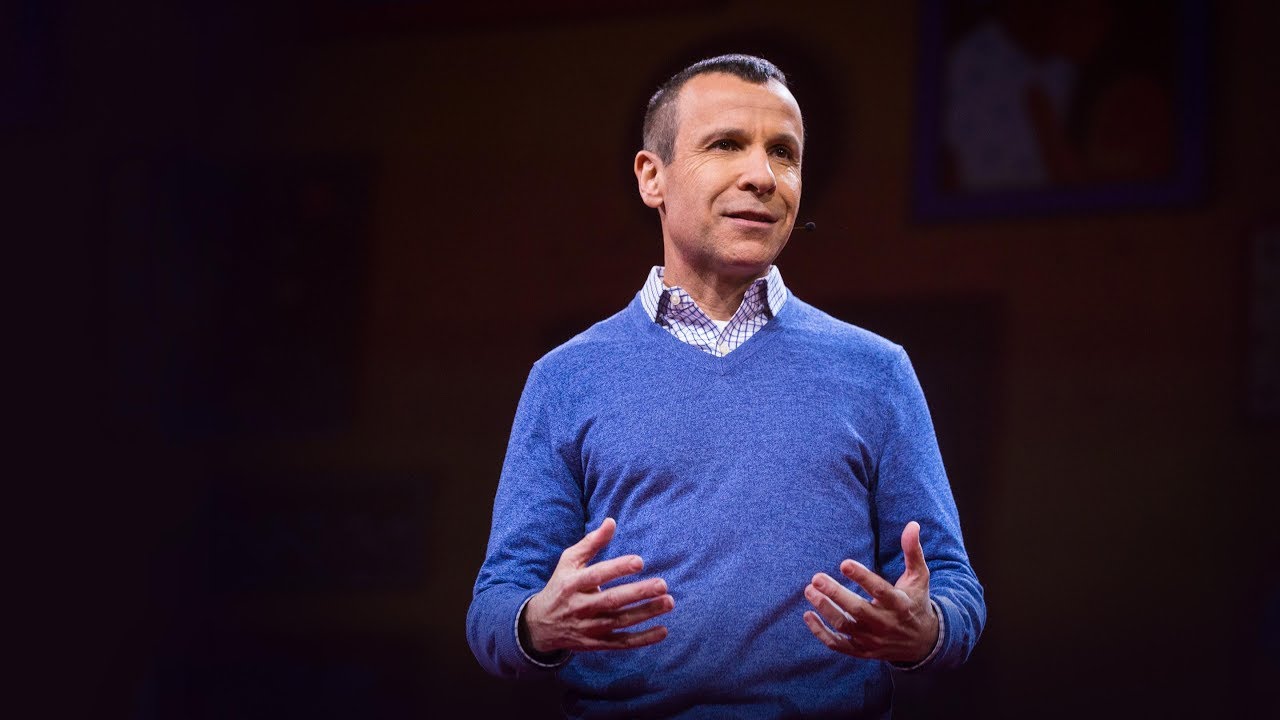
Hans Rosling uses his mother's washing machine story to explore global energy use, poverty lines, and whether the world can sustain everyone's consumption.
Key Takeaways
- Access to labor-saving technology like washing machines is a widely shared human aspiration, and it frees time for education and reading.
- Global energy use is highly unequal, and the richest one billion people consume about half of it.
- Economic growth in emerging economies will sharply increase energy demand, making climate action and green energy essential.
- Wealthier populations should lead on energy efficiency and sustainable behavior before telling poorer people what they can consume.
What the video covers
- Hans Rosling recalls, at age four, watching his mother use a washing machine for the first time, a joyful moment shared with his grandmother.
- He notes that in rich countries homes are full of machines, while billions still heat water and cook with fire.
- He divides the world into groups: the 'air line' (over $80/day), the 'wash line' (about $40/day), and those in poverty below $2/day.
- Roughly two billion people have washing machines, while about five billion, mostly women, still wash clothes by hand, which is hard, time-consuming labor.
- Rosling argues that people in poverty want washing machines just as his grandmother did, and questions why environmentalists accept washing machines for themselves but deny them to others.
- An energy analysis shows the richest one billion people use half of the world's energy, and projected growth could double total consumption to 22 units by 2050.
- Rosling says emerging economies will grow their energy use and that the richest must become more efficient and produce green energy before advising others.
- He describes a favela woman who voted for the energy minister who electrified her community, illustrating how democracy drives demand for appliances.
- The washing machine freed his mother's time to read to him, which he credits as the start of his career as a professor.
- He closes by thanking industrialization, steel mills, power stations, and chemical industries for giving families time to read.
Chapters
- 00:00A mother's first washing machine
- 00:48Grandma and the miracle of electricity
- 02:02Machines, poverty, and the air line
- 03:10Who has a washing machine?
- 03:48Hand-washing and the women of the world
- 04:16Environmentalists and the washing machine question
- 04:48Energy units and global inequality
- 05:45Future energy growth and climate risk
- 07:00Democracy, electricity, and the favela woman
- 07:51The magic of the machine: time to read
Full Transcript — Download SRT & Markdown
Speaker A
I was only four years old when I saw my mother load a washing machine for the very first time in her life.
Speaker A
That was a great day for my mother. My mother and father had been saving money for years to be able to buy that machine, and the first day it was going to be used, even Grandma was invited to see the machine.
Speaker A
(Laughter) And Grandma was even more excited. Throughout her life, she had been heating water with firewood, and she had hand-washed laundry for seven children.
Speaker A
And now, she was going to watch electricity do that work. My mother carefully opened the door, and she loaded the laundry into the machine, like this.
Speaker A
And then, when she closed the door, Grandma said, "No, no, no, no! Let me! Let me push the button!" (Laughter) And Grandma pushed the button, and she said, "Oh, fantastic!
Speaker A
I want to see this! Give me a chair! Give me a chair! I want to see it," and she sat down in front of the machine, and she watched the entire washing program.
Speaker A
(Laughter) She was mesmerized. To my grandmother, the washing machine was a miracle. Today, in Sweden and other rich countries, people are using so many different machines.
Speaker A
Look -- the homes are full of machines. I can't even name them all. And they also, when they want to travel, they use flying machines that can take them to remote destinations.
Speaker A
And yet, in the world, there are so many people who still heat the water on fire, and they cook their food on fire.
Speaker A
Sometimes they don't even have enough food. And they live below the poverty line. There are two billion fellow human beings who live on less than two dollars a day.
Speaker A
And the richest people over there -- there's one billion people, and they live above what I call the "air line" -- (Laughter) because they spend more than 80 dollars a day on their consumption.
Speaker A
But this is just one, two, three billion people, and obviously, there are seven billion people in the world, so there must be one, two, three, four billion people more who live in between the poverty and the air line.
Speaker A
They have electricity, but the question is: how many have washing machines? I've done the scrutiny of market data, and I've found that, indeed, the washing machine has penetrated below the air line, and today, there's an additional one billion people out there
Speaker A
who live above the "wash line." (Laughter) And they consume for more than 40 dollars per day.
Speaker A
So two billion have access to washing machines. And the remaining five billion -- how do they wash?
Speaker A
Or, to be more precise, how do most of the women in the world wash?
Speaker A
Because it remains the hard work for women to wash. They wash like this: by hand.
Speaker A
It's hard, time-consuming labor, which they have to do for hours every week. And sometimes they also have to bring water from far away to do the laundry at home, or they have to bring the laundry away to a stream far off.
Speaker A
And they want the washing machine. They don't want to spend such a large part of their life doing this hard work with so relatively low productivity.
Speaker A
And there's nothing different in their wish than it was for my grandma. Look here, two generations ago in Sweden -- picking water from the stream, heating with firewood and washing like that.
Speaker A
They want the washing machine in exactly the same way. But when I lecture to environmentally concerned students, they tell me, "No, everybody in the world cannot have cars and washing machines." How can we tell this woman that she isn't going to have a washing machine?
Speaker A
And then I ask my students -- over the last two years, I've asked -- "How many of you don't use a car?" And some of them proudly raise their hand and say, "I don't use a car." And then I put the really tough question:
Speaker A
"How many of you hand-wash your jeans and your bedsheets?" And no one raised their hand.
Speaker A
Even the hardcore in the green movement use washing machines. (Laughter) So how come [this is] something that everyone uses and they think others will not stop it?
Speaker A
What is special with this? I had to do an analysis about the energy use in the world.
Speaker A
Here we are. Look here. You see the seven billion people up there? The air people, the wash people, the bulb people and the fire people.
Speaker A
One unit like this is an energy unit of fossil fuel -- oil, coal or gas.
Speaker A
That's what most of the electricity and the energy in the world is. And it's 12 units used in the entire world, and the richest one billion, they use six of them.
Speaker A
Half of the energy is used by one seventh of the world population. And these ones, who have washing machines but not a house full of other machines, they use two.
Speaker A
This group uses three, one each. And they also have electricity. And over there, they don't even use one each.
Speaker A
That makes 12 of them. But the main concern for the environmentally interested students -- and they are right -- is about the future.
Speaker A
What are the trends? If we just prolong the trends, without any real advanced analysis, to 2050, there are two things that can increase the energy use: first, population growth; second, economic growth.
Speaker A
Population growth will mainly occur among the poorest people here, because they have high child mortality and they have many children per woman.
Speaker A
And that will get you two extra, but that won't change the energy use very much.
Speaker A
What will happen is economic growth. The best of here in the emerging economies -- I call them "the New East" -- they will jump the air line.
Speaker A
"Wopp!" they will say. And they will start to use as much as the Old West are doing already.
Speaker A
(Laughter) And these people, they want the washing machine. I told you. They'll go there.
Speaker A
And they will double their energy use. And we hope that the poor people will get into the electric light.
Speaker A
And they'll get a two-child family without a stop in population growth. But the total energy consumption will increase to 22 units.
Speaker A
And these 22 units -- still, the richest people use most of them. So what needs to be done?
Speaker A
Because the risk, the high probability of climate change is real. It's real. Of course, they must be more energy efficient.
Speaker A
They must change their behavior in some way. They must also start to produce green energy, much more green energy.
Speaker A
But until they have the same energy consumption per person, they shouldn't give advice to others -- what to do and what not to do.
Speaker A
(Laughter) (Applause) Here, we can get more green energy all over. This is what we hope might happen.
Speaker A
It's a real challenge in the future. But I can assure you that this woman in the favela in Rio, she wants a washing machine.
Speaker A
She's very happy about her minister of energy that provided electricity to everyone -- so happy that she even voted for her.
Speaker A
And she became Dilma Rousseff, the president-elect of one of the biggest democracies in the world, moving from minister of energy to president.
Speaker A
If you have democracy, people will vote for washing machines. They love them! (Laughter) And what's the magic with them?
Speaker A
My mother explained the magic with this machine the very, very first day. She said, "Now, Hans.
Speaker A
We have loaded the laundry. The machine will make the work. And now we can go to the library." Because this is the magic: you load the laundry, and what do you get out of the machine?
Speaker A
You get books out of the machines, children's books. And mother got time to read for me.
Speaker A
She loved this. I got the "ABC's" -- this is why I started my career as a professor, when my mother had time to read for me.
Speaker A
And she also got books for herself. She managed to study English and learn that as a foreign language.
Speaker A
And she read so many novels, so many different novels here. And we really, we really loved this machine.
Speaker A
(Laughter) And what we said, my mother and me, "Thank you, industrialization. Thank you, steel mill.
Speaker A
Thank you, power station. And thank you, chemical processing industry that gave us time to read books." Thank you very much.
Speaker A
(Laughter) (Applause)
Topics:Hans Roslingwashing machineenergy consumptionpovertyclimate changeeconomic growthgreen energydevelopmentTEDglobal inequality