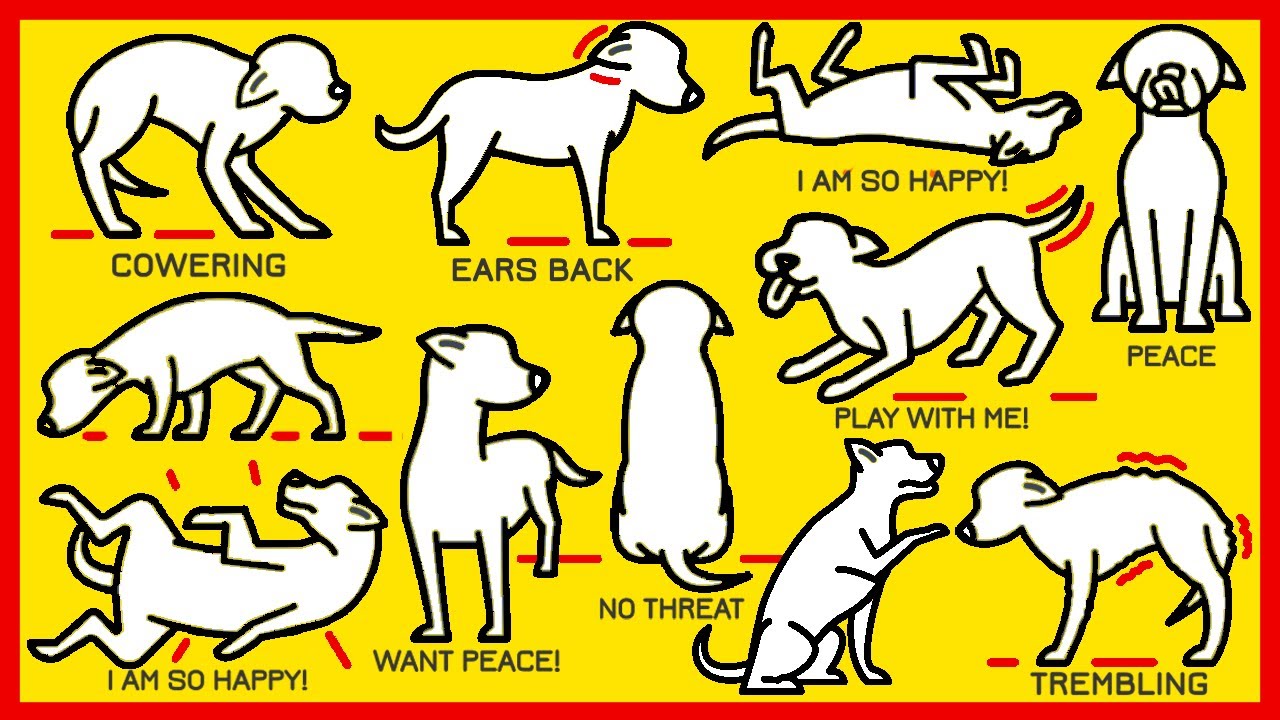
Learn how to interpret your dog's tail wags and body language to understand their emotions and intentions better.
Key Takeaways
- Tail position and wagging direction are key indicators of a dog's emotional state.
- Positive emotions are often shown by tail wagging to the right, negative emotions by wagging to the left.
- Tail wag speed and breadth add nuance to understanding a dog's mood.
- Breed and individual tail carriage differences must be considered when interpreting tail signals.
- Comprehensive observation of the dog's entire body language is necessary for accurate understanding.
What the video covers
- Tail position reveals a dog's emotional state, such as dominance, submission, curiosity, or fear.
- Tail wagging direction indicates feelings: left wag signals negative emotions, right wag signals positive emotions.
- Tail held high and stiff shows alertness and dominance, while tail between legs indicates fear or submission.
- The speed and breadth of tail wagging provide additional context about the dog's mood, from happiness to anxiety or threat.
- Fast broad wagging usually means a happy, friendly dog, while slow or reluctant wagging may indicate insecurity or anxiety.
- Quick, short wags often occur during tentative greetings, and vibrating tails held high can signal an imminent threat.
- Breed differences affect tail carriage, so tail signals should be interpreted relative to the dog's normal tail position.
- Dogs with short or stubby tails may have more difficulty communicating and are more prone to aggressive encounters.
- Observing the entire dog, including posture and facial expressions, is essential for accurate interpretation.
- The video encourages viewers to watch additional content to deepen their understanding of canine body language.
Full Transcript — Download SRT & Markdown
Speaker A
The position of a dog's tail can reveal a lot about what a dog is thinking and feeling.
Speaker A
The speed of the wag, the pattern of movement, and the breadth of each tail sweep
Speaker A
can all give information about a dog's intentions and emotions.
Speaker A
In this video, we will teach you how to interpret the language of a dog's tail.
Speaker A
Tail held high and stiff indicates alertness and the desire to display dominance.
Speaker A
When dogs are alert, they stand with their tails raised and ears up.
Speaker A
This posture means that they are observing carefully and ready to confront whatever caught their attention.
Speaker A
This position could also be a display of dominance, in other words, they are showing their role as the dog who rules the world.
Speaker A
Tail held straight out means that the dog is taking a new information and is so far responding neutrally.
Speaker A
There could be a new canine in the neighborhood or at the dog park, your dog is curious and just doesn't know what to make of it yet.
Speaker A
Tail held between the legs indicates submission or fear.
Speaker A
A tucked tail is a sign that your dog is afraid, scared, or uncomfortable, they could be in pain or afraid of something or someone.
Speaker A
Tail wagging to the left, it may be hard to catch, but a dog will wag their tail to the left if they are suspicious of another dog or person they don't trust.
Speaker A
Recent studies suggest that a tail wagging to the left indicates negative feelings, fear or stress.
Speaker A
Dogs may show this tail wagging behavior in the presence of an unfamiliar dominant dog.
Speaker A
Tail wagging to the right, it seems a little bit unbelievable, but recent research suggests that the tail wagging to the right indicates positive feelings or that your dog is relaxed.
Speaker A
Oftentimes, dogs show this tail wagging behavior when they see their owner.
Speaker A
Tail held high and wagging indicates the dog is happy but also alert, the dog is cautiously excited but displaying dominance.
Speaker A
The breadth of each tail sweep and the frequency at which a tail moves adds further meaning to canine communication.
Speaker A
Fast broad wag, this indicates a friendly happy dog who is not threatening anyone.
Speaker A
You may have bought them a new treat or maybe you got the leash out for a walk.
Speaker A
This is the closest to the popular concept of the happiness wag, especially if the tail seems to drag the hips with it.
Speaker A
Slow, reluctant wag, a slow wag with the tail at half mast is less social than most other tail signals.
Speaker A
Generally speaking, slow wags with the tail in neither a particularly submissive nor a dominant position might indicate a dog who is feeling anxious, less enthusiastic, or insecure.
Speaker A
Quick, short wag, a slight wag with each swing of only small breadth usually happens during greetings when a dog is feeling tentative.
Speaker A
Very tiny, high-speed movements that give the impression of the tail vibrating are signs that the dog is about to run, fight, or attack.
Speaker A
If the tail is held high while vibrating, it is most likely an active threat.
Speaker A
It's important to recognize that different breeds carry their tails at different heights, some dogs like beagles hold their tails vertically, others like greyhounds tuck their tails.
Speaker A
All tail positions should be read relative to the average and neutral position where that dog normally holds its tail.
Speaker A
A short tail, a stubby or curly tail may make it more difficult for dogs to communicate with their owners and with other dogs.
Speaker A
Interestingly enough, recent studies have shown that dogs with tiny tails are twice as likely to have aggressive encounters as dogs with longer tails.
Speaker A
While you can understand a lot about your canine companion from their tail signals, it's important to observe the entire dog.
Speaker A
And watch out for other telltale signs such as posture, facial expressions, and body movements.
Speaker A
Watch our other videos to learn more about how to understand your dog better.
Topics:dog tail wagdog body languagecanine communicationdog emotionsdog behaviortail wagging meaningdog dominance signalsdog submission signsunderstanding dogsdog tail position