Exploring the causes and implications of the widespread French protests led by high school students and unions, amid political and social tensions.
Key Takeaways
- French protests began as student-led demonstrations over education but have expanded into a national movement.
- Violence during protests is not uncommon in France, but incidents involving minors have shocked the public and authorities.
- Student unions play a significant role in French political culture, acting like labor unions for youth.
- The protests symbolize broader social and political dissatisfaction in France, influencing the upcoming presidential election.
- The future of France remains uncertain as the country faces deep divisions and widespread unrest.
What the video covers
- The protests in France began with high school students demonstrating against poor public education conditions, including underfunding and inadequate facilities.
- These student protests have grown to include nationwide trade unions and hundreds of thousands of participants across more than 40 towns and cities.
- Violence has occurred during the demonstrations, notably a 15-year-old losing a hand, prompting police to scale back aggressive tactics.
- The protests reflect broader dissatisfaction with the French government's policies and the country's social and political state.
- French student unions function similarly to labor unions, serving as an entry point into organized political life for youth.
- The movement started organically in mid-September when students supported striking teachers, with no single triggering event.
- Political figures, including Marine Le Pen and Jean-Luc Mélenchon, have used the protests to advance their agendas ahead of elections.
- The protests are part of a long tradition of French demonstrations, often marked by both festive and violent elements.
- There is a general fear among protesters about the future, highlighting deep societal concerns beyond education alone.
- The situation is ongoing, with further protests expected and significant uncertainty about how the crisis will be resolved.
Chapters
- 00:00Introduction: What are the protests about?
- 01:45Scale and spread of the protests
- 03:44Role and nature of student unions
- 05:28Origins and growth of the movement
- 06:37Responses from officials and public reaction
- 09:05Broader social and political implications
- 11:08Historical context and ongoing unrest
- 12:48Conclusion and future outlook
Full Transcript — Download SRT & Markdown
Speaker A
What are the protests in France actually about? Last month, high school students began taking to the streets, and since then, thousands of people have joined them. These protests have engulfed the nation. Politicians in France have entered the debate, and even an ocean away, President Trump is chiming in, insisting that these protests are about mass migration and Islam. But what are they really about? Today on the show, I'm joined by my co-host Tristan Redmond, who's lived in Paris for years and covered quite a few French protests over his career. From the BBC, I'm Asma Khaled in Washington, DC, and welcome to the Global Story on YouTube.
Speaker A
away, President Trump is chiming in, insisting that these protests are about mass migration and Islam. But what are they really about? Today on the show, I'm joined by my co-host Tristan Redmond, who's lived in Paris for years and covered quite a few French protests
Speaker A
On Friday, I sent this text message to my co-host Tristan Redmond. We sometimes swap messages to check in on what's going on, and he was in Paris. So I asked him, "Is everything okay in France? I keep seeing these reports of protests." And Tristan wrote me back this text message. I'm going to read it here, in which he said, "Hey, yeah, high school students are demonstrating about the state of public education. It's been unusually aggressive considering most of them are actually kids. Still," Tristan adds, "the feeling of a country creaking at the seams deepens." Since then, the situation has become more serious and more volatile. On Monday, a 15-year-old's hand was blown off in a demonstration. On Tuesday, the protest grew and spread with high school students being joined by national unions, and hundreds of thousands took to the streets. On Thursday, another day of protests are expected. Tristan, hey there, Asma. Good to see you. Thank you for having me on your show. Well, I want to begin with my original message to you. What has actually been happening in France?
Speaker A
On Friday, I sent this text message to my co-host Tristan Redmond. We sometimes swap messages to check in on what's going on. and he was in Paris. So I asked him, "Is everything okay in France? I keep seeing these reports of
Speaker A
Well, Asma, on Tuesday, the pictures went around the world. There were demonstrations across more than 40 towns and cities in France. Hundreds of thousands of people on the streets. There were scenes of, you know, bins being burnt in the streets, riot police out, students, high school students primarily, protesting, calling for better education conditions in their high schools. They say their schools are underfunded. They say, you know, the roofs are leaking, the teachers are absent, they're not paid enough. And they say that the conditions under which they're learning have just become impossible. Now, those protests started off small. They were organized by high school student unions. This is something that exists in France, but they've gained momentum, and this week they've been joined by other groups including nationwide trade unions, which led to these demonstrations across the country on Tuesday. Organizers say more than 500,000 people took part in these protests. Police say around 250,000 out there supporting the high school students in their calls for more state funding for education and also to express a more generalized dissatisfaction with the way the country is being run. And look, French demonstrations, this is a well-practiced, well-oiled machine. You get out in the streets of Paris, there are people by the sides of the street, you know, there's always a bunch of people selling mega sausages, hot dogs. You have these vans going down the street with massive speakers on the roof kind of pulsing out, you know, demonstration songs.
Speaker A
adds, the feeling of a country creaking at the seams deepens. Since then, the situation has become more serious and more volatile. On Monday, a 15-year-old's hand was blown off in a demonstration. On Tuesday, the protest grew and spread with high school
Speaker A
Sounds a bit like a festival. I mean, there's definitely a festival element to it, but there's also been violence in these protests. So, as you mentioned earlier on, a 15-year-old boy at a demonstration in the north of France had his hand blown off on Monday. Now, this week in reaction to that, the police said that they were going to scale back some of their tactics because that shocked people, even though, look, unfortunately, violence in French demonstrations is not uncommon. You know, if you think back to the Gilets Jaunes, the yellow vest demonstrations back in 2018, 2019, I remember interviewing people who'd lost eyes, who'd had their hands blown off in those demonstrations. This unfortunately is something that happens in French demonstrations, but for it to happen to a child, a 15-year-old, is something that has really shocked people, and the police have had to take stock of that and react, and they've said they're no longer going to use some of their more aggressive tactics in handling these demonstrations.
Speaker A
begin with my original message to you. What has actually been happening in France? Well, Asma, on Tuesday, the pictures went around the world. There were demonstrations across more than 40 towns and cities in France. Hundreds of thousands of people on the streets. Um,
Speaker A
Tristan, you described the situation of high school students protesting. Was there an immediate catalyst? And the reason I ask this is I usually think of protests in the United States springing up as a result of something that took place, like, you know, for example, the mass protest we saw after the murder of George Floyd here a couple of years ago in the United States.
Speaker A
the roofs are leaking, the teachers are absent, they're not paid enough. Um and they say that the conditions under which they're learning have just become impossible. Um now those protests started off small. Um they were organized by high school student unions.
Speaker A
There isn't really one thing that set this all off in terms of a kind of key moment, one thing that happened to one person. It all started in mid-September when some students decided to come to the aid of some teachers who were on strike about pay and working conditions. Unions got involved, and it's kind of grown organically from there. The organizers of these demonstrations, at their origin, were high school student unions.
Speaker A
500,000 people prot uh took part in these protests. um police say around 250,000 out there supporting the high school students in their calls for more state funding for education and also to express a more generalized dissatisfaction with the way the country
Speaker A
Now, the idea that high school students should be formed into unions might seem strange. Are you talking about union like a labor union?
Speaker A
of people selling uh megas sausage hot dogs. Um you have these vans going down the street with massive uh massive speakers on the roof kind of pulsing out, you know, demonstration songs.

Speaker A
Yeah, almost like a labor union, almost exactly like a labor union.
Speaker A
Now, this week in reaction to that, the police said that they were going to scale back some of their uh some of their tactics because that shocked people even though look unfortunately violence in French demonstrations is not uncommon. You know, if you think back to
Speaker A
Interesting. So, it's not just like a club.
Speaker A
happen to a child, a 15year-old is something that has really shocked people and the police have had to take stock of that and react and and they've said they're no longer going to use some of their more aggressive tactics in in
Speaker A
Well, sort of. It's a thing which goes back decades. Union culture is very much a part of French society, and student unions are often seen as a way for high school students to take their first steps in kind of organized political life, so to speak. You'll often see that politicians on the left, you know, grown-up politicians on the left in France started their political careers in high school student unions. So, it sounds very alien to anyone who's not in France, who's not familiar with this idea of student unions, but they are a real thing, and here they are being taken very seriously.
Speaker A
place like, you know, for example, the the mass protest we saw after the murder of George Floyd here a couple of years ago in the United States. There isn't really one thing that set this all off in terms of a kind of key moment, one
Speaker A
You mentioned demands, Tristan. So, let's talk more about that. What are the specific demands that the students have?
Speaker A
organically from there. The organizers of these demonstrations um at their origin were high school student unions.
Speaker A
I mean, if they want better public education, I don't know, that sounds kind of admirable that students are demanding a better quality schooling.
Speaker A
Yeah, almost like a lab almost exactly like a labor union. Interesting. So, it's not just like a club.
Speaker A
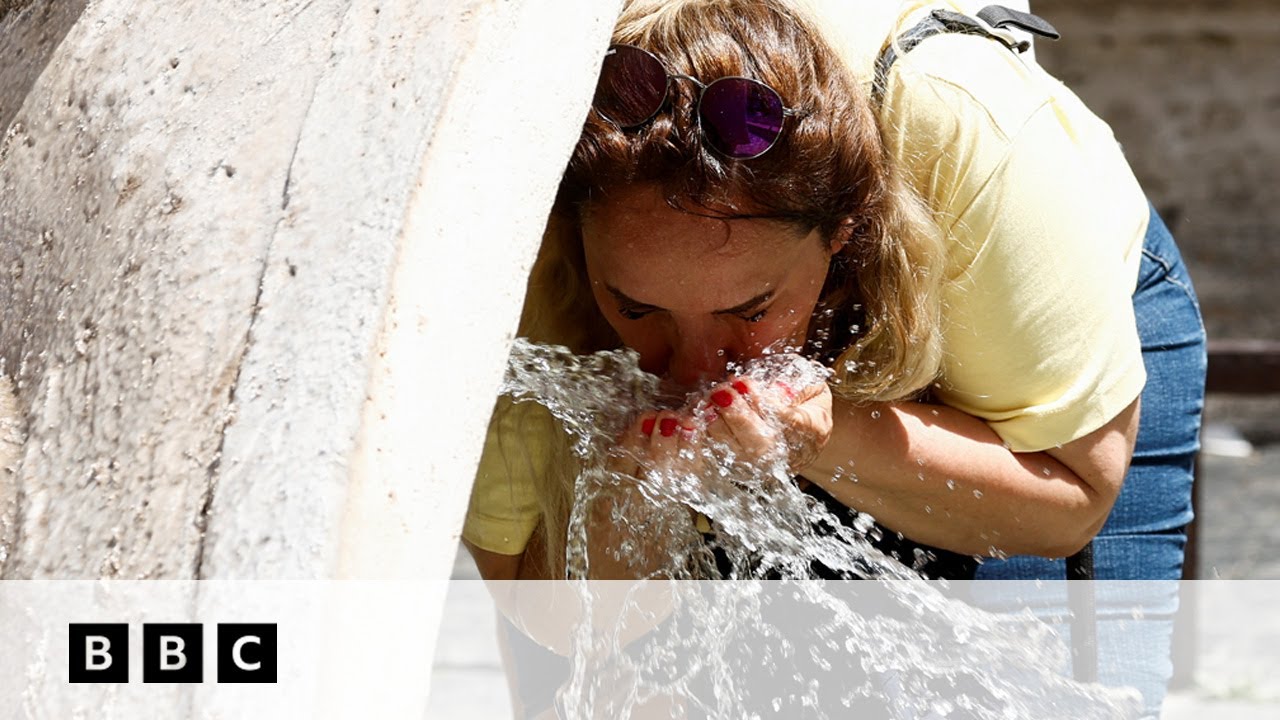
Well, I mean, yes, you could separate their demands into two things. Think of them as the present and the future. In the present, they say that the conditions in their schools are deplorable. They say they can't do their work. They say that teachers aren't properly compensated, they're often absent. Class sizes are too large. You know, there are reports of people saying there aren't even any chairs in their school. Sometimes they have to do lessons standing up. The roof might be leaking. There are drips coming through into their classrooms. They say that, as you remember, there was a massive heat wave in France over the summer. There's no air conditioning. There are no fans in the classrooms, and they're expected to continue their studies in unbearable temperatures. So that's all about kind of funding of public services in the present, and students are saying that they can't get the education that they need because there just isn't the money to educate them. But there's also a concern about the future here. So young people in France are worried about what happens to them when they finish their studies. They're worried about AI. They're worried about what kind of jobs there might be for them to go to in the future and a universal feeling these days.
Speaker A
organized political life, so to speak. You'll often see that uh politicians on the left, you know, grown-up politicians on the left in France started their political careers in high school student unions. So, it sounds very alien uh to
Speaker A
Yeah, exactly. And, you know, they say that they're scared about the future. So, it's a really serious question for them, what's going on at the moment.
Speaker A
You mentioned demands, Tristan. So, let's talk more about that. What are the specific demands that the students have?
Speaker A
Have we seen elected officials, school administration, anybody willing to make concessions to what these student demands are?
Speaker A
of them as the present and the future in the present they say that the conditions in their schools are deplorable they say they can't do their work they they say that teachers aren't properly compensated they're often absent um
Speaker A
Yeah. So look, the government has said that they are.
Speaker A
through into their classrooms. Um, they say that, as you remember, you know, there was a massive heat wave in France over the summer. There's no air conditioning. There are no fans in the classrooms and they're expected to continue their studies in unbearable
Speaker A
temperatures. So that's all about kind of funding of public services in the present and students are saying that they can't get the education that they need because there just isn't the money to educate them. But there's also a
Speaker A
concern about the future here. So young people in France are worried about what happens to them when they finish their studies. They're worried about AI.
Speaker A
They're worried about what kind of jobs there might be for them to go to in the future and universal feeling these days.
Speaker A
Yeah, exactly. And you know, they say that they're they're scared about the future. So, it's a really serious um question for them, what's going on at the moment.
Speaker A
Have we seen elected officials, school administration, anybody willing to take to make concessions to what these student demands are?
Speaker A
Yeah. So look the the government has said that they are taking the students demands seriously. Um the reality is they don't have that much latitude to do too much about it because the bank accounts of the government are stretched
Speaker A
thin if not absolutely empty. And you know, the critics of the demonstrations are saying that uh some schools have been partially burnt or ransacked in places and that that's going to cost even more money to repair. Money that is
Speaker A
already incredibly thin on the ground, meaning they've been burned throughout these protests, you're saying?
Speaker A
Well, yeah. I mean there have been fires in some schools and uh you know some school um leaders are saying you know hundreds of thousands of euros of damage have been done by the protesters and that that's just making the situation
Speaker A
worse not better. So you know the government doesn't have a lot of capacity right now to do much about this and that's a that you know that's uh something of intense concern not just for students but for leaders you know
Speaker A
like how are they going to get themselves out of this situation it's really unclear. I also want to understand where the energy for these protests is coming from beyond students because these aren't just student protests at this point anymore in
Speaker A
France. Is there a leader of this movement at this point? Well, that is an absolutely key question right now, Asma, because the debate around the demonstrations is really evolving. Now, six months out from the presidential election, uh everything is
Speaker A
political right now. And so there have been a lot of accusations that the demonstrations have been fermented by a man called Jean Luke Melanchon who is the farleft leader in France. He's a guy who's been around for a very long time.
Speaker A
He has a party called Lafrance alsum which roughly translates as France unbowed. Uh think of him roughly as a French equivalent of Bernie Sanders.
Speaker A
He's quite a controversial figure in French politics. Um polls at the moment suggest that there is a very good chance that the French presidential election in 2027 could come down to a runoff between on the one hand Jean Luke Melon on the
Speaker A
far left and Maren Le Pen the far right leader. So, as you can imagine, uh, people on the French right are not missing the opportunity of blaming Jean Luke Melon and his party for what's going on. They say that Jeanluke Melon
Speaker A
has instrumentalized these demonstrations that he is whipping them up, um, making them worse. Well, Jeanluke Melon has been speaking out. uh he put out a video on social media, quite a long speech uh with him sitting behind a desk looking somewhat
Speaker A
presidential with like a worker's helmet on the shelf behind him. Um you know, he kind of styles himself uh as a sort of old school um hardleft leader. Melon has used words like police savagery. He called on people to go to the streets to
Speaker A
confront the police for this. Um and people have interpreted that as a call for ramping up the tensions in the street. On the other hand, Melanchaw himself and his political party say he's simply calling on people to go to the
Speaker A
streets uh to demonstrate about their legitimate political demands. Students on the street say, "Look, that that is being entirely ex exaggerated. We have our own political agency. We don't need Jean Luke Melon uh to make us demonstrate. We're doing it because we
Speaker A
have legitimate demands. So, a lot of the students deny it. It is it is absolutely the case that uh some um people from the far left have been participating in the demonstrations.
Speaker A
That's not unusual. I think it's unclear uh to what extent LFI this this party have responsibility for starting the demonstrations. It's a very political question. Marine Le Pen has been blaming Jeanluke Melanch for some of the unrest.
Speaker A
he would obviously deny it. The picture you paint Tristan is so different than the narrative we have heard here in the United States amongst some on the right um including the president of the United States. Uh on Monday, President Trump posted uh on
Speaker A
social media that these protests were the result of in his words out of control mass migration. Uh he went on to write this isn't about schools. This is about Islam wanting to take over a once great country. We also heard from the US
Speaker A
ambassador to the United Nations, Mike Waltz. Always condemn lawlessness, condemn violence that we're seeing uh in Paris.
Speaker A
But I think we also have to, you know, recognize that when you have open borders, when you have this pro- migration, uh, unchecked immigration kind of policy coupled with, uh, I think policies over the years that deny people basic energy,
Speaker A
that overspend on all kinds of, uh, other government programs that you see a level of frustration boiling uh, boiling to the surface. And likewise, the conservative commentator Ben Shapiro, who hosts a pretty popular podcast amongst his followers, described this
Speaker A
movement as a cautionary tale for Americans. Is there any truth to this narrative that they are depicting?
Speaker A
We've seen time and time again um members of the Trump administration focusing on stories of unrest uh not just in France, but in Europe more widely. You know, we saw it more recent quite recently in Spain in the enclave
Speaker A
of Suda in North Africa when we had a an influx of migrants coming into that Spanish territory in North Africa. Um th this is a different story. This isn't about migration. This is a movement about um economic problems, the ability
Speaker A
of the government to pay for public services. This is about education. Um you know, France is not without its problems to do with immigration. Uh, immigration is going to be a major issue when it comes to the French presidential
Speaker A
election. It's no secret that uh that's one of the main reasons why Marine Le Pen is among the favorites to win the election next year because she says that she will be um she'll come down hard on uh illegal immigration to the country.
Speaker A
This is not it's not that that is not an issue in France. It's just not the issue.
Speaker A
These protests aren't that. And even Marine Le Pen, is she describing these, you know, studentled protests as being about immigration? Even her version is not matching up. Some on the right in the US are saying that's not to say that she's not
Speaker A
involved in the politics around all of this. Uh she hasn't shied away from accusing Jean Luke Melon as as we've already discussed of fermenting the demonstrations. Um she is presenting this week her economic program um for France for the election. Um she has ring
Speaker A
fenced education uh spending in that economic program. So you know she's she's sensitive to the question. She is not suggesting that these demonstrations are being caused by immigration in France. It's just not something which is on the table. I want
Speaker A
to go back to something that Melan, the far-left leader, spoke to in his video earlier. Um, he described these protests, as as you alluded to, as the most powerful since 1968.
Speaker A
Uh, can you explain that to me? What happened in France in 1968? I mean, look, the 1960s was a really politically volatile era here in the United States.
Speaker A
What was going on in France during this time period? Well, I mean 1968 was a volatile moment all around the world.
Speaker A
Um, if you think back to, for example, the Prague spring in 1968, well, France had its own uh spring. It was May 1968.
Speaker A
university students primarily on the Paris left bank um demonstrated for weeks um there, you know, famous pictures of them throwing cobblestones at police officers um hunkering down in university buildings and producing student newspapers and and famous um art
Speaker A
pamphlets and posters and they were calling for the resignation of the then president of France uh Charl de Gaul at the time. He didn't immediately resign but by the end of the next year he had gone. Shelder Gaul was a a toemic figure
Speaker A
in French 20th century history and the fact that students uh played a role in his eventual downfall speaks to the capacity of students to play a role in the political process in France. And 1968 is this kind of moment that a lot of people refer
Speaker A
back to um as a kind of moment of uh hope and change for the future. Um 1960s counterculture protest. A lot of French people think of France before 1968 and France after 1968 that it was this kind of transformative moment that dragged uh
Speaker A
France into the into the modern era. And there are still a lot of politicians in in the French system who cut their teeth in that era as as um French student protesters. You know, that's really striking, Tristan, because some of the
Speaker A
headlines I've seen here in the US press, they read France in crisis, discontent grips France. Um it seems to be much bigger and broader than student protest. It is this sense that something is going on in France whether it's a
Speaker A
fiscal crisis a political crisis but that France seems to be almost at the cusp of a tipping point and does it feel like that in France you know from from a distance from outside of France it does look like
Speaker A
protests like this are things that happen all the time and to some extent that's true you said it Tristan we do think oh the French they're protesting again about something to some extent it is true that protests are part of the fabric of life in France
Speaker A
especially at this time of year. This is actually known uh as part of protest season. After the summer vacation, you have this thing called the rontree, which is when everyone comes back from holiday and goes back to school and goes
Speaker A
back to work. And people do their rontree, they publish books for the rontree. They have political conferences for the rontree and they have political demonstrations for the rontree. There is a lot of mythmaking about protest in France. The French people are never
Speaker A
happy. um they're just a bunch of discontents and you know they should just they should just go home and you know get on with life uh like the rest of us and that's not quite how things are seen in France. Um French people
Speaker A
believe that protesting is an important duty. It's part of their dem not all French people but a lot of French people believe that protesting is part of their democratic duty. um it's part of the conversation uh that happens between voters, citizens
Speaker A
on the one hand and governments on the other and it's part of the normal political protest. So you know on any given week in France in Paris you'll see protests of some description happening on a Wednesday afternoon or a Saturday
Speaker A
not necessarily of this scale right now. Uh this is something bigger but it is an important part of of French society. But that said, there is a deep feeling right now in France that things are not working. People are worried for the
Speaker A
future. Um there is a budget crisis. There is very very little money for public spending. And in a country where a large proportion of the workforce are employed by the government as civil servants in one form or another, that's
Speaker A
something which frightens people because public spending is a motor of the economy. People are worried about where growth is coming from. People are worried about what the future not just of France is but of Europe more widely.
Speaker A
Now that sense of males is is driving people to go to the political extremes arguably as we've already discussed. So on the far left and the far right.
Speaker A
On that note, Tristan, thank you for being our guest on the Global Story today.
Speaker A
Thanks for having me, Asma. I'm sorry um to be quite somber about things. Um I I hope I can come back with better news on the show soon.
Speaker A
And that's it for the Global Story. Thanks as always for spending some time with us. And a reminder that if you appreciated our show today and want to hear more from the Global Story, we are also available as an audio podcast. Just
Speaker A
search for The Global Story on BBC.com or wherever you listen to your favorite shows.
Topics:French protestsFrance riotsstudent unionspublic educationFrench politicstrade unionssocial unrestviolence in protestsMarine Le PenJean-Luc Mélenchon