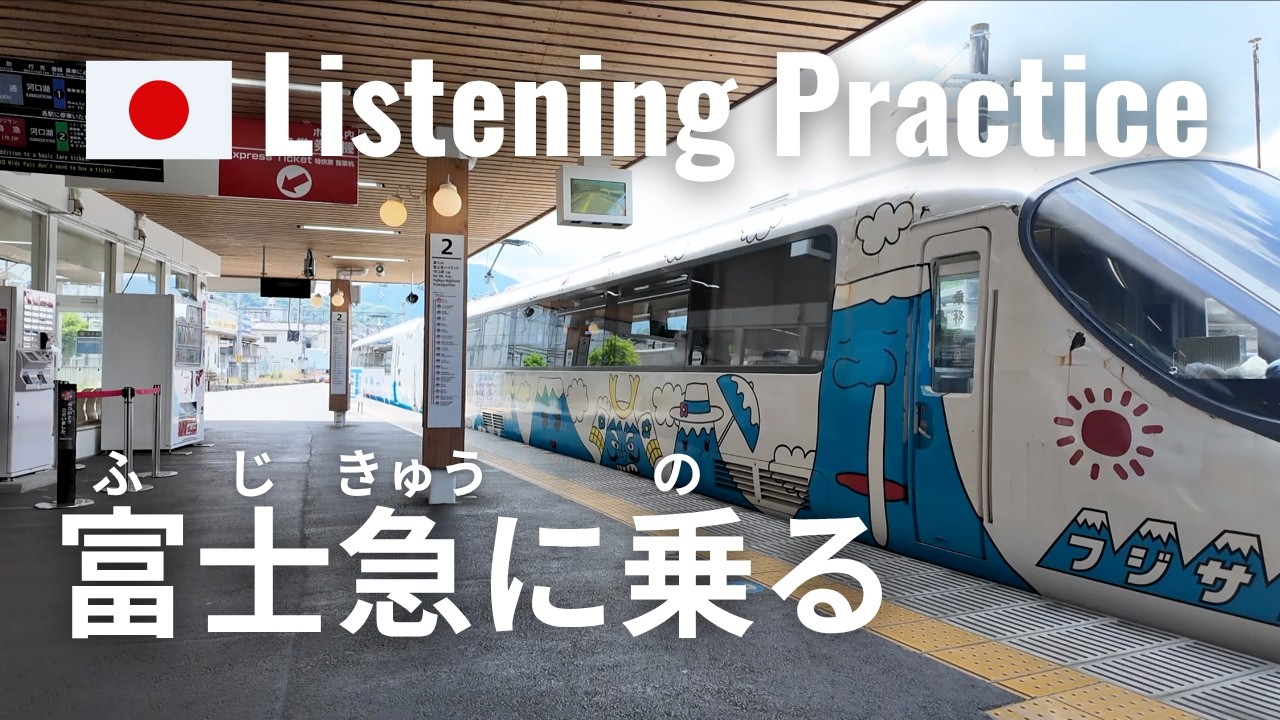
Can We Eat Lunch? | Japanese Listening Practice — Transcript

Join a Japanese listening practice walk as we explore restaurants, shops, and local culture while learning useful Japanese phrases.

Key Takeaways

  • Reservation-only restaurants require advance booking, expressed as 'kanzen yoyaku' or 'yoyakusei'.
  • Japanese culture includes unique practices like using parasols to avoid sunburn ('hiyake').
  • Common Japanese phrases for ordering food, paying bills, and shopping are useful for travelers.
  • Walking around local neighborhoods offers better cultural and language learning opportunities than driving.
  • Vegan dining options exist in Japan and can be delicious and accessible.

Summary

  • The video follows a walk around a Japanese town while trying to find a place for lunch.
  • Several restaurants are visited but many are closed or reservation-only, teaching related Japanese vocabulary.
  • The narrator explains cultural details such as the use of parasols and local landmarks like city hall and rivers.
  • Japanese phrases related to dining, shopping, and daily life are introduced and explained.
  • A vegan restaurant is featured where the narrator orders a meal and explains relevant vocabulary.
  • The video includes visits to various shops including a snack shop, flower shop, and kimono stores.
  • Cultural insights about shopping streets (shōtengai) and local customs are shared.
  • The video ends with a visit to a café, a taxi ride, and a friendly conversation with the taxi driver.
  • Useful Japanese words and phrases are highlighted throughout for language learners.
  • The video encourages learning Japanese through natural listening practice in real-life contexts.

Full Transcript — Download SRT & Markdown

00:00
Speaker A
Hello everyone. In today’s video, we’re going out for lunch. But we couldn’t get into restaurants, so we ended up walking a lot.
00:15
Speaker A
I hope you enjoy watching! There’s a river. It looks a little dirty, doesn’t it?
00:29
Speaker A
There’s a cardboard box in the water. We’re heading to a French restaurant by the river.
00:43
Speaker A
The sign says “Natural French ZEN.” Alright, let’s go. “Hi there.” “We don’t have a reservation...” “Oh, sorry, we’re reservation only…” “Reservation only? Oh, I see. We’ll come back another time, then.” “So it’s reservation only...” “Yeah.” Both “kanzen yoyaku” and “yoyakusei” mean that you can’t get in without a reservation.
01:22
Speaker A
I wish I had made a reservation. So we decided to try a tempura restaurant nearby.
01:37
Speaker A
You can already see it. That’s the place. The entrance is over here. The flowers are beautiful.
01:58
Speaker A
It said “Full” on the sign. “Full” means that all the seats are taken and you can’t get in.
02:20
Speaker A
Since we couldn’t get into either place, we decided to walk toward the station. We found a post office.
02:35
Speaker A
This is the symbol of the post office. We’ll cross at that light and turn left.
02:53
Speaker A
You can see a bridge ahead. That means there’s a river. It’s not a very clean river, is it?
03:16
Speaker A
That bridge is bigger than the one before. The river is also bigger than the last one.
03:31
Speaker A
We’re turning by the river. This narrow street looks interesting. This used to be an elementary school.
03:55
Speaker A
Now it’s a city hall. Here’s the name of the elementary school it used to be.
04:15
Speaker A
We’ve come out to a slightly wider road. I often drive through here. But I’d never walked here before.
04:38
Speaker A
When you walk, you can see your surroundings better — it’s fun! We’ve come out to a main road.
04:57
Speaker A
That big building is the new city hall. It’s totally different from the old elementary school–turned city office.
05:18
Speaker A
The green of the trees is really beautiful. That woman is holding a parasol. People use them when it’s hot or when they don’t want to get a tan.
05:43
Speaker A
"Hiyake” means when your skin gets red from the sun and then turns darker. In Japan, many women use parasols.
06:05
Speaker A
Lately, some men use them too. We’ve arrived at the restaurant where we wanted to have lunch.
06:23
Speaker A
But it was closed. There’s no specific reason written. That’s a shame. There’s a newly developed tourist spot around here, so let’s go check it out.
06:50
Speaker A
These flowers are the kind given as a gift when a new shop opens. This place sells desserts made with fruit.
07:14
Speaker A
There are more congratulatory flowers over there too. This is a crepe shop. I’ll come back to try it next time.
07:35
Speaker A
There were a few more shops across the street too. And here, it opens up into a plaza.
07:54
Speaker A
It looks like it would feel nice here on a sunny day. We’ve reached the end, so let’s head back.
08:11
Speaker A
It looks like you can try letterpress printing at this shop. Letterpress printing is when raised letters are inked and then pressed onto paper.
08:34
Speaker A
Next door is a craft beer shop. It’s not open during the day. When we say “yatteru,” it means the shop is operating.
08:57
Speaker A
And this place is an izakaya known for its great food. This place is also only open at night.
09:13
Speaker A
Looks like this road ends here. We decided to try another Italian restaurant. The font of this flower shop looks kind of old-fashioned.
09:37
Speaker A
Next to it is a Korean restaurant. The restaurant we wanted to have lunch at is on the first floor of that building.
09:57
Speaker A
Looks like they’re not open for lunch. Let’s head to the next place. We’ve been walking for about an hour and a half now.
10:20
Speaker A
I’m getting pretty hungry. This is a kimono shop. This lovely building is a gallery.
10:47
Speaker A
A place with shops lined up on both sides of the street is called a “shōtengai” (shopping street).
10:59
Speaker A
But the number of people coming to these shopping streets has been decreasing. Because people drive to big stores farther away.
11:19
Speaker A
I see the next restaurant. This one is open. Let’s go in. “Hello, we’re two people.” “Sure, please have the window seat.” “Window seat” means a seat by the window.
11:52
Speaker A
We can finally have lunch. “Excuse me.” “Yes, thank you.” “Actually, we’re out of cheeseburgers for today…” “Ah, I see.” “Sorry about that.” “Shinagire” means we’ve run out of that item.
12:10
Speaker A
In other words, it means “we don’t have it.” It’s a phrase often used in stores.
12:21
Speaker A
“Have you decided?” “Yes, first for drinks… a glass of white wine.” “One glass of white wine, okay.” “And also, the Far East White.” “And a power salad.” “Power salad, okay.” “And as a topping, tofu nuggets.” “Tofu nuggets, got it.” “And buns.” “Buns. Okay.”
12:47
Speaker A
“Which dressing would you like?” “Carrot.” “Carrot dressing, understood.” “And lastly… the Fluunt Burger?” “Fluunt Burger.” “That’s all.” “Okay, thank you.” This restaurant is vegan.
13:06
Speaker A
They don’t use meat or animal products. I’m not vegan, but this meal was really delicious.
13:21
Speaker A
Time to pay the bill. “That’ll be 4540 yen.” “Can I pay by card?” “Of course.” “Yes, please.” “Sure.” “Please enter your PIN.” “Anshoubangou” is a word you often hear in Japan.
13:41
Speaker A
“Thank you. You can now remove your card.” “Would you like your receipt?” “Yes, please.” “Would you like your receipt?” means “Do you need a receipt?” You’ll hear this often when shopping.
14:08
Speaker A
“Thanks so much.” “Thank you for the meal.” “Thank you!” That was a really tasty place.
14:17
Speaker A
I recommend it to anyone who’s vegan. Next, we're going to buy some snacks in the same shopping street.
14:34
Speaker A
Here it is. It’s called “Saigusa Mame-ten.” They sell traditional snacks here. I’ll buy this.
14:53
Speaker A
This one is cute. I’ll get this one too. They had these as well. “Omusubi” is another word for “onigiri” (rice ball).
15:11
Speaker A
“Excuse me, I’ll take these.” “Could you please put these two in a separate bag?” “Of course. Will this all go on the same bill?” I asked him to put the ones I’m giving to someone in a separate bag.
15:28
Speaker A
“That’ll be 1327 yen.” “Here’s 5500 yen.” “Thank you.” “Thanks very much.” “Such a lovely bag!” “Thank you. Your change is 4000 and… 173 yen.” “Take care.” “Thank you!” “Thanks so much!” It was a really nice shop.
16:01
Speaker A
Now I’m heading to my usual flower shop. “These ones look like a pineapple!” “So cute!” “I really like these — they're super cute.” “Hey, this looks like onions.” “Yeah, it does!” “What is this? It’s adorable.” They sell all sorts of cute plants here.
16:26
Speaker A
“Hello~” “Oh, hello!” “Please remember how heavy it is now. Right now, it’s really full of water.” “When it feels much lighter, that’s when you should water it.” “If it’s only a little dry, you don’t need to water it yet. Overwatering can cause it to rot.”
16:47
Speaker A
Look, there’s No-Face from Spirited Away. The dish Kaonashi is holding is called a “sakazuki.” It’s a dish used for drinking sake.
17:07
Speaker A
If you place a coin on the sakazuki... “Oh, he couldn’t drink it!” Now, let’s see if he can drink it this time.
17:28
Speaker A
He was able to drink it! Those teeth are kind of creepy. That was pretty funny.
17:41
Speaker A
This flower shop appears in one of my videos—please check it out! Now we’re walking back the same way we came.
17:55
Speaker A
There’s a bookstore here. What’s next to it? It looks like a lovely space. And here is a wine bar run by the father of one of my son’s soccer teammates.
18:24
Speaker A
Next to it, there’s another kimono shop. We turn left in front of the building that had the restaurant which wasn’t open for lunch earlier.
18:49
Speaker A
The atmosphere of this street feels a bit nostalgic. Here’s a supermarket. The sign right in front says “Jeju Island.” It’s funny to find Jeju Island in a place like this.
19:21
Speaker A
It seems like many of the shops around here only open at night. We’ve reached a slightly bigger street.
19:38
Speaker A
There’s a hotel here. “Welcome!” This is a really nice café with a great atmosphere.
19:53
Speaker A
They also have a bar. There are lots of cushions piled up on the sofa.
20:06
Speaker A
We’re taking the seat in the very back. “I’ll have the silk blend.” “Coffee—okay.” “Then I’ll have an iced café au lait.” “Iced café au lait—sure.” “And we’d like the afternoon tea set, please.” The afternoon tea set has arrived.
20:38
Speaker A
After we finished eating and stepped outside... It was raining. We’ll wait here until the taxi arrives.
20:59
Speaker A
The taxi has arrived. “Hi.” “Hello.” The “GO” app is really useful when calling a taxi.
21:14
Speaker A
“I spent about 32 years abroad.” “Wow.” “I just returned last S
21:34
Speaker A
He was a very friendly driver. “Not long ago I picked up an Australian and an Irish person from here.” “From here?” “Yes. They said they visited Takeda Shrine.” “Oh, I see.” “They really respected Takeda Shingen.” “Wow!” “They even mentioned names like Yamamoto Kansuke. I asked how they knew, and they said they could watch taiga dramas in Germany.”
21:59
Speaker A
“They watched a ton of them.” “Amazing...” Takeda Shingen was a famous warlord in Kofu.
22:13
Speaker A
I was really happy to hear that people from other countries know about him. There are videos about Takeda Shrine and the festival related to Takeda Shingen.
22:31
Speaker A
I’ll put the links in the description. “Here’s your receipt. Thank you.” “Thank you!” “Thanks a lot!” “ขอบคุณ ครับ (Thank you).” “ไม่เป็นไร ครับ (You’re welcome).” It was a great day.
22:45
Speaker A
Now, let’s weigh this. 475.2 grams. Big thanks to Chu Chu-san and Dog Playgroup Stories-san for the Super Thanks!
23:08
Speaker A
That really helps me a lot! To everyone watching this video— I want to help you speak Japanese with more confidence.
23:20
Speaker A
That’s why I created a course to help improve pronunciation, rhythm, pitch accent, and intonation.
23:27
Speaker A
If you’d like to feel more confident when talking with native speakers, please check out my subscription course!
23:34
Speaker A
You’ll find the link in the video description. Lastly, let me share a comment. This one’s from Eric-san.
23:40
Speaker A
I just started learning Japanese for a trip to Japan next year and subscribed to your channel for listening practice.
23:47
Speaker A
I didn't expect to see an episode on fighting wildfires with helicopters in your playlist.
23:54
Speaker A
I'm from California and we are very experienced with fighting wildfires with planes and helicopters.
24:00
Speaker A
I also illustrate helicopters here in the US and have several customers in Japan. I'm a bit ashamed to not know Japan had wildfires.
24:10
Speaker A
Thank you for including this very unique content. Thank you, Eric-san, This video is actually the least popular among my recent videos, so I’m really glad to hear you found it interesting!
24:23
Speaker A
This is my first time watching fighting with helicopters, which was really moving. I’d love for more people to see this video.
24:31
Speaker A
And thanks so much to every one who watched till the end, hit the like button, or shared it with friends.
24:38
Speaker A
Have a great day, everyone, and see you in the next video!! See you!
Topics:Japanese listening practiceJapanese language learningJapanese cultureJapanese vocabularyJapanese restaurantsvegan JapanJapanese phrasestravel JapanJapanese foodshōtengai

Frequently Asked Questions

What does 'kanzen yoyaku' mean in the context of Japanese restaurants?

'Kanzen yoyaku' means that the restaurant only accepts customers with a reservation, so you cannot enter without booking in advance.

Are there vegan dining options featured in this video?

Yes, the video features a vegan restaurant where the narrator orders a meal and explains that no meat or animal products are used.

What cultural insight is shared about parasols in Japan?

Parasols are commonly used by women in Japan to protect their skin from sunburn and tanning, and recently some men have started using them too.

Get More with the Söz AI App

Transcribe recordings, audio files, and YouTube videos — with AI summaries, speaker detection, and unlimited transcriptions.

Or transcribe another YouTube video here →