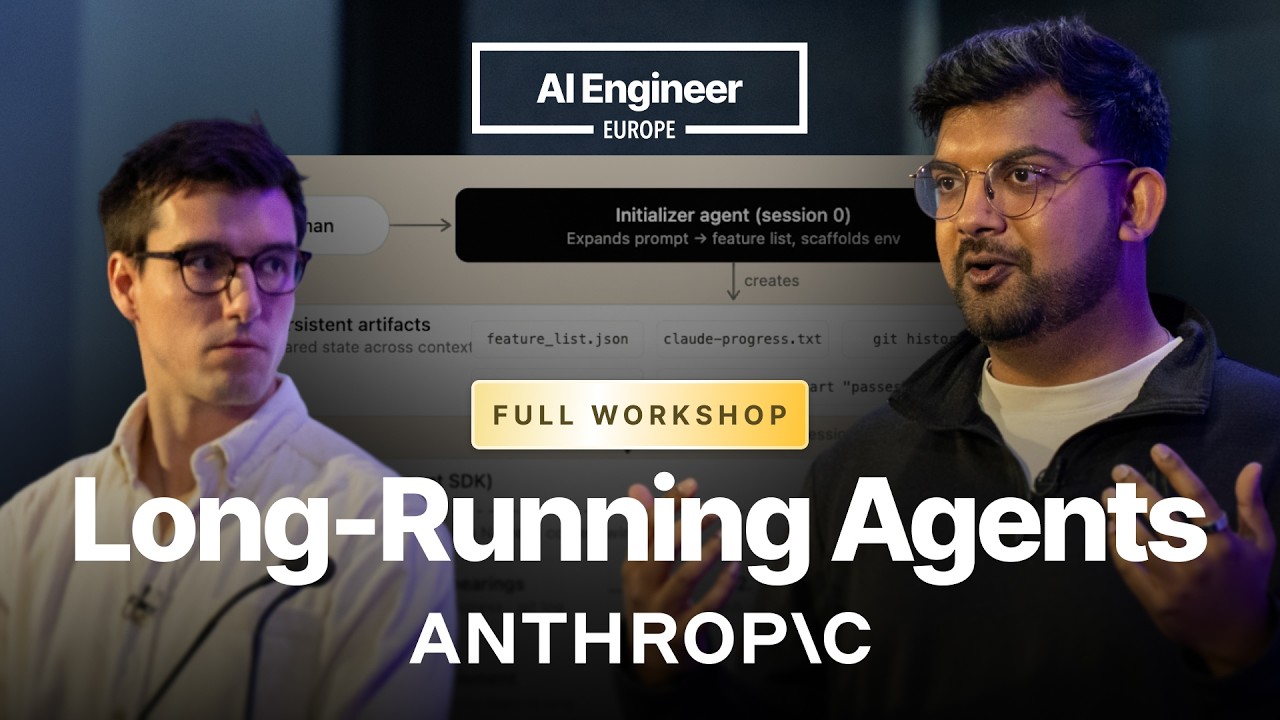
Comprehensive 76-minute overview of AI Engineering covering foundation models, Transformers, training, and challenges in the field.
Key Takeaways
- AI Engineering leverages existing foundation models to build applications, focusing on adaptation rather than training from scratch.
- Transformers and their attention mechanism are central to modern foundation models, enabling efficient and effective processing of large data sequences.
- Training data quality and distribution significantly affect model knowledge and biases, necessitating filtering and specialized models.
- Compute resources and energy consumption are major constraints in scaling AI models, with ongoing research into optimization and alternative architectures.
- Understanding model architecture and training principles is essential for AI engineers to effectively build and improve AI systems.
Summary
- AI Engineering focuses on building applications using foundation models rather than training models from scratch.
- Foundation models are large AI systems trained via self-supervision on vast web-crawled data, enabling learning without manual labeling.
- Transformers, based on the attention mechanism, revolutionized sequence-to-sequence tasks by allowing parallel input processing and dynamic token referencing.
- Training data biases and quality issues, such as misinformation and language skew, impact foundation model performance and applicability.
- Model size, parameter count, and compute resources critically influence training efficiency and model capabilities, with sparse models offering efficiency gains.
- The Chinchilla scaling law guides optimal model and data size for given compute budgets, highlighting the trade-offs in training large models.
- Future bottlenecks include scarcity of high-quality training data and the significant electricity consumption of data centers.
- Alternative architectures like RWKV are emerging, combining RNNs with parallelization for specific use cases.
- Foundation models power diverse applications including coding assistants, image generation, customer support, and data analysis.
- Small improvements in model performance can have large impacts on downstream applications despite high costs.


![[IELTS SP2] Sample Answer | DESCRIBE A WORK OF ART — Transcript](https://i.ytimg.com/vi/GQuYabbycTM/maxresdefault.jpg)