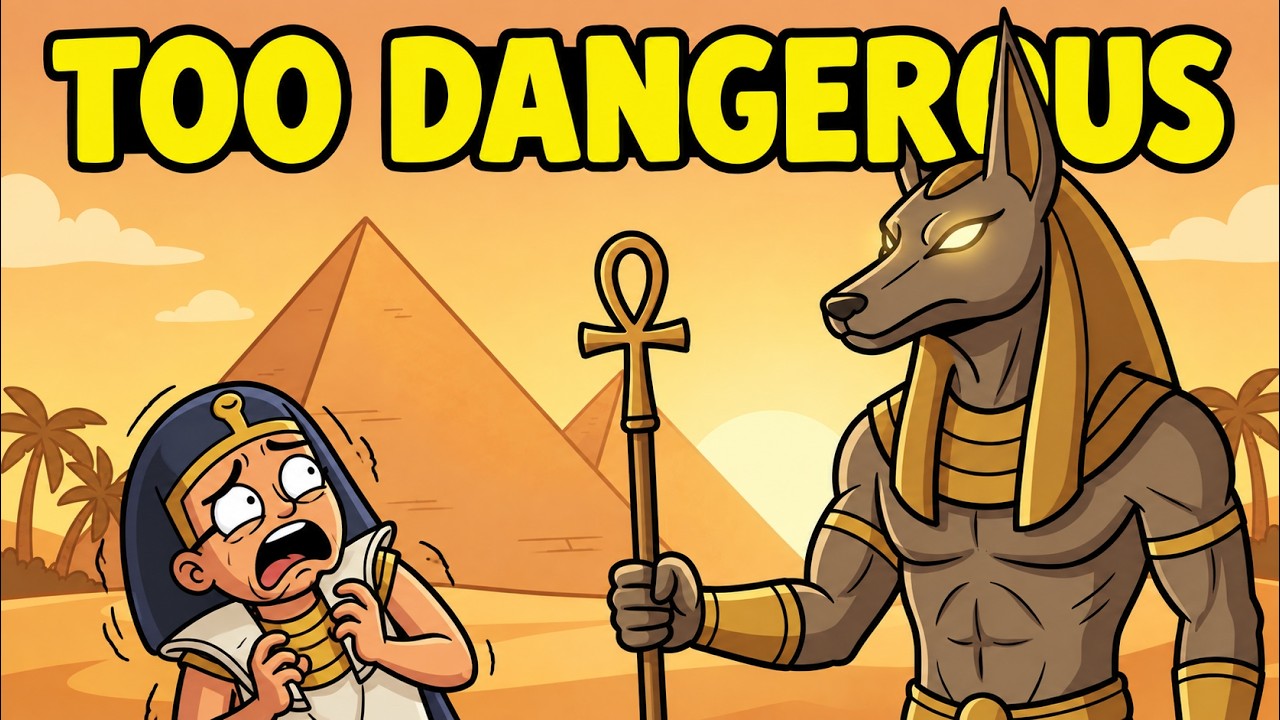
Explore the worst punishments in ancient Egypt, from legal penalties to the feared 'second death' beyond physical harm.
Key Takeaways
- Death was not always the worst punishment; spiritual annihilation was a greater fear.
- Punishments were context-dependent, balancing restitution, deterrence, and social order.
- Powerful institutions and officials were subject to strict laws and harsh penalties to maintain justice.
- The legal system addressed both ordinary disputes and serious crimes with varying severity.
- Religious beliefs deeply influenced concepts of justice and punishment in ancient Egypt.
What the video covers
- Ancient Egyptians feared not only physical death but also a 'second death,' meaning non-existence after death.
- Punishments ranged from repayment and beatings to mutilation, exile, and death, depending on the crime and context.
- The concept of ma'at represented order, truth, and justice, while isfet symbolized chaos and disorder.
- Legal disputes and punishments were documented in places like Deir el-Medina, showing everyday problems and court cases.
- Temples were powerful institutions; crimes against them, like theft, were punished more harshly, exemplified by the Na decree.
- Officials abusing power faced severe punishments, including mutilation, exile, and death for bribery and injustice.
- Punishments were not uniform but varied by crime severity, social status, and authority involved.
- Tomb robbery was considered a grave crime, threatening the afterlife and royal protection, with documented investigations.
- Legal texts show severe physical punishments were real but do not guarantee consistent enforcement across all cases.
- Ancient Egyptian punishment intertwined legal, social, and religious beliefs, emphasizing both earthly justice and cosmic order.
Full Transcript — Download SRT & Markdown
Speaker A
For some ancient Egyptians, death was not the worst thing that could happen. There was something even worse. A second death, not another execution, not another beating, something much more frightening. The possibility that after you died, you simply would not continue to exist. But that was not the only kind of punishment ancient Egyptians knew. Some people were forced to repay what they had stolen. Some were beaten, some were mutilated, some were sent far away from home, and some were killed. So, what were the worst punishments in ancient Egypt? Was death really the worst of them? Or did the Egyptians imagine something even more final? To answer that, we need to look at two very different worlds. The first is the world of laws, courts, officials, violence, and royal power. The second is the world of tombs, funerary rituals, judgment, and the hope that death would not be the end. And when those two worlds come together, punishment starts to mean something very different. Because in ancient Egypt, the worst punishment was not always about what happened to your body. Sometimes the real fear was what happened after your body was gone. Ancient Egyptians had a word for the kind of order they believed the world needed. That word was ma'at. Ma'at was connected with truth, justice, balance, and order. It was the idea that the world had a proper way of working. The sun should rise. The Nile should follow its cycle. The king should rule properly. People should deal fairly with one another. And society should not fall into chaos. The opposite was often described with the word isfet. Disorder, lies, chaos, things falling apart. So breaking a rule was not always seen as just a private problem. Wrongdoing could be understood as something that damaged the order society depended on. But we should not imagine that every Egyptian punishment was some kind of mystical attempt to repair the universe. The legal system also dealt with very ordinary human problems. People stole things. People argued. People failed to repay what they owed. People lied. People fought over property. Officials abused their power. And ancient Egypt left behind thousands of records showing us that these problems were very real. One of the best places to see this is a village called Deir el-Medina. It was home to the workers who built and decorated the royal tombs at Thebes. These workers were unusually connected to writing and government administration. And because they wrote so much, a huge amount of material survived. Some of it was written on small pieces of broken pottery or stone. These are often called ostraca. And some of these tiny pieces preserve the most ordinary problems imaginable. Arguments, complaints, debt, accusations, work problems, and legal disputes. That gives us something rare. We are not just reading what a king wanted people to believe. We are seeing traces of problems experienced by real people. Imagine two neighbors having an argument over something that was stolen. Someone borrows grain and refuses to pay it back. Someone accuses another person of lying. Someone takes an object that does not belong to them. These are not stories from mythology. They are everyday problems. And some of them could end up before a local court. That means ancient Egyptian punishment was not one single system. There was no one punishment for every crime. The response could depend on what happened, how serious it was, who was involved, and what kind of authority was dealing with it. For smaller offenses, punishment could be surprisingly practical. If someone stole something, one possible answer was simple. Give it back. In some cases, the person could also be required to pay back more than the original amount. The point was not always to destroy the person who committed the offense. Sometimes the goal was to make up for the loss. That is easy to forget when we imagine ancient Egypt only through stories of pharaohs, pyramids, and executions. A lot of punishment was much more ordinary. But the situation could change when the offense became more serious, especially when it involved an institution with much more power. And that brings us to the temple. A temple in ancient Egypt was not simply a place where people went to pray. Temples could own land, animals, workers, buildings, storage areas, agricultural resources, and valuable goods. They were part of a much larger religious and economic system. So stealing from a temple could be treated as more than stealing from one person. It could be treated as an attack on an institution protected by royal authority. One of the clearest examples comes from a royal decree connected with King Si. It is usually called the Na decree. The decree was connected with the protection of the property and resources of the temple of Osiris at Abydos. And some of the punishments are extremely harsh. For certain kinds of abuse involving labor and resources, the decree describes 200 blows and five inflicted wounds. That is a huge difference from simply being told to return something you stole. But there is an important point here. The Na decree was not a general rule saying that every person who stole something would receive 200 blows. It dealt with specific offenses. And that is something we need to remember throughout this story. Ancient Egyptian punishments were not one simple list. They changed with the crime. They changed with the situation. And sometimes they changed with the person who had committed the crime. That becomes even clearer when we look at what happened when officials themselves abused their power. Ancient Egypt depended on people who had authority over others: judges, administrators, military officers, tax officials, local leaders, people who could control goods, labor, land, and legal decisions. And naturally, that created a serious problem. What happens when the people enforcing the rules break them? One important answer comes from a royal decree issued under King Horm. The decree deals with officials who abused ordinary people. Some were accused of taking property they had no right to take. Others used their position to take advantage of people who could not easily fight back. In some cases, the punishment could include having the nose cut off and being sent away to a distant frontier settlement called Charu. That alone sounds severe, but the decree goes even further. It also deals with people involved in judging legal cases. And if a judge accepted a bribe and then gave an unfair decision, the punishment recorded could be death. Think about how serious that idea is. The person who was supposed to protect justice could become the person facing the harshest punishment for breaking it. At least in the royal decree, being powerful did not automatically place someone above the law. But we have to be careful here, too. A law tells us what authorities wanted to happen. It does not prove that every punishment was carried out exactly as written in every case. We do not have every court record from ancient Egypt. We do not know what happened in every village. We do not know how often every punishment was actually used. But the texts do prove something important. Severe physical punishment was part of the legal world. Beatings were real, mutilation was real, exile was real, and death was a real punishment. But there was one crime that could take the story to another level. Tomb robbery. By the end of the 20th dynasty, royal tombs in the Theban area were being broken into. These were not ordinary graves. They belonged to kings. They contained valuable objects: gold, funerary equipment, burial goods, and the bodies of rulers who were supposed to remain protected in the afterlife. Several documents survive from the investigations. They are often called the tomb robbery papyri, and they give us something extremely unusual. We can actually watch the investigation happening through the surviving records. People were questioned, workers were questioned, accusations were made.
Speaker A
to exist. But that was not the only kind of punishment ancient Egyptians knew. Some people were forced to repay what they had stolen. Some were beaten, some were mutilated, some were sent far away from home, and some were killed. So, what were the
Speaker A
worst punishments in ancient Egypt? Was death really the worst of them? Or did the Egyptians imagine something even more final? To answer that, we need to look at two very different worlds. The first is the world of laws, courts,
Speaker A
officials, violence, and royal power. The second is the world of tombs,erary rituals, judgment, and the hope that death would not be the end. And when those two worlds come together, punishment starts to mean something very different. Because in ancient Egypt, the
Speaker A
worst punishment was not always about what happened to your body. Sometimes the real fear was what happened after your body was gone. Ancient Egyptians had a word for the kind of order they believed the world needed. That word was
Speaker A
mahat. Mahat was connected with truth, justice, balance, and order. It was the idea that the world had a proper way of working. The sun should rise. The Nile should follow its cycle. The king should rule properly. People should deal fairly
Speaker A
with one another. And society should not fall into chaos. The opposite was often described with the word isvet. Disorder, lies, chaos, things falling apart. So breaking a rule was not always seen as just a private problem. Wrongdoing could
Speaker A
be understood as something that damaged the order society depended on. But we should not imagine that every Egyptian punishment was some kind of mystical attempt to repair the universe. The legal system also dealt with very ordinary human problems. People stole
Speaker A
things. People argued. People failed to repay what they owed. People lied. People fought over property. Officials abused their power. And ancient Egypt left behind thousands of records showing us that these problems were very real.
Speaker A
One of the best places to see this is a village called Dear El Medina. It was home to the workers who built and decorated the royal tombs at thieves.
Speaker A
These workers were unusually connected to writing and government administration. And because they wrote so much, a huge amount of material survived. Some of it was written on small pieces of broken pottery or stone. These are often called ostricha. And some of these tiny pieces
Speaker A
preserve the most ordinary problems imaginable. Arguments complaints debt accusations, work problems, and legal disputes. That gives us something rare.
Speaker A
We are not just reading what a king wanted people to believe. We are seeing traces of problems experienced by real people. Imagine two neighbors having an argument over something that was stolen.
Speaker A
Someone borrows grain and refuses to pay it back. Someone accuses another person of lying. Someone takes an object that does not belong to them. These are not stories from mythology. They are everyday problems. And some of them could end up before a local court. That
Speaker A
means ancient Egyptian punishment was not one single system. There was no one punishment for every crime. The response could depend on what happened, how serious it was, who was involved, and what kind of authority was dealing with it. For smaller offenses, punishment
Speaker A
could be surprisingly practical. If someone stole something, one possible answer was simple. Give it back. In some cases, the person could also be required to pay back more than the original amount. The point was not always to destroy the person who committed the
Speaker A
offense. Sometimes the goal was to make up for the loss. That is easy to forget when we imagine ancient Egypt only through stories of pharaohs, pyramids, and executions. A lot of punishment was much more ordinary. But the situation
Speaker A
could change when the offense became more serious, especially when it involved an institution with much more power. And that brings us to the temple.
Speaker A
A temple in ancient Egypt was not simply a place where people went to pray.
Speaker A
Temples could own land, animals, workers, buildings, storage areas, agricultural resources, and valuable goods. They were part of a much larger religious and economic system. So stealing from a temple could be treated as more than stealing from one person. It could be treated as an
Speaker A
attack on an institution protected by royal authority. One of the clearest examples comes from a royal decree connected with King Si. It is usually called the na decree. The decree was connected with the protection of the property and resources of the temple of
Speaker A
Osiris at Abidos. And some of the punishments are extremely harsh. For certain kinds of abuse involving labor and resources, the decree describes 200 blows and five inflicted wounds. That is a huge difference from simply being told to return something you stole. But there
Speaker A
is an important point here. The nour decree was not a general rule saying that every person who stole something would receive 200 blows. It dealt with specific offenses. And that is something we need to remember throughout this story. Ancient Egyptian punishments were
Speaker A
not one simple list. They changed with the crime. They changed with the situation. And sometimes they changed with the person who had committed the crime. That becomes even clearer when we look at what happened when officials themselves abused their power. Ancient
Speaker A
Egypt depended on people who had authority over others. judges, administrators, military officers, tax officials, local leaders, people who could control goods, labor, land, and legal decisions. And naturally, that created a serious problem. What happens when the people enforcing the rules
Speaker A
break them? One important answer comes from a royal decree issued under King Horm. The decree deals with officials who abused ordinary people. Some were accused of taking property they had no right to take. Others used their position to take advantage of people who
Speaker A
could not easily fight back. In some cases, the punishment could include having the nose cut off and being sent away to a distant frontier settlement called Charu. That alone sounds severe, but the decree goes even further. It also deals with people involved in
Speaker A
judging legal cases. And if a judge accepted a bribe and then gave an unfair decision, the punishment recorded could be death. Think about how serious that idea is. The person who was supposed to protect justice could become the person
Speaker A
facing the harshest punishment for breaking it. At least in the royal decree, being powerful did not automatically place someone above the law. But we have to be careful here, too. A law tells us what authorities wanted to happen. It does not prove that
Speaker A
every punishment was carried out exactly as written in every case. We do not have every court record from ancient Egypt.
Speaker A
We do not know what happened in every village. We do not know how often every punishment was actually used. But the texts do prove something important.
Speaker A
Severe physical punishment was part of the legal world. Beatings were real, mutilation was real, exile was real, and death was a real punishment. But there was one crime that could take the story to another level. Tomb robbery. By the
Speaker A
end of the 20th dynasty, royal tombs in the Theban area were being broken into.
Speaker A
These were not ordinary graves. They belonged to kings. They contained valuable objects. Gold,er equipment, burial goods, and the bodies of rulers who were supposed to remain protected in the afterlife. Several documents survive from the investigations. They are often called
Speaker A
the tomb robbery papyrie and they give us something extremely unusual. We can actually watch the investigation happening through the surviving records.
Speaker A
People were questioned, workers were questioned, accusations were made, suspects were interrogated, some people were beaten during questioning, and eventually some of those involved confessed. The records describe people entering royal tombs and stealing valuable objects. They describe coffins being opened, burial equipment being
Speaker A
damaged, bodies being disturbed while people searched for valuable materials. This was not treated like an ordinary theft. And it is easy to see why. A royal tomb was supposed to protect the dead. It was connected to the king's
Speaker A
burial and his hopes for the afterlife. So, breaking into one was not just taking property. It threatened something much bigger. The surviving records indicate that some tomb robbers were eventually executed. But there is an important limit. We do not know every
Speaker A
detail of every execution. Later stories sometimes add dramatic methods that the original documents do not actually prove. So we should separate what the records tell us from what later people imagined. What we can say with confidence is simple. Royal tomb robbery
Speaker A
could cost a person their life. And that brings us to an important question. If death was the ultimate punishment on earth, what did death actually mean to an Egyptian? Near the end of the reign of Rammeses III, something even more
Speaker A
dramatic happened. A conspiracy was formed inside the royal palace. The target was the king himself. The plan involved a number of people connected to the palace and royal household. And one of those connected with the conspiracy was one of the king's own sons. The plot
Speaker A
was discovered, a trial took place, and the record survived. It is known today as the judicial papyrus of Turin. The papyrus gives us a detailed look at the case. It names accused people. It describes their crimes, and it records
Speaker A
punishments. Some of the conspirators received death sentences, but the document describes different forms of punishment. Some were left to die by their own hands. Others receive different penalties depending on their role in the conspiracy.
Speaker A
The story would already be remarkable on its own. But centuries later, modern science added another piece to it. A royal mummy found in a hidden cache at Dear Elbahari became one of the strangest bodies in Egypt. The cash
Speaker A
itself was discovered in 1881. Years later, in 1886, the mummy was examined by Gaston Masparrow. It became known as Unknown Man E. and it looked different from the royal mummies around it. The body had been treated in an unusual way.
Speaker A
It was wrapped in animal skin. It had not received the same kind of normal royal burial treatment as the kings found nearby. And for a very long time, nobody knew who this man was. Then modern researchers returned to the body.
Speaker A
They used scans. They studied the bones. They used genetic evidence. And in 2012, researchers reported that unknown man E was closely related to Rammeses III through his male family line. That led to an extraordinary possibility. Could this be the prince involved in the
Speaker A
conspiracy? Could unknown man E actually be Pentaware? The researchers considered him a possible candidate. But that word matters. Possible. Not certain. We should not present the identification as if it has been proved beyond all doubt.
Speaker A
The evidence is strong enough to make the idea important, but it still leaves questions. We also cannot prove that every unusual detail of the mummy's treatment was deliberately designed as punishment. Some researchers have suggested that the unusual burial may
Speaker A
have been connected to the person's punishment. Perhaps the person was denied some of the normal treatment given to the dead. But that is an interpretation. It is not something we can prove from the mummy alone. And this is where the story becomes really
Speaker A
interesting because whether unknown man E was definitely pentaware or not, the case raises a much bigger question. What happens after execution? If death was supposed to be the end, then the punishment would be finished. But what if death was supposed to lead somewhere
Speaker A
else? To understand that, we need to leave the courts behind. Because legal records can tell us how people were punished while they were alive, they cannot fully tell us what Egyptians believed happened afterward. For that we haveerary texts. One of the most famous
Speaker A
collections is what we now call the book of the dead. But the name can be misleading. It was not one single book.
Speaker A
It was a collection of spells and texts that could be used for the dead.
Speaker A
Different people had different selections. The texts changed over time. And not every Egyptian had the same set of beliefs. Still, one scene appears again and again in Egyptianerary tradition. The judgment of the dead. The dead person stands before a great
Speaker A
balance. On one side is the heart. On the other is a feather linked with mahat. The heart was extremely important. It was connected with the person's inner self, their identity, their character, the life they had lived. And standing nearby is one of the
Speaker A
strangest creatures in Egyptian religion. Amit, part crocodile, part lion, part hippopotamus. She is waiting beside the scales. And the reason she is there tells us something important. The judgment is not simply asking whether a person broke a law on earth. It is
Speaker A
asking whether the dead person can continue into the next stage of existence. That is a very different kind of judgment. On earth, a court can punish your body. The afterlife judgment deals with something much bigger. Your future after death. And now we can begin
Speaker A
to understand the idea of the second death. The phrase sounds simple, but we need to be careful with it. It was not one single rule that every Egyptian understood in exactly the same way.
Speaker A
Egyptian beliefs about death changed over thousands of years. Different periods had different traditions. Different religious texts used different ideas. Different people had different access toerary rituals. So we should not imagine that every Egyptian had exactly the same picture of the afterlife. But
Speaker A
there is a recurring idea that matters here. The first death is physical. The body dies. But death does not necessarily mean that the person completely disappears. That is why Egyptians invested so much effort in what happened after the body died. The
Speaker A
body was preserved. The tomb was prepared. Offerings were made, rituals were performed, texts were used, names were recorded.
Speaker A
All of these things could be connected with the hope that the person would continue to exist in some form. And if that continuation could succeed, then there was also the possibility that it could fail. This is where the idea of a
Speaker A
second death becomes so disturbing. The problem is not simply pain. It is not another wound. It is not another beating. It is the possibility that the existence you hoped would continue after death simply would not continue. Imagine believing that your body would die, but
Speaker A
that this was only one stage. Then imagine the second possibility. You die. You face judgment and you do not continue. The first death ends the body.
Speaker A
The second death ends the future you expected beyond the body. That is a very different kind of punishment. And it helps explain why Egyptianerary practices could be so elaborate. People did not simply prepare a body for burial. They prepared for what they
Speaker A
believed might come next. And one part of that was identity. Your name mattered. In ancient Egyptian thought, the name or ren was more than a label. A name could be written. It could be spoken. It could be remembered. It could
Speaker A
be placed on a statue or monument. And Egyptian evidence connects the continued presence of a person's name with continued existence and remembrance.
Speaker A
That helps explain why the deliberate removal of a royal name could matter so much. There are cases in Egyptian history where the names of earlier rulers were removed from monuments. But we should be careful with that too. This
Speaker A
was not simply an everyday criminal punishment. It could be part of a political or religious struggle over memory and royal legitimacy. Still, the idea reveals something important. For the Egyptians, destroying a person was not always only about destroying the
Speaker A
body. Identity mattered. Memory mattered. The name mattered. And if the body could be destroyed, but the person's identity could still be remembered, then destroying the memory of someone could carry a different kind of meaning. That brings us back to the
Speaker A
afterlife. Because the ancient Egyptian hope was not simply, I want my body to survive. It was bigger. I want to continue. Now, we can put the whole story together. On Earth, punishment could take many forms. A person might be
Speaker A
forced to return what they had stolen. They might have to pay compensation. They might be beaten. In especially serious cases, they could suffer severe physical punishment. They could be mutilated. They could be exiled. They could be killed. The Nari decree shows
Speaker A
that some abuses involving temple resources and labor could bring extremely harsh physical penalties. Horm's decree shows that officials who abuse their power could face severe punishment, including mutilation, exile, and in some cases death. The tomb robbery papyrie show that breaking into
Speaker A
royal tombs could lead to execution. The judicial papyrus of Turin shows that conspiracy against the king could end in death. These are the punishments we can see in the legal record. They are physical. They are public and they
Speaker A
happen in the world of the living. But Egyptianerary texts add another layer. A person could die and still have a future. That was the hope. So what would it mean if that future failed? This is where the idea of the second death
Speaker A
becomes much more powerful than the simple phrase death is the worst punishment. Because for someone who believed death was supposed to lead to another form of existence, death itself was only the beginning of the next problem. Would the person pass judgment?
Speaker A
Would the heart be accepted? Would the person continue? Would the name survive? Would the person's existence remain? Or would everything simply stop? That is the deeper fear, not pain. Not blood, not even death, disappearance. But there is something else we need to remember.
Speaker A
The ancient Egyptians were not a single group of people who all believed exactly the same thing. Egyptian civilization lasted for thousands of years. Religious ideas changed. Funerary texts changed.
Speaker A
Political systems changed. Different communities had different practices. Rich people could afford things that ordinary people could not. And the texts that survive were not written to explain the private thoughts of every Egyptian.
Speaker A
So we should not say the Egyptians all believed the same thing. We cannot know that. What we can say is much more interesting. Egyptian texts repeatedly show an enormous concern with what happens after death. They preserve bodies. They protect tombs. They record
Speaker A
names. They perform rituals. They prepare spells. They show the dead standing before judgment. And they sometimes describe the possibility of a death beyond ordinary physical death.
Speaker A
That is real evidence. What we cannot do is turn that evidence into a simple statement about what every Egyptian felt. There is a difference between what a text says and what a person privately believed. So what were the worst
Speaker A
punishments in ancient Egypt? There was no single answer. For a small offense, the punishment might be simple. Return what you took, pay it back, settle the dispute. For a more serious crime, the punishment could become physical. A beating, severe injury, mutilation,
Speaker A
exile, and for the most serious crimes, death. But even death did not necessarily end the story. The Egyptians had a very different way of thinking about what came next. A person could die physically while still hoping to continue. That is why so much effort
Speaker A
went into the dead. Tombs, mummies, offerings spells names rituals, judgment, all of them were connected in different ways to one enormous question. What happens to me after I die? And that question changes how we understand punishment.
Speaker A
Imagine losing your property. It can be replaced. Imagine being beaten. It can eventually stop. Imagine being exiled.
Speaker A
You are still alive. Imagine being executed. Your life ends. But now imagine believing that death is supposed to lead somewhere else. And then imagine losing that future too. No successful judgment, no continuation, no place among the dead, no future beyond the grave, no
Speaker A
name remembered, no existence continuing. That is the idea behind the second death. And it is why the phrase is so powerful. The first death ends your life. The second death represents the loss of what you hoped would come
Speaker A
after it. But we should not make the story darker than the evidence allows. We cannot say every Egyptian lived in terror of the second death. We cannot say every person feared Amit. We cannot say every Egyptian had the same idea of
Speaker A
the afterlife. We cannot even know exactly what every person thought when standing beside a tomb. The evidence is incomplete. It comes from different places and different times. But the pattern is still remarkable. Ancient Egyptians spent enormous effort preparing for death. And that effort
Speaker A
only makes sense if death was not the entire problem. There was something beyond it, something they hoped for, and something they feared they might lose.
Speaker A
So perhaps the question was never simply what was the worst punishment. Maybe the better question is what did the ancient Egyptians think was worse than death?
Speaker A
And the answer, at least in some of theirerary traditions, points towards something very different from a beating or an execution. It points toward disappearance, a failure to continue, a second death. The punishment on earth could hurt your body. The second death
Speaker A
threatens something much bigger. Not your body, your future, your identity, your existence after death. And that may be the most disturbing punishment ancient Egyptian religion could imagine.
Speaker A
Not another execution, not another beating, not another wound, but the possibility that there would be no after at
Topics:Ancient Egyptpunishmentsma'atisfetlegal systemtomb robberyNa decreeroyal decreesancient justiceDeir el-Medina