Skip to content

How Do Wild Animals React To Human Babies?

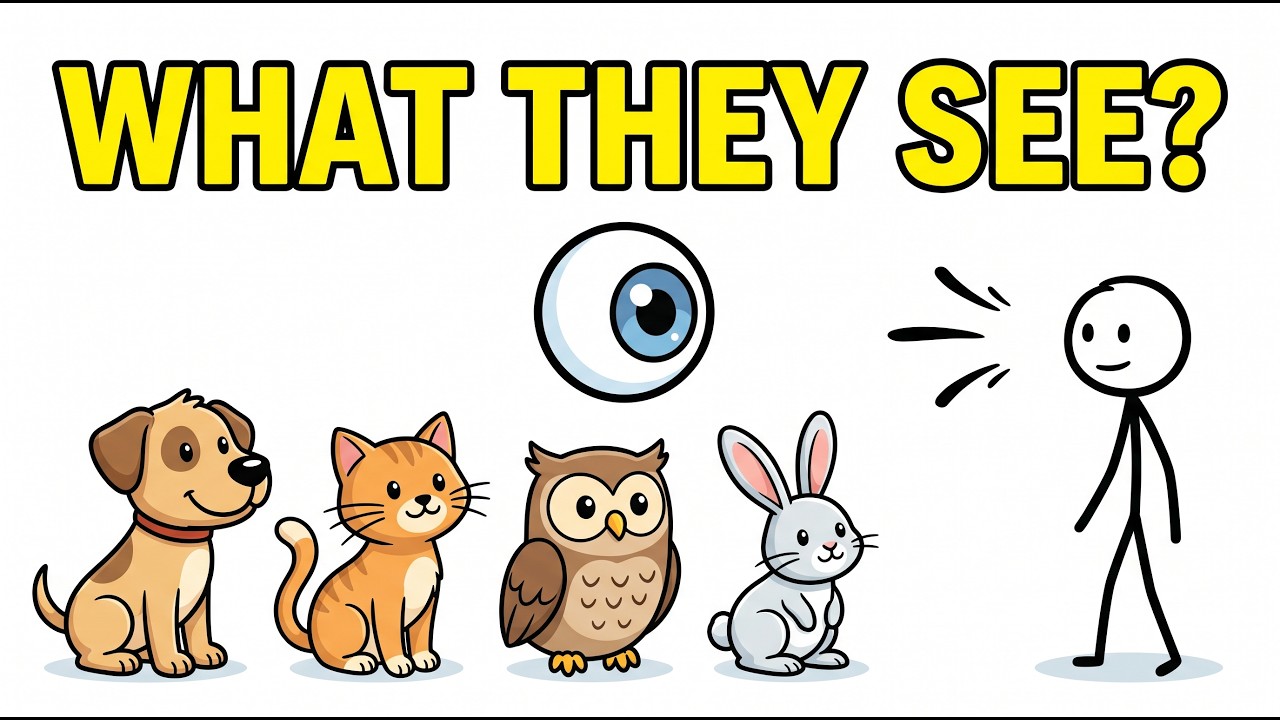
Explores how wild animals perceive and react to human babies, highlighting sensory differences and scientific uncertainties.

Ask about this video. Answers come from its transcript only — with the timestamp, so you can check them.

Generated from the transcript and can be wrong — check the timestamp.

Key Takeaways

  • Wild animals respond to sensory cues from human infants but likely do not conceptualize them as 'babies'.
  • Human infant cries share acoustic features with animal distress calls but may not communicate the same meaning to animals.
  • Baby schema effects are well documented in humans but not confirmed in wild animals.
  • Animal reactions to human infants are primarily investigatory, not necessarily protective or affectionate.
  • Scientific understanding of animal subjective experience remains limited, highlighting the complexity of cross-species perception.

What the video covers

  • Wild animals detect human infants through sensory signals like sound, movement, size, and scent rather than recognizing them as 'babies'.
  • Human infant cries have unique acoustic properties that resemble distress calls in the animal kingdom but may not convey the same meaning to animals.
  • The concept of 'baby schema' triggers caregiving responses in humans but lacks evidence of similar effects in wild animals.
  • Highly social animals like elephants and primates investigate human infants through scent and touch, but their behavior is primarily information gathering, not necessarily affection.
  • Predators do not have evidence of recognizing human infants as prey, though they may notice vulnerability signals that are unfamiliar.
  • There is no strong scientific evidence that wild animals form a distinct category for human infants combining all sensory signals as humans do.
  • Different species rely on different sensory priorities, leading to varied interpretations of the same infant encounter.
  • Research shows animals can recognize individual humans but not necessarily human infants as a unique category.
  • Behavioral responses can be measured, but the subjective experience of animals remains inaccessible and a fundamental research limitation.
  • The video emphasizes the mystery and scientific gaps in understanding animal perception of human babies.

Answers

Questions about this video

Do wild animals recognize human babies as babies?

There is no strong scientific evidence that wild animals recognize human infants as a distinct category like humans do. They respond to sensory signals but likely do not conceptualize 'baby'.

Why do human infant cries sound distressing to animals?

Human infant cries have nonlinear acoustic patterns similar to distress calls in many animals, caused by physical vocal constraints, which may trigger attention but not necessarily understanding of distress.

Can predators see human babies as prey?

Predators do not typically consider humans as prey, and there is no evidence that they interpret human infants as prey, though they may notice vulnerability signals that are unfamiliar.

Full Transcript — Download SRT & Markdown

00:00
Speaker A
A wild animal stops. Something small is nearby. It doesn't move like the humans the animal is used to seeing. The animal watches. It doesn't approach yet. Then the small one makes a sound. Hi, sharp.
00:15
Speaker A
Unfamiliar in its rhythm. The animal's posture changes. We can see the pause, the attention, the reaction to the sound, but we can't see the part that matters most. What does the animal think it's looking at? Does it recognize a
00:31
Speaker A
baby? Or is it simply responding to a collection of signals, sound, movement, size, scent, without ever forming the idea we call baby? That's where the mystery begins. A human infant isn't simply a miniature version of an adult.
00:47
Speaker A
The proportions are different. The head is large relative to the body. The movements are sudden, uncoordinated, and unpredictable. The sounds are different, higher, less controlled. Even the scent is different. To a human, all of these details come together almost instantly.
01:07
Speaker A
We see a baby. The category is obvious. But an animal doesn't receive a category. It receives information.
01:16
Speaker A
Shapes, sounds, movement, smell, each arriving through senses built for entirely different purposes. So before asking what an animal thinks about a human baby, there's a narrower question worth asking first. Which of these signals can a wild animal actually
01:34
Speaker A
detect? Start with the cry. A human infant's cry isn't a simple noise. Acoustically, it can behave in strange, unstable ways. Sudden pitch breaks, chaotic bursts, rough overlapping tones.
01:48
Speaker A
Researchers studying vocal production across species have found that these unstable, nonlinear acoustic patterns also appear in distress calls throughout the animal kingdom. Not because different species share the same message, but because they share similar physical constraints on how vocal
02:06
Speaker A
systems behave under strain. In other words, some of the urgency in a cry may come from physics before it comes from meaning. And that distinction matters.
02:17
Speaker A
Researchers have also found that humans can judge emotional intensity in the calls of other species, including birds, mammals, and reptiles we've never lived alongside. But that tells us something about the human ear. It doesn't tell us that a wild animal hearing a human
02:32
Speaker A
infant cry understands why the sound exists. An animal may detect a distress-like signal without understanding distress itself.
02:40
Speaker A
Recognizing a signal is not the same as understanding what caused it. Then there's the face. Large eyes, a rounded head, a small nose and chin, sitting low on a disproportionately large skull.
02:54
Speaker A
These features have a name in behavioral science, baby schema. The idea was first described by ethologist Konrad Lorenz, and later research showed that these infantile features can trigger stronger feelings of cuteness and caregiving motivation in human observers. The
03:11
Speaker A
response is measurable and remarkably consistent. But here's the limitation that matters. That research is primarily about us. Human eyes looking at infant faces. Human brains responding to infantile proportions. There is very little direct evidence that a wild animal looks at those same features on a
03:32
Speaker A
human infant and responds in the same way. We have an entire emotional framework for recognizing babies.
03:39
Speaker A
Whether other species share any part of that framework is something we mostly don't know. And that uncertainty becomes even more interesting when we look at animals that are highly social. Consider elephants and primates. These are animals capable of remarkably complex
03:54
Speaker A
social behavior. Elephants, for example, are known to investigate unfamiliar animals and objects using their trunks to touch, smell, and explore. That behavior is well documented. But investigation is not automatically affection. It's simply an animal gathering information. There are also
04:13
Speaker A
documented cases of animals caring for young belonging to another species. Cross-species adoption can happen. In some cases, even nursing has been observed, but these events are rare and scientists still don't have one clear explanation for why they happen.
04:30
Speaker A
Hormonal state, scent, opportunity, social instincts. Several mechanisms could be involved. So, when a video shows an elephant gently touching a human infant, it's tempting to call the behavior protective. But what can we actually confirm? The animal noticed something unfamiliar. It approached and
04:51
Speaker A
it investigated. Everything beyond that requires interpretation, and that's where the story becomes much harder. Now, consider a predator. In the wild, predators don't hunt randomly. Within their normal prey relationships, they often key in on signs of vulnerability, slower movement,
05:11
Speaker A
irregular movement, younger or weaker individuals. These patterns are well established in predator-prey research, including studies of wolves and their prey. But there's an important boundary.
05:23
Speaker A
Humans are not the normal prey of most large predators. A human infant doesn't automatically belong to the same sensory category as the animals a predator has evolved to hunt. So, the honest question isn't would a predator see a human baby
05:38
Speaker A
as prey? We don't have the evidence to say that. The more interesting question is this. If a predator's senses are tuned to notice small size, unusual movement, or vulnerability within familiar prey, what happens when those same signals appear in something
05:54
Speaker A
completely unfamiliar? Something that doesn't fit the categories the animal already knows? Right now, there's no strong evidence answering that question. And that gap is important because it prevents us from turning a fascinating possibility into a scientific fact. This is where the
06:11
Speaker A
mystery reaches its center. There is currently no strong direct evidence that a wild animal recognizes a human infant as a distinct category. The way a human recognizes baby as a concept combining sound, size, face, movement, and behavior. But that doesn't mean the
06:29
Speaker A
animal perceives nothing. It may detect the size, the sound, the unfamiliar scent, the unpredictable movement, possibly signs of vulnerability, or simply novelty, something that doesn't match anything it has encountered before. And here's the distinction that matters most. An animal could respond to
06:49
Speaker A
every individual signal produced by a human infant without ever assembling those signals into the concept we call baby. The parts may be visible to it, the whole may not be. Now imagine the same infant encountered by four different animals. An elephant may rely
07:06
Speaker A
heavily on scent, sound, and movement while using its trunk to investigate something unfamiliar. A primate may pay closer attention to visual and social cues shaped by attention patterns within its own species. But how much of that transfers to a human infant remains
07:22
Speaker A
unclear. A predator may register movement, size, and unfamiliarity, perhaps even signals associated with vulnerability, but there is no evidence that it interprets those signals as prey simply because the infant is small, and a crow can do something remarkable.
07:39
Speaker A
Research has shown that wild American crows can recognize and remember individual human faces, including people they associate with threats. But recognizing a particular human is not the same thing as recognizing a human infant as a category. Four animals, one
07:56
Speaker A
baby, four different sensory systems, four different sets of priorities, and potentially four completely different versions of the same encounter.
08:05
Speaker A
Scientists can measure a surprising amount: movement toward or away, vocal responses, heart rate, attention, recognition over time. All of that produces real data, but none of it can directly tell us what is happening inside the animal. We can describe the
08:24
Speaker A
response. We can measure what the animal notices, but we can't step behind its eyes and experience the world exactly as it experiences it. And that isn't necessarily a temporary limitation of technology. It may be one of the fundamental boundaries of studying
08:40
Speaker A
subjective experience from the outside. So return to the beginning. The animal pauses. The infant makes a sound. The animal reacts. At first.
08:52
Speaker A
Like the animal simply knows what it's seeing. But now the same moment looks different. sound, movement, size, scent, novelty, perhaps vulnerability, perhaps familiarity. We know an animal can detect these signals. What we don't know is whether those separate pieces
09:12
Speaker A
ever come together inside its mind to form the thing we call a baby. Maybe the animal isn't seeing a baby at all. Maybe it's seeing a collection of signals that happen to belong to one. And perhaps that's the strangest part. When a wild
09:27
Speaker A
animal looks at a human baby, we can watch its reaction. We can study its behavior, but we may never know exactly what it sees.
Topics:wild animalshuman babiesanimal behaviorbaby schemaanimal perceptioninfant crycross-species interactionanimal cognitionpredator-prey behavioranimal sensory systems

Get More with the SozAI App

Transcribe recordings, audio files, and YouTube videos — with AI summaries, speaker detection, and unlimited transcriptions.

Or transcribe another YouTube video here →