Skip to content

Why Do Eclipses Still Terrify Us?

Explores why eclipses evoke deep emotional responses despite scientific understanding, tracing cultural, psychological, and biological impacts.

Key Takeaways

  • Eclipses disrupt deeply ingrained natural expectations, causing intense emotional responses.
  • Cultural interpretations of eclipses vary widely but consistently attract focused attention.
  • Scientific understanding does not eliminate the profound experiential impact of eclipses.
  • The brain’s predictive nature explains why eclipses feel unsettling despite being understood.
  • Humans uniquely imbue eclipses with meaning beyond environmental changes, linking them to mythology and ritual.

What the video covers

  • Eclipses disrupt the predictable patterns of daylight, creating a strange and unsettling experience.
  • Ancient humans likely experienced surprise and awe at eclipses, though exact beliefs remain unknown.
  • The sky served as essential infrastructure for timekeeping, navigation, and agriculture in ancient societies.
  • Different cultures interpreted eclipses variously—as omens, cosmic disorder, or natural phenomena.
  • Prediction of eclipses transformed them from terrifying events into expected occurrences, but emotional impact remains.
  • The human brain constantly predicts environmental cues; eclipses break these predictions, causing cognitive dissonance.
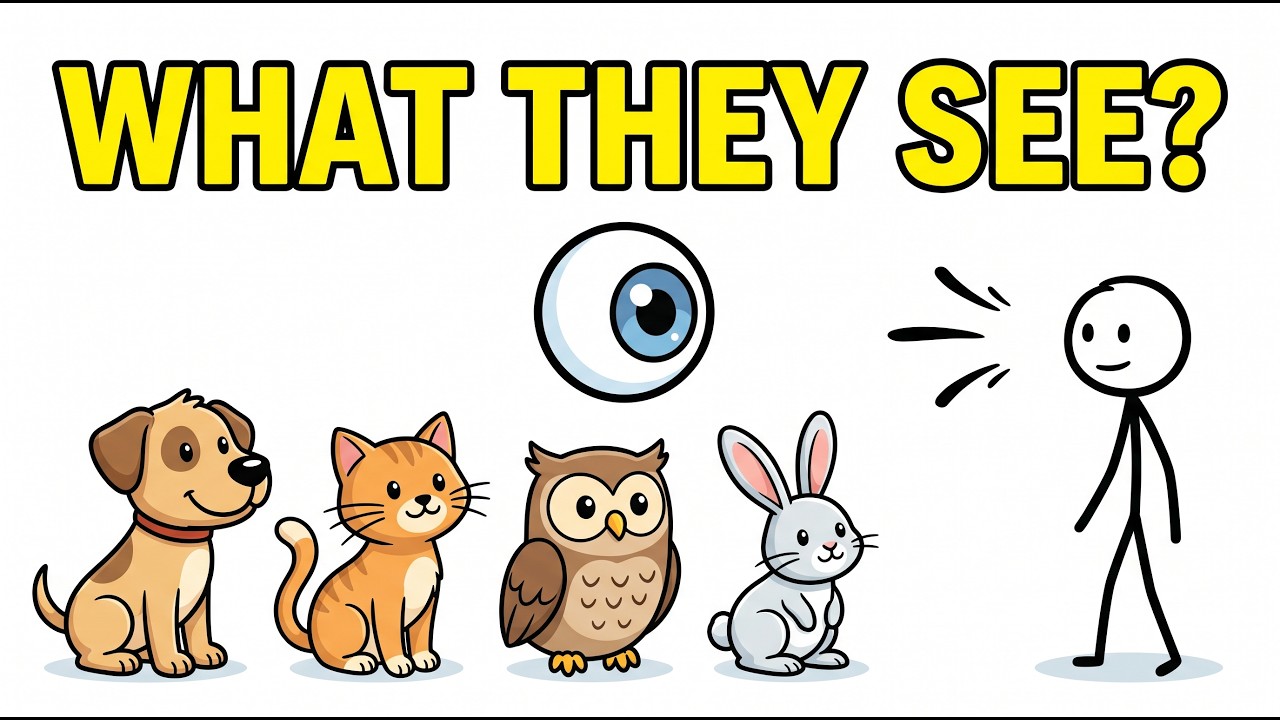
  • Animals also react to eclipses due to environmental changes, but without symbolic meaning.
  • Humans uniquely add meaning and imagination to eclipses, fueling mythology and ritual.
  • Scientific explanation enhances rather than diminishes the emotional power of witnessing an eclipse.
  • Eclipses continue to captivate and sometimes terrify because they challenge our fundamental expectations of reality.

Answers

Questions about this video

Why do eclipses still evoke strong emotions despite scientific explanations?

Eclipses disrupt the brain’s predictions about natural light and time, creating a sense of unfamiliarity and emotional intensity even when fully understood scientifically.

How did ancient cultures interpret eclipses?

Ancient cultures had diverse interpretations, ranging from omens of political or cosmic disorder to subjects of mathematical study, but all paid close attention to the event’s significance.

Do animals react to eclipses the same way humans do?

Animals respond to environmental changes like light and temperature shifts during eclipses, but unlike humans, they do not assign symbolic meaning or experience emotional reactions based on those changes.

Full Transcript — Download SRT & Markdown

00:00
Speaker A
The world is exactly as it should be. Then something begins to change. At first, you might not notice it. The light becomes strange. Not darker exactly, just wrong. Shadows sharpen.
00:14
Speaker A
The temperature begins to fall. Birds grow quiet. And then slowly, impossibly, the sun begins to disappear. For a few minutes, the sky performs an act our brains never expected to perform.
00:30
Speaker A
Darkness arrives in the middle of the day. Today, we know exactly what's happening. The moon has moved between Earth and the sun. There is no monster, no dying star, no supernatural warning, no cosmic accident, just gravity, motion, and geometry. And yet, knowing
00:50
Speaker A
the explanation doesn't completely remove the feeling. People travel across continents to stand beneath totality.
00:58
Speaker A
Some cry, some fall silent. Some describe the experience as terrifying. Others call it the most beautiful thing they have ever seen. So why? Why can an event we completely understand still make the world feel suddenly unfamiliar?
01:16
Speaker A
And perhaps the stranger question is this. Why has humanity spent thousands of years staring at eclipses and seeing something more than astronomy? Long before telescopes, calendars, or written astronomy, humans looked upward at the same sky. And at some point in our
01:32
Speaker A
distant past, a human being experienced a solar eclipse. We don't know who, we don't know when, and we will probably never know what they thought. There is no prehistoric diary describing the first eclipse. No fossil preserves a memory. No cave painting can reliably
01:50
Speaker A
tell us what someone believed when daylight suddenly vanished. So, we should not invent a story. We cannot honestly say prehistoric humans thought a monster was eating the sun. We don't know. But we do know something simpler.
02:04
Speaker A
They saw it. Imagine what that meant. For most of human existence, the sun was one of the most reliable things in the world. It rose. It crossed the sky. It set. Day followed night. Night followed day again and again and again. Then
02:24
Speaker A
without warning, something interrupted the pattern. The brightest object in the sky began to vanish. Perhaps that is where the story really begins. Not with superstition, not with mythology, but with surprise. Because an eclipse doesn't need an explanation to become
02:42
Speaker A
strange. The event itself is strange enough. Modern humans often treat the sky as background. We wake up indoors.
02:51
Speaker A
We check the weather on a screen. We work beneath artificial light. We know the exact time without looking upward.
02:58
Speaker A
But for ancient societies, the sky was not background scenery. It was infrastructure. The movement of the sun structured the day. The changing moon marked time. Stars helped people navigate.
03:14
Speaker A
Seasonal changes in the sky could help organize agriculture and ritual. The sky was one of humanity's oldest clocks, one of its oldest calendars, one of its most reliable environmental systems. And reliability is important because the more predictable something becomes, the
03:32
Speaker A
more disturbing it can feel when that prediction suddenly fails. Imagine a clock that has worked perfectly every day of your life. Then one afternoon its hands begin moving backward.
03:45
Speaker A
Nothing dangerous has necessarily happened but something is wrong with your understanding of the world. An eclipse creates a similar disruption.
03:54
Speaker A
The sun is supposed to make daytime bright and suddenly it doesn't. Ancient civilizations did not interpret eclipses in the same way. There was no universal human explanation. But across cultures one pattern appears again and again.
04:10
Speaker A
People paid attention. In ancient Mesopotamia, eclipses could be interpreted as dangerous omens connected to kings and political order. The disappearance of the sun was not simply an astronomical event. It could become a warning about the stability of society
04:26
Speaker A
itself. Some Mesopotamian traditions even developed elaborate rituals surrounding ominous eclipses. In ancient China, eclipses were also connected to cosmic disorder. Stories emerged involving creatures or forces threatening the sun. But these traditions were not simply childish attempts to explain the sky. They
04:46
Speaker A
existed inside sophisticated systems of astronomy, politics, ritual, and imperial authority. And elsewhere, eclipses could take on entirely different meanings. In ancient Greece, observers increasingly attempted to understand celestial events through geometry and natural philosophy. The same disappearing sun could become an
05:08
Speaker A
omen in one society and a mathematical problem in another. Different explanation, same attention. That is important because even when humans disagreed about why an eclipse happened, very few could simply ignore it. Something enormous had changed in the environment and everyone
05:27
Speaker A
could see it. This is where we need to be careful. It is tempting to imagine ancient humans universally panicking beneath every eclipse. But history is rarely that simple. Different societies had different traditions. Some people may have been frightened. Others may
05:44
Speaker A
have been fascinated. Priests and astronomers may have anticipated events that ordinary people found mysterious.
05:51
Speaker A
And once a civilization develops methods for predicting eclipses, the event changes. Something terrifying can become expected. Something supernatural can become calculable. But prediction doesn't necessarily make an eclipse emotionally ordinary because understanding something intellectually and experiencing it physically are not
06:11
Speaker A
the same thing. You can know exactly when an eclipse will occur. You can know its duration down to the second. You can understand orbital mechanics and then still stand beneath totality and feel something difficult to describe. Terror may be too strong a word for every
06:27
Speaker A
observer, but fear does not always begin with danger. Sometimes it begins when reality suddenly stops behaving the way your brain expects. And that brings us closer to the real mystery. The human brain does not simply sit back and
06:41
Speaker A
record the world. It constantly makes predictions. What will happen next? Where will that object move? What sound should come from that direction? What should the world look like at this time of day? Most of the time, these predictions work. When the sun is
06:58
Speaker A
overhead, the world should be bright. When darkness arrives, it should usually be night. When birds become quiet and nocturnal animals emerge, the day should be ending. An eclipse disrupts several of these expectations at once. It creates darkness, but at the wrong time.
07:16
Speaker A
The temperature changes, but the day is not over. Animals may alter their behavior, but night has not actually arrived. The environment begins sending signals that normally belong together, except now they don't, and your brain is forced to confront something unusual.
07:32
Speaker A
The world is still recognizable, but its rules seem temporarily broken. An eclipse does not break nature. It breaks our expectation of nature. And perhaps that is why the experience can feel so powerful. Humans aren't the only animals affected by sudden changes in
07:48
Speaker A
light. During eclipses, researchers have observed changes in the behavior of some animals. Birds may become quieter or behave as if evening has arrived. Some insects may change activity. Other animals show little reaction at all. And this is important. We should not imagine
08:08
Speaker A
the animal kingdom collectively looking at the sky in terror. A bird does not need a mythology of eclipses. It responds to environmental information.
08:18
Speaker A
Light changes. Temperature changes, behavior changes. In a sense, an eclipse creates a temporary contradiction. For a daytime animal, the sky says night, but the clock inside the body says day. For a nocturnal animal, the darkness may suggest activity, but something else
08:38
Speaker A
about the environment is wrong. Humans experience this contradiction, too. But we add something animals cannot.
08:46
Speaker A
Meaning, we don't just notice that the light changed. We ask why. And when we don't have an answer, the imagination rushes in. For most of human history, people could not instantly explain what they saw. There was no search engine, no
09:01
Speaker A
live stream.
09:21
Speaker A
sometimes all three existed alongside one another. But uncertainty itself is powerful. Imagine hearing an unfamiliar sound in the darkness. The sound may be harmless. But before you know what caused it, your brain has a problem. It cannot predict what happens next. The
09:38
Speaker A
eclipse creates a similar kind of uncertainty on an enormous scale. Except this time, the unfamiliar event isn't hiding in a forest. It's happening to the sun, the most visible object in your world. And suddenly, the question is unavoidable. If that can change, what
09:56
Speaker A
else can? Eventually, humans discovered something remarkable. The sky was predictable. Eclipses were not random. They followed patterns.
10:07
Speaker A
Celestial bodies moved according to principles that could be observed, calculated, and eventually understood with extraordinary precision. Today, we can predict eclipses centuries in advance. We know exactly where the shadow will travel. We can calculate when totality begins. And yet, something
10:26
Speaker A
interesting happened. Science explained the eclipse, but it didn't destroy the experience. In some ways, it made it more extraordinary because now we know what we're actually seeing. The moon, a world hanging hundreds of thousands of kilome away, can temporarily block the
10:44
Speaker A
light of a star 150 million km from Earth. And for a few minutes, those distances align with impossible precision. The explanation is not less beautiful than the mystery. It may be more beautiful, but explanation and emotion are different systems.
11:01
Speaker A
Understanding an eclipse doesn't prevent your body from experiencing it. The temperature still drops, the light still changes, the horizon still glows strangely, and your ancient expectations about daytime still collide with something impossible looking. Perhaps this is why total solar eclipses feel
11:19
Speaker A
different from simply watching the moon cross the sun in a diagram. A diagram cannot reproduce the environment. During totality, the entire world participates.
11:29
Speaker A
The landscape changes. The sky changes. The air changes. Sound changes. The behavior of living things can change.
11:38
Speaker A
For a few minutes, you are standing inside an event. And perhaps that is why people struggle to describe it. We have words for darkness. We have words for daytime. But an eclipse occupies an uncomfortable space between them. It is
11:54
Speaker A
daytime and it isn't. The sun is there and it isn't. The world is familiar and suddenly unfamiliar. That contradiction is difficult to experience without feeling something. Awe, wonder, confusion, excitement, or fear.
12:13
Speaker A
Sometimes all of them at once. Think again about ancient humans. They did not need to understand orbital mechanics to depend on the sun. Every living organism on Earth is shaped by cycles of light and darkness.
12:28
Speaker A
Humans organize their lives around those cycles too. Wake, work, travel, rest, plant harvest navigate celebrate.
12:40
Speaker A
The sun was not merely something humans looked at. It helped structure existence itself. And this may explain why an eclipse has always attracted attention.
12:50
Speaker A
For a few minutes, one of the most reliable systems in human experience appears to fail. Of course, it isn't actually failing. The universe is behaving exactly as physics predicts.
13:02
Speaker A
But evolution did not build the human brain to intuitively understand orbital geometry. Our instincts evolved beneath a sky where daytime remained bright.
13:12
Speaker A
When that expectation suddenly collapses, even temporarily, something ancient inside our perception takes notice. Not necessarily terror, but attention. Intense attention. Perhaps that is the strangest thing about eclipses.
13:27
Speaker A
Modern humans know more about them than any civilization in history. We can predict them, photograph them, broadcast them live, calculate their paths, explain every stage of their formation.
13:42
Speaker A
And still millions of people stop what they are doing to look up. For a few minutes, technology becomes almost irrelevant. You don't experience an eclipse through a spreadsheet. You experience it standing beneath the sky.
13:56
Speaker A
And suddenly, a modern human finds themselves sharing something with every generation that came before. The same light changes. The same strange darkness arrives. The same question appears even if we now know the answer. Something is happening. Look. So why do eclipses
14:13
Speaker A
still terrify us? Perhaps they don't. Not everyone. Not always. And terror may not even be the right word. But eclipses still have the power to disturb something deeper than simple ignorance.
14:27
Speaker A
They interrupt certainty. They temporarily violate one of the oldest predictions our brains make about the world. That daytime stays light. For ancient people, that disruption demanded an explanation. Different cultures found different answers. Gods, monsters, omens, geometry, science. But beneath
14:49
Speaker A
all those explanations was the same event. The sun disappeared. Today we know why. But knowing why doesn't make the experience ordinary because an eclipse reminds us of something we usually forget. Our sense of reality depends heavily on patterns. The sun
15:05
Speaker A
rises, day becomes night, winter becomes spring. The world repeats itself so reliably that we stop noticing how much we depend on that repetition. Then for a few minutes the pattern breaks. Not because nature has failed, but because nature has produced something our
15:24
Speaker A
intuition was never designed to expect. And perhaps that is why we still look up, why crowds become quiet, why some people cry, why others feel uneasy, why an event predicted centuries in advance can still feel impossible when it finally happens. An eclipse doesn't
15:42
Speaker A
make the universe mysterious. The universe was always mysterious. For a few minutes, an eclipse simply removes the illusion that we were completely used to
Topics:eclipsesolar eclipsehuman psychologyancient astronomycultural mythologynatural phenomenabrain predictionanimal behaviortotality experienceZERAN

Get More with the SozAI App

Transcribe recordings, audio files, and YouTube videos — with AI summaries, speaker detection, and unlimited transcriptions.

Or transcribe another YouTube video here →