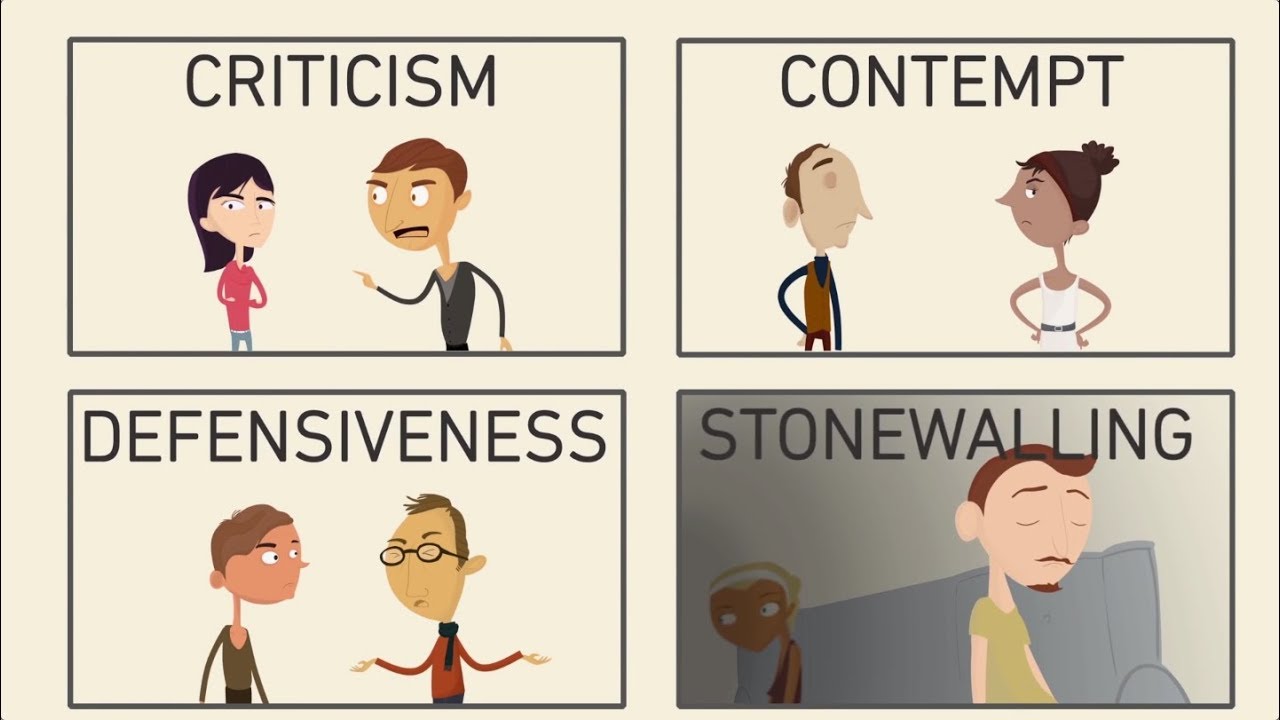
Dr. John and Dr. Julie Gottman act out a fight that escalates through contempt and defensiveness, then demonstrate how to repair it with a reset and a validating response.
Key Takeaways
- Contempt, criticism, and defensiveness escalate conflict and should be recognized early.
- Repair attempts, such as calling a timeout or changing tone, can redirect an argument back on track.
- Accepting a partner's repair attempt is as important as making one.
- Apologizing for hurtful statements, even mid-argument, helps restore safety in the relationship.
- Affirming a partner's intelligence and points while disagreeing on specifics keeps conflict productive.
What the video covers
- The video opens with the Gottmans announcing they will demonstrate an argument that goes wrong, showing anger, criticism, contempt, and defensiveness, followed by repair.
- The couple's scenario centers on a shared article: one partner asks what the other thought of it, and the response is that it was stupid, sophomoric, and ridiculous.
- The disagreement escalates into personal insults, with the criticism shifting from the article to the partner (e.g., 'you're stupid too', 'you are a jerk').
- The partner being insulted says they feel attacked and that the other is being mean and nasty, which signals the conversation has gone off track.
- A pivotal repair attempt occurs when one partner says 'let's take a step back,' then clarifies their opinion and admits the earlier comment was unfair.
- The apology is accepted, and the partner acknowledges their own feelings got out of hand, showing mutual responsibility.
- The Gottmans highlight that noticing the conversation has derailed and deliberately offering a repair is one of the most powerful tools in a relationship.
- The demonstration closes with a model repair: acknowledging the partner's intelligence, expressing appreciation for their points, and asking the other not to dismiss the work.
- The video frames contempt, criticism, and defensiveness as harmful patterns, while repair attempts and accepting them are protective.
- The format is an acted-out example meant to teach viewers to recognize the escalation and practice de-escalation skills.
Full Transcript — Download SRT & Markdown
Speaker A
we're going to demonstrate an argument where we don't use the right methods of talking to each other. We start to get angry, critical, a little contemptuous, defensive. All the stuff you're not supposed to do. And then how to repair. So.
Speaker A
did you read that text I sent you that article yeah yeah what' you think of it cuz I thought it was really terrific I thought it was stupid what yeah really you thought it was stupid sophomoric I mean ridiculous don't I hey you're
Speaker A
Did you read that text I sent you? That article?
Speaker A
that I'm not calling you stupid I'm calling you didn't write the article yeah but I like the article so I guess you're stupid too oh my God that is such an insult you know what you are a jerk
Speaker A
Yeah, yeah. What do you think of it? Cuz I thought it was really terrific.
Speaker A
opinion you ask my opinion not about me but everything that you're saying is insulting to me and I don't like it you are being mean and nasty and I don't like it all right all right let's take a step
Speaker A
I thought it was stupid.
Speaker A
at all I think you're brilliant H okay thank you okay and I think I should probably apologize too because I called you mean and you're not mean thank you I appreciate that not a mean person and I don't know I guess when my feelings get
Speaker A
What? Yeah, really? You thought it was stupid? Sophomoric, I mean, ridiculous. Don't I...
Speaker A
where you know the conversation has gotten off the right track and you say something to your partner to get it back on the right track and then see if your partner accepts that right right one of the most powerful repairs that we
Speaker A
Hey, you're talking about something that I thought was really terrific and intelligent and made some really good points. So don't call it stupid.
Topics:Gottman Methodcouples conflictrelationship repaircontemptdefensivenesshealthy communicationrelationship advicemarriage counselingconflict resolutiontoxic arguments