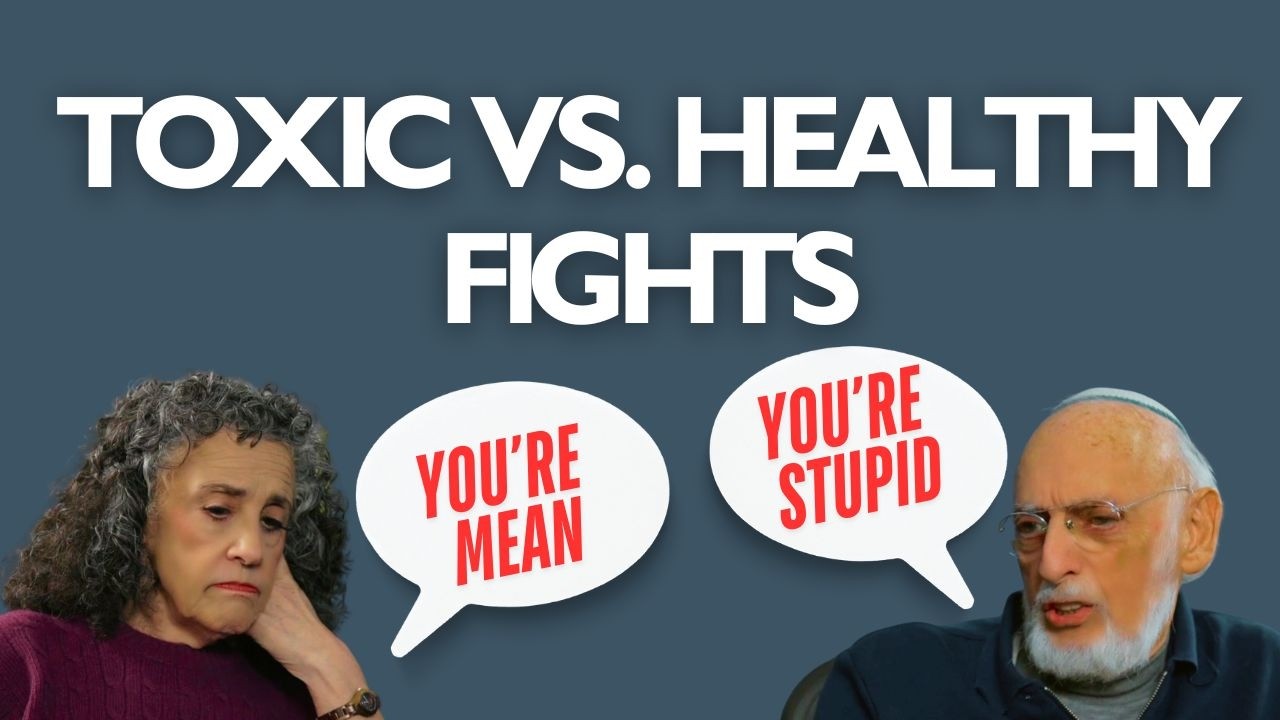
Dr. John Gottman explains that successful couples repair arguments effectively, and that repair success depends less on how the attempt is phrased than on the emotional goodwill built up between partn
Key Takeaways
- Conflict itself is not the problem; failing to repair after conflict is what damages relationships.
- Focus on how to repair rather than on perfecting the wording of an apology or request.
- Invest consistently in the emotional bank account so partners are receptive to repair attempts.
- Each conversation about a recurring issue should aim to be better than the previous one.
What the video covers
- Stable marriages still involve arguments that are often messy, mean-spirited, defensive, critical, or involve stonewalling.
- What distinguishes 'Masters' from 'disasters' is their ability to recover and repair during or after conflict.
- The major goal of conflict is to fix things and make each subsequent conversation on a problem area better than the last.
- Repair attempts can take many forms: suggesting a pause, noting the conversation is off track, asking for a break, or apologizing.
- Gottman's research found that the style or eloquence of a repair attempt does not predict whether it succeeds.
- A beautifully worded repair attempt can fail, while a clumsy one can succeed.
- Whether a repair attempt works depends largely on the receiver's 'emotional bank account' with the sender.
- Emotional bank account is built through prior care, understanding, support, and respect shown over time.
- Gottman illustrates this with a chemist whose unpredictable work hours affected family dinners and created tension with his wife.
- Repairs are most likely to be accepted when earlier interactions have been kind and respectful.
Full Transcript — Download SRT & Markdown
Speaker A
what's different about the Masters and the disasters is that the Masters are repairing things effectively. So that we think that what's going on is that, yeah, you know, in a good marriage people have arguments. That are kind of crummy arguments. And, uh, you know, and they're, and they don't follow communication rules, and they, you know, they say mean-spirited things, and they get defensive, and they get critical, and they get desperate and upset, and they stonewall, and they do all this stuff. But
Speaker A
arguments and uh you know and they're and and they don't follow communication rules and they you know they they say mean-spirited things and they get defensive and they get critical and they get desperate and upset and they Stonewall and they do all this stuff but
Speaker A
at some point they have a conversation where they recover from it. They can talk about it, and they can repair it. And so what we want to suggest to you is, really, that's really what the major goal ought
Speaker A
to be is how do you how do you fix things how do you make your next conversation on this problem area better than your last one how can you repair it and so for a lot of years we were
Speaker A
to be. Is how do you, how do you fix things? How do you make your next conversation on this problem area better than your last one? How can you repair it? And so, for a lot of years, we were
Speaker A
might be uh you know this isn't this isn't really what we're supposed to be talking about we're getting off on a tangent or repair attempt might be I need a break or repair attempt might be you know I'm sorry I really I I really
Speaker A
looking at the repair attempt itself. How do people try to make it better? You know, like a repair attempt might be, gee, I don't think either one of us is really listening to the other right now. Maybe we should try again. Or a repair attempt
Speaker A
making a repair attempt atts in a beautiful way it could have been written by a social worker and you know and and it was it was failing and other people were making repair attempts in this real clumsy way and it was successful you
Speaker A
might be, uh, you know, this isn't, this isn't really what we're supposed to be talking about. We're getting off on a tangent. Or a repair attempt might be, I need a break. Or a repair attempt might be, you know, I'm sorry. I really, I, I really
Speaker A
home for dinner he has these experiments going on at work and uh and she said well the kids get hungry and you know and they don't want to St start dinner without you so they get irritable and I
Speaker A
wish I hadn't said that. You know? And we were looking at the repair attempt, and how was it said? And we found that we could not predict the effectiveness of repair from the nature of the repair attempt. You know, in fact, some people were
Speaker A
that and he realized he needed to make a little repair so he this guy was wearing a red bow tie and he went that was his repair attempt this big stupid grin you know and she started to laugh and the repair attempt was
Speaker A
making repair attempts in a beautiful way. It could have been written by a social worker, and, you know, and it was failing. And other people were making repair attempts in this real clumsy way, and it was successful. You
Speaker A
the person receiving the repair attempt right and what made the difference was really how much emotional money in the bank they have with that person so in other words my repair attempt with Julie is going to work well if I've really
Speaker A
know, I remember this one case where this guy, who was a chemist, um, and he and his wife were talking about the fact that, because of the nature of his work, he, uh, he doesn't know exactly when he's coming
Speaker A
understanding you know I've been there for her when she needs me all those kinds of things that determines whether she's going to accept my repair attempt and if I'm if I've been kind of crummy and disrespectful to her you know and
Speaker A
home for dinner. He has these experiments going on at work. And, uh, and she said, well, the kids get hungry, and, you know, and they don't want to start dinner without you, so they get irritable, and I
Topics:John Gottmanrelationship repairrepair attemptscouples therapymarriageconflict resolutionemotional bank accountcommunicationGottman Instituterelationships