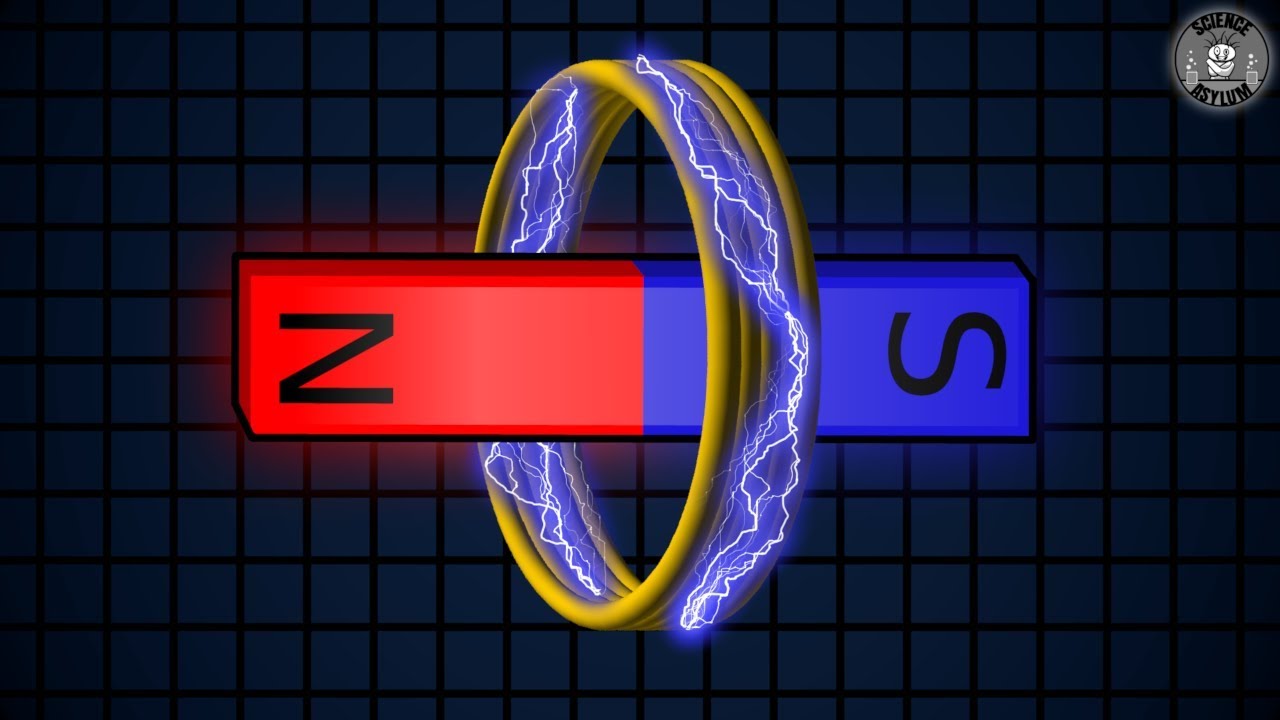
Bathroom scales measure normal force, not true weight; this video explains apparent weight using elevator experiments and astronaut examples.
Ask about this video. Answers come from its transcript only — with the timestamp, so you can check them.
Generated from the transcript and can be wrong — check the timestamp.
Key Takeaways
- Bathroom scales do not measure true weight but the normal force exerted by the surface.
- Weight is the gravitational force, which varies with location and is different from apparent weight.
- Apparent weight changes with acceleration, as shown by scale readings in an elevator.
- Astronauts have weight in orbit but feel weightless due to free fall conditions.
- Understanding forces like normal force clarifies misconceptions about everyday measurements.
What the video covers
- Bathroom scales are commonly thought to measure weight, but they actually measure the normal force or push force.
- Weight is defined as the gravitational force acting on a mass, but gravity is technically curved spacetime, approximated as a force here.
- Apparent weight differs from true weight and depends on acceleration and contact forces, not just gravity.
- Astronauts in low Earth orbit still have weight due to gravity but appear weightless because they are in free fall.
- Taking a bathroom scale on an elevator demonstrates how scale readings change with acceleration, proving scales measure normal force.
- When the elevator accelerates upward or downward, the scale reading fluctuates even though the actual weight remains constant.
- Normal force is the perpendicular contact force between surfaces, which the scale measures.
- Buoyant force from displaced air is negligible for bathroom scales and does not affect their readings significantly.
- The video encourages viewers to rethink what weight means and understand the physics behind everyday measurements.
- The presenter uses clear experiments and analogies to explain complex physics concepts in an accessible way.
Chapters
- 00:00Introduction to Bathroom Scales and Weight
- 00:24Why Scales Don’t Measure Weight Directly
- 00:56Testing Scales in Unintended Ways
- 01:20What is Weight? Gravity and Its Nature
- 01:43Gravity Between Masses and Defining Weight
- 02:01Weight in Low Earth Orbit and Astronauts
- 02:48Free Fall and Apparent Weight Explained
- 03:34Elevator Experiment: Scale Readings Change
- 04:15Understanding Normal Force
- 05:01Elevator Acceleration Effects on Scale
Full Transcript — Download SRT & Markdown
Speaker A
Thanks to Brilliant for helping support this episode. Hey, crazies. Most of us have at least seen a bathroom scale, right?
Speaker A
I grew up on the analog version, but the digital ones are pretty standard now.
Speaker A
Anyway, these things are marketed as though they measure your weight, but they don’t. And I’ll prove it to you by taking one on an elevator.
Speaker A
How do they get away with it then? Because of a physical technicality. They expect you’ll be using the scale in a house that’s attached to the ground and that you’ll be placing that scale on a firm, flat floor.
Speaker A
Probably while she sells seashells by the seashore. In that specific situation, the force the scale measures is equal to your weight, but it’s not directly measuring your weight.
Speaker A
So, first, we need to understand what weight is, and then we need to disprove the premise: Bathroom scales measure weight.
Speaker A
To do that, we need to use the bathroom scale in ways that aren’t as intended.
Speaker A
Science! [Title Screen: What is Weight?] Hmm. The quick definition of weight is just that it’s the force of gravity.
Speaker A
I’ve even used that definition in previous videos. But gravity is a force that all masses experience toward all other masses.
Speaker A
Technically, gravity isn’t a force. It’s curved spacetime. Yes, I know, but that technicality is not important right now.
Speaker A
Pretending it’s a force works, like, 99% of the time. It’s going to be fine today too.
Speaker A
Anyway, these two space clones are experiencing a force of gravity toward each other. In fact, this force would cause them to fall toward each other.
Speaker A
They’d collide in about 6 hours. But I think I’d have a hard time convincing anyone that that force is weight.
Speaker A
In practice, we only call it “weight” when one of the masses is much larger compared to the other.
Speaker A
So, instead of two space clones, it should be one space clone and, say, the Earth.
Speaker A
Up here in low Earth orbit, the clone would have a weight of about 140 pounds.
Speaker A
That force depends on how far he is from the Earth though. It might be 140 pounds in low-Earth orbit, but it’s about 165 pounds on the Earth’s surface.
Speaker A
And, in deep space, it’s effectively zero. Wait, are you saying that astronauts aren’t weightless?
Speaker A
Yes, that’s exactly what I’m saying. These astronauts floating in low-Earth orbit have weight. There’s plenty of gravity up there.
Speaker A
About 90% of the gravity they’d experience down on the ground. They just can’t feel it because they’re falling.
Speaker A
Allow me to explain. If I put a squirrel in a box and drop it off a really tall building, he’ll lift off the bottom of the box and float around inside.
Speaker A
It’s just like how astronauts float around in their big metal box. Space stations in orbit around the Earth are falling just like the squirrel in the box.
Speaker A
It’s just that the space station is moving so fast sideways that it misses the Earth.
Speaker A
That’s what an orbit is: falling but missing. Both an astronaut and a squirrel have gravity acting on them.
Speaker A
That’s why they’re attracted to the Earth. It’s not like the Earth’s effect on the squirrel can change from here to here.
Speaker A
Same Earth. Same squirrel. Same height. Same gravity. But it doesn’t seem like that should be true.
Speaker A
Our instincts would tell us that these astronauts are weightless, even though they’re not. And that’s because tools like this have messed with our heads.
Speaker A
[Title Screen: Apparent Weight] A bathroom scale might not measure weight, but it does measure what we think weight is.
Speaker A
Something you might call “apparent weight.” Astronauts are not weightless. They just have no apparent weight.
Speaker A
They only appear weightless. They have no weight that could be measured on a scale.
Speaker A
But you’re not going to find an apparent weight on a list of Newtonian forces.
Speaker A
That’s just the name we give to a force we expect to be weight but isn’t.
Speaker A
And which force that is can depend on the situation. To figure out which force it is for a bathroom scale, we need to take this thing on an elevator.
Speaker A
[Elevator Music] When the elevator is stationary, the reading on the scale is what we’d expect.
Speaker A
But watch what happens when the elevator begins to move. Did you see that jump?
Speaker A
Let’s watch it again. It jumped below 160 pounds. It’s only for a moment though.
Speaker A
Once the motion steadies, it goes back to normal. When the elevator stops, there’s another momentary jump on the scale.
Speaker A
This time it goes up over 180 pounds. What we’re visibly seeing here is the acceleration of the elevator.
Speaker A
It starts moving down, then it steadies. Again, the actual weight doesn’t change. Elevator Clone is 165 pounds that whole time.
Speaker A
But, if you’ve ever been on an elevator, you know it doesn’t feel like it.
Speaker A
You can feel these changes, especially in your feet and lower legs. Elevator Clone even has a hard time keeping the camera steady in this shot.
Speaker A
So, what force is the scale actually measuring? The push force. Also known as a normal force.
Speaker A
Normal force? Is there a weird force? No, “normal” is just a math term that means perpendicular or at 90 degrees.
Speaker A
Why don’t they just say perpendicular then? At some point, someone decided that “perpendicular” just applied to two dimensions.
Speaker A
I know. It's silly. Anyway! Normal force is a force perpendicular to two surfaces in contact.
Speaker A
In our case, the two surfaces are the bottom of Elevator Clone’s shoes and the top of the scale.
Speaker A
These two surfaces are pushing on each other with a force. That push is what the scale actually measures and it’s what actually changes inside the elevator.
Speaker A
If the elevator is stationary or moving at a steady speed, the scale will work as expected.
Speaker A
But, if the elevator starts to move downward, the scale doesn’t have to push as hard on you to hold you up.
Speaker A
Its reading will drop. The opposite will happen as the elevator brakes. The scale will have to push harder on you to slow you down with the elevator.
Speaker A
Its reading will rise. And you can feel these changes when you’re in the elevator.
Speaker A
A similar thing happens when elevators go up. As it starts to move upward, the bathroom scale has to push harder on you to make you go up with the elevator.
Speaker A
The opposite will happen when the elevator brakes. You can even use this information to calculate the acceleration of the elevator, which is kind of cool.
Speaker A
You forgot to mention buoyant force. I didn’t forget it. I ignored it. There’s a difference.
Speaker A
Yes, the human body is displacing air. Yes, that air pushes back inward trying to fill the space the human occupies.
Speaker A
If you total up all the forces, you do get an upward force. In fact, that’s why snow is easier to shovel than slush.
Speaker A
It pushes more air out of the way. But, for this human, it’s only about 1/5 of a pound.
Speaker A
That’s outside the precision of something like this bathroom scale. The point is that bathroom scales don’t measure weight.
Speaker A
They only measure what we instinctively think weight should be. How hard we push down on the ground.
Speaker A
Bathroom scales just measure push force, also known as normal force. You can prove they don’t measure weight by taking them on an elevator.
Speaker A
The scale reading will change as the elevator speeds up or slows down even though your weight doesn’t change.
Speaker A
All that changes is the contact force you feel with whatever is underneath you. The push doesn’t even have to be vertical.
Speaker A
I can pick up the scale and use it on a wall or a car or whatever.
Speaker A
And it’ll tell me how hard I’m pushing on those things. You don’t feel weight.
Speaker A
You only feel pushes and pulls. So would you ever take a bathroom scale on an elevator?
Speaker A
Please share in the comments. Thanks for liking and sharing this video. A special thanks goes out to my Patreon patrons and YouTube members like Jonathan Lima, one of our new Einsteinium crazies.
Speaker A
Don’t forget to subscribe if you’d like to keep up with us. And until next time, remember, it’s okay to be a little crazy.
Speaker A
Thanks again to Brilliant for helping support this episode. Let’s be honest. The most successful way to learn something is to just do it.
Speaker A
Brilliant is a website and app built on this principle. You’ll learn while doing and solving in real-time.
Speaker A
Before you realize it, you’ll have learned.
Speaker A
You’ll start with the basics: how mass and distance affect gravity. Eventually, you’ll get a chance to apply those basics in interesting hypotheticals.
Speaker A
What happens when you drop an egg in an accelerating elevator? What happens if you shine a laser in an accelerating spaceship?
Speaker A
If you get a question wrong, it’s no big deal. It’ll give you the correct answer and an explanation if you want it.
Speaker A
If you'd like to join a community of 8 million learners, click the link in the description below.
Speaker A
Or go to brilliant dot org slash Science Asylum, so they know you heard about them from me.
Speaker A
They’re offering the first 200 of you 20% off an annual subscription. Black holes formed from hot stars. How can they be cold?
Speaker A
Once heat falls inside an event horizon, it’s not heat anymore. At least not for us.
Speaker A
It’s all just mass now. The thermal energy has become mass. Anyway, thanks for watching.
Topics:weightbathroom scalenormal forceapparent weightgravityelevator experimentphysicsfree fallastronaut weightScience Asylum