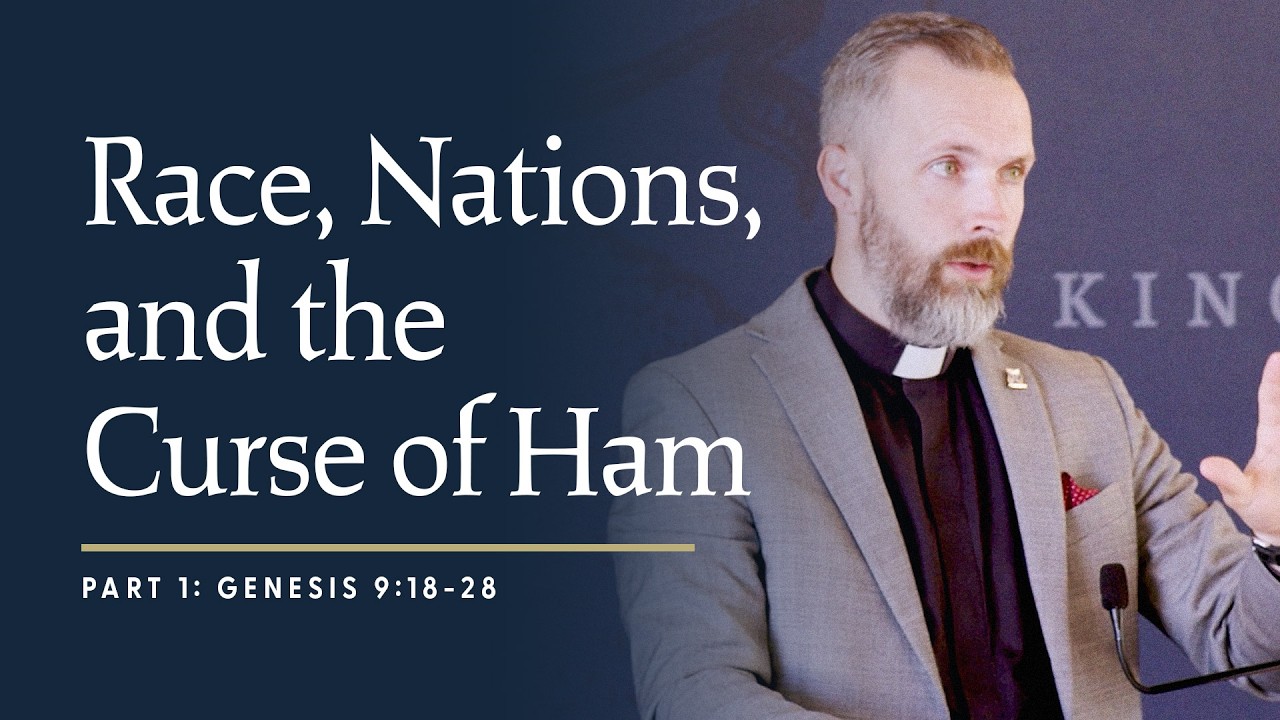
Jonathan Pageau and R.R. Reno discuss how the post-WWII 'open society' consensus, rooted in Popper, weakened truth, beauty and goodness and left people anxious and demoralized.
Key Takeaways
- The post-WWII open society framework, shaped by Popper, has suppressed transcendent truths and strong loves.
- Cultural and spiritual demoralization today stems from losing a sense of something worth living and dying for.
- Renewing Christian transcendence and sacramental life is presented as necessary to avoid repeating past catastrophes.
What the video covers
- Reno frames the 1914-1945 catastrophe in Western civilization as the origin of the post-war demand that 'never again' be allowed to happen.
- The post-war consensus blamed inflamed passions and ideological demagogues, and aimed to lower the temperature of civic life.
- The open vs. closed society dichotomy, reinforced by the Cold War, became the dominant lens for judging good societies.
- Popper's The Open Society and Its Enemies identified Plato as a progenitor of totalitarianism, fueling a broader anti-Western impulse.
- Reno argues that truth, goodness and beauty (the transcendentals) are treated as enemies of the open society.
- 'Strong gods' is Reno's metaphor for compelling transcendent loves that call people to loyalty, service and heroism.
- Pageau explains how his view of goods as drawing us toward them made him unpopular with some liberal critics.
- The speakers argue that contemporary society is dispirited, driven by anxiety and safety-seeking rather than transcendent purpose.
- They discuss how economic and moral liberalization are seen as two sides of the same drift toward the open society.
- They suggest that without a renewed Christian love of God, society risks repeating the disorder of the 1930s.
Full Transcript — Download SRT & Markdown
Speaker A
I think it's hard for people to realize how what a catastrophe western civilization endured from 1914 to 1945. And there was a demand for some explanation of what went wrong and a plan so that this sort of thing wouldn't
Speaker A
happen never again. And never again becomes a kind of watch word in the post-war years. I think the west, especially under American leadership, consolidated around the consensus that the passions of men had been inflamed by ideological images and demagogues. And
Speaker A
what we needed to do was to dial down the temperature of civic life across the board. And so this notion of an open society versus a closed society that this dichotomy gained hold as the dominant way to interpret like what's a
Speaker A
good society is an open society, what's a bad society, a closed society. In many respects, you and I could say if I have to choose between a closed society, an open society, I'll choose an open one. I mean, duh. You know,
Speaker A
that's right. But it's not so simple because it turns out that truth is an enemy of the open society.
Speaker A
[music] This is Jonathan Pjo. Welcome to the [music] symbolic world. [music] Hello everyone. I am here with Rusty Reno. Many of you will know him as the editor of First Things. He's also written several books and it's a very
Speaker A
strange that we haven't met until now. And so it's good to meet you, Rusty.
Speaker A
A pleasure to be with you. Uh so the one of the reasons why I wanted to talk to Rusty is because it's actually because of Winston Marshall. I was I did an interview with him about uh kind of the end of World War II
Speaker A
consensus and he kept telling me he said well have you read Rusty's book and and I thought no I haven't read his book and so then I looked into it and I saw just how close our thinking was and and how
Speaker A
parallel it was you know I come at it more from a cultural narrative type attack and then you come at it really through the politics and so I was able to read Russy's book and it was very helpful to me because as I was saying
Speaker A
certain things. I was making enemies and I didn't understand why. Like I Yeah, I didn't understand why all of a sudden James Lindsay hated me.
Speaker A
The easy way to make enemies is to question the dominant mythology of uh second half of the 20th century. Yeah.
Speaker A
And and I was using words like I did a speech for Arc, the first arc where I just talked about the idea that, you know, that goods act on us and they draw us into them, right? That they're that
Speaker A
they're more akin to gods in some ways, right? and they kind of pull us towards themselves. Um, and I didn't realize that this was such a trigger word for liberals and and so, you know, then then that's when James and just started
Speaker A
attacking me. And then reading your book and learning about Poppers's theories and the weakening of being and everything, I realized, oh, okay. So, I I see now why I'm making enemies like David Bentley Heartes Me and like James
Speaker A
Lind's history. I'm like, okay. It's because I'm triggering them with these and I'm not even I'm thinking about it more in terms of cultural history. So maybe give us a sense of of the basic concept, the way you see it cuz you come
Speaker A
at it through in some ways different writers that I would tend to uh talking about how this world view was set up.
Speaker A
And so maybe you can give us a sense of how you see the reaction to the end of World War II and how it led us to the morass in which we are now.
Speaker A
I think for for us living at in the in the 21st century, I think it's hard [clears throat] for people to uh realize how what a catastrophe western civilization endured from 1914 to 1945.
Speaker A
You know, pointless slaughter in the trenches of the Western Front in World War I, collapse of Russia, inauguration of a totalitarian empire.
Speaker A
um the Soviet Union, the turmoil of the inter war years, Viomar Republic, uh a kind of watchword for a failed political experiment, rise of fascist governments, Spain, Italy, Germany, and then another round of even more uh lethal uh warfare
Speaker A
starting in 1939, culminating in 1945 with saturation, bombing of cities, uh two nuclear weapons and then the revelation of the terrible slaughter um of the Holocaust. So I just think it knocked the stuffing out of Western civilization and there was a demand for some
Speaker A
explanation of what went wrong and a plan so that this sort of thing wouldn't happen never again. and never again becomes a kind of watchword in the post-war years.
Speaker A
[clears throat] And there were lots of e efforts to analyze what went wrong. But I think the west, especially under American leadership, consolidated around the consensus that the passions of men had been inflamed by ideological uh images and demagogues. And what we
Speaker A
needed to do was to dial down the temperature of civic life across the board. And so this notion of an open society versus a closed society, which of course got reinforced by the cold war antagonism between the American West and
Speaker A
the Soviet East. that this dichotomy really gained hold as the dominant way to interpret like what's a good society is an open society what's a bad society a closed society and so you got to get in and think about well what is the open
Speaker A
society really all about and I I reread uh for writing the book I reread Carl Pauper's open society and its enemies that tells you everything you need to know enemies it's a very manakian and view of of um of our destiny, our
Speaker A
political, cultural, even spiritual destiny. And Popper identifies Plato as the great um evil that's lurking in our tradition. And if you think about it, a lot of people say, "Oh, this anti-western mentality that's taken a hold in academia." And you read Popper,
Speaker A
this book was published in 1945 and he identifies the root thinker of western philosophy as the patron of the closed society and therefore a progenitor of Adolf Hitler. So the anti-western impulse is actually uh I think rooted in
Speaker A
this catastrophic experience 1914 to 1945. So get the open society idea. And in many respects, you and I could say, if I have to choose between a closed society, an open society, I'll choose an open one. I mean, duh. You know,
Speaker A
that's right. But it's not so simple because it turns out that truth is an enemy of the open society in Carl Pauper's world. You know, capital T truth or capital B beauty or capital G goodness. So these are the platonic transcendentals which
Speaker A
of course the Christian tradition takes up and develops and makes central to not just the life of a society but our own souls. And so over time the open society consensus becomes a kind of flesh eating uh outlook that's an enemy of any strong
Speaker A
gods. I use that term as a kind of metaphor for the powerful things in life that beckon us to love them, to be loyal to them, to serve them, to advance them, to proclaim them. So, not surprisingly, it's now 2026 and we live in a literally
Speaker A
demoralized society, dispirited society, uh, where it seems like the overriding emotion that people feel is anxiety and fear and and a desire to be safe rather than a society where people are called to something that's heroic, something that's
Speaker A
transcendent, something that gives them a kind spiritual sense that there's something to live for. Um anyway, so that's my my big picture view. I go into book all kinds of details with various writers that I think help people who are
Speaker A
like me kind of book oriented. But it's not just a book thing. It's everywhere in our in our society. This this kind of hostility to strong loves.
Speaker A
Hello everyone. We are excited to announce that God's Dog 3, that is God's Dog Monk, is currently being shipped to the United States. It is set to ship to all of you in October. And so, we are offering it in pre-sale. And to
Speaker A
celebrate, we are also offering up to $25 off if you get the bundle of the books together. We are also offering free shipping in the United States. And so, now's the time to get God's Dog. The new book will really explode the story.
Speaker A
If in the past two books we've stayed close to the main characters, now we're going to bring it close to its cosmic place, we're going to see more about the giants, more about the biblical themes of the garments of skin. We're going to
Speaker A
see the Amazon centaurs and even we'll take a little trip into hell. And so I'm definitely looking forward to seeing what all of you think of this recent book. And so get your books today.
Speaker A
It was so fascinating for me to read it because I tend like I tended to go to the to Makuse right after the war and and to to the idea I have this conceit this idea that because the the fascists
Speaker A
lost the war and because we we also associated ourselves with communism even though we were anti-communist at the beginning it meant that it was impossible for any thing that came close to fascism to have a voice in the west
Speaker A
after the war. But it be it was definitely possible for the more communistic revolutionary thinkers to slowly take root and to kind of grow. So we end up in a situation where revolutionary thinking has room in the academy to grow and then it gets joined
Speaker A
with you know with the cultural revolutions of the of the of the Frankfurt school. like it's no longer as it's not as militarized or political, but it's definitely a cultural revolution. And I found it interesting that you come to like you come to this
Speaker A
exact same conclusion that I would come to, but you don't take that tack. You really talk about weak and strong and uh this idea in some ways of um the open and close, but you end up in the same
Speaker A
place. And so it's interesting. I mean, did you consider the Frankfurt, you do talk about Adorno a little bit in the in the text, but like you why don't you mention Mar Cruz in the book? I'm just surprised
Speaker A
I read all that stuff when I was an undergraduate in the late 70s and early 80s. I read all of Marcusa as an undergraduate and and a great deal of of Horheimer and Adorno.
Speaker A
So for me later in life the question became not why did these men think what they thought but why were they welcomed into uh into the conversation in the United States. And one has to look at what what I would call establishment
Speaker A
liberals who thought of Marcusa and his [clears throat] crew as a kind of levan that you know what's the greatest danger? The greatest danger is fascism.
Speaker A
What is fascism? Fascism is believing things too strongly. And so wouldn't it be good for undergraduates in the 1960s and 70s to be exposed to revolutionary thinking as a as [clears throat] 11. So I think that my teachers as as undergrads had
Speaker A
confidence that we would as students achieve the equilibrium. We would question, we would entertain these critical revolutionary thoughts, but we would also acknowledge the integrity of our inheritance, you know, the American democratic founding, our classical liberal traditions, and we'd find a sort
Speaker A
of balance. In the book I talk about the 1943 Harvard report education for a free society that stri tried to strike a balance between the authority of our cultural inheritance and the imperative of critical questioning.
Speaker A
Mhm. But all the prestige was going to the critical questioning. So it's only a matter of time decades not years. It's only a matter of time before the acid of doubt overwhelms any kind of confidence of belief. Yeah. Yeah. I think that
Speaker A
that's interesting. And so in some ways you see that the the post-war thinkers, they use the communistic approach as a weapon. Like they just wanted to defeat to attack attack fascism but didn't think that it would start to completely
Speaker A
the revolutionary thinking would take over. You could say the the the I was on faculty. I was a professor for 20 years at Kraton University in Omaha, Nebraska teaching theology and I was on various hiring committees and there was
Speaker A
always this kind of yeah confidence that sort of there's enough balance in the system so we can always have it's just good for the school to have somebody you know radical feminist in English department or a Marxist in the sociology
Speaker A
department. There was no sense that um if you don't re provision so to speak, you got to supply imaginatively, intellectually, spiritually resupply the anchors um and the transcendent elements of education.
Speaker A
Um otherwise the kind of critical debunking and unmasking will wind up being the only note of any kind of significance for a young person going through education. And by the time you get to the '9s, I think that most young
Speaker A
people, you can imagine some young kid who reads Henry James at age 18 and thinks like, "Wow, literature. I want to study literature." And they go off to university and they're not taught to love literature. They're taught to
Speaker A
dissect it. Yeah. So, it's a dead cadaavver that you put your scalpel into and cut. It's not a living thing that you honor and and love. And so one of the light motifs of the book is the importance of love. And
Speaker A
I think the antithesis to the open society as it's become this kind of perverse and singular thing is the love society, not the closed society.
Speaker A
The love society is a society where people are encouraged to find the things that are worthy of our devotion. And wow, we're a long way from that, it seems to me. Um, in our in our society, we're not allowed to we're not allowed
Speaker A
to love our nation. We're not allowed to love our tradition. We're not allowed to love our homes.
Speaker A
Yeah. Uh, and these are very I mean, I talk about in the book, I was at a conference in Europe. This is after the migrant crisis crisis in 2014 when Angala Merkel invited millions of Muslims into Europe.
Speaker A
And this woman, young French woman said that her Muslim neighbors on vacation would go back to Algeria, Morocco, etc.
Speaker A
And they would refer to it as going home, of course. And she said, "If I lose France, where can I go?" M and when I heard her say that I thought wow that is an explosive emotion.
Speaker A
So I foraw the rise of populism you know in the ancient world um uh death and exile were the great um punishments and Socrates famously chose death over exile. Mhm.
Speaker A
And it's very hard for us. We think that to die is the worst possible thing. Uh but the ancients were recognized to be homeless, to be a drift, to live in a world where no one speaks your language
Speaker A
or shares your memories is a terrible fate. And I think if you talk to they're all dead now, but I'm old enough to to have met and talked to kind of intellectual refugees, Jewish refugees from places like Vienna. And Amos Oz
Speaker A
famously said about his father who left Vienna on the when the Anelus and moved to Israel. He said his father has been living in Israel for 40 years, but he never left Vienna.
Speaker A
Mhm. Spiritually. And that that's a that's a that's a hard hard fate. And we live in a time when it seems like this is something that we're all going to have to become homeless, a drift in a liquid
Speaker A
world where we're treading water endlessly. And that's um that's an unhappy situation. And so we have to start thinking and I and I think you're very much trying to help people think about like how do we get to a place
Speaker A
where we can be at home uh anchored. Uh and of course the Christian view is that it's a paradox. The church to to to abide in Christ is to find your true home. But of course we're in the
Speaker A
world but not of it. And so it's both a home and if you will the incentive to take a pilgrimage. I mean um and I yeah I think that that's this to me Christianity is the only solution to
Speaker A
this problem because the problem of identity you could say and the problem of the strong loves that brought about the f the fascist world Christianity because we believe in a self-sacrificial identity that is to participate in something is to also
Speaker A
sacrifice yourself into that uh but we believe that fractally right so it's not just like you you completely lose yourself in your nation you also give yourself to your family, to your parish, you give yourself at all these different
Speaker A
levels, right? It's a subsidiary system. Um, and so that way it mitigates the goods, right? The image of Hitler standing in front of a 100,000 people with a microphone, right? This is this was a completely modern uh possibility
Speaker A
in part because of technology, you know, because of the the modern state. This this idea of something be completely subsumed, right, in one person or this one focal point is something that it's hard for modern people to understand how
Speaker A
impossible it was in the ancient world for that to happen because in order for anything to sub subside, it needed a kind of a hierarchy to set itself up because you can't have one person lead a 100,000 people. Only in the modern world
Speaker A
can you do that. Ivan Ilich said that uh the um the microphone was the most wicked invention of the modern era.
Speaker A
[laughter] Well, when you see that video of Hitler standing with the microphone and you realize what it what it does, how it enables the propaganda, how it enables types of control and types of influence that were not it's the most magical
Speaker A
thing, right? A sorcerer, an ancient, you know, late medieval sorcerer would have dreamed to have a microphone for his influence to be able to reach, you know, so with such strength into so many now we have social media algorithms
Speaker A
which are like 100x uh a microphone and 100,000 people. So uh we we and I think that the Christian tradition it it it offers us an order of our loves and so we recognize that um and you can
Speaker A
have a perverse love of family at the expense of a love of God or a perverse love of nation at the expense of love of God. And and so the loves are encouraged but also corrected and uh purified. And
Speaker A
I think that I agree with you. I I feel like I mean my book argues that the strong guys are returning whether we want them to come or not because man cannot live on bread alone. Um and he
Speaker A
must have things to love. And if we don't see a renewal of the true truest and highest love, which is a love of God and Christ, then we were we we're going to suffer these perverse overinvestments with merely worldly things. Yeah, I
Speaker A
think you know in 20 I think it was in 2016 I I it was one of my first public speaking events where I talked about the resurrection of Logos and I talked about how meaning was returning and I could
Speaker A
see it. It was similar to you. I could see it in what was grumbling in the United States, you know, this kind of resurgence of populism. I could see it in, you know, young men how they were hungry for purpose, hungry for meaning,
Speaker A
and you know, it was basically the Jordan Peterson kind of event. Um, but now it feels like things have changed a lot. You know, I Nolan's Odyssey, for all the people that are angry at me for thinking it's very an important culture
Speaker A
moment, does exactly that. It's about returning home. People don't realize how we haven't had that narrative for two decades where a a movie or a story about a man who longs to go home and to go back to his family and back to his wife
Speaker A
has been an impossible narrative. So all of a sudden we see this to me it's a marker that we're going to see shifts.
Speaker A
Even there's a stupid DreamWorks animation movie that's coming out in a few months. It's called Forgotten Island and it's about going to this crazy island when anything is possible and then remembering yourself and ultimately finding a way back home. These stories
Speaker A
were impossible just even 5 years ago. And so I feel like the shift has actually happened already and now we're going to start to see the fruits of it for all the good and ill of it. You know
Speaker A
that seems like that's one of Nolan's preoccupations. That's kind of the theme of Dunkirk. I think I think to get home to get home to get home to get home.
Speaker A
I think that's that is that is his he is more of a I mean like a small C conservative person. He's not he's not an ideologue.
Speaker A
At least that's not my that's my impression of him. Uh I think you could be left and right in old school terms. I mean we could say Nolan I mean it's got an anti-war theme, the Odyssey and you could say well
Speaker A
code's left. Uh [clears throat] but I think your point transcends these merely political differences. Uh and I'm I I I'm with you. Uh if if I I'm happy to argue about politics with someone who says, you know, our ultimate goal is to
Speaker A
strengthen our shared home. Um you know, across the board, whether as you point out, obviously we try to do that with our wives. you know, how can we make our families more unified stronger? You know, how can I make our marriage
Speaker A
stronger? How can we make our local community or our parish and to go outside of one's self? That's what love does. It breaks the me centered existence. It breaks the bonds of the me centered existence and and pulls you out to undertake
Speaker A
tasks in the world for the sake of something that's not just you. Yeah. Um and again it goes from the smallest unit to the largest uh unit and we can disagree about how I I disagree with my wife about how
Speaker A
I mean so but if we but we we're united in the fact that our you know we can argue about how to do it but we we agree about what needs to be done which is to strengthen the
Speaker A
the shared enterprise. And I think one of the things in your book that was probably shocking to people but when I saw it I thought this is exactly right which is that you also cut through the right left narrative. You say you talk
Speaker A
about how the economic liberalization is akin to moral liberalization and that the right embraces one the left embraces the other but ultimately they're just two feet moving towards the open society as you call it. And as the, you know, as
Speaker A
the right in in some ways moves towards economic liberalization, it's slowly being eroded even in in its moral kind of strength and and that that is being eroded and we're just moving towards this open open society. And so maybe you
Speaker A
can talk a bit about that. I just thought that was brilliant and probably one of the reasons why some people were angry with you because they didn't like that you weren't neatly taking a side.
Speaker A
You know, when I I matched the Popper open society, it's enemies book and Popper is very clear. He's a forerunner of this cultural social um uh openness kind of the deregulation of society so to speak or driving out the strong gods
Speaker A
of moral truth and and so on. But I I pair him with Sri Hayak's book, The Road to Surfom. And it's Hayak's most ideological book. He was a very thoughtful man. And Popper was also um but it's a these books. In fact, I want
Speaker A
to write a book about the books about what went wrong between 1914. It's a whole body of literature. It's very interesting. [snorts] And so I don't want to pin these men in their both of them were from Vienna. Uh both of them
Speaker A
fled. Both of them were deeply traumatized by the destruction of the world that they loved. Um and and so you and I can read their books and excuse them, but they were very influential.
Speaker A
And Hayek represents the view that uh the anti-totalitarian thing is to put everything under the logic of the market because the market is a non-coercive tool for coordinating people. And so you see the forerunner of a kind of
Speaker A
libertarianism that says, you know, the best society is a society that has the least amount of coercive authority. And we do that by turning everything into a market. Um, so if people want to smoke pot, then they can smoke pot. If people want to use the
Speaker A
gambling apps, they can use gambling apps. If people want to watch internet pornography, they can watch it. Who are we to interfere with these private decisions of private individuals? Dot dot dot. uh you know and I think that I
Speaker A
don't put that in Hayek's lap but I try to show how there is a marketetizing uh logic on the American right and it's not just it's going to make us richer it's also it's going to make us a freer
Speaker A
more open society and it's the same move on the cultural left which really lost touch with its old commitment to the working class and became a patron of various movements of liberation, women's liberation, gay liberation, and so on
Speaker A
and so on. And and by the time you get to the 21st century, you've got the uni party where the Republicans in America promise, you know, to we're going to do e cultural liberalization, but not so fast. And the Democrats say we're going
Speaker A
to do globalization and economic liberalization, but don't worry, not so fast. But everybody agrees that that's the direction that history is going.
Speaker A
capital H history. Yeah. And that's also one of the things that this is one of the things that I was like arguing with James Lindseay for example, which is that the the logic of liberalism, the nation has no justification, has no
Speaker A
philosophical justification. And so even in his own system for example there is no reason for the nation because if you reduce if you remove the loves if you see all types of of common goods as being a problem then you're moving also
Speaker A
towards globalization you know and what happens is that the fragmentation of the individual and the fragmentation of the morals is happening in pair with actually a supra state apparatus. So it's not that it's leaving, it's not that it's actually leading to breakdown,
Speaker A
but it's leading to a breakdown and types of tyranny that we've never experienced before. Right? We we're seeing during co we saw a little bit of it where there was like these international orders that were establishing themselves and kind of
Speaker A
imposing themselves on top of of nations. And so this breakdown like you always wonder like why do the banks love LGBT culture? like what? Why would international banks be so in love with the pride flag? And it's because there's
Speaker A
a connection between internationalism and international orders and this kind of fragmentation at the bottom. I don't know if you if you thought a bit about that.
Speaker A
Certainly the more atomized people are and the more stripped they are of these kinds of powerful loves the more available they will be as workers and consumers in in a market economy. So I agree with you. I think the capitalism has an effect of
Speaker A
dassinating people. I mean many people have uh I think it was Daniel Bell the cultural contradictions of capitalism that capitalism undermines the virtues and qualities that are necessary for a functional um economy. So it's been long observed over the decades
Speaker A
uh this effect and I I agree. I think that when the elite establishment, when Ivy League schools are on the forefront of promoting this multiculturalism and the DEI stuff and all these kind of crazy liberation projects, you got to
Speaker A
stop and say, hm, is there some harmony of interest here between billionaires and uh activists?
Speaker A
Yeah. On college campuses. And I I think Yeah. And another observation too is that and I've told a lot of young people this that even I was a late baby boomer so I didn't get the peak experience but even in my time a
Speaker A
couple of my friends they became very um hostile to the system and they read their marcus they became very convinced of the fundamental corruption of the system and they went to like printers commune in Vermont you know and then they realized after a
Speaker A
couple years this isn't working at all and then they went to law school and blah blah blah. But now you have some purple-haired girl at Harvard taking place in kind of, you know, I don't know, pro Palestinian protests in the
Speaker A
morning and in the afternoon she fills out an application as a McKenzie consultant. It's like how does that work? How can how can it's an indication that these are not really fundamentally at odds with each other. M uh I mean people can live with
Speaker A
some cognitive dissonance but that's pretty profound and it would suggest that there isn't as much cognitive dissonance as the ideology tells us there there there is and that there's something underneath that's actually unifying these these tendencies.
Speaker A
Yeah. One of the things I've been thinking about and I' I'd love to hear your thought about this is one of my one of my puzzles it's like in life has been to wonder in in the book of revelation
Speaker A
there's this image of course of the sitting on a beast right and there's a moment when the beast kills the and one of my puzzles in life has been how does that happen like how does it move from of the image of
Speaker A
openness and the image of markets and the image of pleasure How does it switch? How does it flip to a system of control, right? How does it flip into something that basically just clamps down?
Speaker A
It's an idea. The open society in its mo most extreme forms in late 20th and early 21st century is fundamentally utopian. M in other words to to be to include everyone really requires requires a kind of rewiring of the human
Speaker A
person. Um you know we you know you have to train people. So you have to exercise um increasing amount of control as the project becomes more and more extreme.
Speaker A
So if we if we want to erase the boundaries between men and women, you know, kind of transgender ideology, you have to go really deep into human life and police pronouns and you know, as opposed to other stages
Speaker A
which were less uh they were less extreme and and to me, you know, back in 2016, I my line was if you tell me what your view is on transgenderism, I can tell your your view on on the border
Speaker A
with Mexico. Yeah. No logical connection whatsoever. But it's a it's a it's a way it's an imaginative way of thinking of the world. A world without borders.
Speaker A
Yeah. Uh no borders between men and women. No borders between Mexico and America. Uh no borders between true and false. Uh no borders between, you know, uh beauty and ugliness, you know. And so there's this great assault on any kind of hierarchy
Speaker A
that it runs so counter to the human spirit that it requires tremendous amount of political cultural um uh energy applied. And so that's why we experience it as a as a as a kind of weird paradoxical totalitarianism. It's
Speaker A
a totalitarianism. It's like it's as one of my friends said, it's not like there aren't strong gods. They they are, but they're the gods of weakening, as I call them.
Speaker A
They're not weak, but they're gods of weakening. And they they say that just stay with us for a while and then we'll disappear from the scene. And once gods of castration, like they're castrating gods really.
Speaker A
And once we finish our work, we'll disappear from the scene. And we'll be in this utopian world where everybody includes everybody or nobody judges anybody.
Speaker A
Yeah. Um so this is characteristic of I think modern Eric Foglin his new science of politics lays out this analysis saying that you know imminentizing the escaton blah blah blah because a lot of progressive politics has has the
Speaker A
structure of serving the future and it's a kind of weird idealistic nihilism because guess what the future doesn't exist and so you're serving something that doesn't exist which is a very definition of nihilism.
Speaker A
Yeah. And so it's that's why we're in this par we kind of look and we think oh my god it doesn't seem like there's any there there but it's very powerful you know. Yeah. But once you realize that the word progress is absolutely
Speaker A
meaningless like it's a meaningless word. When people use the word progress you're like what I like what is that where what do you mean progress towards what? Usually it just means and reading your book was helpful to me because
Speaker A
usually I realize it just means more openness like that's the progress is basically how can we can can we reduce progress means eliminating limits eliminating boundaries eliminating uh even eliminating difference to some extent uh you know and that seems to be
Speaker A
what progress is but there's a type of violence and this is why I was talking about like the the switch between the and the beast right there's a there's a kind of violence that exists.
Speaker A
And you can see how the left, you realize, well, the left these categories like the progressive tends to enact violence towards the inside, right? That is to police identity on the inside and they hate violence that so they hate
Speaker A
borders, but they want to control the the the inside. And the libertarian types, they want in some ways to say, well, let's just have borders and then if we have really strong borders, then we can basically do what we want and we
Speaker A
can be free to do what we want. And so what you can you can see is that one of the great things you point out in the book is how in some ways there's openness in both in both sides of the
Speaker A
political question, but there's also violence kind of hidden in both. And like when that gets unleashed, you see a different aspect. You see this weird like the totalitarian impulse towards openness which is which when you say it sounds ridiculous but
Speaker A
we've seen it now you know for a decade how what that looks like this kind of totalitarian openness.
Speaker A
It's a it's it's a telos but it's a kind of pseudo telos. Yeah. Um because it it uh it's purely formal and uh you know more openness more more.
Speaker A
Yeah. I do think uh uh there is a there is a you know there's a hostility because obviously the real is a limit you know and so there's a hostility towards the real transhumanism I think is a is a I remember I I was
Speaker A
shocked when I read this interview with the transhumanist who said why wouldn't you be a transhumanist everything about our world is so screwed up and so bad. I mean, it's kind of a problem of evil issue.
Speaker A
Uh, you know, there's there's a a kind of theatical horror that evil even exists. And so, it's a kind of we have to, I don't know, kind of remake everything from the ground up. Uh, we have to remake society from the ground
Speaker A
up. We got to remake even now the human person from the ground up. So, yes, that's a I mean, it doesn't get any more totalitarian than that.
Speaker A
Yeah. Yeah. Yeah. Yeah. And it's and it and that obviously the transhuman aspect really cuts through political lines for sure, you know, because the the you have these right-wing tech bros that are completely sold on the project to go to
Speaker A
Mars or whatever kind of techno project we have. And then the transgender, transhuman aspect, it is also there.
Speaker A
These are kind of reflections of each other. And you see it in certain characters like Ross Blat. was that her her is her her name. In certain characters, you kind of see them collide where you have both the the the
Speaker A
transgender aspect or the this kind of fluid identity, but then also the tech possibility like AI as a as a as the the possibility of trans transcending ourselves into into the machine. Um but at the same time we we are seeing a
Speaker A
resurgence of of Christianity at least in some circles and like I would say in more intellectual circles. So I would like to hear you talk a bit about that.
Speaker A
If you think that's authentic, if you think that it's it's a it's exaggerated. How what has been your perspective on on that?
Speaker A
Oh, it's a real thing. There's no doubt about it. I mean, do you want to tread water forever in a liquid world? It's a it's exhausting and you're looking young people are looking for dry land and something that um can holds out some
Speaker A
promise of both anchoring them and inspiriting them towards something more than this kind of be people are not wrong to think that the world is uh kind of shitty. Um and and so both to be anchored and to be drawn to some lure of
Speaker A
transcendence. So it's it's oh it's very real. Um and and it's authentic. I'm I really find I don't know I get frustrated with people who say well they're just coming to church because it's uh they need a sense of belonging.
Speaker A
Well people come to church for lots of reasons and it's a good thing. And over time, uh, the gospel will will will penetrate and affect them. And and it, you know, I've I've certainly seen it's more of an elite phenomenon than it is a
Speaker A
um a kind of everyman phenomenon. And which I don't doesn't surprise me. It seems to me the university kids are acutely aware of how disintegrated everything is and uh and they have agency um and they're able to begin to
Speaker A
move whereas I think the drugaddicted um you know uh porn addicted uh 18 21 year old in Muscogee um uh Illinois is so I mean he's been drowning owned and he does he has he lacks the agency to
Speaker A
move often not always but often and so I see these young uh young people especially young men as the um as new leaders um and I think over time they they will lead a renewal for for the rest of uh their cohort.
Speaker A
I'm very encouraged by this. I think uh this historians may look back. I mean, this isn't the second third great awakening. We're not looking at a mass revival of Christianity in America. The numbers of uh although the Southern
Speaker A
Baptists recently reported, you know, the most baptisms in 30 years or something like that. So, it's not nothing. Um and we'll see what it does over time. And we shouldn't also underestimate, you know, the open society was led by mostly men. um who
Speaker A
were in positions of influence. And so we shouldn't underestimate the effect of an idealistic and motivated minority.
Speaker A
And these young people that that you and I are trying to reach and and help could be the leaders of of the future.
Speaker A
Yeah. I think you know because this is when we started talking about the a revival or a return obviously there was a backlash people saying there's no statistical change and that's absolutely true there's still a decline in participation in Christian in Christian
Speaker A
circles if you look at the statistics on the whole but I know a seed when I see it you know it's like when you plant a seed in a dung hill it's still 99% dung but I can tell the difference between
Speaker A
the dung and the seed and when I see like you said university types uh elite more elite level people converting to Christianity. I measure that in generations. I can't think of just now.
Speaker A
I'm thinking, oh, this is an image of the of the future for sure. And it's not just Christianity. It's, you know, there's a whole internet culture of right-wing influencers, some of whom, you know, have a um a a kind of
Speaker A
Nichian, you know, power is all mentality. And there's just a general um feeling that the open society project has reached its you know expiration date is no longer functional and young people are groping for alternatives. All the more important that I believe that we
Speaker A
speak about the strength of the gospel and we should be emphasizing the church militant in in our time so that we we're clear that Christianity is not a kind of its own path towards self annihilation but it's it's actually an empowering
Speaker A
thing. It's it's the most heroic option out there. Um, you know, so I I do think that we need to really hold up um the Christian heroes of the past.
Speaker A
Yeah. I mean, I would love to hear you talk a bit about that because in some ways we're seeing there are different divides that are happening more on the right. You could see it online. There's all these there's all these fractures
Speaker A
that are happening. But definitely there is one that is between the more nichian or kind of paganleaning uh right and the Christian right. uh the you know there when you it's a very bold move to call your book like the return
Speaker A
of the strong gods you know because there is there is a kind of desire for that type of world right this this world of these more national national gods or the a world of the more passionate gods you could say um and I've been obviously
Speaker A
I've been trying to help people see that without Christianity we're going to go back to the same problem we had in the in the 30s like because it's going to be a similar problem. I I tend to see the
Speaker A
that we're in like our VHimar is like 10 times what VHimar was in Germany in terms of the moral degradation. Like we are we are way past what VHimar attained in terms of kind of moral uh and like
Speaker A
social cohesion degradation. Um, and so I'd love to hear you talk about a bit about that about do you think there is a danger of of a return to fascistic thinking or do you think that that's over like there is no
Speaker A
possibility that people we can really go in that direction? Well, you know, with a Mark Twain, history doesn't repeat itself, but it but it sometimes rhymes. Uh, and so we're not going back to um uh I mean there's a demographic issue here, which
Speaker A
is that just aren't that many young men And if you want revolution in the streets, you need young men.
Speaker A
And and they're also they're um the methods of social control are very welldeveloped in our time. So I don't foresee you know paramilitary groups and the the kind of form that that these that the rise of fascism took in the
Speaker A
1930s. But I think you're right. There's definitely, let's just focus on uh masculinity. Uh this I mean, you know, young guys today are are bludgeoned from the time they're in elementary school and so and they know something's really wrong and
Speaker A
they want they want to be free to be men. [laughter] And there are lots of influencers who have who have one-dimensional or even perverse views of what it means to be a man. and and and you know I I I know what your experience
Speaker A
is but I when I am with groups of young people you can even in the kind of conservative religious circles that I'm in you can sense the hostility between the men and the women and this is you know so this is a real thing and and you
Speaker A
know so some of these influencers can can encourage you know a kind of masculinity that is it's a predator masculinity or um or it's a kind of doineering masculinity as opposed to um you know years ago I was approached by some friend of mine
Speaker A
about the importance of getting behind men's rights and I said but wait a minute aren't isn't our job to be responsible for the whole you know I mean to be a true man is to be responsible for others for the
Speaker A
It's called leadership. Yeah, that's right. Not men's rights. That's right. Leadership is a much better that's what we should be obviously [clears throat] aiming towards.
Speaker A
And Ern, he he he wrote that uh the true vocation of nobility is to protect the weak.
Speaker A
Mhm. Yeah. Well, that's the solution to the problem, I think, of the strong gods. It's Christ. I mean, we, you know, we've been kind of obviously talking about this the whole time, which is that, you know, the Shioval code, if you
Speaker A
think of it as a as a representation of how Christianity encounters martial ethics, you realize how much of a transformation it is from the kind of chaos that you see in ancient poems.
Speaker A
This idea of that you are looking for glory, but no, you know, the the knight fights for the those that can't fight.
Speaker A
That is and we that's what we think a hero is still today. We think a hero is someone who is willing to fight and to sacrifice themselves for those that don't have the strength to fight for themselves. But that is not that far
Speaker A
from us. It's still available. It's it's really still permeating our thought. So it's not it's not that difficult to imagine that we could rembrace that type of thinking and the strength of you know the strength of soul you know
Speaker A
St. Paul, you know, neither life nor death nor principles nor powers, you know, etc., etc., will separate me from the love of God in Christ. That that the power of God's love for us if we abide in Christ will give us the strength to
Speaker A
triumph over any adversity. Uh and even if that triumph means I mean Nisha said that the first word of freedom is no.
Speaker A
I will not do this. Uh I will not be coerced. I will not be I will not tell a lie. Um, I will not mouth the pieties that are false. And the ability to say no. Um, this is obviously what the
Speaker A
martyrs, that's the heroism of the martyrs. They say no. Well, wait a minute. You can't say no otherwise we'll kill you. I said, you know, basically, you. You know, uh, that's not that that's not a real power. You don't I
Speaker A
mean, I I live in Christ and killing my body isn't is not going to um is not going to change that. And you know that whether it's the mother Teresa and her heroic people sense that that there's a
Speaker A
greatness of soul a megalys in Christian disciplehip that is very alluring. I tell the story in the book about uh a young professor friend at Cal Irvine who was opposed to the gay marriage resolution and uh and was you
Speaker A
know attacked by the administration and protest outside his classrooms and all this sort of thing but his his classics classes were fully enrolled overenrolled and he said why why would students want to take my class I know that um that I
Speaker A
know that they don't agree with me I said I said They sense that you're a free man, that you have the power to say things that they know that they themselves would not be courageous enough to say even if they um if they agreed with you
Speaker A
and they want a piece of that freedom. I mean in the New Testament it's paracia translate as frankness but it's a deeper it's a deep it's it's St. Peter, when the when the temple authorities say, "Hey, hey, you know, you're a nobody.
Speaker A
You can't run around Jerusalem talking about the high things of God and they say, "We obey God, not men." That's a more powerful declaration of freedom than anything that's been done in the political realm with the Declaration of
Speaker A
Independence and so forth. And I think we need to help young people see that in Christ there is a freedom uh which will allow them to have the courage to live authentic lives, honest, truthful lives in a world that is full of all kinds of
Speaker A
obligatory lies. Hello everyone. Almost as if universal history was in a scene in a dark mirror, Dr. Zach Poru is going to give us our new symbolic word class, which is a demonological history of the world. So, Dr. Zach, what is going on? Well, the
Speaker A
early church fathers did not disbelieve in the existence of the pagan gods. They believed they were real. They believed that they were fallen demonic entities.
Speaker A
And if that's true, then that really changes the way that we read history. So, in this course, I'll be walking us through six weeks of reconstructing our history of the world, starting with Genesis and the fall, going all the way
Speaker A
through Babel and the modern age of AI to investigate how we read all of the events of world history under the assumption that the gods are real and they are bad.
Speaker A
And so, join Dr. Zach. I cannot wait for this. It's going to be a blast and a surprise to all of you. So come and join us on a demonological history of the world. That's September 15th through October 20th.
Speaker A
Well, one of the things we've seen in the past decades, I mean probably actually right since the war is this desire to bring Christianity close to this idea of weakening. Right?
Speaker A
So the notion of self-sacrifice of the Christian was paired with in some ways this idea that you have to diminish right you basically have to get out of the way for the stranger for women for whatever like whatever thing was the you
Speaker A
know for the gay rights or whatever rights and so you know help us formulate this you know because how how does strength how do you see strength presenting itself within the self-sacrificial image of the Christian How do you see that different from this
Speaker A
weakening principle that we've been taught is Christianity? You know, Christianity after the war participated in this general open society consensus in its own way.
Speaker A
Probably the most prominent was the death of God theology of the 1960s early 1960s. And the argument there was that the final fulfillment of the gospel was for secularism. You know that God sacrifices himself. so to speak, and
Speaker A
departs from the scene and opens up space for for life, you know, and and so on. And there are more moderate versions of the same thing. And, you know, so it's so you get the biatitudes and there are two sides
Speaker A
to the biatitudes. Um, you know, uh, blessed are the meek, you know, for they shall inherit the earth. Uh but there's another side of the biatitudes which is it takes a great kind of strength of soul to to live them or to believe them.
Speaker A
U and and so I think we need to lean into the the empowering quality uh and also emphasize that you're not sacrificing for the sake of sacrifice.
Speaker A
You're sacrificing for the sake of a greater good. Mhm. You're sacrificing for the sake of truths that that you can't you you have the freedom to affirm in a society that says otherwise. And you know, so the sacrifice is ordered towards towards the
Speaker A
the end of the triumph of Christ. Yeah. And in I mean if you look at the history of Christianity, you don't see this notion that we see this idea that also the self-sacrifice is an is a personal gesture of self transcendence,
Speaker A
right? It's a personal gesture of of fleeing your passions, of not being completely swallowed up by your own desires, all of this.
Speaker A
this idea that that the states in which we participate, right, that the nations that we exist in have to in some ways diminish in front of their enemies or in front of like, you know, an army of invading strangers. That just never it
Speaker A
just it's a completely modern invention. This is not something that Christians saw themselves as having to do or that it was part of the manner in which uh God was setting the world up because St.
Speaker A
Paul says that you know that God has put our leaders in place that that they are God's they God chose those leaders for us and we should submit to them not that we should participate in the weakening of our own nations. I mean, there's two
Speaker A
kinds of vanity, maybe. There's the the judge who um who is corrupt, let's say, and lets off the criminal because of a payment. But there's also a judge who with a kind of moral vanity, he allows his personal desire to want to be
Speaker A
forgiving to triumph over his duty as the judge to render justice. And they're both perversions of that role. And you know, they're both assertions of the self and the self's need um against the need to to subordinate and transcend the
Speaker A
me centered existence as I called it in order to serve properly serve. We all have different roles um in society and and we have you know in democracy we're citizens. we have some uh duty to promote the common good of our society
Speaker A
uh at least um um in our votes and so on. Um but but a lot of the disorder is that we're not actually making the laws [laughter] and people get over you know there's a kind of invasion of the political into
Speaker A
everything at this point which I think is very corruptive. um you know that uh um but you're right uh I don't think that in the classical Christian world there was a subordination of self towards the you know you subordinate
Speaker A
yourself in order to serve the the goods of you know of your you know that are before you. For some it's family, for some it's the local community, for others it's the it's the larger body politic and and and the in the church, you know,
Speaker A
the church's uh the church's duty is the salvation of souls and that transcends national borders.
Speaker A
Yeah. Of course. Uh and but as I've told many of my progressive Catholic friends, but United States is not a church. [laughter] Yeah.
Speaker A
And you know, you you accuse me of theologizing politics, but wait a minute, you guys. You're making you're you're taking the [snorts] uh imperatives that the church must follow and assigning them to the nation. That's a pretty heavyduty theologization of of
Speaker A
politics. Yeah. Because in some ways the in some ways the west was characterized by its Christianity. the the Christianity was the international element of what then constituted the nations. And so although it obviously there were wars between the nations but that
Speaker A
international order was one that limited the damage you could say of the conflicts between those nations. But like you said, one of the elements of the the church was that it in theory, obviously we know it it didn't always
Speaker A
follow that in theory it wasn't supposed to wield temporal power like it was supposed to be a vehicle of influence.
Speaker A
Now when we move towards globalization and we want to in some ways move escape the nation into the some kind of global order, we don't realize that those types of orders they have the capacity to enforce with violence on us. And so to yield the
Speaker A
nation like to basically say well we you know we don't need the nation anymore.
Speaker A
We just need some international order is to move that violence also to levels that no one has ever seen in the history of the world where you you you will have systems of control and violence anonymous systems of control and
Speaker A
violence that no one has seen before. So it's not that as we as we kind of let the nations go and move towards these more open societies that we'll be freer.
Speaker A
That's not what's going to happen. Kojv's idea of the universal and homogeneous state which is a very dystopian uh view. I was influenced by Vladimir Salovv's war progress and the end of history with which ends with the tale of the antichrist and the fusion of
Speaker A
the spiritual universalism of the church with the political universalism of world government. And you know it's that is the image of the antichrist for slov and there's had a powerful influence on me when I read it in my 20s and it
Speaker A
helped me see I one of my concerns is that um the Vatican is much too wedded toward to a kind of world government idea.
Speaker A
Yeah. As a as a kind of projection of its own spiritual universalism. And I think there's a lot of peril in that. You know, Orthodoxy has a tendency towards a kind of uh perversion of the church's universalism and its kind of
Speaker A
ethnationalism, but I think Rome has a tendency towards a perversion in the direction of the universal uh the universal government idea that you described.
Speaker A
I think they're both perversions of the true Christian notion of the two swords. Yeah, I I definitely agree at least for this at this moment. I'm very h because of the universalizing tendency of of governments like this kind of movement. I'm kind of happy for
Speaker A
the petty fights between the Orthodox churches. When they weren't able to actually get the council going, I was like actually let's not have a council.
Speaker A
Let's just let's just not have a council so that we don't because the it's as if the entire narrative of the world is to move towards this. And so if we can at least in our petty squables avoid, you
Speaker A
know, to avoid moving in that direction, then I'll be I'll be happy for the little the little squables.
Speaker A
I I I agree with you. And I think there's always a time, right, that uh the church should be pressing for the universal as the world is fragmenting rather than pressing for the universal as the world is itself grasping for some
Speaker A
kind of globalized um world citizenship. uh you know the I mean I I challenged one of my Thomas friends is there such a thing as glo a global common good and I mean the environment but that turns out to be a utility function more
Speaker A
than a a common good strictly speaking um and we saw that the environment is a is actually a tool it's a polit it became a political tool pushing it wasn't a good in itself you can see that it was actually serving other other
Speaker A
other goods that were more in terms of creating this global order. Yeah, that's why I think it's now now AI is the way to go. Now that we have AI, you can see that the environmental narrative is is
Speaker A
waning because like oh, we don't need it. We have this this is much better.
Speaker A
This is going to do what we want. Much better. Well, what do you see there? Uh I mean I I I'm a bit of an I mean a little bit of an AI skeptic. It's a powerful tool, don't get me wrong, but I I find myself
Speaker A
doubting that the um the the the hype Silicon Valley hype is going to be realized. There are limits to what these learn language models can actually achieve, right? So, it becomes a tool rather than it's a so think about it like
Speaker A
it's a symbol rather than Yeah. So either so one of the things that obviously it's doing is that it's creating immense levels of power that we haven't yet completely understood how powerful they are and so it's a it's a
Speaker A
you have this check system where as the AIS become more powerful either it's going to be decentralized and if it's decentralized it means that governments will have to clamp down and and tell us what's real even just tell us what's
Speaker A
real because as the as the decentralized AI generates all kinds of narratives and stories will need authority to to basically manage reality itself or it will be centralized and then it's going to happen all on its own. So whether the
Speaker A
AI and the power that it distributes is decentralized or centralized it's going to lead to more centralization. Uh there's almost no way around this. We're already seeing it like the the the the AI fake the fake AI videos they're
Speaker A
becoming more and more convincing. very soon we won't know and and who will legitimate them for us who will tell us what's real and I mean obviously it's very scary to imagine that that that state type power will be telling us
Speaker A
what's real but we won't have another another way around this so to me the the and so for example like during co in Canada we saw it that we had the worst here and they tried to initiate a a a
Speaker A
control mechanism right and so They tried to do it but they didn't have the capacity to do it.
Speaker A
Their software was horrible. Their system was broken. You know, I was getting emails. I every I fell through the cracks during CO and I was getting emails from a system where they were telling me they're going to put me in
Speaker A
jail and the police came to my door, but the policeman didn't want to be there.
Speaker A
But it was completely broken. It wasn't really a functional control system. But now, I mean, now they'll have the capacity to do whatever it is they want to do. We just need a crisis for that to I think what you're saying is I agree
Speaker A
and and I think this is the this is the the sort of vicious circle that we're in that you know we mass migration the kind of deregulation of society atomization of people we have a increasingly low trust societies
Speaker A
and in that environment we're going to have to use external means of social control.
Speaker A
Yeah. and that those external means further atomize people, further infantilize them, making the social control even more necessary. We're in that kind of vicious circle.
Speaker A
I do think that um I this is again we're in a time when the church, you know, has many wounds, but in the land of the blind, the oneeyed man is king. And the church, I think, may wind up being an
Speaker A
environment where people feel like they're in touch with things that are real, real people. Also, the church is not selling you something.
Speaker A
Yeah. And it may be the only uh the only institution in society that's not engaged in some sort of marketetized behavior, you know, buying your attention and selling it to somebody else the way that social media does and
Speaker A
and so on and so forth. and and it's you know it's also so I think that that's going to become more and more precious to people the sense and we have the sacraments this is something that I think is going to
Speaker A
become more and more preient for people and people even the Protestants are going to start to understand in some ways that how important the sacraments are because in the world of technology you know if you reduce the Christian
Speaker A
experience to worship music and a sermon you don't have to go you can just watch it on YouTube, right? You can just get the best pastor to give you the best sermon, right, online. You'll be much better than your pastor. That's 100%
Speaker A
sure. And the music will be better and everything will be better if you just stay at home and watch it on YouTube.
Speaker A
But then the sacramentality of the church now becomes a limit that technology cannot get beyond. Right?
Speaker A
It's like the we know that during while we were you know during co and when we had to stay at home and go and watch liturgy online we everybody knew that this was absolutely deficient that we that this is not the church of Christ
Speaker A
this is not the body of Christ we have to drink from the tame chalice we have to you know stand together in the in the space and so I think that for sure sacramentality will reveal itself for people who struggle to see its
Speaker A
importance it's going to be become more visible why it is that We have to be together in the same space.
Speaker A
I agree. I think as life gets more and more digitized, the sacramental reality of the church will become more and more precious and more and more powerful. And also in, you know, the your notion of re-enchantment, the sacraments, they
Speaker A
remind us that reality is diaphanous. it it it's a medium uh through which um and and I think that you know we're we're living in a time when the authority of science is is in decline.
Speaker A
Yeah. And and people are more open to the notion that it's not an adequate account of like what what is real that reality is dense not flat.
Speaker A
um you know it's saturated and not you know one-dimensional uh and and I think the sacramental life of the church is is um it gives people an experience of that um and and I so I'm I'm hopeful that uh that the church
Speaker A
can lead at least it could take the lead in resistance [laughter] which is the first step to renewal.
Speaker A
Yeah. No, I I I totally agree. And so maybe Russy, tell us what it is that that is preoccupying you now or what is it that you're working on? What do you think are the important things to say
Speaker A
because you now I mean Return of the God was written what six seven I shouldn't say six, seven years ago, just say seven years ago. Uh and so what are you what are you thinking about now? What are you
Speaker A
working on? You know, it's funny. I I'm working on a climbing memoir. Okay. And it uh it's you know I was when I was 18 I didn't go to college I I I became a climbing bum in Euseite Valley
Speaker A
and it's so it's a story about love you know being smitten being drawn into this crazy practice but also about the real um you know unmediated life uh the rock nature danger And so I'm trying to get back in touch
Speaker A
with uh some of these experiences in the hope of you know for me one of the I think one of the best authors out there right now is Matthew Crawford. I don't if you follow his work but Matthew is
Speaker A
he's been beating the drum about the tactile element of life. You know to navigate through life is to navigate through real things. and how do we develop the ability to do that? Um, and so it's a little effort on my part to
Speaker A
think about my own journey not just to respect for the real but al ultimately towards life towards faith. Yeah, I think it's a great idea especially because the idea of climbing a mountain or is has been a universal image of
Speaker A
spiritual journey, you know, mo from Moses all the way into the desert fathers and into into the Christian tradition.
Speaker A
You know, there's um St. Bonaventure has he is a wonderful biblical commentator, incredibly complex and I think he had the entire Bible memorized so everything was at his fingertips and he has a reflection on the transfiguration and he
Speaker A
does these bundles of three quotes from the Old Testament, three quotes from the epistles, three quotes from the New Testament and all of them are about the ascent of mountains except the final one which is about the spiritual ascent of
Speaker A
the soul to God which is not an ascent physical ascent. And I think one of the things I learned as a young man was there is a kind of natural spiritual journey. Um, but that it's just it's not the real thing.
Speaker A
The real thing is the labor of the soul to try to make some sort of progress towards the heavenly kingdom. Difficult progress. Much more difficult than any mountain I've ever climbed.
Speaker A
[laughter] Well, thank you. and and and Russy, thank you for what you do. Thank you for, you know, working so hard to make First Things available to us and and for your books and uh and I'll be continue
Speaker A
to pay attention and I think we should all need to pay attention to how this end of the post-war consensus plays out and how obviously the the the Church of Christ can can play a role in that. So,
Speaker A
thanks for your time. Great to be with you.
Topics:open societyKarl PopperR.R. RenoJonathan Pageaustrong godsWestern civilizationpost-war consensustranscendentalsChristianitytotalitarianism