Skip to content

NEW Persistent Skill Compiler: WIKISKILL (Google)

Discover Google's WikiSkill, a persistent knowledge compiler enhancing AI agent skills through structured experience and domain-specific learning.

Ask about this video. Answers come from its transcript only — with the timestamp, so you can check them.

Generated from the transcript and can be wrong — check the timestamp.

Key Takeaways

  • WikiSkill significantly boosts AI agent performance by structuring and accumulating knowledge over time.
  • Persistent knowledge storage between raw experience and skill execution is crucial for skill evolution.
  • Three specialized agents collaboratively manage inference, knowledge maintenance, and skill proposal.
  • Learning from mistakes is integrated through rollback, preserving valuable insights from failures.
  • WikiSkill supports domain-specific customization and local model deployment for precise task handling.

What the video covers

  • Google introduces WikiSkill, a new framework compiling agent experience into persistent, domain-specific skill libraries.
  • WikiSkill uses a three-layer memory structure: raw traces, a persistent epistemic wiki layer, and executable skills.
  • The wiki layer organizes cumulative knowledge from agent experiences, enabling continuous skill evolution and refinement.
  • Performance improvements show up to 70% accuracy with WikiSkill compared to about 50% without it, across various model sizes.
  • The system involves three agents: an inference agent, a wiki maintainer agent for root cause analysis, and a skill proposer agent for skill updates.
  • WikiSkill supports local deployment with open-weight models for precision in complex domains like finance, medicine, and architecture.
  • The framework emphasizes learning from failures via rollback mechanisms while retaining insights from unsuccessful attempts.
  • WikiSkill enables AI systems to build and maintain a structured, persistent knowledge base that drives skill generation.
  • The approach separates raw experience from validated skills through an intermediate knowledge layer, enhancing agent performance.
  • This methodology aligns with recursive self-improvement and ontology-building concepts in AI development.

Answers

Questions about this video

What is the main innovation of Google's WikiSkill?

WikiSkill introduces a persistent epistemic knowledge layer between raw experience traces and skill execution, enabling continuous skill refinement and improved agent performance.

How does WikiSkill improve AI agent performance?

By accumulating and organizing agent experiences into a structured wiki, WikiSkill allows for domain-specific skill generation, resulting in significant accuracy improvements compared to models without such skills.

What roles do the three agents in the WikiSkill framework play?

The inference agent executes rules on training data, the wiki maintainer agent performs root cause analysis and organizes knowledge, and the skill proposer agent suggests new or updated skills based on the wiki's insights.

Full Transcript — Download SRT & Markdown

00:00
Speaker A
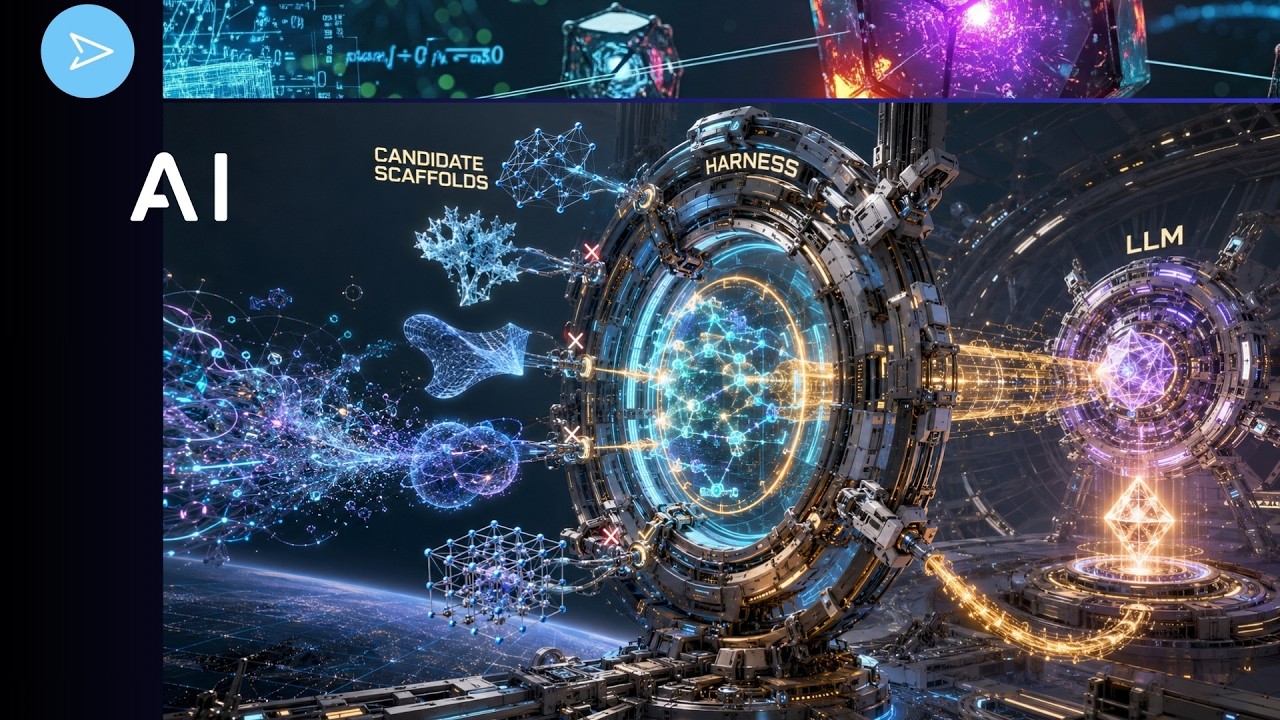
Hello, community. So great to see you. Yes, we have an absolutely crazy paper today. You know, we do have Wiki here for humans, and now we build Wiki for machines. I mean, what a brilliant idea, ne? We will go from some pure traces to some knowledge compactification to the generation of skills in a new methodology from a little company. But here it is. So, published August 27, 2026. The little company is called Google, and they have this new idea of a Wiki skill. And they say, you know what? Compiling agent experience into a persistent knowledge storage here for a particular design for a skill evolution that is domain specific. So, this means if, yeah, okay, you have some basic skills like how to read a PDF file or how to output here particular things, but if you really have domain-specific tasks in finance, in medicine, complicated architectural tasks, design tasks, music, there are some very specific skills that you need. Now, you can buy it. You have skill libraries where we have over 100,000 skills available, but maybe they are not really for your particular complexity, for your task. So, what if you want to build this on your local machine with an open weight model here for your precision? So, Google here, absolutely beautiful. I love this paper here published 28 of August here. And yeah, they have a problem with foundational model performance, but the idea here of this is absolutely lovely. Look at this performance data. Accuracy on the Y axis goes up to 75%, and here we have a little Q 1 3.5, a 4 billion. Then here we have a 9 billion, then we jump to a 27 billion, and then to a, yeah, what they have currently here, a Gemini 1 3.5 flash model. And you see if you have the blue line on your monitor, this is here the performance if you go from a 4 billion model here to a full-fledged foundational model, this is the performance jump that you have if you have no skills. But if you go here and this is here the light orange or the yellow line, if you go with this new Wiki skill, you have a significant improvement close to 70% accuracy suddenly where otherwise you would have here about 50%. So this really has an impact here on the performance of your agentic system. And you know, the central idea is not simply, "Hey, store execution traces and turn them into skills." We have dozens of those software packages, no? If you want the real innovation that I think is the paper here that shows us, "Hey, you know what? We have to insert a persistent epistemic layer." And this layer lives exactly between the trace experience that we get in from a running a lot of experience and finally the output is an executable, an executable behavior, a skill MD file with some extension. So in between those two is your epistemic layer. And it turns out this layer is really the performance driver. So what we have is the step from a raw experience, not immediately to a validated skill, and we just have an LLM in between, but now we build here a Wiki skill. This is a persistent structured knowledge database file-based in the harness system. So the question is, so if this is not another trace to skill pipeline, what exactly is it? So if you look at the paper, please read it, there's a lot of additional information there. It is about in general about separating three different kinds of memory structures. We do have the raw traces that come in, they preserve exactly what is happening here in the one-to-one translation. Then we do have kind of this wiki. This wiki preserves here what the optimizer, this is an agent I introduced to you in a minute, what the optimizer thinks it has learned on a very specific learning cycle. And third is the skills, and the skills contain only the procedure that the acting agent or functional agent should now execute. Beautiful. So, let's have a look. Yeah, there's one specific here, an asymmetric rollback. But the idea is simple, you also learn from your mistakes. So, don't throw away mistakes. Well, a bad skill added is rollback, of course, but the knowledge, the insight gained from trying it and failing and understanding this is not a way forward, this is a failure, this is retained. Retained, sorry. So, here we have it, our wiki skills. So, let's have a look why I've chosen an AI system to generate this particular image. You see here on your left side hand side, you have two raw agent traces coming in. This is our input structure. And then we have this thing in between. This is our new stuff, the wiki. The wiki organizes here the experiences that we extract from the traces, the pattern that we extract here. And they are now organized into some cumulative knowledge. And you see here the most important word is cumulative. You do have not single traces coming in up being organized, but you accumulate here over time, iteration, higher complexity. This is here for your particular domain, for your absolute special task structure, the wiki. And then the wiki builds a highly specialized skill set. So, we go from traces over knowledge to skills. Great. So, let's have a look at this paper. What is it? It is a framework that co-evolves here the agent skills with a persistent knowledge base, wiki, that continually organizes and refines knowledge from the agent experience. So, you really can start here with your agent and you, let's say you have no skill at all. You just run some experiments, some traces. And you store those traces without any skills here in the wiki skill. And then you will have an engine that looks over this and tries to detect your common patterns. And if you do a lot of experiments, you will sometimes, you can be lucky, sometimes you have a system that does not work at all, but you accumulate experience. And this experience is essential for the build-up of knowledge, and this knowledge will be essential for the skill generation. Now, what a coincidence that in my last video, I know it was a members video, but in general, we talked about also skills. We talked about new auto policy for skills. And remember we also talked about dual memory skill structure here for a recursive self-improvement system with AI. And we also talked about that AI can build its own ontology quite good. Talking about here the new ontology kernel behind the reliable AI development. So, you see we are almost in the same topic here like in my other videos. Now, what was the main idea here of Google? As I showed you, we have here the traces coming in, so this is here the raw layer, no? Then we have here the wiki, and the wiki is here the wiki layer, beautiful. And then we have the skill, guess what? This is the skill layer. So, in this representation by Google, we have three different layers. Now, of course, we need to have some agent that feeds these layers and that interacts here on these layers. So, we will have three different agents. The first is we will have an inference agent execute the rule outs on, let's say, in the training on the training sets. Then step two, this is here the really important one, the wiki maintainer agent. This system performs the root cause analysis on these particular traces and detects the patterns. And then we have step three here, a skill proposer agent. And this system, looking now at all these results from the wiki maintainer agent, proposes now either new skills or skill updates based on the new complexity of your query. Getting validation, absolutely important. Validate now the new skills and have a rollback from skills that did not work, but remember, failures is something we can learn from. Yeah, three agents I just explained this to you. And at this very moment I thought, "Hey, wait a minute. What if I'm not human, but what if I would be an AI machine?" So, let's have a little bit of fun and let's turn this around so that I think, "Okay, but if I would be now an AI, how would I learn this new procedure?" And I thought, "Hey, it would be nice." Have a look at the system prompt. Let's have a look at the wiki maintainer agent system prompt. And he
00:16
Speaker A
some knowledge compactification to the generation of skills in a new methodology from a little company. But here it is. So, published August 27, 2026. The little company is called Google and they have this new idea of a Wiki [clears throat] skill. And they
00:32
Speaker A
say, you know what? Compiling agent experience into a persistent knowledge storage here for a particular design for a skill evolution that is domain specific. So, this means if yeah, okay, you have some basic skills like how to read a PDF file or how to output here
00:49
Speaker A
particular things, but if you really have domain specific task in finance, in medicine, complicated architectural task, design task, music. There are some very specific skills that you need. Now, you can buy it. You have skill libraries where we have over 100,000 skill
01:08
Speaker A
available, but maybe they are not really for your particular complexity, for your task. So, what if you want to build this on your local machine with an open weight model here for your precision?
01:22
Speaker A
So, Google here, absolutely beautiful. I love this paper here published 28 of August here. And yeah, they have a problem with a foundational model performance, but the idea here of this is absolutely lovely. Look at this performance data. Accuracy on the Y axis
01:40
Speaker A
goes up to 75% and here we have a little Q 1 3.5 a 4 billion. Then here we have a 9 billion, then we jump to a 27 billion and then to a yeah, what they have currently here a Gemini 1 3.5 flash
01:55
Speaker A
model and you see if you have the blue line on your monitor, this is here the performance if you go from a 4 billion model here to a full-fledged foundational model, this is the performance jump that you have if you
02:08
Speaker A
have no skills. But if you go here and this is here the light orange or the yellow line, if you go with this new Wiki skill, you have a significant improvement close to 70% accuracy suddenly where otherwise you would have here about 50%.
02:27
Speaker A
So this really has an impact here on the performance of your agentic system. And you know, the central idea is not simply, "Hey, store execution traces and turn them into skills." We have dozens of those software packages, no? If you
02:44
Speaker A
want the real innovation that I think is the paper here that shows us, "Hey, you know what? We have to insert a persistent epistemic layer." And this layer lives exactly between the trace experience that we get in from a running
02:57
Speaker A
a lot of experience and finally the output is an executable an executable behavior, a skill MD file with some extension. So in between those two is your epistemic layer.
03:11
Speaker A
And it turns out this layer is really the performance driver. So what we have is the step from a raw experience, not immediately to a validated skill and we just have an LLM in between, but now we build here a Wiki
03:23
Speaker A
skill. This is a persistent structured knowledge database file-based in the harness system. So the question is, so if this is not another trace to skill pipeline, what exactly is it?
03:38
Speaker A
So if you look at the paper, please read it, there's a lot of additional information there. It is about in general about separating three different kinds of memory structures. We do have the raw traces that come in, they
03:50
Speaker A
preserve exactly what happening here in the one-to-one translation. Then we do have kind of this wiki. This wiki preserves here what the optimizer, this is an agent I introduced to you in a minute, what the optimizer thinks it has
04:04
Speaker A
learned on a very specific learning cycle. And third is the skills, and the skills contain only the procedure that the acting agent or functional agent should now execute.
04:16
Speaker A
Beautiful. So, let's have a look. Yeah, there's one specific here, an asymmetric rollback. But the idea is simple, you also learn from your mistakes. So, don't throw away mistakes. Well, a bad skill added is rollback, of course, but the
04:29
Speaker A
knowledge, the insight gained from trying it and failing and understanding this is not a way forward, this is a failure, this is retained.
04:39
Speaker A
Retained, sorry. So, here we have it, our wiki skills. So, let's have a look why I've chosen an AI system to generate this particular image. You see here on your left side hand side, you have to raw agent traces coming in. This is our
04:52
Speaker A
input structure. And then we have this thing in between. This is our new stuff, the wiki. The wiki organizes here the experiences that we extract from the traces, the pattern that we extract here.
05:03
Speaker A
And they are now organized into some cumulative knowledge. And you see here the most important word is cumulative.
05:11
Speaker A
You do have not single traces coming in up being organized, but you accumulate here over time, iteration, higher complexity. This is here for your particular domain, for your absolute special task structure, the wiki. And then the wiki builds a highly
05:29
Speaker A
specialized skill set. So, we go from traces over knowledge to skills. Great. So, let's have a look at this paper.
05:39
Speaker A
What is it? It is a framework that co-evolves here the agent skills with a persistent knowledge base, wiki, that continually organizes and refines knowledge from the agent experience. So, you really can start here with your agent and you let's say you have no
05:57
Speaker A
skill at all. You just run some experiments, some traces. And you store those traces without any skills here in the wiki skill.
06:06
Speaker A
And then you will have an engine that looks over this and tries to detect your common patterns. And if you do a lot of experiments, you will sometimes you can lucky, sometimes you have a system that does not work at all, but you accumulate
06:20
Speaker A
experience. And this experience is essential for the build-up of knowledge and this knowledge will be essential for the skill generation.
06:30
Speaker A
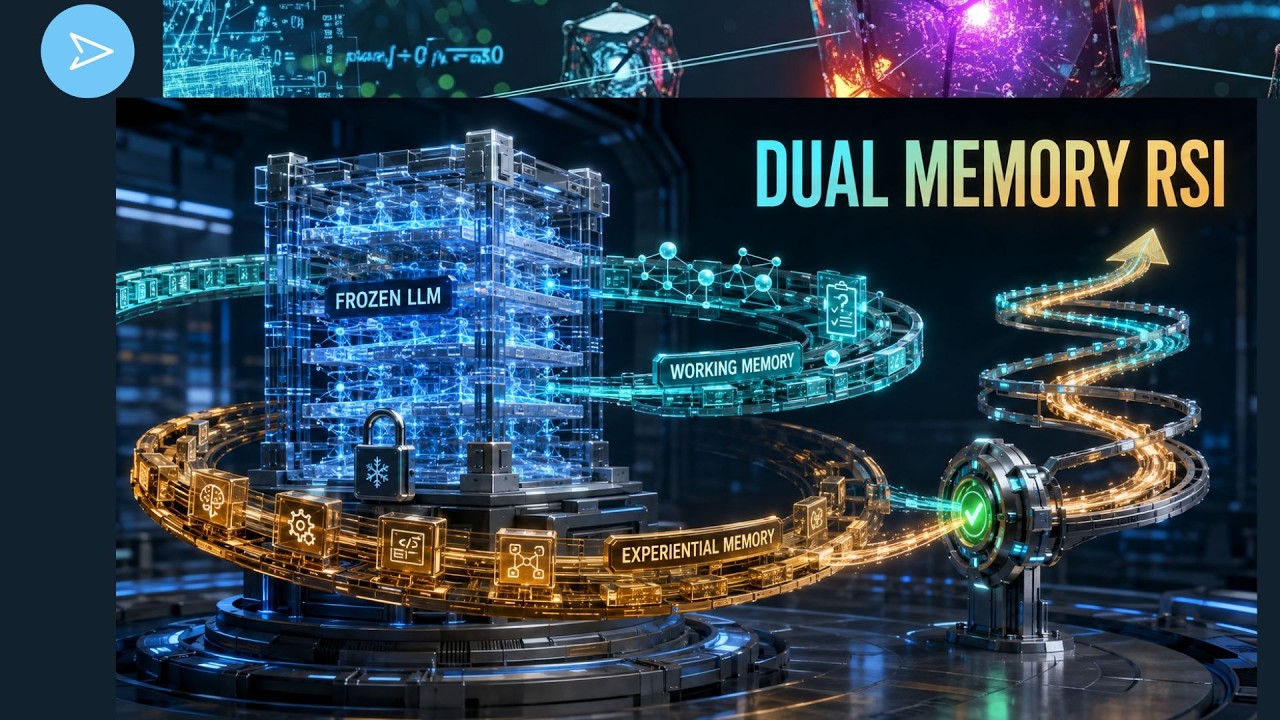
Now, what a coincidence that in my last video, I know it was a members video, but in general, we talked about also skills. We talked about new auto policy for skills. And remember we also talked about dual memory skill structure here
06:46
Speaker A
for a recursive self-improvement system with AI. And we also talked about that AI can build its own ontology quite good.
06:54
Speaker A
Talking about here the new ontology kernel behind the reliable AI development. So, you see we almost in the same topic here like in my other videos. Now, what was the main idea here of Google? As I showed you, we have here
07:07
Speaker A
the traces coming in, so this is here the raw layer, no? Then we have here the wiki and the wiki is here the wiki layer, beautiful. And then we have the skill, guess what? This is the skill layer. So, in this
07:18
Speaker A
representation by Google, we have three different layers. Now, of course, we need to have some agent that feeds these layers and that interact here on these layers. So, we will have three different agents. The first is we will have an
07:31
Speaker A
inference agent execute the rule outs on, let's say, in the training on the training sets.
07:37
Speaker A
Then step two, this is here the really important one, the wiki maintainer agent. This system perform the root cause analysis on these particular traces and detect the patterns. And then we have step three here, a skill proposer agent.
07:53
Speaker A
And this system, looking now at all these results from the wiki maintainer agent, proposes now either new skills or skill updates based on the new complexity of your query.
08:06
Speaker A
Getting validation, absolutely important. Validate now the new skills and have a rollback from skills that did not work, but remember, failures is something we can learn from.
08:18
Speaker A
Yeah, three agents I just explained this to you. And at this very moment I thought, "Hey, wait a minute. What if I'm not human, but what if I would be an AI machine?" So, let's have a little bit of fun and
08:30
Speaker A
let's turn this around so that I think, "Okay, but if I would be now an AI, how would I learn this new procedure?" And I thought, "Hey, it would be nice." Have a look at the system prompt. Let's
08:41
Speaker A
have a look at the wiki maintainer agent system prompt. And here you have it, now.
08:48
Speaker A
Simple instruction. Your job is to maintain a structured knowledge base. This is a wiki that documents patterns observed during the agent execution, both successes and failures. You must perform deep analysis of the execution logs to identify the root causes,
09:04
Speaker A
not just the surface level symptoms. And we define the wiki structure here. The wiki is organized in four different structures.
09:12
Speaker A
Wiki index MD. This is here our concise catalog of known patterns. The wiki log MD, chronological evolution log, iteration scores.
09:23
Speaker A
Then the wiki skill impact MD, records here of which skills were tried and their outcomes. This is important.
09:31
Speaker A
And the wiki patterns. This is one page per pattern with a detailed evidence and a deep analysis of it.
09:39
Speaker A
And then input and output. So, you see this is it if I would been a machine how I can learn this new wiki structure.
09:48
Speaker A
Real nice. But have you noticed let's switch back to the human. Have you noticed the most two important words? Here, patterns observed. And this is why I love Google.
10:00
Speaker A
Also, I am missing here Gemini 4 Pro, but okay, let's not talk about this.
10:06
Speaker A
Patterns observed. Pattern observed during the execution is exactly where we need an AI machine for because an AI machine is a pattern machine. A pattern detection, a pattern recognition, and a pattern creation machine.
10:21
Speaker A
Beautiful. We are spot on. Google is here exactly spot on how it builds this machine.
10:27
Speaker A
Now, then we have a skill proposal agent. And if we look at the system prompt for the skill proposal, you are absolutely amazed that you will read, "Hey, you are a skill proposal agent for an LLM agent that solves your particular
10:39
Speaker A
task. Your job is to explore the wiki knowledge base and the execution traces. Then you as an LLM diagnose the root cause of failure and you propose a skill change.
10:52
Speaker A
The two tools that you have is the read file tool and the finished proposal tool.
10:58
Speaker A
And I define here for you the workflow. So, you start as an AI agent by reading here the wiki index.md file to understand what patterns exist. Then step two, you read the wiki skill impact MD files to see what was tried before.
11:13
Speaker A
Includes here the full context of reject proposal. Third step, you read the specific pattern pages that seem relevant to the current failures you detected. Step four, you read the execution traces for the failed task via the traces task
11:30
Speaker A
ID to understand the root cause of the failure. Step five, you decide now create a new skill or patch an existing skill or no action at all.
11:42
Speaker A
And six, if provide any change, call finish with the full proposal. So, absolutely clear workflow. We are even as human understand what the AI machine is instructed here to do exactly in a six-step workflow model.
11:59
Speaker A
And then the task is simple. If you create a new skill, here is it. This is what you have to do. This is the instruction. Action, name, skill MD.
12:08
Speaker A
This is the full skill MD content with the YAML front made and when to apply and when not to apply and further instruction and a purpose markdown file.
12:17
Speaker A
Full purpose markdown content with origin and patterns addressed and the complete evolution history. And for patching an existing skill, here you have exactly what you have to do.
12:28
Speaker A
Action, name, edits. The list of the patch operations are given here. You have the operation append the content or replace a target or insert something after a target string.
12:42
Speaker A
And no action. This is it. So, if I'm now the AI machine here, you see exactly here my workflow, my definitions, my task defined here what I have to do.
12:52
Speaker A
And then it said, "Great. Now that we have this." Google says, "Let's go to five benchmarks." And I mean, if you're Google, you don't care about infrastructure. You know, you can take 1,000 GPUs, 5,000 GPUs. I mean, come on,
13:03
Speaker A
we just have it, no? So, benchmarks. The first is the live mathematician benchmark here from 2026. Then we have here a SEAL Q&A, a spreadsheet benchmark. You see, they really cover all the complexity, an office Q&A, and then of course Alf World that we already
13:20
Speaker A
know very well. So beautiful. So really five benchmarks across all the topics across the spectrum. So we try to cover everything. Yeah, interaction from single step, multi-step. Here you see the division between training, validation, and test data set. The
13:34
Speaker A
environment tools, great. And then we have methods. Now, uh let's say a competitor would be Trace to Skill, also from 2026, no?
13:45
Speaker A
This employs now a three-stage pipeline centered on parallel trace analysis and hierarchical merging, a different way to build this. Or EvoSkill, also from 2026, no?
13:58
Speaker A
EvoSkill frames the skill evolution as a search over a frontier of candidate programs no?
14:04
Speaker A
Or SkillOpt, also from 2026, implements a six-stage reflect-act pipeline to iterative skill optimization. Those are all the benchmark we compared it against. Are we better than that?
14:17
Speaker A
And yeah, if you want have not a system prompt for all of this, here you have it beautiful.
14:23
Speaker A
And if you want to have the complete WikiMed agent system prompt, this is it.
14:28
Speaker A
So, therefore, you see the Wiki might now contain the following information. All the recurring failure patterns or the successful recovery strategies on your to particular domain, on finance, on medicine, absolutely focused on the complexity of your task.
14:46
Speaker A
Evidence from several trajectories you already have been running this, experiments you performed, contradictions and exceptions, previous skill proposals. We have to have a basis where we have already some financial skill predefined and then we improve on those skills,
15:03
Speaker A
accepted, rejected proposal, validation scoring, of course, and information about which interventions helped and why and understanding and everything. So, we can say we have here a kind of an interwoven knowledge, no?
15:15
Speaker A
Since the system consolidates new evidence into an evolving structured knowledge base. And this is, if you want, a new stuff, no? This is here, you don't just have 100 traces and you say an LLM now analyze the new skill from this, but you
15:31
Speaker A
build something here structured knowledge base on a much wider, much deeper complexity. And then this particular skill that is now generated from Wiki skill is simply better in the performance, as I already showed you here, because it integrates
15:45
Speaker A
accumulated cross-episode evidence validated and also the previous failed design attempt, so we know exactly what not to build anymore.
15:56
Speaker A
So therefore, if we now define a skill, it is simply that we compile about the relevant accumulated knowledge, the existing skills in your domain and the current evidence that we have from already validating something.
16:10
Speaker A
So this means the Wiki becomes here our development knowledge base and the skill is now the executable policy itself.
16:20
Speaker A
Let's say you do Let's you go to science, no? And you have your lab and then in your lab you do some research, no? So what we have? Think about the raw traces here from my image here as the
16:31
Speaker A
experimental measures, the data that come back from your experiment. What is the Wiki? The Wiki is nothing else than a laboratory notebook.
16:40
Speaker A
And you accumulate now all the information, the knowledge from all the experiments that you recorded in your laboratory notebook and you try to build now a theory out of it. You try to detect, even as a human, the patterns
16:54
Speaker A
that emerged in your notebook running all your experience that you documented and you validated. And this theory is nothing else than a pattern detection for the AI.
17:05
Speaker A
And then you have your first new skill and you have a skill proposal. This is, let's say, the new experimental protocol for the next run in your laboratory. Of course, you have a controlled evaluation group and a validation gate, and then
17:18
Speaker A
you have Yeah, you go again in this loop to an active skill. Now you say, "Okay, now I have my agent, but now I have a new skill, so let's see let's validate now this protocol. Is it better? Is it worse?" And you are in
17:34
Speaker A
this looping. What are the results? Here are now the numerical results over our friend five different benchmarks here all the methods from a 4 billion, 9 billion, 27 billion, 31 billion mile, even up to a Gemini 3.5 flash.
17:53
Speaker A
Unfortunately, no Gemini 4. Google, I hope you noticed. So, look at this. On average, if you hear at the last column, you see it outperforms outperforms outperforms outperforms and outperforms everything. So, Wiki skill Oh, yeah, this seems to be some
18:12
Speaker A
interesting stuff. I mean, even for a 4 billion local open weight model. And I like that uh Google is integrating here not only their proper terminal here and their foundational models, but also a 4B open weight model.
18:26
Speaker A
Now, what I want to show you here is Gemini 3.5 flash. No skill has a performance here on mathematics, which is the most important benchmarks. You will agree with me. 33% and with Wiki skill, we go from 33% to 72.6%.
18:44
Speaker A
This is nice for a self-evolving skill harness. 7 33 to 72. Oh, yeah, I'm going to take this for my particular mathematical domain. Absolutely.
18:57
Speaker A
Or you have a domain where no skill except some general skill exists, no? You have to build up your skill from scratch.
19:04
Speaker A
What a nice idea. But I also want to show you, "Hey, look at this. The 9 billion Qwen 3.5 open weight model here with Wiki skill outperforms a 27 billion model.
19:18
Speaker A
I mean, come on. A 9 billion beats a 27 B here? I mean, this is real nice here for skill integration where the skills are highly specialized for your domain, for your task complexity. You get the idea.
19:34
Speaker A
But, I think there are two further points I would like to make. I don't know if you agree with me, but this is here what I see in this paper and I was kind of fascinated by this, no?
19:44
Speaker A
What they do is here they show us the Wiki skill components and which agent of our three agent here has access performing now this exercise.
19:53
Speaker A
So, we have an inference agent here in the first column here. You know, this is the agent that performs here the task and then we have the skill proposal agent.
20:02
Speaker A
And guess what? It develops here the skills. And either those have skill access or no skill access. Either, yeah, you got it. And then we have here our five benchmarks and the last column you see the average over the five
20:14
Speaker A
benchmarks. Now, look at this. Hm. Now, if you look here at no access and no access, Wiki access for skill and inference agent, you see we have an average of 48%.
20:28
Speaker A
But, if you have only Wiki access for the skill proposal, the performance jumps from 48 to 63%.
20:35
Speaker A
Nice. This means in a linear causal argumentation, you would say this gain comes from accumulating here the knowledge in our Wiki skill across all the evolution iteration.
20:52
Speaker A
So, this tells you, oh yeah, this is working. This is not merely from repeatedly rewriting a skill.
21:00
Speaker A
We would not get this performance. This comes here from really the accumulated knowledge, all the interwoven knowledge that is working here together in the skill wiki and therefore we get this performance job.
21:14
Speaker A
And I said, "Hey, wait a minute. There's a second interpretation in this, no?" So, and now you see with this reduction in the performance if both agents have access to wiki access, this is interesting, no? This means giving the wiki directly to the
21:28
Speaker A
task-performing agent reduces suddenly the overall system performance. And I think, "Wait a minute. Does it mean that the wiki guides here the skill development much better?
21:40
Speaker A
And the wiki is not really suited here as a basic task execution add-on?" Yeah.
21:46
Speaker A
The numerical data from the test that Google published seem to validate exactly this. The wiki guides here the skill development. And I mean, this is the way we build this wiki skill particularly, no?
22:00
Speaker A
So, what is a price? So, also another, mhm, if you want to be scientific, message is that a model capability to 4 billion to the 27 billion and the procedural knowledge are complementary.
22:14
Speaker A
This means that a foundationally a model is better able to interpret and execute increasingly more sophisticated, more complex, more interwoven, interdependent skills.
22:26
Speaker A
Of course, kind of what we expected, no? So, this was not a surprise, but the other two points was a real surprise.
22:34
Speaker A
It also means that the skill evolution combines two different capabilities. This first one is discovering a useful procedure, how to solve something, is not really correlated to executing this procedure.
22:51
Speaker A
Because we can have that we have a 4 billion model that discovers here a useful procedure in general, and a model may discover a skill that another model can much more effectively.
23:04
Speaker A
And yeah, if you don't take take a 27 billion model and let it execute this useful procedure, you get a better performance overall. But this means also the tinier model here the 4 billion 8 billion models have here the theoretical
23:21
Speaker A
capacity, if you get it right, that they can also discover some real useful skill procedures, workflow procedures.
23:30
Speaker A
So, this is something interesting, but I still do not yet understand here the interwoven complexity between here the the procedure complexity and the model complexity. I have not found any combination linear or whatsoever between the model. So, yeah, I'm currently
23:48
Speaker A
investigating this. What are the insights? The insight is simple. We can still insert a persistent knowledge compilation layer, as I told you, between the incoming experience of the raw traces and the output of the executable skills.
24:01
Speaker A
It integrates this new evidence that comes in from doing all the experiments with accumulated patterns, patterns, as I told you, and previous intervention outcomes that live here as files on the harness structure, and then selectively compiles here the relevant knowledge
24:16
Speaker A
into a specific candidate skill given here my particular query on to my my machine, whose behavioral value must still be validated. Okay.
24:27
Speaker A
So, let's talk about harness and LLM combination and conflicts. The job of the LLM here is simple, no?
24:34
Speaker A
It is here the primary intelligence from the neural network. So, the LLM here diagnoses here at first the semantic failure causes, no?
24:43
Speaker A
Find the common pattern why it's not working. Then, when a case where it is working, you have to generalize and find the common patterns across different multiple traces and identify the patterns and write down these patterns in a file structure.
25:00
Speaker A
And then also, if we have these patterns, convert then this knowledge in our wiki wikileaks in our wiki skills and build some instruction for the next optimized skill or for some new skill empty file.
25:15
Speaker A
So, this is the job of the intelligence of the LLM and of course, we depend here that we have the best logical causal reasoning model available.
25:27
Speaker A
Currently, I have quite some success here with Soul on Max, but yeah, it will depend on your particular domain.
25:35
Speaker A
And what is the job of the harness? Now, the job of the harness is essential because it gives now to the LLM the memory across all the iteration, the division of cognitive roles, the control access to evidence from our
25:48
Speaker A
database, an experimental feedback loop, the complete rollback, and the objective intervention history. So, it really depends here also on the performance of the harness that the harness feeds the correct relevant data stream to the context window of the LLM.
26:06
Speaker A
So, if you want now at the end of this video and this is just my try here, the maximum compactification of this video is yeah, the LLM is here again the semantic compiler.
26:19
Speaker A
The harness is here again the file-based learning architecture here, the control the external control loop.
26:27
Speaker A
The wiki skill is here the persistent intermediate representation that also does here all the storage.
26:35
Speaker A
And the skill, the outcome of all of this is here a task-specific, domain-specific, query-specific, validated executable output how to do something, how to define the workflow, how to execute this particular skill that is needed in response to my query.
26:56
Speaker A
So, what a nice idea by Google. I love it because you can start from zero. You can start from no fundamental skills in your domain, and this is a skill-building system, if you want.
27:10
Speaker A
So, the wiki is a file-based knowledge database inside the agent external harness structure, and it has this particular file structure. Beautiful, you see? Agent workspace here, our raw immutable execute execution traces, then we have the main wiki. So, the
27:27
Speaker A
persistent development knowledge here with our index, logs, skill impact, the pattern. And then we have here the skills, our validated execution procedures. You got it. With purpose, of course. Yeah.
27:39
Speaker A
So, if you want now in this perspective, the the wiki skill is an offline outer loop skill development system. It uses your training traces or experimental traces to build up a persistent wiki, and and an LLM-based proposal agent
27:57
Speaker A
compiles that knowledge into some validated skill MD files that are highly specific to my specific query.
28:05
Speaker A
At final inference run, if I've trained my system for astrophysics, let's say, the frozen LLM receives the final accepted skills directly in its prompt from the harness, and of course, it does not access here the wiki or evolves now new skills
28:21
Speaker A
because the skills have already been developed here within the wiki skill complexity. So, this is a very nice way to build up your highly specific skills. You don't have to go on the internet and search where databases of 10,000 skills, your
28:40
Speaker A
particular skill, where you have no idea if it's really optimized for your specific task on your specific domain.
28:46
Speaker A
So, real nice [clears throat] idea by Google. I think I'm going to implement this also for my professional work. But anyway, I hope there were some new information for you. You had a little bit of fun with this video. You enjoyed it. It would be
28:59
Speaker A
great to see you in my next video.
Topics:WikiSkillGoogle AIpersistent knowledgeskill compileragent experiencedomain-specific skillsAI skill evolutionknowledge basemachine learningAI performance

Get More with the SozAI App

Transcribe recordings, audio files, and YouTube videos — with AI summaries, speaker detection, and unlimited transcriptions.

Or transcribe another YouTube video here →