Skip to content

Turn into the man who can handle your dreams

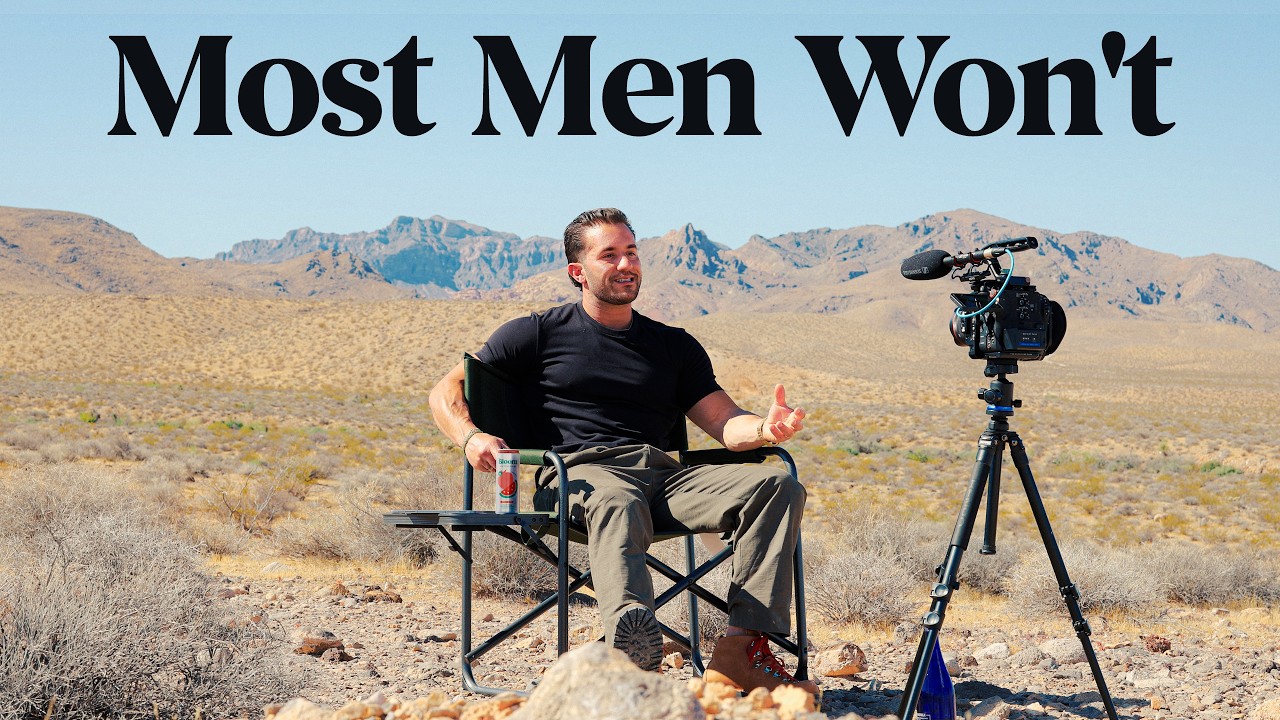
Greg Lav shares crucial lessons on becoming a man capable of handling success and entrepreneurship beyond just making money.

Key Takeaways

  • Self-dialogue profoundly impacts your ability to face challenges and grow.
  • Internal beliefs and stories set the ceiling for your success more than external factors.
  • Entrepreneurship transforms your identity and builds resilience beyond financial gains.
  • Courage means acting despite fear, and bravery is developed through mindset.
  • Passing on wisdom to future entrepreneurs can accelerate their success.

What the video covers

  • Success in entrepreneurship is not just about money but about the transformation into a capable man with new skills and identity.
  • Most teachings focus on making money, but few teach how to keep it and grow as a person.
  • The internal voice and self-dialogue shape your reality and capabilities more than external factors.
  • Negative self-talk limits growth, while positive, courageous self-talk fosters bravery and progress.
  • Internal obstacles, such as limiting beliefs and stories, are often bigger barriers than external challenges.
  • Entrepreneurship forges resilience through real risk, failure, and rebuilding from zero.
  • The speaker emphasizes passing down these lessons to the next generation of entrepreneurs.
  • Practical examples include overcoming ADHD, low GPA, and lack of experience through mindset shifts.
  • The importance of emotional discipline and managing pride and ego in business and life decisions.
  • True success is measured by the man you become, not just financial achievements.

Answers

Questions about this video

What is the main message Greg Lav conveys about entrepreneurship?

Greg Lav emphasizes that entrepreneurship is less about making money and more about the personal transformation and resilience it builds in a man.

How does self-talk influence success according to the video?

The way you speak to yourself shapes your reality; negative self-talk limits your growth, while positive, courageous dialogue empowers you to face challenges.

What internal obstacles does Greg Lav highlight as barriers to success?

He highlights limiting beliefs, assumptions, and stories that people tell themselves as the biggest internal obstacles, often more significant than external challenges.

Full Transcript — Download SRT & Markdown

00:00
Speaker A
If you are in your 20s, you are being lied to. Everyone is teaching you how to make money. Nobody is teaching you how to be the kind of man capable of keeping that money. And that's the part that actually matters because success doesn't just give you a company and wealth. It gives you a new identity, a new set of skills, a new way of seeing the world.
00:10
Speaker A
And those are the lessons that I wish I was taught earlier on in my life. Most people get interested in entrepreneurship or enter entrepreneurship because they want the outcome of entrepreneurship.
00:20
Speaker A
Every piece of content you watch on the internet about entrepreneurship is probably telling you how incredible the outcome is. The money, the freedom, the big company that you'll start, and I talk about that stuff, too, 'cause that stuff's awesome. But here's what nobody
00:29
Speaker A
talks about. It's not that you just get the money or get the company or even get the freedom. Nobody talks about the type of man that entrepreneurship turns you into or forges you into while you're competing in the arena, taking real
00:42
Speaker A
risk, surviving real failure, pushing through the tribulations of entrepreneurship, rebuilding several times from zero, like real zero.
00:55
Speaker A
At this point in my career, I truly believe that the net worth that comes with entrepreneurship is truly secondary to the man that it has forced me into today. And the best part about that, the best part about the man that entrepreneurship turns you into is one day you can burn through the money.
01:10
Speaker A
Somebody can somehow take the money. It could all implode. It's happened to me before. But what has never been taken from me is the man that entrepreneurship has forged me into. That man stays.
01:19
Speaker A
Hello, my name is Greg Levecia. I am the CEO of Bloom. We have a nutrition portfolio, a soda portfolio, and an energy drink portfolio. The company is on track to do well over half a billion dollars this year in revenue.
01:28
Speaker A
I am the CEO of the company day-to-day. I am sitting here in England right now on a large manor and I wanted to film this video today talking about the lessons that I learned in my 20s that I
01:42
Speaker A
wish I knew earlier on. And if I did learn them earlier on, I'd be far further ahead than I am right now at 31 years old. And I hope to be able to pass these lessons down to the next
01:54
Speaker A
generation of entrepreneurs because that's what I want to do right now. I want to pass the baton down to the next generation of entrepreneurs and hopefully you guys will be further ahead than I am when you are 31 years old.
02:04
Speaker A
Let's get into the first lesson. And this first lesson is about the voice that's in your head. One lesson that took me way too long to learn in my 20s is the voice inside your head. The way that you speak about yourself to other
02:14
Speaker A
people and to yourself eventually becomes the reality that you live. And this goes all the way back to Bruce Lee and some of the biggest savage entrepreneurs or just savage men that I have ever met. It's so real. Be so
02:24
Speaker A
careful about the self-dialogue, about how you speak to yourself and to others. Do not joke about your inadequacies. Do not joke about your weaknesses. Don't downplay what you're working on. The way you speak about yourself and the way you
02:36
Speaker A
speak to others about yourself is so powerful. When I was younger, I would make jokes to other people about how low my IQ was, how dumb I was, how I had no idea what I was doing with Bloom. And I
02:49
Speaker A
would downplay what I was working on. I would downplay how sophisticated I was, what my IQ level was, what I was capable of. And what I quickly realized is I started to speak that way about myself when challenges would present themselves
03:00
Speaker A
to me. So I would, if a challenge presented itself to me, I would say, Greg, you're too dumb to take on that challenge. You're not capable of taking on that challenge, or I have no idea what I'm doing right now. And I didn't
03:12
Speaker A
actually think that way, but I was speaking that way in the mirror to other people about myself as some sort of coping mechanism or defense mechanism of trying to, like, you know, if I failed then nobody would find out because I was
03:23
Speaker A
just dumb anyway. But all of that negativity ended up turning me into a less capable man. That self-dialogue spun the other way because now when I speak about myself, I speak about myself
03:35
Speaker A
as a capable man. I speak about myself as someone who's down to take on the challenge and capable of crushing that challenge. And now when challenges present themselves to me, I have courage. I have bravery. I may still be nervous, but that's not what courage and bravery is, right?
03:46
Speaker A
Courage and bravery. Bravery is somebody who still goes after something whether or not they have fear. And that is the man that I speak about myself as today. And that is the man who actually approaches real life situations in the reality of the
03:57
Speaker A
world. I mean, this isn't even just like some Bruce Lee or something that I'm telling you on some manifestation woo-woo. There was literally, like, recently a psychologist scientist on Joe Rogan talking about how the more you
04:08
Speaker A
speak about your problems, the bigger that problem becomes a roadblock in your life. This is real science. The more that somebody has an issue going on in their life, the more that they vent about it, the more that they spread that
04:19
Speaker A
aura of negativity around the people in front of them or just to the mirror to themselves, the more that real potential problem will stop them from taking on greater goals. If you think you have room to grow, if you speak about having
04:29
Speaker A
room to grow, you will. If you think you're as good as you can be, then you're as good as you can be, and you will not grow. You will not get any better. The way you speak on yourself
04:43
Speaker A
will have just as much input on how far you progress as any tangible input will.
04:52
Speaker A
Next lesson, you are your own biggest gatekeeper. Most people can identify the obstacles standing in front of them.
04:57
Speaker A
Very few can identify the ones standing inside of them. Because the hardest ceilings to break through aren't external. They're internal. They're beliefs, assumptions, and stories that quietly dictate what you are actually capable of. I spent a lot of time in
05:03
Speaker A
these videos talking about how bad my GPA was, how bad my ADHD was, how I had no experience going into launching and growing Bloom, and I have explained how I've worked through all of those, but I have not spoken about the internal
05:18
Speaker A
obstacles that I have gone through. And I want to be honest, those are probably far greater than the obstacles that I have ever felt externally because the ceiling on your life right now is probably not your bank account, your
05:31
Speaker A
network, or even your total addressable market of the business that you're entering. It's more than likely the story that you have been telling yourself since you are 16 years old. I'm not built for that. I'm not capable of
05:41
Speaker A
having success like that. I'm not smart enough, well spoken enough, or connected enough. That quiet voice in your head is the most powerful thing in your life.
05:51
Speaker A
And the scariest part about it is that nobody can even see it. You can't point at it. It's not tangible. It doesn't show up on a balance sheet. But it is the most powerful thing that controls how low or high or infinite the ceiling
05:59
Speaker A
on your life is. I can personally vouch that before every big decision that has changed the trajectory of my life, there were two voices inside of my head. The first was a comfortable internal dialogue that went like this: I'm not
06:13
Speaker A
cut out to start a supplement company. I don't even know how to start an LLC.
06:25
Speaker A
This gets easier over time as you build a personal resume, as you start to knock out challenges, as you build your first website, as you apply for your first LLC, open your first bank account, but you need to do everything you can to
06:28
Speaker A
strangle that internal dialogue that is stopping you from taking the first step because nobody knew how to start their first website. Nobody ever knew how to start their first LLC. Nobody knew how to open
06:41
Speaker A
strangle that internal dialogue that is stopping you from taking the first step because nobody knew how to start their first website. Nobody ever knew how to start their first LLC. Nobody knew how to open their first bank account. I was
06:52
Speaker A
never taught any of these things. My parents didn't teach me how to do these things. the schools that I went to, the teachers, the I never had a mentor that taught me any of these things. So, there's an internal dialogue that when
07:02
Speaker A
you're stuck in a comfortable life, it's telling you don't don't go do that. You don't even know how to do that. Some anyone who has a business probably knew how to open a bank account, know how to start an LLC, know how to start a
07:12
Speaker A
website. They didn't. I had no idea. In fact, we launched our first business with no website. People would just PayPal as cash and I would email them the PDF. My wife and I would. We were working in the DMs of Instagram. I am
07:24
Speaker A
telling you right now, Greg Lcia, somebody who has done it. I promise you, if I was able to figure it out, you are capable of doing it. I am no better than you at literally anything. So, now that
07:35
Speaker A
we're sitting here in the middle of this field speaking about emotions, I think the next lesson that I speak on will be be careful about making massive life decisions that are fueled by emotion.
07:44
Speaker A
There have been many moments in my career where I did not want to accept it was time to move on. And I speak a lot in these videos about knowing when it is time to move on, when it is time to give
07:52
Speaker A
up the good for the great. I have completely changed my main source of income probably eight times over the last decade. And I have consistently each of those eight times given up a good source of revenue for a far greater
08:06
Speaker A
source of revenue. PDF guides to booty bands to Bloom pre-workout to Bloom protein powders to our greens business that we bootstrapped to $180 million to today a full beverage portfolio on top of that nutrition portfolio. During these changes of my career, I had to
08:22
Speaker A
face my ego and say, "Greg, this PDF and booty band business is fantastic. It has room to grow. Why don't you just continue to make it better?" And moving on almost feels like giving up. And entrepreneurs come up to me all the time
08:34
Speaker A
after watching some of my videos and they say, "Greg, how do I know if I'm giving up the good for the great or if I'm just starting to get fatigued or or bored and wanting to move on to the next
08:42
Speaker A
thing or in the worst case scenario, maybe the challenge is just getting so hard that you're talking yourself into taking on a different challenge because frankly, you do want to give up. But having the discipline and control and
08:53
Speaker A
taking a responsible amount of time to look at the arena that you're currently playing in and knowing when it is time to move on charged by logic instead of charged by emotion is one of the greatest skills that you can learn in
09:04
Speaker A
your 20s. Easiest way that I have experienced that in my life is just trends, right? I can see that a business is starting to approach a plateau. I can see that I am already the number one in a category and it's like how much bigger
09:15
Speaker A
do I want to be responsible for growing this whole category myself because I am number one. when we were selling booty bands and what I felt like we plateaued that business. It's because we were the number one selling booty band business
09:26
Speaker A
in America. When we were selling pre-workouts and protein powders, we were one of the largest direct to consumer pre-workout and protein powder businesses in America. It was time to move on. I had logical data in front of me that this could not scale as fast as
09:38
Speaker A
I would like it to and there was a greater opportunity such as greens powders or beverage businesses that I could go after after that could scale faster and could scale far larger. So if I just look at the greens category total
09:48
Speaker A
addressable market, I see it can't really get larger than a quarter billion dollars a year. I look at the energy drink market and I look at a multi-10 multi-dea [clears throat] billion dollar opportunity to go after. So of course
09:59
Speaker A
it's a larger opportunity and I almost tapped out the greens business. How much bigger can my greens business possibly get? How many more consumers could I satisfy that want to buy this greens powder versus so many consumers that I
10:10
Speaker A
could go give an incredible consumer experience to through our energy drink business? That's why I move on to larger challenges. I am not charged by fatigue.
10:18
Speaker A
I'm not charged by emotion. I am not charged by this internal dialogue of wanting to grip my teeth and see if I can make it any larger. Knowing when to switch from the good to the great is the
10:27
Speaker A
greatest opportunity or is the greatest skill that you can develop as a man in your 20s, 30s, 40s, or for the rest of your career. And I continue to practice that muscle as I age. Next lesson, revenge is a weak fuel. And I know so
10:40
Speaker A
many of y'all probably have a chip on your shoulder. I did when I was younger.
10:44
Speaker A
I was just talking to the Hard Knocks podcast homies. James, the the face of Hard Knocks, was like, "Chips on your shoulders. Put chips in your pocket." And I love that. Use that to get off the launch pad. Use those chips. But
10:56
Speaker A
eventually, you're going to realize that revenge is actually a pretty weak fuel. One of the things that I learned early in my career, thank God, is you need to be really careful about building your entire life and your entire career
11:06
Speaker A
around trying to just prove one or two people wrong. I promise you that that that bully in high school doesn't even remember your name. I promise you that those teachers that gave you horrible grades or the people that called you
11:17
Speaker A
dumb when you were whatever the hell it is, they don't give a about you. You need to think long term. And if you are making decisions out of emotions or irrational competitiveness or revenge, you're going to do really short-term
11:30
Speaker A
dumb decisions for your business. Every time somebody pissed me off in our vertical of business who probably didn't even it probably wasn't even a personal attack, I thought I just wanted to tell myself it was a personal attack and did
11:42
Speaker A
something with Bloom to try to spite them. It was a short-term decision that did not grow a better brand. You need to think generationally. You need to think moonshots. And moonshot, no moonshot was built to prove one person
11:54
Speaker A
wrong. And I don't care if you're in your late teens, late 20s, late 30s, late 40s. Think long term. Don't think short-term revenge. Don't think short-term proving somebody. Don't think short-term healing this chip on my shoulder. The greatest way to heal the
12:06
Speaker A
chip on your shoulder is to build something as big as anybody can. And it will be undoubtable. And the easiest way to do this is every time I'm at a crossroad of a very large decision in my life is I basically just ask myself, am
12:17
Speaker A
I being emotional or am I being logical? And I'll I'll ask Mari, I'll ask my wife, I'll ask my best friend who I run Bloom with, Leo Walter, and I'll just be like, are we are we being toxically
12:25
Speaker A
competitive right now? Are we not doing what's best for our customer? Are we not doing what's best for brand as a bloom for decades to come? Are we not being generationally minded right now? And if you're not, you're probably being
12:35
Speaker A
emotional. And if you're being emotional, it's 99% not the right decision. Here's something that nobody tells you about when you're 22 years old. Life's going to be hard. It's always hard. The discipline is hard. The sacrifices are hard. The sleepless
12:46
Speaker A
nights are hard. Entrepreneurship is really hard. Missing Christmas 5 years, Thanksgiving 5 years. Yeah, it was pretty hard. But you know what else is hard? It's looking in the mirror at 45 and knowing that you didn't do what you
12:57
Speaker A
are capable of doing, that you didn't achieve what you were capable of achieving. And watching somebody or seeing somebody later in your life that did take the courage to take on or choosing their own hard in their life
13:10
Speaker A
and as a result built something so spectacular. Damn, that that's a hard that I never want to feel. And thank God, I don't think I will ever need to feel it. To me, a comfortable life, a life where you didn't build something
13:21
Speaker A
great, that is a sad life. And that is a hard life. It's a different kind of hard. Entrepreneurship is hard, but not doing what you're capable of doing is far harder. So basically, if you're in your 20s and you're like, man,
13:33
Speaker A
entrepreneurship is hard. I'm not sure if I want to take this route. You're guaranteed to have a hard life. You only get to choose which hard you are signing up for. And it's going to be the hard that builds something or the hard that
13:44
Speaker A
leaves you with a life of nothing but regret, knowing that you settled for something lame. At 21 years old, my wife and I chose our hard in our college dorm room. She had dropped out of college. I was still in Philadelphia in a college
13:54
Speaker A
dorm room. We were actually long distance. She was in New York at the time. And we launched Mari Fitness. And we knew that it was going to be very challenging. But we had no other choice because the alternative was I don't
14:04
Speaker A
know. I go get some corporate job and don't build anything substantial. And now at 31, the way that I kind of go about large decisions in my life is I have two people in my life that I need
14:14
Speaker A
to make proud. The 14-year-old Greg and the 75year-old Greg. I talk a lot in these videos about being 75 years old on your rocking chair looking over your estate being so proud of everything you've built. I think a lot about that,
14:25
Speaker A
Greg. The 75year-old version of me reflecting back at my life and the stories that I want to tell and the stories that I want to just remember.
14:32
Speaker A
And if I was 75 in my rocking chair and I had nothing to show for the last 75 years of my life, whether or not it was comfortable, damn, I would I would being disappointed. Let's talk about building
14:41
Speaker A
your team and let's talk about the discipline to delegate. This is the next lesson. The discipline to delegate. Most people think that success is about doing more things. It's not. It's actually about using your life and your time,
14:52
Speaker A
your most valuable asset, doing the things that actually move your life forward, the things that nobody else can do for you. And the more you want to climb, the higher you climb, the more ruthless you will need to be with your
15:02
Speaker A
time and therefore delegating tasks that are sucking that time out of your day. The previous generation, and I know I ran a lot about the previous generation, they taught us that a great man makes his bed, knows how to cook, cleans his
15:14
Speaker A
clothes, shovels his driveway, mows his lawn, whatever the hell it is. That previous generation, for some reason, made us feel guilty spending money to free up their time. They made you feel like it was excessive or, you know,
15:25
Speaker A
lowbrow or, you know, high ego opulence or opulence fueled by ego. But the only way you will actually achieve anything great in this decade of your life or in your life overall is by getting extremely good at paying people to
15:38
Speaker A
handle delegatable or automatable or tasks that you are not necessary to execute. And this takes a real investment and it actually takes more discipline I have found to not be frugal here to actually deploy your own capital at investing and getting your time back.
15:53
Speaker A
So, for example, I've always invested very early on, probably in year three or four of my career, in a highly overqualified executive assistant.
16:01
Speaker A
Somebody who handles my calendar, my email, basically runs my whole life. Even this, I didn't even book this hotel. I an executive assistant has ran Mari and I's life since year three of Bloom. I don't cook my meals. I don't
16:14
Speaker A
make my bed. I wouldn't know how to run a load of laundry right now. I would I would literally have to go watch a tutorial if I wanted to go launch a washer and dryer right now. I have no
16:22
Speaker A
idea how. I have delegated that since the second that I could afford it because I knew my time could be better spent and I had to delegate those tasks to somebody else. And that of course goes, it's obvious, right? Like the
16:32
Speaker A
things that you do in your day-to-day, but as you build your business, such as running your social media, doing your I used to spend hours doing customer service for the first year and a half of Bloom, hours just just responding back
16:43
Speaker A
to customers about like issues with UPS and USPS and damaged packages or late arrivals, whatever it may And I was like, once I hired our first person in Colorado, which is where we launched Bloom to handle our customer service,
16:54
Speaker A
the amount of time that it freed up in my day, it was such a giant unlock for the rest of my career that now whenever there is a task that I am doing that I know I could hire for, oh my god, the
17:05
Speaker A
job post goes up by the end of the day. And if you're unsure on the first things that you should delegate for, honestly, delegate the things that you just don't enjoy doing. If you want to be in this
17:13
Speaker A
game infinitely, if you realize that there's no finish line to this game and you're going to be doing this for decades to come, you need to enjoy it.
17:20
Speaker A
And the person who enjoys their job is always going to beat the person that doesn't enjoy their job because you will just stay in the game harder and stronger and more savage than anyone who doesn't enjoy it. So delegate the tasks
17:32
Speaker A
that you don't enjoy. I don't like doing finance. I don't like having spreadsheets on my computer. I don't like doing supply chain. Those were the those were the tasks that I delegated at Bloom. We got a killer head of supply
17:42
Speaker A
chain, a killer HR, a killer head of finance, whatever it may be. Those are the tasks that you delegate versus the things that you don't enjoy. And those are probably the things that you suck at. Nine out of 10 times, if you don't
17:52
Speaker A
enjoy it, you probably aren't even good at it. So delegate and give it to someone who's better at it and enjoys doing it. Find somebody who actually enjoys doing finance and they're going to crush your finance department for
18:01
Speaker A
you. This next way of thinking is not only how I think about my life, but it's how I ask my whole team to think. And I try to find this trait throughout the interview process for all of our talent
18:10
Speaker A
acquisition, which is think from first principles. One of the most dangerous phrases in the world is that's how it's always been done. Because most people inherit their beliefs, inherit their business strategies, inherit their career paths, they learn them from a
18:22
Speaker A
book, they learn them from a teacher, they learn them from their parents, and even the way they think about success without ever asking, is this actually the best way to handle this process? And so there's a reason we're all hearing
18:33
Speaker A
the Elon Musks of the world or the Nvidia CEO talk about the way the reason they are so successful as a multi as trillionaire CEOs and entrepreneurs is because they look at every problem with first principal thinking. You look at
18:45
Speaker A
Elon Musk and the way he built an affordable spaceship is by not buying the parts but say by saying okay this part is $10,000 but the steel and alloys and whatever the in total cost $500. I'm just going to build this part myself for
18:57
Speaker A
$500. That's first principal thinking. One of my favorite stories about Bloom is early on, I mean, even once we were at probably 50 headcount, 50 people working for Bloom, the entire team was probably under 27 years old. And I loved
19:10
Speaker A
that because the way I thought about it is none of those people were brainwashed. None of those people learned how to do things the old school way from older corporations and they would come to Bloom with a completely
19:20
Speaker A
open mind and by default had first principal thinking to every problem that approached us. So when we wanted to market Bloom, instead of doing the copy and paste advertising strategies of every other brand, we looked at the most
19:32
Speaker A
obvious thing in front of us that no one else was doing, which was just dominating social media. None of the textbooks said to do that. All the textbooks said go buy a billboard. So yeah, we were at 50 people and probably
19:41
Speaker A
even close to $50 million a year with a entire team that was under 30 years old that just inevitably had no preconceived routes or paths or solutions to any of the problems that approached us. And if you really think about the arena in 2026
19:54
Speaker A
as something that constantly changes every few months, Tik Tok shop is only two years old. How could there be a best strategy to go after that marketplace?
20:02
Speaker A
You need to take somebody who is young and open-minded and doesn't apply old school business logic to these new school arenas. In conclusion, do not ever do something purely for the reason that this is how it's always been done.
20:14
Speaker A
We're all taught when to say yes to opportunities, how to say yes to opportunities, and that's an incredible game of addition. But you know what's more powerful than addition? And I'm gonna with you on this one. It's subtraction. The power of saying no is
20:26
Speaker A
what gives you the space to say yes to opportunities. Everyone in the self-improvement space is obsessed with adding things to their life, with adding opportunities to their life. This self-improvement space of new morning routines, new habit stacks, new
20:43
Speaker A
strategies to deploy or incremental strategies to deploy more, more, more I've done that. And I was the with the three-hour morning routine. But some of the biggest jumps in my life that have changed the trajectory of my life have
20:54
Speaker A
come from removing things and not adding things. Removing a business line that was good and not great. Removing a relationship from my life that was costing me and not adding anything.
21:04
Speaker A
Removing a belief about myself that was holding me in place. Removing the noise that was splitting my mind share.
21:09
Speaker A
Subtraction is harder than addition because it costs you something right now. It costs you something immediately.
21:14
Speaker A
And the gains come later. The gains from subtraction take longer, I have found. But the most dangerous, savage, most locked in version of yourself does not exist by adding more to your life. It exists by removing things from your
21:27
Speaker A
life. And the way I think about this isn't even about the hours in the day or your most valuable resource being time.
21:33
Speaker A
It's actually about again just your mind share. We truly cannot do something great when we are distracted by hundreds of priorities. I see all of these entrepreneurs on the internet today that will never achieve something great because they have all these side quests.
21:46
Speaker A
When did the world become obsessed with these side quests? I'm all about a wild night out that ends up with a side quest. Don't get it twisted. But if your life is filled with these side hustles and side quests and I'm doing this one
21:57
Speaker A
gig over here to make a couple bucks, you need to say no to those things, man.
22:01
Speaker A
You need to go after the grand prize. When I come across new business opportunities that are not great opportunities, but they're easy, I still say no to them because it's going to take time away from me building Bloom
22:12
Speaker A
into the multi-billion dollar energy drink company that I know that it can be. And that requires all of my attention. And it's hard, man. Like opportunities sometime even like to invest in things and go on the boards of
22:23
Speaker A
things or become a strategic adviser to projects that I want to help people. I can't. And it and it actually takes courage. It takes courage to say no to things. It takes courage to say no to opportunities. Especially when you know
22:35
Speaker A
you want to help somebody out with something or you want to just get involved with something because you think it will be fun. But you got to say no to that, man. It takes courage. Next lesson, people bet on people, not ideas.
22:45
Speaker A
One of the biggest misconceptions in business is that the best idea wins. It doesn't. The person who can inspire confidence wins. Because every opportunity that happens in your life will go through another person, another human being, a customer, a retailer, an
22:59
Speaker A
investor, an employee, a a partner. And before they decide if they can believe in your idea, they decide if they can believe in you. Every retailer I've ever pitched, every strategic investor I ever pitched, every partner I ever pitched,
23:10
Speaker A
they were never betting on the product, they were betting me. In fact, the first time that we raised $90 million, which is the first time we ever raised money, we didn't even have an energy drink idea yet. We It wasn't baked out at all. It
23:21
Speaker A
was just a thought that I had. I knew it was a big opportunity and I pitched it to somebody and they were so infatuated by the confidence that I spread into that room that they wrote a $90 million
23:31
Speaker A
check. The product was kind of just the excuse to make the bet. But the reason they made the bet was because me and my team, my wife and and what we had created. When you pitch these retailers, these partners, these strategic
23:43
Speaker A
investors, they see they see thousands of products and most of them aren't even that different. So just think about what what is the reason they will actually say yes. The reason they will actually say yes is because you owned the room.
23:54
Speaker A
Which means every time you walk into a room to pitch the product you are actually selling is yourself, your reputation, your ability to execute, your presence, your belief that you can make it happen. Walk in timid and uncertain and you will never land the
24:07
Speaker A
pitch no matter no matter how good the idea is. [snorts] But if you walk in with conviction, not arrogance, but conviction, and you give them a reason to believe in the product because they believe in you first, it's game over,
24:19
Speaker A
baby. All right, let's talk about identity death. The identity death that's required to level up. This may this this may sound silly, but I feel like I'm invulnerable with y'all while I sit here in this manner right now. I
24:29
Speaker A
think that's what this is a manner. My wife and I started Bloom with zero outside capital, and we never took an investment or outside capital until Bloom reached $180 million. You would define that as being bootstrapped founders. That $180 million year was
24:42
Speaker A
probably at around year five for Bloom, year seven for our career. And I kind of had like a personal ego attachment to the infatuation that we were bootstrapped founders. And I would even, you know, to my closed circle speak down
24:54
Speaker A
on the types of founders that would take on outside capital, that would take on investors too early, as if they weren't willing to roll the dice and take the risk themselves. It took me a while to look in the mirror and and it took me a
25:05
Speaker A
while to reflect on what was the DNA of my ego. What was the DNA of my pride, of my personal pride? And this was when I realized, am I being a man with too much pride? Do I have a toxic amount of
25:17
Speaker A
pride? And that's why we ended up taking a massive level of partnership, a massive strategic external injection of capital from a from a company in 2024.
25:27
Speaker A
We sold 30% of the business. And I no longer was that bootstrapped founder. And I think what I was obsessed with was this idea that if I failed, I could say it was because we were bootstrapped. If we failed, I had that excuse that I
25:41
Speaker A
could spray on top of the shame of failure saying, "Well, yeah, I was self-funded." And so therefore, I wasn't actually going after the greatest opportunities and trying to build Bloom into something that I was truly the most possibly proud of. Because what was
25:55
Speaker A
required to go after the beverage space was to kill the bootstrapped version of myself. the bootstrapped identity, something that I was so proud of and so much of my pride's DNA was part of being a bootstrapped founder. But to go after
26:09
Speaker A
this huge multi-billion dollar opportunity to have cans in so many people's hands across the world, I had to kill my identity that day, the bootstrapped identity. when I decided to go from the PDF business to sell a physical product and I was so proud of
26:24
Speaker A
this guy that was able to build an entire business without ever having a warehouse worth of products. That guy had to die that day when I decided to stop having a fitness app and stop having BootyBand business to go after
26:34
Speaker A
Bloom nutrition and sell pre-workouts, protein powders, and greens. The PDF Bootyband guy had to die that day or the fitness app booty band guy had to die that day. And when we had us launch an energy drink business to go after Red
26:46
Speaker A
Bull and Monster, there was a funeral that day. But because of that funeral, Bloom now has beverages in 70,000 doors worldwide. So most people don't level up not because they don't know the strategy. They know the strategy. They
26:59
Speaker A
don't level up because they are so locked into what they think their public identity is. But your public identity your pride. First of all, no one actually cares. No one knows your personal public your what you think your
27:10
Speaker A
public identity is probably isn't even close to what it is. You care about things that no one else cares about and you need to sometimes kill that man.
27:17
Speaker A
That is my suggestion to you. Kill that pride. Kill that identity. Rewrite your DNA. One of the most important lessons that I can tell you right now if you're watching this in your 20s is don't obsess over the man that you are right
27:28
Speaker A
now. Obsess over the man that you are becoming. Because the skills that you're building, the risks that you're taking, the confidence that you're earning, that will last with you forever. Money comes and goes, opportunities come and go, but
27:42
Speaker A
the person that you become in the pursuit of something meaningful that will last with you forever. Most people get interested in entrepreneurship because of the outcome. Every content that I watch about entrepreneurship talks to you about the incredible
27:52
Speaker A
outcome of wealth, of success, of the incredible company that you may build. Anding awesome, you know, I love that stuff. I talk all about that stuff. But nobody talks about the man that it turns you into. And what'sing awesome about
28:04
Speaker A
obsessing over the man that entrepreneurship forges you into through the journey itself is that the money comes and goes. And believe me, it goes sometimes. I've lost it several times.
28:14
Speaker A
I've almost lost my company several times. Nobody can take from you the type of man that you are forged into as a result of the challenges that you take on. The person that I am today, the way I read a room, the way I go after
28:25
Speaker A
business decisions, the conviction that I have on the ideas that I that I come up with, the way that I handle an L on a random Wednesday, none of that came from a book that I read. It came from 12
28:36
Speaker A
years in the arena. You can't buy 12 years in the arena. Taking real risk, surviving real failure, re rebuilding from real zero. The net worth is almost secondary to the lessons that you learn throughout [music] this journey. and the man that you are forged
28:50
Speaker A
into as a result of this journey, the trials and tribulations that you will be inevitably put through throughout this journey. Nobody can take that from you.
28:58
Speaker A
We've seen some of the greatest businesses crumble and those founders come back with vengeance. But it's because of who they turned into throughout that journey.
Topics:entrepreneurshipself-developmentmindsetsuccesspersonal growthresilienceGreg Lavbusiness lessonsinternal obstaclescourage

Get More with the SozAI App

Transcribe recordings, audio files, and YouTube videos — with AI summaries and speaker detection. 30 minutes free.

Or transcribe another YouTube video here →