Skip to content

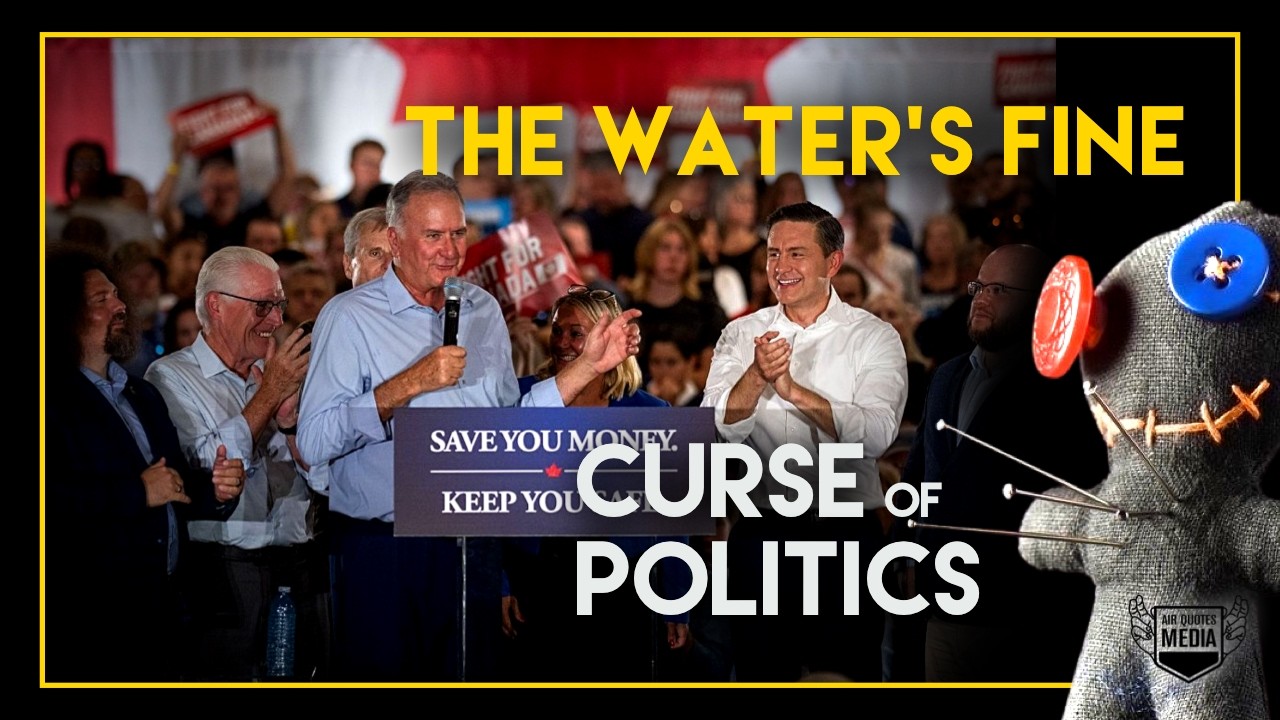
Impossible Mission AI + a farewell to Fred! | Curse of Politics

Farewell to Fred Delorey and discussion on Canada's AI strategy, political dynamics, and sports banter on the Curse of Politics podcast.

Key Takeaways

  • Fred Delorey's departure marks a significant transition for the podcast's conservative voice.
  • Canada's AI strategy is a key political focus, with debates on its benefits and risks.
  • Political leadership and party dynamics remain central themes in the discussion.
  • Sports analogies are used to illustrate political challenges and personalities.
  • Sustainability and corporate responsibility are integrated into political discourse.

What the video covers

  • Fred Delorey hosts his last episode on the Curse of Politics podcast, with co-hosts expressing appreciation and discussing their shared love of the New York Knicks.
  • The hosts discuss the impact of Donald Trump's presence at a Knicks game on fan experience and security measures.
  • A humorous analogy is made comparing conservative political figures to basketball players, focusing on leadership and political challenges.
  • The podcast covers the launch of Canada's national AI strategy by Prime Minister Mark Carney, emphasizing sovereignty and productivity.
  • Discussion on the political implications of the AI strategy announcement and the Prime Minister's direct involvement.
  • The hosts critique the government's approach to AI regulation and the potential risks versus opportunities it presents.
  • Telus's commitment to sustainability is highlighted through its biodiversity position and action plan.
  • The episode includes political banter about leadership, caucus dynamics, and government messaging discipline.
  • The podcast touches on broader political issues such as national unity, economic growth, and public policy challenges.
  • Fred Delorey is fondly bid farewell, marking the end of an era for the podcast's conservative perspective.

Answers

Questions about this video

Why is Fred Delorey leaving the Curse of Politics podcast?

Fred Delorey is leaving the podcast as part of a transition where one conservative host is replaced by another, marking his final episode.

What is the main focus of Canada's national AI strategy discussed in the video?

The AI strategy focuses on national sovereignty, productivity gains, competitive advantage, and investment, with the Prime Minister taking a direct role in its announcement.

How does Donald Trump's attendance at the Knicks game affect fans?

Trump's presence causes heightened security measures, requiring fans to arrive earlier and leading to the cancellation of outdoor viewing parties, negatively impacting the fan experience.

Full Transcript — Download SRT & Markdown

00:05
Speaker A
[music] All right, you happily miserable accursed, this is Hurley here with some news. It's alternately sad news and happy news.
00:19
Speaker A
Your favorite political podcast is exchanging one perfectly coiffed conservative guru for another. Today is Fred Delorey's very last pod with us because next week it's the return of tonight.
00:31
Speaker A
We will talk more about Corey and his Vancouver adventures next week, but for now Scott, Jordan, let's tell, let's tell Fred just how goddamn much we love the New York Knicks and how much we're going to miss the [ __ ] out of him here on this
00:44
Speaker A
podcast. We are going to miss the [ __ ] out of Fred. He brought such a level of decorum and politeness [laughter] and class.
00:53
Speaker A
We did not even know what to do with ourselves. So [laughter] I agree. It's sometimes Fred is like what to do with us.
01:03
Speaker A
Still don't, just to be clear. No. [laughter] This is fair. But it has and you know what? You've got me. I will give you full credit. You have got me cheering for the Knicks. Like I like your interest in the Knicks has
01:14
Speaker A
caused me because typically like once the Thunder's out I sort of lose interest and I only have interest in the Thunder because of my kids. So so now yeah, now I'm rooting for them. I think you know there's a chance, eh? There's a chance
01:26
Speaker A
for a sweep, you think? A sweep? I just want to win. Um I was thinking back this weekend, 1993, really at the height of my fandom when I was really getting pumped for the Knicks. We were up 2-0 after going to
01:39
Speaker A
Chicago in the Eastern Conference Finals. Um and feeling great. And then Michael Jordan took over and won the next four games. And we, you know, didn't have, have not won a title in my lifetime.
01:52
Speaker A
San Antonio has a player who's capable of doing that, right? Yeah. The whole anything can happen in basketball. I feel good about the Knicks, but it's it's scary.
02:01
Speaker A
I obviously sweep would be great, but I just want the win. Just want that championship in my lifetime.
02:07
Speaker A
Who's the who the great thing about the Knicks is like everything in the world proves what an [ __ ] Donald Trump is.
02:14
Speaker A
Okay? Yeah, he ruins everything. Everything in the world proves what an [ __ ] Donald Trump is. So, Donald Trump has decided to go to this game in New York tonight. And as a consequence, everybody else who goes to the game has
02:25
Speaker A
to go 2 and 1/2 hours early in order to enter the stadium. And the outdoor viewing parties, and if you've been watching hockey or basketball, these things are as fun as the game itself. The outdoor viewing parties have
02:39
Speaker A
to be canceled for security reasons. So, Donald Trump, in order to be at this game, is ruining the experience for tens and tens of thousands of people.
02:50
Speaker A
On purpose, because it's New York. It's a blue state. [ __ ] them, he thinks. So, he's doing it on purpose. I have a question for you, Fred.
02:58
Speaker A
Who's the Patrick Ewing of the conservative movement? [laughter] The Patrick Ewing who's like the great dominant center, never was able to pull it off?
03:07
Speaker A
Well, I mean Christ. I mean, Bob Stanfield would have the legacy of that, but that's so far back.
03:13
Speaker A
No, no. Right now. Oh, he did not have I I think he can have the hand-eye coordination.
03:20
Speaker A
The [laughter] hand-eye coordination. They say that he threw that football 50 times. And they only photographed it one time.
03:28
Speaker A
So, no. I I maybe it maybe Stanfield's a perfect one. Modern times, uh look, if Erin O'Toole was the leader of the Conservative Party uh in '23 or '24, if he'd lasted that long, and I don't know if he ever could
03:41
Speaker A
have lasted that long, but if he lasted that long, he'd be prime minister. Now, again, maybe he'd still be out by now as prime minister, but he would have been prime minister because the Liberals um were incredibly weak, and the NDP
03:53
Speaker A
really [ __ ] hated Pierre Poilievre and would never work with him and would never take the Liberals down. I believe they would have taken Trudeau down early.
04:00
Speaker A
Um, and uh, O'Toole would have won and been Prime Minister if he didn't have uh, that situation happen. Now, again, he still may not be Prime Minister today because maybe it all would have fallen apart not long after.
04:13
Speaker A
I still think he needs a little work on I think he needs a little work on boxing out on the rebounds.
04:19
Speaker A
I [laughter] Excuse me, he's got that big long span just like you, right? He can I mean, my favorite thing about the Knicks love with Fred is that like Fred and I have found like, you know, we we
04:28
Speaker A
agree in Mum Donny's great political judgment in this regard. So, that's been my favorite little hidden Easter egg of this uh, this sports episode.
04:37
Speaker A
All right. Show my kids the uh, that they can stay up late during the finals.
04:41
Speaker A
Adorable was that? Brilliant. But it's canceled tonight. The kids have to go to bed early because of Donald Trump.
04:48
Speaker A
[laughter] National Guard everywhere, you know. Just normal normal dictator stuff. All right, let's get to it. Banter 447.
04:59
Speaker A
Okay. [laughter] Don't forget my man. We have to hurry. Here my man. Here's the rundown. Prime Minister Carney stood behind a podium that read AI for all last Thursday launching Canada's national AI strategy.
05:15
Speaker A
Sovereignty is the major theme. We'll talk about the politics of all that. Speaking of the Prime Minister, his vociferous ways are the focus of our cursed clipping. It's from Althia Raj in the Toronto Star. He yells, "Mark Carney's focus has liberal MPs bristling
05:31
Speaker A
and then it's a rebate on radishes." The first round of Canada's grocery and essentials benefit went out last Friday.
05:39
Speaker A
And finally, the immortal, the incomparable Mr. Pinson brings us to our hey use. So, let's get started on the AI strategy. Scott, I want to start with you because I've got a boring and banal question and I want to direct it at you.
05:53
Speaker A
Oh, and not naturally. Oh. You're my boring and banal is is yeah, the corner I was born on. So, [laughter] bring it.
06:05
Speaker A
Um why why is that announcement made by Mark Carney and not Evan Solomon? What is the general approach to announcements in this government?
06:14
Speaker A
You know, that that's interesting. I'll Um it's an interesting question. I I think in some respects it's the same rule as every government, which is the Prime Minister wants to front it and the Prime Minister will front it.
06:30
Speaker A
But, I have seen fewer examples of them saying, "Yeah, well, let's see how this dog hunts. We'll just put the minister out." And then the PM can back clean up an an avail at 3:00 p.m. if he gets a
06:45
Speaker A
question on or something like that. I think in this case, you know, Carney has long talked about the importance of AI and he's talked about it largely um you know, from the perspective of we can use this to
06:59
Speaker A
achieve productivity gains, we can use this to gain competitive advantage in a handful of ways against competitors and generate investment. And you know, I I don't know. I lack the brains to know whether or not that's true. I'll say one
07:15
Speaker A
thing I like tactically about this announcement and the the pure rollout choice they made, I like that it was in a hospital. I thought that they were going to put it in a laboratory, an AI laboratory somewhere where there would be like a a
07:28
Speaker A
talking [snorts] robot that would be like, "Haha, I am not intending to kill all of you today." And so, I thought it was wise to put it in a hospital where you could see perhaps more adorable applications.
07:42
Speaker A
Um but you know, I Yeah, I I I think the Prime Minister voiced this because the Prime Minister wanted to voice this. And I think he wants to own this and I'm not sure he necessarily should. I'm not certain if
07:59
Speaker A
that's a prudent political analysis uh because I I see a lot more jeopardy in this file than opportunity, frankly.
08:06
Speaker A
Yeah. So, we're still talking sustainability here. More specifically, how our presenting sponsor Telus's actions prove their commitment to it.
08:17
Speaker A
The latest is the launch of their inaugural biodiversity position and action plan. It's pretty obvious how infrastructure growth and day-to-day business operations can have a deleterious effect on wildlife habitats. Species extinction, water and food security, ecosystem degradation.
08:36
Speaker A
Telus gets that, more than most. Responsible en
08:46
Speaker A
One of those practices? Leveraging their technology to stop and reverse biodiversity loss. The action plan features five integrated pillars to deliver environmental, social, and economic benefits.
09:00
Speaker A
Number one, assess and manage impacts truthfully, objectively. By determining how Telus's operations affect ecosystems and biodiversity.
09:12
Speaker A
From its infrastructure footprint to supplier sourcing practices. Number two, protect and restore landscapes and ecosystems, including boreal forests, prairies, watersheds, and coastal areas through Telus environmental solutions.
09:29
Speaker A
Number three, prioritize the co-design of restoration projects with indigenous nations. Rooted in the principles of two-eyed seeing, which partners Western science with indigenous knowledge systems.
09:44
Speaker A
Number four, lean into technological innovations like AI, ground-based camera sensor networks, satellite imagery, and drones to strengthen biodiversity data collection and accurately track progress.
09:58
Speaker A
And five, transparent disclosure. Telus commits to annual reporting on key biodiversity indicators, like numbers of trees planted and hectares undergoing restoration.
10:10
Speaker A
In 2026, in partnership with indigenous communities, the target is to plant 1 million trees, equal to 500 hectares.
10:19
Speaker A
More on sustainability, AI, and how they fit together from Telus next week. You know, so Fred in the hospital, as Scott says, it makes you believe that the audience for this was the general public or citizens at large.
10:36
Speaker A
Yet, they really didn't pitch it the way the public opinion research tells us that Canadians would have wanted to hear it. It was all, as near as I could tell, on the upside. It was really an a strategy for how Canada should adopt AI
10:48
Speaker A
and how Canadians should adopt AI, not a strategy for managing AI, which is really what the polls tell us Canadians are quite concerned about. What are the job implications of this thing? What are the moral implications of this thing,
11:01
Speaker A
etc. Um so, they seem to want to talk to Canadians, but they didn't really pitch their message to Canadians.
11:08
Speaker A
Well, I think they did in a sense that fits into the Prime Minister's narrative, which is about building and job creation.
11:15
Speaker A
Um and that's how this entire thing was framed. It was about all the jobs that will come from it and all the jobs of the future. So, it fits their narrative, but to your point, I mean, uh the Trudeau Liberals, when they were
11:25
Speaker A
in government, they brought in an AI bill as soon as AI popped up on the you know, when everyone became aware of ChatGPT and other products started coming out. They jumped right away and put in this bill that was quite universally panned
11:38
Speaker A
even by liberal members of parliament that committee who are looking at all the flaws in it. It was written super quick to get to try to regulate an industry that is growing rapidly and so fast. I think it's incredibly hard to do
11:51
Speaker A
to put down these regulations when we're seeing lightning speed advancement. You can put down a bill now that may not be relevant in a few months time.
12:00
Speaker A
Potentially. Yeah, that technology is moving [clears throat] so fast. It is. So I and I understand the concerns people have and what the they want and want to see.
12:09
Speaker A
But I think it's tough to come up with regulations on something this fast moving. I mean, we can put some baseline frame around it, but it's it just seems tricky. But and again, back to start of my point here, this is an
12:22
Speaker A
economic message for Carney, not a regulation message. So I think that's why he's out there leading it.
12:30
Speaker A
And you know, they're talk pledging hundreds of thousands of jobs that they can create from this.
12:36
Speaker A
Jordan, what's your take? I think they're sailing into some very, very rocky shoals full speed here.
12:42
Speaker A
Um I think that there is a fundamental tension in how they're approaching the question of AI. And David, it's a bit to what you said.
12:51
Speaker A
The way they're packaging it, the way they're talking about it is really at odds with everything we know about what Canadians think about AI and how they understand the impact of the technology is going to be in their lives. This was
13:03
Speaker A
a very positive strategy. It was a lot about job creation. Um it was very focused on the economic benefit potentials of AI.
13:13
Speaker A
Uh but if you ask most Canadians, in fact, you don't actually need to search that far for this. You can look into the AI strategy itself. And in the strategy itself, they note that half of Canadians think that AI is a threat to the
13:26
Speaker A
So, putting the Prime Minister out and having him be the face that's championing this in a very difficult public opinion environment, I think it's a really risky choice for them. And I think that there's two major points where this
13:40
Speaker A
strategy did not meet the mark in terms of how Canadians have expressed their concerns about AI adoption. Um and the first one is around job impact. So, you know, you talked about they've got some very optimistic numbers there in terms
13:55
Speaker A
of the potential of job creation from large-scale AI adoption, but no numbers uh to reflect the potential job displacement around AI. Uh you know, we know that this is something that is coming um and despite all of the talk of
14:10
Speaker A
the Bank of Canada currently saying that that's not happening, the Bank of Canada has also said they see the potential for that particularly in entry-level jobs.
14:18
Speaker A
This is coming for young people. This is coming for white-collar workers. Um and just by way of level setting on this, you know, so this week uh in the US, AFL-CIO's having their major convention.
14:30
Speaker A
AI and job loss and displacement around AI is like the number one topic there.
14:35
Speaker A
There are some unions in Canada who estimate that 80% of their members are going to be out of work with large-scale AI adoption. So, the fact that the strategy doesn't meaningfully touch on that, I think was big miss number one.
14:47
Speaker A
Um and it also is a problem because it positions the Prime Minister and this government on like if you step back and say, "Okay, like that fundamental political question, whose side are you on here with this strategy?" Uh the Prime Minister appears to be
15:04
Speaker A
cheerleading for the technology um rather than being on the side of protecting Canadians from what they perceive as a really really strong potential of displacement in the job market. So, I think that's a political problem number one. And then the second
15:18
Speaker A
one is around the question of trust. So, you know, there's a lot of talk about trust in this document. I'm actually I'm sure you guys saw Evan Solomon out making the rounds and I think he was like getting a nickel every time he
15:27
Speaker A
worked trust into his talking points. And he's right because there is a huge trust gap. But the emphasis of the strategy is very much again in the economic sphere in the in the speeding up the adoption sphere. And there's actually
15:42
Speaker A
very few details around governance and regulation. Which I think again is a huge miss. We know that Canadians are really worried about this. We just came out of Tumbler Ridge. We just came out of an absolute tragedy in our country where
15:57
Speaker A
poor governance of AI, where not having clear thresholds where threats need to be reported was a problem. The minister says it's a problem. And there's no details about for example, is AI or chatbots going to be touched on
16:12
Speaker A
in this forthcoming legislation, which by the way, online harms legislation, we've been trying to get that for almost a decade now and it hasn't worked yet.
16:21
Speaker A
So the government's basically saying, please just trust us to regulate this when we haven't been able to get it done for social media. But we're going to do it this time, don't worry.
16:30
Speaker A
And then the last piece, which I'm going to stop at this point because I have a lot of views. But the last piece on this I think is maybe even a little deeper than this and it's not just about
16:38
Speaker A
governance. It's about when Canadians think about a potential future with the large-scale adoption of AI. Assuming we do this. Assuming we go along with this plan.
16:49
Speaker A
Who do they think is going to get the benefits from that? Is it going to be the workers who are changing their work to now integrate AI into their work or to work alongside AI?
17:00
Speaker A
Or is it shareholders and big tech companies? Is it Is it these large platforms?
17:07
Speaker A
Is it people who are already doing very well in society where these benefits of large-scale AI adoption are going to accrue. And I don't think the government touched on that at all.
17:17
Speaker A
The societal impacts of large-scale AI adoption that include like deepening of inequality was not remotely touched on in this strategy. Um, but it's something that we know is coming and you don't have to take my word for it. You can ask
17:29
Speaker A
the the CEOs of these companies themselves. They've named that as a really big disrupting factor. So, I think the strategy is steering the government actually into some politically really dangerous waters and and I think it opens up a lot of
17:40
Speaker A
opportunity for other parties to go after the sense of insecurity that AI has created among the public.
17:47
Speaker A
You know what they say about bad ideas, don't you? Well, they say a lot of things and I'm not here to deliver clichés. So, let's just be reductive.
17:55
Speaker A
Bad ideas are bad. They're also remarkably durable. Our sponsor CN would like to suggest an example.
18:03
Speaker A
A discredited practice known as extended interswitching. CN, along with other railways, warned about it when the previous government in Ottawa decided to bring it back a few years ago.
18:14
Speaker A
Extended interswitching basically means forcing railways to pass cargo to one another back and forth at a discounted rate from origin to destination.
18:25
Speaker A
It was a heavy-handed intervention in an industry that was performing well and already charging some of the lowest cargo rates in the world.
18:34
Speaker A
When it was first introduced in 2014, it diverted thousands of car loads of cargo to American railways and cost Canadian jobs and was abandoned 3 years later because of the damage it did to Canadian supply chains.
18:50
Speaker A
Special interests convinced Ottawa to introduce it again in 2023 and once again, it was dropped.
18:57
Speaker A
But, as I said, remarkably durable. It's back on the political horizon again, under consideration in the new government's one Canadian economy consultation.
19:08
Speaker A
So, CN would like to respectfully remind our policy makers of a few clear and undisputed facts.
19:14
Speaker A
Extended intra switching requires more railway assets to move the same volume of cargo. Stopping trains, unhooking rail cars, and reattaching them to other trains cost time and money.
19:27
Speaker A
It slows down cargo movement, it causes congestion and higher freight costs, and it drives investments and jobs to the United States.
19:36
Speaker A
There is a reason it has been introduced and abandoned and then reintroduced and re-abandoned.
19:41
Speaker A
You know the saying about doing the same thing over and over and expecting a different outcome.
19:46
Speaker A
These are fraught times. Our government is rightly searching for smart reforms. Reheating a bad idea doesn't make it any better.
19:55
Speaker A
Yeah, you know what? Jordan went on such a beating against AI there that she's actually made me slightly sympathetic.
20:00
Speaker A
So, let me Yeah. Let me uh let let me of the robots, David. [laughter] IT WON'T SAVE YOU.
20:07
Speaker A
LET ME LET ME COME back with something that builds on that builds on Fred's economic growth scenario. So, let's say let's kind of say that what I kind of agree with you, Jordan.
20:18
Speaker A
But but in a way it's kind of so what? Because first of all, how can Canada stop AI? Right? AI is happening in the world, and so are we participating in it or we not participating in it? Point
20:31
Speaker A
number one. But the second thing is one of the smartest people I know in the world again, and Peter Nicholson, somebody that I turn to for guidance on things, has been telling me for a long time that the reason why
20:44
Speaker A
growth is really low, economic growth is really low in the world, is because we've used up the latest technological innovations.
20:54
Speaker A
That we have maximized what economic growth can come out of techno out of the current technology, and we need a massive technological breakthrough to create another wave of economic growth in the world. And this is that thing.
21:11
Speaker A
This is that thing. This is the thing that is going to drive um the next the next wave of economic activity. So, Canada has to be part of this. And yes, it's going to replace a [ __ ] load of
21:23
Speaker A
it's going to eliminate a [ __ ] load of jobs. Hopefully, it will create other jobs. I mean, this is the steam engine agriculture argument all this stuff that a lot of things have replaced jobs in the past. The problem is it's not the
21:35
Speaker A
same people getting the jobs. So, there's a massive dislocation um when that happens. So, with all that Fred um is is AI the political loser that uh Jordan says it is?
21:50
Speaker A
Oh, I [laughter] I I want to go I want to I look forward 20 years from now. I want to watch this episode back and see what kind of world we live in then uh and how different it
22:00
Speaker A
is. And like go back 20 years from now and like, "Hey, did you hear they have the internet out now?" Uh this new thing.
22:04
Speaker A
[laughter] And they have it on computers. Um it's just this it it's going to be such a rapid evolving system around the world that we are either in it or we're not. And um I I shouldn't even say it. There's no
22:21
Speaker A
not. There's no missing this. There is no like it's going to take off on its own. And we can try to put up the the safeguards or whatever it is we think we could do. Um but I think this is just
22:32
Speaker A
this is going to be the future economy around the world is going to be based off of this. The the advancements already that we're seeing is just so gargantuan and uh it feels like the what can we possibly do to manage it? I
22:46
Speaker A
I think it's try to build for growth and try to be on that ride that wave. Um and understand where Jordan's coming from and it is there is scary aspects to this, but I just don't see how we prevent anything.
23:00
Speaker A
Right. Before before people put their finishing touches on their straw men, I just want to clearly say that there is nobody arguing that we should cannot participate in AI. That is happening.
23:13
Speaker A
The question is what's what's around that. Right. Sorry. Go ahead, Scott. Um Well, I was just thinking that in 20 years you'll dial me up and obviously I'll be with Victoria, my uh large language model who will uh be
23:29
Speaker A
my life partner uh at that stage. And uh and you're going to have a hard time reaching me. I'm going to tell you that [laughter] right now.
23:37
Speaker A
We're going to be busy. Uh to have the VR glasses on. [laughter] Yeah, that's how you're going to protect That's how you're going to protect me from the harms of AI. You're going to give me a pocket universe of my own
23:52
Speaker A
degenerate making and I will be oblivious uh to the well-being of others uh or even myself. Um I think a couple things. I'm going to start micro. I think the government made a mistake maybe 4 months ago on this.
24:08
Speaker A
And uh and this is at the this is not I'll come to the big questions which you guys are posing, but just um in terms of presenting this I think they made a mistake about 4 months ago when they didn't say, "You
24:20
Speaker A
know what? Let's just pull uh the shoot on this strategy thing." Cuz the longer they delayed on a strategy document, they more that they guaranteed that there would be the most obvious of responses to the strategy document, which is that it lacks specificity with
24:33
Speaker A
respect to IP reform, that it lacks specificity with respect to online harms and protections, that it lacks specificity with respect to the other side of the ledger in terms of well, what policies are you going to do to
24:45
Speaker A
produce growth? And so um if you listen to Evan's interviews, a good share of his time was spent trying to say to people, "Okay, but understand, right? Like I mean, you know how these things work. We're building a broad integrated strategy
24:59
Speaker A
first and now people can see that and we're being very transparent and that's to build trust. See, cuz I want to build trust and then we'll move on to some specific elements on all of those various verticals that uh AI touches
25:10
Speaker A
upon and and then we'll we'll we'll come to that. But be patient with me. And people are like, "No, I'm not." When we're talking about whether or not machines are going to bury me me in my own backyard, I I don't I don't want to
25:20
Speaker A
be patient. When we're talking about that less funny, that more real. When people are talking about Tumbler Ridge, they don't want to be patient, right?
25:28
Speaker A
And so um I think you I think they might have done themselves a favor 4 months ago if they just said, "You know what? [ __ ] all this strategy stuff. We can't ask people to sit patiently while we give them the TED
25:39
Speaker A
Talk on how we see this and how it all fits together with six priorities and three principles and whatever in hell." Um so I I I felt for Solomon, to be honest, not just cuz he's a long-time friend,
25:52
Speaker A
but watching him, he's trying to present all of this when he knows people are going to confront him with a bunch of tough uh media questions and they're trying to make something balanced that does not balance. We are going to
26:03
Speaker A
participate then in this as fully as possible to generate as much economic gain as imaginable and to make certain that we're not losers in the arms race.
26:11
Speaker A
And this is a [ __ ] arms race, right? Right now when you see the amount of money that's being spent and the way in which people are throwing caution to the wind from a regulatory and policy-making standpoint. Um
26:22
Speaker A
we're going to participate in that arms race, but we're going to protect you. And people are going, "Huh?" I kind of don't believe either part of that. I don't really believe we're going to be the beneficiaries of it that Canada's
26:31
Speaker A
going to be at the leader uh at the forefront of this in in a whole in almost every dimension uh because we sort of talk about it almost every dimension. You know, we've got the best scientists and at the same time
26:42
Speaker A
we're going to have data centers and we can do this and it's going to be sovereign and all this other stuff. I think people are like, "Huh? Really?" And then I think on the other side they're like, "I I don't I don't buy
26:49
Speaker A
that we're going to be protected from it." And so I think I think they would have been better just to have moved forward. And I I think this This calls from my perspective communications-wise, this calls for cynicism. This calls for
27:02
Speaker A
profound cynicism in government. I think the reality is you need to talk about what you're doing to protect people at the same time that you unleash to the greatest degree you can, that you have permission to, as many positive economic
27:16
Speaker A
drivers as you can on this front. And you'll have to carefully, carefully, carefully monitor those things to watch how often they come into conflict and how violently they come into conflict because trying to talk about them both at the same time and persuade people
27:30
Speaker A
that um both goals can be met is an impossible mission, especially when you don't have any specifics to back that up. And so, I think I think they probably should have pulled out and and and adopted at least a different
27:44
Speaker A
communications approach a handful of months ago cuz this thing was almost guaranteed to go the way that it went.
27:51
Speaker A
So, a couple of months ago in this space, I talked about Canada's new sustainable finance taxonomy.
27:58
Speaker A
Remember that it functions like a highly detailed, meticulously researched cheat sheet that helps investors know where the big opportunities are and where they are not in the global transition to low-carbon technologies.
28:12
Speaker A
Last year, that market was a record $2 trillion investment opportunity and it's only growing.
28:19
Speaker A
The effort has been led by an independent taxonomy and transition planning council. Today, a progress update brought to you by the Canadian Climate Institute who support the council with research and evidence-based recommendations.
28:34
Speaker A
The headline is the council has decided to zero in on six industrial sectors over the next 18 months spelling out climate-friendly investment opportunities in electricity, buildings, transportation mining manufacturing and forestry/agriculture.
28:53
Speaker A
There will be an opportunity for public feedback starting in early July, and then the council will finalize investment guidelines for three of the sectors by early 2027.
29:04
Speaker A
The remainder will follow later next year. The ultimate goal is to help attract more than $115 billion a year for legitimate projects that help Canada progress toward net zero.
29:17
Speaker A
No greenwashing allowed, in other words. Canada is not alone in this effort. Close to 70 jurisdictions around the world have adopted or are well along the process of adopting similar taxonomies.
29:31
Speaker A
An important part of the council's work will be making sure our taxonomy aligns with those other countries.
29:37
Speaker A
But this made-in-Canada undertaking is being designed to be practical and credible for investors based on our own economy, our own geography.
29:47
Speaker A
There's far more to it than the Climate Institute can possibly fit in this space today.
29:53
Speaker A
So expect further progress reports here as the effort continues. More information, including how you can participate, is available at businessfuturepathways.ca.
30:06
Speaker A
Well, if the goal was trust, which I know from years of work in this area, opinion research, crisis management work, is that the way to build trust is not to tell people that there's no risk when they think there's risk. It is not to
30:20
Speaker A
diminish their sense of risk. It is not to wave away their sense of risk.
30:25
Speaker A
It is to demonstrate that you understand the risk they are afraid of. And that you have thought a plan for that, and that you are aware of that, and you will be managing that risk, and that they know on what basis and on what
30:38
Speaker A
values that risk will be managed. What are the priorities of it? When you tell people who fear things that they shouldn't fear them, they fear them more.
30:48
Speaker A
Right. I Can I add a wrinkle to that? I also think you have to talk about trust in in a very precise way.
30:55
Speaker A
A lot of the emphasis is, look, we recognize that people do not yet trust this technology and they don't trust that this technology will be managed in a way that's going to be beneficial to them. They don't trust that they'll be
31:05
Speaker A
beneficiaries. They don't trust the future path of this technology. But one of the most important things, especially when you're the government talking, is that people are actually saying, "I don't trust the government can manage this thing. I don't trust
31:20
Speaker A
that you can get your arms around something this goddamn big." And so I think you have to be very precise, not just to talk about, "Well, we can trust this technology and we can direct it." I think you've got to be very
31:31
Speaker A
precise in talking about how government can exert um some degree of of control and management over technology. That's such a gigantic question mark in the minds of so many people. I don't know where it's going to go and I fear the
31:45
Speaker A
worst is beyond imagina- beyond imagination in terms of bad. Um and so I think again, that would have taken me to a more specific I think I would have started with some Here's some things that we can do as a government alone and
31:59
Speaker A
here's a handful of things that we're going to do as governments calling on allies. So there's some kind of cross-border, multinational effort. I mean, that's the challenge is that the bros feel bigger than governments. And you know, we need a Teddy Roosevelt for
32:13
Speaker A
Christ's sake to come in and say, "Hey, you know what? The answer to everything isn't yes. So just [ __ ] simmer down, okay? Like just simmer down, Zuckerberg.
32:22
Speaker A
Okay, just simmer down, guys." But no one's in a position to do that and the president of the United States doesn't want to.
32:27
Speaker A
You know, as somebody that plays around with these large language models a little bit and as somebody that surveys the internet a little bit, something that would make me a lot more comfortable would just be some basic transparency about this.
32:38
Speaker A
Like uh just a basic you have to tell people when you're using it. Like I am, you know, I think I I think we probably all are, but I'm moving into the area on the internet of I don't believe what I
32:49
Speaker A
see. And that's a really problematic place to be, right? [snorts] Um a month or so ago there was a group of us that spent part of a day analyzing a George Will interview that turned out to be fake.
33:05
Speaker A
Right? Something that was circulating on the internet appeared to be George Will, seemed like it was reasonably George Will, and there was only I mean like so this is this is pretty pervasive, and I don't know why they can't at least make that
33:17
Speaker A
transparent, what is being used what is being generated by AI or not. Yeah. I think that Yeah.
33:24
Speaker A
there is such a, you know, a desire to on the part of people for governments or for somebody to try to get their arms around this technology. And I think Fred, to your point, like is it very difficult for
33:37
Speaker A
Canada alone to regulate? Absolutely. But politically, I think it's really really important for governments to get caught trying.
33:45
Speaker A
And there are so many opportunities within this strategy for the government where they could have had some really specific examples of safeguards that answered that question, whose side are you on in a more persuasive way. And like I can think about things like for
34:01
Speaker A
example, some of the money that's in here for companies, you know, to encourage the adoption in Canada of AI tools. Well, okay, what happens if a company takes that money and then lays a bunch of people off? Is that prevented
34:13
Speaker A
in the strategy? Does the government have a view about that? What about what's coming out of what we've seen, you know, we we've got OpenAI, uh you know, the the government likes to talk about how they're having serious conversations
34:26
Speaker A
with Sam Altman about what happened after Tumblr Ridge. What is the threshold going to be? What is the reporting requirement going to be for these companies in Canada? Again, these are really specific things that could have been folded into this uh to
34:38
Speaker A
have concrete examples in the coverage that they are taking regulation and guardrails and inequality at least as seriously as they're taking some of the hype around AI. And I think that one of the communications challenges, you know, and I watched a number of Minister
34:53
Speaker A
Solomon's interviews over the weekend and I think he was in a really difficult communications position because he was put time and again in the position where he had to explain the enthusiasm for the technology and he had to sort of, you
35:07
Speaker A
know, level set with people about why this is so great. Um and I think that that is a that is going to be a losing communications argument for this government and they have to demonstrate at least as much enthusiasm for trying
35:20
Speaker A
to protect people from the technology and from the impacts as they do for adoption. And right now that balance is not at all present in this.
35:27
Speaker A
I agree with that. We're very, very close to the political payoff on this issue to be seen to be standing on a milk crate and saying no [ __ ] way. Like and and we're getting public Bob Rae in
35:40
Speaker A
his own way started that. Now he's a little more thoughtful and polite, but he's basically saying that and you're going to see politicians all across the United States saying that. It's going to start on data centers, but it's going to
35:49
Speaker A
it's going to spread to other things. I mean, so if there isn't a better um if there isn't a better balance in managing this issue in the public domain by political leaders, you're going to find out that all of it's going to dis
36:02
Speaker A
uh just cascade very quickly uh to people who uh grow draw uh cheap cheers by saying no as loudly and as violently as possible.
36:13
Speaker A
I'm actually saying that because I feel like these are real problems. [laughter] This is show of a politics and we talked about this issue for a half an hour. We finally got to what is going to be the
36:23
Speaker A
most immediate political uh consequence of AI and that is there is a massive revolt going on against these data centers.
36:32
Speaker A
Right? And citing data centers is now going to become a massive political problem because nobody wants one in their neighborhood, anywhere.
36:41
Speaker A
68% of Canadians would oppose a data center near them. Oh, it's it's apparently it's apparently any election in the United States is now about this.
36:51
Speaker A
That's right. The following message is brought to you by Unsmoke Canada. Not all nicotine products carry the same risk. Smoke-free [music] alternatives, like heated tobacco, vaping products, and nicotine pouches, don't burn tobacco [music] or produce smoke. While not risk-free,
37:09
Speaker A
evidence shows they have the potential to be significantly less harmful than cigarettes. Yet, Canadian regulations restrict [music] access and limit communication about these alternatives, keeping adult smokers in [music] the dark.
37:23
Speaker A
Sweden has accepted the science, embraced smoking harm reduction, [music] and driven smoking rates below 6%.
37:30
Speaker A
Canada has the tools to do the same, but it requires political will. It's time to align regulation with science, expand access to smoke-free products, [music] and empower Canadians to make informed choices.
37:44
Speaker A
The evidence is clear. The opportunity is real. [music] Canada can be smoke-free. Learn more at unsmoke.ca.
37:54
Speaker A
Well, that's okay. Because Musk says uh the data centers are going to orbit. Uh this is one of This is one of the great appeals of the SpaceX IPO is that he's going to put data centers in orbit.
38:05
Speaker A
So, everything's, you know, going to be in the cloud now. Um And then, I guess what? We just eat out of cans. Uh and it's okay. It's okay, Scott. Like, you know, when Dr. Doom attacks all these satellites, like, what are we all just
38:17
Speaker A
like, what happens then? We just kill each other with bones? Your post-secondary students kids are going to get a trusted AI tool and that is totally going to fix the 15% youth unemployment rate. It's going to be great.
38:28
Speaker A
Do you think Bezos and Musk are ultimately going to go at it? In space, I hope. In space. [laughter] And they'll be in these suits that preserve them from aging and they'll it'll be yeah, I think it's pretty
38:41
Speaker A
great. And I I think you got the minutes until this episode is over. Fred's like when can [laughter] I get the [ __ ] off off of this I want this idiot train to stop and [laughter] I got to [ __ ]
38:56
Speaker A
All right, we're going to start today. I think I'm with the Pope on this one, honestly.
39:00
Speaker A
[laughter] I'm going to have to read I'm going to have to read that thing. I'm actually hoping that Evan the minister will will come on the will come on the Hurley Burley to talk about this and now I listened to a podcast the
39:10
Speaker A
other day that made me think British one called the rest is politics that made me think I've got to read this encyclical by the Pope. Apparently it is quite something.
39:20
Speaker A
I would say it's a better communications document than this AI strategy. So maybe the minister can take some notes.
39:25
Speaker A
What's 50,000 words? How could that be true? [laughter] I assume he got some help.
39:35
Speaker A
All right, let's let's go to our our clipping of the day. Althia Raj in the Toronto Star, I believe the actual title was he yells.
39:44
Speaker A
Uh [laughter] yells. So here's here's an excerpt. Perhaps we'll soon call it Mark Carney's democratic deficit.
39:57
Speaker A
The Prime Minister has a penchant for centralizing power, one explored a few times in this column and now the edict to his liberal MPs is that he does not want to be challenged. Over the course of several caucus meetings now, grit MPs
40:10
Speaker A
report Carney lashing out at certain members when he doesn't like the uh a they deliver. "He yells," said one MP who, like others, spoke on condition of anonymity to avoid retribution from the Prime Minister's office. "He punches down at caucus all the time."
40:27
Speaker A
Carney has told his caucus members he doesn't want to hear their concerns, he wants solutions.
40:32
Speaker A
While it's a message that resonates with some, hearing complaints can be useful. It's an early warning system for the government that certain policies or bills are not properly understood and that the message needs to be tweaked or the legislation amended to address
40:47
Speaker A
legitimate but unforeseen criticism. Last week some felt some MPs felt the Prime Minister's message was that he's not interested in what they have to say.
40:56
Speaker A
Carney was making the case that the government is focused on national unity, on the Kuzma talks, on growing the economy. It has a plan and message discipline is key.
41:05
Speaker A
"If you don't agree with our agenda, I don't want to hear it. If you have criticism, keep it for yourself." was the way another MP portrayed it. So, this this column then led to many other columns of a similar nature and very
41:20
Speaker A
strong rebuttal interviews from James Maloney, the chair of the Liberal caucus, etc. Fred, what do you make of it?
41:30
Speaker A
[clears throat] I imagine it is a striking contrast for these parliamentarians that sat in the Trudeau caucus for a decade where I envisioned every caucus meeting started with them holding hands in a circle singing hymns. Um so, I imagine it's just a very, very
41:46
Speaker A
different uh entire leadership style that we're seeing here and if you're, you know, based on what was in those reports and other things that were coming out uh over the weekend on it, you know, MPs or, you know, as they
42:02
Speaker A
do in many caucus meetings, they get up and they complain and say we need to do something. Um so, I have very little um sympathy if that's what they're doing unless they come up with solutions and say, "This is what we should be doing."
42:16
Speaker A
So, if that's the angle, if that's true and that's accurate, then I think what the the Prime Minister's position is is right there. At the same time, uh, you know, I worked for Prime Minister Harper his entire time, uh, in
42:28
Speaker A
uh, in government and he was a strong leader with strong opinions and took no [ __ ] but there is still an element of respect to caucus members that absolutely has to be shown. These are people who put their names on ballots,
42:45
Speaker A
uh, and I know Harper did that. Harper absolutely respected. Of course, when you go against the party and you vote against budgets and stuff, then you're, you know, your head comes off, but uh, that's our parliamentary tradition.
42:54
Speaker A
Uh, but generally, um, that would be my a caution I would take from this is if I was liberal and if he is not showing respect and again, there's people in coming out saying that's not the case at all, but if
43:06
Speaker A
that's an issue, that could be a growing issue. That would be something I'd want to keep a a close eye on.
43:11
Speaker A
Right. There's a certain rhythm to life in rural Ontario. The summer mist rising off a lake at sunrise, snow falling quietly on a country road, a cottage filled with family stories passed down through generations.
43:28
Speaker A
Through every season, natural gas is part of that story. This is our sponsor, Enbridge Gas.
43:34
Speaker A
It keeps homes warm in winter. It helps farms operate, small businesses open their doors, communities thrive.
43:43
Speaker A
Summer matters, too. When temperatures climb and air conditioners are working overtime, natural gas helps fuel power generation and support Ontario's electricity system.
43:54
Speaker A
Enbridge Gas serves communities across Ontario, including many rural towns, villages, and communities that help define this province.
44:03
Speaker A
As Ontario grows, so does the need for reliable and affordable energy. That's why Enbridge Gas continues to invest in infrastructure expansion that supports families, businesses, and municipalities today and tomorrow.
44:20
Speaker A
Learn more about how natural gas supports communities across Ontario by visiting the municipalities page at enbridgegas.com.
44:30
Speaker A
Because strong municipalities depend on reliable energy. Jordan, has there ever been a prime minister or even a leader of a party that liked it when members of their caucus stood up and said, "You're really [ __ ] this up, right? You've got to
44:44
Speaker A
change this all around. Is that ever a popular thing to do with the leader in the caucus meeting even if they don't yell at [laughter] you?
44:52
Speaker A
No, and and to be clear, you know, and I've I've had the privilege to sit in a lot of caucus meetings, and there are often very hot words exchanged. Like that is there is intensity in caucus meetings. That's normal.
45:04
Speaker A
But what I would say piqued my interest about this story is its very existence, the fact that people are talking.
45:12
Speaker A
Um you have a government that has an approval rating over 50%. Like Jesus could only hope for these approval numbers, okay? And if you're Jesus, by the way, was a yeller.
45:22
Speaker A
[laughter] Ask Mark. Ask Luke. I really yelling. He'd be like, "Where are my sandals?" You okay?
45:29
Speaker A
[laughter] Actually one of Paul's letters to the Corinthians. He goes on and on about it.
45:35
Speaker A
Yeah, I don't know. I don't know who they sent out to counter spin on that, but obviously it was very successful.
45:40
Speaker A
Maybe the prime minister should get him. Um but look, like if you've got people talking It was really Paul.
45:47
Speaker A
Yeah, it was good. He did a good job. He's my rock. If you've got people talking when your approval numbers are this good, that is a problem. That is that is in and of itself a problem apart from whatever's
45:58
Speaker A
going on in the caucus room. This is indicative that something, uh, dangerous, uh, potentially, I think, is is brewing. When your approval numbers are this high, in theory, particularly if you're in the Liberal Party of Canada, everybody should be
46:12
Speaker A
behind you. Um, and there should not be public complaining. So, the fact that it's happening, I think, indicates that there are a lot of folks in caucus who feel like the Prime Minister, um, is not getting the balance right in terms of
46:25
Speaker A
how he's managing that coalition internally. And the other thing that caught my attention in this story is the phrasing of punching down. And I think this goes to what Fred was talking about. It is very, very common for
46:36
Speaker A
caucuses to have intense discussions. It's very common, um, for a leader to have a level of intensity with caucus.
46:43
Speaker A
Um, those are rooms that are meant for frank conversations, not for necessarily super gentle ones. But they are, uh, also rooms where power and respect is, uh, very significant. And so, the phrasing of punching down says that there are people who are observing, um,
47:01
Speaker A
what they think is the Prime Minister using a position of power to sort of go after people who are less powerful within caucus in a way that they feel, uh, is not cool. And, and that's something that can be really, really
47:14
Speaker A
corrosive. If there is a sense of disrespect within caucus, uh, that's really different from a a type of intensity that's intended to rally people around a common political goal.
47:26
Speaker A
Um, that's not a kind of leadership that weathers downturns very well. So, I think that, um, as much as, uh, I'm sure we've all heard from, uh, from Liberals over the weekend breathlessly denying and being annoyed about this story, this
47:41
Speaker A
is a warning for them. Um, because if you're seeing these these these this fragmentation right now, uh, when things are going really, really well objectively for the government, these are cracks that are only going to deepen when times get tough. So, a lot
47:58
Speaker A
of this is soft skills, it's people skills, um and these are things that the Prime Minister, who by all accounts is an extraordinarily smart and capable man, needs to put a little bit of attention on as well, in my view.
48:13
Speaker A
So, Scott, given my history, you may be different. Given my history, Why don't you yell?
48:19
Speaker A
when I look at things like this, I'm inclined to see rat [ __ ] And um And when I look at some of the principles that are sort of involved in liberal critique of the Carney administration, I'm wondering how much of this is
48:37
Speaker A
perhaps a little bit of the revenge of the ancien regime, a little bit of the pushback from the Trudeau era team that isn't uh feels that it's been pushed aside, feels that it's not got enough credit for the work
48:49
Speaker A
that it does, and maybe is not enjoying the Carney honeymoon as much as all liberals are.
48:56
Speaker A
Yeah, I think there's definitely an element of that at play. Definitely an element of that at play.
49:01
Speaker A
But But but I definitely think there's an element of that at play. And I know that's not popular, like you know, we'll shoot the messenger and all that. No, no, no, no. I cuz I think the messenger's shooting, so I think it's
49:11
Speaker A
fair to shoot back. [laughter] But um But I by and large have when I see this story, I have three thoughts, right? For [ __ ] sake, [laughter] cuz like to me, it is like [gasps] uh man, like seriously, like you know,
49:32
Speaker A
you're at 60%. Oh, the Prime Minister uh wasn't indulgent of your long critique of his leadership or some other thing that you felt dismissed. So, here's what I believe and what I don't believe, okay? One, I believe that
49:47
Speaker A
you're right. I believe there's an element of agency here. I believe there is a little bit of um griping from a uh unestablished Greek chorus. But, easy to say. Easy to say since it's anonymous, it's easy to take too
50:01
Speaker A
seriously, but it's also easy to dismiss. Um I think I don't believe he yells. I don't believe that he's yelling at caucus. I don't believe that he's screaming at caucus members. I don't believe that. I don't I don't see that behavior. What I
50:17
Speaker A
do believe Uh I don't believe he yells. I don't think they should I don't think it's the loud yell. I think it's the quiet turn.
50:25
Speaker A
I think it's the the eye roll, the all right, whatever. You know, like you don't get it. I think it's said a dumb thing to him, you're likely to know it was a dumb thing.
50:36
Speaker A
Precisely. And if you're dumb, you might not recognize that what you said was dumb, and his reaction [laughter] means that you're dumb, and you think, "My god, that was a yell." No, it wasn't a yell.
50:50
Speaker A
[laughter] It was a quiet recognition of your dumbness. Um now [laughter] go find a fork and a knife and teach yourself how to eat again.
51:00
Speaker A
Um I I Like I mean, I just we'll see. I I I do think there is obviously a caution always has to be recognized, which is um don't just rule people out of hand when they appear to disagree
51:23
Speaker A
with you or if they have um a thought that goes in a different direction. But again like I've I've had I I've worked for leaders, including prime ministers, obviously with Paul. I've had worked with leaders, premiers, ministers, right, who did yell. But I've
51:41
Speaker A
also worked with lots who um you you had to earn their respect. You couldn't just make a statement to them.
51:52
Speaker A
You had to demonstrate that your argument, particularly if you were going to try to tell convince them that the course they're on is incorrect. I mean, you had to demonstrate that you could meet them on the battlefield of reason
52:03
Speaker A
and argument. You had to demonstrate that from a policy perspective or strategic perspective that you had an argument that was worth consideration.
52:12
Speaker A
And so, do I think that Carney might be the kind of leader who rolls his eyes if he thinks that a comment is unworthy of consideration because it isn't particularly fully articulated, that it doesn't seem to be rooted in any kind of
52:25
Speaker A
rigorous analysis? You're [ __ ] right I think that. Yeah. Um, and maybe that's something he needs to watch just in case ideas come from caucus. Hey, why don't we just take the carbon tax off of home heating fuel in Atlantic Canada?
52:40
Speaker A
Right? These kind of ideas, they come from caucus. Yeah. Right? Anyway, my my overall reaction [laughter] is So, we're going to explore the idea of that they're responding to some other political pressures as well, right?
52:55
Speaker A
One thing we got to keep in mind is how unique this Prime Minister is, at least in my experience. We have a guy here who did not grind it out to become a party leader and did not grind it out to
53:05
Speaker A
become Prime Minister. He basically saw a job vacancy and walked in the front door and took it. Uh, so he doesn't have the same experience that a lot of others may have had in understanding the importance and power that caucus can
53:17
Speaker A
wield. Um, so I think this it could be a a mentality here but And he hasn't had the experience of sitting in that room as a caucus member.
53:25
Speaker A
Nor is he indebted to any of them. Right? Right. Yeah. Right? Which most Prime Ministers are heavily indebted to a lot of the people they're looking out there in that caucus room.
53:35
Speaker A
Help get them that job. [snorts] All of which is to say the most that I'm willing to give this story and this issue, to be honest with you, is the generalized obvious caution, which is don't dismiss people out of hand, right?
53:49
Speaker A
To a certain degree the position you hold, because of the power you possess, means that you have to be a little bit patient when you want to be impatient. Means you have to be a little tolerant of people
54:02
Speaker A
whose arguments are probably not worthy of tolerance. Um, and that's just a that's just a life skill, but like you know, it's not like it's not like Pierre Trudeau was, you know, running around stroking egos. Like I mean, this complaint is as
54:18
Speaker A
old as time. This isn't he doesn't listen, it's he doesn't listen to me. That's the [ __ ] beef.
54:24
Speaker A
Yeah, look, I hope there's a lesson for the dissidents here, too. If you're going to leak from caucus, leak something a little bit more fun and juicy than he yells at me.
54:32
Speaker A
[laughter] He yells at me. I did actually it did make me think about my kids. Like, you know, when I talk a little sternly to them, like, "Why are you yelling at me?" And I'm like, "I WASN'T." [laughter]
54:44
Speaker A
I'M JUST VERY DISAPPOINTED. [snorts] BUT BUT I think the point holds. It's going to get worse unless he deals with it.
54:53
Speaker A
[snorts] Okay, last uh subject is the uh grocery affordability benefit, which replaces the GST credit.
55:02
Speaker A
Uh first uh checks uh went out uh last week, I guess. Um, hey Scott, when you introduce a policy like this, what is your political objective? A win, a draw, a sense that you're at least doing something? What are you trying to
55:21
Speaker A
communicate when you roll something like this out? Because it's certainly not an answer to the problem. So, what are you trying to say it is?
55:29
Speaker A
It's it's a blunting strategy. It's it's it's to offset the suggestion that you don't get it and you're doing absolutely nothing.
55:39
Speaker A
Uh it's to at least force people to say, "Look, I got this thing. I ain't you know, like I guess I'll give them that much credit for it, but I'm still mad about X, Y, and Z." You can't stop the
55:47
Speaker A
back end of that sentence, but at least at at least people are going to the mailbox and getting something. And I'll tell you something that I I I this is probably indeliberate, but if it wasn't then I I'll really praise it. I actually
56:00
Speaker A
prefer I mean, the Prime Minister did a little bit of a news-er, but it was swamped by other stuff and I think to a certain degree they knew that his avail was going to be swamped by other issues.
56:09
Speaker A
And I kind of like just letting like I think it speaks for itself. I think there's a risk politically and communications-wise if you run to the microphones and try to tell people that you've solved every problem in their life A to Z.
56:24
Speaker A
I I I I like the idea of kind of being low-key on the front end and letting people get the check and go, "Fuck, what's what's this?
56:31
Speaker A
Loretta, what was it what's this thing in the mail from the government?" Oh, yeah. I don't know. Let me see. I don't know. Yeah, yeah, everybody in the house got one. All right. Well, what the hell?
56:38
Speaker A
Like I think that you just have to have the confidence and the quiet to assume that it will produce some benefit and goodwill. And don't demand it or ask of it.
56:49
Speaker A
Yeah, I agree. You know, Fred, whatever the government thinks and whatever people in Ottawa think about the affordability crisis, it's a bigger [ __ ] deal than they think it is. Like it is a massive deal out there
57:01
Speaker A
and it is going to reassert itself as the dominant factor in Canadian politics at some point. There are just too many people that cannot afford comfortably the basics of life right now in this country. It's a big god damn deal. Um
57:17
Speaker A
in the context of all that uh this is not the government's only measure. They've done this. They've done they've done some income tax cuts.
57:28
Speaker A
They've done some GST. So, what what what is How how do you think they're managing this relative to what their tools are?
57:35
Speaker A
Yeah, it's incredibly challenging to manage affordability in any way. You know, you throw more money out, you increase inflation.
57:44
Speaker A
I will say on to Scott's point, I I strongly agree with how they've rolled this out. I didn't like Sean Payne's video. I thought that was clownish and gimmicky and just doesn't look authentic and real. I like that it's
57:56
Speaker A
He's always too on the nose, man. Always. It looks like a gimmick when you're doing it and not an actual policy. And when you when you very discreetly put it on those checks that go out and the Liberals learned from this, the failure
58:08
Speaker A
on the carbon tax when people were getting their carbon tax rebates that were listed on their checks as CAI payment. What the [ __ ] was that?
58:18
Speaker A
No one knew what it was and I think it was the last year they finally realized that wait a second, we have a problem here. We need to rebrand this and they they fixed it then, but it was way too
58:27
Speaker A
late. So instead of just getting GST checks, now we're getting Canada Essentials benefits, which shows and looks like okay, the government's doing something here to help with essentials. And that's what it is.
58:39
Speaker A
The danger of in the politics, of course, you mentioned this before, Hurley, how corporations are the ones who are viewed as the villain here, not government. So they I think the government needs to look like they're doing something here, but knowing that
58:52
Speaker A
it's so incredibly hard to actually achieve any success other than build our economy and get our trade and market going. That's the way to really fight this stuff is good paying jobs.
59:02
Speaker A
[sighs] I mean, that is really that is really the issue. I mean, I don't know how this can work through subsidies or through forcing prices down. The government talks about competition, Jordan, as a key part of their affordability
59:18
Speaker A
package. But we just really have arrived at a situation it's not increasing cost of living, it's not inflation anymore, although there certainly is inflation in some sectors of the food it's that it's that things have gotten to a price
59:31
Speaker A
forget about rising to a price that people can't afford them. And um and it I mean it's it's a very significant segment of the population. I don't really think people in the government fully understand what's going on.
59:49
Speaker A
Yeah, I have to say I like this whole thing makes me feel really bleak and like it's Monday and I'm tired so I'm going to commit the crime of being earnest here. But I don't think you can look at this benefit rolling out this
60:00
Speaker A
week without reading it in tandem with the Food Banks Canada Poverty Report that came out last week. Um which if you haven't had a look at it um and people in Ottawa who are doing this work for the government certainly should.
60:12
Speaker A
We are seeing food bank use in Canada. Like this is not marginal anymore. This is two-parent families. This is people working full-time. This is across every community in the country.
60:23
Speaker A
We have just gotten to a point where the basics are out of reach. Can only make it to Thursday.
60:27
Speaker A
That's right. And you know and it's funny one of the things um you we you know when we decided we were going to talk about this today uh sometimes I find like the Reddit threads can be like a really interesting
60:37
Speaker A
little sample of how people are are thinking about topics. So I wanted to go in and see what people are thinking you know folks who are receiving the benefit which is about 12 million Canadians uh lowest income Canadians who are going to
60:48
Speaker A
receive this. And you know what the overwhelming thing people were saying was? Well, I'm going to have my bank account over zero for a week. Cool. What what's next?
60:58
Speaker A
And I don't want to diminish this because I think of course every amount of money helps. But we are talking about big structural problems and uh thankfully uh because uh I fall to left of the spectrum I got a bigger toolbox
61:10
Speaker A
than Fred does in terms of solutions for this. I there are things the government can be doing to address this. In fact, there are many many things and I think to go back to that Food Banks Canada Report and actually to go back to what
61:21
Speaker A
we talked about at the start of the podcast when it comes to things like the job market disruption around AI. We got to fix our [ __ ] EI system. This is not a political winner necessarily, but it is something we urgently have to do.
61:34
Speaker A
One of the big things driving food bank use in Canada is the complete inadequacy of coverage of EI benefits. When we are in a time of a big unemployment with with huge instability in our job market, this should be something that we can get
61:47
Speaker A
done. Um another thing is on competition around groceries. You know, the efforts of the government have really been pretty much limited to getting the large grocers together and asking them very nicely to agree to have lower prices. We need to be a
62:03
Speaker A
little tougher than that. Um there are things the government can do in terms of regulating the cost of basics. Uh there are things that the government can do in terms of putting greater pressure on grocers. And yes, there are things the
62:14
Speaker A
government can do in terms of looking at public options in places where that makes sense. Those are all tools in the toolbox. There are many many things the government could be doing if they wanted to think outside the box, but the idea
62:24
Speaker A
that the only way out of an affordability crisis is simply uh that we should make lots of investments to grow our economy and wait for those benefits to trickle down to the millions the millions of Canadians who right now
62:37
Speaker A
cannot make ends meet I find just [ __ ] bleak. So, first of all, great intervention and um you're you're bang on there. But Fred, it she kind of threw out a political challenge that I'm interested in your
62:53
Speaker A
response to, which is do people see tax cuts as an answer to this? That's a good question. Um it's an easy argument to make that yeah, let's put money right directly back, keep it in their pockets. But I don't know what
63:08
Speaker A
people look as solutions for this. I don't know if they they don't see the government being able to tackle this.
63:14
Speaker A
Um and I think that's the one of the the political problems, but also the the the logistical problems of actually having an impact. And I That's I think the biggest issue here is if the government could make affordability go away, I'm
63:26
Speaker A
sure they would. Um but it's something that is not, you know, you can have these different policies. You can put together all these pretty packages and say this is do it do this will do this this will accomplish that. But I I don't
63:37
Speaker A
think people are the economists and the folks that are behind this stuff think that will actually work. Uh and that's the the issue with all of this and how, you know, why it's not being tackled the way everyone would like to see it.
63:49
Speaker A
Again, every government would like to not have an affordability issue. Right. Right. The food bank thing, it's quite it's amazing what doesn't penetrate, eh, Scott? Like I would have thought that the massive use of food banks now would have become
64:04
Speaker A
a political issue, but it really isn't. Yeah, we'll see. Um it isn't right now. Um but if things worsen, um it maybe become it maybe become the sort of symbol uh that that can plant itself firmly in people's minds. Uh knowing that your
64:21
Speaker A
neighbor is uh literally standing in line to get a can of soup. Uh it it it it because it challenges people's assumptions, right? Like you sort of go, "Well, you know, like everyone thinks they're middle class, right? Richest
64:34
Speaker A
people in the world think they're middle class and poor people think they're middle class." And when you find out that your neighbor is actually standing for that can of soup, then that starts to uh shatter your world. So, who knows?
64:46
Speaker A
Avi Lewis might be the kind of leader that can actually um not true anymore, by the way, Scott. It used to be true. It's a very sad thing that it isn't true anymore. That the only people who still think that they're
64:55
Speaker A
middle class are rich people. Are up and uh everybody else has redefined themselves down.
65:02
Speaker A
Which is quite something. Right? And I think Well, I mean there are things that Sorry.
65:07
Speaker A
I was just going to say to your No, I just I'll I'll then [laughter] I'll let Scott finish.
65:15
Speaker A
All I was going to say is that the government did one small measure. EI is probably ultimately where this uh ship is sailing, but the government did do an initiative late last year where it put some money directly into food banks, and I wonder
65:29
Speaker A
if that isn't something that could be built upon. I know that people might say "Gee that that sounds like an admission of failure, and uh it's the wrong way to come at the problem." But, um Jesus Christ, man, those those um
65:43
Speaker A
those people are patching communities together right now. So, I just wonder if that's not something you could do more aggressively.
65:48
Speaker A
Right. Interesting. I was just going to say, you can you can quantify your neighbor in Toronto. It's one in 10 people in Toronto going to the food bank.
65:56
Speaker A
[clears throat] All right, Mr. Pinsent, we will gather the accursed from wherever they have surely dispersed as we've meandered our way through this show. Bring them back for our hate yews.
66:09
Speaker A
Ladies and gentlemen, please return to your seats. The hate yews are about to begin.
66:16
Speaker A
All right, Scott, you go first. All right, um my hate yew goes out to Pierre Poilievre. I am pleased that you're going to be giving a speech tonight uh about Alberta Romania and Canada, and I am pleased that you have been vocal and
66:32
Speaker A
upfront that this is the position you're going to take. I am anxious about how the argument will be put, and in particular um there's the broad concept of wait a second, are you going to say it's, you know, um Canada owes us, and it's, you
66:48
Speaker A
know, the support should be conditional upon our promises of this and that and that and this, and you know, um or pipelines and all that. That's a concern, but I'll go beyond that. Here's my specific concern.
67:01
Speaker A
I get frustrated by this lazy argument I hear sometimes from Pierre in in clips at Media Velz where he just goes, "Look, you know, just let's just get out of the way. Let's just just move. Let's get out
67:13
Speaker A
of the way." And, you know, the presumption is that if he was Prime Minister or that if somebody else was Prime Minister, that there is some series of steps that can be taken that will automatically and immediately unlock construction of major pipelines,
67:30
Speaker A
a bunch of other energy infrastructure. It pays no heed to the reality that this Prime Minister has staked his reputation around doing these things. He has every incentive to get these things done as quickly as possible. He surely is as
67:45
Speaker A
motivated as he possibly can. The politics all demand that he deliver on these things. So, I don't think there's a bunch of tricks that he isn't pulling out of his hat. I think the reality is that when you say, "Well, let's just get
67:57
Speaker A
out of the way." you were saying, Pierre Poilievre, right? Well, what we're going to do is we are going to trample upon, ignore all of the obligations that courts have told us we must fulfill.
68:09
Speaker A
What you're saying is, "Sorry, indigenous communities, you're not even permitted to raise an objection. So, just piss off." It isn't going to work.
68:16
Speaker A
Rather than actually acknowledging the reality that you're going to have to take some steps, work with some people, communities, indigenous leaders, others.
68:25
Speaker A
Like, this just doesn't happen on its own. And he just acts like, "Well, if the government just would streamline the regulatory process and promise that nobody gets to exert their rights, then this will all be done." That can't
68:37
Speaker A
happen. And the outcome of that promise is that you will force greater protest, you will force greater delay, you will force greater division, and everyone will be hung up in court for years. And there's no acknowledgement of that, and
68:52
Speaker A
people applaud like he's talking common sense when he says, "We just need to get it government to [ __ ] out of the way." No, that's not the truth. And if it was the truth, Carney would have done it
69:02
Speaker A
already, cuz it's in Carney's interest to do that. And, you know, like you're having to work through this MOU, then you have to work through this implementation agreement. They still haven't been able to tempt a private sector investor into this. I mean, it's because
69:15
Speaker A
this is actually not as simple as it looks. It's not as easy as you promised.
69:20
Speaker A
And if even if you say you're willing to trample on people's rights, you can't.
69:25
Speaker A
You're not permitted to. It will make the thing you promised come longer and harder and not faster and easier. So, I just It drives me crazy when he offers up this simple solution that is not just illusory, it's actually destructive
69:39
Speaker A
because it uh it it it it it it suggests something that uh is unavailable uh is available.
69:48
Speaker A
All right, Jordan. Well, my hey you this week is going out to Minister Miller and actually really to the Prime Minister as well, because I don't think this was Minister Miller's idea, but I want to talk about the CRTC
70:00
Speaker A
being told that they have to roll back the requirement for uh American web giant streaming platforms to increase their contribution for Canadian content.
70:12
Speaker A
I am old enough to remember this fall when we were told by the previous Heritage Minister not to worry that Canadian culture was not on the table in our trade negotiations with the United States. Well, it turns out not only is
70:25
Speaker A
it on the table, but it's being given away for free. For free without any demonstrated um benefit that we're getting from that.
70:34
Speaker A
This decision is uh very bad for Canadian cultural industries. And yes, I am aware that the government is putting $600 million of taxpayer's money. So, again, we're shifting the burden off those very profitable American companies and onto the
70:50
Speaker A
taxpayer, but overall, the Canadian uh arts community is is to get less money. They were expected to get about 2 billion in uh in revenue from that levy.
71:02
Speaker A
Instead, they're going to get 600 million that comes from your pockets. This is a bad trade. Um and it's one I think that should be worrying for a lot of Canadians in terms of what it indicates about what the government is
71:14
Speaker A
preemptively giving up at the table with the United States for no demonstrated benefit in the trade negotiations. And once again, who is getting a break here?
71:24
Speaker A
It is these big platforms out of the US and it's Canadians who are going to have to pay for it and we're going to get less support for our cultural industries throughout it. So, that's my hey you. I
71:33
Speaker A
don't think this was well done. I don't think it was well communicated. I think it takes a lot of chutzpah to say this wasn't affordability measure. Come on.
71:41
Speaker A
If we have these platforms gouging Canadians, then the problem is that the platforms are gouging Canadians and the government should do something about that. But, I think it takes a lot of credulity for the Prime Minister and the
71:52
Speaker A
Minister to go out and make that argument. So, I think Marc Miller's a lot smarter than that and I hope he will do better in the future.
72:00
Speaker A
All right. And Fred? Well, it's my my final hey you. So, I'm going to do it to the conservative movement itself.
72:09
Speaker A
Um you know, we have to be completely honest with ourselves. Um that Leger poll from last week putting the Liberals over 50% is a damning and brutal piece of data.
72:23
Speaker A
Uh things are bad uh and there's no point in brushing it off, sugarcoating it, or pretending uh the current trajectory uh isn't deeply alarming. Um if we keep doing exactly what we're doing right now, we're looking at a
72:39
Speaker A
generational defeat in the next election. Um but the core reality is there is a path forward. Um we know the path exists because Canadians actually want to vote conservative. Just look at the map, uh right now, um in the provinces and
72:55
Speaker A
territories that run on a party system, conservatives are in power in eight of 11 of them. Eight of 11.
73:04
Speaker A
Those premiers aren't winning by by magic. They're winning by because they they understand that to earn a majority you have to look like a safe, serious, and credible government in waiting. They build broad coalitions instead of just talking to the echo
73:22
Speaker A
chamber. And we can compete and win, but only if we do the research build and execute the right campaign plan to do so. And yes, the libs are up 50%, but there's time. And if we do the work and
73:38
Speaker A
we do it right, we can put ourselves in a position to win. So, that's my final hey you the show.
73:43
Speaker A
Thanks for having me on all this time. Awesome. And my hey you. Thanks, Fred.
73:48
Speaker A
My hey you and I think that Jordan and Scott will echo. My hey you goes to Fred Delorey.
73:53
Speaker A
Who for the last number of months has graced this show and graced these conversations. Fred, you're a person of great intellect and great character. And it has been an absolute pleasure and honor to talk politics with you every week here for the last number of
74:08
Speaker A
months. Thank you for giving your time and I look forward to an ongoing relationship with you. Great to get to know you.
74:15
Speaker A
Thank you, guys. I like you, too. I'm not so sure about the forward relationship. I I just sounded a bit I think Dave was being presumptuous. I mean, I like to see you from time to time. I like to talk about
74:25
Speaker A
politics. [laughter] I don't like I'm not we're not I'm not staying in your bunkie.
74:31
Speaker A
[laughter] We're going to miss you, Fred. You really classed up the joint. You're you're one of the leading voices in Canadian politics. Thanks very much.
74:38
Speaker A
All right, you accursed. Thank you for joining us today. I want to thank the sponsors who make this show possible.
74:43
Speaker A
All you accursed out there who watch or listen and participate on social media about it. By the way, we haven't had a comment on on the Apple iTunes Apple podcast device there for a while. So, if you have the opportunity
74:58
Speaker A
to do that, we'd like that. And anyway, we'll see you next week with Corey tonight and more of the Curse of Politics.
75:05
Speaker A
Take care, Fred Lowry. Great man. [music]
Topics:Fred DeloreyCurse of PoliticsCanada AI strategyMark CarneyNew York KnicksDonald TrumpConservative PartyPolitical podcastTelus sustainabilityCanadian politics

Get More with the SozAI App

Transcribe recordings, audio files, and YouTube videos — with AI summaries, speaker detection, and unlimited transcriptions.

Or transcribe another YouTube video here →