MY FISH COULD DIE, SO I CALLED THE DOCTOR — Transcript

Mark Marshall treats a parasite infection in his koi pond fish, showing how to diagnose, treat, and prevent parasite outbreaks in large ponds.

Key Takeaways

  • Always quarantine and examine new fish before introducing them to a pond to prevent parasite outbreaks.
  • Parasites are common but can become problematic when fish are stressed or immune-compromised.
  • Treating both individual infected fish and the entire pond is necessary to control parasite infestations.
  • Maintaining good water quality is crucial for fish health and parasite prevention.
  • Expert advice and proper pond management practices significantly improve fish recovery and pond health.

Summary

  • Mark Marshall discovers his koi fish Raymond is infected with parasites after introducing rescue fish into his 35,000 L pond.
  • A pond expert named John assists by examining Raymond and administering a potassium permanganate salt bath to remove parasites.
  • The video explains the importance of quarantining new fish and examining them under a microscope before adding them to a pond.
  • Mark discusses how parasites are common but stress and poor immune response can worsen infections.
  • The treatment involves both individual fish dips and treating the entire pond to prevent spread.
  • Water quality testing confirms the pond parameters are healthy, emphasizing the importance of maintaining good water conditions.
  • Mark also mentions other fish like Bailey showing signs of health issues and parasite-related symptoms.
  • The video highlights common mistakes pond owners make, such as introducing unquarantined rescue fish.
  • Additional pond health products like Aquascape Protect for Ponds are used to support recovery.
  • John’s expertise as a Certified Aquascape Contractor (CAC) is emphasized for proper pond and fish care.

Full Transcript — Download SRT & Markdown

00:00
Speaker A
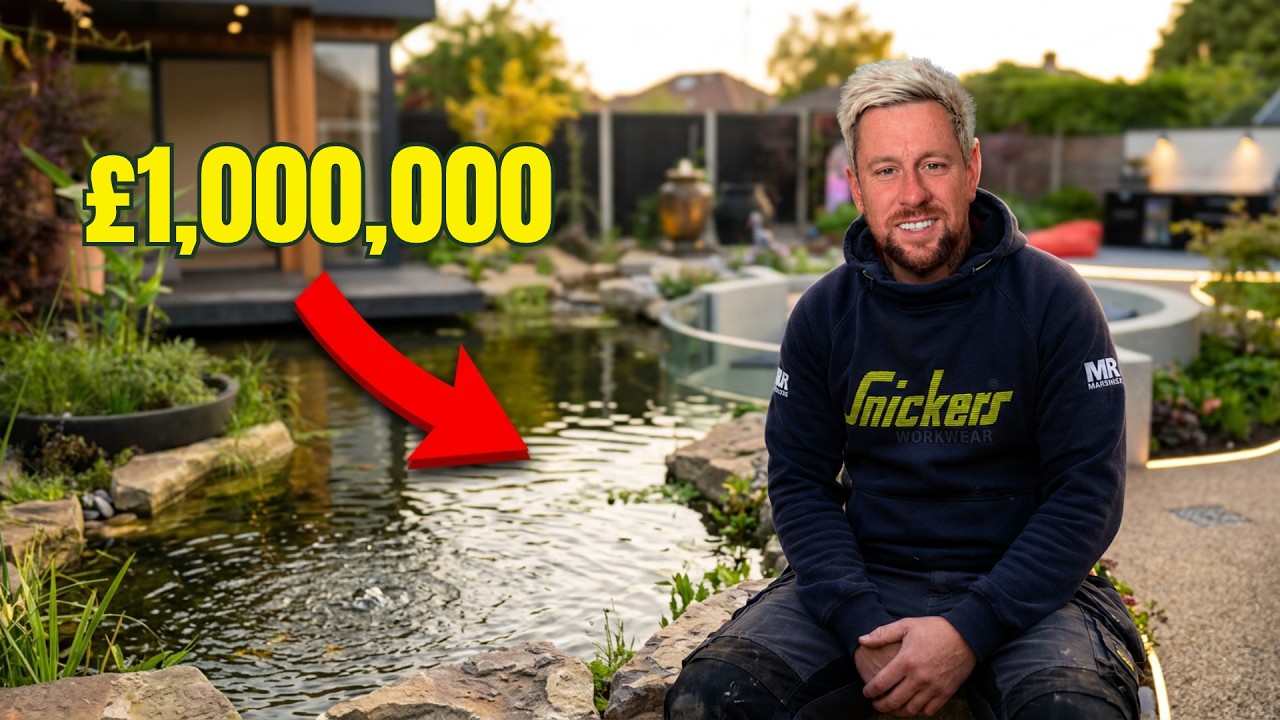
In this video, we are going to answer the age-old question: what happens if you put a fish into your million-dollar pond with parasites? Because I might have accidentally done it. So, let's go and fix it. Now, this big boy down here is called Raymond. And as you can probably tell, he's a little bit beat up.
00:15
Speaker A
called Raymond. And as you can probably tell, he's a little bit beat up. [music] Now, Raymond comes from one of our followers who his granddad unfortunately passed away and he was unable to look after the fish. Now, we [music] think
00:28
Speaker A
Now, Raymond comes from one of our followers whose granddad unfortunately passed away, and he was unable to look after the fish. Now, we think he's got parasites. He's a little bit beat up. So, we're going to do our best to get Raymond back to his former glory. To do that, we have got a celebrity guest. Let's go and have a little look. He's invisible. Where's he gone? There's John.

00:38
Speaker A
little look. He's invisible. Where's he gone? [laughter] There's John. Now, John has come He's got a lot of experience with ponds and koi fish, and he's got a lot of experience in what they're called?
00:56
Speaker A
Now, John has come. He's got a lot of experience with ponds and koi fish, and he's got a lot of experience in what they're called? Parasites. Parasites. Sounds horrible, doesn't it? And I think it is. So, what Raymond's been doing over the last couple of days, he was rubbing himself on the floor, and I rang John and I said, "John, something's up with Raymond. He keeps rubbing himself." And he says, "It's a telltale sign of parasites."
01:07
Speaker A
Raymond. He keeps rubbing himself." And he says, "It's a telltale sign of parasites." So, what we're going to do, John's got his little heart attack kind of set up here, biological set up. We're going to pull him out of the pond. We're
01:18
Speaker A
So, what we're going to do, John's got his little heart attack kind of set up here, biological set up. We're going to pull him out of the pond. We're going to examine him. And we're going to treat him for those parasites.
01:27
Speaker A
Unfortunately, because of me being stupid, we've got to treat [music] that whole pond for parasites. But, what John is going to do is give Raymond a bit of a salt bath.
01:36
Speaker A
Now, we've got a 35,000 L pond, which is a huge amount. Unfortunately, because of me being stupid, we've got to treat that whole pond for parasites. But, what John is going to do is give Raymond a bit of a salt bath. It's a dip bath in potassium permanganate. That's what I was going to say. I was going to say to do that. And the reason that we're going to do that is that is going to do a good job of really helping him remove those parasites. Then, we're going to treat the pond as well. But, Raymond's affected, which means there's a 99.9% chance that other fish are affected.
01:45
Speaker A
helping him remove them parasites. Then, we're going to treat the pond as well. But, Raymond's affected, which means there's a 99.9% chance that other fish are affected.
01:56
Speaker A
Correct. Now, if you're a homeowner and you bought a pond, like me, you'd be sensible and only put, say, fish in. You won't put any other fish in.
02:07
Speaker A
What is the correct way to do things? The correct way, I suppose really, of doing things [music] is that you go to a fish shop. Um you you then acclimate uh acclimatize the fish in a bag and release it.
02:20
Speaker A
What is the correct way to do things? The correct way, I suppose really, of doing things is that you go to a fish shop. You then acclimate, acclimatize the fish in a bag and release it. Technically, you know, if we all had the facilities to do so, you would then put it in a holding tank for, you know, a week or two.
02:27
Speaker A
Yeah. [music] Um you would examine the fish under a microscope. Um and then you would uh quarantine that fish for a little while.
02:35
Speaker A
Yeah.
02:43
Speaker A
No. Um And quite right, if I'm honest. the the the problem we've got [music] is because I said I was going to put rescue fish in, which, on the scheme of things, is a beautiful thing [music] to do. But
02:53
Speaker A
You would examine the fish under a microscope. And then you would quarantine that fish for a little while. Then you can keep an eye on it.
03:03
Speaker A
Um what we're also going to do is retreat the pond again today with bacteria. Bailey is the [music] big um fish. Now, when we got him, he was lethargic and a little bit like our mate is down here. Um
03:18
Speaker A
Realistically, though, that's just not how the world works. I reckon 99.9% of these people watching this video have probably never done that.
03:29
Speaker A
Bailey as well, but he's got like these weird wart things on him on his tail.
03:34
Speaker A
No. And quite right, if I'm honest. The problem we've got is because I said I was going to put rescue fish in, which, on the scheme of things, is a beautiful thing to do. But what I didn't realize is I'm bringing in so many different parasites, bacterias into the pond, which can then affect things. So, let's go and get Raymond out. Raymond.
03:39
Speaker A
Yeah, we go for [music] two nets, um ideally. And that way, with one, you can guide him into the other. Um [music] it's not often the case with a it's not as often as easy as it sounds.
03:48
Speaker A
What we're also going to do is retreat the pond again today with bacteria. Bailey is the big fish. Now, when we got him, he was lethargic and a little bit like our mate is down here. But he's coming back alive. Not that he died, but he's come back, he's got energy now, he's swimming around. He has got this weird other thing again, so if we could potentially have a look at Bailey as well, but he's got like these weird wart things on him on his tail.
03:54
Speaker A
So, the parasite thing that's obviously a worry. Is there any other things that I can't see that might be bad?
04:00
Speaker A
Yeah, let's get him out. Let's get all the Raymond out. So, to get him out, you've got two nets here.
04:10
Speaker A
water nice and healthy Normally a fish will normally the fish, you know, just sort of follow suit.
04:15
Speaker A
Yeah, we go for two nets, ideally. And that way, with one, you can guide him into the other. It's not often as easy as it sounds.
04:19
Speaker A
[music] Um and quite often stress, you know, if a fish have have been under stress, whether they've been reintroduced or they've been caught or something [music] that um it just lowers their immune system that little bit and they can't shake it off.
04:32
Speaker A
No, but because he's lethargic, because he's super lethargic, he might be all right, yeah. Shouldn't be too difficult.
04:43
Speaker A
Right. So, what we're looking for is we're going to get him out. We've already got a slide ready.
04:48
Speaker A
So, the parasite thing that's obviously a worry. Is there any other things that I can't see that might be bad?
05:00
Speaker A
flashing [music] and he's, you know, he's clamped. He doesn't look very well." and then actually blind treat cuz you really have no idea what you're treating for.
05:07
Speaker A
Well, we've already tested your water. So, we know that your water parameters are all good. You know, so that's, we always say in the fish hobby, you don't keep fish, you keep water. If you keep the water nice and healthy, normally a fish will just sort of follow suit.
05:13
Speaker A
Precisely, yeah. And you don't want to ask that can mess up the bio system.
05:17
Speaker A
Parasites, they're always present in any sort of pond.
05:28
Speaker A
everyone knows what they're looking for under the microscope. We'll go through that in a little more detail shortly.
05:33
Speaker A
And quite often stress, you know, if a fish has been under stress, whether they've been reintroduced or they've been caught or something, that just lowers their immune system that little bit and they can't shake it off.
05:43
Speaker A
parasites then Yeah. chances are he will have them. But that doesn't necessarily mean that they're all going to get into this state where this unfortunate [music] fish is now.
05:51
Speaker A
Yeah. Sometimes it really happens for no reason. One thing I will say is that, you know, you could have a perfectly healthy pond, find one or two parasites on a fish, and you wouldn't be concerned by that.
05:57
Speaker A
Oh, yeah. I mean, he's got classic signs [music] of of a parasite infection. See that on Bailey's tail? See it? Do you know what that is?
06:05
Speaker A
Right. So, what we're looking for is we're going to get him out. We've already got a slide ready.
06:12
Speaker A
He's on his way now. nets. And we're going to try and just ease him into one of them. The last thing we want to do is [music] start chasing him around.
06:19
Speaker A
Yeah. We're going to scrape him. Yeah. We're looking for what sort of parasite he has and then we'll treat accordingly. Because the one thing that you don't really want to be doing is coming in and going, "Okay, my fish is flashing and he's clamped. He doesn't look very well," and then actually blind treat because you really have no idea what you're treating for.
06:30
Speaker A
Sit. That's it. Put it down a little bit, Mark. And ease either into yours or mine.
06:40
Speaker A
Blind treatment, what's that? Is that when I— Let me guess. Blind treatment is where you just throw loads of chemicals in and hope one of them's fixing him.
06:44
Speaker A
Little bump. Bump. Bump. So, what we're going to do is we're going to take a scrape off him.
06:49
Speaker A
Precisely, yeah. And you don't want to ask, that can mess up the bio system.
06:54
Speaker A
Oh, wow. Look at this thing. Okay. So. So, this is this is a koi sock. It's an open-ended net.
07:08
Speaker A
Yeah, I mean, you could also be treating something which is completely irrelevant to that fish. So, you don't want to be throwing chemicals in without really understanding a little bit more. Now, I understand that not everyone knows what they're looking for under the microscope. We'll go through that in a little more detail shortly.
07:17
Speaker A
We've put 72 L of water in here. Yeah. I've done that purely because of easy maths.
07:22
Speaker A
Is wagging its tail. Could that be an itch? Uh, no. I wouldn't say that has got anything to do with it. But like I say, because he's in this pond with fish with potential parasites, then yeah, chances are he will have them. But that doesn't necessarily mean that they're all going to get into this state where this unfortunate fish is now.
07:34
Speaker A
And because the beauty of these koi socks is that we can just lift it out.
07:37
Speaker A
Yeah. You know? He looks very subdued and like his color's not really in. Do you know what I mean?
07:47
Speaker A
Yeah. So, what we'll do is we'll just go down his side a little. Does the scraping hurt him?
07:53
Speaker A
Oh, yeah. I mean, he's got classic signs of a parasite infection. See that on Bailey's tail? See it? Do you know what that is?
08:01
Speaker A
Um we just try and get a good scrape from all over the body. Yeah.
08:05
Speaker A
Very difficult to tell. I mean, you know, I wouldn't be really worried too much about it. But, yeah, we're going to go and get this guy out.
08:10
Speaker A
Yeah. We just go near the gill plate. I don't know what type of bug The reason why we do that is that there is um parasites which love the gills.
08:18
Speaker A
He's on his way now. Nets. And we're going to try and just ease him into one of them. The last thing we want to do is start chasing him around.
08:24
Speaker A
Yeah. And then you get a a a gill fluke. And they're a different Well, they're the same they're a fluke, but they're a little bit smaller. And they just love going for the gills. So, this is why we
08:33
Speaker A
Okay. Where are you going? Oh, even better. Even better. We're just going to ease him into the net.
08:39
Speaker A
Um we uh dip bath in him. So, we're not going to be treating the whole pond with this.
08:44
Speaker A
Sit. That's it. Put it down a little bit, Mark. And ease either into yours or mine.
08:58
Speaker A
thriving species such as the tench are um sturgeon, sterlets, that sort of thing. They will be the first to suffer from this.
09:05
Speaker A
Yeah, he's gone. You got him? Like this. And then straight into the bucket.
09:09
Speaker A
how much you've got in there. Yeah. And if an overdose on this can be lethal to the whole pond. So, we're just going to go in there cuz I know exactly to the liter how much is in here.
09:16
Speaker A
Little bump. Bump. Bump. So, what we're going to do is we're going to take a scrape off him.
09:21
Speaker A
And it's really crucial that the air stone's in there. You do not want to be putting this in without an air stone.
09:26
Speaker A
Yeah. Just going to leave him in the net a little bit and I'm going to go and get the koi sock, transfer him into that.
09:41
Speaker A
So, what does this do now? Kill the parasites? is this is going to be really actively going through his through through the parasites that are on his body. Like you say, we already know that he's got um we found Costia.
09:52
Speaker A
Oh, wow. Look at this thing. Okay. So, this is a koi sock. It's an open-ended net.
10:01
Speaker A
Oh, that's what I'd like. Yeah. Cuz I don't want him to be like itchy and it's horrible. Like I used to have eczema as a kid and you're just itching and your skin's itching. So, I can imagine that's what he feels like.
10:11
Speaker A
You hold him down. All right. Okay. So, this is the dip tank that we've got sorted out.
10:19
Speaker A
But I want to do another one just to have another look at the um exactly what parasite he's got. Like I say, we found Trichodina. We found Costia as well. So, we're just going to look again.
10:35
Speaker A
We've put 72 L of water in here.
10:42
Speaker A
Um Costia is a really really small um parasite. Um [music] Max's little um not going to say it's inferior to mine.
10:56
Speaker A
Yeah. I've done that purely because of easy maths.
11:09
Speaker A
the sort of the faster flow, the mucus. Um and they flick about all over the place and they're they're usually in numbers, you know, when you it's very rare that you find just one of them.
11:19
Speaker A
Yeah. At 10 mils per 36 L.
11:25
Speaker A
And the Trichodina is um like [music] a perfect circle. It looks a little bit like a Catherine wheel and it's got little cilia hairs around the side them.
11:33
Speaker A
Yeah. So, we're going to put 20 mils of potassium in here in a l—
11:43
Speaker A
out [music] um because they just look so unnatural around the um you know, the scrap.
11:48
Speaker A
Um the other ones which are easy, we haven't found any is is fluke. They they have a what look to be like a giant set of pincers at the front. That's where they latch onto the fish. They look
11:57
Speaker A
really nasty under a microscope and uh but yeah, haven't found those but we have found costia and we have found half a dozen [music] trichodina on this one.
12:06
Speaker A
But we've scraped it. John is over here. He has scraped Ray [music] and he's had a look at the parasites. What do you think the parasites are?
12:14
Speaker A
Uh he's got costia, a lot of costia and we found [music] half a dozen or so trichodina.
12:19
Speaker A
That's exactly what I thought, John. I've just done a story on TikTok just explaining how much of an idiot I am.
12:25
Speaker A
Well, I say that but in my defense, I've not really got a defense but if I had a defense, it would be you just don't think about fish in that particular way.
12:35
Speaker A
You're not an idiot. You you've just fallen into the trap which every single fish keeper falls into.
12:41
Speaker A
You know, you get excited or people say, "Oh look, you've got a a really nice big pond." And you ask for rescue fish. What are you supposed to do? Turn them away?
12:49
Speaker A
No. You know, it's the whole point of it all. Um so people watching going, "Oh, you should have done this. You should have done that." I guarantee that those people have learned from experience because they've gone through it. Um we
13:03
Speaker A
all have as fish keepers. Say for instance, I'm a customer or a just a normal person watching this video.
13:09
Speaker A
Do you offer this as a service where you go out and help them or Yeah, we do. So no, I do.
13:14
Speaker A
Yeah, we do. Yeah, um so myself and um Phil who runs my maintenance division, um we're experienced in in this. So Phil goes out more often than I do now.
13:25
Speaker A
[music] Yeah. Um to to you know, look at the people's ponds and it's it's very rare that we get phone calls from people which are, you know, saying I have a direct parasite problem cuz a lot of people
13:36
Speaker A
actually don't know. Yeah. I rang John because the fish looked dead lethargic. I was like, he looks ill. He looks ill. You could tell.
13:43
Speaker A
Even [music] though it's just fish, you could tell he didn't look well. Then he started like rubbing his belly on the rocks and I was like, nah. That for me, just as common sense, that would mean he's itchy cuz I had eczema as a kid.
13:55
Speaker A
So, like you'd I used to rub my like bits that I couldn't get, my eczema bits, on the bed. And I thought, he's doing the same thing. So, then I rang John and said, look, I think I need some
14:03
Speaker A
help here. John mentioned parasites. And you just don't like that's the skin [music] of a fish.
14:09
Speaker A
Or it's just flat and smooth. Like you don't think there's going to be flukes in there. But as you've probably seen, John stuck it in the microscope. He's had a look and it's [music] you could see the parasites. What type
14:21
Speaker A
of fish is this, by the way? It's the akai. [music] Interestingly, he's got very few scales on the side of his body.
14:26
Speaker A
Yeah. And the Japanese call that doitsu. [music] Are they not open to more infection because they've not got the gills to protect um scales to protect them?
14:34
Speaker A
I wouldn't say that there's anything in that. No. And this little one is a doitsu. She's a She's a cockapoo doitsu.
14:41
Speaker A
Cuz she's got no scales. She's got no scales. [laughter] We've scraped him before. Do we scrape him afterwards [music] to see if we There's no point. He's under He's under enough stress.
14:51
Speaker A
And we keep calling him him. Now, the body shape is [music] suggestive of so.
14:58
Speaker A
And he is [music] a boy. How do you know? Because in human anatomy, boys have something [music] which stick out.
15:04
Speaker A
Oh, yeah? And in the fish anatomy, knew that. in the fish anatomy, it's actually the [music] opposite way around.
15:09
Speaker A
Oh. So, in the um just underneath the anal fin, just where [music] my finger is here, you can see how it sinks in.
15:18
Speaker A
Yeah, yeah. Ah! Jesus Christ, Raymond. Do you want back [music] in? Going back in.
15:24
Speaker A
You happy with that? Very. Straight into the koi sock, eight sides, an open-ended net.
15:30
Speaker A
Yeah. You just hold one end. Yeah. And then we lift. And then straight in.
15:42
Speaker A
And if you want to play a ball There he goes. There you go. Now, what would be very intriguing is how he sort of responds Straight away.
15:57
Speaker A
sort of like 24 hours. Yeah. Is it worth trying to get Bailey out? Definitely.
16:03
Speaker A
Now, you join me a couple of weeks later and Raymond, have a little look at him.
16:09
Speaker A
He is eating out of my hand. He's got all of his color back. All of the redness is completely gone. John has been an absolute lifesaver. Although, I didn't agree with his little joke.
16:21
Speaker A
I'm not going to say it's inferior to mine. Kind of is. However, let's check out Bailey.
16:29
Speaker A
Oh yeah. Right, it's important not to chase. All right, okay. Not to stress them out.
16:34
Speaker A
Yeah. This is hard me. Well, they're it's all So, this is an ecosystem pond nightmare problem.
16:46
Speaker A
They um They just know where to go. Come on, mate. Right, in together. That's it.
17:00
Speaker A
Get him into that wetland. He knows exactly where to go. Oh, yes. Right, if you get him, scoop him.
17:09
Speaker A
Straight up. Yes. Oh. Ah, he's out here. [laughter] Get in that wetland. Um but yeah, go on.
17:19
Speaker A
But get bunny love. It's important that you get a I need another net down here.
17:26
Speaker A
Yeah. Just need to turn him for you. He done us. He's healthy though, isn't he?
17:32
Speaker A
Yeah. Uh, we're trying to get a bail but it's hard work. Yes. Bonnie, no.
17:40
Speaker A
Move. I need it. Yes. Oh. Well well stopped though. Well stopped. Right. Yeah, I've got it.
17:56
Speaker A
Yeah. Make sure the bottom of the things. Have you got it? Nope. It's It's Oh, it was close.
18:07
Speaker A
[laughter] He was nearly too quick for me. So, I don't want to put him in that potassium.
18:12
Speaker A
No, no. The reason why is that we don't actually know. We We know he has a little mark on his tail which we wanted to have a look at.
18:24
Speaker A
Which has come off. Has it? On the other side. It's on the other side.
18:28
Speaker A
No. Oh, is it? Which was indicate indicating a louse. What's a louse? So, it could have been any Yeah, this is much cleaner.
18:37
Speaker A
Is it? Um. Is it worth me holding him in there and you going and checking to see?
18:42
Speaker A
Yeah, yeah, we're going to definitely going to go and check. Um, but you see the difference in the It's all right there.
18:46
Speaker A
the the mucus sample this time round. Better. Um, yeah. So, do you want me to hold him in there and then you go and check?
18:52
Speaker A
Yeah, I'll go and quickly have a look. Yeah, it's come off, John, yeah? Yeah, so it's almost certainly a a louse and fish do get lice.
19:02
Speaker A
Um, and you know you were saying Oh, so if you come here look around his gills. There, that's what it was but on his tail.
19:10
Speaker A
Yeah, that stuff. What is that? Ooh. Yeah, it's an open wound. Um Okay. On his On his fin here basically, he's got like loads of pink stuff.
19:24
Speaker A
Um So, [music] he feels a lot He feels like quite beautiful, to be fair, but on his fins down here, you'll see like the [music] split and they've got like a pink thing on there.
19:36
Speaker A
Um It was like some weird growth. Now, he did have one on his tail, a big one, a chunky thing, uh but since he's been in the pond for about a week, that's gone.
19:44
Speaker A
Uh so, he seems to be getting healthier uh just by being in clean water.
19:49
Speaker A
Um So, yeah, John's just going to go and quickly just check to see um and then we can let him go and enjoy his life.
19:59
Speaker A
Now, one thing I've learned about putting the rescue fish in, it's normally the quality of uh water is not as good as obviously this ecosystem. So, yeah, this this [music] the sadness of me wanting to try and put all new fish
20:14
Speaker A
in a home is probably the end of that dream, unfortunately, because I can't risk putting all these fish in danger by bringing in a parasite that could affect all the fish.
20:24
Speaker A
Um and I don't really have the facilities to kind of put fish in a a tank for a month while, you know, we're checking out and make sure they're healthy. I'd love to be able to do that. Maybe that's something
20:35
Speaker A
I can do in the future, but um you know, we've got some beautiful fish in here [music] now and I really don't want to kind of You do more harm than good, so lesson learned.
20:47
Speaker A
Eventually, I hopefully get like a big tank that you can kind of that we can keep him in for the time being to make sure they are healthy.
20:53
Speaker A
Um but until that day comes, no more rescue fish. Sad, isn't it? What do you reckon, John?
20:59
Speaker A
Clean? Clean. Yeah. No way. I reckon that was a fungus. John, do you want me to let him go?
21:08
Speaker A
Yeah, we'll let him go. John's just given us a clean bill of health, which means Bailey can go back [music] in.
21:16
Speaker A
Yeah. Yeah? It's it. But the stuff that you're putting in the pond will treat whatever's on his gills.
21:26
Speaker A
Exactly. So, he's got a more of a bacterial infection. What's that mean? So, again, it's conditions from his previous pond.
21:35
Speaker A
On on the face of it, he's he's he's got no parasites that we've that we found.
21:40
Speaker A
Um he's got a little damage on his on his fins and there was a little bit on his tail and whatnot, [music] but so I think that's just a a lot of it. You know, these fish can can pick up They've
21:49
Speaker A
just been spawning, so they can pick up little bits of damage here and there.
21:52
Speaker A
[music] Um actually, the way to really combat this is is just really really good quality water.
21:58
Speaker A
Um and that will it will start coming through. So, if he did if there is a the odd parasite on him, we're going to be treating the pond anyway.
22:04
Speaker A
Yes. Let's do that. And to treat the parasites, we're going to use 350 mils of malachite. [music] Once we've got our 350 mil, we apply it to our pond.
22:23
Speaker A
This is going to be sick. It's going to turn my pond blue. [laughter] In addition, we add 450 mils of formalin.
22:32
Speaker A
We also apply this directly to the pond. This isn't as fun [music] cuz it's just white, but it still packs a punch.
22:40
Speaker A
It's only just coming through the wetland now. Is it? Yeah. You can see it's coming a bit the through the wetland, isn't [music] it?
22:47
Speaker A
Yeah, just on the bottom there. Yeah. Yeah, the water that's coming up is just nice and clear.
22:53
Speaker A
Right. What we have just done [music] is added a natural kind of product from Aquascape that just helps the overall health of [music] the pond, which is this stuff. It's called Protect for Ponds. We've used 450 mil because of the calculations of our
23:11
Speaker A
ponds, and this helps reduce [music] fish stress, and it aids in fish health and accelerates healing.
23:17
Speaker A
[music] Now, the reason that we want that in, we put this in for that main reason, accelerated healing, is because we've got some fish in there that have been spawning. [music] They've got a few little nooks and bangs
23:27
Speaker A
and stuff like that, so this will help with that. Now, this and all the products to John's [music] shop are list a link to his shop in the bio or on the screen now. If you want anything, either
23:37
Speaker A
buy it on the website or give him a ring and he can explain it other things for you. Now, it's just time to add the beneficial bacteria.
23:46
Speaker A
I'm just going to give it a mix up, and this is the last thing that we're going to be putting in the pond today.
23:50
Speaker A
And then them fish are going to be right on the mend. Now, it's time to add the final [music] bits of beneficial bacteria.
24:01
Speaker A
And that is exactly how we have treated the pond for them pesky [music] parasites. Now, the pond is pretty cool now. It looks blue. Cool. Obviously, I am well out my depth when it comes to the overall pond and stuff like that.
24:18
Speaker A
And that is why it's so important to use a CAC like John. John is an advanced CAC, so like his knowledge is insane when it comes to the overall Aquascape ponds. [music] And his knowledge on fish is good as well. So,
24:32
Speaker A
if you do have any questions, don't hesitate to give him a ring. All his details will be in the description.
24:36
Speaker A
Unfortunately for John, he is my friend. [music] So, he means ringing him up a lot and saying, "John, what's going on this week?" I don't mind at all. What's going on there on this week? But you can already
24:48
Speaker A
see Raymond is [music] after one little bit he's swimming around. Before he was just You probably seen on camera, he was stuck to the bottom of the pond. So, he is swimming around a little bit now, so he's
24:59
Speaker A
probably had all that itchiness just took off his skin. And then this stuff is treating So, the the first wash was to kind of wash him of the parasites as best as they can. [music] Yeah.
25:11
Speaker A
This This is now to treat them. Yeah, so it's a complete two different treatments. [music] One was like you said, a dip treatment. That was just a Let's just try and get as much off him as possible. Give him some antibacterial
25:21
Speaker A
[music] treatment in there as well. Um and you can You can't actually see a pretty pretty impressive difference.
25:28
Speaker A
In just one little bit. And good old Bailey he's not as ill as we thought. And he's a bloody fast swimmer. Now, a massive thank you to John for coming helping me with the pond. Um since the video, all
25:41
Speaker A
the rendering has been done by Jake. I'm going to do a full video on that, but let me just show you the fish.
25:48
Speaker A
Bailey is massive now. He looks like he's growing. All the sturgeon are looking super cool. And then every every time I Are you going Come on, darling.
25:56
Speaker A
Ray. Come on, darling. Ray. No, but you can clearly see he's got all of the color back on his face. He's got got a lot whiter. He's a lot healthier.
26:06
Speaker A
The fish are absolutely loving the pond. And as you can see now, I mean, it is raining a little bit, but the pond is just beautiful and clear.
26:17
Speaker A
Dog's toy is Bonnie. Bonnie have to do the night now recently. She just keeps hiding the toys everywhere. Just one minute, guys. Just one minute. Oh, there's a snake.
26:26
Speaker A
Snake. We hide the hide them under there. But yeah, a massive thank you to John and the Aquahub for coming supporting me. Now, John is luckily is my friend, but if you want anything for your pond, if you've
26:40
Speaker A
got worries about your fish, don't hesitate [music] to contact them cuz if he can't answer it, he's got a network of people that can. And as for me, well, I guess you'll see me on the next one.
Topics:koi fishpond parasitesfish quarantinepotassium permanganatefish healthpond treatmentaquascapefish parasite diagnosispond maintenanceMark Marshall

Frequently Asked Questions

What are the signs that a koi fish may have parasites?

Signs include the fish rubbing itself against surfaces, lethargy, clamped fins, and visible skin damage or warts.

How should new fish be introduced to a pond to avoid parasite outbreaks?

New fish should be acclimated properly, quarantined in a separate tank for one to two weeks, and examined under a microscope before release.

What treatments are used to remove parasites from infected koi fish?

In this video, a potassium permanganate dip bath is used on infected fish, followed by treating the entire pond to eliminate parasites.

Get More with the Söz AI App

Transcribe recordings, audio files, and YouTube videos — with AI summaries, speaker detection, and unlimited transcriptions.

Or transcribe another YouTube video here →