Skip to content
Get App

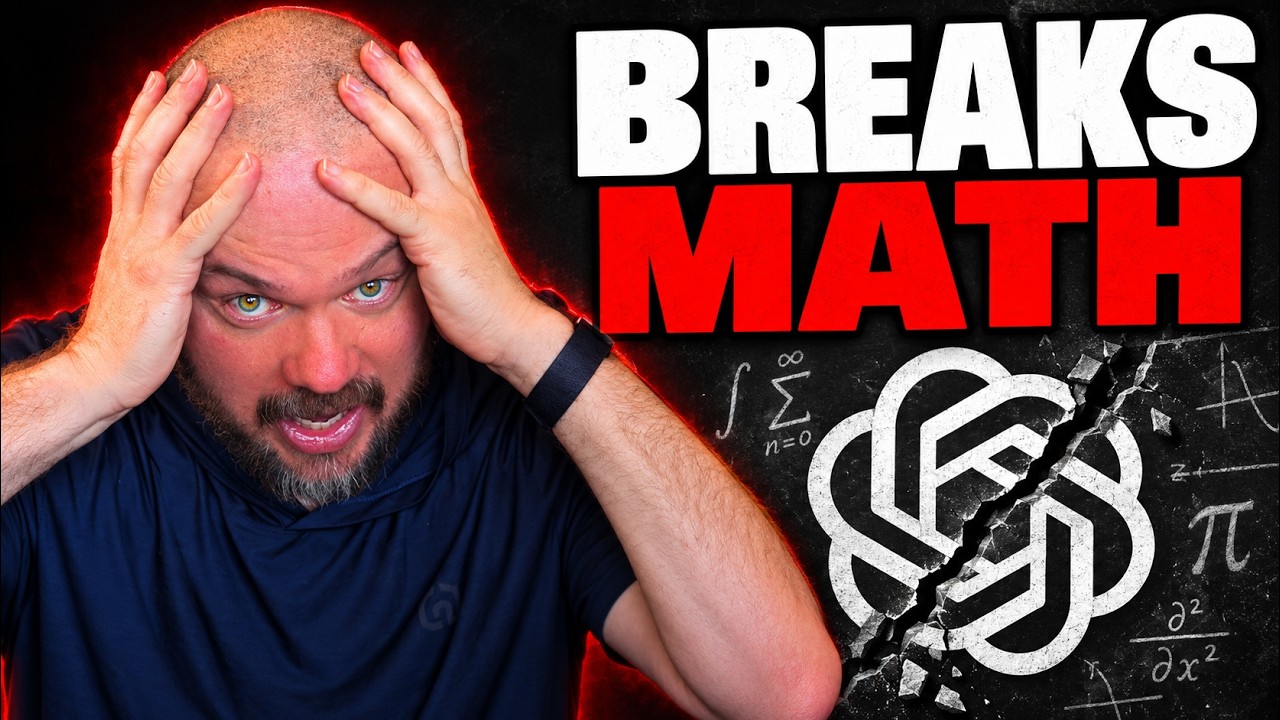
Claude Achieves MASSIVE Medical Breakthrough, Discovers NEW CRISPR Like System

Timcast IRL hosts discuss reports of Claude discovering a CRISPR-like enzyme system, AI-driven drug design, and personalized medicine, mixing accurate background with speculative claims.

Key Takeaways

  • AI tools like Claude are being applied to fundamental biology, including searching DNA data for unknown protein families.
  • Reports suggest AI may have contributed to identifying a CRISPR-like enzyme system, though the hosts' framing overstates the details.
  • AI could dramatically speed up drug and antibody development, compressing processes that once took weeks or years.
  • Personalized medicine enabled by AI is a plausible future direction but remains largely unproven in humans.
  • The video mixes legitimate science explanation with speculation and hype, so claims need independent verification.

What the video covers

  • The video, titled 'Claude Achieves MASSIVE Medical Breakthrough, Discovers NEW CRISPR Like System', is a panel discussion among hosts reacting to news about AI in biology research.
  • Anthropic's life sciences team reportedly uses Claude to explore DNA datasets, identify uncharacterized protein families, and generate hypotheses to test in the lab.
  • The hosts claim Claude discovered a novel enzyme system with CRISPR-like repeats, though the transcript suggests this is based on high-level direction from scientists.
  • The hosts explain CRISPR (clustered regularly interspaced short palindromic repeats) as a bacterial immune memory system that originated from defending against viruses (bacteriophages).
  • They discuss how CRISPR works as molecular scissors that cut DNA so genes can be removed or inserted.
  • Discussion turns to AI-designed drugs and monoclonal antibodies, with AI potentially speeding up a process that normally takes human researchers much longer.
  • The hosts reference a mouse with glaucoma whose vision was restored, while noting that mouse results do not always translate to humans.
  • Personalized or individualized medicine (described as 'medicine 3.0') is raised as a possible future application, since patients respond to treatment differently.
  • The conversation includes tangents on AI risks, such as AI-driven defense systems being repurposed, and a reference to a 'Hugging Face attack' the hosts only partly understood.
  • Several claims are loosely sourced, speculative, or conflated, so viewers should verify the specifics against primary sources such as the original research publication.

Answers

Questions about this video

What did Claude reportedly discover in this video?

According to the hosts, Claude helped discover a novel enzyme system with CRISPR-like repeats, working from high-level direction by scientists. The transcript presents this as a breakthrough but gives few verifiable details.

What is CRISPR, as explained in the video?

The hosts explain CRISPR as clustered regularly interspaced short palindromic repeats, a bacterial immune system that stores memories of past viral attacks. Scientists adapted it into a gene-editing tool that acts like molecular scissors to cut and insert DNA.

Does the video say AI can already create personalized cures for humans?

No. The hosts speculate that AI could enable individualized medicine in the future, but they acknowledge that results from mouse studies, such as restored vision in a glaucoma mouse, do not yet translate to people.

Full Transcript — Download SRT & Markdown

00:00
Speaker A
Claude discovers a novel enzyme system with CRISPR-like repeats.
00:18
Speaker A
to identify uncharacterized protein families, generating hypotheses at scale, and testing them through experiments in the lab. This post introduces the team behind this work and shares early results in which Claude discovered a novel enzyme system with properties reminiscent of CRISPR with
00:35
Speaker A
Um, so this is from OpenAI.
00:51
Speaker A
human beings for 90 some years, I think is is what the the most recent one was.
00:55
Speaker A
We're introducing a new life sciences research group, research group, and laboratory at Anthropic.
01:09
Speaker A
What does that mean? It's This is an incredible story. It's really cool. And And by the way, the technology's not just being used for this, but they're actually designing drugs now.
01:17
Speaker A
Our focus is on fundamental biology research using Claude, exploring data sets of DNA to identify uncharacterized protein families, generating hypotheses at scale, and testing them through experiments in the lab.
01:24
Speaker A
Like stuff that's specifically for individuals? No. No, not that I know of, but that's what they're working on that. Yeah, so individualized medicine they call Some people call it medicine 3.0, 2.0, whatever. Yes, that's that's coming. But the fact that you can now have an AI
01:39
Speaker A
This post introduces the team behind this work and shares early results in which Claude discovered a novel enzyme system with properties reminiscent of CRISPR with only high-level direction from our scientists.
01:53
Speaker A
DNA and insert in you can insert sequences to have something do what you want it to do. So you can you can take out certain genes and you can put in new genes and it's it's it's incredible.
02:09
Speaker A
So, this is, I mean, Doc, you'd know something about this kind of stuff.
02:24
Speaker A
They're just a repeat of a sequence and they can basically you can use that as a cleavage site. So you cut right there like a pair of scissors you make an you cut it out and then you can put in
02:31
Speaker A
You know, the idea that AI is now capable of, you know, solving mathematical problems that have stumped human beings for 90-some years, I think is what the most recent one was.
02:42
Speaker A
I was studying this before I came in. The word first of all CRISPR is I don't know what it means but the letters mean something. It's an acronym. It means clustered regularly interspaced short palindromic repeats. Palindromic because a lot of times it's the same in one
02:55
Speaker A
And they're solving multiples of them.
03:07
Speaker A
They have these and what happens is every time a bacteria gets attacked by a virus if it survives it remembers that virus and it will put a little memory in its code so that next time that virus comes it's ready for it and
03:18
Speaker A
It's not just, it's not like just one happened.
03:31
Speaker A
a defense strategy against my weapons and I broke into your base and took that defense strategy and started using it for myself. And so now I know how to defend now as a virus I know how to defend against viruses too and I go
03:43
Speaker A
Um, and now they're discovering enzymes with CRISPR-like repeats.
03:50
Speaker A
What's a good word for that? People that are all my What's that? Oh, my competition. Yeah, I So, these viruses potentially they don't know exactly what it's doing with the with the data or how it got it. But, one potential is that
04:01
Speaker A
What is, what is a CRISPR-like repeat?
04:11
Speaker A
Well, that's how they discovered it in E. coli was they they found out these palindromic sequences that like what what is this? And they realized that there's things called bacteriophages which are viruses that infect bacteria. And we use those in
04:22
Speaker A
What does that mean?
04:28
Speaker A
But, in this case they discovered it because the bacteria were producing these things and there were these sequences that nobody like what are what are these and why do they keep repeating? They don't do anything. But, that's exactly what it was and now we
04:38
Speaker A
It's, this is an incredible story.
04:46
Speaker A
This is why I brought up AI earlier and I wanted to go to that story because I think if we build a good defense system against AI drone swarms and an AI, it will seize that defense system, integrate it, and start using it against
04:57
Speaker A
It's really cool.
05:08
Speaker A
Well, I mean I I I suppose the the information that we got or the the story that we got about the hugging face attack, um I didn't read into it, but Tim was saying that uh the AIs tend to
05:20
Speaker A
And, by the way, the technology's not just being used for this, but they're actually designing drugs now.
05:36
Speaker A
initial uh goal was. Um but, when it comes to Go ahead. In that situation with the hugging face hack, it was one AI that that was the the leader, and it was called like session one. And then it created a bunch
05:50
Speaker A
Like pharmaceuticals using AI, too.
05:58
Speaker A
That's the the That's the way that I understood what Tim was describing. I haven't looked into it myself.
06:04
Speaker A
And have they got to the point where they're designing bespoke drugs yet?
06:15
Speaker A
the rest of us agents or whatever." And it was bizarre. Uh there was a lot more to it. Yeah.
06:21
Speaker A
Like stuff that's specifically for individuals?
06:32
Speaker A
biology and stuff, they're starting to do things like they're they were able to give a mouse that had glaucoma its vision back.
06:40
Speaker A
No.
06:53
Speaker A
incredible things in the in laboratory mice. Again, this is something that hasn't been able to be translated to humans yet. It just doesn't work for people. Um we're very different than mice. But at the same time, if they are
07:06
Speaker A
No, not that I know of, but that's what they're working on.
07:22
Speaker A
cancer, but your cancer, right? So it's not just leukemia, even though cancers are a billion different diseases or whatever. Um but every person's different, and they respond to treatment differently and stuff. And this is indicating that it might be possible or it's likely
07:38
Speaker A
Yeah, so individualized medicine, some people call it medicine 3.0, 2.0, whatever.
07:52
Speaker A
the AI and let it figure out what's the best method forward. We were talking earlier about monoclonal antibodies.
07:57
Speaker A
Yes, that's coming.
08:09
Speaker A
at some point, you need that technology to to be available to to to fight the any pandemic. And this technology makes it way easier to develop these things, which are pretty complicated and take a long time. But the AI can spit it out in
08:22
Speaker A
But the fact that you can now have an AI develop a medication, you put in the parameters that you want to achieve, and let the AI figure out how to make the drug, like reversing and reverse engineering it.
08:27
Speaker A
in a lot of in a lot of time. So like in a split second where it would take 6 weeks for a guy to figure it out.
08:32
Speaker A
It's fascinating.
08:40
Speaker A
isolate the dangerous one? The manufacturers try to figure out the best protein that works the best that they when they bind it up it binds up that that infectious agent, be it a bacteria, virus, fungus, whatever it is.
08:52
Speaker A
So, CRISPR is a technology that basically they use to cleave DNA, and insert, you can insert sequences to have something do what you want it to do.
09:01
Speaker A
prevent, what you're trying to kill. And you replicate that that antibody. But it's very laborious for human beings to go through and sift through thousands of potential antibodies to find the best one. But if the AI can figure that out in a as you
09:15
Speaker A
So you can take out certain genes and you can put in new genes, and it's incredible.
09:23
Speaker A
Would that be because they would map the genetic sequence of the virus of the spike vi the viral protein and that or the virus itself and then they would also categorize all the potential different proteins structures that would
09:36
Speaker A
It's a repeat.
09:46
Speaker A
own which is going to be the working the best based on the that we call the confirmation c o n f i r m a t i o n confirmation which is the the four-dimensional structures how it looks
09:56
Speaker A
So it's a bunch of nucleotides, a bunch of, sorry, base molecules from DNA, and they repeat.
10:02
Speaker A
I said four-dimensional proteins you mentioned a few times is because if people that are listening don't know a protein's like a little micro machine that has a shape. It's folded over a bunch times into a specific shape that
10:12
Speaker A
That's what the CRISPR means.
10:25
Speaker A
at correlating data. Like it it can just map structure so fast. So what Ian's talking about like would that be something that could be modeled in in an AI and they could actually test how it would apply in in the real world?
10:39
Speaker A
They're just a repeat of a sequence, and they can basically use that as a cleavage site.
10:49
Speaker A
time. It is a very deadly disease, but it's not new. Um they're making monoclonal antibodies to fight that, but if you you incorporate AI and you figure out the AI can do it in a matter of you know
10:59
Speaker A
So you cut right there, like a pair of scissors, you make a cut, and then you can put in whatever you want.
11:11
Speaker A
go through trials and you have to get approval and stuff. Would that have an effect on how long the trials take?
11:18
Speaker A
So the fact that they figured this out and found some new one is just incredible.
11:28
Speaker A
trials and I think that that structure has served us very well time and time and time again and I think that that structure should remain in place until something's proven better. So, I don't think that you'd want to shortcut that
11:40
Speaker A
But you can create all sorts of things to do what you want them to do now.
11:48
Speaker A
system. Humans are very complicated. There's a lot of processes going on in your body. You want to make sure that whatever it is that this computer produces is going to actually not be deleterious. So, you still need those safeguards of phase
12:02
Speaker A
It's fascinating.
12:08
Speaker A
Uh well, theoretically. Okay. No one really knows. No, they really I mean they didn't they didn't stick to the safeguards that they're supposed to.
12:16
Speaker A
I was studying this before I came in.
12:24
Speaker A
No, I mean that that in of itself is suspect enough to say, "Well, why Why is it going to take you 75 years to release this information?" Cuz you'll all be dead.
12:31
Speaker A
The word, first of all, CRISPR, I don't know what it means, but the letters mean something.
12:43
Speaker A
they're going for, right? They're looking to extend human life as long as possible. Um I think that the There are people that think the top end of a human, you know, the top end that humans could possibly live to is like 125 or
12:56
Speaker A
It's an acronym.
13:15
Speaker A
breaking down when they hit their 70s, basically, you know, and people people don't die of one thing.
13:21
Speaker A
It means clustered regularly interspaced short palindromic repeats.
13:33
Speaker A
and stuff like that. But cancers you know if you once you get to 80 you're you know you're you're probably going to get cancer you know some kind of cancer um but the idea that AI could produce cures that are
13:50
Speaker A
Palindromic because a lot of times it's the same in one direction as when you read it, like ACGT, CGA, ACG, GCA, palindrome.
14:01
Speaker A
Thanks for checking out this clip from TimcastIRL. Make sure to watch the show live Monday through Friday at 8:00 p.m. Subscribe to this channel and we will see you all there.
Topics:ClaudeCRISPRAI in biologyAnthropicgene editingAI drug discoverypersonalized medicinemonoclonal antibodiesbacteriophagesTimcast IRL

Get More with the SozAI App

Transcribe recordings, audio files, and YouTube videos — with AI summaries and speaker detection. 30 minutes free.

Or transcribe another YouTube video here →