Skip to content
Get App

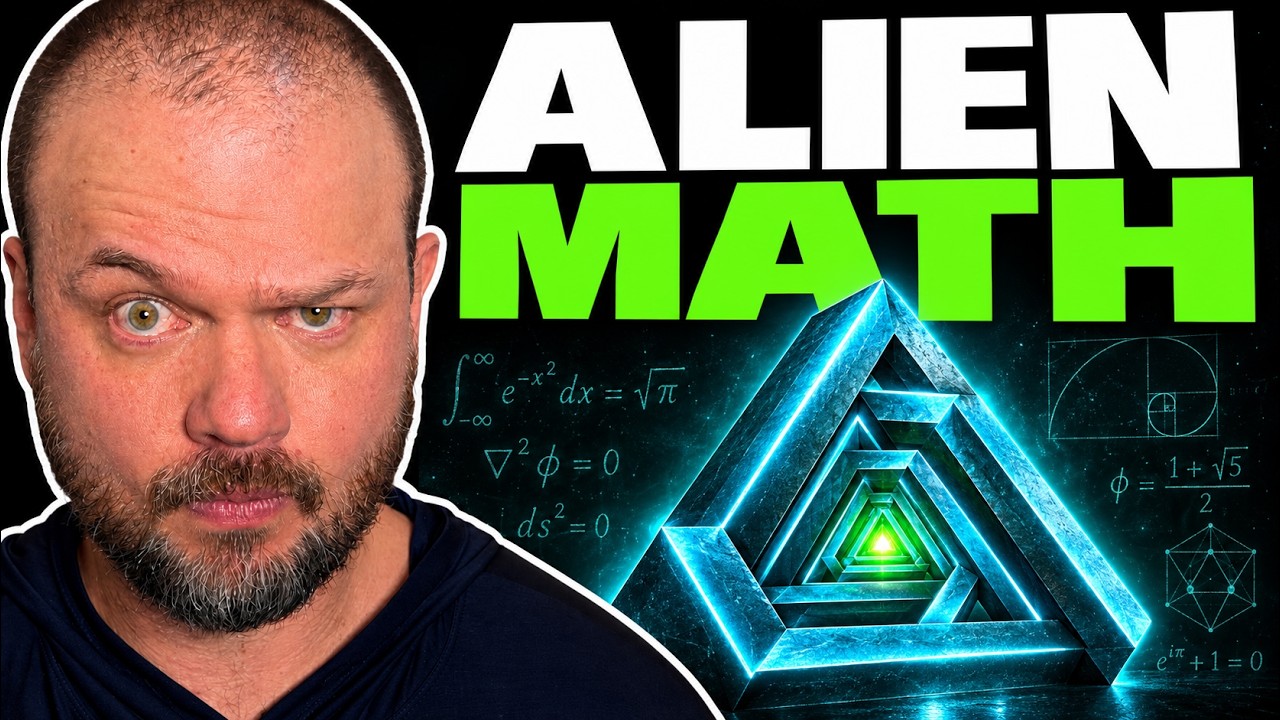
OpenAI's secret model just BROKE math...

OpenAI released 722 math manuscripts from an unreleased internal model, roughly 10x growth per month. Wes Roth explores the Riemann hypothesis partial result and implications for AI.

Key Takeaways

  • OpenAI's internal model has produced a very large volume of math results in a short time, with rapid month-over-month growth.
  • The results are unverified by human mathematicians so far, so claims should be treated with caution.
  • A general LLM contributing across many math frontiers suggests AI may already rival specialized human researchers in some areas.
  • Math's checkability makes it a leading indicator for AI impact in other fields.

What the video covers

  • OpenAI published 722 mathematical manuscripts produced by an unreleased internal model, with Lean verification and reasoning traces on GitHub.
  • The output grew roughly 10x per month: about 10 results in August, 100+ in September (including Navier-Stokes), and 722 within six days of October.
  • The manuscripts span 17 subject areas, from prime numbers to plasma physics and quantum circuits.
  • Each result reportedly used the compute equivalent of about three hours of ChatGPT Pro thinking.
  • The video discusses a partial 'quasi-Riemann hypothesis' result that establishes a fixed 0.875 boundary, closer to the target than prior human progress.
  • The results have not yet been verified by mathematicians, though Lean machine-readable proofs make checking easier.
  • The presenter argues that math is a testing ground because results are checkable, and that similar waves may follow in biology, physics, and economics.
  • The model is a general large language model rather than a specialized math model, which the presenter sees as significant.
  • Potential real-world impact is unclear, though some of this math relates to cryptography and cybersecurity.
  • The presenter suggests the biggest near-term impact may be inside AI labs themselves, accelerating further AI research.

Answers

Questions about this video

How many manuscripts did OpenAI publish, and how fast is the output growing?

OpenAI published 722 manuscripts, following about 10 results in August and 100+ in September. The presenter describes this as roughly a 10x increase every month.

Did the AI solve the Riemann hypothesis?

No. The video describes a partial result, a fixed 0.875 boundary toward Riemann's 0.5 target, which gets closer than humans have but does not settle the full hypothesis or the million-dollar prize.

Have the mathematical results been verified?

Not yet, according to the video. Many come with machine-readable Lean proofs, which makes verification easier, but human mathematicians still need to review them.

Full Transcript — Download SRT & Markdown

00:00
Speaker A
Well, it looks like the rumors were true. OpenAI just published 722 mathematical manuscripts, all of them produced by this unreleased internal model. Did it solve the Riemann hypothesis? Did it prove that P equals NP? Did it solve all of math forever?
00:20
Speaker A
Well, not quite. But what it released is absolutely insane. Some people refer to it as the quasi reman hypothesis. to the people that have no idea what any of that stuff is. Basically, there's a set of math problems that are incredibly
00:34
Speaker A
Well, not quite. But what it released is absolutely insane. Some people refer to it as the quasi-Riemann hypothesis. For the people that have no idea what any of that stuff is: basically, there's a set of math problems that are incredibly complicated, and if we make some progress on them or solve them, they will, we hope, unlock a lot of new understanding in math, fundamental understanding. Some of these problems, if solved, carry millions of dollars in prizes. OpenAI already published Navier-Stokes, which sounds like it would qualify for that prize.
00:49
Speaker A
Stokes, which sounds like it would qualify for that prize. Now, OpenAI is not claiming it because it was solved by an AI model. But forget the individual problems for a second and just zoom out a little bit. In August of this year,
01:02
Speaker A
Now, OpenAI is not claiming it, because it was solved by an AI model. But forget the individual problems for a second and just zoom out a little bit. In August of this year, about two months ago, OpenAI published something like 10 results on 10 problems. In the next month, September, right, that's when they published Navier-Stokes plus 100-plus other math problems. And today we're six days into the month, and they publish 722 manuscripts with Lean verification. This is the important part to understand. Whatever you might think about any of those individual papers or individual problems, pay attention to the curve. It's the same thing I've been saying about how well AI is going to code. Back in the days when people said, "Oh, it's so stupid, it can't do this," I'm like, "Yeah, but it's getting a lot better very, very fast." And think about where we are today. So from August, when they published 10 papers, to September, when they published 100-plus, to October, six days into the month, 722 manuscripts. That's roughly 10x every month. It's a 10x increase every single month. Math just became an industrial process.
01:21
Speaker A
manuscripts with lean verification. And this is the important part to understand. Whatever you might think about any of those individual papers or individual problems, pay attention to the curve is the same thing I've been saying about how well AI is going to
01:37
Speaker A
Take a look at this. As OpenAI says here on this blog post, by the way, they've released all of these proofs and conjectures and reasoning traces and Lean verification, whatever you want. It's on github.com/openai/math. Each one of these results used the equivalent compute of roughly three hours of ChatGPT Pro thinking. So I hope that makes sense, right? We as humans, we've dedicated decades, humanity as a whole, trying to move some of these fields, some of these problems forward. A genius mathematician might devote decades of their life trying to make some progress, and this internal model thinks for three hours and moves the whole field forward. As you'll see, we'll go through some of these. They did move the field forward, way more than we have as humanity as a whole. Last month, when OpenAI released the Navier-Stokes solution, the AI model found it, and a lot of news publications tried to twist it as if they stole it. Like there was this mathematician who did all the work, and OpenAI stole it from him. Well, that of course was not true. But it will be interesting to see how they spin this one, because there are 72 papers here.
01:50
Speaker A
we published 100 plus to October 6 days into the month 722 manuscripts that's roughly 10x every month. It's a 10x increase every single month. Math just became an industrial process. Take a look at this. As opening eye says here
02:09
Speaker A
Now, they haven't been verified by mathematicians yet. But once it's official, once it's verified, I think it'll be pretty hard to argue against the fact that we're at a point in history where these AI models are now better at math than humans. So these 722 problems span 17 different subject areas, from prime numbers to plasma physics to quantum circuits. No human has ever been at the frontier of these problems, no more than maybe two or three of these areas. A mathematician might spend decades learning and working just to have the qualification to maybe approach one of these. That's a very, very, very important point, because the models don't need to specialize. This isn't even a math model. This is a large language model. It can write a rough draft of your email, write you a poem, do a little coding, and also progress humanity's understanding of mathematics on seven different frontiers at the same time. One model, a general model.
02:17
Speaker A
It's on github.com/openi/math. Each one of these results used the equivalent compute of roughly 3 hours of Chad GBT pro thinking. So I I hope that makes sense, right? We as humans, we've dedicated decades, the humanity as a whole, trying to move some of these
02:34
Speaker A
All right, so let's look at some of these, really fast, because it's important. I'm not pretending to understand all of this. When this came out, I tried to do a little deep dive and understand some of these problems and mathematical principles. And after doing some reading, I feel like I understand less. But we have what people have called the quasi-Riemann hypothesis. So the Riemann hypothesis is basically looking at how prime numbers behave. The zeta function contains information about where prime numbers occur. We believe there might be some pattern to how these prime numbers occur. Better understanding of how math works fundamentally just gives us, I guess I would say, fundamentally a better understanding of math, if that makes sense. How big of an impact would this have on real-world technologies and situations? I'm not quite sure. Some of this stuff is used for cryptography, cybersecurity, and so on. But apparently Riemann's target was the 0.5 line, and that was the goal to get to.
02:49
Speaker A
move the field forward way more than we have the humanity as a whole they moved it forward more than all of us have last month when openi released the navy stokes solution that that the AI model found a lot of news publications try to
03:04
Speaker A
By the way, for a lot of this math stuff, this is how I think about it. Imagine there's this mountain, but up here there's a lot of fog or clouds, so we have no idea what's up here. For a lot of these proofs, it's like us slowly climbing up the mountain. If we're able to climb up here, then we know this mountain is at least this tall. Does that make sense? So if you get to this point, you can say the mountain is at least this tall, but it might be much taller. We might be near the peak or nowhere near the peak. Humans got here, right? And Riemann's target, I guess, was somewhere up here. What the AI was able to do is get us here, let's say. So it got a lot higher on the mountain than humans were able to. So it got this high and says, okay, this mountain is at least this tall. So the AI established a fixed 0.875 boundary. Riemann's target is 0.5, and humans got to the 1.0 line. And of course the million-dollar prize is for the full Riemann hypothesis. So this partial result does not settle it, but it gets us a lot closer than we ourselves could ever get.
03:13
Speaker A
But it will be interesting to see how they spin this one cuz there's 72 papers here. Now, they haven't been verified by mathematicians yet. But once it's official, once it's verified, I think it'll be pretty hard to argue
03:26
Speaker A
Then we have the Birch and Swinnerton-Dyer, and I don't even know where to begin with this one, but the point is the AI established the complete formula for some broad class of these problems. And again, we have a $1 million prize for the full set of these problems. So these cases don't settle the entire problem, but again, it seems like a big step forward. It looks like we had some big breakthroughs in the 1980s, and this seems like the next big breakthrough, from this internal OpenAI model. Then we have the Goldfeld conjecture. In this family of equations, half of them should have a finite number of solutions and half an infinite number. I supplied many more to complete the bridge to the predicted 50/50 split.
03:45
Speaker A
has ever been at the frontier of these problem. No more than maybe two or three of these areas. A mathematician might spend decades learning and working just to have sort of the chance the qualification to maybe approach one of
03:57
Speaker A
So the big question now is verification. 722 papers were just dropped on the world in one day. How many people in the world are capable of reviewing, let's say, just one of these? Maybe there are a few hundred people, maybe a thousand. Each one might take a week or weeks to review this math. A lot of this already has machine-readable proofs in the Lean language, so that makes it a little easier. But notice math is moving from "can we prove it" to "can we check it, can we understand it." I think the bigger wave is coming after this, in biology, physics, economics, and so on. The reason is that math is checkable. We can check it. If this AI model spits out some crazy theorem, we can have a human being go through it and say this is true or this is false. So math is almost like a testing ground for what happens when these frontier AI models reach the frontier of any given industry or field of
04:08
Speaker A
They can write a rough draft of your email, write you a poem, do some little coding, and also progress humanity's understanding of mathematics on seven different frontiers at the same time.
04:20
Speaker A
One model, general model. All right. So, let's kind of look at some of these and really fast because it's important. I'm not pretending to understand any of this. When this came out, I tried to kind of do a little deep dive,
04:32
Speaker A
understand some of these problems and mathematical principles. And after doing some reading, I feel like I understand less. But we have what people have called the quasi reman hypothesis. So the reman hypothesis is basically looking at how prime numbers behave. The
04:48
Speaker A
zeta function contains information about where prime numbers occur. We we think we believe that there might be some pattern to how these prime numbers occur. Better understanding about how math works fundamentally just gives us you know I guess I would say
05:02
Speaker A
fundamentally a better understanding of math if that makes sense. So how big of an impact would this have on real world technologies and situations? I'm not quite sure. Some of this stuff is used for cryptography, cyber security, etc.
05:16
Speaker A
But apparently Reman's target was the 0.5 line and that was sort of like the goal to get to. By the way, for a lot of this math stuff, this is kind of how I think about it. Like imagine there's
05:25
Speaker A
this mountain, but up here there's a lot of fog or clouds. So we have no idea what's up here. So for a lot of these proofs, it's sort of like us slowly climbing up the mountain. If we're able
05:35
Speaker A
to climb up here, then we know this mountain is at least this tall. Does that make sense? Right. So if you get to this point, you can say the mountain is at least this tall, but it might be much
05:46
Speaker A
taller. We might be near the peak or nowhere near the peak. And so humans we got here, right? And Reema, I guess the target was somewhere up here. What AI was able to do is get us here, let's
05:57
Speaker A
say. So it got a lot higher than humans were able to. So it got this high on the mountain, say, okay, this this mountain is at least this tall. So AI established a fixed 0.875 boundary. Reman's target is 0.5 and
06:11
Speaker A
humans we got to the 1.0 line and of course the million-dollar prize is for the full reman hypothesis. So this partial result does not settle it but it gets us a lot closer than we ourselves could could ever get. Then we have the
06:26
Speaker A
Burch Swinton dire and I don't even know where to begin with this one but the point is AI established the complete formula for some broad class of these problems. And again, we have a $1 million prize for the full set of these
06:40
Speaker A
problems. So these cases don't settle the entire problem, but again, it seems like it's a big step forward. It looks like we had some big breakthroughs in the 1980s. And this seems like it's next big breakthrough that happened with this
06:52
Speaker A
internal OpenAI model. Then we have the Goldfelds conjecture. So in this sort of family of equations, half of them should have a finite amount of solutions and half an infinite. I supplied many more to kind of complete the bridge to the
07:06
Speaker A
predicted 50/50 split. So the big question now is the verification. So 722 papers were just dropped on on the world in one day. How many people in the world are capable of reviewing let's say just like one of these? Maybe there's a few
07:24
Speaker A
hundred people, maybe a thousand. You know, for each one take a week or weeks to review this math. A lot of this already has machine readable proofs in the lean language. So there's some sort of that makes it a little bit easier.
07:38
Speaker A
But notice math is moving from can we prove it to can we check it? Can we understand it? But I think the bigger kind of wave is coming after this in in biology, physics, economics, etc. The reason being is that math is checkable.
07:55
Speaker A
We can check it. If this AI model spits out some crazy theorem, we can have a human being go through it and say this is true or this is false. So math is almost like a testing grounds of what
08:06
Speaker A
happens when these frontier AI models or when these AI models reach the frontier of any given let's call it industry or field of study. What happens when these AI models start spitting out a flood of discoveries in any given field? We're
08:20
Speaker A
seeing it happen live to mathematics. And step one is going to be this scramble to figure out how do we verify these results? Because what if let's say 10% of it is wrong. What does that mean?
08:32
Speaker A
What if half of it is wrong? Or what if none of it is wrong? Or maybe there's a few errors here and there, but it's it's mostly right. Those are very different stories. A lot of the stuff here
08:40
Speaker A
rewrites textbooks, right? It completely changes how we explain math in colleges and universities. So if this is mostly correct, this is probably the biggest shift in mathematics that we've ever had. Now, if a lot of it is wrong, well,
08:53
Speaker A
then we can kind of maybe it's still good for machine learning because we can figure out, okay, where do these AI models where does their reasoning break down? By the way, the reason why OpenAI is doing this is because they're kind of
09:05
Speaker A
running out of benchmarks. So, instead of trying to come up with some crazy new benchmark, they just pointed at math at these unsolved issues, unsolved problems. But a lot of this kind of begs the question, okay, but how much of this
09:15
Speaker A
is sort of actionable? Is this just like cool breakthroughs that will have no impact on the real world? Is just a new benchmark for AI models and some people won't be able to, you know, win the Millennium Prize and collect a million
09:28
Speaker A
dollars because the AI got there first. By the way, as far as the Millennium Prizes go, so doesn't seem like any of them were reached or solved with with what was produced here, but they're definitely being surrounded, right? All
09:41
Speaker A
this stuff is kind of putting them in a chokeold, so to speak, because all of the little problems surrounding those big problems, they're getting solved.
09:48
Speaker A
Like, it's just getting closer and closer and closer. So, the pattern here is kind of like encircumment like, right? Right. So, we're solving every little problem around it and we're encroaching closer and closer to the big problem. So, it does feel like soon that
10:01
Speaker A
will be solved as well. But the big question is like what actionable things will flow out of this? Will this affect the world in some observable way that we can see and see soon? I can't find the post by Brun who is an open researcher
10:14
Speaker A
from the last couple days. I've covered it on a previous video. I just can't find it right now where he was kind of hinting at all of this stuff being released. And his point, if I understand it correctly, but the point is some of
10:27
Speaker A
these breakthroughs in math, they will affect machine learning. They will affect how we create and and train and understand these AI models. Some of them might even affect how we build the hardware, the GPUs, the various AI chips, etc. AI is, as they say at the
10:43
Speaker A
end of the day, is a matrix multiplication. And these mathematical breakthroughs, they're certainly to sort of beget other mathematical breakthroughs. So definitely where this is very likely to have an impact is inside of these AI labs themselves, right? Because in our little mountain
11:00
Speaker A
example where it's tall and it's in the in the clouds and this in the fog so we don't know how tall it is. Right? Humans over decades and decades we slowly got our understanding to be up here. So
11:09
Speaker A
that's in some cases 100 plus years in other cases decades. Then these new models come out because keep in mind this is like the last what two three months right again. So August 10 problems September 100 problems and now
11:24
Speaker A
it's October 6th and it's 722 problems right? So, so this is kind of the curve as we see it now. 10xing every single month. And not only is that the curve like the the volume of things being produced, but but also understand that
11:39
Speaker A
it's starting kind of where we got to over decades and century plus, right? And it it pushes that understanding forward. And I use the term understanding here very loosely because I I don't know if we understand it. But
11:52
Speaker A
the point is it pushes that frontier up very much past where we as humans can get to and at this increasingly faster and faster rate. And if those breakthroughs in math can be applied to various machine learning approaches and
12:07
Speaker A
techniques which seems obvious that they would be I mean I can't imagine how that's not going to happen. I'd be pretty shocked. In fact, if you looked at Google's alpha evolve and a lot of the work by Sakana AI that we we've
12:20
Speaker A
covered in this channel, like I think that's proof enough that of course all these breakthroughs will be applied to making better and better models. If you sort of think about the progress of like human technologies and how well could
12:33
Speaker A
let's say monkeys, chimps, how well they could understand it, you know, when we were using like a stick or some animal bone as a weapon, the chimps, they would look at it like I get I get that level
12:43
Speaker A
of technology. I understand it. I I gro it. And then later there was a point at which it's like the fire and a wheel building shelter clothing and etc etc etc. That's where the monkeykey's understanding of the technology kind of
12:58
Speaker A
rapidly fell off. Royal see a helicopter in the sky. It's like I I I don't know what that is. One huge huge question for me with a lot of the stuff is will it improve our understanding or will be
13:09
Speaker A
completely lost just like the monkeys. So right now for a lot of the stuff there's not that many people in the world that truly understand it but at least we can kind of say as a humanity as a whole that some of us get it. So
13:21
Speaker A
humanity gets it and for me I can use for example Chad GPT to hopefully have it explain to me some of these things and certainly I'm hopeless at understanding these things but hopefully there's other people out there that are
13:34
Speaker A
mathematicians that are pursuing this kind of track this learning for whom maybe this will be helpful and maybe AI will also be able to kind of help our understanding just as it's doing more and more discovery that would really be
13:46
Speaker A
I think the best case outcome because the other road is where it goes off and it just discovers more and more stuff and it kind of goes over a certain horizon and we can't follow we can't follow what it's doing. So, it continues
13:59
Speaker A
expanding and learning and doing more and more and more but it's already many many sort of miles beyond anything that we can possibly comprehend. Recently, we read a blog post by Scott Aronson who's apparently now teaching a new course at
14:12
Speaker A
UT Austin, AI alignment theory. And three weeks or so ago, he made a post basically, you know, saying that, yeah, these rumors are true. Opening eye is sitting some on some pretty big mathematical breakthroughs. We've covered this in a previous video. If
14:25
Speaker A
you're not subscribe to his channel, you're you're just out of the loop. So, subscribe. But the point is he asked this question as far as mathematicians go. Do we want is is it our goal to maintain this human community across
14:39
Speaker A
generations of people that are capable of understanding the sort of frontier math? Right? Because right now we have this 4,000 year old history of some small percentage of of the human population being mathematicians and learning and studying and proving new
14:55
Speaker A
things and asking new questions, right? But that group of people, they sort of understood the latest math available.
15:00
Speaker A
They worked on it and they they pushed the field forward moving forward. Is that a goal? Is that we do we want to keep those people around? Do we want to have future generations have their own group of mathematicians who understand
15:11
Speaker A
the latest math? Because right now if the entire math industry gets sort of industrialized and the only thing that we need out of humans is just verifiers who sit there and just check its work and eventually maybe not even that then
15:23
Speaker A
certainly no one will be sort of incentivized to go out there and do math and do this hard work. And of course, that's kind of scary to think about that that might go away as a human operated field. And on the flip side of the coin,
15:36
Speaker A
what if this sort of industrialization of math, what if it leads to breakthroughs that improve, let's say, human lifespan or our understanding of how our brains work, how our biology works? One of the best sci-fi books that I think really kind of like envisions
15:50
Speaker A
what that looks like in the far far future is the culture series by Ian M.
15:54
Speaker A
banks where super intelligent machines basically run the universe and the various humans. I mean, they have a great time. They're taken care of. They have great health, all all the resources. They don't have to work.
16:05
Speaker A
They're just kind of just having a good old time and they don't really have to worry about anything. They're like really well taken care of house cats.
16:13
Speaker A
Whatever the case is, watch this field and what's happening here very closely because I think it's going to kind of show us the future. It's kind of a foreshadowing of of things to come if you will when AI models reach the
16:24
Speaker A
frontier of a certain industry. It's happening here in mathematics first because it's verifiable among other things. But the point is what will start unfolding here now is probably a sign of things to come in other fields like biology. Next year when some AI model
16:38
Speaker A
spits out 722 medicines that fix all the ailments that any human being has ever had, we're going to be asking a lot of the same questions. Number one, how do we verify it? How do we make sure that
16:49
Speaker A
when it's saying it's true and it's not just hallucinating hallucinating these medicines and interventions? Number two, do we put the foot on the gas and just let it kind of carry that scientific story forward and just do more and more
17:00
Speaker A
and more even though our understanding is is falling behind? Do we let it go at kind of a slower pace so that our understanding can keep up? So we're kind of that speed control, cruise control if you will, like our ability to understand
17:14
Speaker A
the stuff that it's coming up with. That's the limit. That's the speed limit at which it can go. Or, and this is another sort of side of it, a lot of people think that there's no way to have
17:23
Speaker A
these models be aligned. So, everything needs to either pause or or stop or or really slow down until we figure out how to make it aligned or if you know, if we ever do figure out how to make it
17:33
Speaker A
aligned, a lot of mathematicians are not very happy with OpenAI right now. 25 field medalists have signed a letter.
17:39
Speaker A
They've asked OpenAI, amongst other things, well, basically they said, don't do this. what opening I just did. They said do not do that where you take basically 722 mathematical breakthroughs and you just dump it on the internet, right? Like here you all go. So as you
17:56
Speaker A
can see there's a lot of kind of tension here. There's a lot of things at the intersection of AI and math and it's much bigger than as big as it seems.
18:04
Speaker A
It's even bigger than that because I do think it's kind of like a bell weather I think is the expression for what's what's to come next. How we deal with math is probably how we're going to be dealing with physics and biology and
18:13
Speaker A
everything. everything everything the thing that's most interesting to me is medicine that's kind of under the umbrella of biology because I think AI does carry a promise to improve our lives our health in a lot of interesting ways in my experience talking to a lot
18:27
Speaker A
of other people some people are very worried about giving humans any sort of superhuman characteristics like designing humans to be their best or whatever some people are worried about that some people are okay with that let me know by the way where you fall on
18:41
Speaker A
that line but here's what I've found just talking to people. Everyone, pretty much everyone is okay with the following. If you imagine a day where you were at your best, you felt good, you felt kind of happy, you felt
18:54
Speaker A
energetic, it was just overall a good day. It was one of your better days.
18:57
Speaker A
Like it was in the top 1% of your days in terms of how you felt, how happy you were, how focused you are, you got the right amount of sleep, the right amount of calories the the previous day. You
19:06
Speaker A
just felt good. The question is, would you take a pill or do some treatment where you would just have a lot more of those days? So you weren't super human.
19:14
Speaker A
You weren't more than what you could have been. You were within your sort of potential, just skewed towards kind of the best of those days, right? So you wouldn't have days where you're just kind of dragging. Days where your brain
19:25
Speaker A
just refuses to function, where you just want to lay on the couch all day, where you're just not feeling good, you're feeling a little bit depressed or sad or whatever. Like you'd have a lot less of those days and a lot more of the good,
19:34
Speaker A
energetic, positive days. What I found is most people would say yes to that. I found very few people that are like, "No, keep the horrible days. I I want those as well. That's part of the the human experience." But the the point
19:46
Speaker A
here is that how we're going to approach dealing with this, you know, AI factory producing math. This will lay some of the groundwork I think for when the other industries when the AI will reach the very frontier of those industries.
19:58
Speaker A
So definitely keep an eye on this. The very next step is verification. How much of this is correct? Right? Is it 100% correct? Is it 90% correct? Where we fall kind of on that line will make a big difference. Either way, this is a
20:10
Speaker A
kind of a historic occasion. But I mean, if this is like 90 plus% correct, this is the biggest thing in the history of math, I think, ever. So, yeah, definitely wild times ahead. A longtime family friend of mine that I knew had an
20:25
Speaker A
issue and had to have a plumbing company come out to fix his sink or whatever.
20:30
Speaker A
When the plumber handed him the bill after an hour or so of work, my friend was stunned. He was a mathematics professor. Years of schooling, years of hard work. He was shocked to realize that the plumber made far, far more than
20:43
Speaker A
he did. The plumber did suggest that the professor might join the plumbing company, but tells them to be careful and hide the amount of education that he received. Tell them that you only finished seventh grade. And that's exactly what the professor did. He got
20:56
Speaker A
the job. He started making a lot more money. He started really enjoying life until one day the company required everyone who worked there to join classes to finish 8th grade. One day in math class the teacher calls on him to
21:08
Speaker A
come to the whiteboard and calculate the area of the circle. Now it's been a while since he went to 8th grade. So he forgets the standard formula. So he starts trying to derive it from scratch.
21:18
Speaker A
Pretty soon he has the entire board covered in calculus. Eventually he gets to pir 2. He's confused. That can't be right. He's trying to find the solution.
21:27
Speaker A
He's kind of panicked. So, he kind of glances back at the class and all the plumbers in the class are whispering.
21:33
Speaker A
They're going, "Switch the limits of the integral." So, on that note, I think I'll leave it here. If you made it this far, thank you so much for watching. My name is Wes Roth. I will see you in the
21:43
Speaker A
next
Topics:OpenAIAI mathematicsRiemann hypothesisLean verificationNavier-Stokeslarge language modelsAI researchmathematical proofsAI progressWes Roth

Get More with the SozAI App

Transcribe recordings, audio files, and YouTube videos — with AI summaries and speaker detection. 30 minutes free.

Or transcribe another YouTube video here →